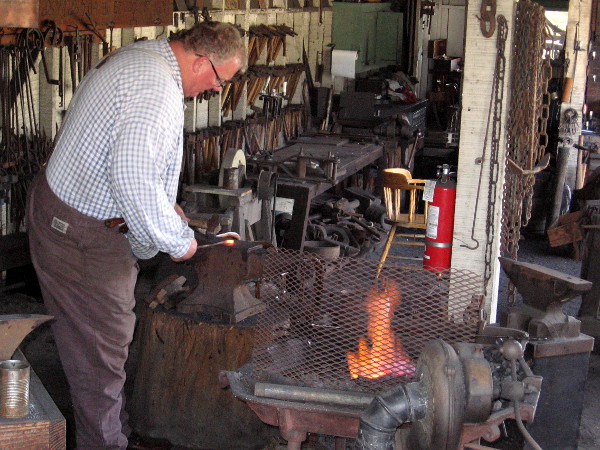
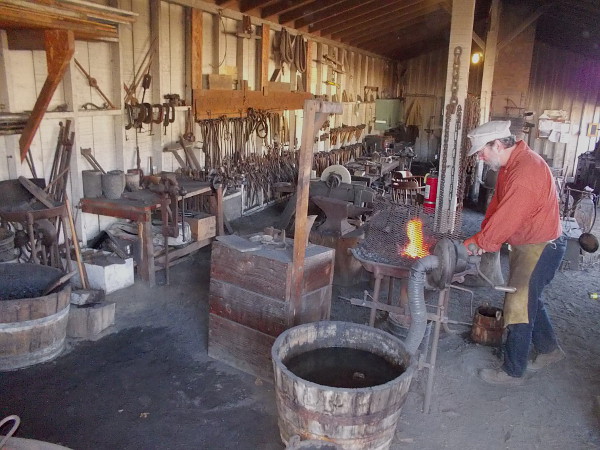
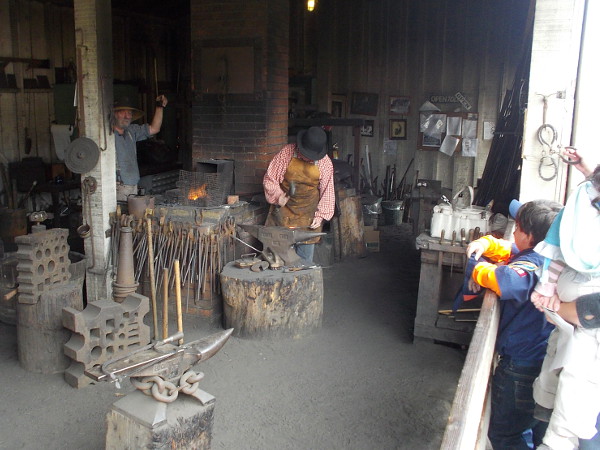
A blacksmith shapes red hot iron at a forge in San Diego’s historic Old Town.
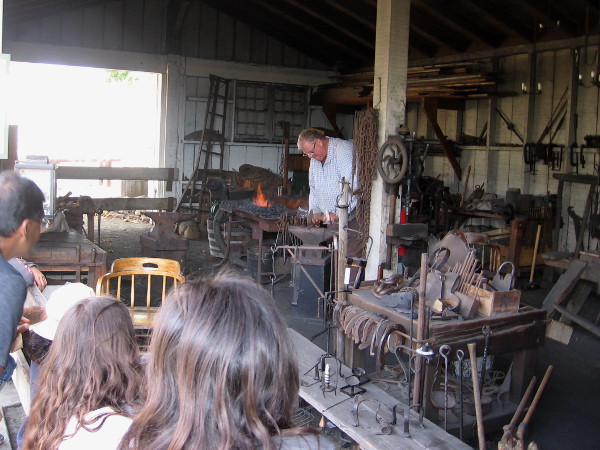
Yesterday I lingered for a few minutes at the Blacksmith Shop in Old Town San Diego State Historic Park. Two forges were operating. I watched as hammers swung, making sparks fly. It was fascinating to learn about blacksmithing and its vital role in San Diego’s history.
I chatted for a bit with one of the friendly gentlemen working in the Blacksmith Shop. These days the shop is used by a handful of skilled smiths to make all sorts of ornamental and useful metal items. They’ve made objects used for display elsewhere in the State Park. They make everything but horseshoes–and that’s because none of them know how to shoe a horse!
I was told that in 19th century San Diego there were several blacksmiths; this shop now in Old Town was probably located a bit to the east, on the outskirts of town (near today’s Presidio Hills Golf Course) because of the fire danger it presented to other buildings. No blacksmith shop back then would have been as large as the one visitors see today. A blacksmith would most likely do their work in the corner of a livery stable, using one modest forge.
Please read the photo captions to learn more!
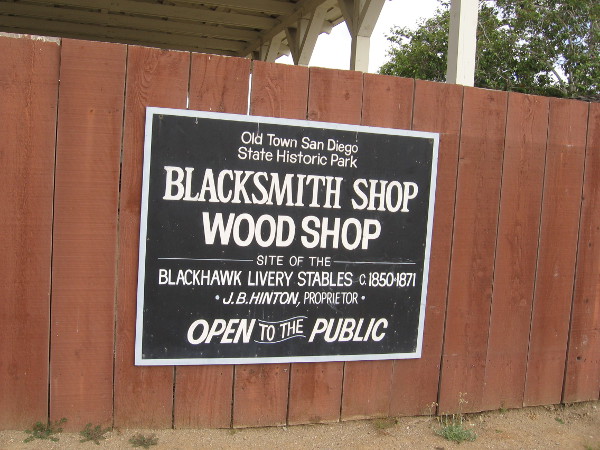
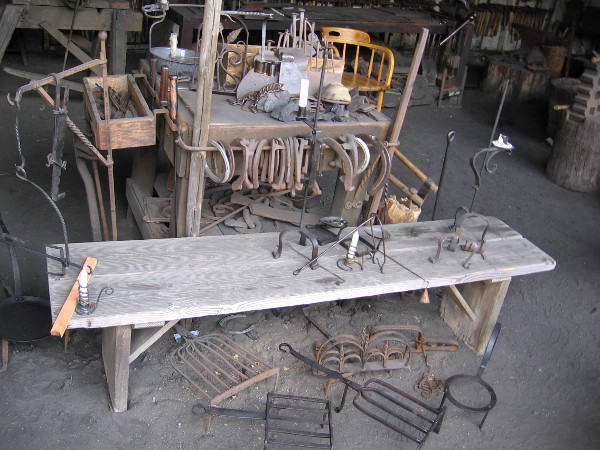
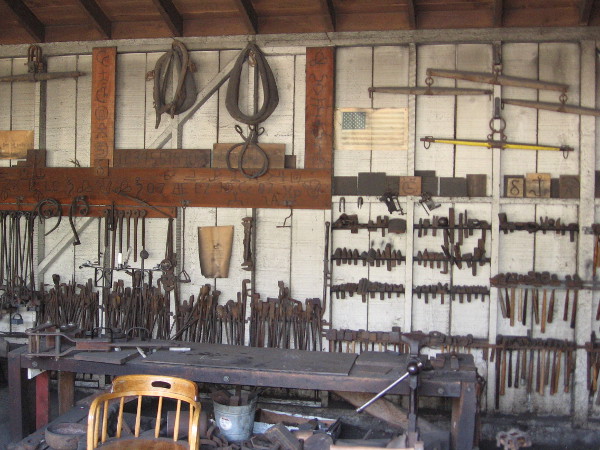
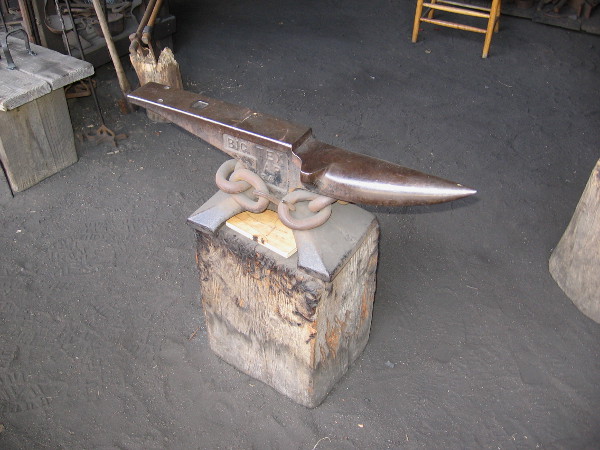
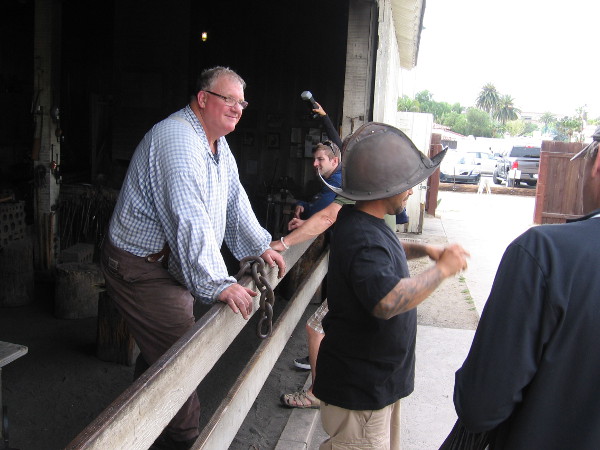
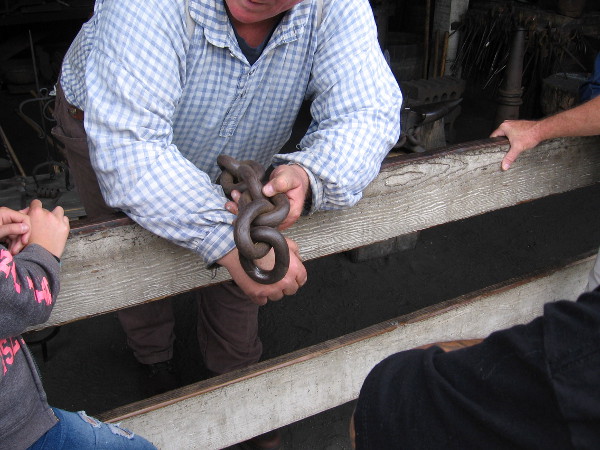
Old Town San Diego State Historic Park’s Blacksmith Shop and Wood Shop at the site of the Blackhawk Livery Stables, circa 1850-1871.Visitors to Old Town learn a little about life in San Diego during the mid 1800s. Blacksmiths created assorted metal objects, made repairs and shoed horses.This friendly blacksmith provided lots of fascinating information. Visitors watch with interest as he works to create a pot holder.I learned that in early San Diego blacksmiths typically burned charcoal in their forge, as coal was usually of poor quality and difficult to obtain in Southern California.A huge bellows provides oxygen for this brick furnace. A good working temperature is about 1800 degrees Fahrenheit.Products that were fashioned include iron grills, traps, candle holders, fish roasters, knives, shovels, chains, hinges, nails, cooking ladles and horseshoes.Hammers, bars, wrenches and various blacksmithing tools hang from the rear wall, in addition to harnesses and other items one might find in a livery stable.The gentleman showed me some devices used to suspend pots over a fire. Everything on this wall was made by local smiths in this shop.A shiny anvil.This wide grassy area behind nearby Seeley Stable was once used for anvil shoots. Gunpowder was placed in a hollow indentation between two anvils and ignited, sending one anvil high into the air with a loud bang! Anvils that did not shatter were considered sound.Old Town visitor tries on a Spanish conquistador helmet made in the Blacksmith Shop.A heavy anchor chain is shown. The welds must be as strong as the iron links themselves.A photo of living history. Skilled artisans used muscle, fire, metal and sweat to make everyday life easier for the early residents of San Diego.
…
I live in downtown San Diego and love to walk around with my camera! You can follow Cool San Diego Sights via Facebook or Twitter!
You can easily explore Cool San Diego Sights by using the search box on my blog’s sidebar. Or click a tag! There are thousands upon thousands of fun photos for you to share and enjoy!
Likeness of Agoston Haraszthy, first Sheriff of the County of San Diego. He was elected in 1850 and served one term. He was a pioneer when it came to growing grapes and became known as the Father of California Wine.
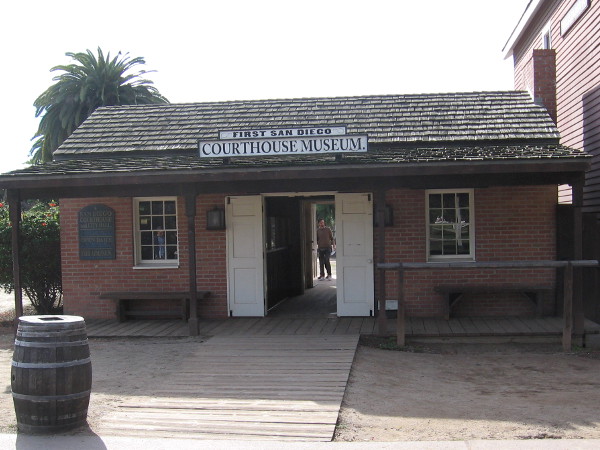
Visitors to Old Town San Diego State Historic Park can get a taste of the city’s early history when they step into the First San Diego Courthouse Museum.
One of many free attractions that can be found around Old Town’s central Plaza de Las Armas, the First San Diego Courthouse Museum is a recreation of our city’s first fired-brick structure, built in 1847 by members of the Mormon Battalion.
From 1847 to 1850 the original building served as the office of el Alcalde (Mexican mayor) of San Diego. Beginning in 1850 it contained the office of San Diego Mayor and City Clerk, and was used for meetings of the San Diego Common Council. The building was also used as a city and county courthouse and First District Court beginning in 1850.
Other uses for the building would include a meeting place for Masonic Lodge No. 35, headquarters of the U.S. Boundary Commission, office of the San Diego County Board of Supervisors, and a place of worship for San Diego’s first Protestant church.
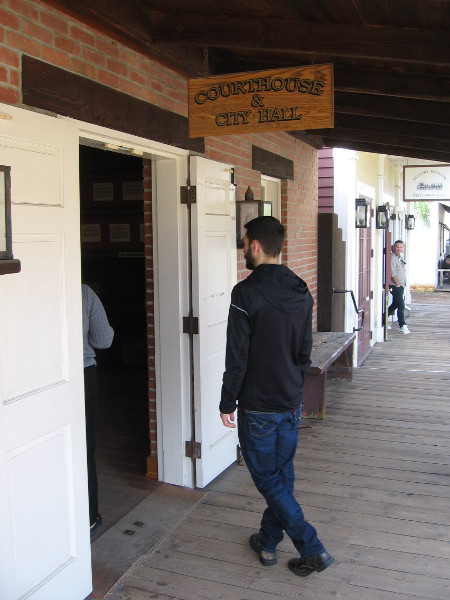
Come with me inside the museum. Let’s have a peek at a few very small rooms and their fascinating exhibits.
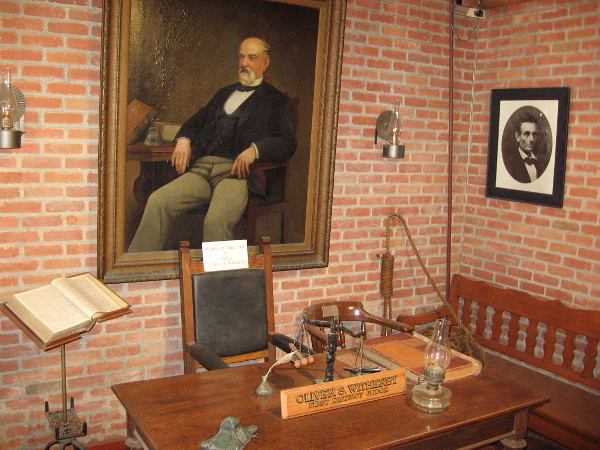
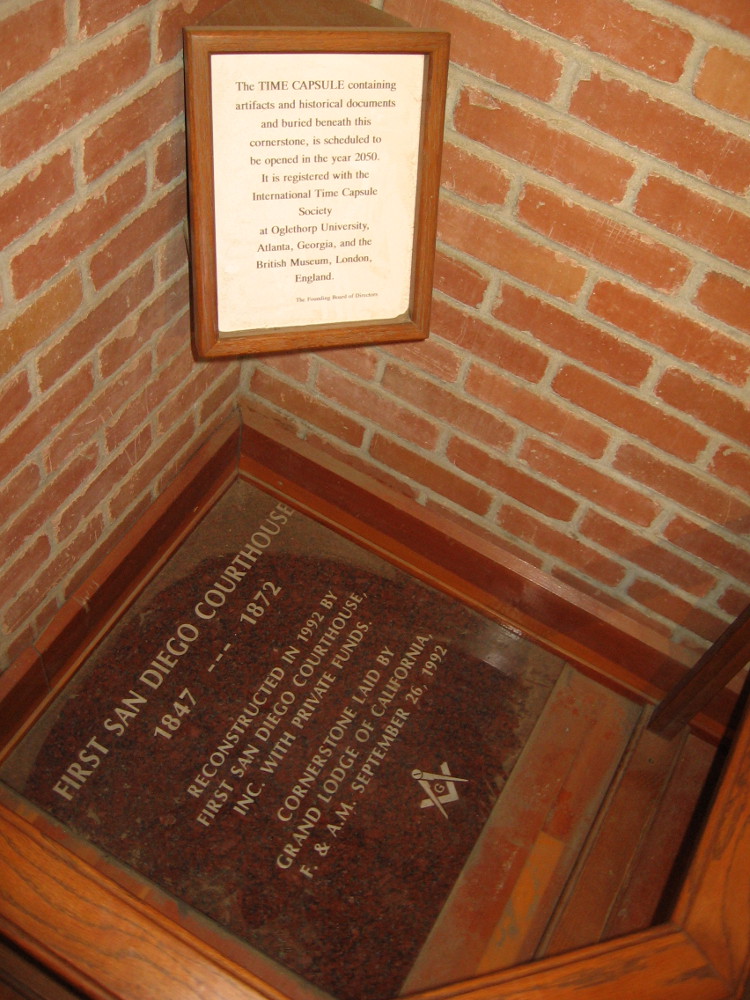
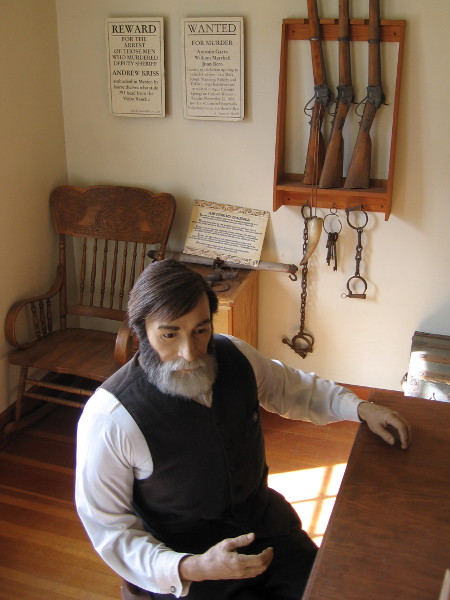
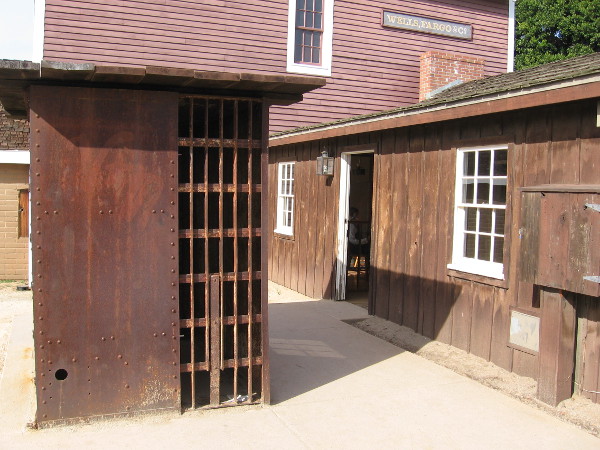
Photo of the modest brick First San Diego Courthouse Museum in Old Town, a recreation of San Diego’s first courthouse and city hall.In 1847, the Mormon Battalion built the first fired-brick structure in San Diego. For over two decades it would serve as courthouse.Visitor to Old Town San Diego State Historic Park enters a fascinating recreation of the city’s first courthouse and city hall.The portrait is of Oliver S. Witherby, He was appointed First District Judge in 1850. He served for 3 years. He is considered the Father of San Diego Jurisprudence.A time capsule lies under this cornerstone of the first San Diego courthouse. It is scheduled to be opened in 2050.A display case in San Diego’s first courthouse contains artifacts from the 19th century, including old pipe bowls and an antique lawyer’s briefcase.In 1872 a fire destroyed the San Diego courthouse. The fire burned a large part of Old Town’s business section.Sign explains the first California courts. The district court convened here, and acted as the highest court in the state.This room in the small building was the mayor’s office. Portraits of some early San Diego mayors are on the wall. Joshua H. Bean was San Diego’s first mayor, elected in 1850.A peek into the adjacent sheriff’s office. I see rifles, handcuffs and keys to the outdoor jail cell.This iron jail cell was the size and construction of the original courthouse jail from 1850.Break the law, and you might end up in here!A small museum depicting the first San Diego Courthouse and City Hall in Old Town is open free to the public every day.
…
I live in downtown San Diego and love to walk around with my camera! You can follow Cool San Diego Sights via Facebook or Twitter!
You can easily explore Cool San Diego Sights by using the search box on my blog’s sidebar. Or click a tag! There are thousands upon thousands of fun photos for you to share and enjoy!
Folks enjoy taking a ride in an old-fashioned covered wagon in Old Town San Diego during 2017 Mormon Battalion Commemoration Day.
I’ve got lots of colorful photos! The annual Mormon Battalion Commemoration Day was held today in Old Town San Diego State Historic Park. I covered this event last year, but I love history and scenes from the Old West so much that I swung by again!
San Diego’s history is remarkably diverse, considering our city is relatively new, and that it is situated in what for a long time was a thinly populated, desert-like wilderness. Many peoples and cultures have converged to help shape our dynamic city, including the original Native American Kumeyaay, missionaries from Spain, Mexicans who have called San Diego home, immigrants from Asia, an influx of Italian and Portuguese fishermen, and among many others, the Mormons.
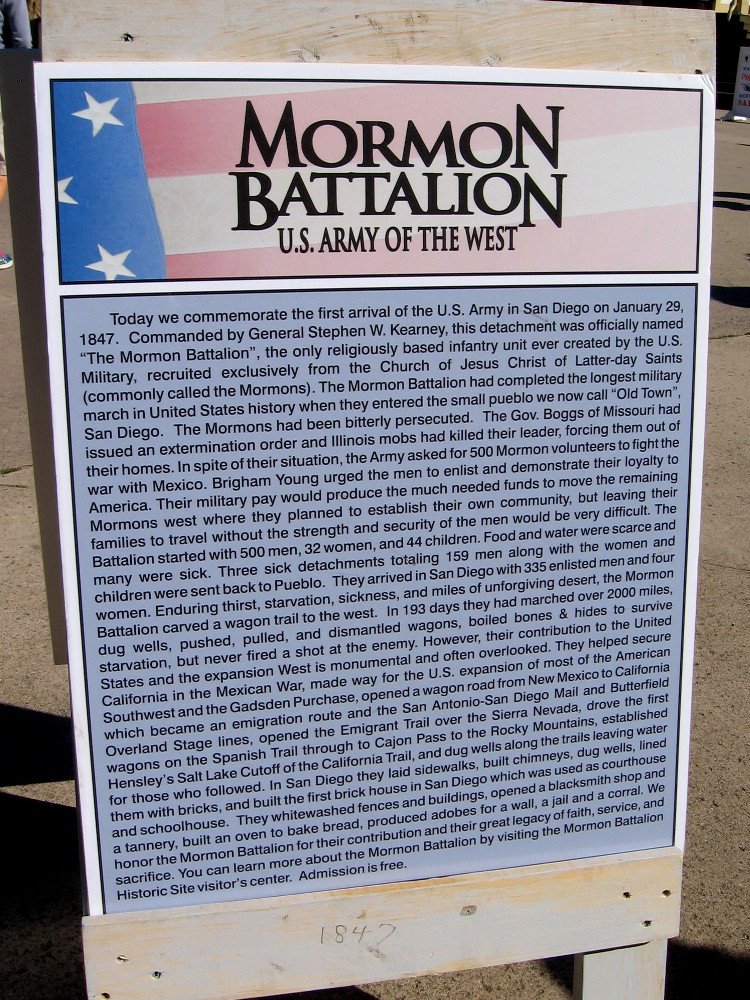
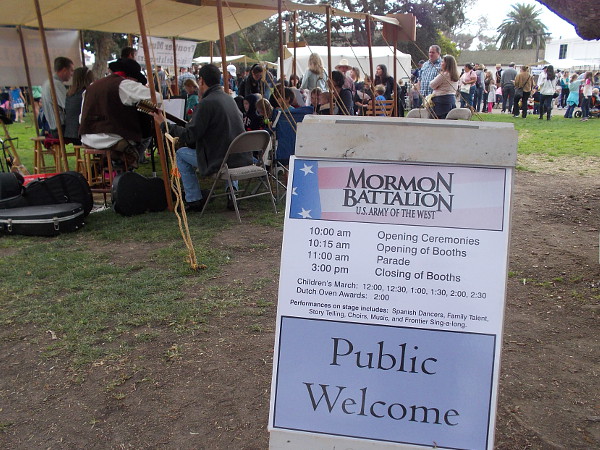
Please enjoy these photos and click the big sign that provides a little more background about the event and the historical importance of the Mormon Battalion in San Diego. More information can also be found on my previous blog post concerning the event last year. Check the related links below!
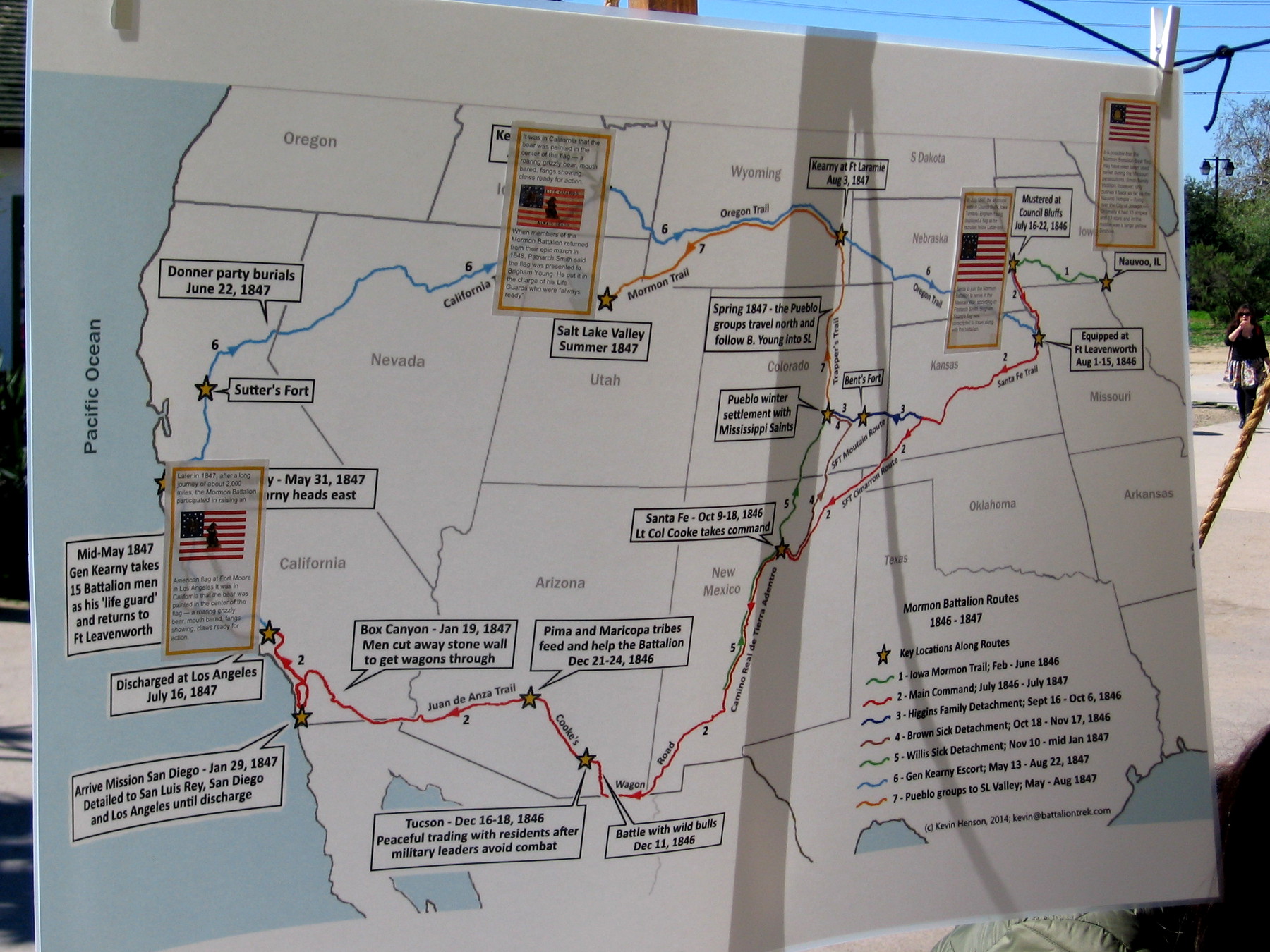
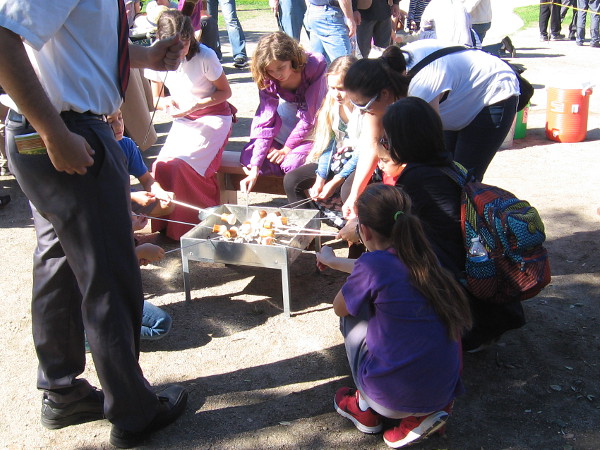
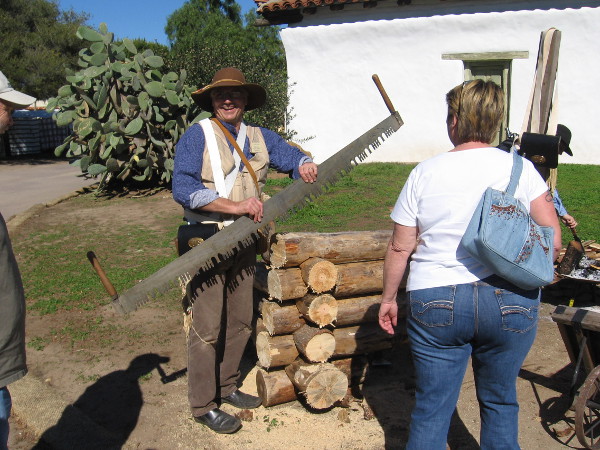
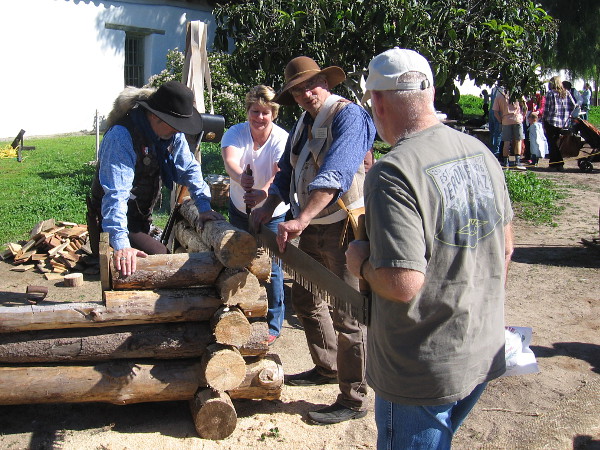
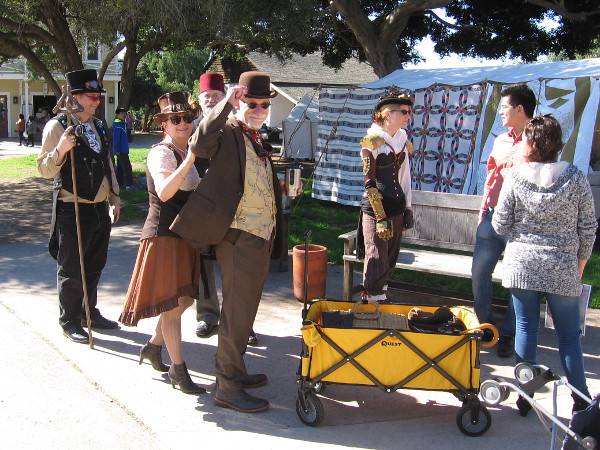
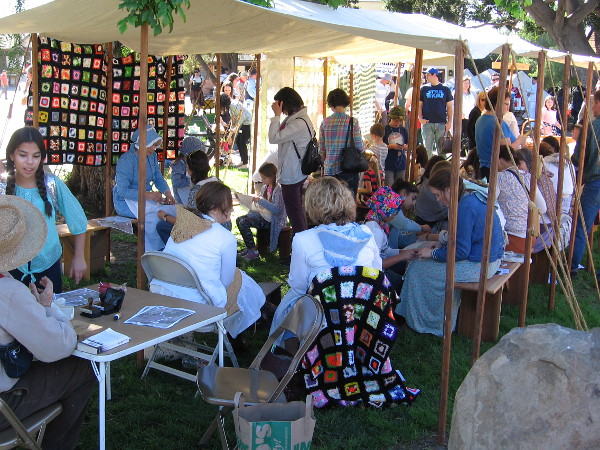
The public was welcome to swing by the annual Mormon Battalion Commemoration in Old Town. There were many historical reenactments and costumes to see.One tent concerned letters home, featuring historical journals, maps and genealogy.Today we commemorate the first arrival of the U.S. Army in San Diego on January 29, 1847. This detachment was called The Mormon Battalion, recruited from the Church of Jesus Christ of Latter-day Saints. (Click image to enlarge the sign if you’d like to read it.)Lots of interesting historical activities were being enjoyed by a large, enthusiastic crowd.Map shows Mormon Battalion Routes 1846 – 1847. The soldiers, recruited by the U.S. Army to fight in the Mexican-American War, undertook the longest military march in United States history. After arriving, they helped to build early San Diego.People draw the star and bear symbols of the California Republic.I believe these families were making biscuits, a staple of the Old West.Guys in pioneer clothing just kick back by plastic chairs and watch some dancing and musical entertainment during the event.Some colorful, joyful Mexican folklorico dancing on stage in Old Town San Diego!This guy with the huge saw was demonstrating another aspect of life in old San Diego.Visitors to Mormon Battalion Commemoration Day try their hand at sawing a thick log!A bunch of steampunk enthusiasts were attending the historical event!A fez and a golden arm. These guys should be in some sort of cool adventure movie! Perhaps they belong in a blimp!Like last year, a tent showed people how bricks were once made in San Diego.These assembled bigwigs were judging a Dutch Oven Bake-off!Scouts and other youth learn how rope was once made, using twisted fibers from native Yucca cacti.Lots of folks, old and young, were in one tent learning about and making frontier dolls.Some mountain men were camped at the Black Hawk Livery Stable, near the Old Town blacksmith shop.A sign tells about various Western trailblazers, including Jedediah Smith, Kit Carson and Jean Baptiste Charbonneau.Five anvils!Shaping red hot iron in the old blacksmith shop.These guys are keeping the ancient art of blacksmithing alive in a high tech world.Running out onto the wide grassy area behind Seeley Stable. Like travelling back in time.Some beautiful quilts on display during Mormon Battalion Commemoration Day in Old Town San Diego.Kids were learning how acorns were mashed by the Kumeyaay and others in San Diego’s early history.Someone poses for a photo with an old rifle.History, culture, bonnets and period dress. I saw many smiles in Old Town.People in nostalgic frontier garb and a modern t-shirt with a jolting urban message pose together for an unusual photo.Playing lively old frontier music.Kids playing simple, old-fashioned games.Another unique and memorable scene from Mormon Battalion Commemoration Day in Old Town San Diego!
…
This blog now features thousands of photos around San Diego! Are you curious? There’s lots of unique stuff to check out!
Here’s the Cool San Diego Sights main page, where you can read the most current blog posts. If you’re using a small mobile device, click those three parallel lines up at the top–that opens up my website’s sidebar, where you’ll see the most popular posts, a search box, and more!
To enjoy future posts, you can also “like” Cool San Diego Sights on Facebook or follow me on Twitter.
Stagecoach on display at the Wells Fargo History Museum in Old Town San Diego State Historic Park.
I recently visited the Wells Fargo History Museum in Old Town. The exhibits inside concern early San Diego history. When our city was in its infancy, Wells Fargo ran a stagecoach line, and their Express Office was an essential part of local business life.
I took loads of photos in this very cool museum. Read the captions to learn much more!
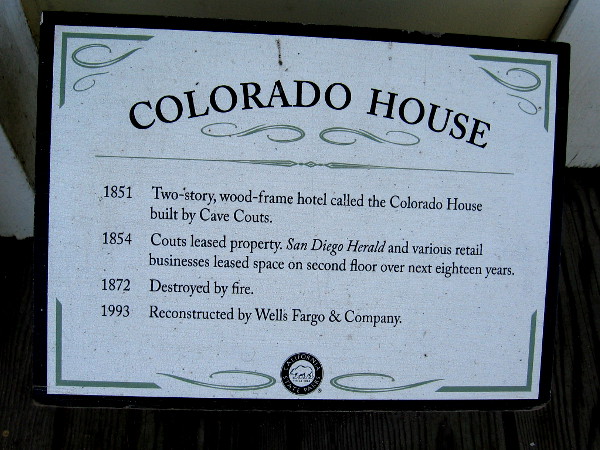
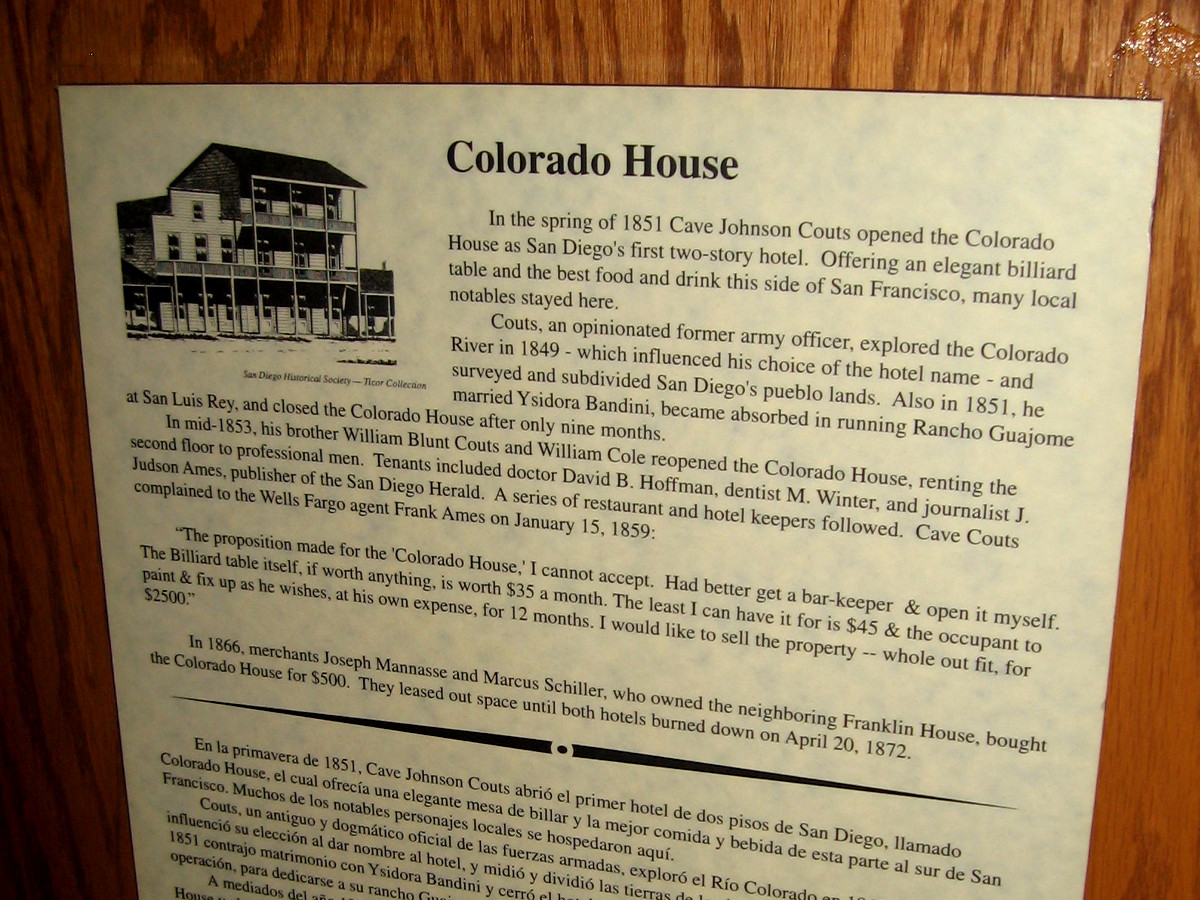
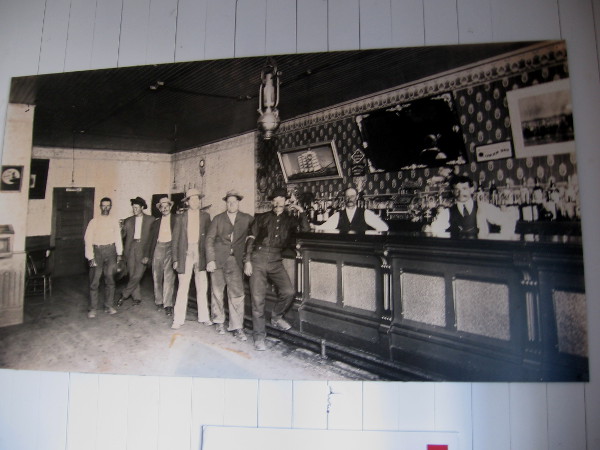
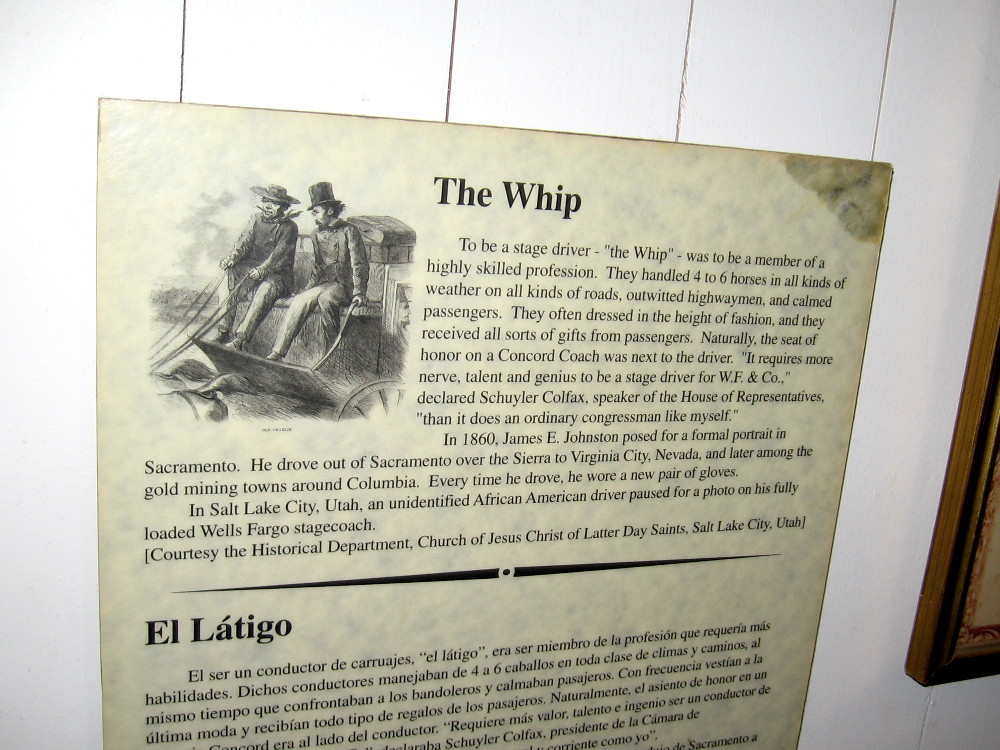
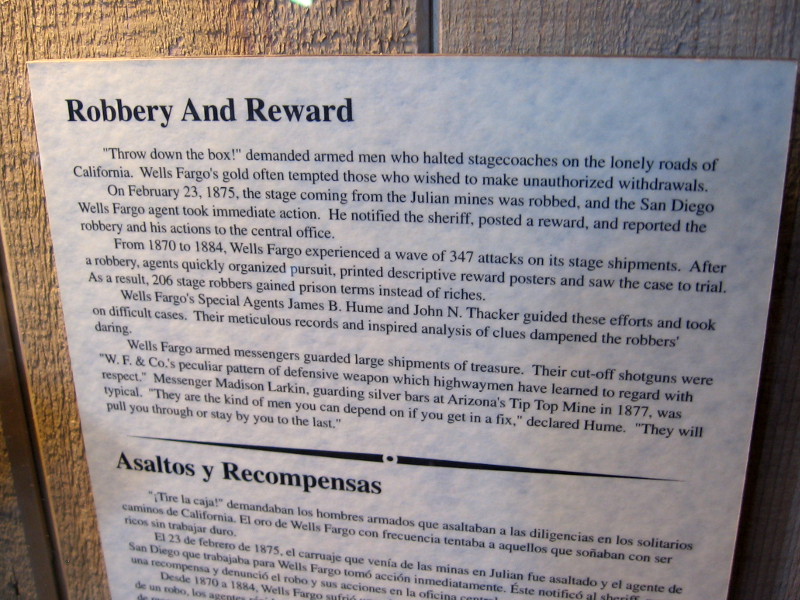
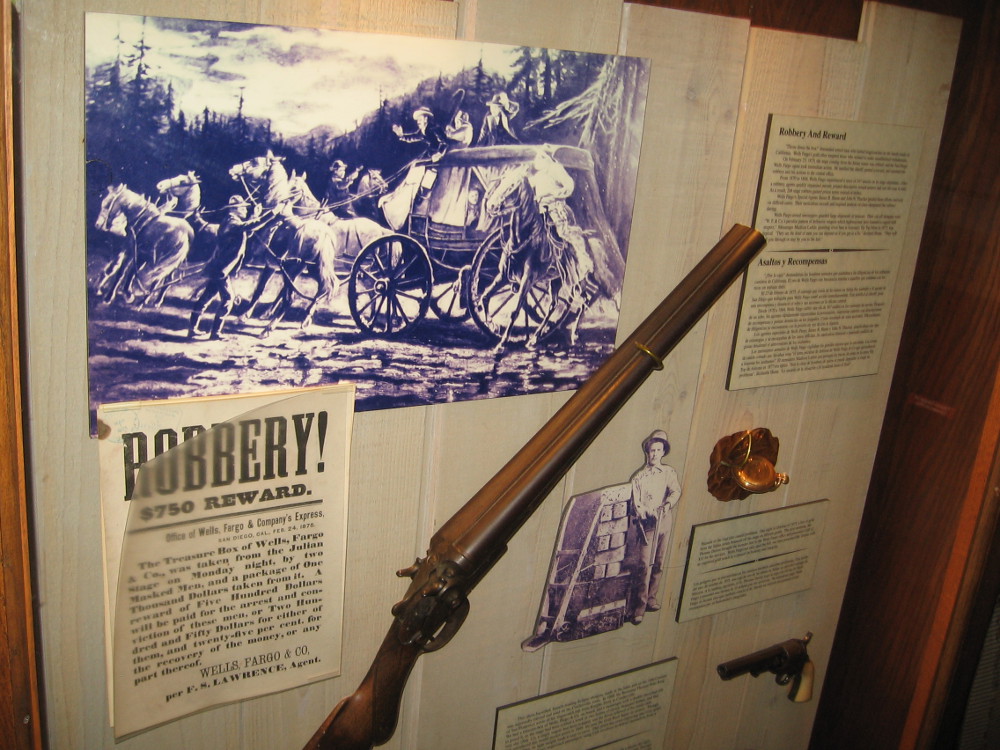
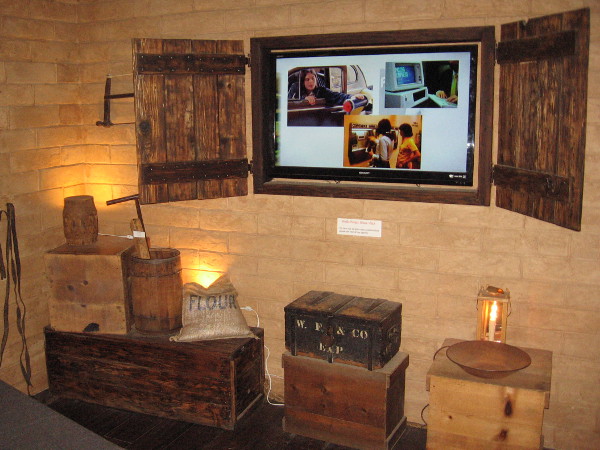
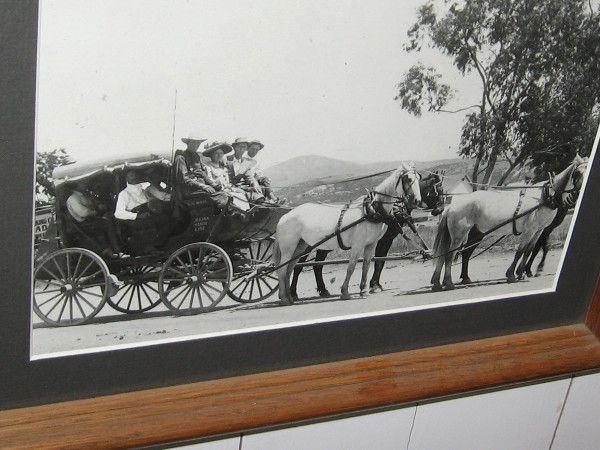
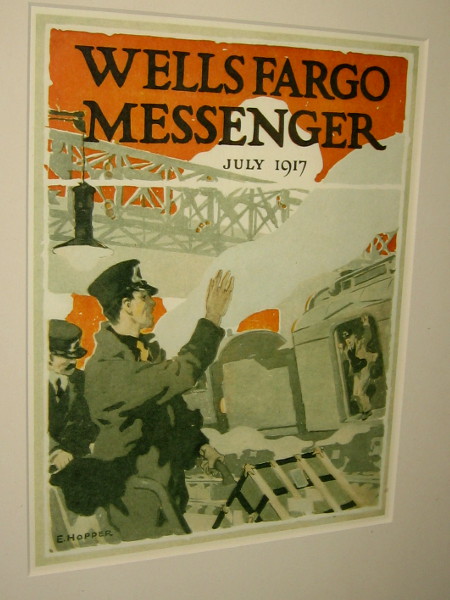
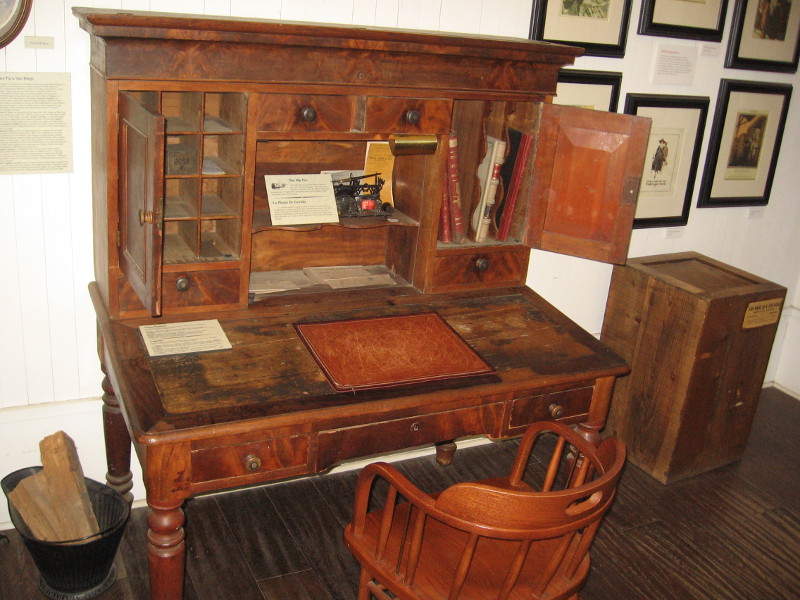
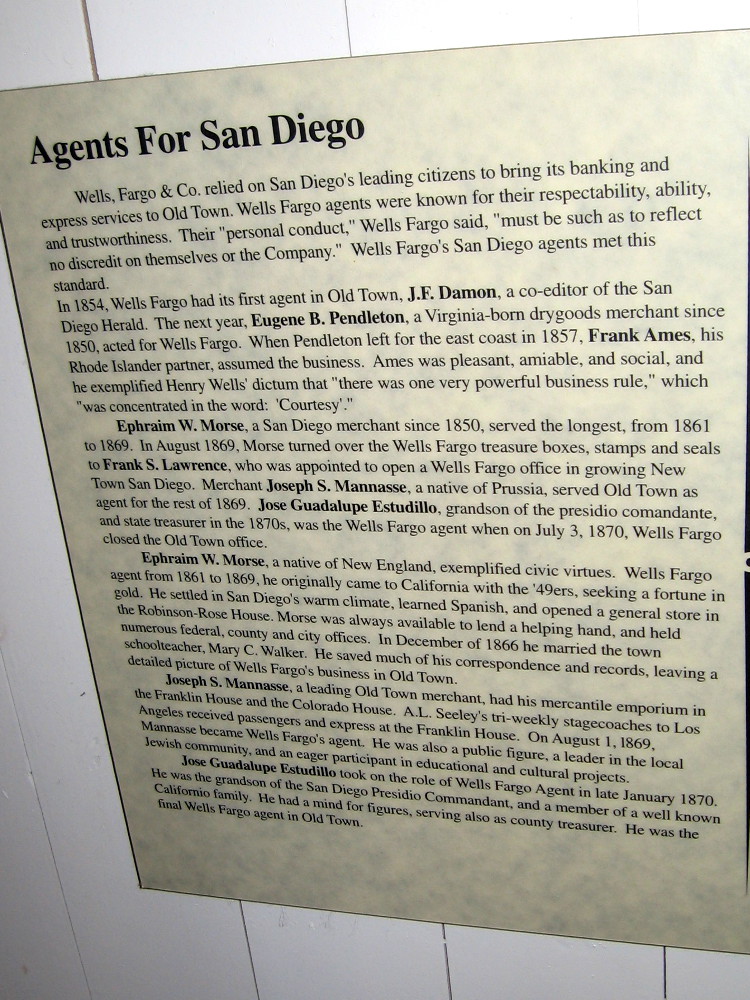
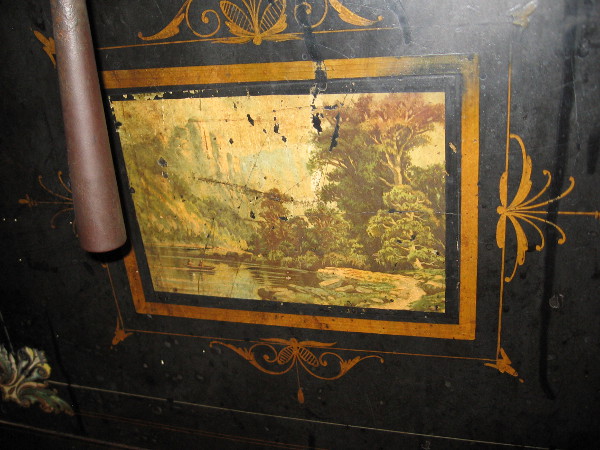
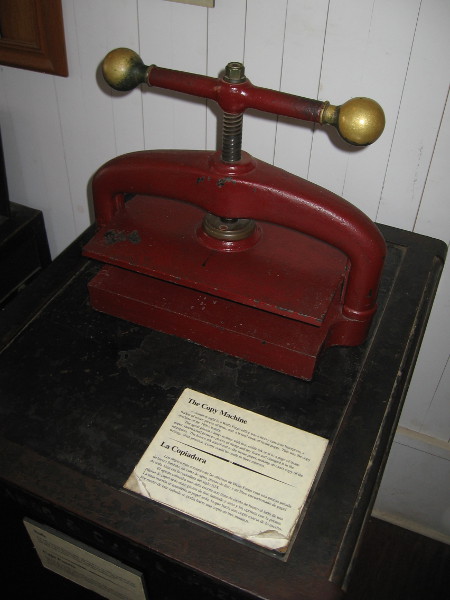
The restored Colorado House in Old Town San Diego is home to a fascinating Wells Fargo museum.The two-story, wood frame hotel called the Colorado House was built in Old Town San Diego in 1851 by Cave Couts. The original building was destroyed by fire in 1872.The Wells Fargo History Museum in San Diego is open daily from 10-5. Admission is free!Tourists in Old Town check out an iconic red Wells Fargo stagecoach, which transported mail, gold, goods and passengers in the Old West.Old photo on video screen shows the Wells, Fargo and Co’s Express Office in downtown San Diego, in 1911.Historical artifacts in a glass display case include books, bottles and a photo of Cave J. Couts.In the spring of 1851 Cave Johnson Couts opened the Colorado House as San Diego’s first two-story hotel. It had an elegant billiard table and fine food.Old photograph shows bar and patrons in Colorado House.Antique telegraph key once used to send messages and money across the continent.Colorful mural high on one wall shows a small town by a blue bay. I believe I recognize many buildings in Old Town.Article from the Omaha Herald published in 1877 provides Hints for Plains Travelers. When the driver asks you to get off and walk, do it without grumbling!Old plaque in the museum: Silas St. John carried the first eastbound overland mail out of San Diego, from Carrizo Creek to Fort Yuma, November 16, 1857. On September 9, 1858, in a lone-handed defense of the Butterfield-Wells Fargo Overland Stage station at Dragoon, Arizona, St. John was horribly wounded and lost his left arm. He recovered to continue in Wells Fargo service. Of his stuff the West was made.To be a stage driver–the Whip–was to be a member of a highly skilled profession. They handled 4 to 6 horses in all kinds of weather on all kinds of roads, outwitted highwaymen, and calmed passengers.Passengers on board the Overland Mail Company stages were allowed 40 pounds of baggage.Advertisement shows Ladies’ and Gentlemen’s traveling trunks and valises, also packing trunks of every description.Map shows the historic Butterfield Overland Mail Route. Wells Fargo’s experience in Western transportation led it to finance and eventually run the Butterfield stage line’s operations in the west. (Click image to enlarge.)On February 23, 1875, the stage coming from the Julian mines was robbed, and the San Diego agent took action. He immediately notified the sheriff, posted a reward, and reported the robbery and his actions to the central office.Cool display inside the Wells Fargo History Museum in Old Town San Diego shows how stagecoaches and their cargo were protected from bandits.The most infamous stage robber was Black Bart. He left bits of poetry and called himself the “Po8” to distance himself from the common thief. He robbed 28 stagecoaches from 1875 to 1883. Once identified, authorities learned he was actually Charles E. Boles, a “respectable” mine owner!A museum recreation of the Vallecito Stage Station, a stop on the Overland Mail Company’s southern route, 1858-1861. Thick adobe walls provided relief from desert heat.Table in the stage station used for rest, serving food and games of cards to pass the time.Gold was discovered at Julian in San Diego’s mountains, triggering a small rush into the area.Miners from placer diggings on the Colorado River and hard-rock mines at Julian brought their gold dust and bars to the Wells, Fargo and Co. agency in Old Town San Diego.The Julian Stage Line carried miners and other passengers to this gold mining town in east San Diego County.Cover of the Wells Fargo Messenger, dated July 1917.Wells Fargo published a monthly magazine calls the Wells Fargo Messenger between September 1912 and June 1918. Edward Hopper, an illustrator, went on to become a famous American realist painter.On her travels she uses Wells Fargo Checks.Cover of the Wells Fargo Messenger, dated April 1918.Antique desk used by a Wells Fargo agent.During a typical day, a Wells Fargo agent saw many types of business, reflecting the Company’s varied and essential services.Nooks in this desk hold dip pens, receipts, letters and accounting ledgers.Wells Fargo agents were known for their respectability, ability, and trustworthiness. The first Old Town agent was J.F. Damon, co-editor of the San Diego Herald.Wells Fargo agent William A. Biglow works in his express office which included an agent’s cabinet and iron safe.A large old letterpress sits atop a cast iron safe. The safe, made by Herring, Hall, Marvin and Co. in 1885, is filled with concrete and weighs over a ton.Some pastoral art on the face of the safe door.The copy machine of the 19th Century. Pressure from this heavy cast-iron letterpress transferred brown ink to tissue paper.A collection of old letters, certificates and small packages exhibited at the Wells Fargo History Museum in San Diego.If you ever visit Old Town San Diego State Historic Park, check out the interesting Wells Fargo History Museum in the Colorado House!
…
I live in downtown San Diego and love to walk around with my camera! You can follow Cool San Diego Sights via Facebook or Twitter!
You can easily explore Cool San Diego Sights by using the search box on my blog’s sidebar. Or click a tag! There are thousands upon thousands of fun photos for you to enjoy!
Visitor to the second floor of the McCoy House Museum learns about some notable early residents of Old Town San Diego.
Should you visit the McCoy House Museum in Old Town San Diego State Historic Park, be sure to venture up the stairs to the second floor. There you’ll discover several fascinating exhibits. In addition to old photographs of notable early residents of San Diego, you’ll find an explanation of Old Town’s gradual decline as competing New Town (the site of modern downtown San Diego) grew and became the center of government and commerce. You will also learn about Old Town’s continuing legacy, including the events that led to the creation of Old Town San Diego State Historic Park in 1968.
If you’d like to read the displays, click the images to enlarge them.
From a window on the museum’s second floor one can also look down upon the scraggly native plant garden just northwest of the McCoy House. A map near the window shows the location of Sycamore, Toyon, Oak, Cottonwood, Elderberry and Willow trees. Other native plants include Yerba Mansa, Datura, Aster, Poppy, Deerweed, Sumac, Lemonadeberry, Manzanita, Monkeyflower, different Sages, Deergrass, Prickly Pear and Yucca. Many of these plants were used by the Native American Kumeyaay in their daily lives long before explorer Juan Rodriguez Cabrillo discovered San Diego Bay in 1542.
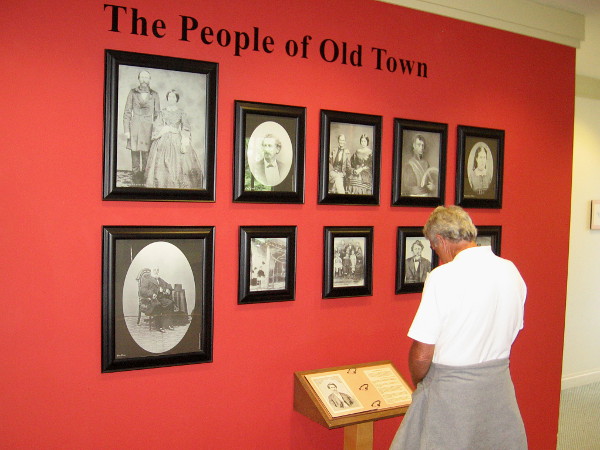
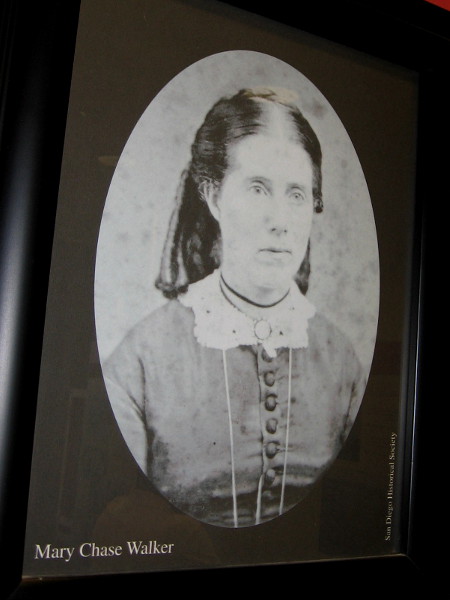
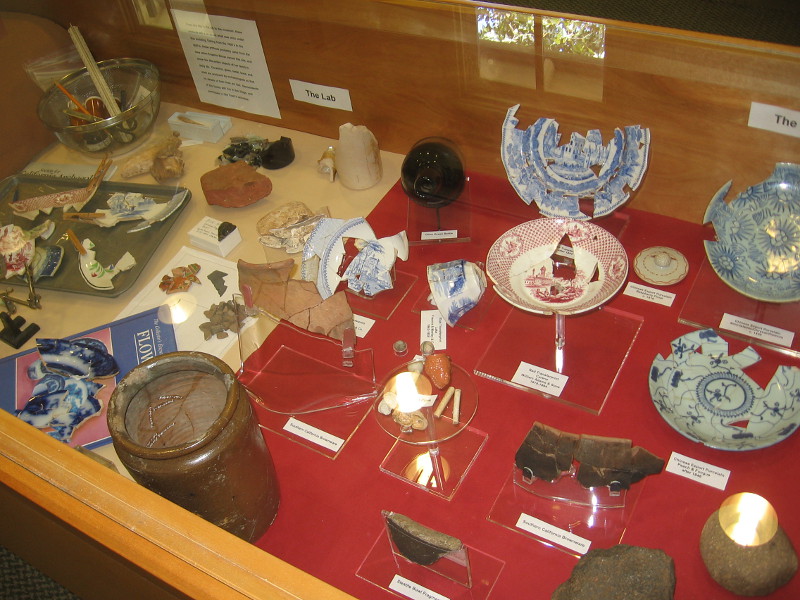
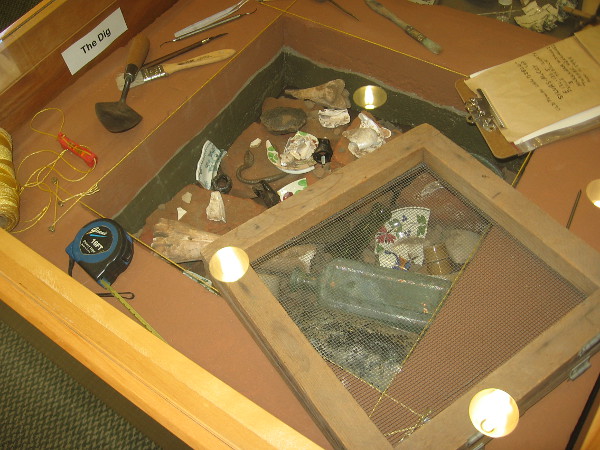
Pio Pico settled in San Diego in 1819 after the death of his father, a soldier assigned to the Presidio. Merchant and rancher, he later lived in Los Angeles and became the last governor of Mexican Alta California.In 1865, Mary Chase Walker became Old Town’s first school teacher. She taught at the one room Mason Street schoolhouse and described early San Diego as a desolate place. She went on to join the suffragette movement.Agoston Haraszthy, born in Hungary, led a fascinating life. As an American pioneer, businessman and wine expert, he became San Diego’s first town marshal and the first county sheriff.Fire devastated Old Town in 1872. At the time only one water pump existed, and it was broken. Firefighters watched helplessly. The fire and many other factors helped to bring about the rise of competing New Town.Various fascinating historical exhibits can be explored on the second floor of the McCoy House Museum in Old Town San Diego State Historic Park.In the early 20th century, neglected, ruined buildings in Old Town were fixed up and converted into tourist attractions. Entrepreneur John D. Spreckels extended his streetcar line to Old Town.Artifacts found under the rebuilt McCoy House date from the 1830’s to 1850’s. They include fragments of daily life from that eraArchaeologists analyze each find, record every detail. These objects probably came from the time when Eugenia Silvas owned this site. Family descendants still live in San Diego and are involved in Old Town’s activities.Archaeologist’s tools on display in the McCoy House Museum.Once again, Old Town became a tourist destination in the 1930’s when San Diego Avenue became connected to the new Coast Highway.Old Town languished during World War II. After the war, some suggested setting aside Old Town as a historic community. In 1968, Old Town San Diego became a state historic park.Photographs in the McCoy House Museum recall Old Town San Diego’s colorful past.
…
I live in downtown San Diego and love to walk! You can follow Cool San Diego Sights via Facebook or Twitter!
You can easily explore Cool San Diego Sights by using the search box on my blog’s sidebar. Or click a tag! There are thousands upon thousands of unique photos for you to enjoy!
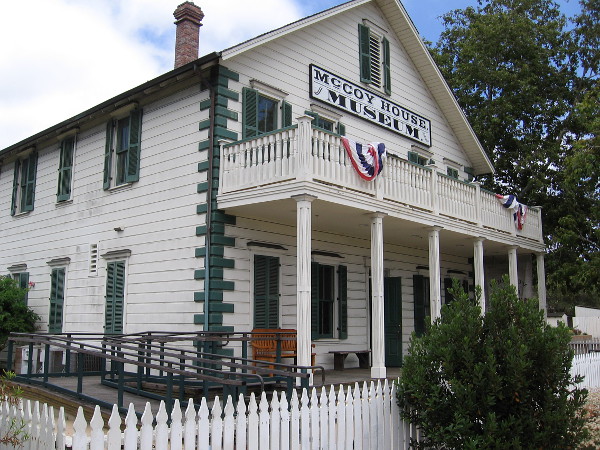
The McCoy House Museum, in Old Town San Diego State Historic Park, is a reconstruction of a home built in 1869 for Sheriff James McCoy.
While there are many small museums and historical attractions that visitors can enjoy in Old Town San Diego State Historic Park, the McCoy House Museum is the best place to see an extensive series of interpretive displays that describe the complete history of early San Diego.
The McCoy House, standing on the north end of Old Town, is a reconstruction of a home built in 1869 for Sheriff James McCoy and his family. James McCoy, who lived from 1821 to 1895, like many early San Diego residents was an ambitious man, working diverse jobs, filling many roles. At the age of 21 he sailed from Ireland to America seeking opportunity. He became a soldier, then a stagehand, then San Diego county assessor, then county sheriff in 1861. He acquired substantial real estate holdings and finally won election to the state senate in 1871.
The interpretive displays in the McCoy House Museum provide a good look back at San Diego’s formative years. They detail the life of the Native American Kumeyaay who’ve lived in the region for thousands of years, the first Spanish explorers, the establishment of the Spanish mission, the Mexican period and the subsequent American period.
If you’d like to read the displays, click my photographs to enlarge them.
This blog post covers the first floor of the museum. I’ll cover the second floor exhibits in a later post. After heading up some stairs, one can find information about the more prominent residents of Old Town, plus the town’s later history as it competed with New Town, which eventually rose to become downtown San Diego as we know it today.
Anyone who is a history buff must visit the McCoy House Museum. You’ll be transported back in time and see how life was exciting, difficult, and altogether different many, many years ago in San Diego.
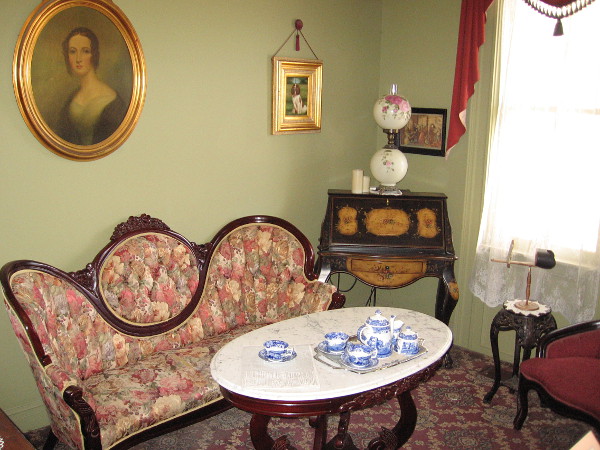
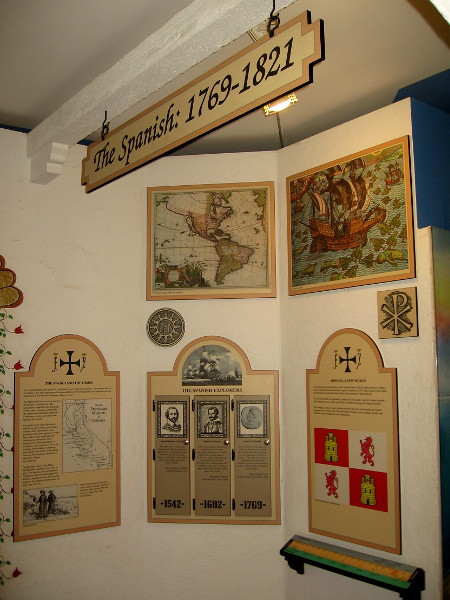
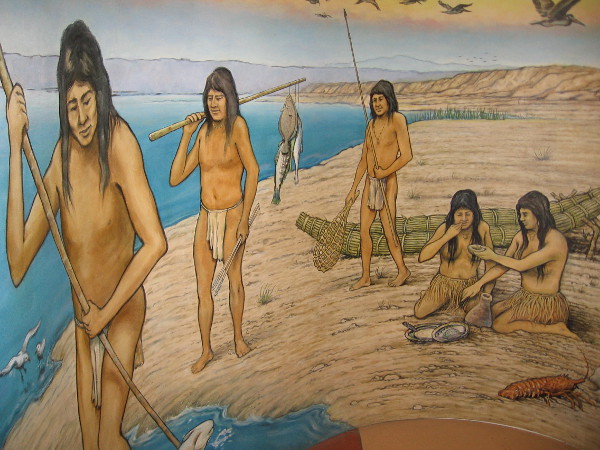
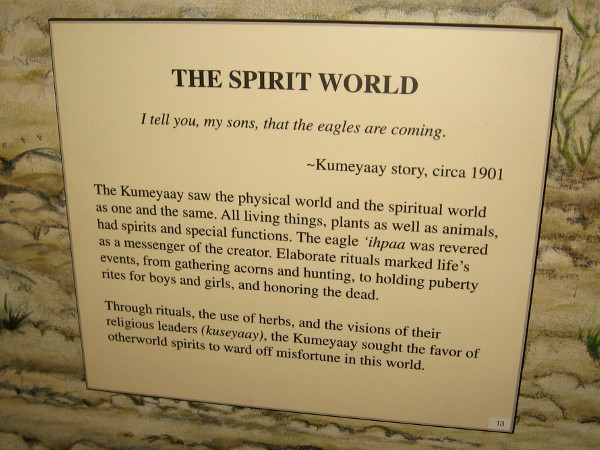
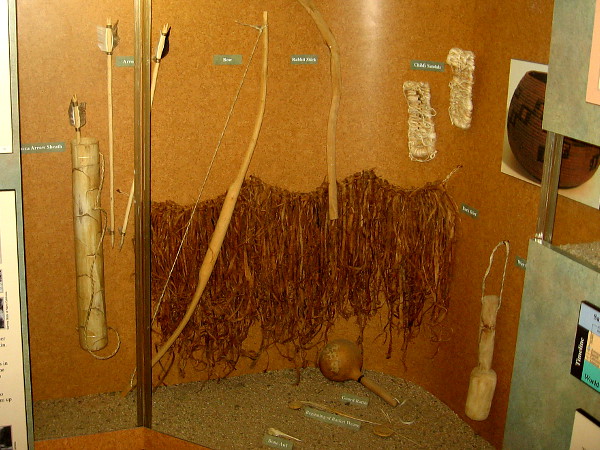
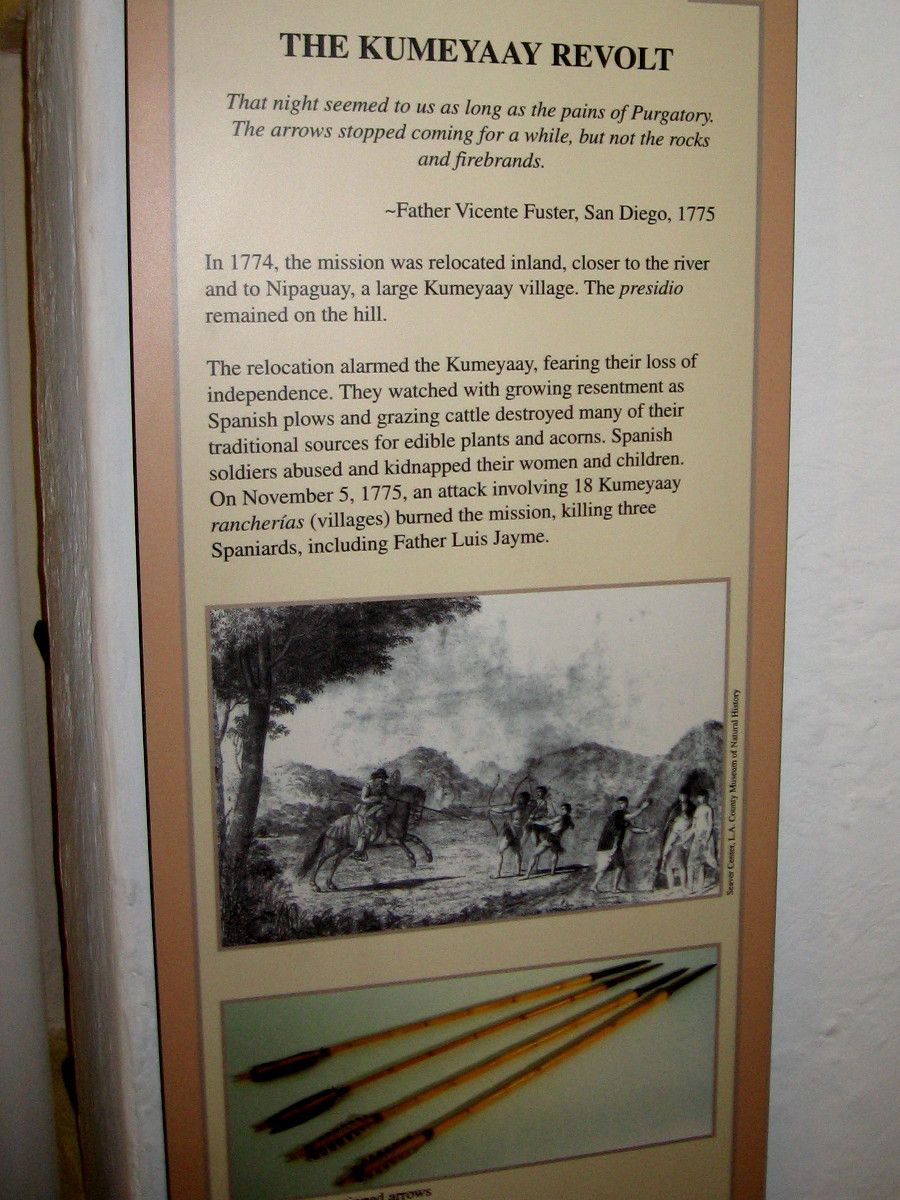
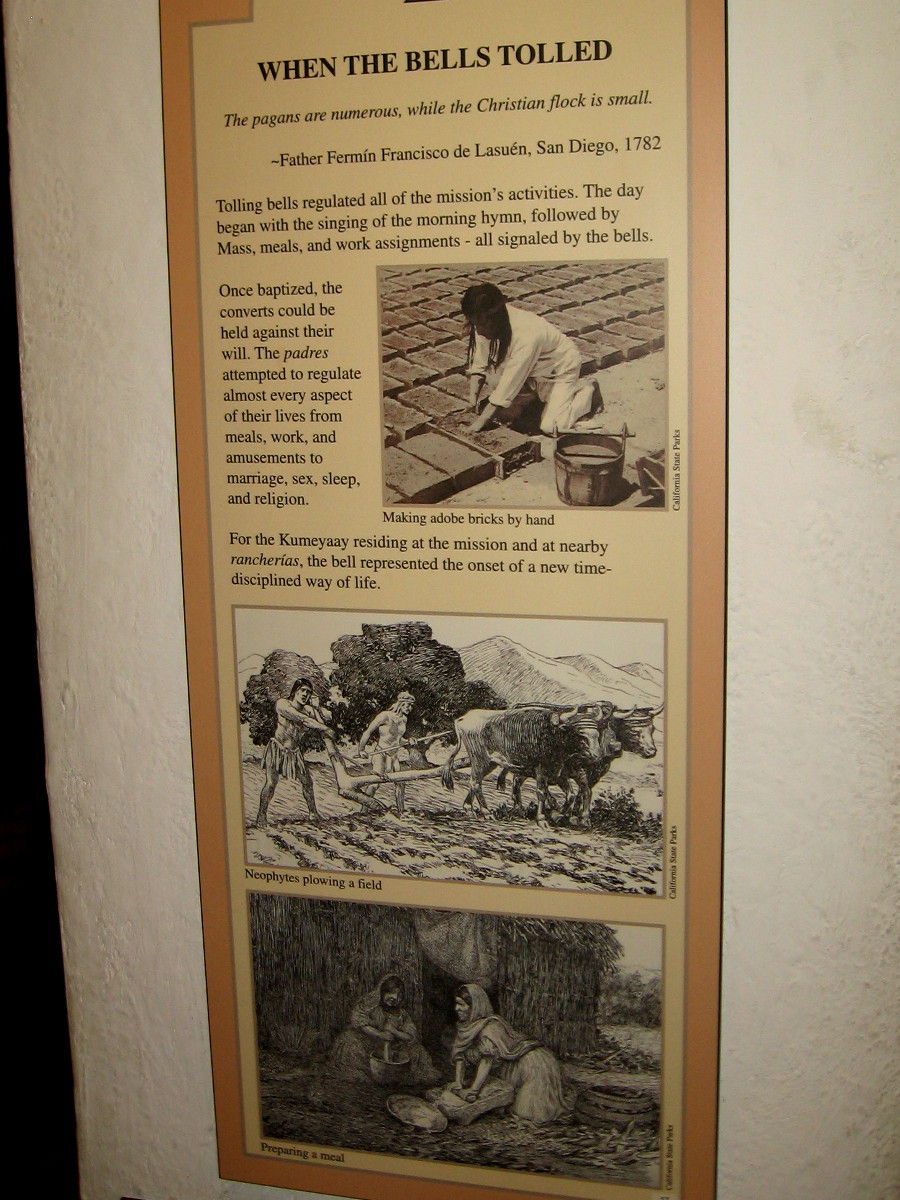
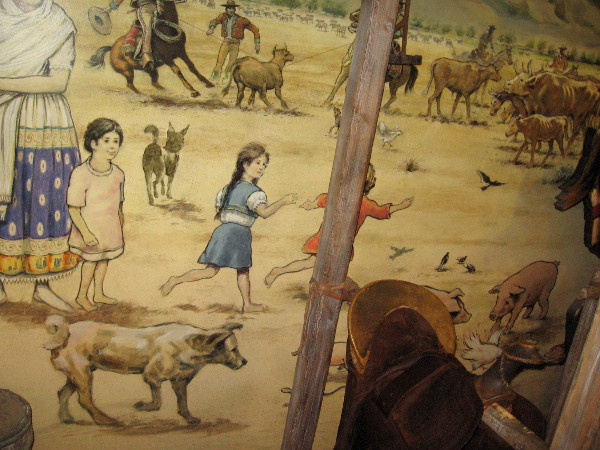
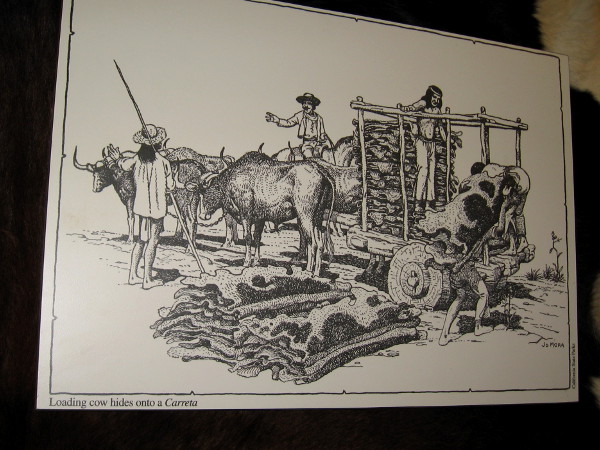
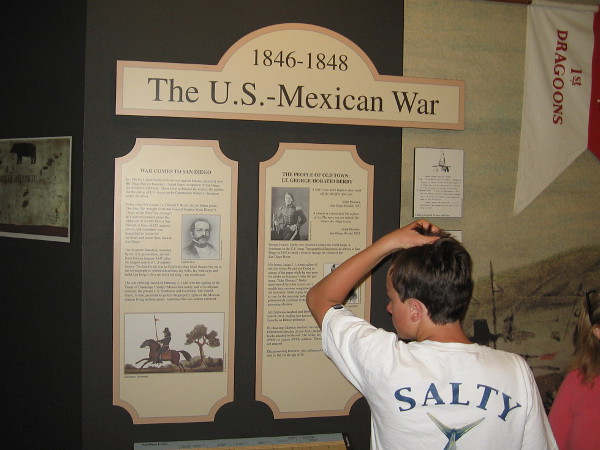
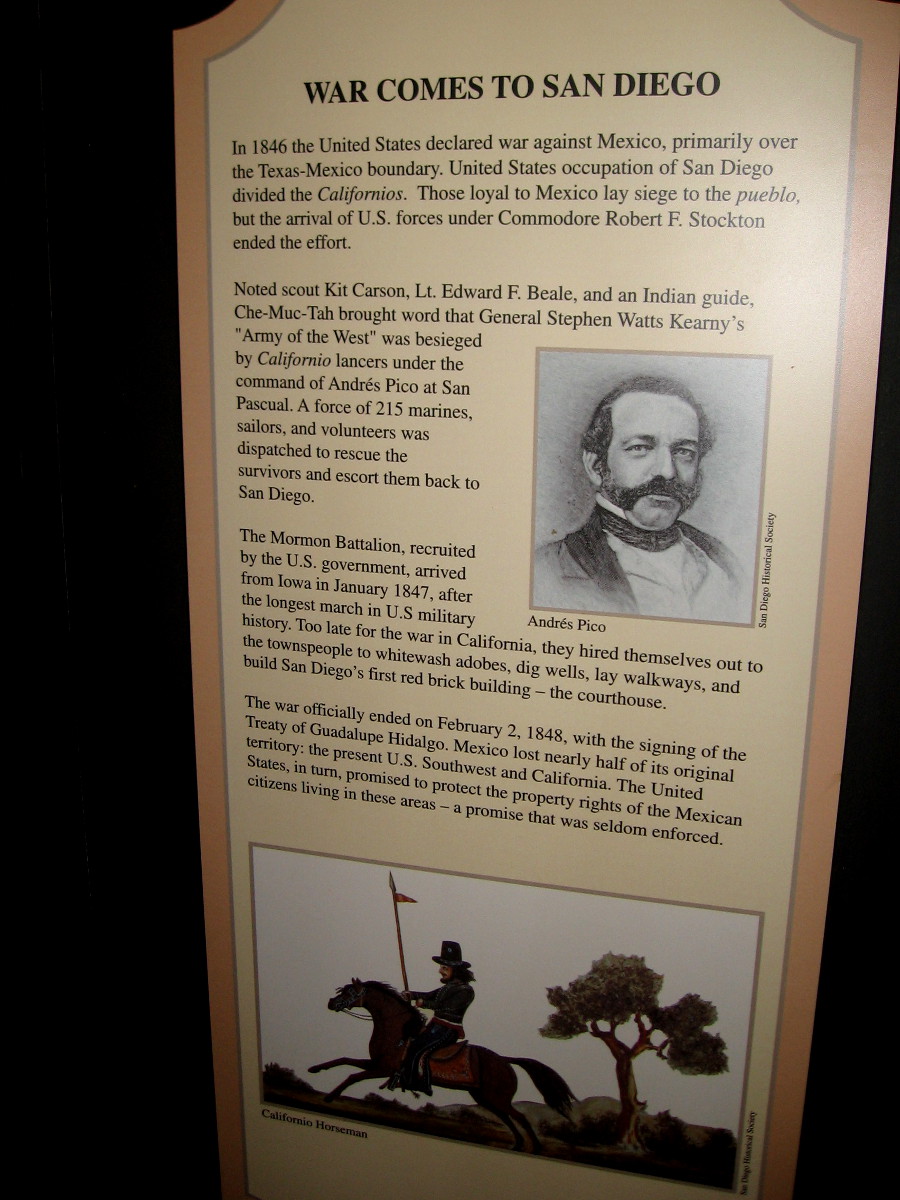
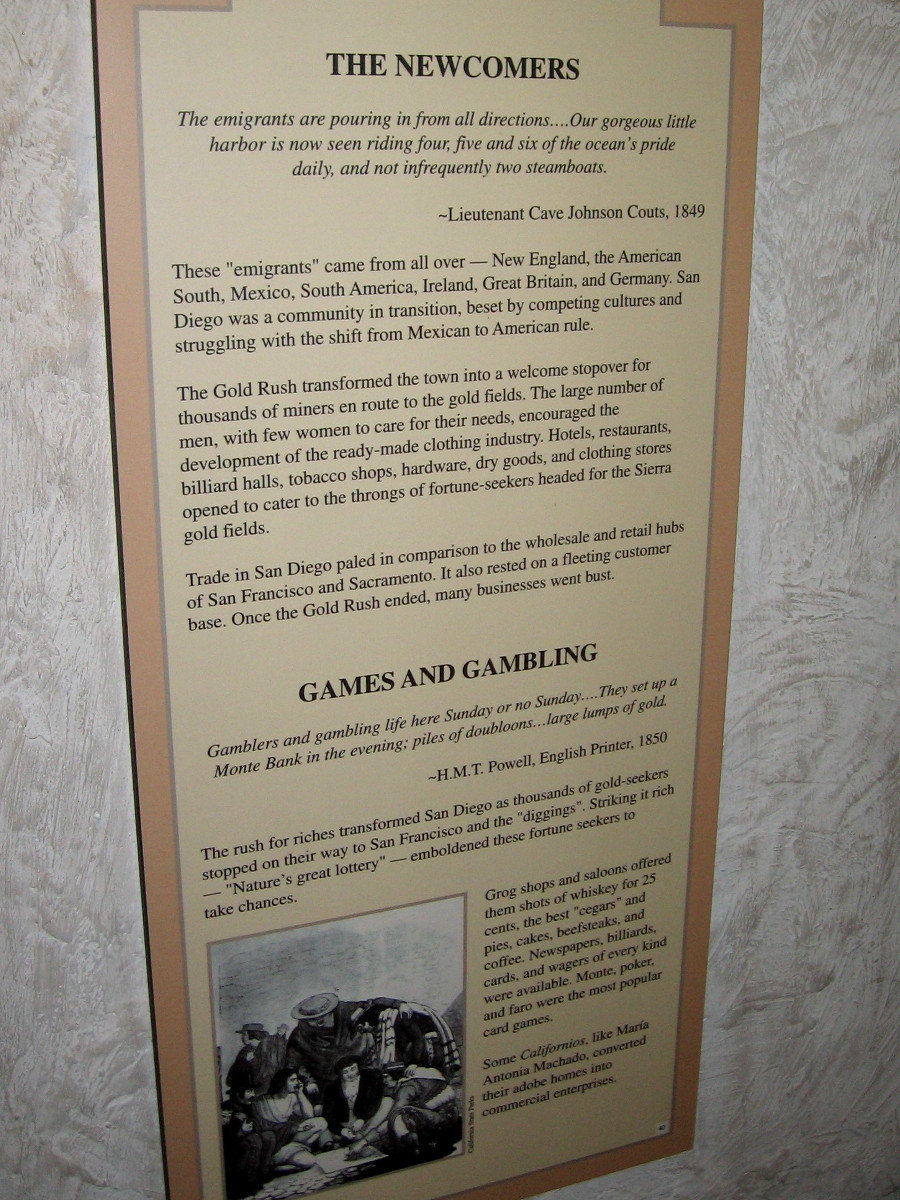
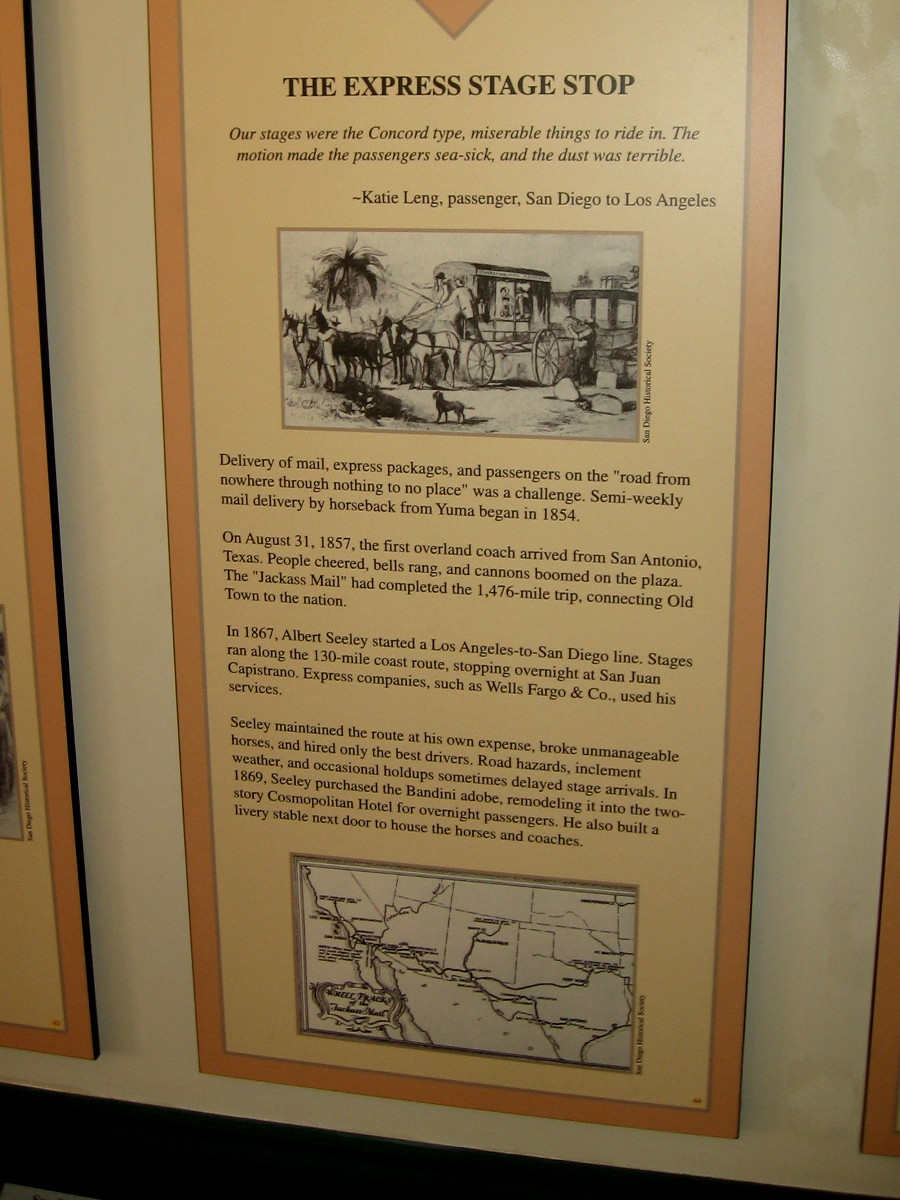
Sign lists important dates concerning the McCoy House. Today it’s a museum containing exhibits that explain the fascinating history of Old Town San Diego.Just inside the front door, this might have resembled the parlor of the original McCoy House, occupied by an upper middle class family in San Diego’s Old Town.Framed photo on one wall from the San Diego Historical Society shows the original McCoy House.Interpretive exhibits inside the McCoy House Museum begin with the Spanish period of San Diego, from 1769 to 1821.Quotes from the journeys of Juan Rodriguez Cabrillo, Sebastian Vizcaino and Gaspar de Portola.A string of missions was created by Spain in California to secure its claim to new territory. The first mission, in San Diego, was originally established on Presidio Hill near the native Kumeyaay village of Cosoy.An artistic representation of life among the Kumeyaay people. They often visited the nearby coast to hunt and gather food.For thousands of years, the Kumeyaay lived along the coast and interior valleys of what is now San Diego County. They moved with the seasons to take advantage of available resources.The Kumeyaay built dome-shaped houses from oak, willow or sycamore branches. The simple structures were called ee-wahs.The Kumeyaay saw the physical and spiritual world as one and the same.Exhibit in the McCoy House Museum shows artifacts associated with the Kumeyaay, including a bark skirt, arrows, rabbit stick, child’s sandals, gourd rattle and war club.The Kumeyaay revolted against the Spanish missionaries in 1775, a year after the San Diego mission was relocated inland very close to a large Kumeyaay village.Once baptized, converted Kumeyaay followed a strict life. Mission bells signaled the day’s activities, including the singing of hymns, Mass, meals and work assignments.Mexico gained its independence from Spain in 1821 after a decade of bloodshed. Changes included a decline in support for the presidio and freedom from Spain’s trade regulations.After the breakup of the Spanish missions, the era of the great ranchos began. Californios were often racially mixed descendants of soldier-settler families.Vaqueros were the original cowboys. They worked on the extensive ranches and handled the large herds of stock.A fanciful picture of life on a rancho, with vaqueros at work and children at play.The Californios loved to celebrate feast days, weddings and religious festivals.Cattle by the thousands roamed San Diego’s hills. Their dried hides were used in trade and were sometimes referred to as California banknotes.Illustration of loading cow hides onto a carreta. Hides were gathered by ships along the coast to be transported around Cape Horn to the eastern United States.Exhibit inside the McCoy House Museum recreates the small shop of a Boston trader. The brig Pilgrim of Two Years Before the Mast brought people aboard to buy wares and finished goods that weren’t available in San Diego.Illustrations of cow hides being cured. This activity took place at La Playa, a point on San Diego Bay near Ballast Point in Point Loma.Diagram of the brig Pilgrim, made famous in Richard Henry Dana Jr.’s classic Two Years Before the Mast. As an ordinary seaman, Dana collected cattle hides up and down the California coast.Exhibit in the McCoy House Museum details local history during the Mexican–American War from 1846 to 1848.During the war, U.S. occupation of San Diego divided the loyalty of the Californios. The two sides fought briefly at the Battle of San Pasqual.Around the time of the Gold Rush, San Diego saw an influx of emigrants from all over, including New England, the American South, Mexico, South America, Ireland, Great Britain and Germany.Old Town tales include the construction of the first jail in 1850. The walls were so poorly made, the first prisoner, Roy Bean, easily dug himself out, then celebrated at a nearby saloon!Grog shops became popular gathering places. They were a social hub of San Diego life, providing customers with news and provisions.A recreated Old Town grog shop can be found inside the McCoy House Museum.After the California Gold Rush of 1849, San Diego became more developed. A courthouse and newspaper were established. Transportation included clipper ships, stage lines and steamships.Poster advertises a new clipper ship route. A very quick trip may be relied upon!Between 1865 and 1872, Old Town San Diego continued to grow. The first public school opened, and the town welcomed its first theatrical company in the Whaley house.The first overland coach to San Diego began service in 1854. Additional stage lines came into existence, allowing for the delivery of mail, express packages and passengers.Visitors to the McCoy House Museum can step into a replica stage stop and see what life was like in Old Town during San Diego’s rugged early history.
…
I live in downtown San Diego and love to walk! You can follow Cool San Diego Sights via Facebook or Twitter!
You can easily explore Cool San Diego Sights by using the search box on my blog’s sidebar. Or click a tag! There are thousands upon thousands of interesting photos for you to enjoy!
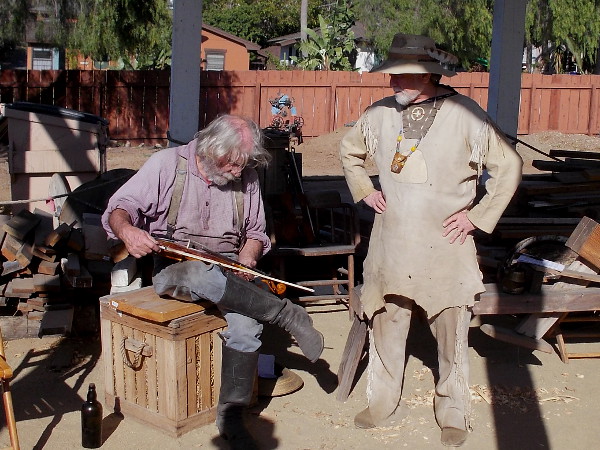
Two rugged mountain men, one with a fiddle, hang out behind Seeley Stable in Old Town San Diego State Historic Park.
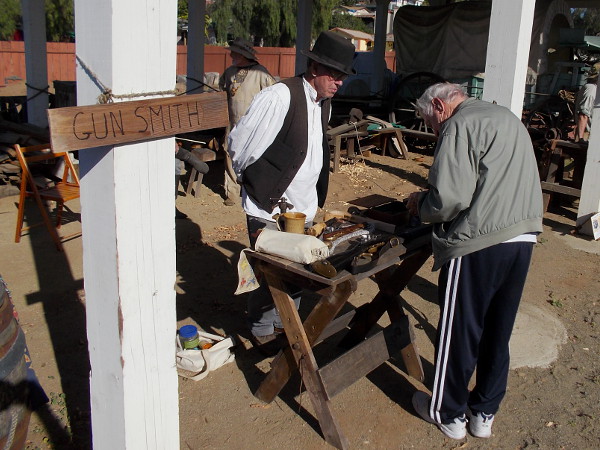
Here are some cool photos of what life was like back in the Old West. I snapped these last weekend behind Seeley Stable at Old Town San Diego State Historic Park. Some mountain men, a gunsmith and blacksmith were showing visitors a few aspects of frontier life long ago.
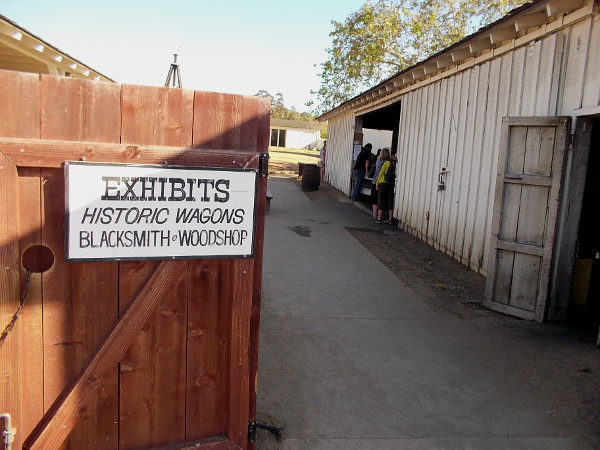
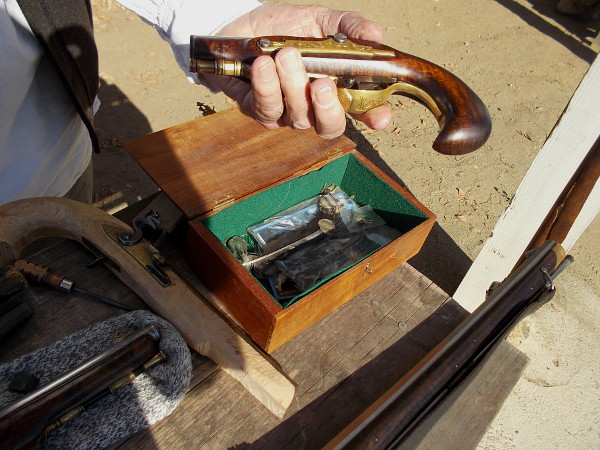
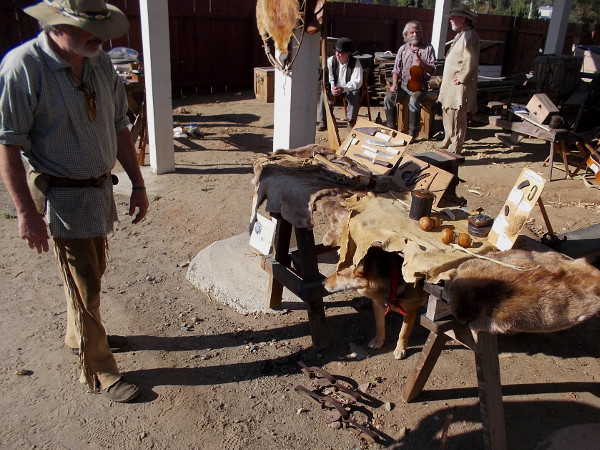
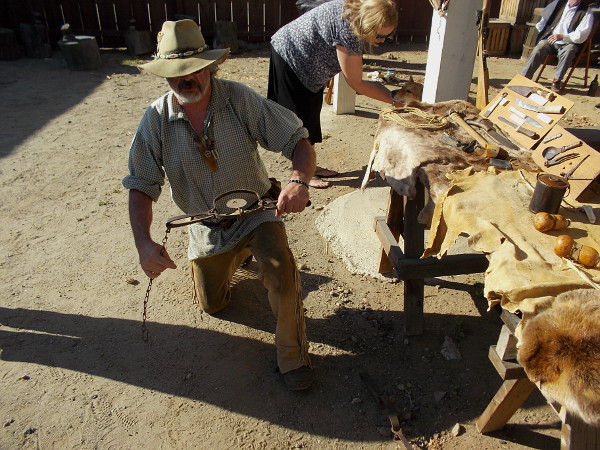
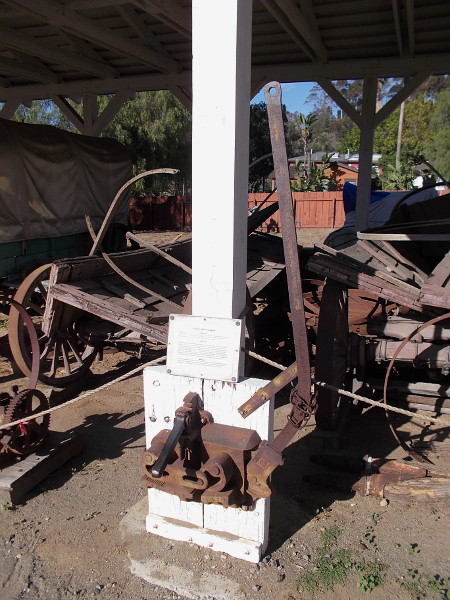
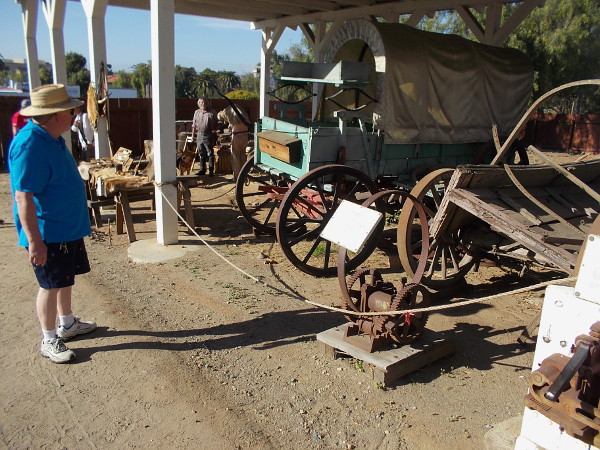
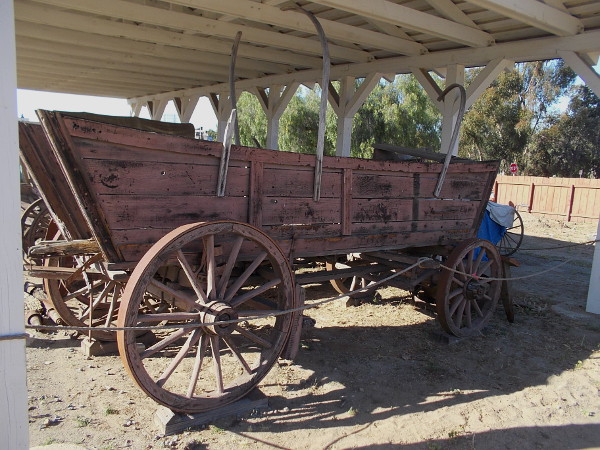
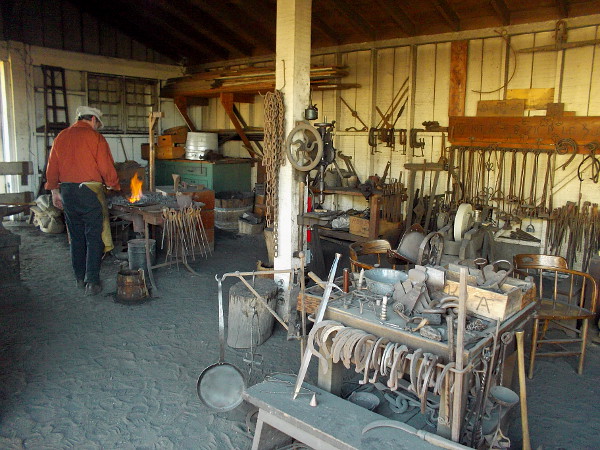
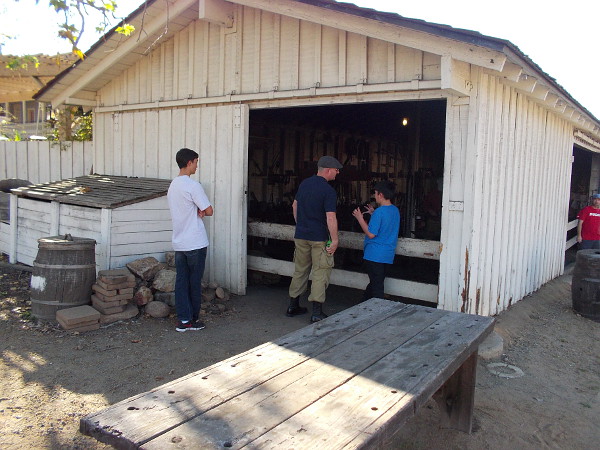
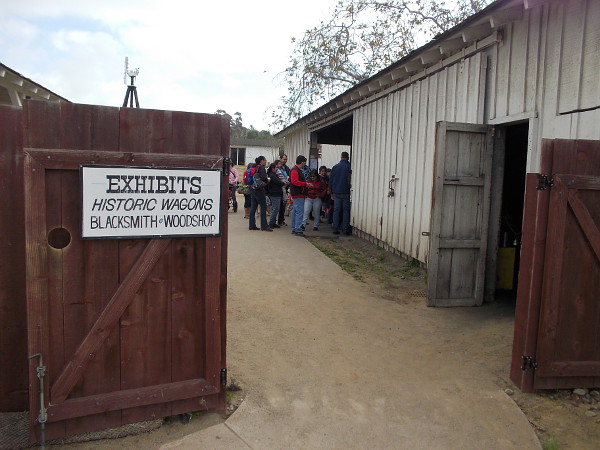
Beyond this gate just off La Plaza de Las Armas is the yard behind Seeley Stable. Here you’ll find outdoor exhibits, including old wagons and a blacksmith and woodshop.A gunsmith who assembles his own old-fashioned rifles and firearms shows a visitor some examples in San Diego’s historic Old Town.This antique flintlock pistol would have been used in past centuries for personal protection at close range.A friendly mountain man had a table full of skins, knives and other objects associated with frontier life in the Old West.A demonstration of how trappers in the Old West would set a beaver trap by a river and anchor it to a strong stick in the mud.This rusty tool with a long handle is a tyre shrinker. It was used for routine maintenance in the olden days–reducing the diameter of the iron tyres found on wooden wagon, cart and buggy wheels.Someone reads a sign near a tyre bender. This device was used to send long, flat bars of iron or steel into a smooth circle that would become an iron tyre.An old covered wagon on display behind Seeley Stable. They were typically sturdy farm wagons with a canvas top. Covered wagons were used on trail drives and cross-country treks.Photo inside the well-equipped blacksmith shop. It’s located behind Seeley Stable in Old Town San Diego State Historic Park.Some park visitors look into the small blacksmith building.A blacksmith removes red hot iron from the fire. He was demonstrating how to make hinges today!
…
I live in downtown San Diego and love to walk! You can enjoy more Cool San Diego Sights via Facebook or Twitter!
Do you like to read short pieces of thought-provoking fiction? Please click Short Stories by Richard.
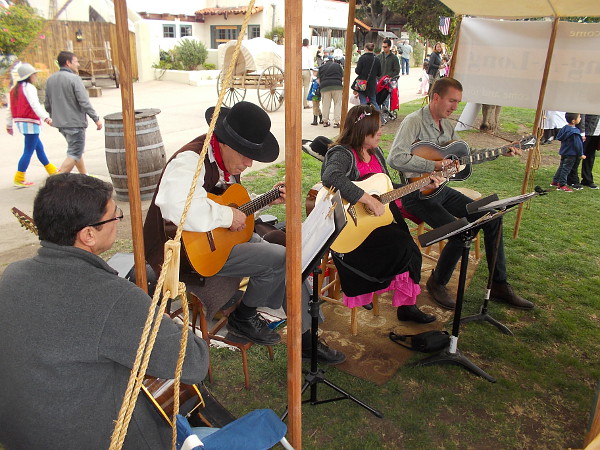
Lots of music was being played during today’s Mormon Battalion Commemoration event in Old Town San Diego.
I love history. So I was thrilled to stumble upon a special event today in Old Town San Diego!
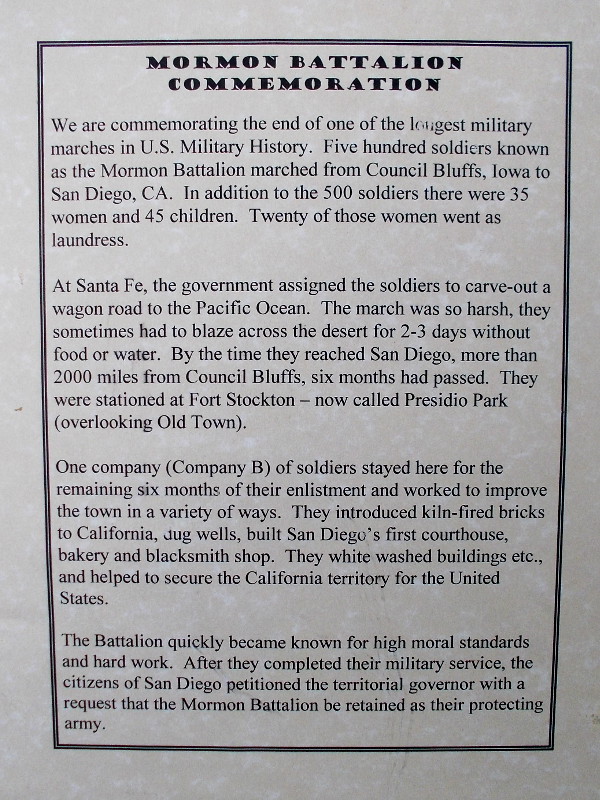
The Mormon Battalion Commemoration is an annual celebration that recalls a part of San Diego’s diverse, often surprising history. The battalion was formed in 1846. Composed of members of the Latter Day Saints and led by regular U.S. Army officers, over 500 men and several dozen women and children set out from Council Bluffs, Iowa and endured an almost 2,000 mile march to San Diego. Their presence in San Diego and several other locations in Southern California helped to support the eventual cession of much of the American Southwest from Mexico to the United States. Many members of the Mormon Battalion went on to play leading roles in the settlement of the West.
Of course, history–like life itself–is a complex thing that can be told and interpreted from many differing viewpoints. Happy reenactments don’t tell the entire story. But among so many costumes and demonstrations, one can start to imagine what life appeared like in San Diego over a century and a half ago.
I ambled around Old Town’s central plaza, spoke to some very friendly folks and took a few photos.
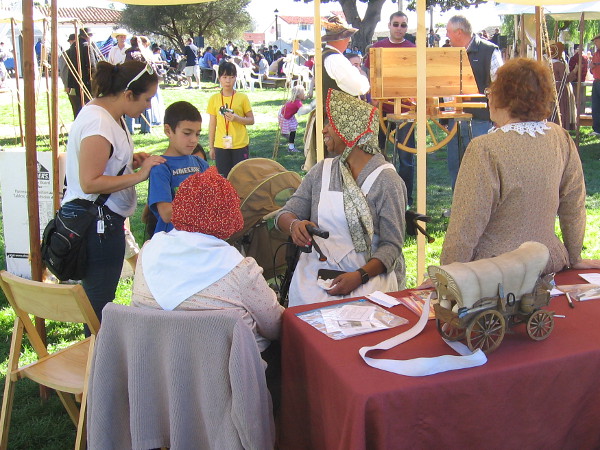
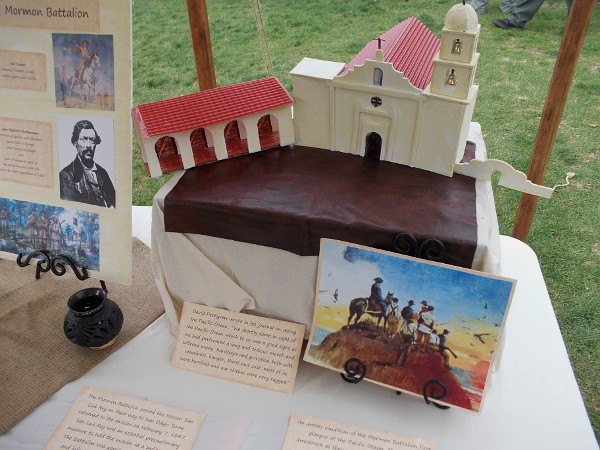
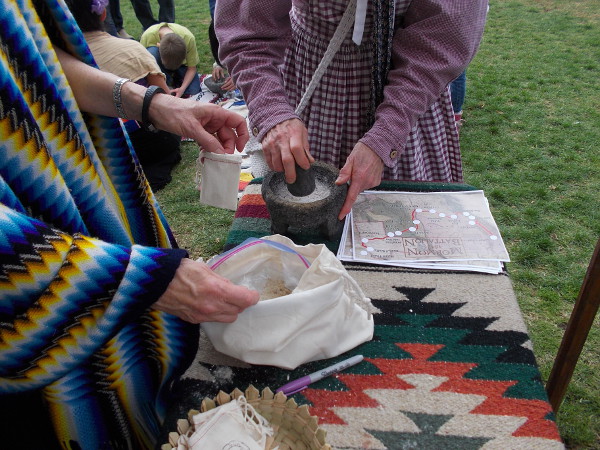
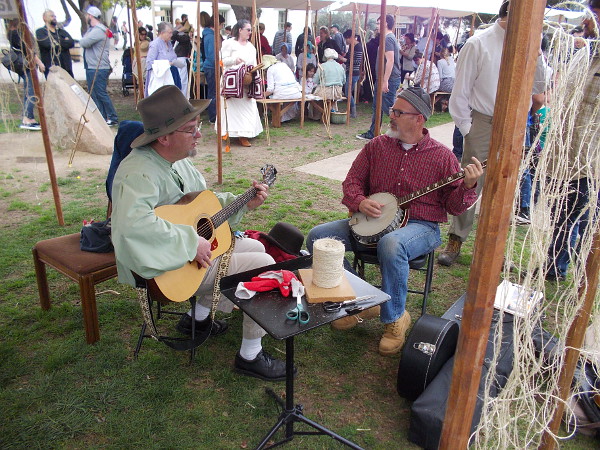
When I saw this rider on horseback as I entered Old Town this afternoon, I knew something special was going on!The public was welcome to this celebration of the Mormon Battalion. It included a parade, which I unfortunately missed.I saw kids in covered wagons, folks on horseback, and just a big whirl of activity all around Old Town today!We are commemorating the end of one of the longest military marches in U.S. Military History. Five hundred soldiers known as the Mormon Battalion marched from Council Bluffs, Iowa to San Diego, CA. In addition…there were 35 women and 45 children.Various exhibits recreated aspects of camp life, and life in San Diego during the mid-19th century.Treats on a stick. Lots of families were present for the very popular history-based event.One tent explained the hardships of women settling the West, and what life was like as a laundress.Lots of folks were about Old Town San Diego State Historic Park in period costume. Many people participating in the event were themselves Mormons.More unique and colorful costumes worn to help reenact a fascinating period of local history.Traditional folklorico dancing on a stage in Old Town. A strong Mexican heritage is a vibrant part of San Diego history.During the festivities, a large crowd enjoyed music, dance, food and all sorts of interesting sights.Contestants in a Dutch Oven Bake Off prepare their tasty concoctions for the judges.Young people were shown how clay bricks were made in the early days of San Diego.I was told this fabric would be used in the making of dolls.These ladies on horseback and in a fancy miniature donkey-driven cart were being photographed right and left. Wearing elegant frilly dresses and holding parasols, they delighted everybody!One booth in Old Town’s central plaza had a quilt-making demonstration, where kids could learn about the craft.Of course, there were many historical exhibits that told the Mormon Battalion’s story and described their contributions to San Diego’s early life and culture.The Liberty Stand explained how Mormons believe in the vision of America’s founding fathers, and their belief in values delineated by the U.S. Constitution.Another demonstration had folks grinding nuts and seeds, a skill adapted from Native American Kumeyaay who lived in this region long before Europeans.A guitar and a banjo create upbeat frontier-style music.This nice lady at an information stand gave the thumbs up for my camera!I wandered behind Seeley Stable because I noticed their famous blacksmith demonstration was open today!This lady was hammering glowing red hot iron while kids watched.A miniature donkey pulls an elegant cart!
…
Join me for more fascinating sights on Facebook and Twitter!
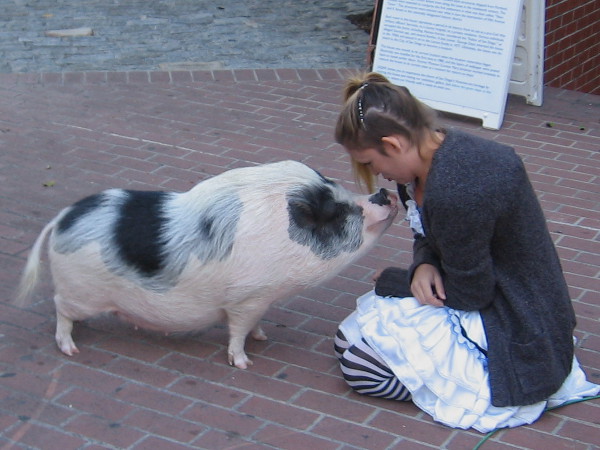
Lady promoting San Diego’s upcoming Fall Back Festival goes nose to nose with a friendly hog.
In two days a large number of characters from the Old West will be roaming the streets of modern San Diego. During the Fall Back Festival, which takes place this Sunday, November 8, between 11 and 4, several blocks of the Gaslamp Quarter will be transformed into a 1880s frontier town!
Visitors to the free event will be able to enjoy all sorts of historical exhibits, not to mention a saloon, a penny candy store, a town jail, hay and pony rides, panning for gold, butter churning, candle dipping, and a Wild West Show! Wow! I went last year and it was a lot of fun!
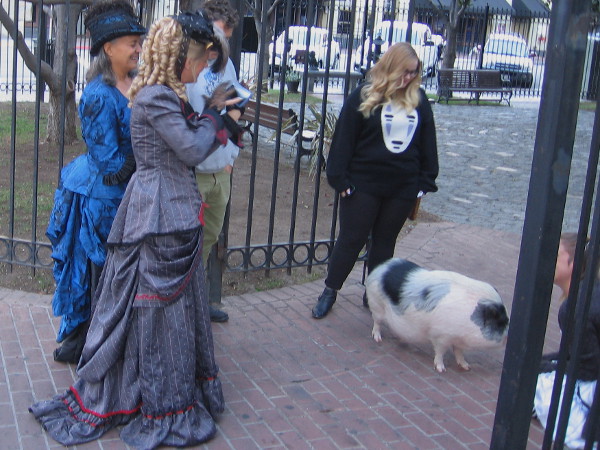
During my walk this morning I happened upon some folks promoting the event for the local NBC television news station. They were hanging out near the entrance to the William Heath Davis House Museum. Sneaky me… I took some pics!
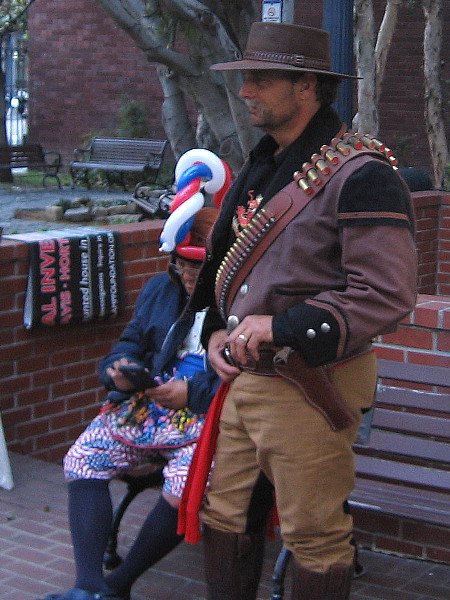
Ladies in frilly dresses linger between television shoots promoting San Diego’s Fall Back Festival. The annual event, which takes place near the William Heath Davis House Museum, will recreate a 1880s frontier town.A tough Western character hangs out with a silly balloon twister. This bench is beside the historic William Heath Davis House in downtown San Diego.Two gentleman from the Old West converse on Fourth Avenue sidewalk in San Diego’s modern Gaslamp Quarter.
…
Follow this blog for more photos of cool stuff! Join me on Facebook or Twitter.
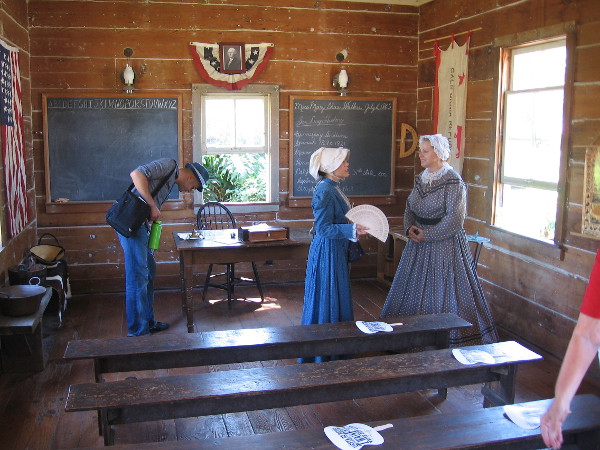
Gentleman in period attire tells visitors at Old Town San Diego State Historic Park about the history of the Mason Street School.
The Mason Street School was San Diego’s very first schoolhouse. It was built in 1865. In 2015, 150 years later, it’s one of the most interesting sights in Old Town San Diego Historic State Park.
The one room schoolhouse museum isn’t always open to the public. So whenever I walk through Old Town, I eagerly wander past to see if the front door is swung wide. If it is, I amble inside and look about, trying to absorb what life was like in the early days of San Diego.
I remember how the Mason Street School used to contain numerous desks. But they’ve been replaced by plain benches, to more accurately portray where a small number of students from Spanish, American and other diverse backgrounds, grade one to eight, sat together and learned how to read, write and do arithmetic.
Back in the early years of San Diego, school was held twelve months a year. Hours were 9 to 4, but many students would skip school to watch bull fights, fiestas and other exciting town doings. Many children were held out of school by their parents to help on a ranch or farm, or to work in a family store.
San Diego in 1865 was a small, isolated, somewhat ramshackle town. Mary Chase Walker, Mason Street School’s first teacher, wrote when she arrived in San Diego by steamship: “I arrived in the bay of San Diego on the morning of July 5, 1865. It was a most desolate looking landscape. The hills were brown and barren; not a tree or green thing was to be seen. Of all the dilapidated, miserable looking places I had ever seen, this was the worst. The buildings were nearly all of adobe, one story in height, with no chimneys. Some of the roofs were covered with tile and some with earth…”
Mary Chase Walker originally traveled from Massachusetts to California, in search of greater opportunity. While in San Francisco, she learned of a teaching opening in San Diego. After less than a year at the Mason Street School, however, she became embroiled in a local controversy. One day she made a kind gesture to a lady who was part African-American, but many early San Diegans had arrived from the Confederate South and voiced their disapproval. A number of students were removed from the small school in anger. To allow the scandal to pass over, Mary quit teaching and married the president of the school board, early San Diego settler and prominent merchant Ephraim Morse.
It’s hard in modern times to imagine the life and culture of San Diego long ago. But one can get a flavor of that fascinating history by stepping inside the old Mason Street School.
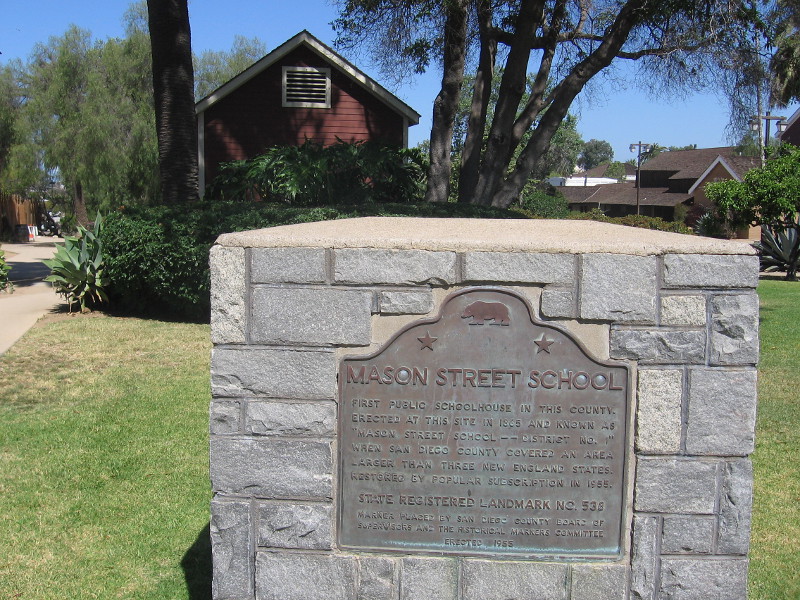
The Mason Street School was built in 1865, to provide education for the children of a sparsely populated San Diego.The first schoolhouse in San Diego County, the Mason Street School stands in historic Old Town.
The nearby plaque reads:
MASON STREET SCHOOL
FIRST PUBLIC SCHOOLHOUSE IN THIS COUNTY.
ERECTED AT THIS SITE IN 1865 AND KNOWN AS
“MASON STREET SCHOOL – – DISTRICT NO. 1”
WHEN SAN DIEGO COUNTY COVERED AN AREA
LARGER THAN THREE NEW ENGLAND STATES.
RESTORED BY POPULAR SUBSCRIPTION IN 1955.
STATE REGISTERED LANDMARK NO. 538
MARKER PLACED BY SAN DIEGO COUNTY BOARD OF
SUPERVISORS AND THE HISTORICAL MARKERS COMMITTEE
ERECTED 1955
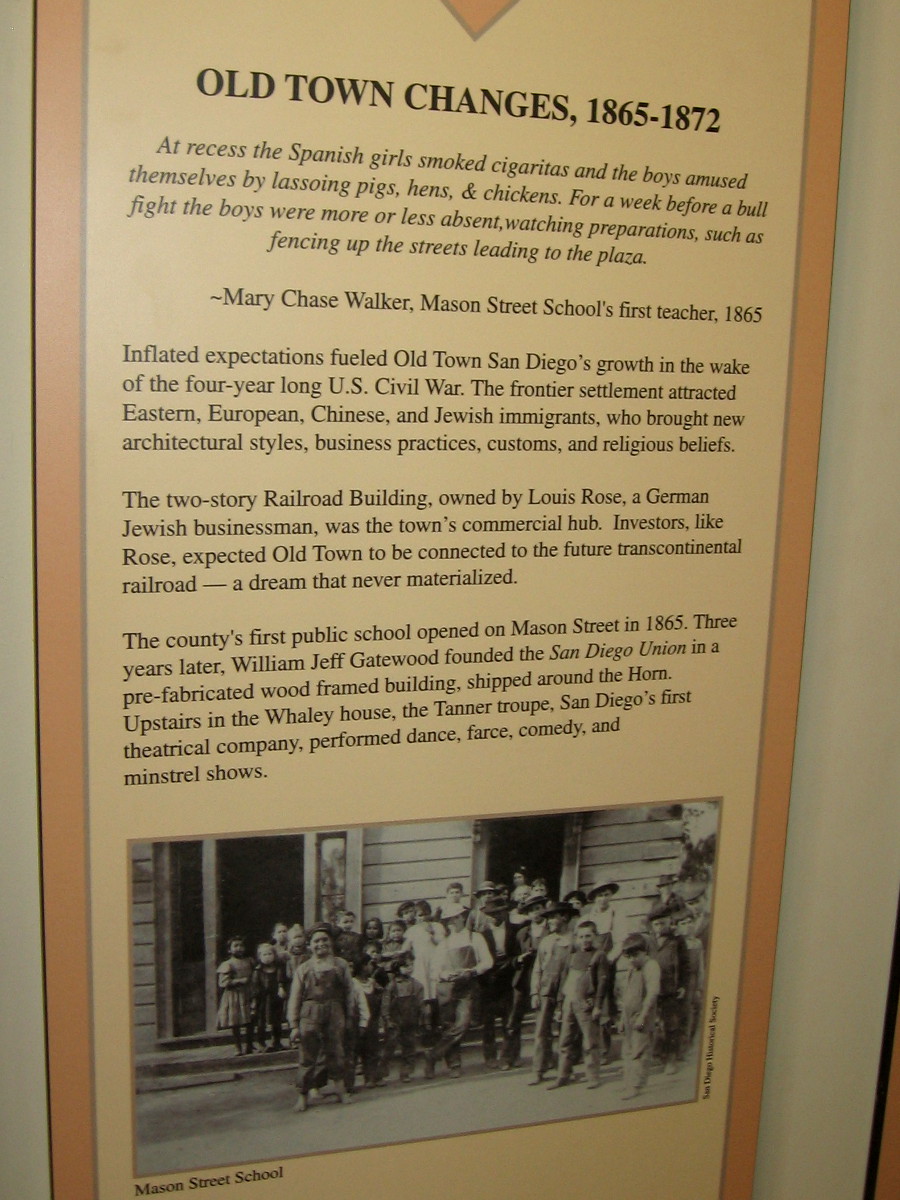
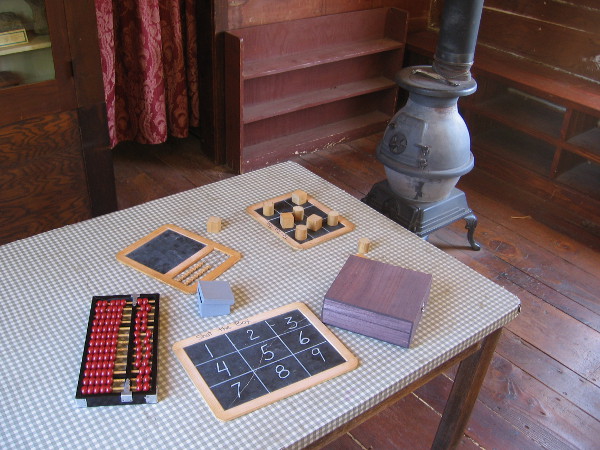
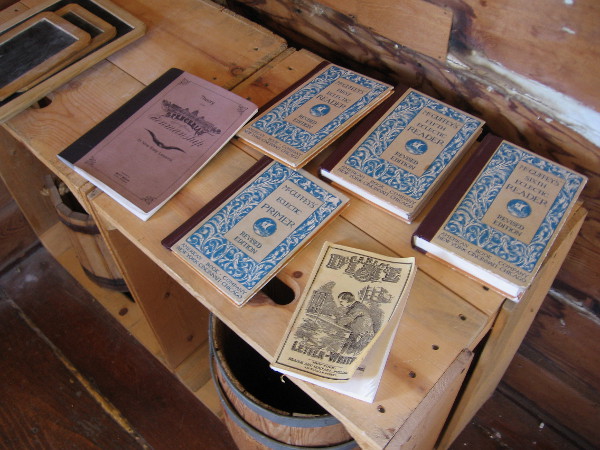
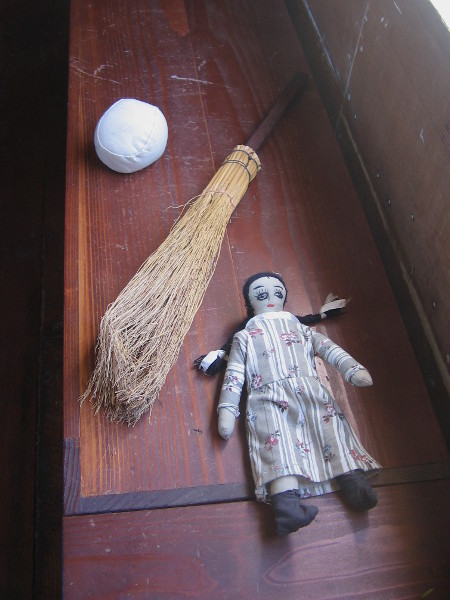
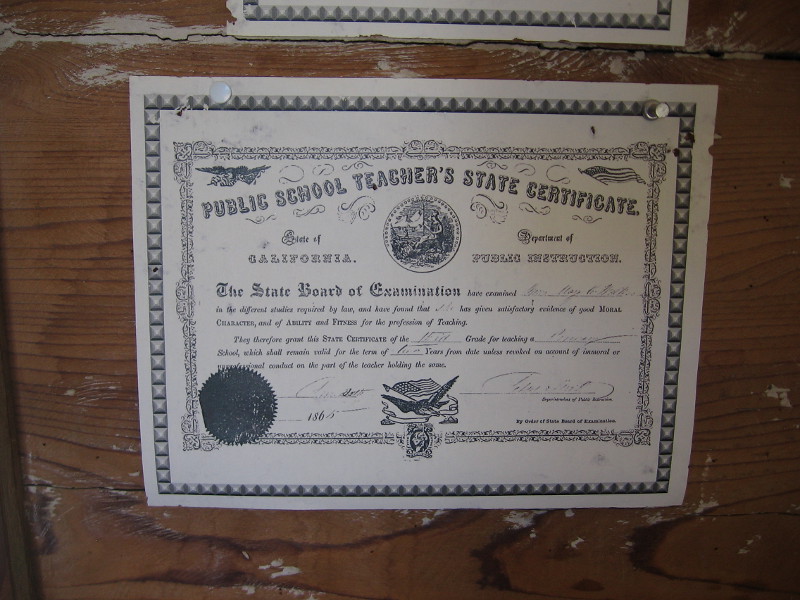
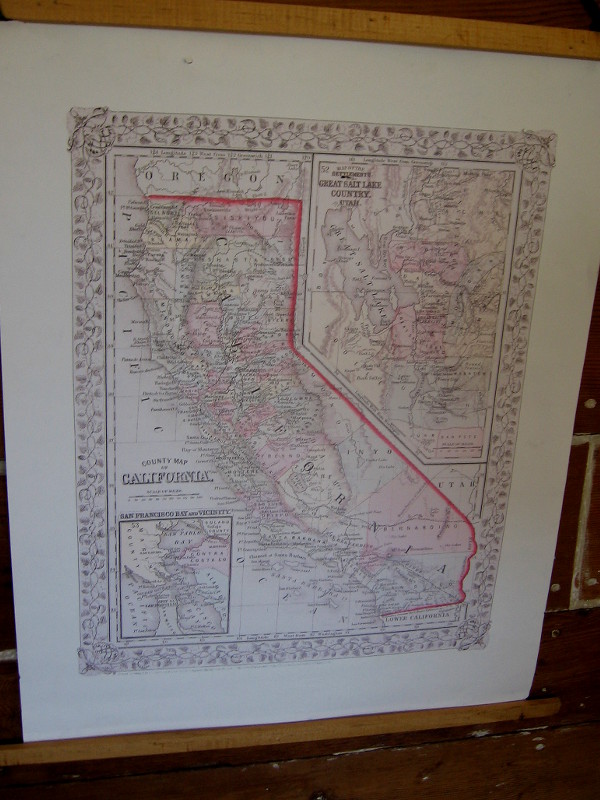
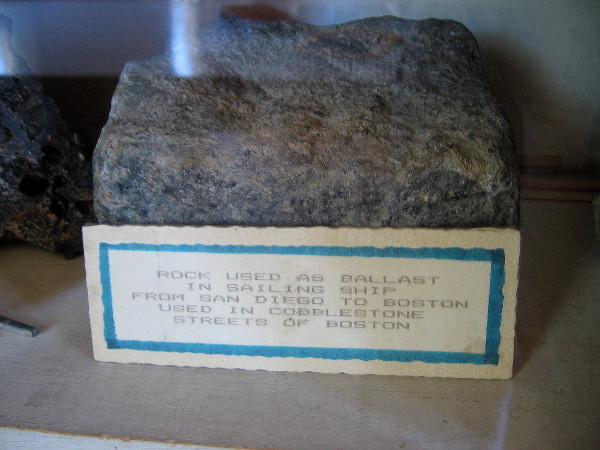
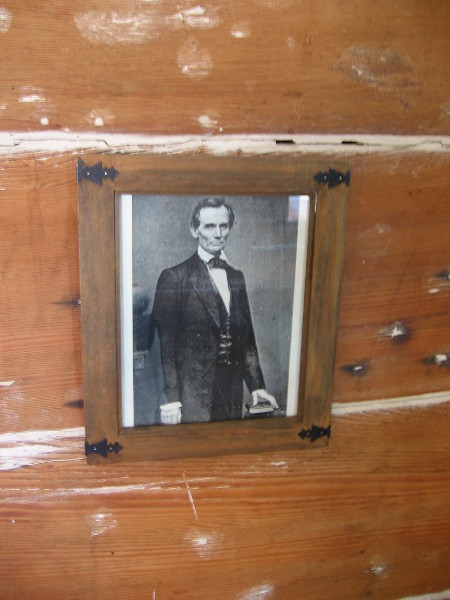
The Mason Street School museum is occasionally open to the public. If you’re lucky and it is, make sure to step inside!Years ago, the museum contained individual student desks. But these benches are a more faithful representation of actual history. Fancy desks were rare in this remote outpost of civilization!Children attending the Mason Street School used slates and chalk, as paper was also scarce and expensive. A wood stove provided heat.Some old Primers and Readers on a wooden table. A water bucket and dipper were used for drink.A ball, broom and doll.Public School Teacher’s State Certificate from the mid 19th century. San Diego’s first teacher was Mary Chase Walker.Old map of California from an era when many immigrants arrived by ship.Rock used as ballast in a ship that sailed from San Diego to Boston. Stones gathered on Ballast Point in Point Loma paved many of Boston’s cobblestone streets, 3000 miles away!Photographic portrait of President Abraham Lincoln on a primitive wall. Mason Street School was San Diego’s first schoolhouse, built in 1865 at the end of the Civil War.Water for washing and drinking was brought in from a well near the schoolhouse.The old well in the schoolhouse yard, beside a clump of prickly pear.The Mason Street School provides visitors to Old Town San Diego State Historic Park a fascinating look at our city’s very unique past.
…
Follow this blog for more San Diego history and photos of cool stuff! Join me on Facebook or Twitter.












































































 Cool San Diego Sights!