A variety of dried food hangs from the ceiling. The kitchen of the Commercial Restaurant museum in Old Town is a place where visitors are transported back in time.
There are dozens of cool things to see in Old Town San Diego State Historic Park. I’ve barely scratched the surface so far with my blog.
For example, there’s a small free museum right next to the central Plaza de Las Armas called Commercial Restaurant. A rather dull name, but a very interesting place jam-packed with history!
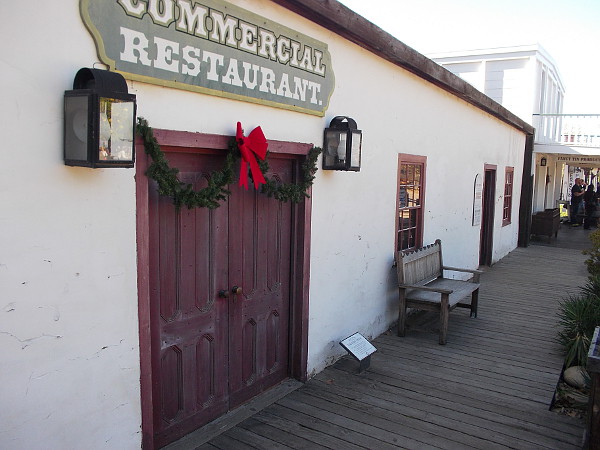
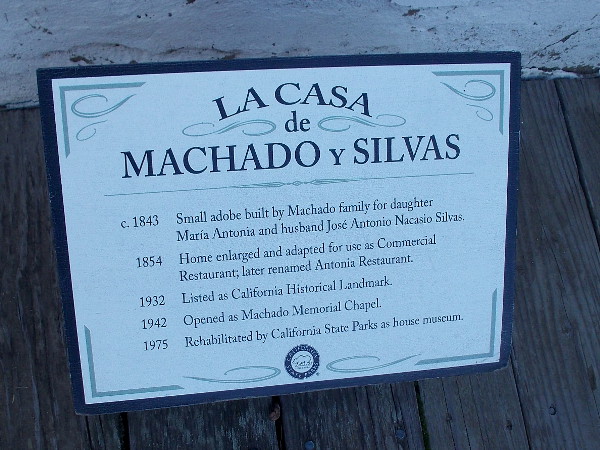
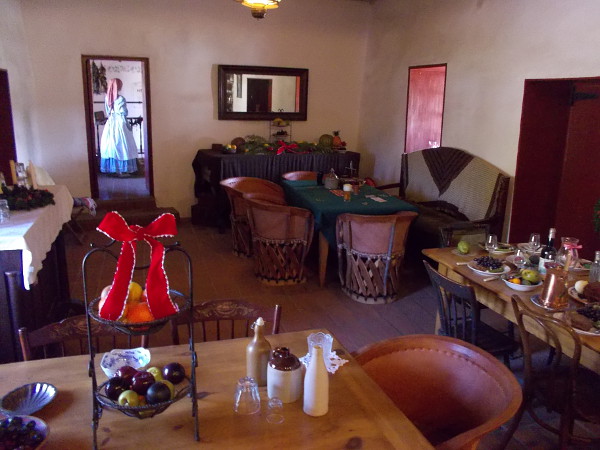
The small recreated restaurant shows what life was like in the mid 1800s, back when San Diego was downright tiny. The Commercial Restaurant is comprised of two rooms: one contains the dining area, the other, the kitchen. Originally called the Casa de Machado y Silvas, the house was built by José Manuel Machado and given as a wedding gift to his daughter María Antonia, and her husband, José Antonio Nicasio Silvas. The simple adobe building was converted into a modest restaurant by its owners in the early 1850s. Today it stands as one of the five historic adobes in Old Town San Diego.
I’ve provided a bit more info in the photo captions!
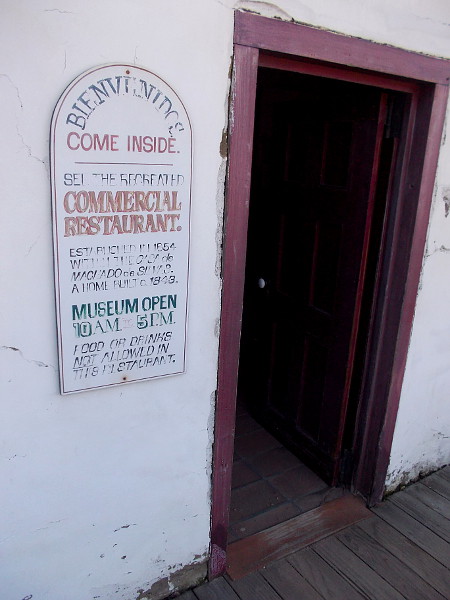
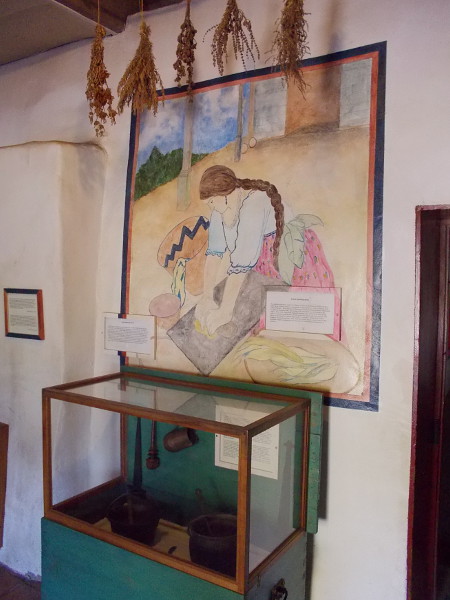
Photo shows the Commercial Restaurant museum, which is free and open to the public in Old Town San Diego State Historic Park.La Casa de Machado y Silvas in Old Town San Diego was turned into Commercial Restaurant, then later renamed Antonia Restaurant.Bienvenidos. Come inside. See the recreated Commercial Restaurant. Established in 1854 within the Casa de Machado y Silvas, a home built in 1843. Museum open 10-5.The dining area of the Commercial Restaurant. This is was what it was like to eat in style in the mid 1800s. Many exhibits along the walls recall the history of old San Diego.Art on one wall depicts the grinding of corn. Other nearby maps and graphics show how food is related to our city’s history.
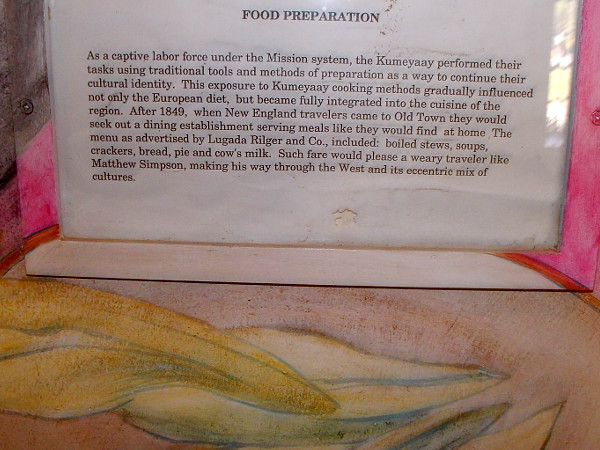
In the mid 1800’s, when New England travelers arrived by ship to Old Town, they sought out a dining establishment serving meals like they would find at home, including stews, soups, crackers, bread and cow’s milk. Over the years, exposure to native Kumeyaay cooking influenced the European diet and became integrated into the region’s cuisine.
As a captive labor force under the Mission system, the Kumeyaay performed their tasks using traditional tools and methods of preparation as a way to continue their cultural identity.Display case contains artifacts used in the daily life of San Diego residents almost two centuries ago.Shelves in the Commercial Restaurant contain old jars, goblets, bowls, bottles, plates and more.It was 1948 when a secret hiding place was discovered in one of the adobe’s window wells. Within the niche were two documents relating to life of an early Old Town San Diego resident.
Historical documents discovered by archeologists hidden in the Casa de Machado y Silvas shed light on the life of San Diego resident Allen B. Light. He was also know as the “Black Steward”. Allen arrived in California during the 1830s, aboard the sailing ship Pilgrim, the same vessel that brought Richard Henry Dana Jr. who would later write Two Years Before the Mast.
One document was “a sailor’s protection”, which proclaimed Light was a “coloured man, a free man, and a citizen of the United States of America”. The second document was his commission from the Mexican Governor of Alta California to investigate illegal sea otter hunting along the coast.
A peek into the recreated kitchen next to the dining room. Cooking was rather primitive in early San Diego.A table full of peppers and vegetables. What life was like many generations ago, in the kitchen of Old Town’s Commercial Restaurant museum.
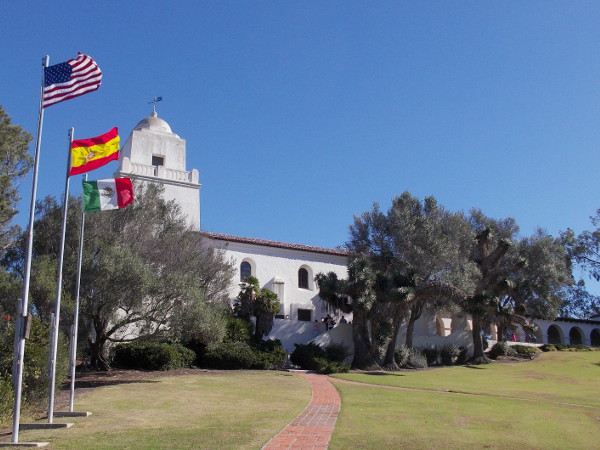
The Junipero Serra Museum of the San Diego History Center was built in 1928 on Presidio Hill, where European civilization was established in Alta California.
I recently visited one of San Diego’s most fascinating museums. The Junipero Serra Museum is located atop Presidio Hill, in a distinctive Mission Revival architectural style building overlooking San Diego Bay and the San Diego River, just east of Old Town. It stands near the site of San Diego’s historic Spanish presidio, built in 1769. The presidio was the birthplace of European civilization in Alta California.
The Serra Museum is operated by the San Diego History Center, which is headquartered today in Balboa Park. Back in 1929, when the building was dedicated, it became home of what was then called the San Diego Historical Society. The important San Diego institution was established by civic leader George W. Marston.
Can you believe it? I’ve lived in San Diego for 15 years . . . and this was the very first time I ventured into the Serra Museum. (I can thank my blog for that!)
What I discovered was an absolutely amazing place that both residents and visitors to San Diego should definitely not miss.
Here’s a sample of what you’ll see…
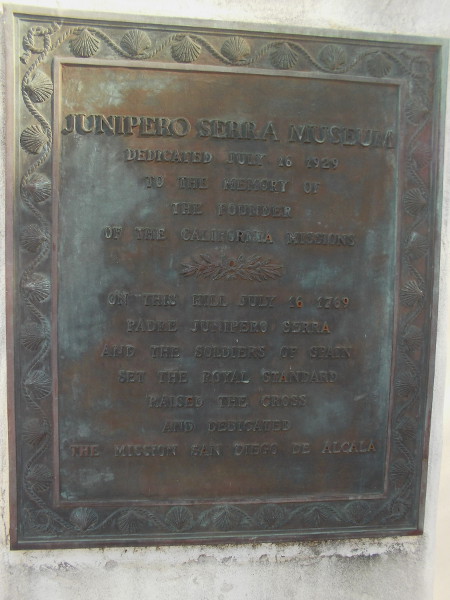
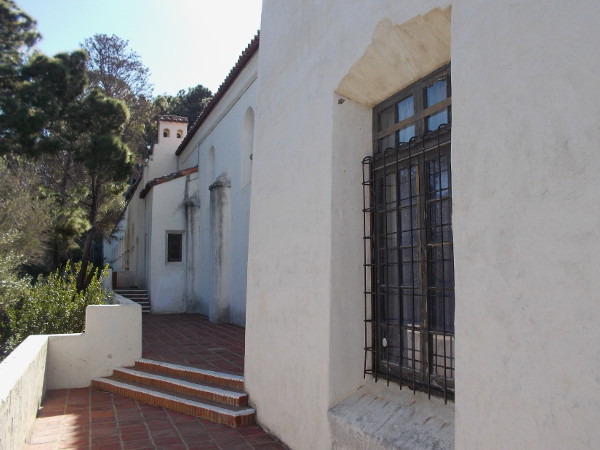
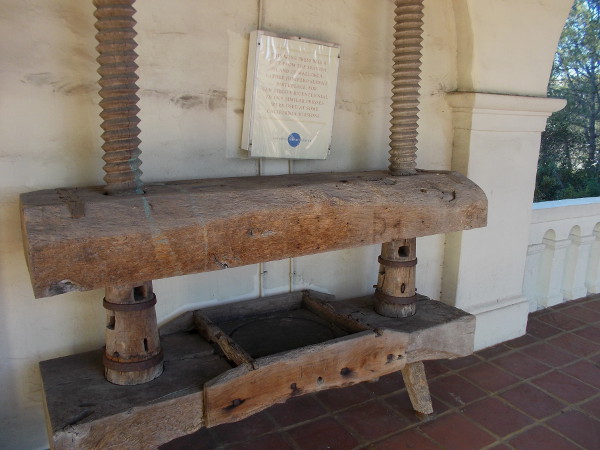
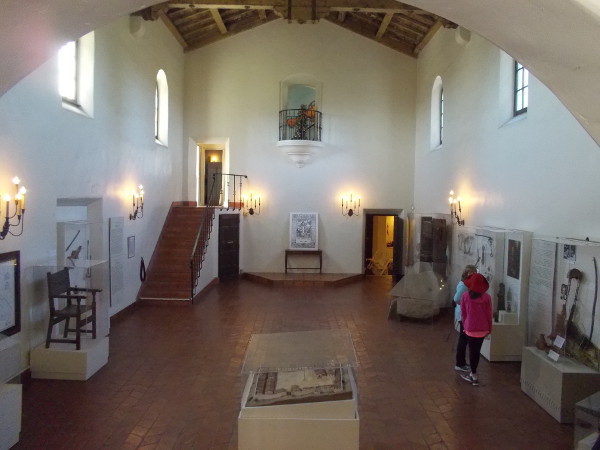
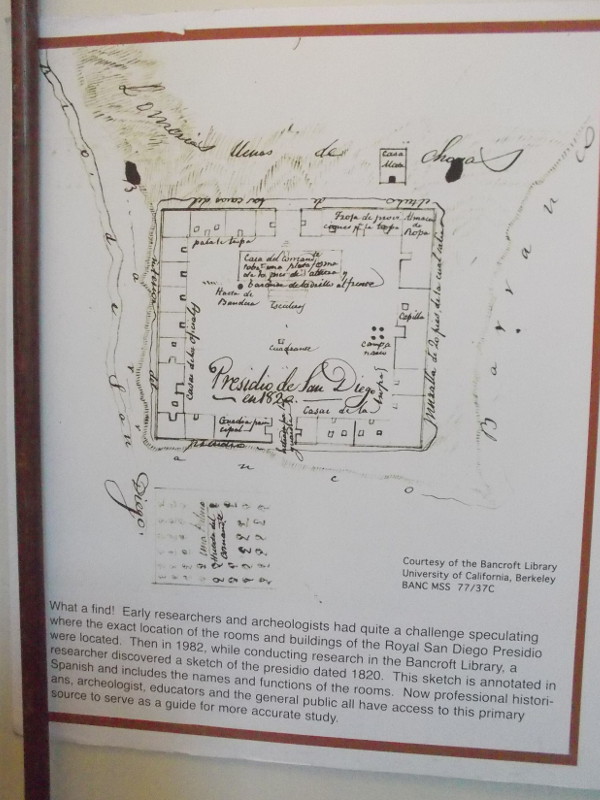
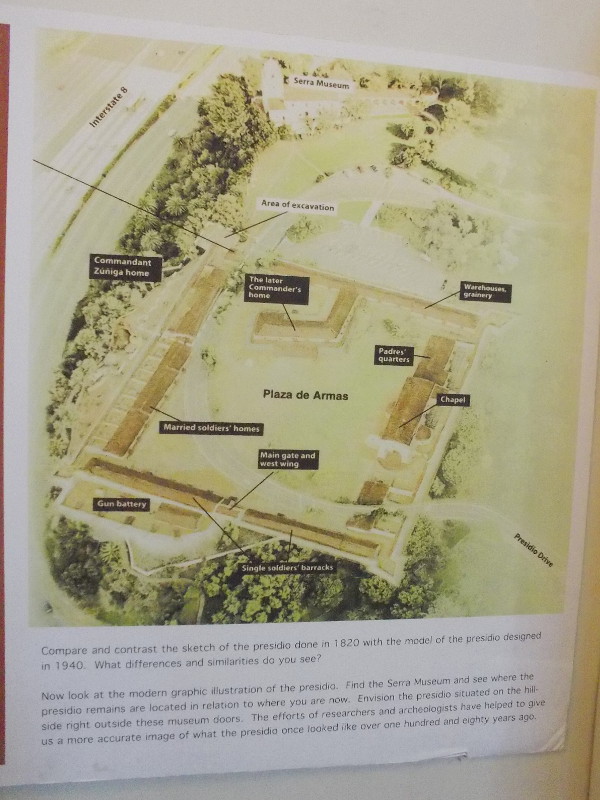
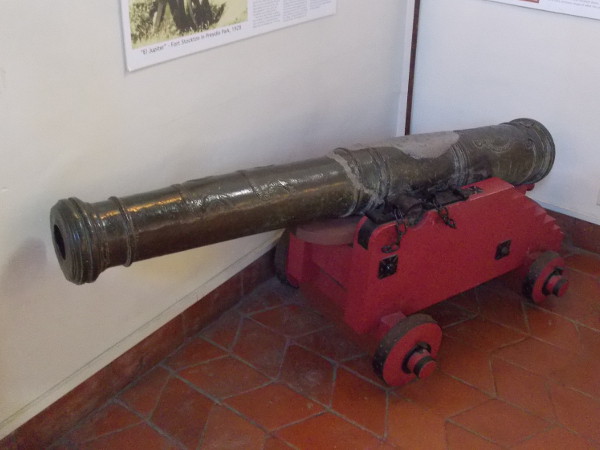
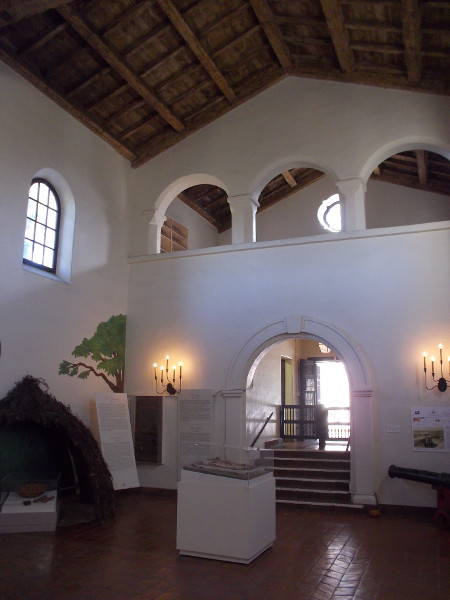
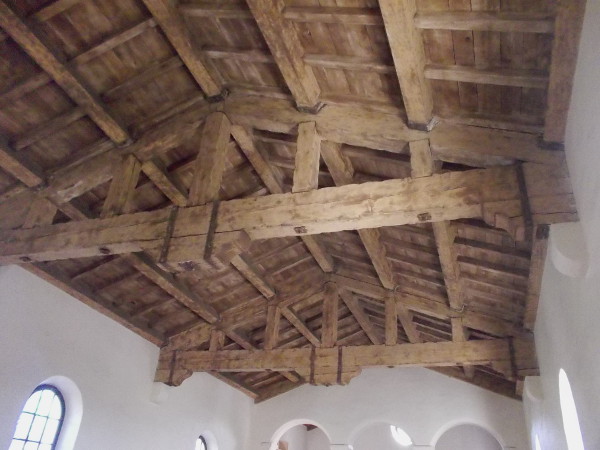
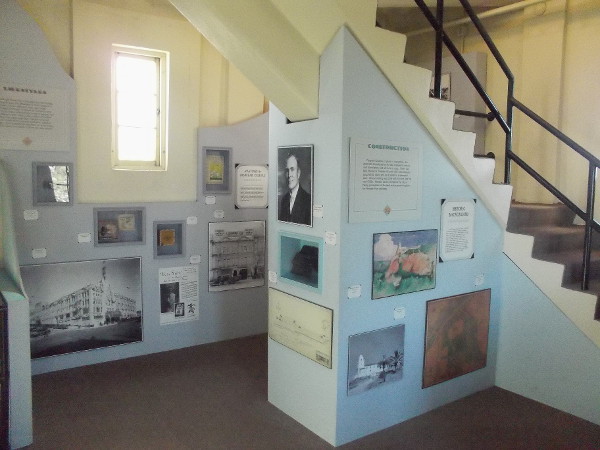
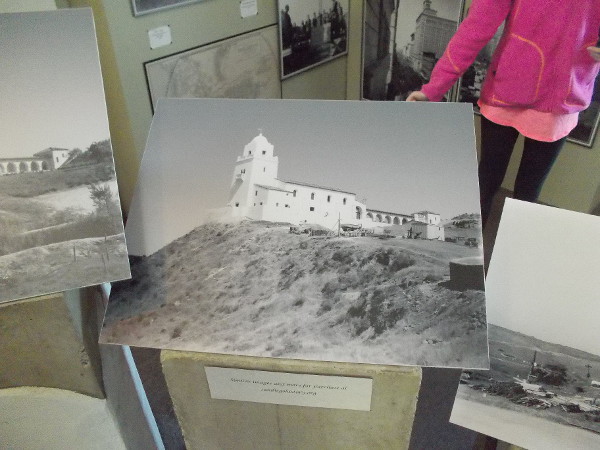
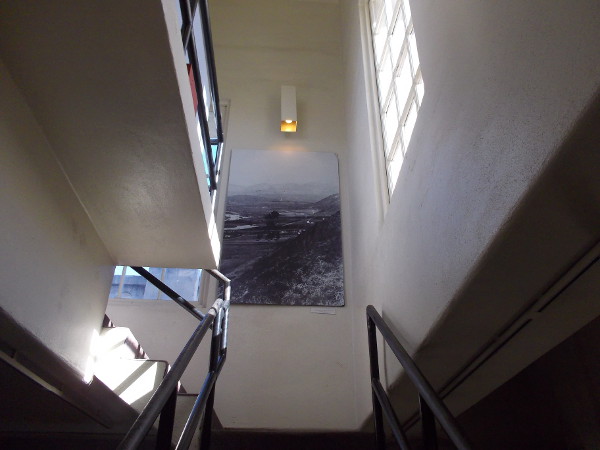
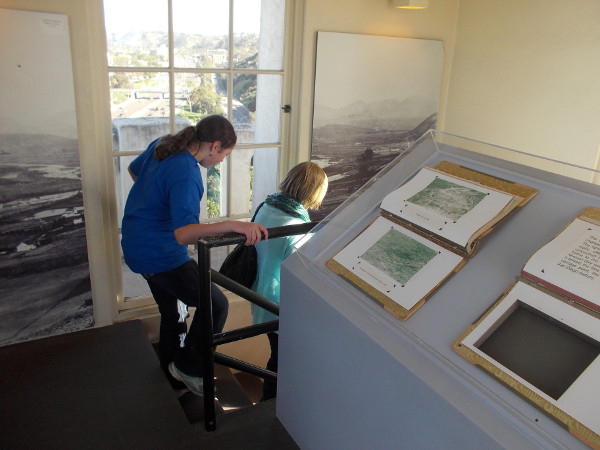
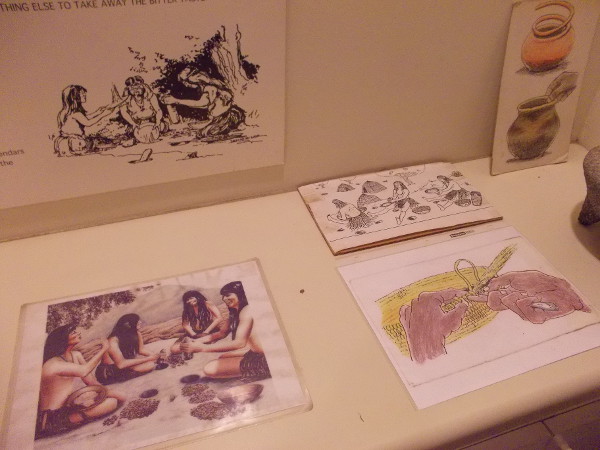
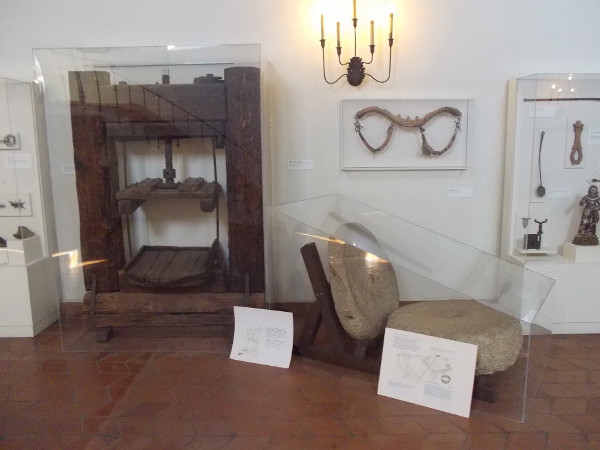
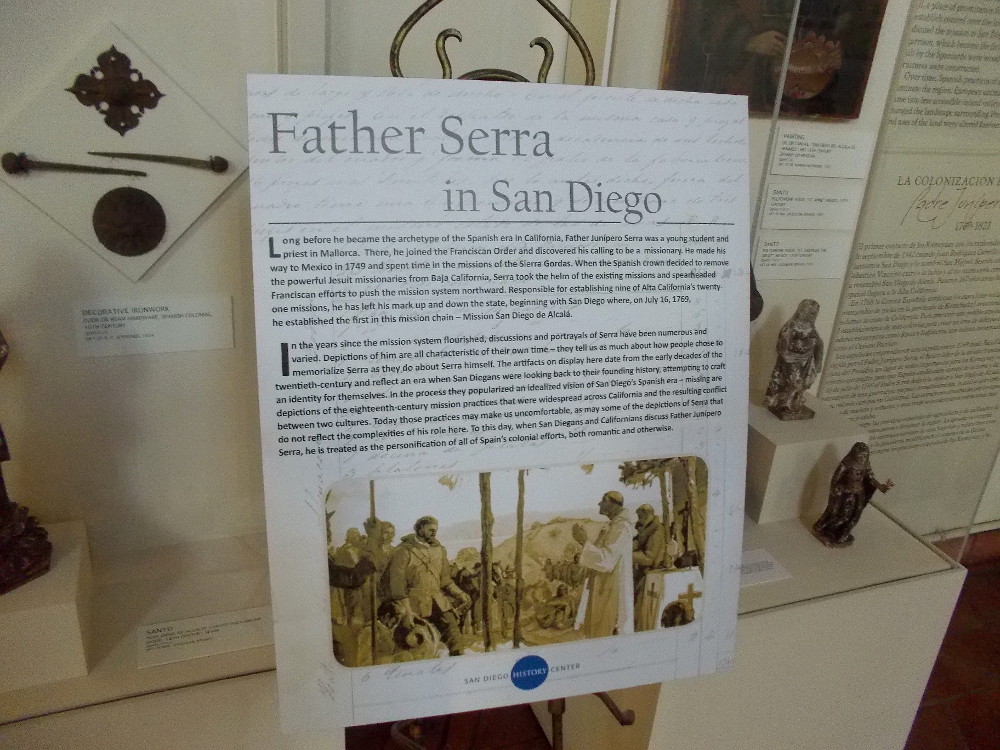
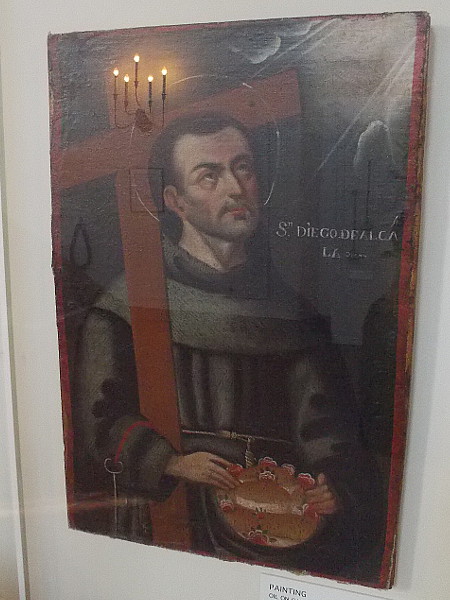
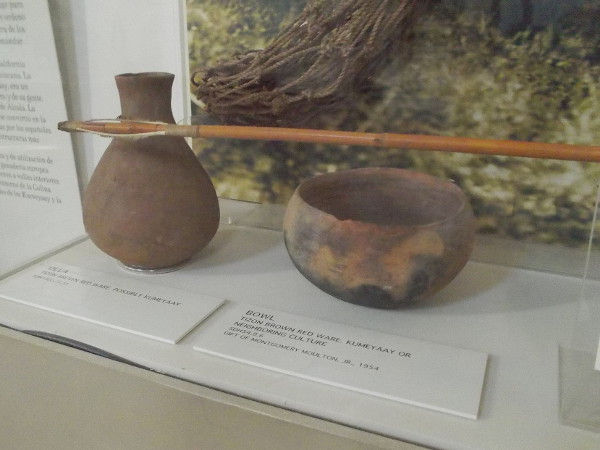
People arrive at the Serra Museum, where San Diego’s early Spanish history comes alive.Junipero Serra Museum dedicated July 16, 1929 to the memory of the founder of the California missions. The original Mission San Diego de Alcalá was established nearby in 1769.A quick look at the rear of the museum.The Serra Museum building was designed by noted architect William Templeton Johnson. It reflects Mission Revival style architecture.Large wine press in front of the museum was a gift from the Spanish island of Mallorca, Father Junipero Serra’s birthplace.Plaque near entrance reads George White Marston 1850-1946. FRIEND OF HIS FELLOW MEN – LOVER OF ALL GROWING THINGS. Piece by piece through many years he acquired these acres…Elegant interior of the Serra Museum contains many exhibits pertaining to San Diego’s early Spanish history.Researchers discovered this sketch of the Royal San Diego Presidio dated 1820. It shows the layout of the old buildings which no longer exist.Modern graphic illustration of the fortified presidio, which was located a short distance below the Serra Museum’s front entrance.Old Spanish cannon named El Jupiter, cast in Manila in the 18th century. El Jupiter stood in Fort Guijarros at Ballast Point, the first defensive fortifications for San Diego Bay.Leather armchair made in Catalan, Spain in the 17th century. This “friar’s chair” was part of the original Serra Museum’s furnishings.Old violin with bow, a branding iron used by rancheros to identify cattle, and iron spurs are among the many historical objects on display.Another look at the beautiful interior of the Serra Museum in San Diego.Large wooden beams in a truly amazing ceiling.Stairs lead up to the Serra Museum’s tower. Painted on the wall is a map showing the sea journey of the Spanish expedition which founded San Diego in 1769.March 9-20, 1769. Desperate to replace drinking water which leaked from the ship’s casks, Captain Vicente Vila commands the tacking Spanish galleon San Carlos near Isla de Cedros.A room halfway up the tower. Numerous displays recall San Diego’s history, most notably around the time when the Serra Museum was dedicated in 1929.Old photo of the crowd attending the Serra Museum’s dedication ceremony on July 16, 1929.A fascinating look at Presidio Hill almost a century ago.A lovely watercolor sketch of the Junipero Serra Museum atop Presidio Hill.On the wall are many historical photos and artifacts, including an image from around 1930 of a cigar factory on 4th Street in San Diego.A reproduction of the west elevation drawing of the Serra Museum by architect William Templeton Johnson.Now we’re heading up to the very top of the tower.Looking west from the Serra Museum tower along Interstate 8. Point Loma is on the left and Mission Bay is to the right.Looking east into Mission Valley.Visitors at the Serra Museum head back down from the tower, after looking at old photos which show a much less-developed surrounding landscape.A small theater in the Serra Museum contains additional exhibits about life in and around the old Presidio.Examples of what life was like for the Native American Kumeyaay, who occupied this region long before it was discovered by the Spanish.Stories of two people who lived on a local Rancho. Click the image to enlarge, if you’d like to read it.Map of the old Presidio’s archaeological site. You can see where the fort was located in relation to the Serra Museum.Explanation of the excavation process utilized by researchers. Some artifacts that were unearthed are on display in the museum.Artistic rendition of a Mexican presidio soldier circa 1830, and a horse bit.An olive press, granite mill stones, and an ox yoke.Small artifacts include this carved polychrome wood San Diego de Alcala Santo from 18th century Spain.Sign describes the life of Franciscan missionary Father Junipero Serra, and his work to establish the California Missions under the flag of Spain. He was recently made a Catholic Saint.Painting. Oil on canvas. San Diego del Alcala de Henares. Mid 18th century, Spanish or Mexican.Olla and bowl. Kumeyaay or neighboring culture.The Junipero Serra Museum in San Diego provides a fascinating look at our culturally diverse city’s very early history.
A group of old-fashioned Christmas carolers in Victorian costumes brings holiday cheer to Old Town San Diego State Historic Park.
Look what I stumbled upon yesterday during an afternoon walk through San Diego’s history-filled Old Town. Folks in Victorian costumes were roaming about, singing Christmas carols!
I learned this group is composed of Old Town San Diego State Historic Park staff and volunteers. They were having a great time spreading Christmas cheer, pausing to sing at the various museums, restaurants and shops around old San Diego’s picturesque central plaza.
I was even given a cool little book filled with Christmas carol lyrics. Thank you guys!
Merry Christmas!
Carolers smile, laugh and enjoy the day in front of a reconstructed building at Old Town San Diego’s central plaza.I was given this Caroling Lyrics Booklet. Songs include Jingle Bells, The First Noel, We Three Kings, The 12 Days of Christmas, Deck the Halls and Silent Night.The colorful group of Old Town roving carolers heads to the Cosmopolitan Hotel, which is decked out with festive wreaths.After entertaining some surprised diners, the group heads through the Cosmopolitan Hotel, much to the delight of one server!Singing traditional Christmas carols around the old fountain in the outdoor courtyard of Casa de Estudillo.Now the Christmas carolers are in the Wells Fargo History Museum next to the original 1867 Concord stagecoach! Several people listened outside the nearby door and applauded.A crowd gathered as Christmas carols were heard outside the Threads of the Past Living History Activity Center. One quilter joined in the public singing!Joyful, uplifting Christmas carols are sung as customers leave Toby’s Candle and Soap Shop.
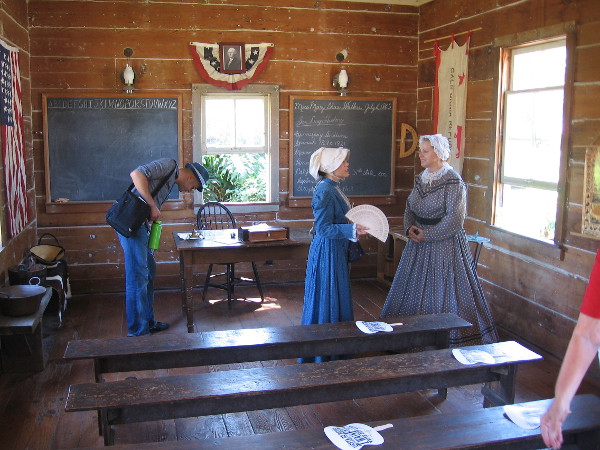
Gentleman in period attire tells visitors at Old Town San Diego State Historic Park about the history of the Mason Street School.
The Mason Street School was San Diego’s very first schoolhouse. It was built in 1865. In 2015, 150 years later, it’s one of the most interesting sights in Old Town San Diego Historic State Park.
The one room schoolhouse museum isn’t always open to the public. So whenever I walk through Old Town, I eagerly wander past to see if the front door is swung wide. If it is, I amble inside and look about, trying to absorb what life was like in the early days of San Diego.
I remember how the Mason Street School used to contain numerous desks. But they’ve been replaced by plain benches, to more accurately portray where a small number of students from Spanish, American and other diverse backgrounds, grade one to eight, sat together and learned how to read, write and do arithmetic.
Back in the early years of San Diego, school was held twelve months a year. Hours were 9 to 4, but many students would skip school to watch bull fights, fiestas and other exciting town doings. Many children were held out of school by their parents to help on a ranch or farm, or to work in a family store.
San Diego in 1865 was a small, isolated, somewhat ramshackle town. Mary Chase Walker, Mason Street School’s first teacher, wrote when she arrived in San Diego by steamship: “I arrived in the bay of San Diego on the morning of July 5, 1865. It was a most desolate looking landscape. The hills were brown and barren; not a tree or green thing was to be seen. Of all the dilapidated, miserable looking places I had ever seen, this was the worst. The buildings were nearly all of adobe, one story in height, with no chimneys. Some of the roofs were covered with tile and some with earth…”
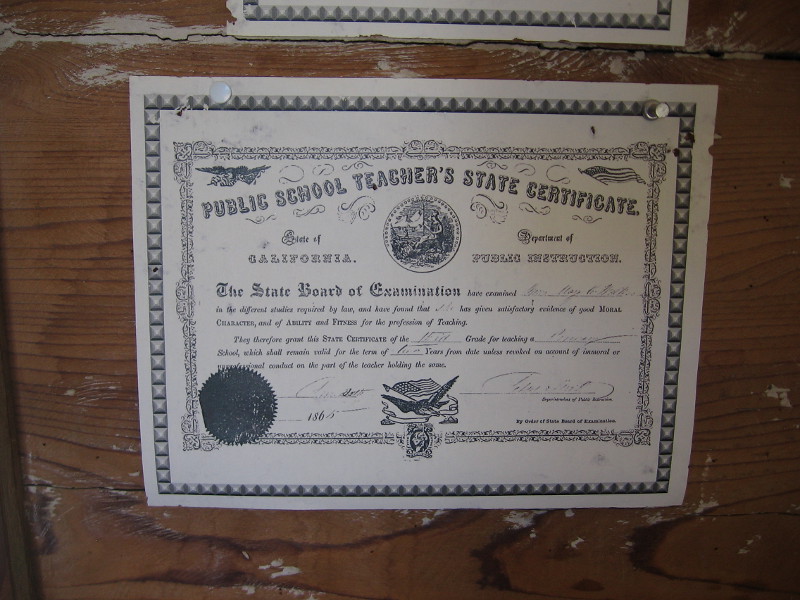
Mary Chase Walker originally traveled from Massachusetts to California, in search of greater opportunity. While in San Francisco, she learned of a teaching opening in San Diego. After less than a year at the Mason Street School, however, she became embroiled in a local controversy. One day she made a kind gesture to a lady who was part African-American, but many early San Diegans had arrived from the Confederate South and voiced their disapproval. A number of students were removed from the small school in anger. To allow the scandal to pass over, Mary quit teaching and married the president of the school board, early San Diego settler and prominent merchant Ephraim Morse.
It’s hard in modern times to imagine the life and culture of San Diego long ago. But one can get a flavor of that fascinating history by stepping inside the old Mason Street School.
The Mason Street School was built in 1865, to provide education for the children of a sparsely populated San Diego.The first schoolhouse in San Diego County, the Mason Street School stands in historic Old Town.
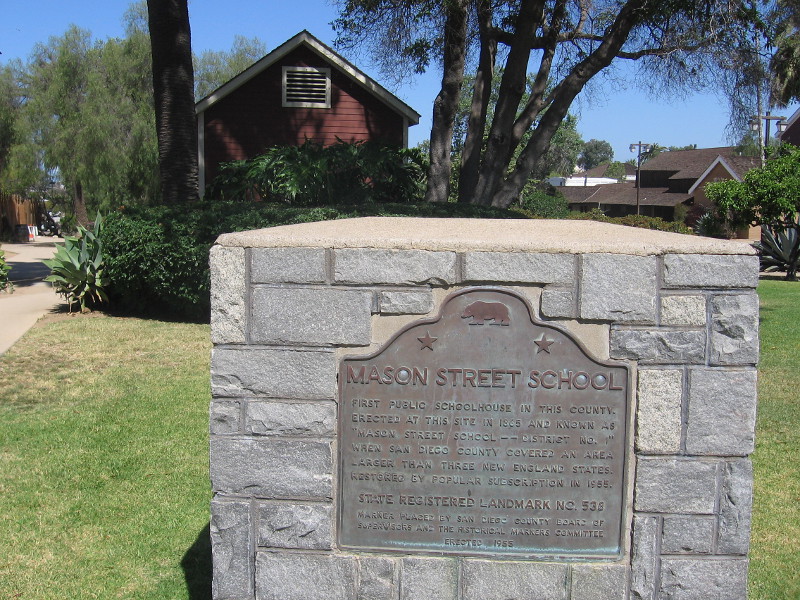
The nearby plaque reads:
MASON STREET SCHOOL
FIRST PUBLIC SCHOOLHOUSE IN THIS COUNTY.
ERECTED AT THIS SITE IN 1865 AND KNOWN AS
“MASON STREET SCHOOL – – DISTRICT NO. 1”
WHEN SAN DIEGO COUNTY COVERED AN AREA
LARGER THAN THREE NEW ENGLAND STATES.
RESTORED BY POPULAR SUBSCRIPTION IN 1955.
STATE REGISTERED LANDMARK NO. 538
MARKER PLACED BY SAN DIEGO COUNTY BOARD OF
SUPERVISORS AND THE HISTORICAL MARKERS COMMITTEE
ERECTED 1955
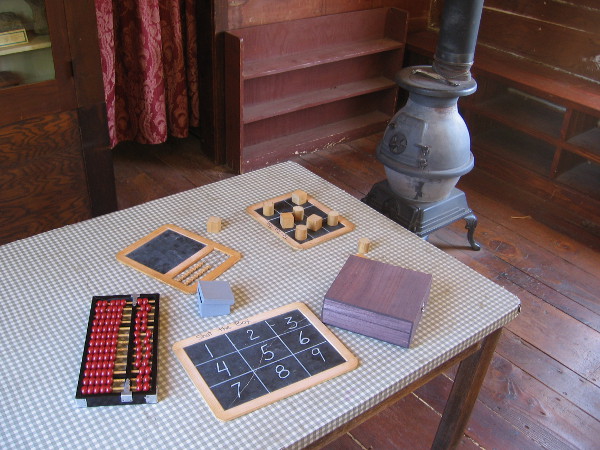
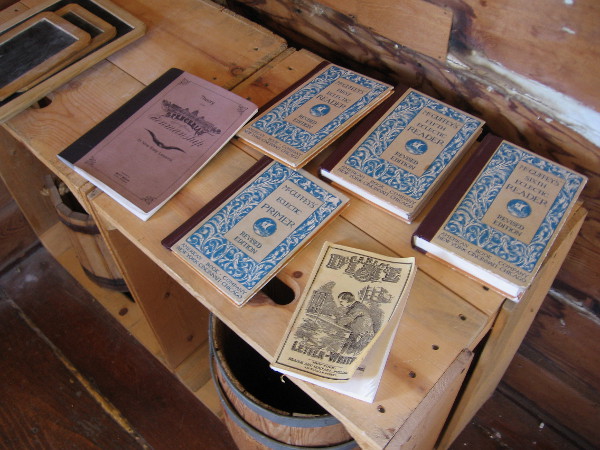
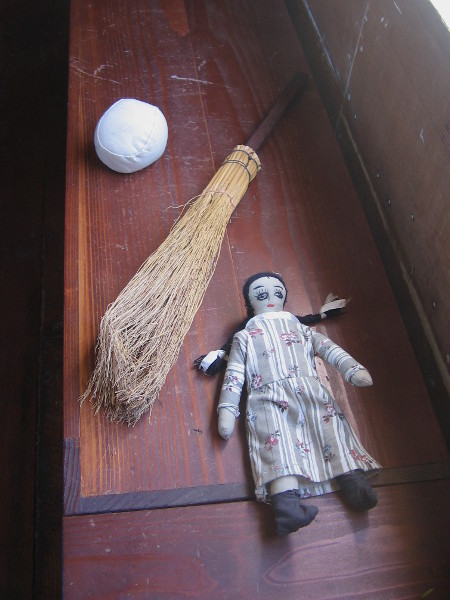
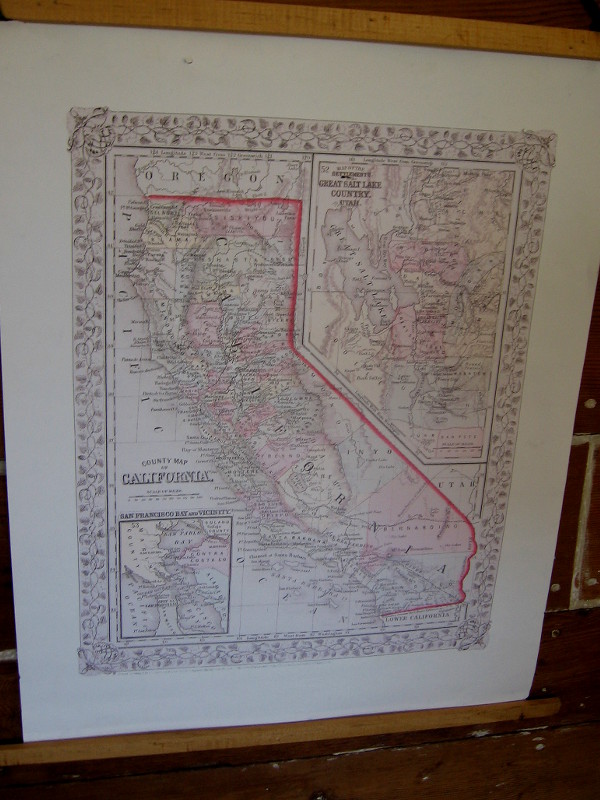
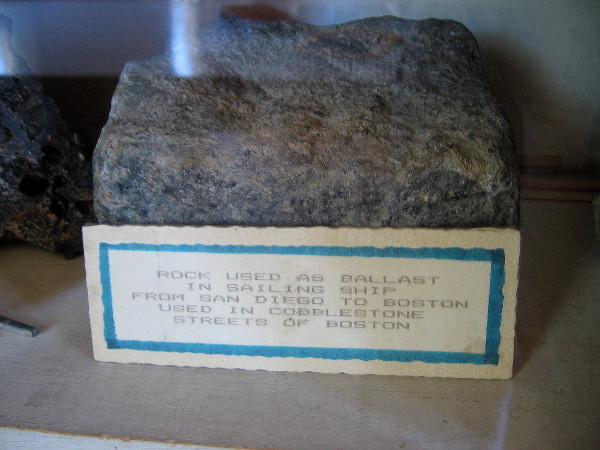
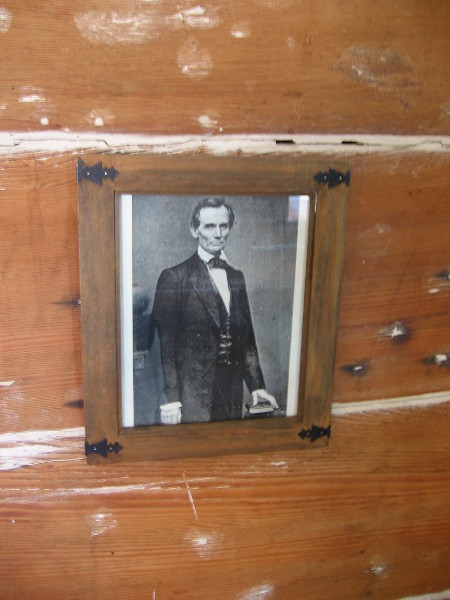
The Mason Street School museum is occasionally open to the public. If you’re lucky and it is, make sure to step inside!Years ago, the museum contained individual student desks. But these benches are a more faithful representation of actual history. Fancy desks were rare in this remote outpost of civilization!Children attending the Mason Street School used slates and chalk, as paper was also scarce and expensive. A wood stove provided heat.Some old Primers and Readers on a wooden table. A water bucket and dipper were used for drink.A ball, broom and doll.Public School Teacher’s State Certificate from the mid 19th century. San Diego’s first teacher was Mary Chase Walker.Old map of California from an era when many immigrants arrived by ship.Rock used as ballast in a ship that sailed from San Diego to Boston. Stones gathered on Ballast Point in Point Loma paved many of Boston’s cobblestone streets, 3000 miles away!Photographic portrait of President Abraham Lincoln on a primitive wall. Mason Street School was San Diego’s first schoolhouse, built in 1865 at the end of the Civil War.Water for washing and drinking was brought in from a well near the schoolhouse.The old well in the schoolhouse yard, beside a clump of prickly pear.The Mason Street School provides visitors to Old Town San Diego State Historic Park a fascinating look at our city’s very unique past.
…
Follow this blog for more San Diego history and photos of cool stuff! Join me on Facebook or Twitter.
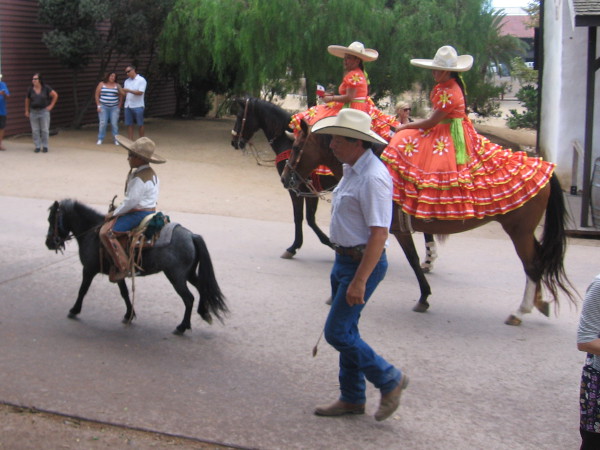
A small parade during 2015 Fiestas Patrias (September 16 is Mexico’s Independence Day) in Old Town San Diego State Historic Park.
Here are some photos of Fiestas Patrias in Old Town San Diego State Historic Park. Mexico began their war for independence from Spain on September 16, 1810, and the occasion was celebrated today with music, food, games, an equestrian demonstration and traditional Mexican dance. I caught a bit of it!
San Diego’s fascinating history includes a Mexican period, which followed the early years of settlement and rule by Spain. Mexico and San Diego share a common border and a great deal of history. A blending of culture and friendly people adds to the richness of our city.
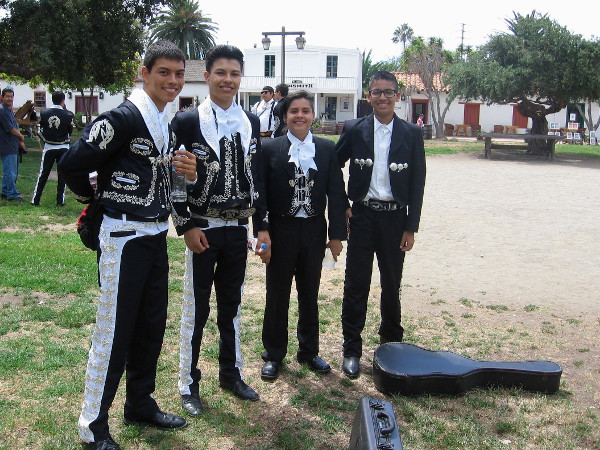
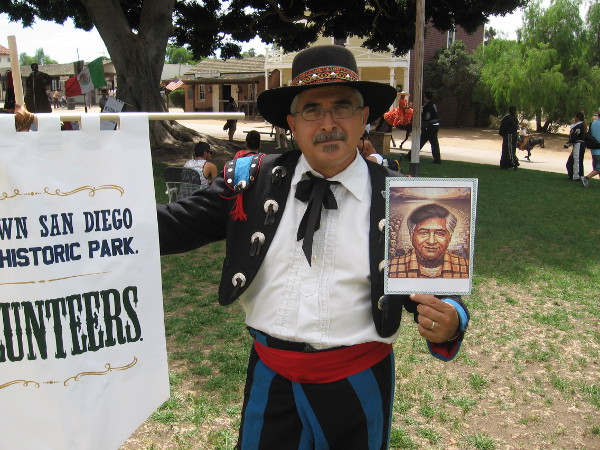
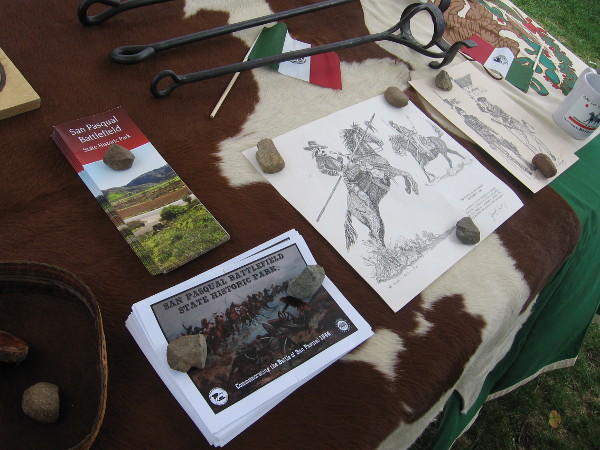
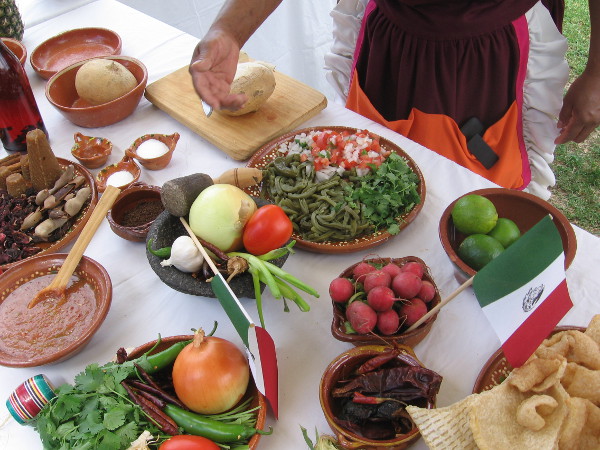
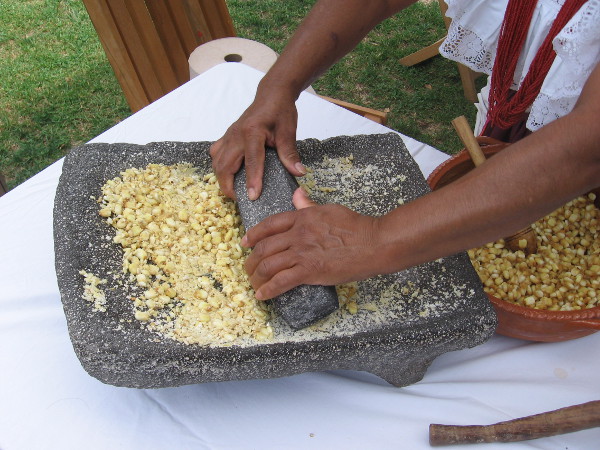
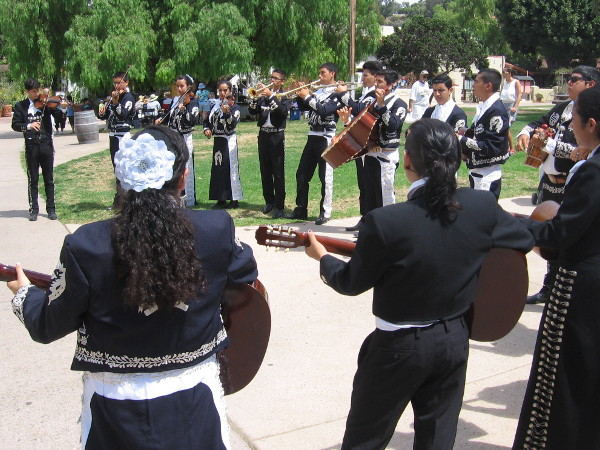
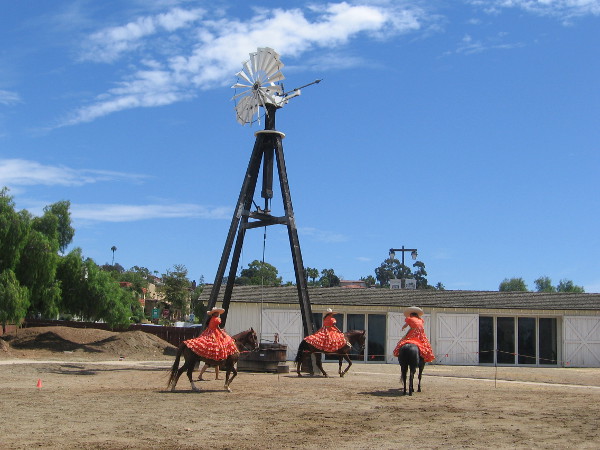
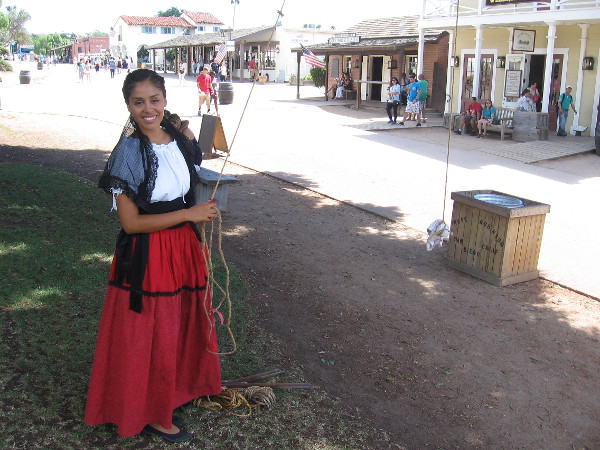
Fiestas Patrias in Old Town San Diego included many cool events flavored with Mexican culture and history.Young musicians from Chula Vista High School Mariachi band smile for the camera!Many event participants carried photos and images of important Mexicans in history. This gentleman holds a tribute to activist Cesar Chavez.Tables contained interesting info and exhibits. This one featured sketches from the Battle of San Pasqual and some cattle brands from historic Mission San Diego de Alcalá.Here are many colorful, often spicy ingredients used in Mexican cuisine. Yum!A super nice lady demonstrates grinding corn with a stone metate, a common practice long ago.Someone paints during the lively festival. Historic Old Town is a picturesque place that inspires artists, at any time!The award-winning Chula Vista High School Mariachi performers warm up before going on stage.Everyone is ready for some traditional Mexican music!These student musicians were incredibly talented. Voices and instruments conveyed stirring emotion. They all received big applause!Beautifully costumed riders of the female equestrian group Escaramuza Las Golondrinas warm up behind Seeley Stable Museum in Old Town San Diego.One rider prepares her horse for a sidesaddle riding demonstration in the afternoon.This rider was nice enough to smile! It’s a perfect, sunny day for a fiesta!A smiling California State Park employee throws a rope over a tree branch, getting ready to hang a piñata. She’s got an awesome job!Fiestas Patrias in Old Town celebrates a rich Mexican heritage and the unique, diverse history of San Diego.
…
Follow this blog for more photos of cool stuff! Join me on Facebook or Twitter.
Mark Twain uses cane to point out his classic novel The Adventures of Tom Sawyer. Many 19th century authors and fictional characters were seen walking around during TwainFest.
TwainFest last summer was awesome. So today I had to go again!
A uniquely wonderful cultural event, TwainFest celebrates Mark Twain and other famous 19th century authors. Held every year in Old Town San Diego State Historic Park, the event includes games and activities for the entire family, including Costume and Liar’s contests (the latter as a tribute to Twain’s tall tales), vintage dancing, and all sorts of historical performances and reenactments. TwainFest is presented by Fiesta de Reyes and created by the literature-loving folks at Write Out Loud.
I walked about randomly for about an hour just aiming my camera at familiar old classics that I love come to life. I saw lots of San Diegans in period costume, many portraying well known characters from literature.
I hope you enjoy these photos…
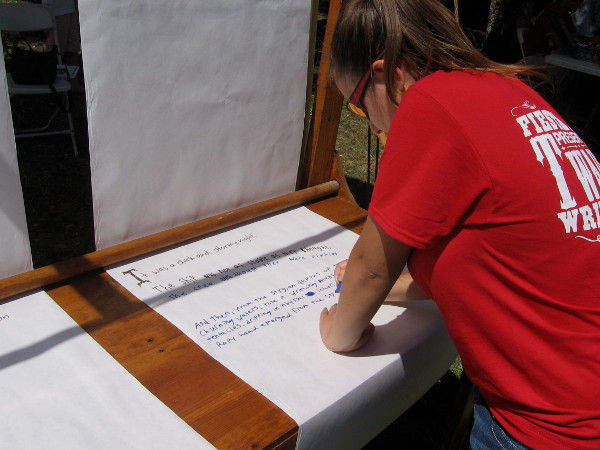
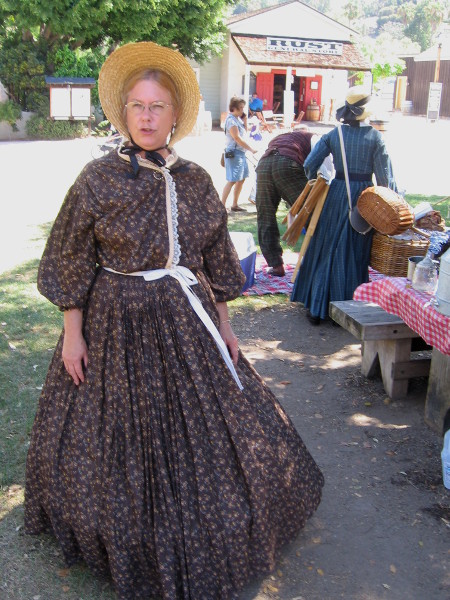
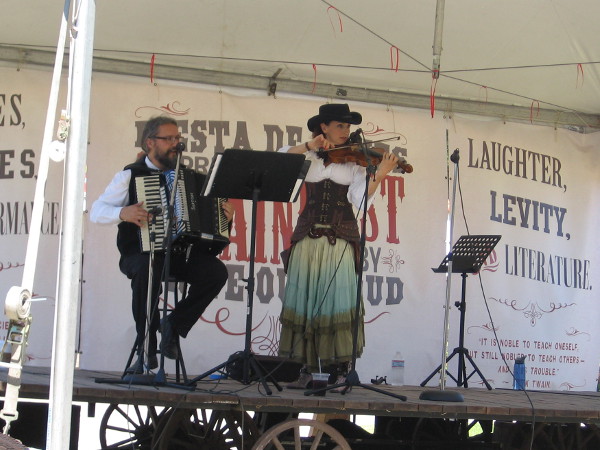
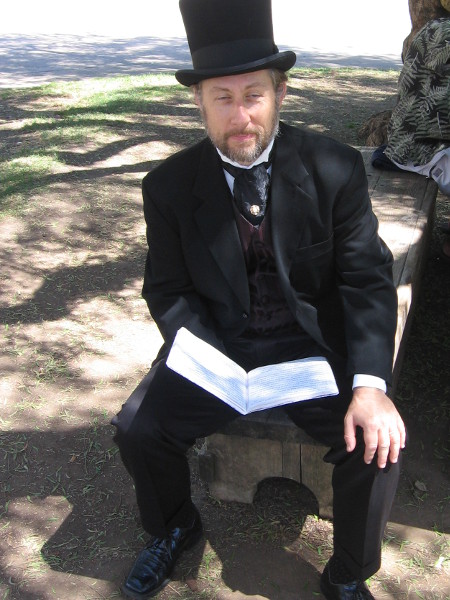
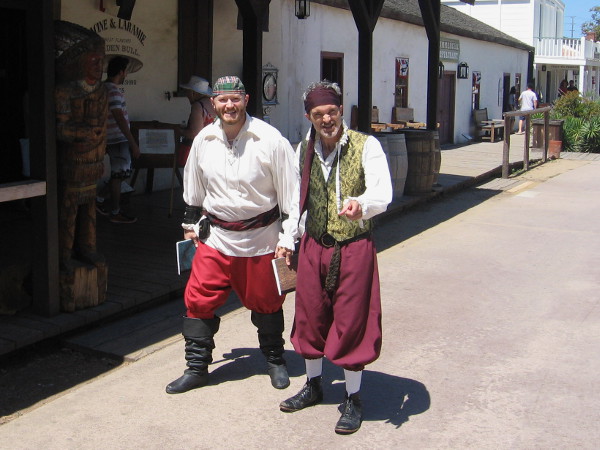
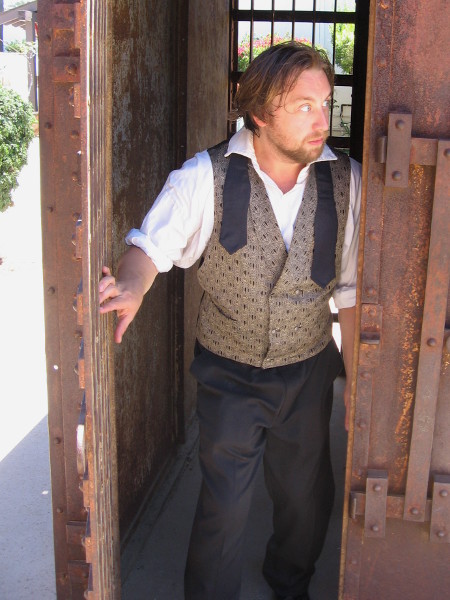
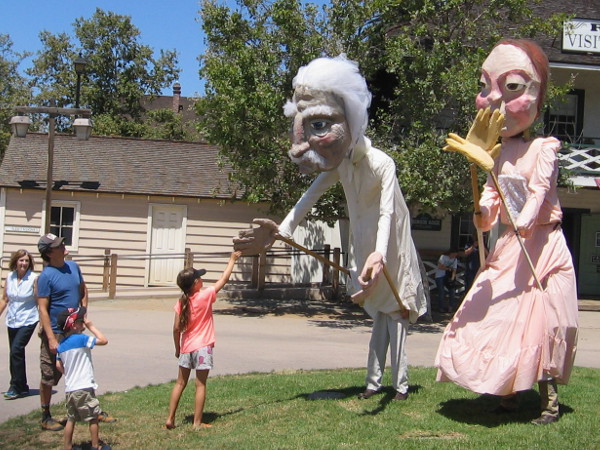
A random writer helps to pen one of three endless stories at the family friendly event. …And, lo, from out of the mist stepped a phantom: it was the ghost of Mark Twain!Mr. Samuel Clemens, American author of many timeless books and stories, relaxes under a tree in Old Town San Diego State Historic Park during 2015 TwainFest.Mark Twain’s beloved character Aunt Polly is looking around for Tom Sawyer and Huck, who are probably running about engaged in mischief once again.Some lively Irish music dating from the Old West is played during TwainFest on the Fiesta de Reyes stage. Laughter. Levity. Literature.A storyteller making the rounds at TwainFest challenges the audience between musical performances to solve humorous riddles.This elegantly-dressed gentleman informed me he would be reading classic fiction to the crowd later today.Not to miss this history and literature-inspired event, a couple of fun-loving pirates come shuffling along through Old Town’s central plaza.Oh, goodness! It’s one of the most famous fictional, rascally pirates of all! Long John Silver! What’s that in the bottle?Al Sorkin, aka Captain Swordfish, represents the Maritime Museum of San Diego. That’s a really big harpoon! Perhaps it was once used to hunt Moby Dick.Two friendly people in period costume were greeting visitors at the entrance to the Casa de Estudillo.This funny guy said he was a sort-of Mad Hatter with a Bowie knife! He looked more like a 19th century Willy Wonka to me!Uh oh. While no one was looking Henry David Thoreau got out of his jail cell! That was awfully disobedient!These two snake oil salespeople were selling Ether of Muse. One whiff of the potent elixir and writing literature is a snap.This mild, ordinary lady in a bonnet demonstrated what happens when one sniffs essence of Emily Dickinson. She recited breathless poetry for minutes on end.Girl greets large puppet Mark Twain and Emily Dickinson at 2015 TwainFest in Old Town San Diego State Historic Park!
…
Follow this blog for more photos of cool stuff! Join me on Facebook or Twitter.
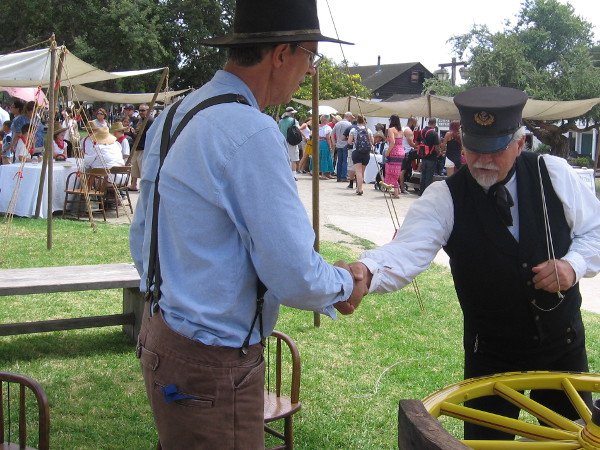
A merchant ship’s purser greets a wheelwright in Old Town San Diego State Historic Park during Stagecoach Days: Trades That Shaped the West.
This afternoon I took a short easy stroll through Old Town San Diego State Historic Park. My trusty little camera captured some interesting photos of history come to life!
During summer Saturdays, Old Town hosts a cool event called Stagecoach Days. Each weekend there’s a different theme. Today it was Trades That Shaped the West.
As you might imagine, I witnessed historical reenactments of working life in San Diego when the town was a small outpost of civilization surrounded by mostly undeveloped wilderness. In those days life was often difficult, but the people were from hardy stock. Let’s see a small sample of what 19th century San Diego might have been like…
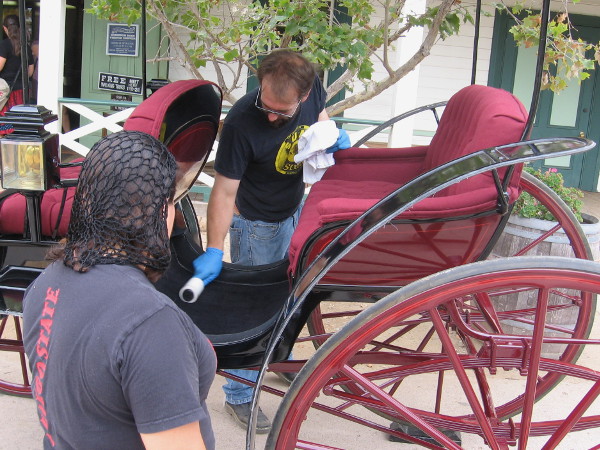
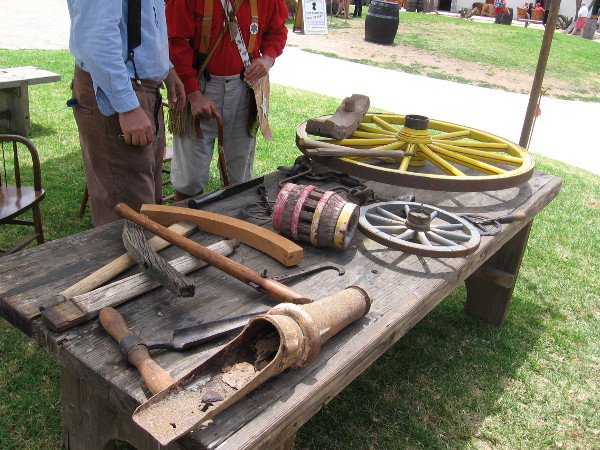
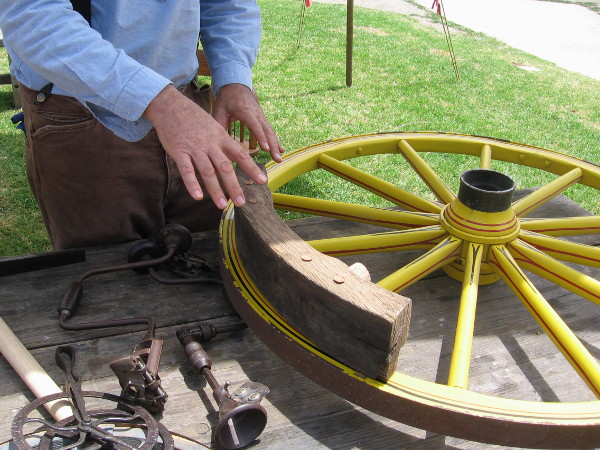
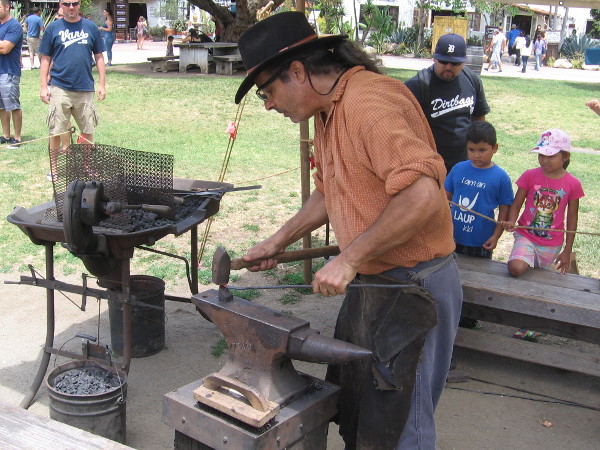
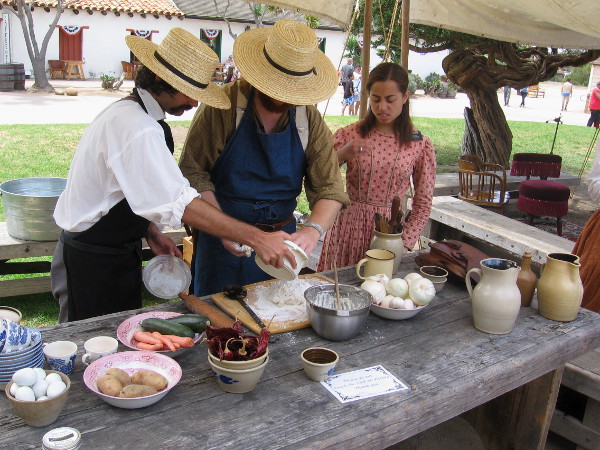
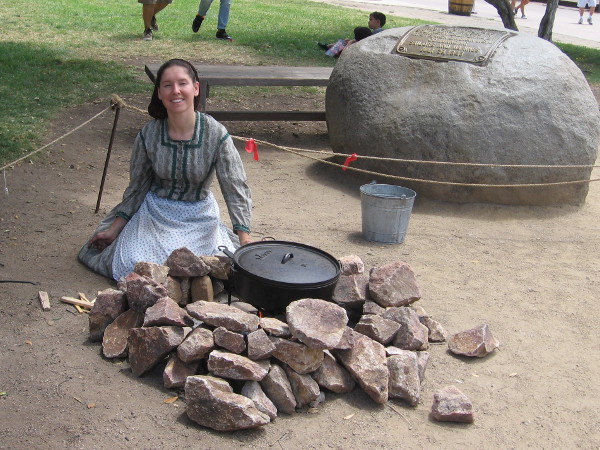
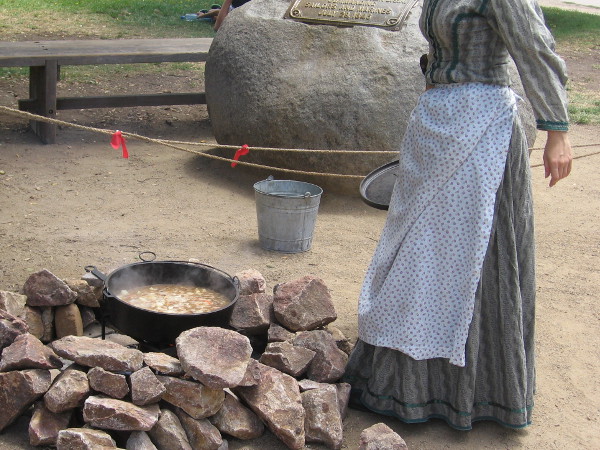
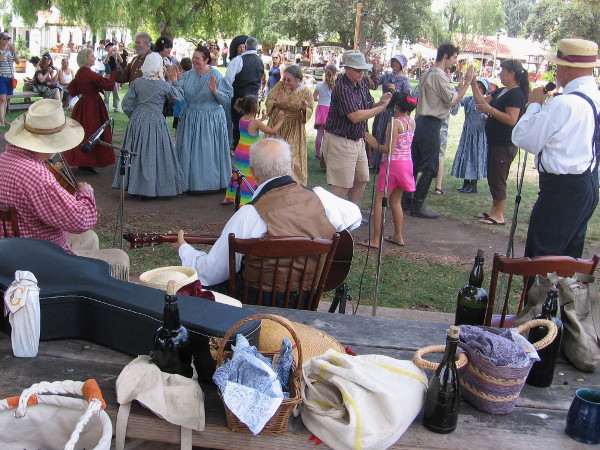
Stagecoach Days, Celebrating the West on the Move, is open free to the public. The weekly event is held on summer Saturdays in Old Town’s historic central plaza.Preparing an old Stanhope Park Phaeton, parked with other buggies and carriages in front of the Robinson-Rose House Visitor Information Center.A ladies basket trap carriage, circa 1900. This simple horse-drawn vehicle was often used for comfortable country travel, complete with wicker basket seat.The wheelwright had many tools on display and explained how wheels in the 19th century were skillfully created of wood and iron.A welded ring of bent iron would be expanded with heat, then placed around the wheel’s ash wood circumference.A cool woodworker demonstrates and provides the names of his many tools to the delight of watching kids.A sneak peek into the blacksmith shop behind Seeley Stable Museum before the event officially begins outside in the plaza.A blacksmith bangs away on some hot metal as he fashions a thin, pointed nail.This sliver of red hot iron with some hammering will be turned into a nail with a flat head, ready to be used for 19th century construction.These folks in historical costume are busily preparing some biscuits, a common food in the early days of San Diego.A smiling someone is tending the campfire. What’s cooking?Looks like a bubbling stew!Printing press demonstration underway at the San Diego Union Museum print shop in Old Town.Wells Fargo employee, from the agent’s office museum in the Colorado House, helps people into a stagecoach for a photograph.Of course, a good historical reenactment of the Old West requires lively music and enthusiastic dancing.Two ladies prepare to dance the polka.
…
Enjoy photos of cool events and random stuff! Join me on Facebook or Twitter.
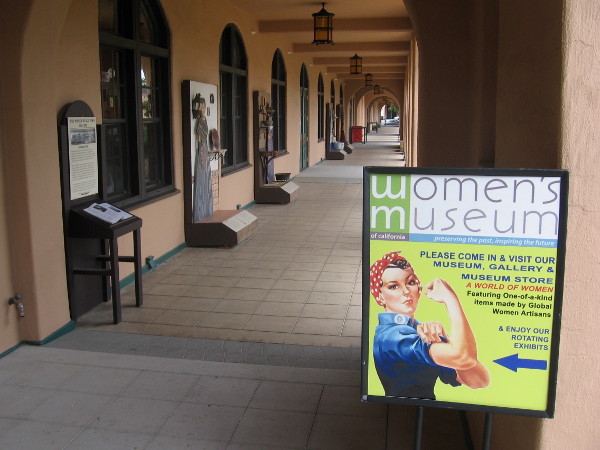
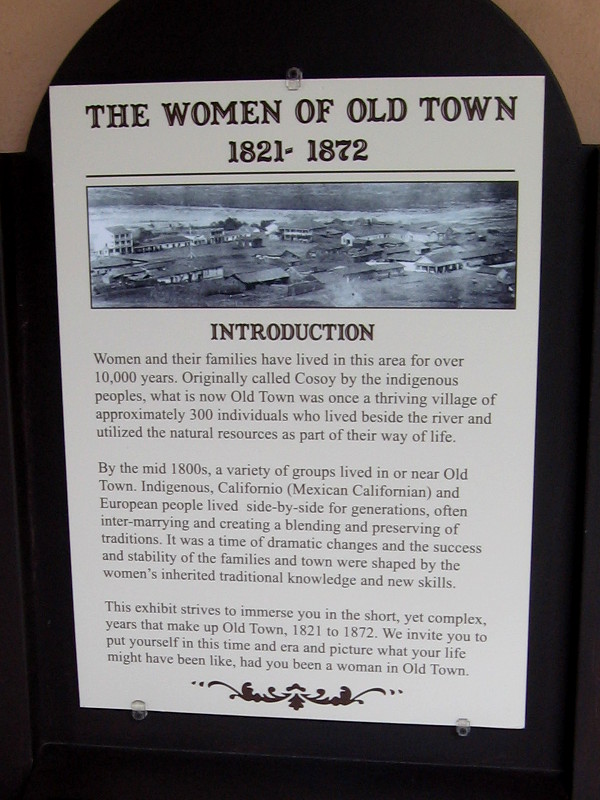
Important stories from local history are preserved at the Women’s Museum of California.
The Women’s Museum of California is one of many cultural attractions that can be enjoyed at Liberty Station in Point Loma. I took some photos of a historical exhibit just outside their front door.
This unique museum was founded by Mary Maschal, a collector of memorabilia and artifacts pertaining to women. The collection has moved to different locations and evolved over the years; today it has grown into an important museum that features art shows, live performances, lectures and other educational events. Its mission is summarized by the slogan: Preserving the past…inspiring the future.
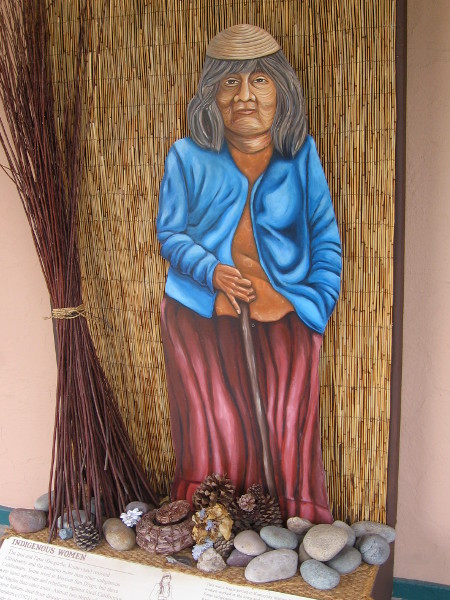
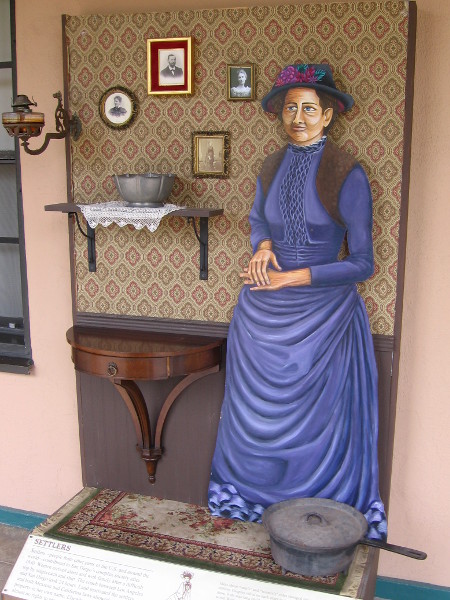
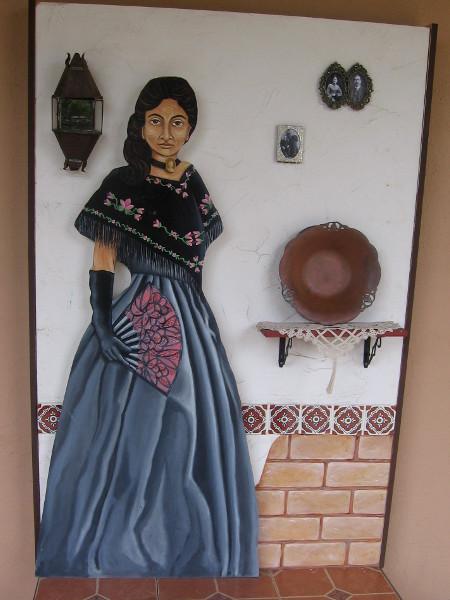
The women of Old Town, 1821-1872. Women and their families have lived in this area, called Cosoy by indigenous people, for over 10,000 years. This exhibit focuses on a short period.The historical experiences and accomplishments of local women are preserved at this unique San Diego museum.The Ipai and Tipai (Diegueño, Kumeyaay) resisted Christianity and the missions more than other indigenous Californians. Moved off their land, the women worked in the town and ranchos.The few women in Old Town had more opportunities to earn money than in the Eastern U.S. They did traditional work: laundry, baking, cooking, sewing, tending to children and livestock.Settlers contributed to San Diego’s complex society after 1830. Women arrived alone and with family after a difficult trip by stagecoach and ship.Californios were a diverse group whose culture created el pueblo San Diego. They were descendants of mixed Spanish and indigenous peoples, often given land grants by Mexico.Old photographs in an artifact help modern San Diegans remember their rugged, fascinating past.
…
To enjoy future posts, you can “like” Cool San Diego Sights on Facebook or follow me on Twitter.
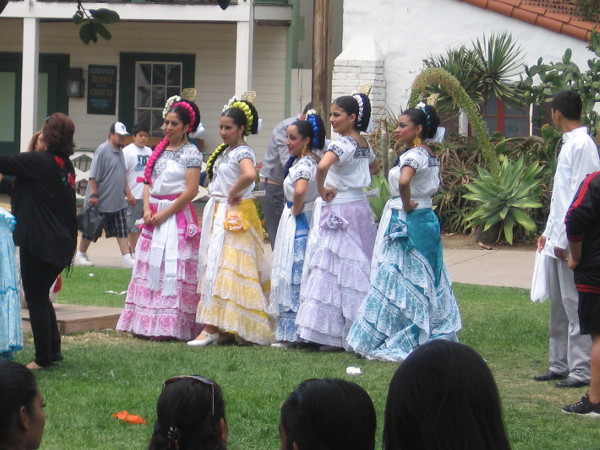
Ladies in Mexican folk costume gather in front of Old Town’s Robinson-Rose House.
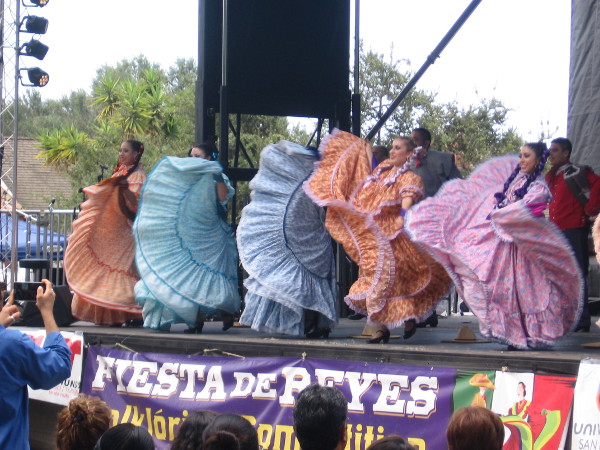
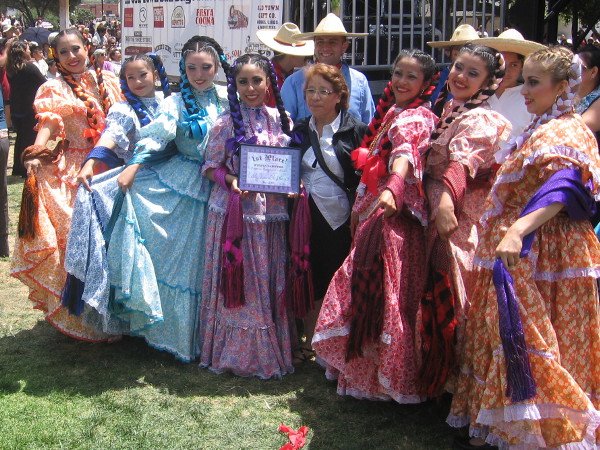
I didn’t catch the names of the dance groups competing today. But I did get some fun photos! The sixth annual Fiesta de Reyes Folklórico Competition in Old Town San Diego State Historic Park was full of energy and color. In past years, the State Park has also been crowded with vendors during the Cinco de Mayo weekend. But not this year. All the commercial vendors were outside the park, along San Diego Avenue, and I believe this was a great idea. The center of historic Old Town is a representation of what life was like in San Diego in the 1800s. Its emphasis today on the authentic baile folklórico competition, which attracted talented troupes from throughout California, and a whole lot of spectators, seemed just right!
How good was the dancing? The participants were motivated to go full tilt with a first place prize of one thousand dollars! The dancers were evaluated by several renowned Mexican judges. It was fantastic!
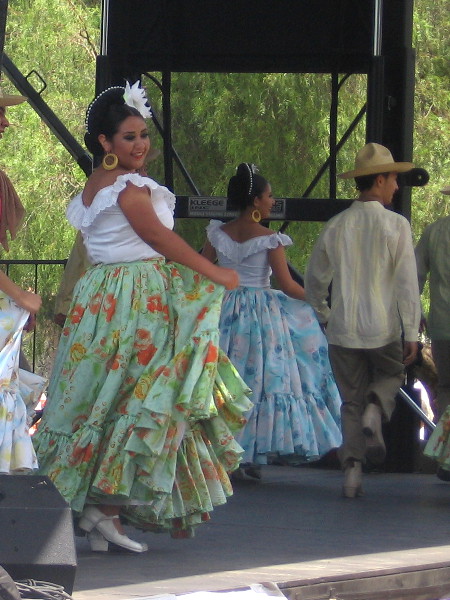
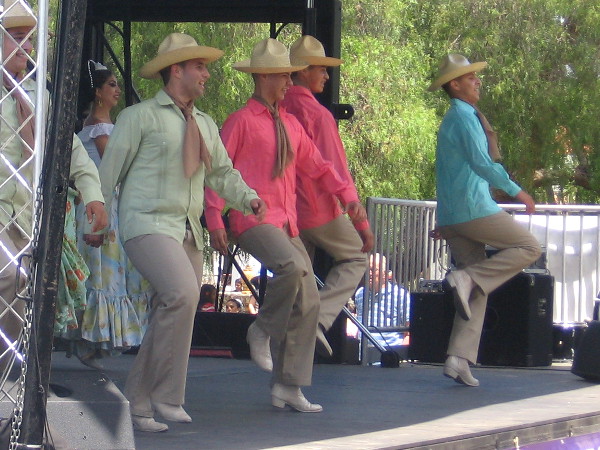
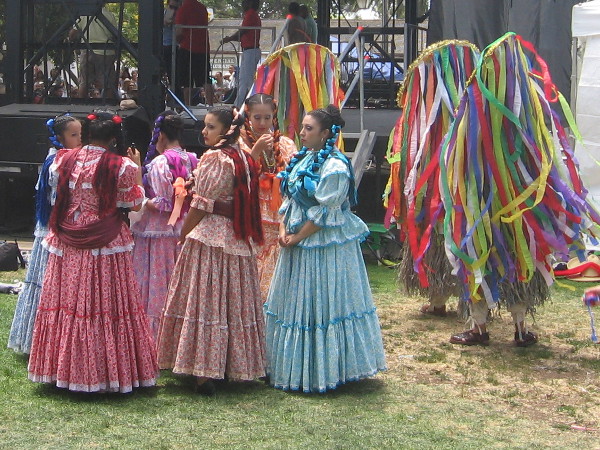
Performers in the Cinco de Mayo weekend Folklorico Competition walk toward the Fiesta de Reyes stage area.A dance troupe wearing colorful costumes waits at the edge of Old Town’s grassy central plaza.Traditional Mexican folklorico dancers have checked in for the cool San Diego event!A huge crowd watches as the super energetic dance contest is already underway.With flowers in their hair, bright dresses and broad smiles, these dancers bring cheers and whoops from the crowd.Dances and costumes from different parts of Mexico can be quite unique.These stomping guys are full of vigor and so is the crowd!Long colored ribbons stream from very odd costumes. The headpieces appear to be religious icons or altars.Sacred images of Christ crown these dancers’ heads. I believe I heard this peculiar tradition originated in Jalisco, but I might be wrong.Frilly, flouncy dresses were seen throughout Old Town San Diego State Historic Park.Traditional Mexican folk dancers in long flowing skirts dazzle the cheering crowd.Another sensational performance!These were the first place winners!
…
To enjoy future posts, you can “like” Cool San Diego Sights on Facebook or follow me on Twitter.
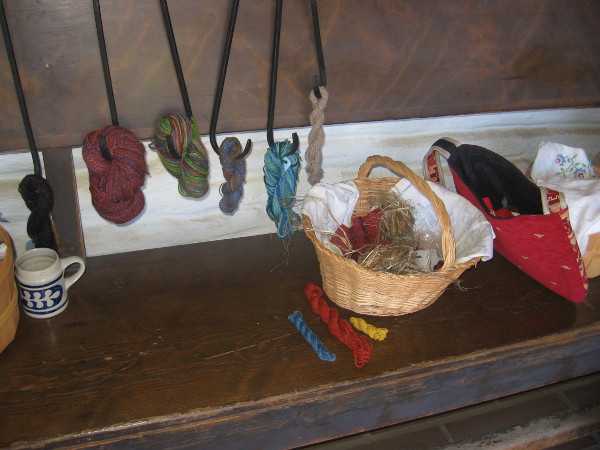
Yarns dyed many different colors out on display in San Diego’s Old Town.
One more quick post from today’s stroll through Old Town San Diego State Historic Park. After going on the free walking tour, which I do every few years to jiggle my memory, I observed that a couple of unique exhibits were out on public display. One concerned yarn, the other twine. A “string” of coincidence too good not to blog about!
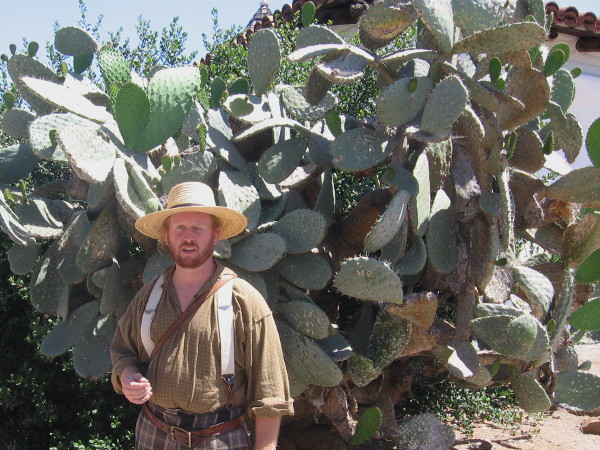
During the tour, our knowledgeable guide explained how red dye in the olden days was derived from a particular insect–the cochineal. The cochineal is a beetle that can be found on prickly pears, a cactus which grows abundantly in arid San Diego. While we watched, the guide plucked one from a prickly pear next to the Casa de Estudillo, then crushed it. His fingers turned bright purple from the beetle juice! (He explained the British Red Coats dyed their uniforms with cochineal, but Purple Coats didn’t sound quite so fierce.)
Tour guide ready to produce some reddish dye.
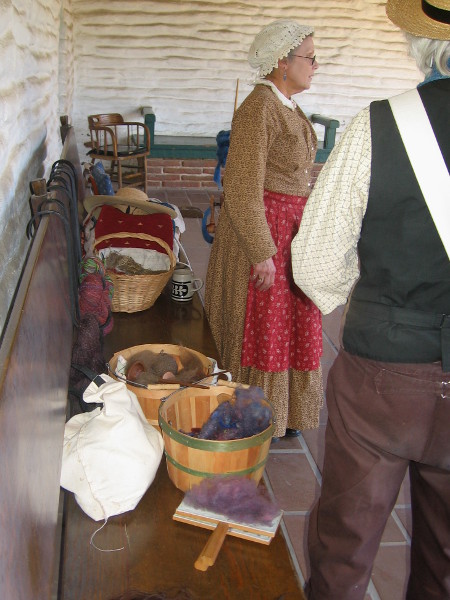
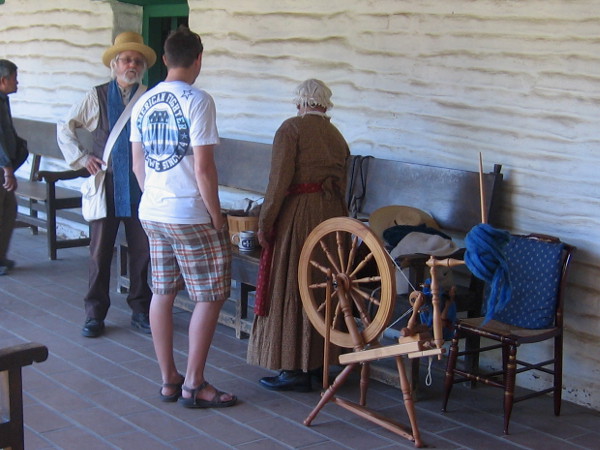
After the tour ended, two volunteers inside the Casa de Estudillo were demonstrating how yarn used to be made. To dye the fibers, both cochineal and indigo dye were commonly used. A spinning wheel served to demonstrate the hard work required to live comfortably before our more modern conveniences.
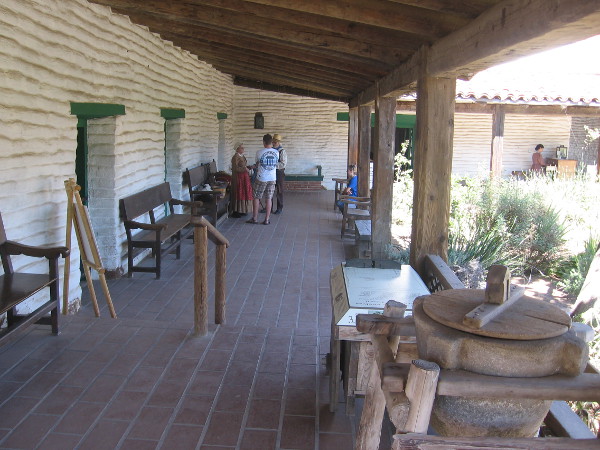
La Casa de Estudillo, an elegant adobe house built in 1827 by a wealthy Californio family that owned several large ranchos in Southern California.Volunteers in costume with baskets of color. They told me some yarns concerning San Diego’s complex, fascinating history.State Park volunteers describe life in early San Diego, when spinning wheels were common household objects.
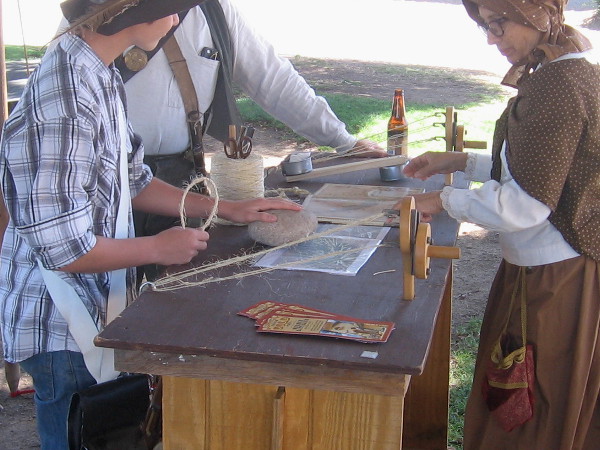
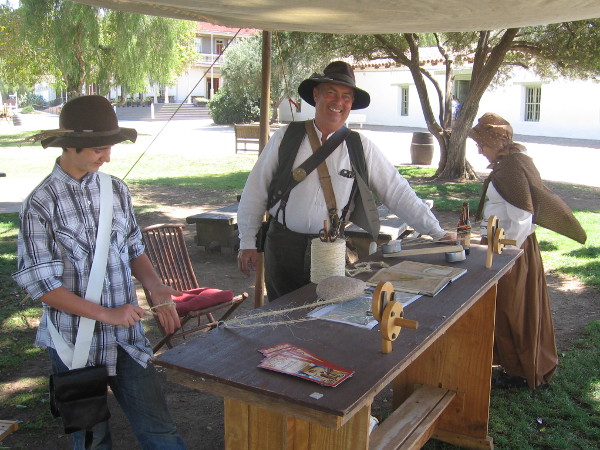
Out in one corner of Old Town’s big central plaza, some friendly Mormons were demonstrating the making of twine. Like the native prickly pear, yucca plants have always been plentiful in San Diego’s desert-like environment. The tough fibers in the leaves, once extracted, are dried and then twisted using a simple mechanism to create primitive but very practical twine or rope.
Making twine involved twisting fibers found in native yucca plants.Mormon guy smiles as he exhibits rope-making in Old Town. The Mormon Battalion was one of many diverse participants in San Diego’s early history.
Someday I’ll probably blog about the amazing, hour-long Old Town walking tour. I need some more photos and many more notes before I undertake that, however!
…
To enjoy future posts, you can “like” Cool San Diego Sights on Facebook or follow me on Twitter.





















































 Cool San Diego Sights!