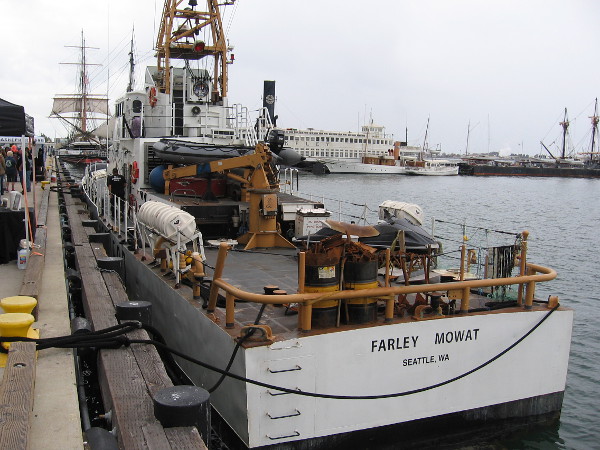
The Sea Shepherd Conservation Society’s old Coast Guard patrol boat, renamed M/V Farley Mowat, is docked this weekend on San Diego’s Embarcadero.
Yesterday after work, I noticed that an unusually decorated old U.S. Coast Guard patrol boat was docked along the Embarcadero, just north of the Maritime Museum of San Diego. Naturally, I had to investigate!
Turns out the renamed boat, M/V Farley Mowat, is now owned and operated by an organization called the Sea Shepherd Conservation Society, whose stated mission is to defend, conserve and protect marine ecosystems and species. They use direct-action tactics to expose and confront the illegal slaughter of marine wildlife at sea. I’d seen their exhibit aboard the steam ferry Berkeley during Earth Day on the Bay, where their representative explained that Sea Shepherd was like Greenpeace on steroids.
I spoke to a friendly crewmember near the Farley Mowat and learned they would be offering the public free tours on Saturday. The vessel has just returned from its second mission in the Sea of Cortez off Baja California–the wildlife defense campaign was titled Operation Milagro II. For a number of months, Sea Shepherd worked with the Mexican government in a marine refuge near San Felipe to identify and intercept illegal gillnet fishing which has reduced the population of the rare Vaquita Porpoise over the decades to just about 100 animals. This is commendable work! Sea Shepherd not only has permission from the Mexican government to patrol for poachers and pull up illegal fishing nets when encountered, but they are making observations concerning this endangered marine species. They are doing similar work to protect another rare fish in the region: the Totoaba Bass.
Working within the law in a positive way to protect these species is commendable and extraordinary! After doing some research at home, however, I learned that the organization is quite controversial. Some say they go too far. Some, including other environmental activists and organizations, have called them eco-terrorists. I don’t know enough to comment, but I do know that sometimes people with enthusiastic agendas and a sense of urgent purpose can lose their sense of humanity. The people I met yesterday and this morning when I walked again along the Embarcadero seemed like very nice people. I will say no more.
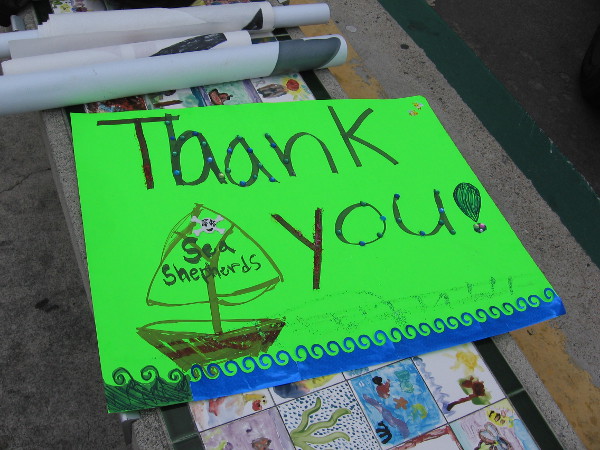
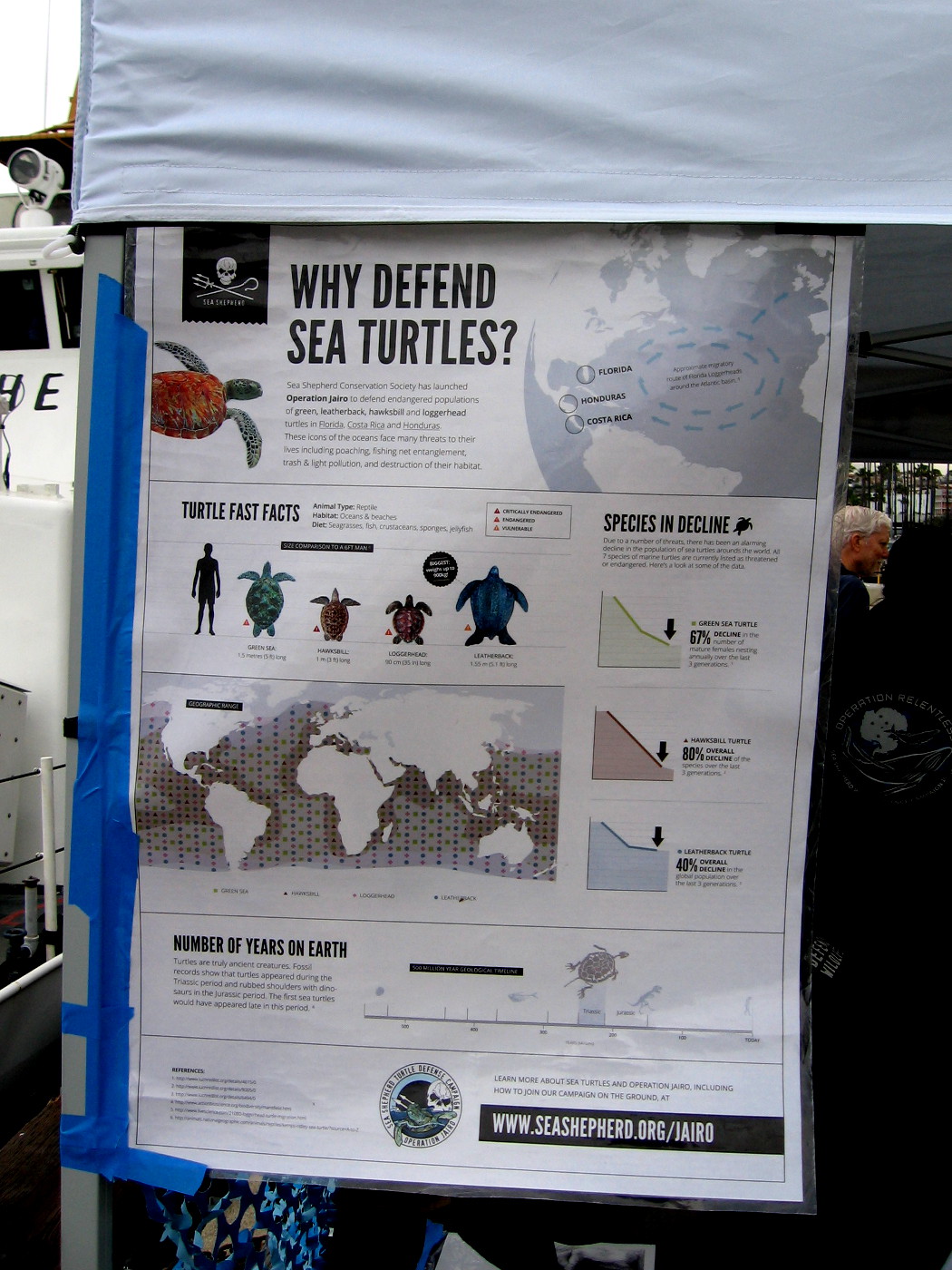
A very friendly, informative crewmember of Farley Mowat explained their recently completed mission, which was to defend the Vaquita Porpoise in Mexico’s Sea of Cortez.Photograph of M/V Farley Mowat the following cloudy morning. Visitors were being given tours aboard the vessel.Interested people and crew mingle before boarding the Sea Shepherd’s cool boat. Public tours of M/V Farley Mowat are being offered this weekend in San Diego.Looks like kids made some Thank You signs for Sea Shepherd!A tent near the boat featured gifts and information in support of Sea Shepherd. Defending Ocean Wildlife Worldwide.A detailed poster explains why sea turtles should be defended. Click to enlarge. San Diego’s South Bay has its own small group of migratory green sea turtles.Sea Shepherd stops in San Diego. They were featured in Animal Planet’s television show Whale Wars. M/V Farley Mowat will soon be on its way to another location on the high seas.
…
I live in downtown San Diego and love to walk! You can follow Cool San Diego Sights via Facebook or Twitter!
Do you like to read short pieces of thought-provoking fiction? You might enjoy checking out Short Stories by Richard.
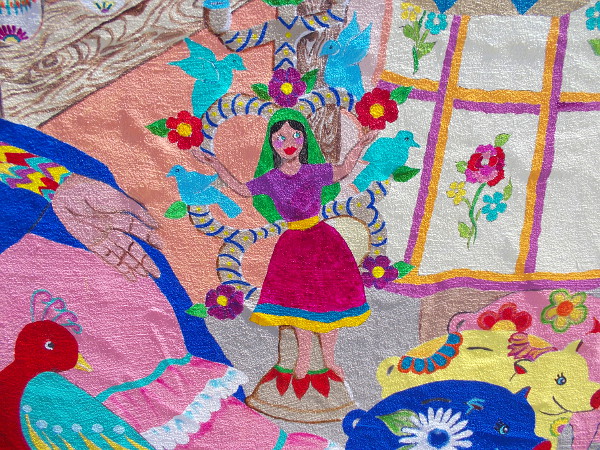
A painting of a market full of Mexican crafts and charm. It makes anyone walking down the sidewalk feel that life is good, just gazing at this colorful artwork.
Some new, very cool urban art has recently appeared on Adams Avenue in Normal Heights! Here are a few photos!
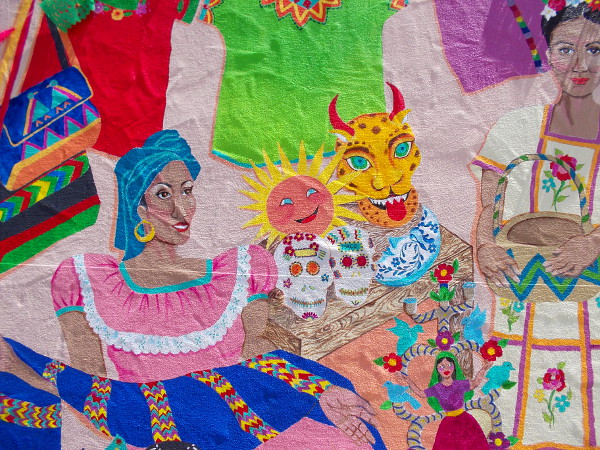
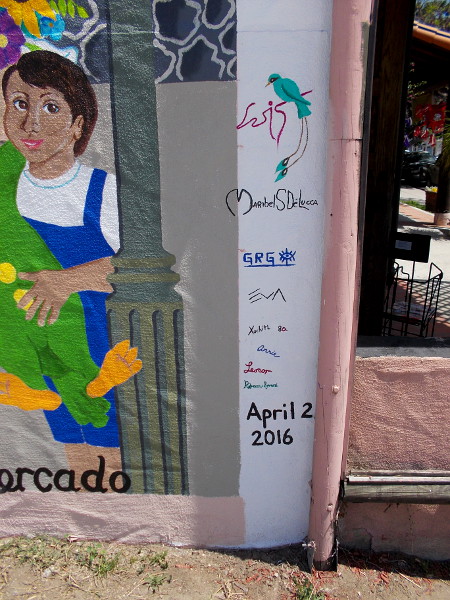
The street mural, titled Un dia de Mercado, is painted on the side of one small building. It depicts a Mexican marketplace, and many of the goods a shopper is likely to find there. The colors are vivid and happy. The artwork inspires joy.
Un dia de Mercado. A fantastic new street mural on Adams Avenue in San Diego’s Normal Heights neighborhood.Un dia de Mercado was completed on April 2, 2016. It was painted by several talented artists. Their signatures are evident in this photo. New colorful urban art in Normal Heights!A smiling face, a funny parrot, an umbrella, guitar, flowers, fruit and a sleeping dog. One day at the market!Beautiful artistry on the side of a building on Adams Avenue in Normal Heights!This street mural adds sunshine and happiness to an already very cool neighborhood in San Diego!
…
I live in downtown San Diego and love to walk! You can follow Cool San Diego Sights via Facebook or Twitter!
Do you like to read short pieces of thought-provoking fiction? You might enjoy checking out Short Stories by Richard.
Making fresh tortillas for people walking down the sidewalk. Eat these hot with melted butter and you’re in heaven.
I enjoyed an exhilarating walk through Old Town today.
Here are some colorful photos of what you might discover while strolling down San Diego Avenue, just south of Old Town San Diego State Historic Park.
You’ll find all sorts of shops, Mexican restaurants and cantinas, a few historical sights, and sidewalks full of smiling tourists and locals enjoying one of San Diego’s favorite destinations.
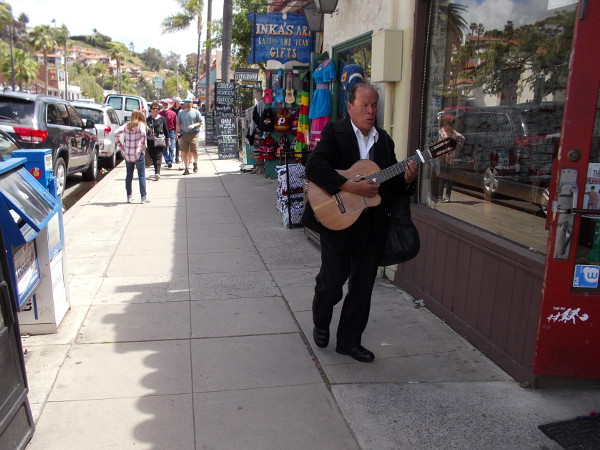
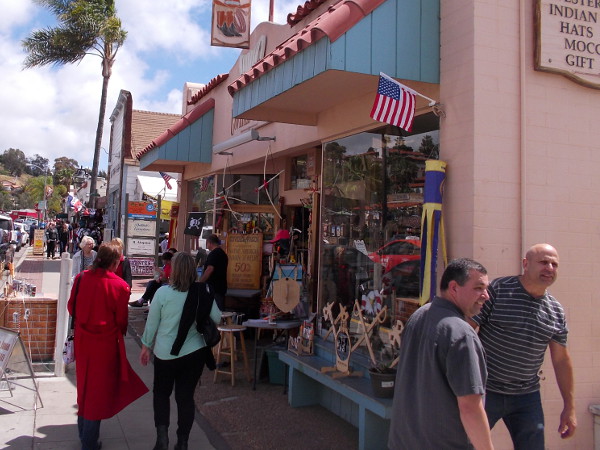
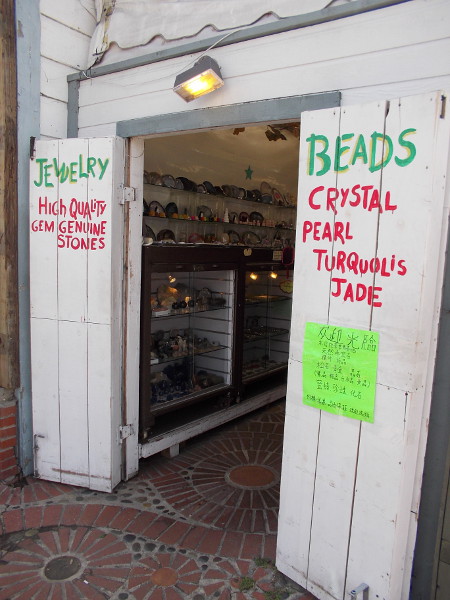
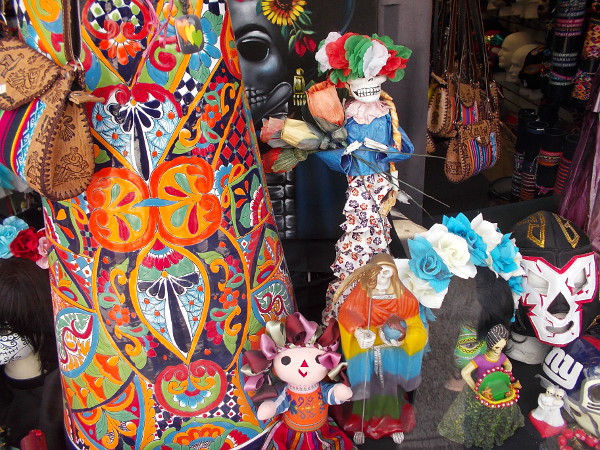
A guitarist walks down a sidewalk in Old Town. You’ll find plenty of music and energy up and down San Diego Avenue.There are tantalizing sights everywhere you turn. The commercial part of Old Town is a popular destination for tourists visiting San Diego.Many colorful items for sale at shops up and down San Diego Avenue are from Mexico, or have a Mexican theme.I love rocks and minerals, so of course I had to poke my nose in here.Just a riot of color in one window! Mexican culture adds a great deal of life to San Diego and this region.I blogged about this public art a while back. Beyond the crazy cowboy shootout is the entrance to the Old Town Chamber of Commerce.
I stepped inside the Old Town Chamber of Commerce Information Center and checked out a few cool exhibits. In the event you ever visit Old Town, make sure to stop here to grab a map, brochures, and a bunch of valuable coupons for nearby restaurants and businesses!
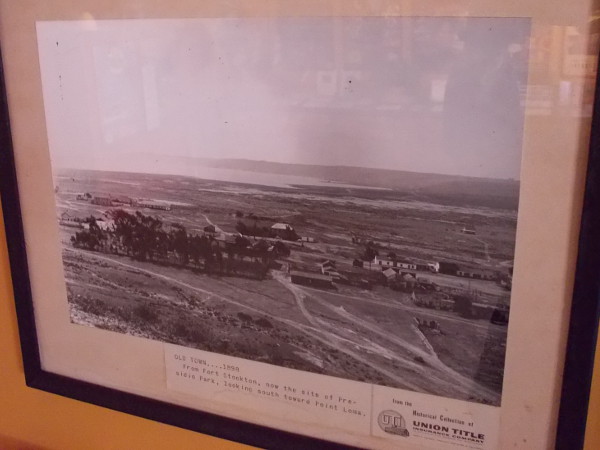
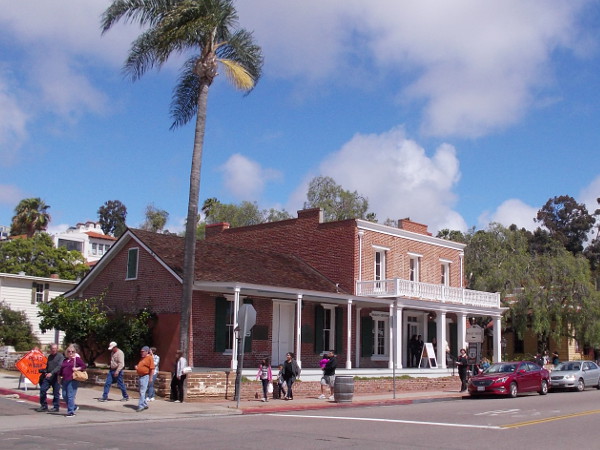
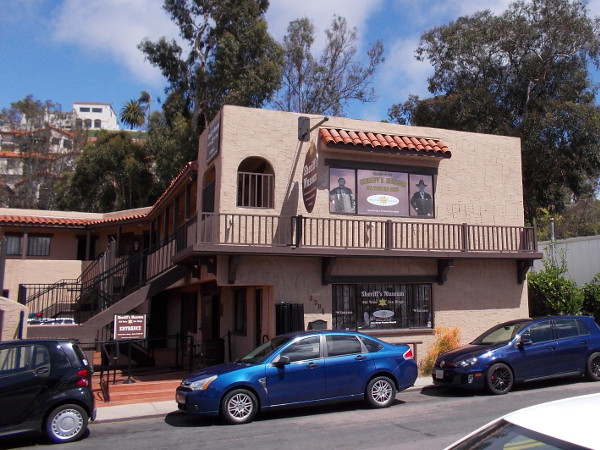
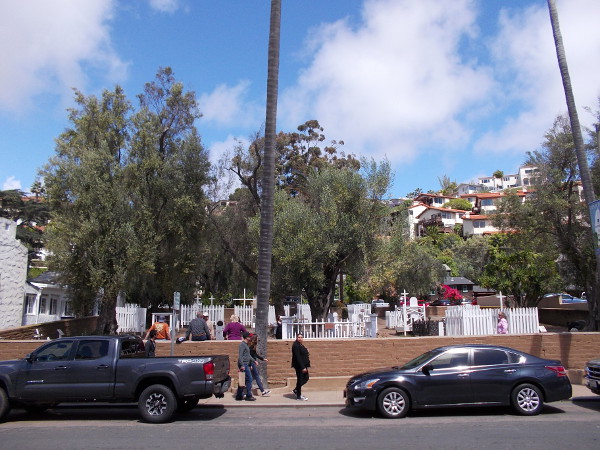
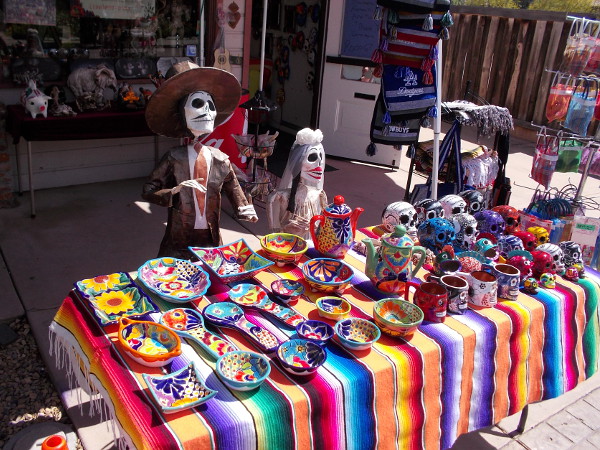
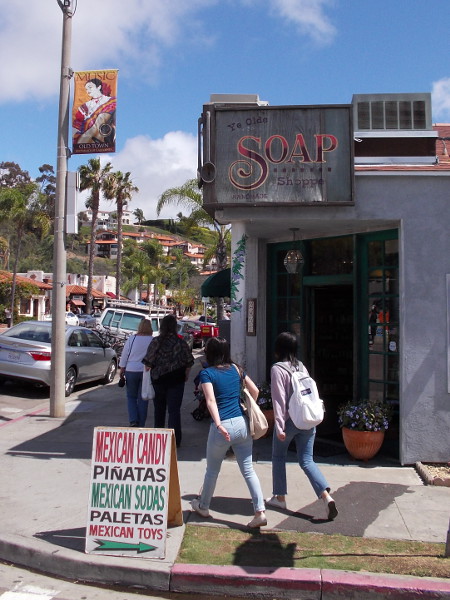
A cool model of a Spanish galleon (I believe) and some useful free literature inside the Visitor Information center.Several interesting historical photographs can be found inside the Old Town Chamber of Commerce. This one from 1898 shows tiny Old Town San Diego at the base of Presidio Hill.Vintage photo of the famous Whaley House, the oldest brick house in California, built in 1854. (That’s what it reads. Every source I’ve seen says the house was actually built in 1857.)The Whaley House as it appears today on San Diego Avenue. It’s reputed to be the most haunted place in America! (Just to be careful, I stayed across the street. Those spooks didn’t have a ghost of a chance!)The Sheriff’s Museum on San Diego Avenue. I’ve yet to visit this place! So much still to do!The El Campo Santo Cemetery in Old Town is where many of San Diego’s earliest residents are buried.Many curios and crafts for sale in Old Town shops are related to Mexico’s traditional Día de Muertos, or Day of the Dead.A festive banner in a perfect San Diego sky.Rounding a corner, searching for more unique discoveries!This shop contains all sorts of Old West-themed stuff for sale. There’s so much on display, it boggled my mind!A walk down San Diego Avenue in Old Town San Diego is never dull!
…
I live in downtown San Diego and love to walk! You can follow Cool San Diego Sights via Facebook or Twitter!
You can easily explore Cool San Diego Sights by using the search box on my blog’s sidebar. Or click a tag! There are thousands upon thousands of fun photos for you to enjoy!
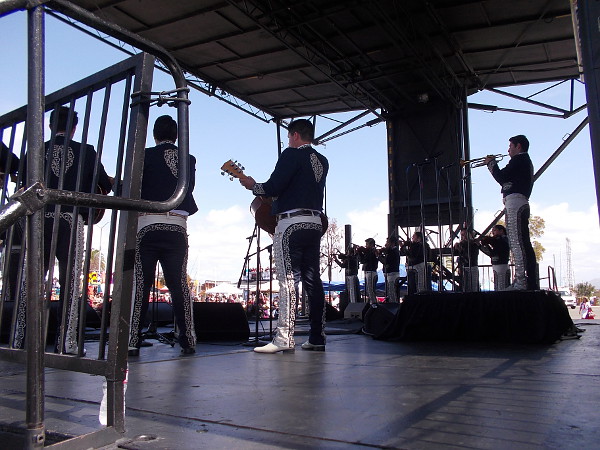
A friendly Mariachi band smiles as photos are taken!
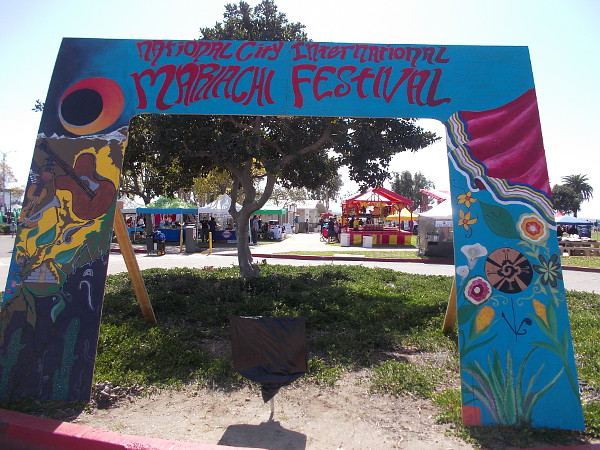
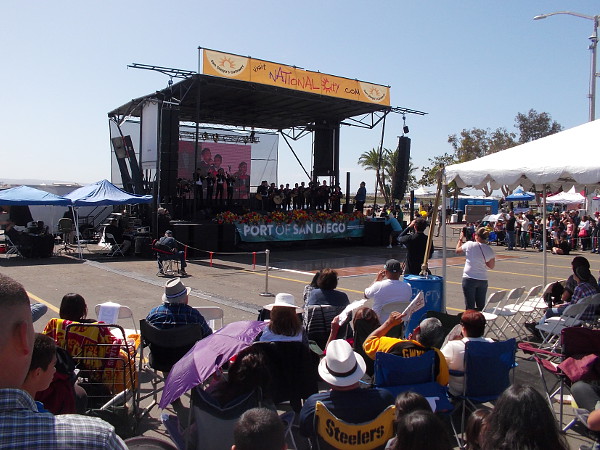
Today I rode the trolley down to the South Bay to enjoy the big 2016 National City International Mariachi Festival and Competition.
The annual cultural event takes place in Pepper Park, which is located close to where the Sweetwater River empties into San Diego Bay.
I was absolutely amazed by the color, the energy, the sheer happiness of those participating and watching. Hopefully my photos provide a taste…
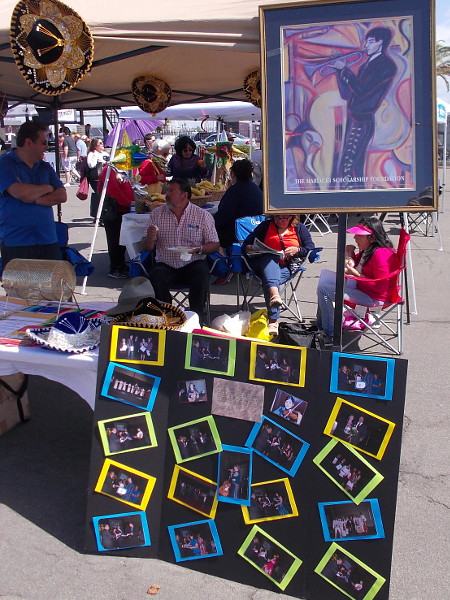
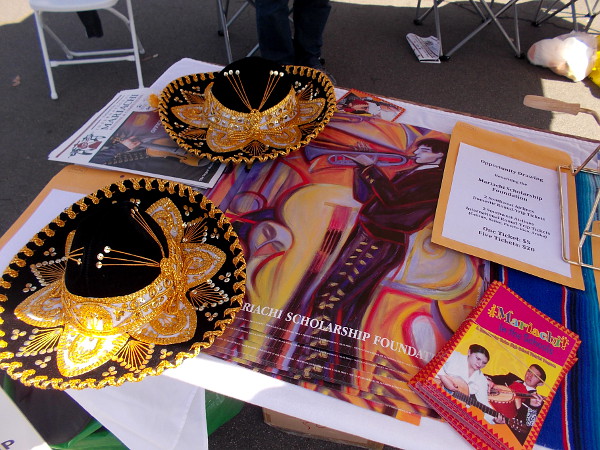
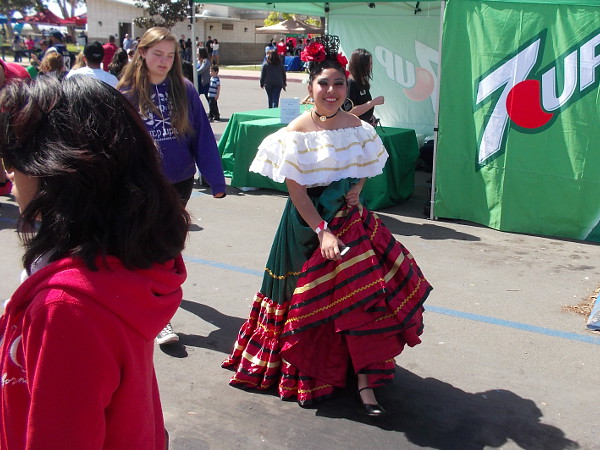
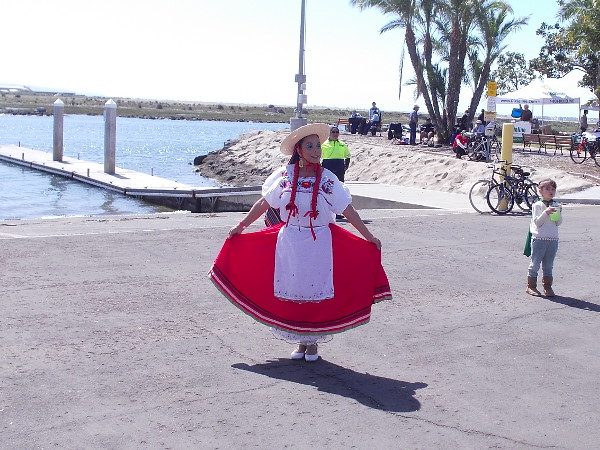
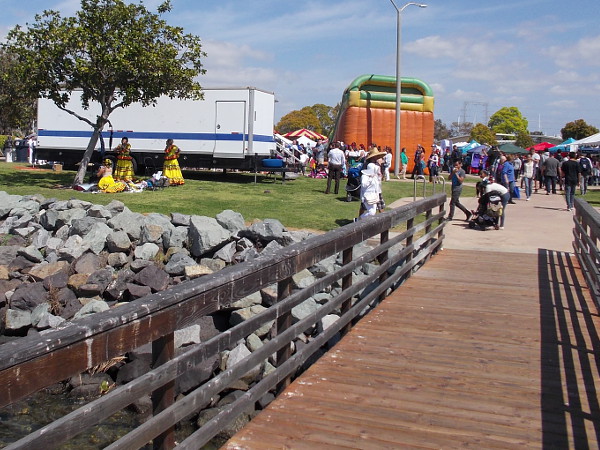
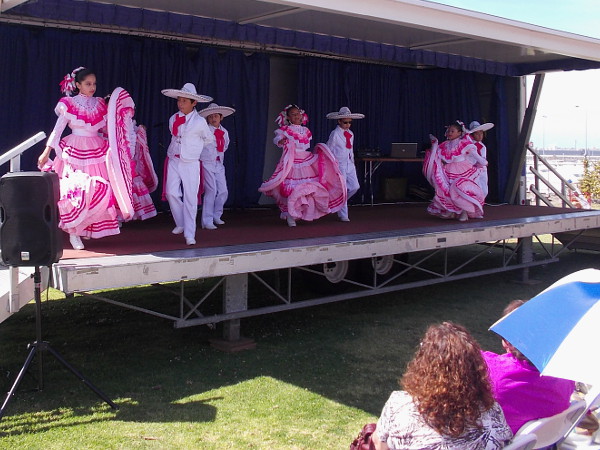
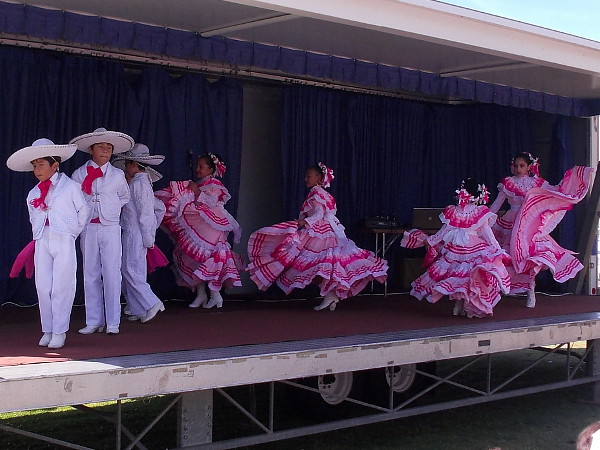
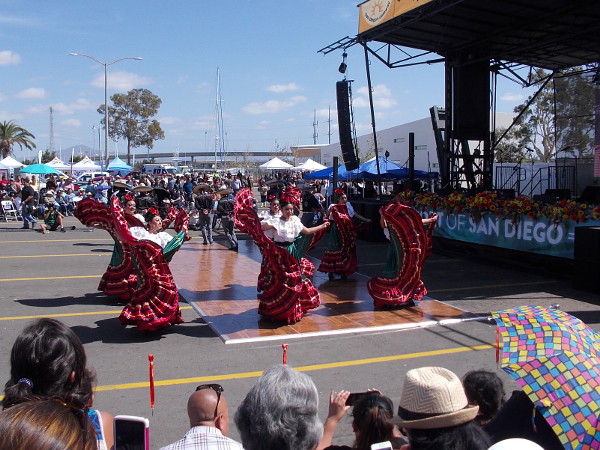
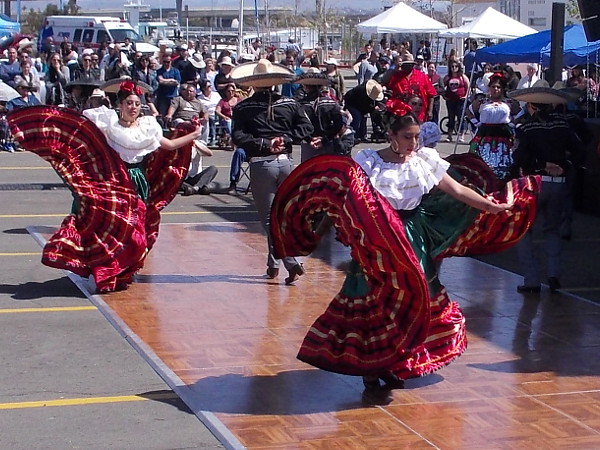
A colorful arch welcomes visitors to Pepper Park and the 2016 National City International Mariachi Festival!The Mariachi Scholarship Foundation has benefited many music-loving students in San Diego County.Fantastic sombreros attracted my camera at the festival’s Mariachi Scholarship Foundation table.The grand stage drew the largest crowd. Many excellent Mariachi groups and baile folklorico dancers wowed the audience.A smiling senorita at the International Mariachi Festival and Competition in National City.Members of Danza Folklorico Las Florecitas perform Mexican folk dances in Pepper Park.Mariachi musicians perform on the main stage at the 2016 National City International Mariachi Festival and Competition. They received loud cheers.A cheerful dress on a beautiful day in San Diego’s South Bay. A nearby boat ramp leads into the channel of the Sweetwater River.Colorful, energetic folklorico dancing on a smaller, non-competitive stage.A diverse audience from San Diego, Tijuana and the surrounding region. Many of the participants also enjoyed the non-stop entertainment.Taking a break to stretch my legs, I walked out onto the short pier in National City’s Pepper Park. Visible is a huge car carrier ship docked in San Diego Bay. It transported imported vehicles from Asia.Looking back at the rear of the smaller stage. Some dancers wearing bright yellow are getting ready for their turn to perform.Young dancers on stage whirled, stepped smartly, then whirled again.Mexican culture is warm, happy and lots of fun.These ladies in traditional costume were taking their turns at one of the festival’s many prize wheels!Dancing with joy.A typical scene from the annual Mariachi festival in National City.
…
I live in downtown San Diego and love to walk! You can follow Cool San Diego Sights via Facebook or Twitter!
Do you like to read short pieces of thought-provoking fiction? Please visit Short Stories by Richard.
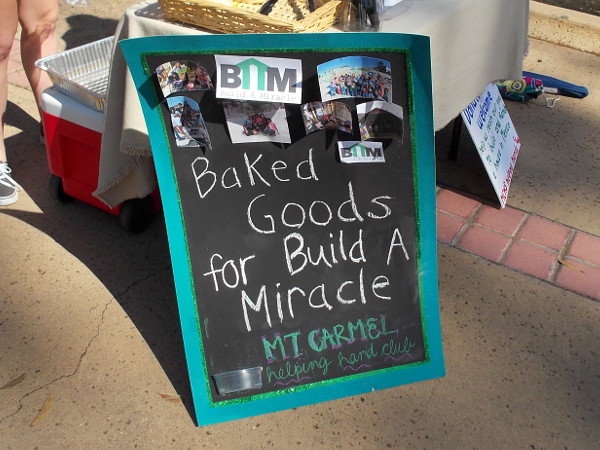
Members of the Helping Hand Club at Mt. Carmel High School are raising funds for Build a Miracle.
Students belonging to Mt. Carmel High School’s very cool Helping Hand Club would like you to help Build a Miracle!
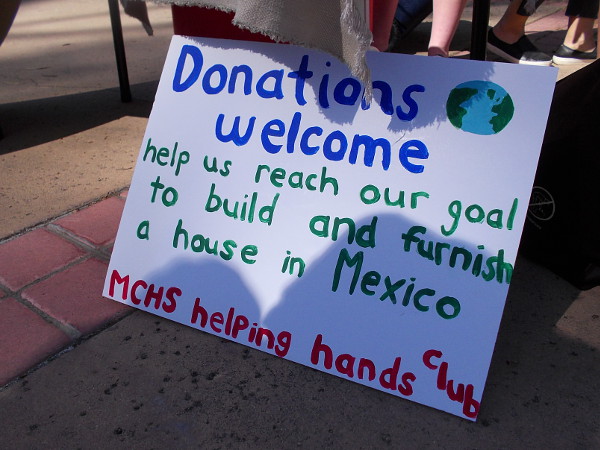
Today I came across a bake sale in Balboa Park. Two very generous MCHS students had a table full of brownies and other treats; they were raising donations for Build a Miracle, a charity that constructs and furnishes homes for needy families in Mexico. Between 1999 and 2014, Build a Miracle has built 185 homes and 3 community centers. They have touched literally thousands of lives, offering hope and a pathway to a brighter future.
Should you wander through Balboa Park and see smiling members of the Helping Hand Club, perhaps you could offer your own hand! Or check out the Build a Miracle website and see if you’d like to help!
Two awesome students are working to make our world a better place.Donations welcome. Help us reach our goal to build and furnish a house in Mexico.
…
I live in downtown San Diego and love to walk! You can enjoy more Cool San Diego Sights via Facebook or Twitter!
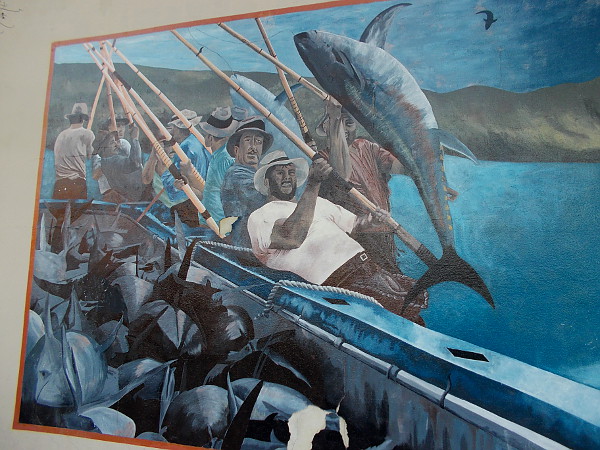
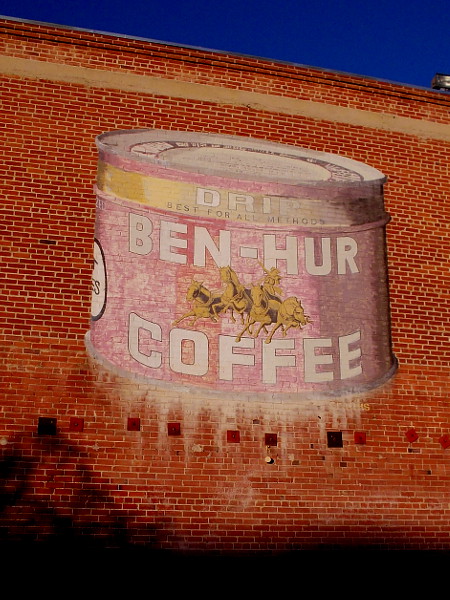
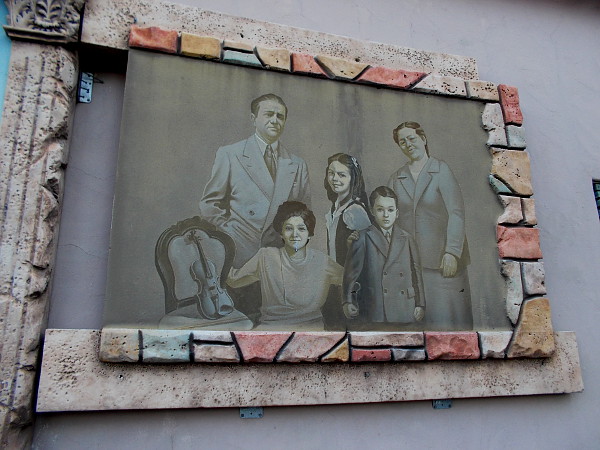
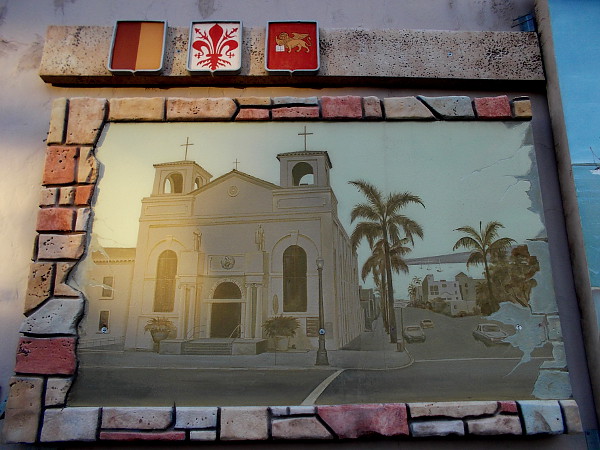
Mural titled I Pescatori by artist Renee Garcia, 2003. Depicts tuna fishermen who lived in Little Italy (many were Italian immigrants) fishing off the coast of San Diego.
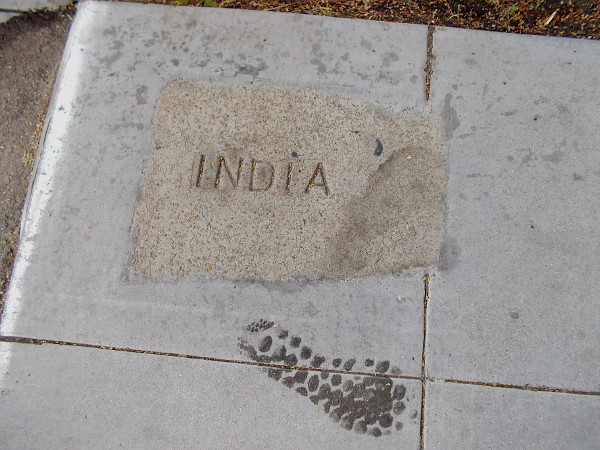
Camera in hand, I captured even more examples of fantastic, colorful artwork. Most of these pics were taken on India Street north of Ivy Street.
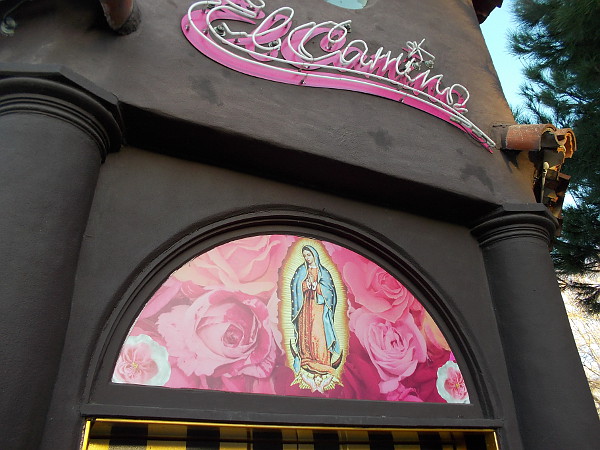
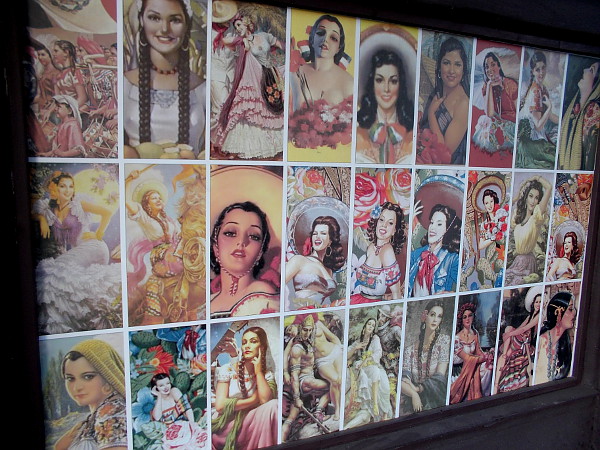
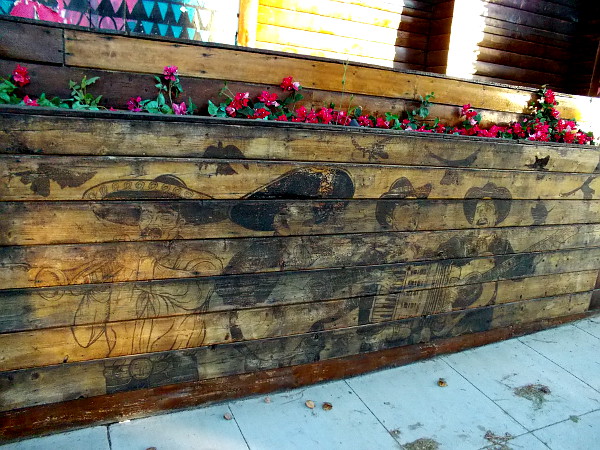
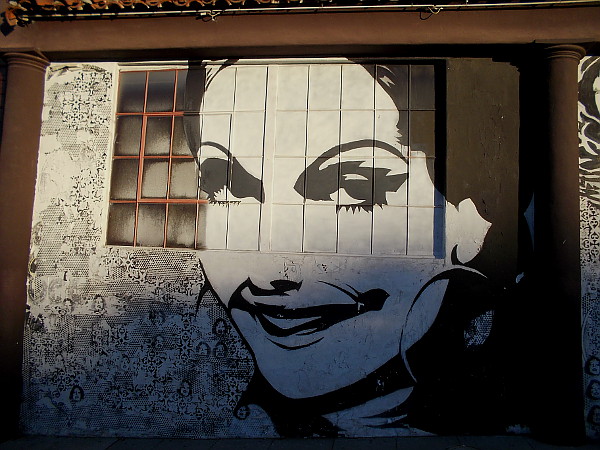
This painting of two dancers was in the front patio of a shop or cafe or restaurant of some kind–I forget what, exactly. I had to snap a quick pic.Ben-Hur Coffee. A cool old advertisement on the side of an old brick building in San Diego’s hip Little Italy neighborhood.Just a fun artistic tile on a building wall that I noted as I walked up India Street this morning.Several murals that together are titled Eredita Italiana. By Yakov Kandinov, 2004. According to a nearby plaque, this is a Precious Cheese Art Mural Project.A portrait of a proud Italian family that might have lived in this neighborhood.One of the grouped murals depicts the historic Our Lady of the Rosary church in Little Italy.Looks like someone else was walking up the sidewalk on India Street–and they had wet shoes!Just a fun sign on a Little Italy antique shop’s door. The Bungalow Store.A radiant Madonna above the front door of El Camino, a crazy, kitschy Mexican eatery and bar in San Diego’s Little Italy.Many faces of beauty on an exterior wall of El Camino.Old, faded graphic on wood wall shows a troupe of Mexican mariachis.Colorful application of kitsch on the outside of El Camino.A large smiling senorita mural looks right at you.Caballero muy guapo in Little Italy!
…
You can follow Cool San Diego Sights on Facebook and Twitter!
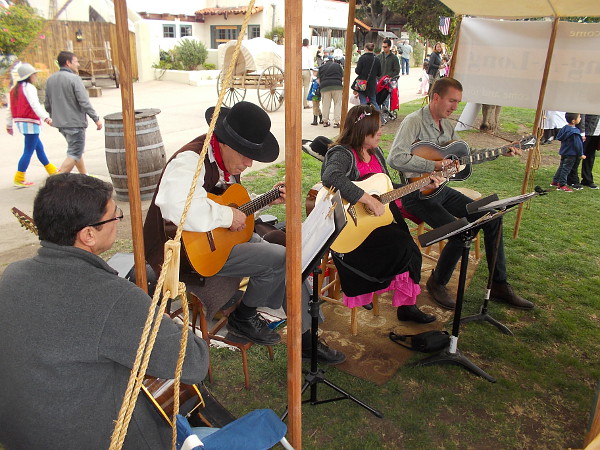
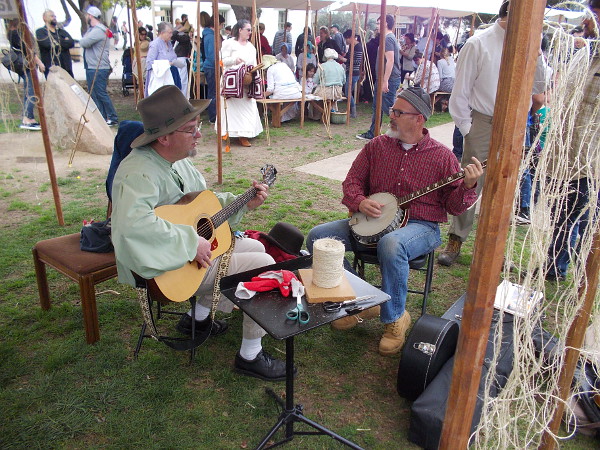
Lots of music was being played during today’s Mormon Battalion Commemoration event in Old Town San Diego.
I love history. So I was thrilled to stumble upon a special event today in Old Town San Diego!
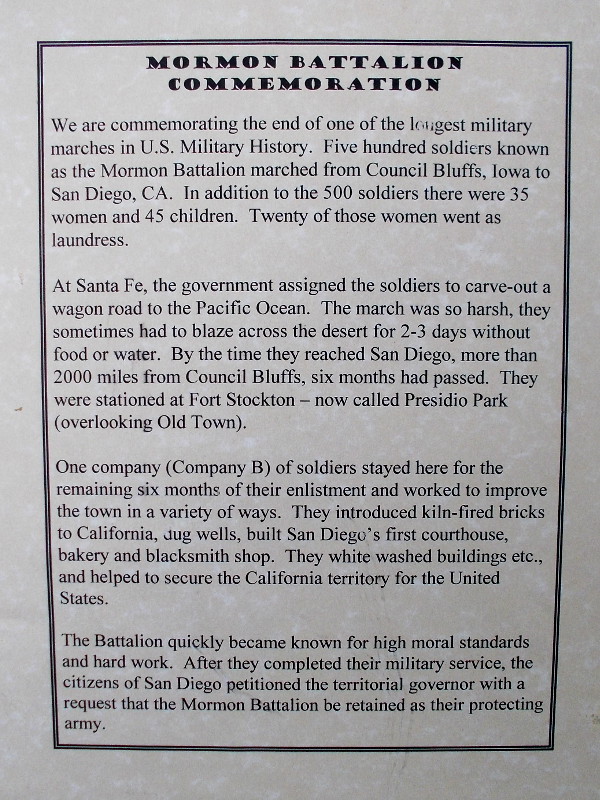
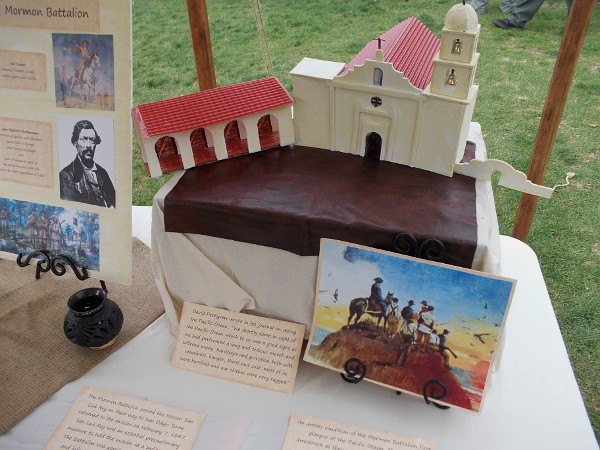
The Mormon Battalion Commemoration is an annual celebration that recalls a part of San Diego’s diverse, often surprising history. The battalion was formed in 1846. Composed of members of the Latter Day Saints and led by regular U.S. Army officers, over 500 men and several dozen women and children set out from Council Bluffs, Iowa and endured an almost 2,000 mile march to San Diego. Their presence in San Diego and several other locations in Southern California helped to support the eventual cession of much of the American Southwest from Mexico to the United States. Many members of the Mormon Battalion went on to play leading roles in the settlement of the West.
Of course, history–like life itself–is a complex thing that can be told and interpreted from many differing viewpoints. Happy reenactments don’t tell the entire story. But among so many costumes and demonstrations, one can start to imagine what life appeared like in San Diego over a century and a half ago.
I ambled around Old Town’s central plaza, spoke to some very friendly folks and took a few photos.
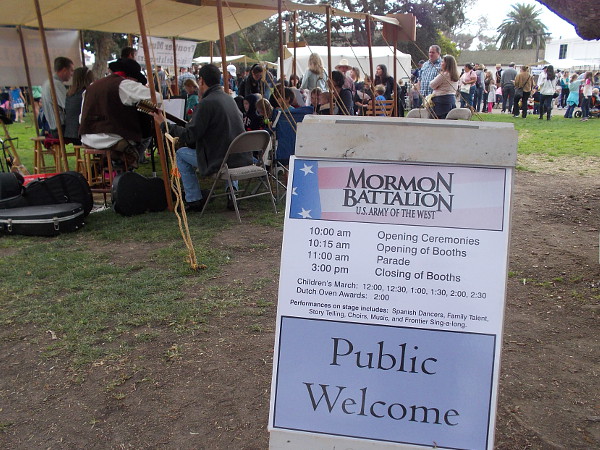
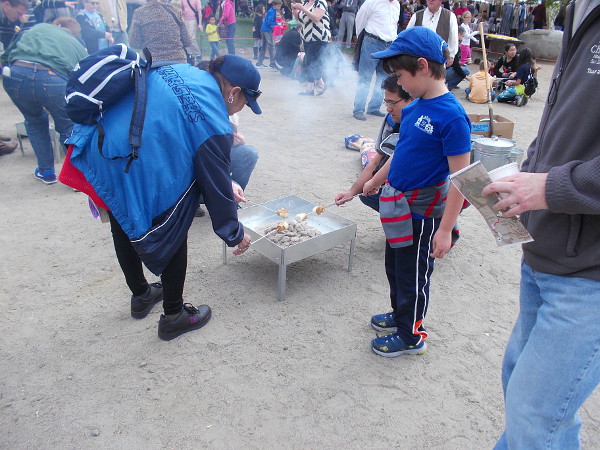
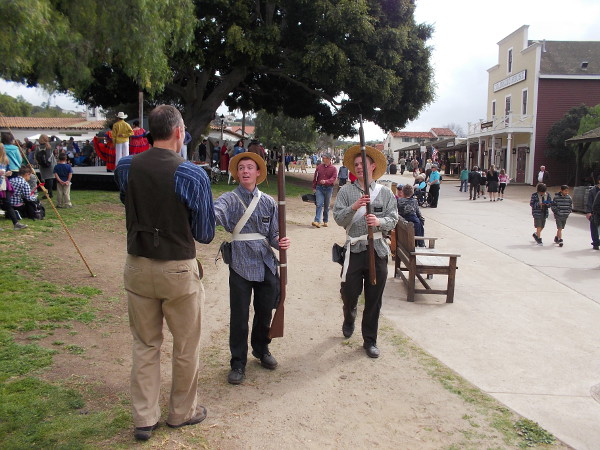
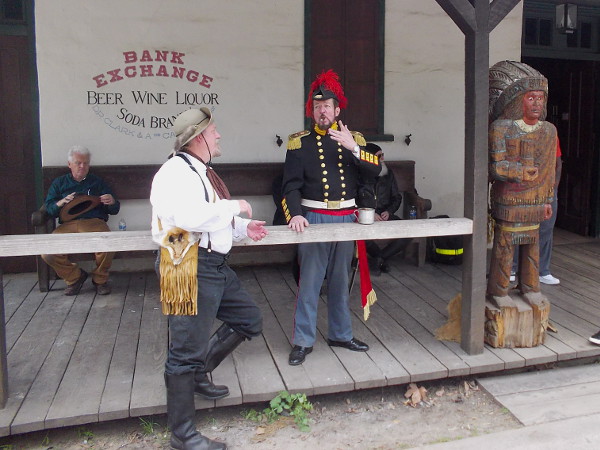
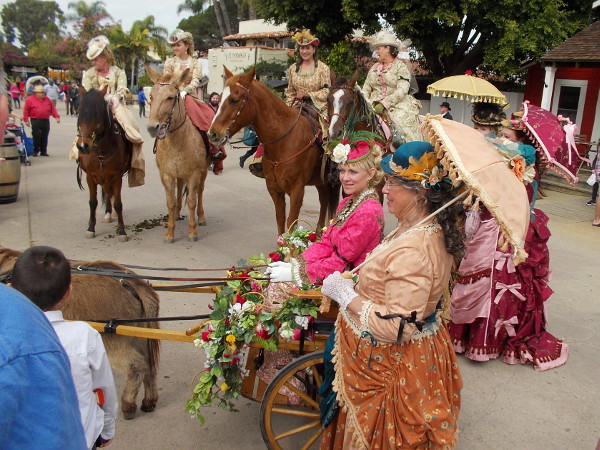
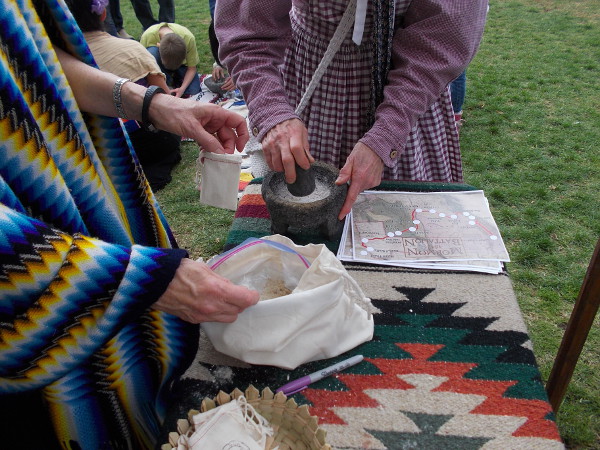
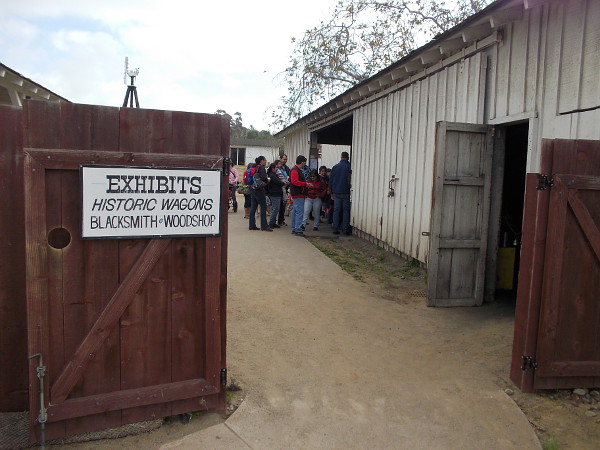
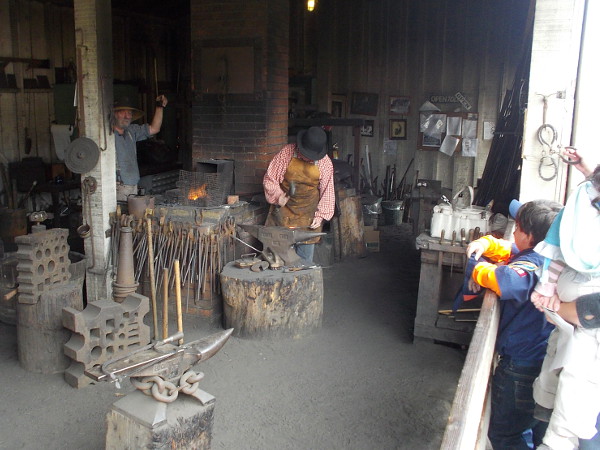
When I saw this rider on horseback as I entered Old Town this afternoon, I knew something special was going on!The public was welcome to this celebration of the Mormon Battalion. It included a parade, which I unfortunately missed.I saw kids in covered wagons, folks on horseback, and just a big whirl of activity all around Old Town today!We are commemorating the end of one of the longest military marches in U.S. Military History. Five hundred soldiers known as the Mormon Battalion marched from Council Bluffs, Iowa to San Diego, CA. In addition…there were 35 women and 45 children.Various exhibits recreated aspects of camp life, and life in San Diego during the mid-19th century.Treats on a stick. Lots of families were present for the very popular history-based event.One tent explained the hardships of women settling the West, and what life was like as a laundress.Lots of folks were about Old Town San Diego State Historic Park in period costume. Many people participating in the event were themselves Mormons.More unique and colorful costumes worn to help reenact a fascinating period of local history.Traditional folklorico dancing on a stage in Old Town. A strong Mexican heritage is a vibrant part of San Diego history.During the festivities, a large crowd enjoyed music, dance, food and all sorts of interesting sights.Contestants in a Dutch Oven Bake Off prepare their tasty concoctions for the judges.Young people were shown how clay bricks were made in the early days of San Diego.I was told this fabric would be used in the making of dolls.These ladies on horseback and in a fancy miniature donkey-driven cart were being photographed right and left. Wearing elegant frilly dresses and holding parasols, they delighted everybody!One booth in Old Town’s central plaza had a quilt-making demonstration, where kids could learn about the craft.Of course, there were many historical exhibits that told the Mormon Battalion’s story and described their contributions to San Diego’s early life and culture.The Liberty Stand explained how Mormons believe in the vision of America’s founding fathers, and their belief in values delineated by the U.S. Constitution.Another demonstration had folks grinding nuts and seeds, a skill adapted from Native American Kumeyaay who lived in this region long before Europeans.A guitar and a banjo create upbeat frontier-style music.This nice lady at an information stand gave the thumbs up for my camera!I wandered behind Seeley Stable because I noticed their famous blacksmith demonstration was open today!This lady was hammering glowing red hot iron while kids watched.A miniature donkey pulls an elegant cart!
…
Join me for more fascinating sights on Facebook and Twitter!
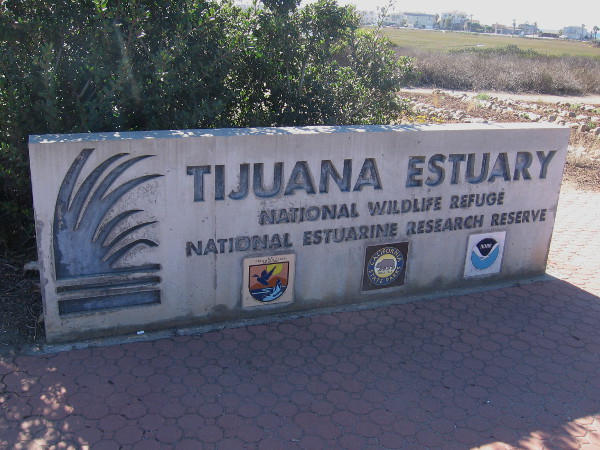
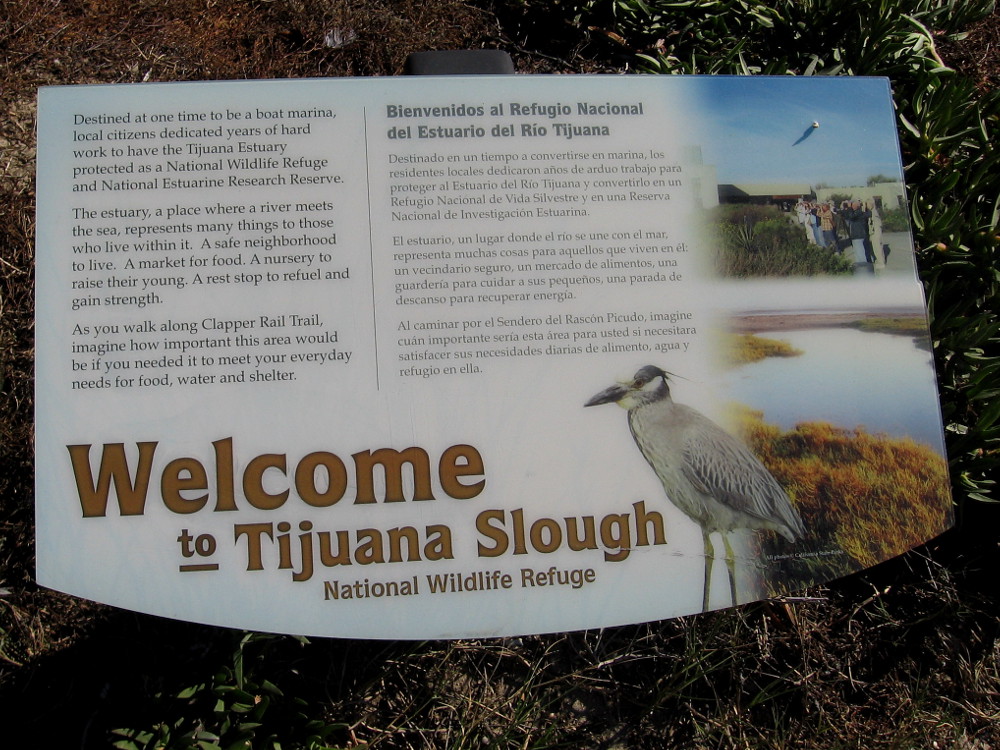
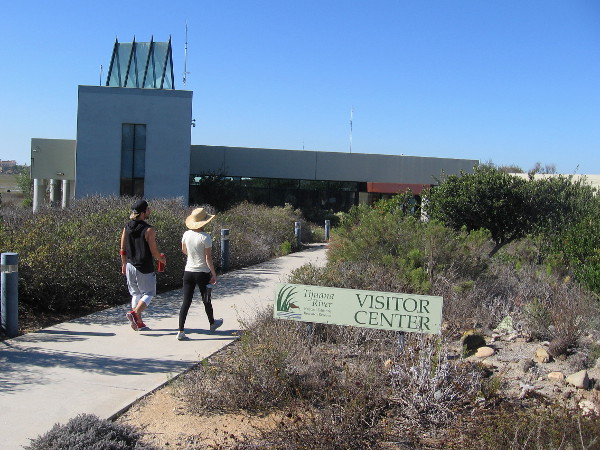
Sign near the entrance to Visitor Center of Tijuana Estuary, home of a National Wildlife Refuge and National Estuarine Research Reserve.
What place in North America officially contains the most plant and animal species? You don’t know? San Diego and the Northern Baja California region!
Yesterday I took a nature walk around and through the northern section of the Tijuana River Estuary. The large estuary, which is located at the extreme southwest corner of the continental United States, where the Tijuana River empties into the Pacific Ocean, contains abundant life which reflects San Diego’s amazing biodiversity and range of habitats.
The Tijuana Estuary is not only a place of tranquil beauty, but it’s a scientific laboratory, protective refuge, and outdoor classroom where the public can learn about our natural environment. It’s managed by several agencies, including the NOAA National Estuarine Research Reserve System, the California Department of Parks and Recreation, and the National Wildlife Refuge System under the U.S. Fish and Wildlife Service.
I absorbed so much information while walking about, reading signs, and listening to a volunteer guide during a short nature walk near the Visitor Center, that I couldn’t possibly convey it all on my blog. So I’ve selected some photos and have captioned them so you’ll get the gist of what I saw and learned. And hopefully you’ll want to visit, too!
Relatively few people partake of the scheduled weekend nature walks at the Tijuana Estuary Visitor Center. Joan, the plant expert, said that some days nobody shows up. What a shame. Because there’s so much beauty, so much to see.
I strongly encourage anyone who lives in the San Diego area to head down to Imperial Beach and take a long, leisurely walk where life thrives!
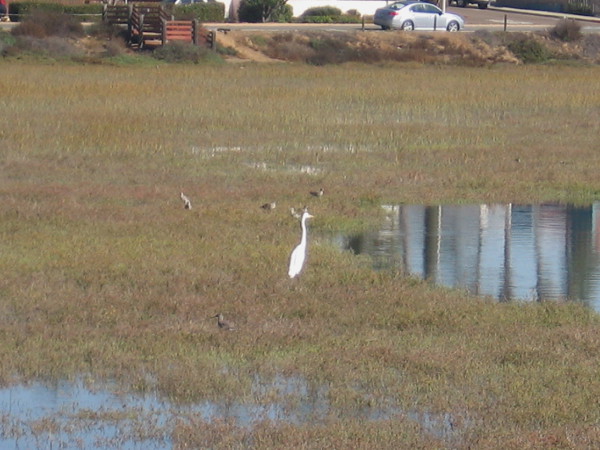
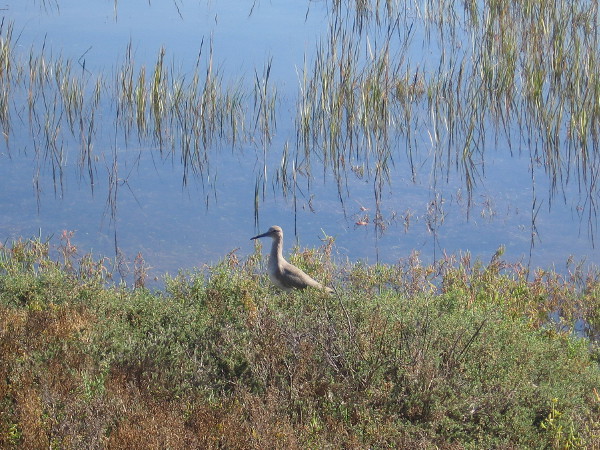
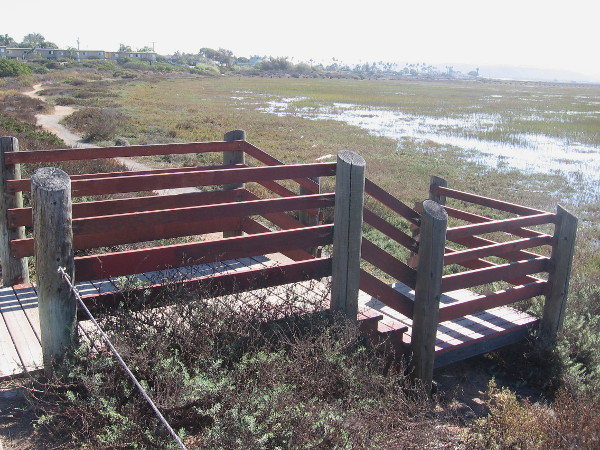
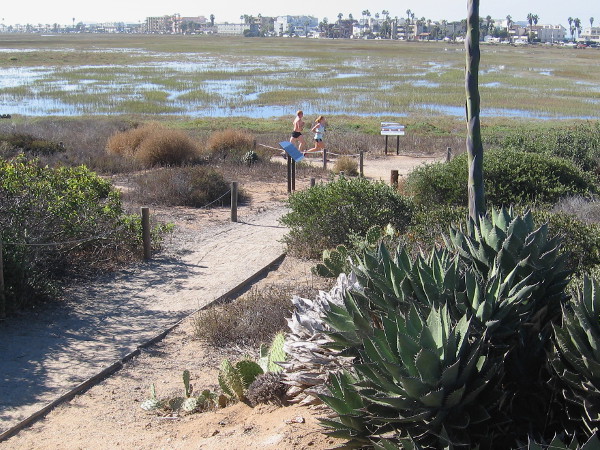
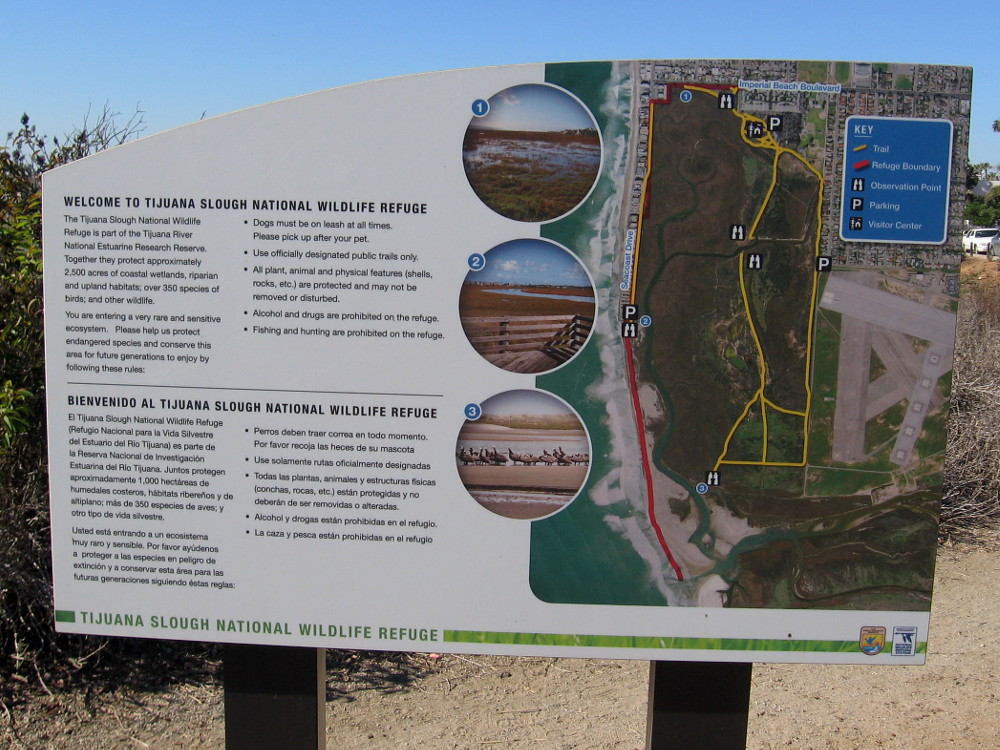
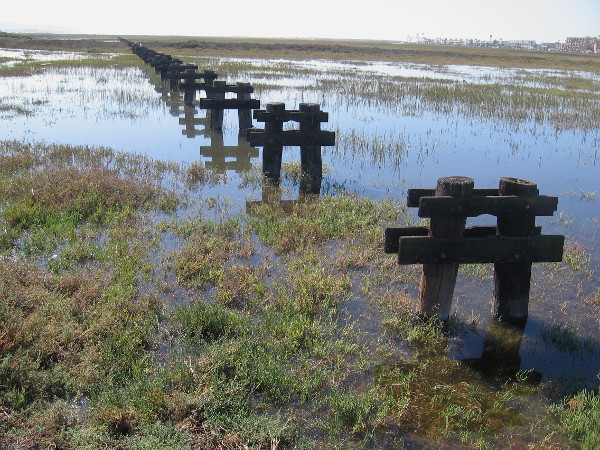
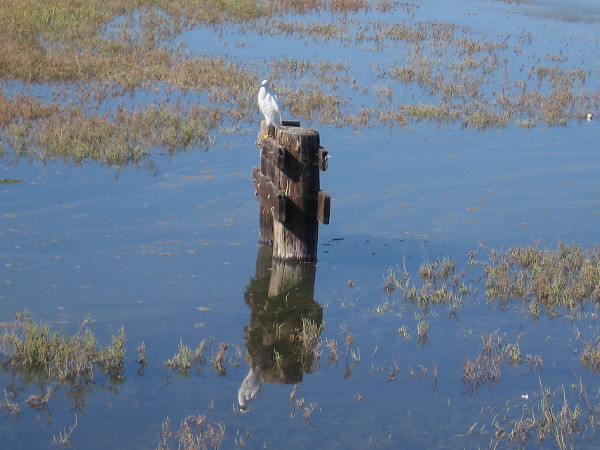
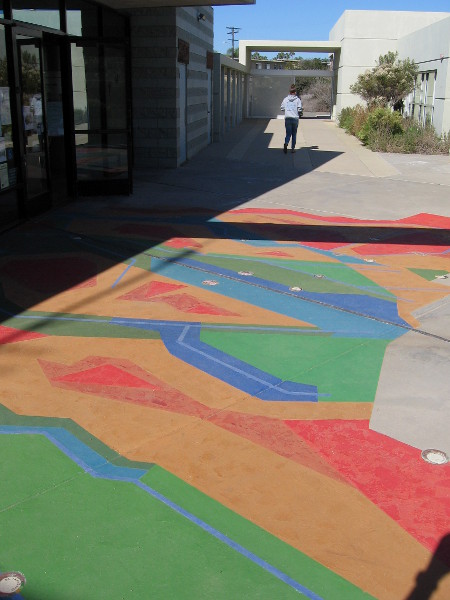
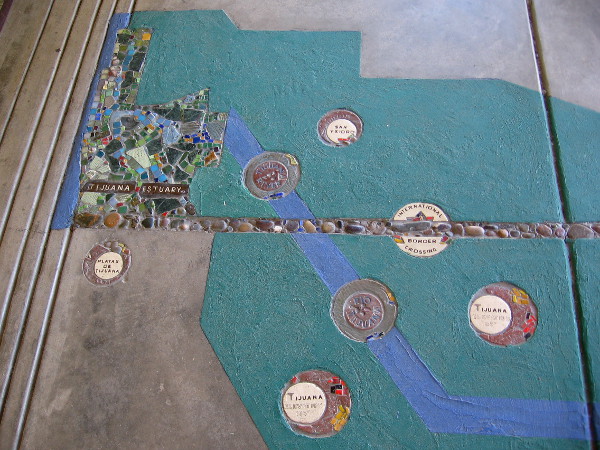
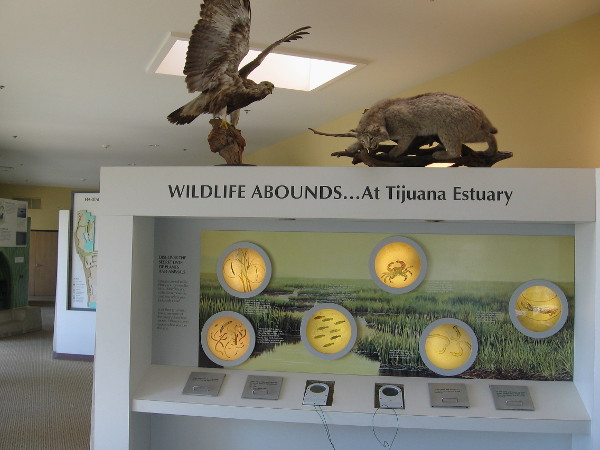
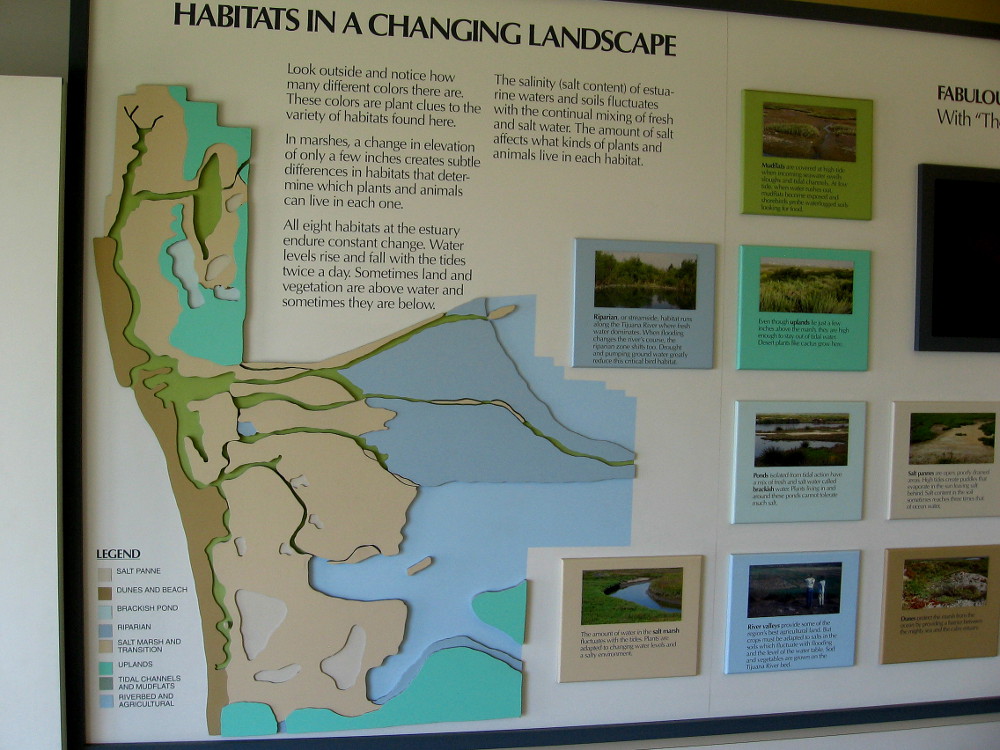
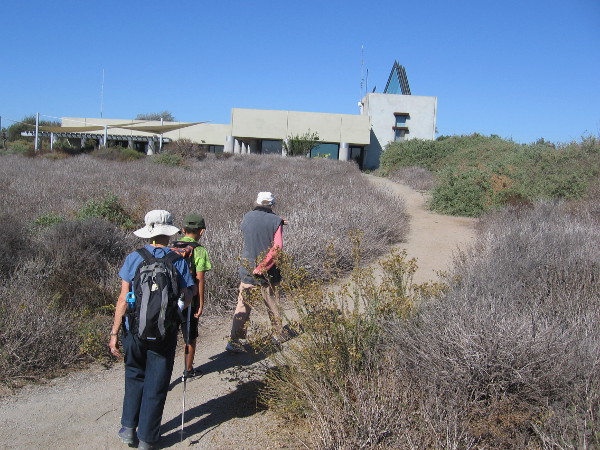
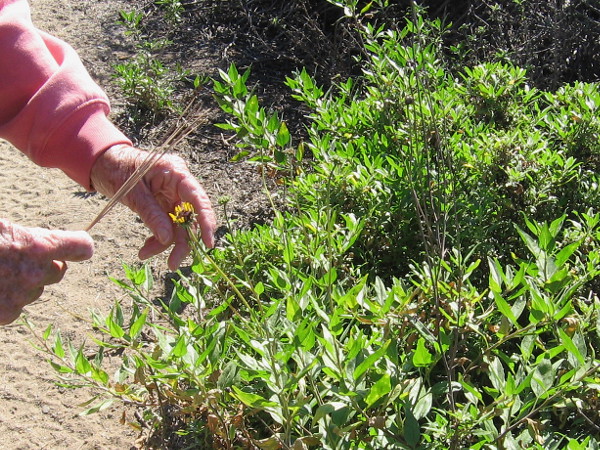
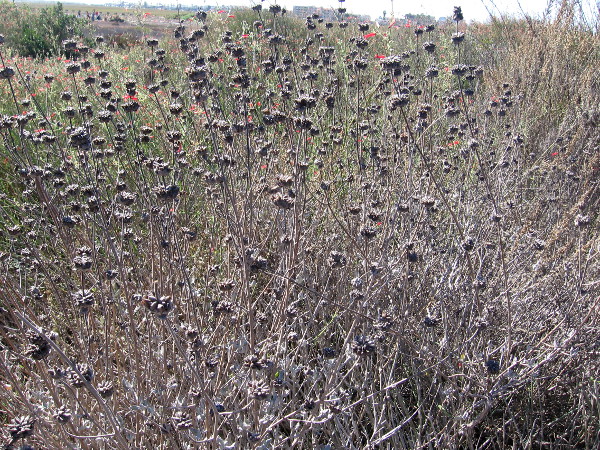
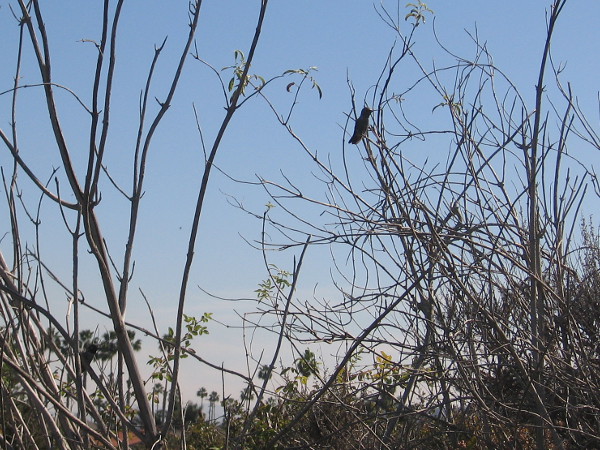
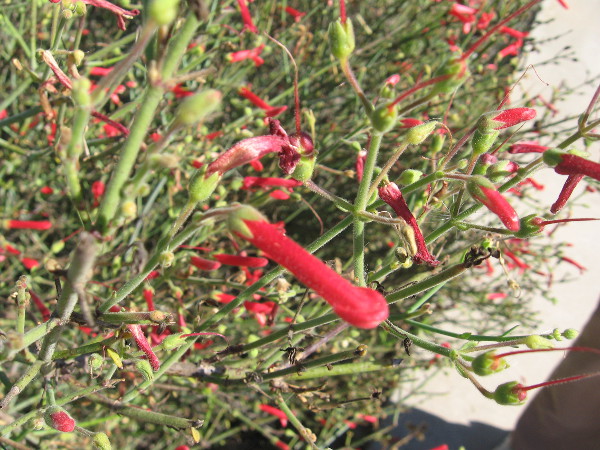
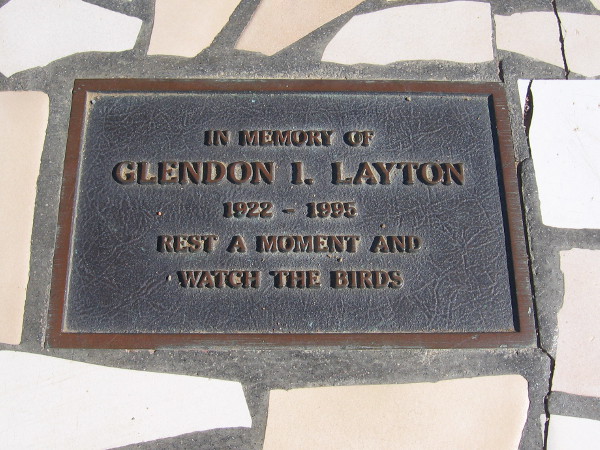
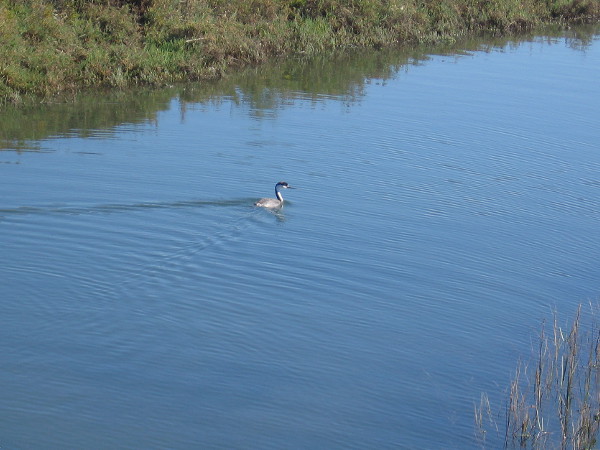
Ecoroute Bikeway and sidewalk along Seacoast Drive in Imperial Beach offers views of the north section of 2,500 acre Tijuana River Estuary.A white egret and other small birds enjoy the fertile, nutrient-rich environment created by this important coastal wetland.A shorebird equipped with a long bill, used to poke into sand and mudflats for food. Over 370 species of birds have been sighted in the wildlife reserve.Once a dump, and destined to be a boat marina, local citizens fought to have the Tijuana Estuary protected as a National Wildlife Refuge and National Estuarine Research Reserve.Steps lead down from Imperial Beach Boulevard to one of many trails in the fascinating, life-filled estuary.There are many habitats in the estuary including dune, salt panne, salt marsh, mudflat, brackish pond, riparian, coastal sage scrub, and vernal pool.Sign welcomes visitors to Tijuana Slough National Wildlife Refuge. Five endangered and two threatened species of birds are protected here in their natural habitat.I was told these old wooden pilings used to support a storm drain which ran out to the ocean.A Snowy Egret perches atop a post, perhaps watching the water for prey. Small fish, frogs, reptiles and insects are part of the food chain in a shallow river estuary.The path to the Tijuana Estuary Visitor Center passes through a garden of native plants often found along the coast of Southern California.This colorful abstract map at the Visitor Center entrance represents the 1,735 square mile watershed of the Tijuana River, reaching deep into Mexico.The edge of the map, inside the Visitor Center’s door, shows a part of San Diego and Tijuana. As it nears the Pacific Ocean, the Tijuana River crosses into the United States.One of many educational exhibits inside the cool Visitor Center. Wildlife abounds . . . at Tijuana Estuary!Viewed from the distance of the moon, the astonishing thing about the earth, catching the breath, is that it is alive.Habitats in a changing landscape. All eight habitats in the estuary endure constant change. Water levels rise and fall with the tides. Salinity of the water fluctuates.Visitors can jot notable sighting of birds on a board inside the Visitor Center. Buds and blooms are also listed.A few people out on a nature walk on a pleasant Saturday in November. The estuary is full of blooms, birds, and animal activity, even as winter approaches.Joan, a super nice park volunteer who is a plant expert (and author of a fun native plant book), shows us the yellow bloom of California bush sunflower.Even though the blue blooms of this pleasantly aromatic Cleveland Sage have dried, the seeds pods have a bluish tint.A tiny hummingbird is perched on the branch of a shrub.The Galvezia, or bush snapdragon, is common in Baja California. It has green stems, bright red tube flowers, and attracts hummingbirds.Hiking south down the North McCoy Trail in the Tijuana Estuary. Rising on the left horizon is Mexico. On the right horizon are the Coronado Islands in the Pacific Ocean.Ranger Debbie Good is super friendly. She answered a bunch of questions with a big smile. Here’s she’s putting away a table used to welcome volunteer workers.These volunteer students from SDSU are helping to plant native vegetation. Efforts to return the estuary to a natural state are ongoing. This area several decades ago was a dump.Looking across cordgrass and a beautiful wetland at the extreme southwest corner of the continental United States.A quiet bench on the North McCoy Trail invites walkers to relax and take in the sunshine and surrounding tranquility.Plaque on another bench at the south end of the trail. In memory of Glendon I. Layton. Rest a moment and watch the birds.The Tijuana River National Estuarine Research Reserve and Tijuana Slough National Wildlife Refuge is a place where amazing biodiversity and nature’s beauty thrive.
…
Follow this blog for more photos of cool stuff! Join me on Facebook or Twitter.
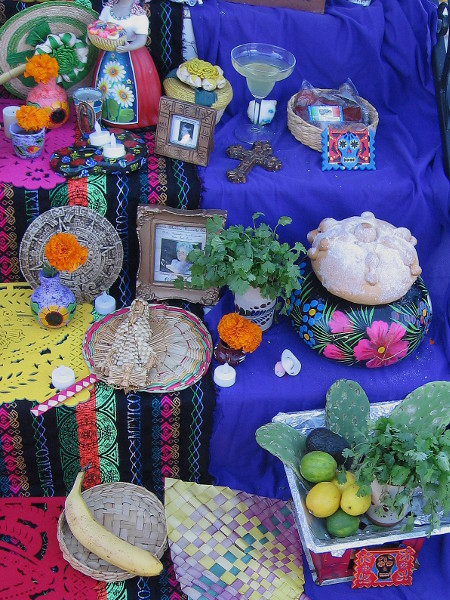
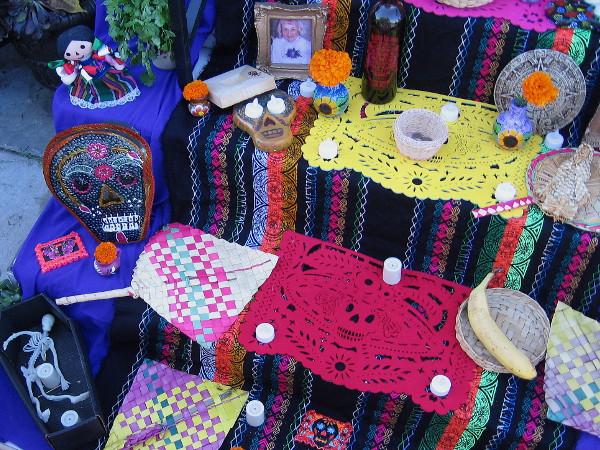
A traditional Dia de los Muertos altar in Sherman Heights summons ancestors and loved ones who have passed from this world.
I went for a long walk this morning. My feet carried me through Sherman Heights, a neighborhood directly east of downtown San Diego. I was hoping to see some of the community Dia de los Muertos (Day of the Dead) altars. These outdoor altars, distributed about a few residential streets, were the focus of yesterday’s popular Sherman Heights Muertos Festival, which I missed.
Heading down 24th Street, I spotted one elaborate altar near the sidewalk and was struck by the rich, heartfelt symbolism.
Loved ones who’ve “passed to the other side” are remembered with reverence on Dia de los Muertos, and their spirits are enticed back among the living. Traditional items featured in the altars can include sugar skulls, samples of the deceased person’s favorite food, pan de muertos (bread with a small human figurine baked inside), seeds, flowers, portraits of the dead, candles, alcohol (to toast the arrival of spirits), and papel picado (decorative perforated paper which represents the fragile nature of life).
I don’t know whose spirits are being summoned by this particular altar. I can tell that precious memories are being kept alive among the living, and that those memories contain whole lifetimes of love.
Powerful symbols of life, love, hope and renewal on display in this colorful outdoor altar.In Mexico, Dia de los Muertos is a joyous celebration of the dead. It is a beloved time in culturally rich San Diego.A beautiful outdoor Dia de los Muertos altar in Sherman Heights. An ordinary family cherishes extraordinary memories.
…
Thanks to all you great folks who visit my fun blog. And thanks for sharing! Join me on Facebook or Twitter.
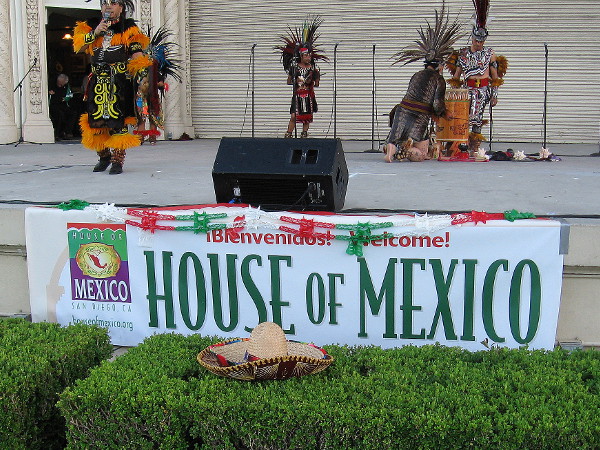
Dancers from Calpulli Mexihca perform at the Spreckels Organ Pavilion during weekend House of Mexico celebration.
This evening I enjoyed a walk through beautiful Balboa Park. As I approached the Spreckels Organ Pavilion, I heard the rhythmic beat of drums. I’d stumbled upon something wonderful and unexpected!
The House of Mexico, of Balboa Park’s House of Pacific Relations International Cottages, was having a celebration!
I lingered for a while and took a few photos…
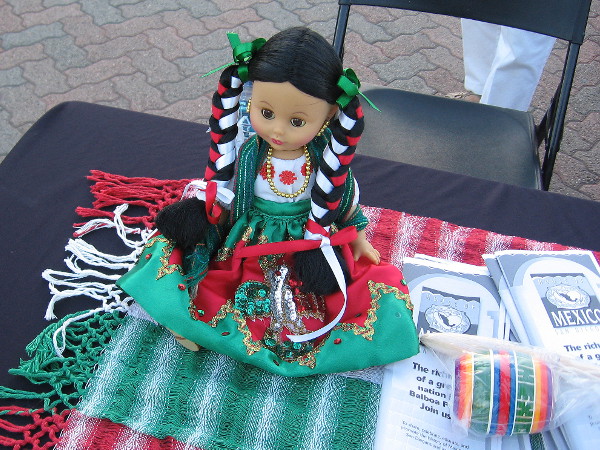
Doll greets visitors at Friday evening House of Mexico event in Balboa Park.The House of Mexico, of the House of Pacific Relations International Cottages, celebrated Mexican Independence Day and Balboa Park’s Centennial with music and dance.Performer from Danza Azteca Calpulli Mexihca in a colorful Aztec costume.Musicians from Mariachi Garibaldi of Southwestern College would take the stage in a few minutes.Smiles during a celebration of Mexican culture and history in San Diego’s Balboa Park.
…
Follow this blog for more unexpected discoveries! Join me on Facebook or Twitter.













































 Cool San Diego Sights!