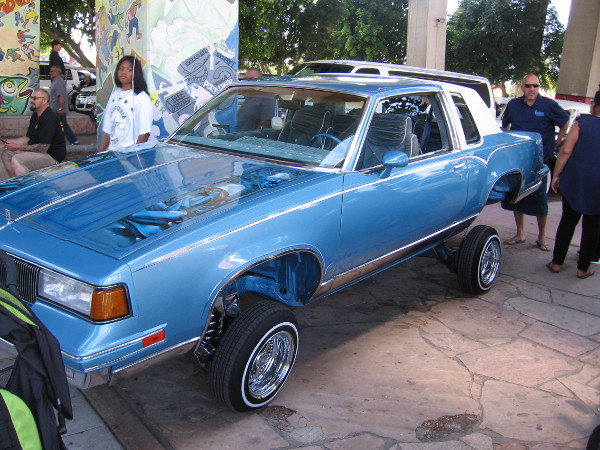
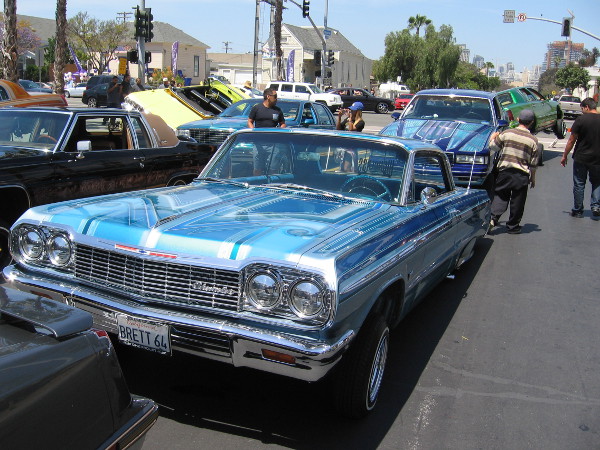
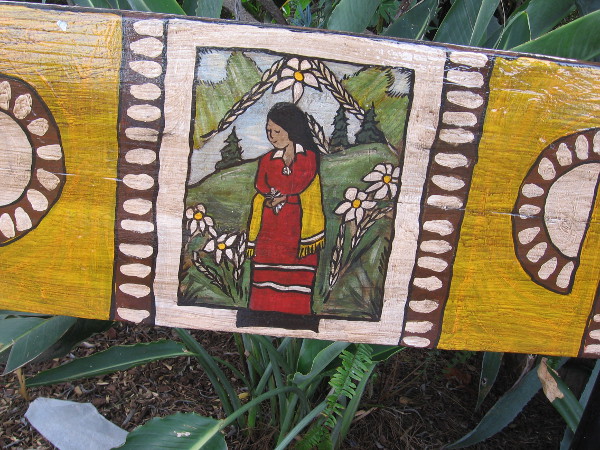
Cool graphics on the side of a customized lowrider on display at this year’s Chicano Park Day celebration.
I headed down to Barrio Logan this morning to enjoy a bit of the 47th Annual Chicano Park Day celebration!
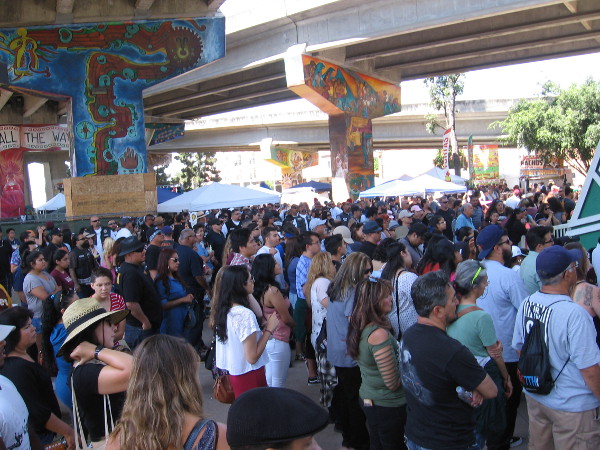
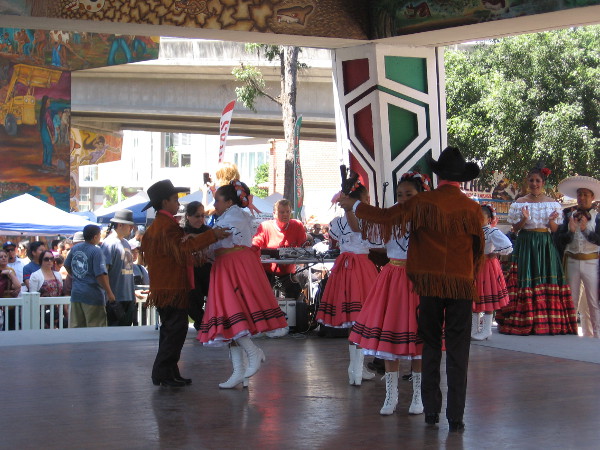
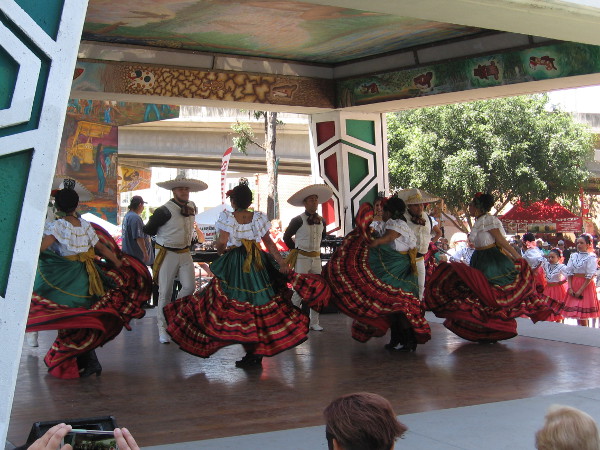
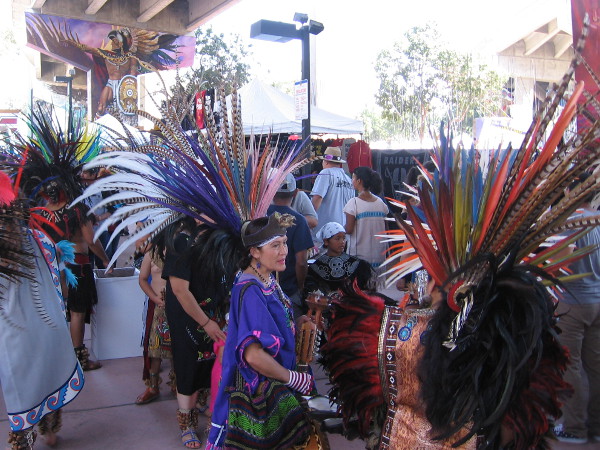
The big festival celebrating Mexican and Chicano culture drew huge crowds as usual from all around Southern California. There was traditional folklorico dancing, Aztec indigenous dance, and a huge contingent of lowriders and motorcyclists who converged to enjoy the scene and showcase their cool rides. Families enjoyed great food, the park’s playground, and a look at artwork and unique gifts at the many vendor tents. It was fun to just hang around, absorbing San Diego’s warm sunshine and the lively entertainment. The famous murals of Chicano Park infuse the much-loved event with a sense of history and potent meaning. The murals tell of the hard-fought struggle for civil rights.
Chicano Park Day this year was dedicated to Ramón Chunky Sánchez, a very popular musician and a leader of San Diego’s Chicano community who passed away late last year. Speakers also provided emotional tributes to the four who died last year at the annual La Raza Run motorcycle festival in Chicano Park when a car tragically plummeted onto the crowd from a ramp to the Coronado Bay Bridge.
On a happier note, I must mention that in January Chicano Park was designated a National Historic Landmark! Chicano Park contains our nation’s largest collection of outdoor murals.
Please enjoy some colorful photos from this morning!
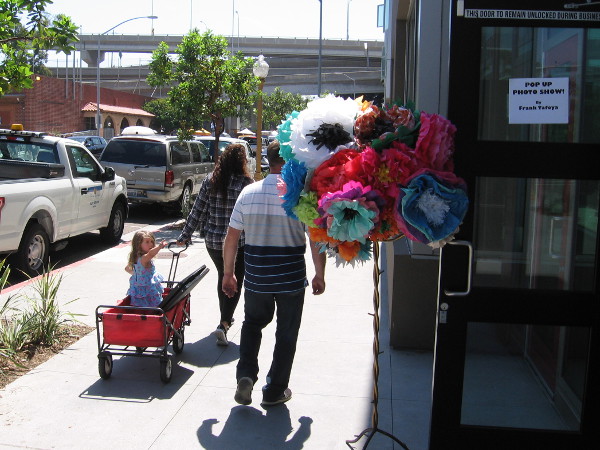
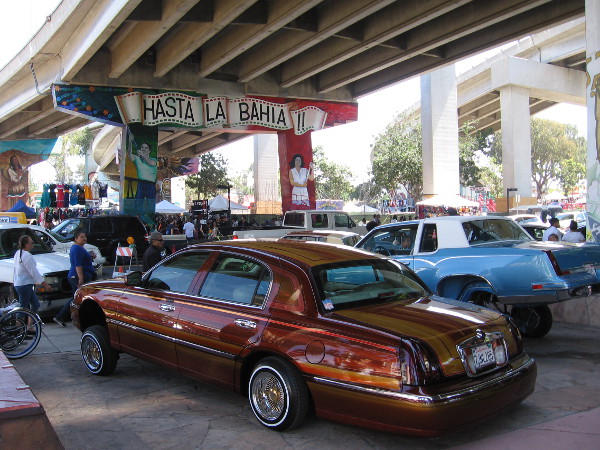
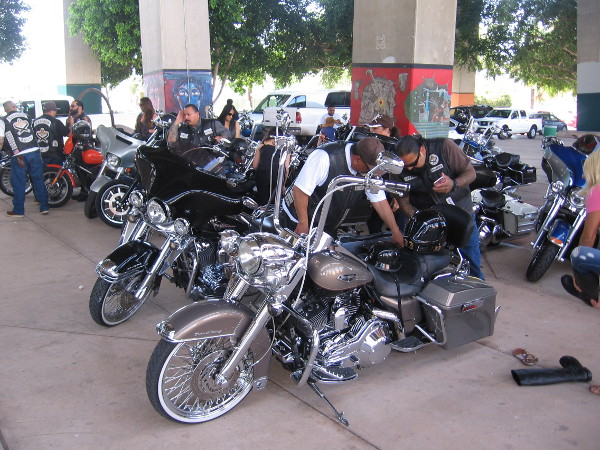
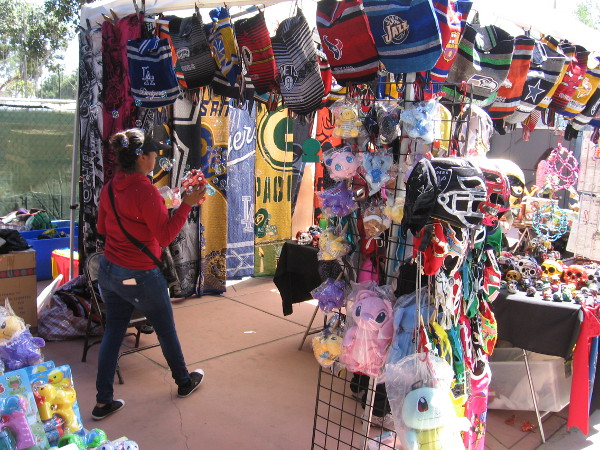
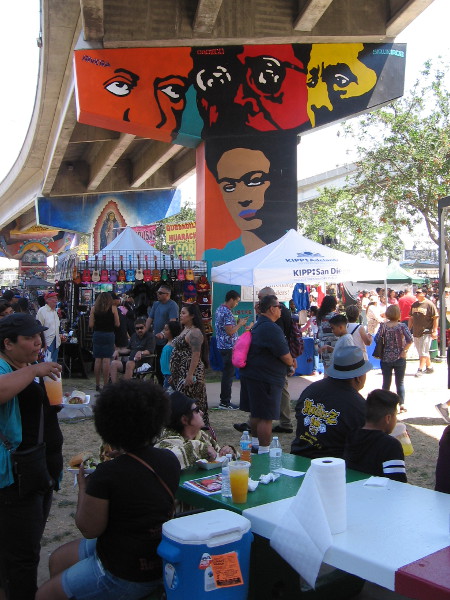
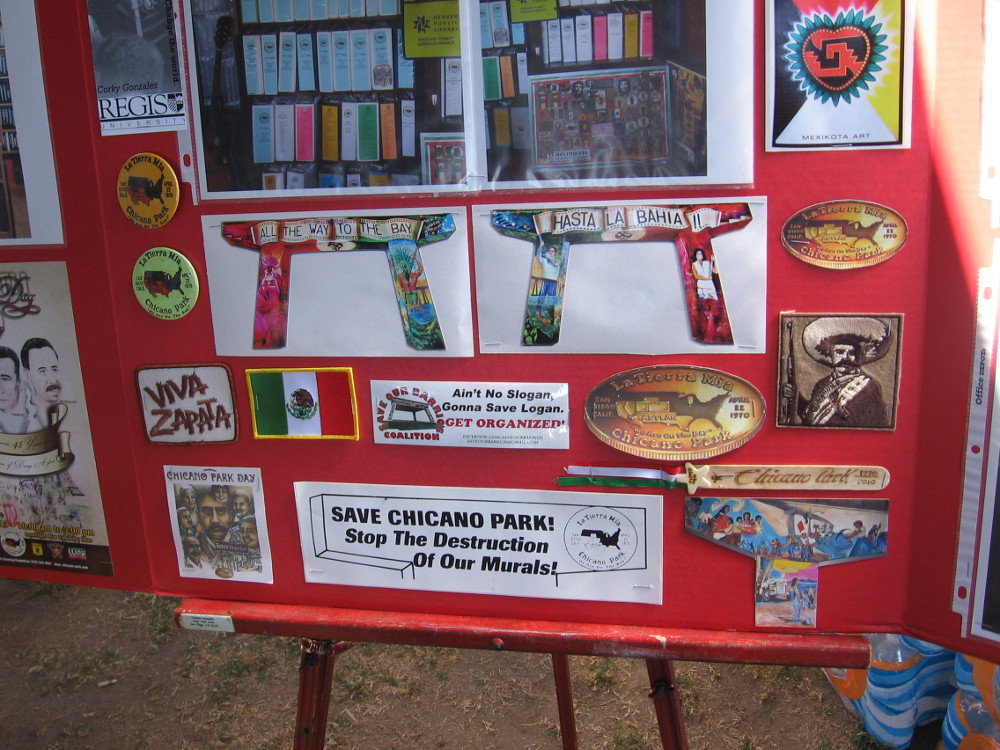
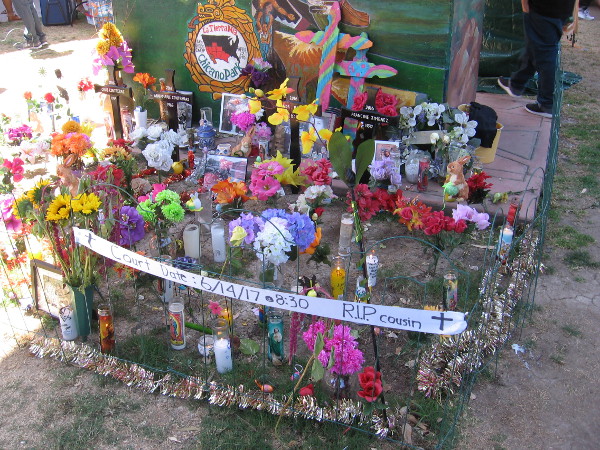
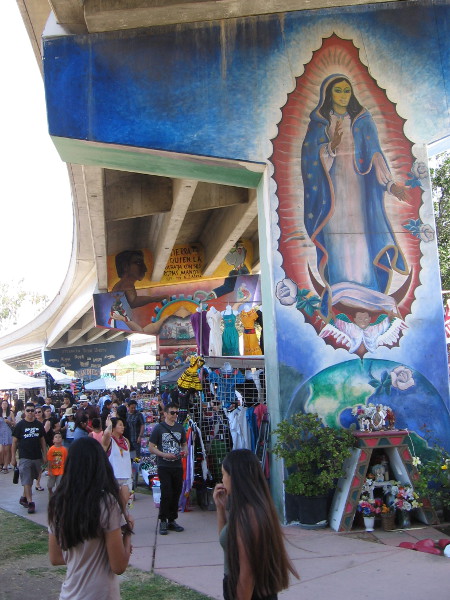
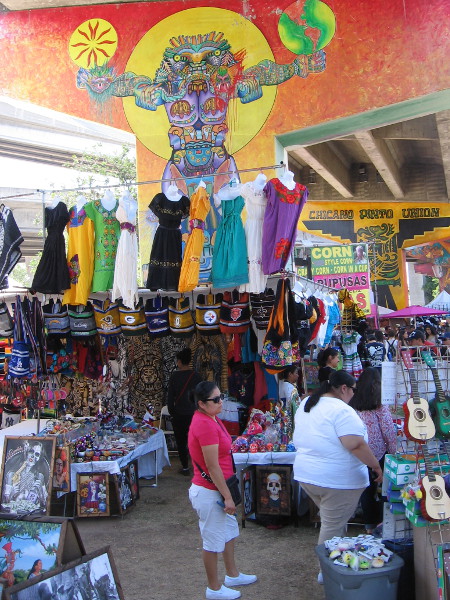
A family heads toward Chicano Park, where a big annual celebration of Latino history and culture took place today.The first thing that caught my attention were lots of awesome vehicles. Many were fitted with hydraulics. Southern California lowrider culture is unmatched in the entire world.Cool cars in Barrio Logan’s world-famous park.Motorcycles and their proud owners also rode in from far and wide for the event.One corner of one mural. As I walk through the valley of the shadow of death, I fear no evil porque soy Chicano!Vendor has lots of fun gifts ready for the growing crowd.These guys were enjoying the lively scene from one of the public park’s picnic tables.Some old photos at one booth show Chicano Park being claimed and created by activist community members in 1970.A variety of images that tell some of the history of San Diego’s unique Chicano Park.A memorial still remains in Chicano Park, where four were tragically killed last year when a driver veered off the bridge above.A large crowd gathered around the pavilion to hear surviving family members remember the deceased and thank the local community for its undying love.A large crowd, and the festival had barely opened.And then the entertainment began!People enjoy Chicano Park Day among the many expressive murals. A beautiful image of Virgin Mary has a shrine at its base.Another photo of the festival today.The folklorico dancing produces smiles, cheers and applause. The park’s pavilion, also called the Kiosko, was designed to look like a pre-Colombian Mesoamerican temple.Traditional Mexican ballet folklorico is a delightful slice of Latino culture and much loved in San Diego.Some bold artwork on display at the festival. I spotted lots of Aztec and Dia de los Muertos designs.And more cool stuff!Photograph at one table shows the late Chicano musician Ramón Chunky Sánchez.Many dancers who would perform at the Chicano Park Day celebration wore resplendent Aztec-inspired costumes.Another fantastic sight in culturally rich San Diego.The High Class Car Club out of Los Angeles had lots of amazing lowrider vehicles on display at nearby Mercado del Barrio.A cool design on the side of one very cool car!
…
I live in downtown San Diego and love to walk around with my camera! You can follow Cool San Diego Sights via Facebook or Twitter!
You can easily explore Cool San Diego Sights by using the search box on my blog’s sidebar. Or click a tag! There are thousands upon thousands of fun photos for you to share and enjoy!
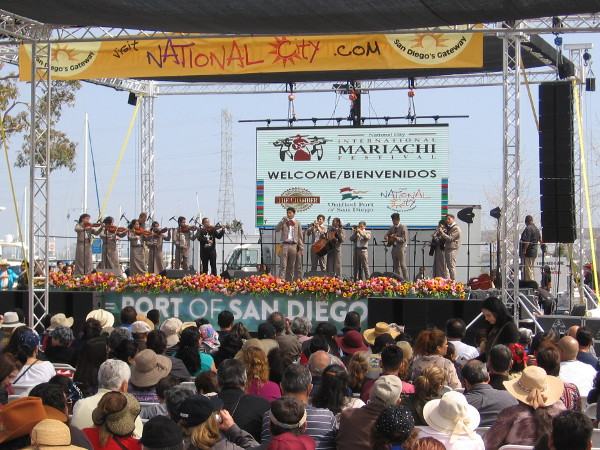
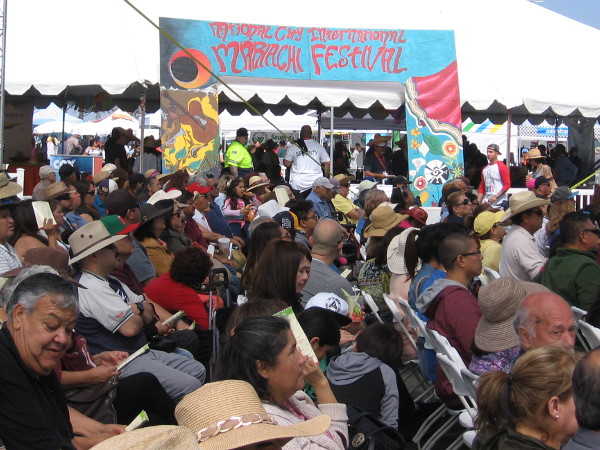
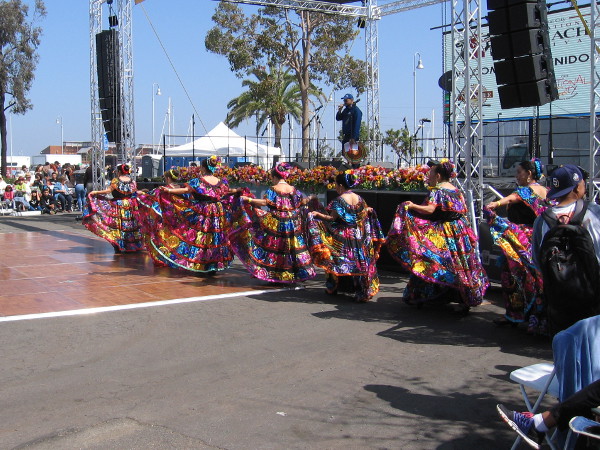
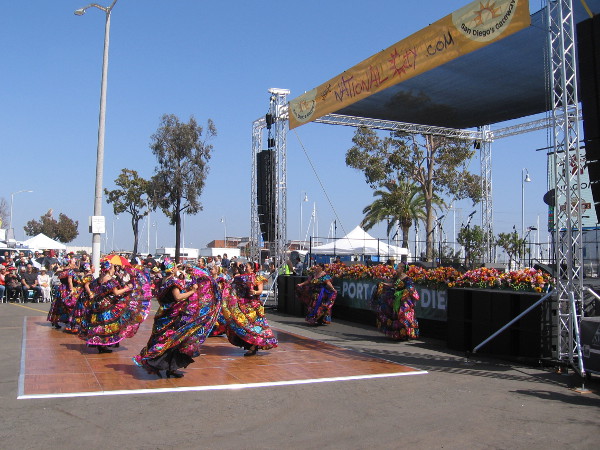
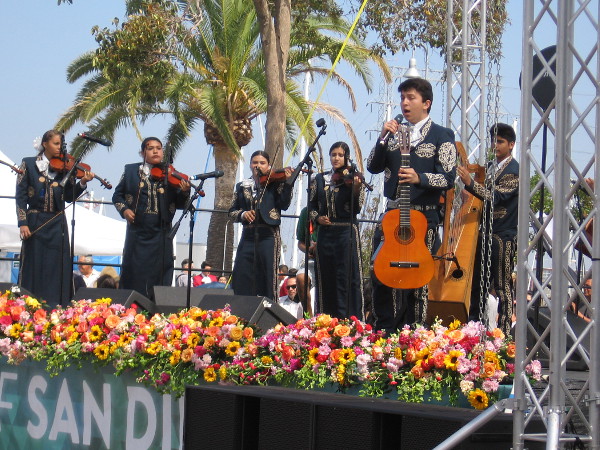
People watch the 5th Annual International Mariachi Festival in National City’s Pepper Park.
I took a bunch of colorful photos today at one of San Diego’s most wonderful festivals! The 5th Annual International Mariachi Festival was held today at Pepper Park in National City. (Actually, as I post this blog, the event still has about an hour to go.)
So what does one see at a Mariachi Festival? Read the captions!
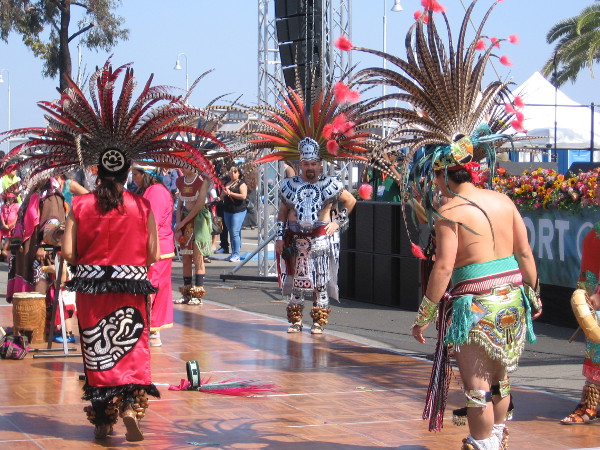
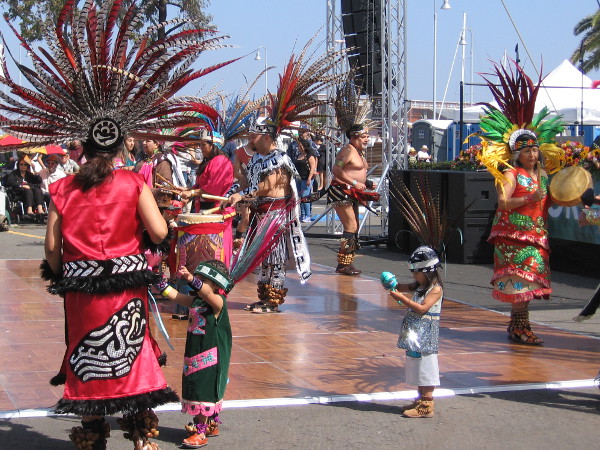
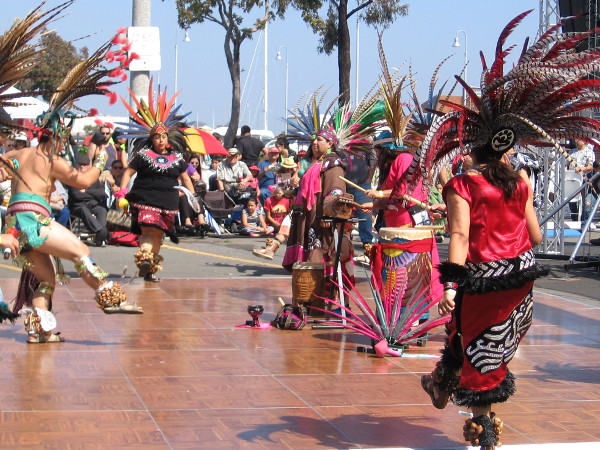
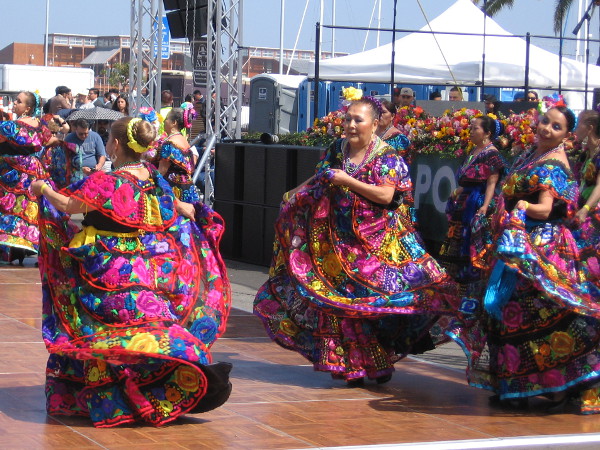
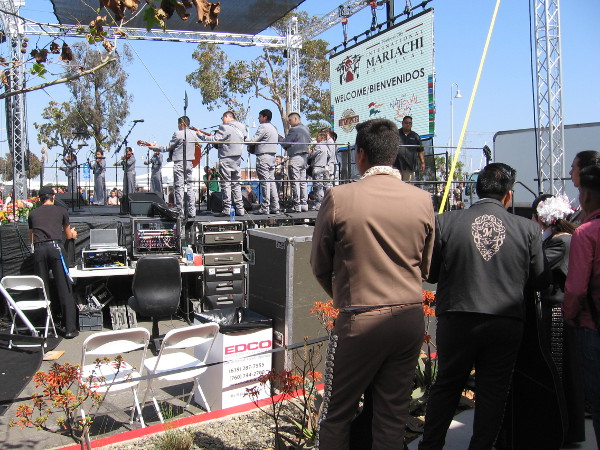
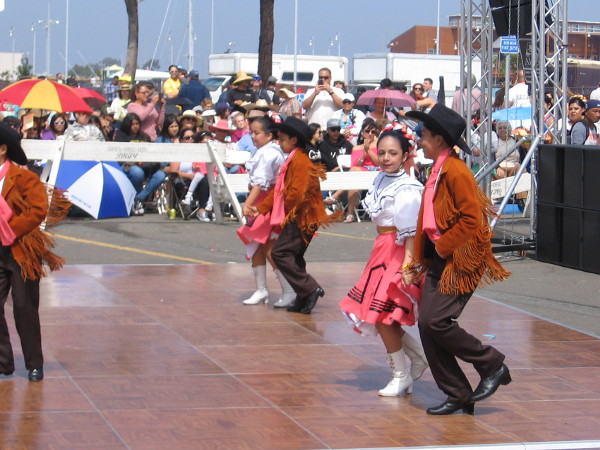
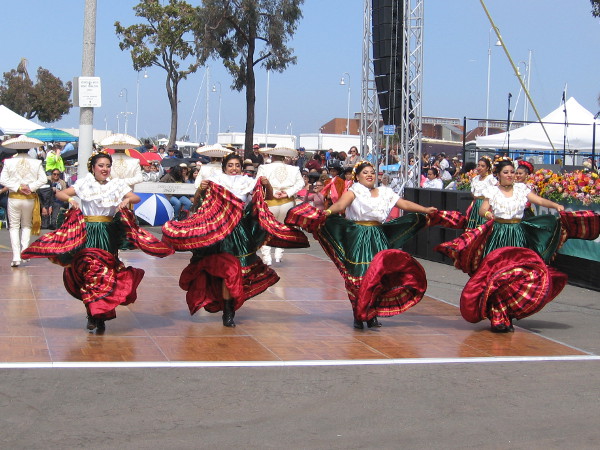
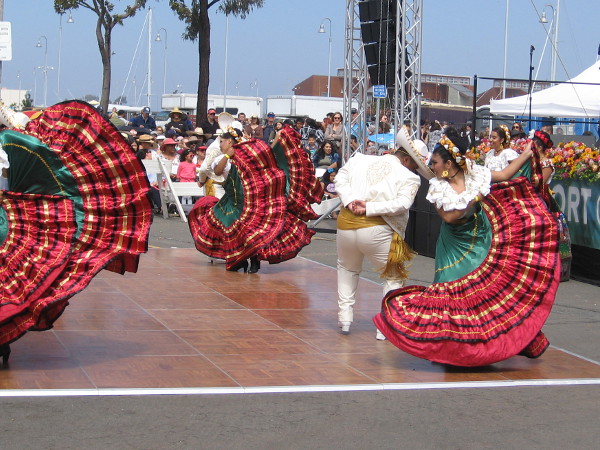
The first performance featured the colorful Azteca Dancers – Danza Mexi’cayotl.The Azteca Dancers file onto the stage to the beat of drums.The audience watches the dancers perform on the Main Stage of the National City International Mariachi Festival.Dancers of all ages participate in several ancient Aztec dances, including a Rain Dance.Energy and joy are expressed as cultural traditions live on.The first of many wonderful performances at the Mariachi Festival!Now here comes Danza Folklorica Las Florecitas!Another amazing dance begins!Smiles and brightly colorful dresses are both big parts of Mexican culture.Dizzily spinning color and pure joy.Life as it should be.The happy, rhythmic music had lots of people in the audience clapping along.Here come some youthful musicians! I believe this is Mariachi Maya de Southwest Middle School. You wouldn’t believe the lung power and vocal range of that gifted young singer!Watching from the side of the Main Stage.Meanwhile lots of other fun stuff was going on at the festival, including this guy creating cool spray paint art.Vendors had all sorts of stuff for sale, including colorful Mexican dresses and fierce lucha libre masks.Speaking of lucha libre, there was some of that as well. (The blindfolded guy somehow won!)Wrestlers entertain a small crowd at the International Mariachi Festival.My favorite photo of the family event!And the event this year was very big! More people kept on arriving right into the afternoon.The excellent entertainment continued non-stop at the Main Stage.Many great mariachi groups would perform from around San Diego, Southern California and Mexico. Many middle school and high school groups participated.At the opposite end of Pepper Park, on the Port Stage, kids of all ages performed.On the grass off to the side of the Port Stage a bunch of young performers awaited their turn in the spotlight.Now I’m back at the Main Stage one last time. The crowd has grown!Rousing, emotional, much-loved mariachi music brought loud applause throughout the event.This young man sang several songs, and finished with an exciting mariachi version of Sinatra’s New York, New York!Here come some young couples dancing! I’m not sure who these performers are.A dance filled with life.Youthful energy at the Mariachi Festival in National City.And now–I believe–Danza Folklorico Nanahuatzin.Colorful skirts whirling like kaleidoscopes.A traditional Mexican folk dance delighting both eyes and ears.Pure joy.Many wonderful performances could be enjoyed at the 5th Annual International Mariachi Festival!
…
This blog now features thousands of photos around San Diego! Are you curious? There’s lots of cool stuff to check out!
Here’s the Cool San Diego Sights main page, where you can read the most current blog posts. If you’re using a small mobile device, click those three parallel lines up at the top–that opens up my website’s sidebar, where you’ll see the most popular posts, a search box, and more!
To enjoy future posts, you can also “like” Cool San Diego Sights on Facebook or follow me on Twitter.
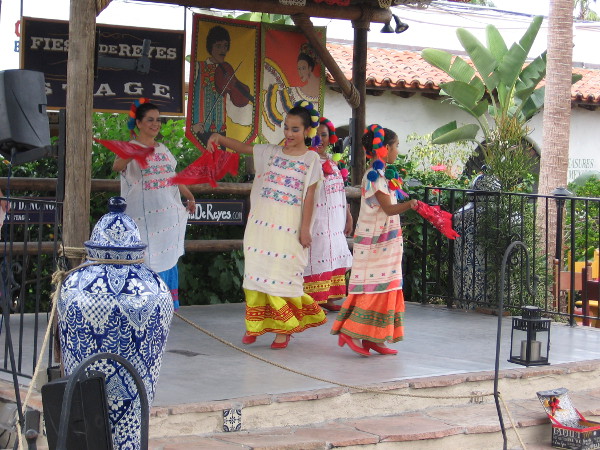
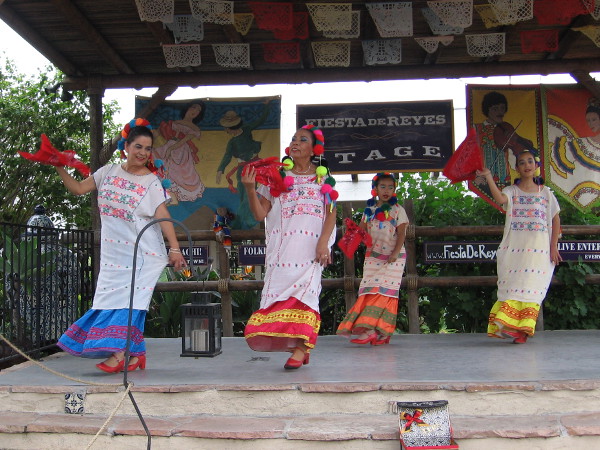
Fiesta de Reyes in Old Town San Diego State Historic Park features a stage with live folklorico dancing!
Whenever I visit Old Town San Diego State Historic Park, I poke my head into Fiesta de Reyes. The Mexican-themed shops and restaurants are always lively and cheerful, but what I really hope to see is the folklorico dancing!
The colorful dancing takes place daily. Take a look at these photos and smile!
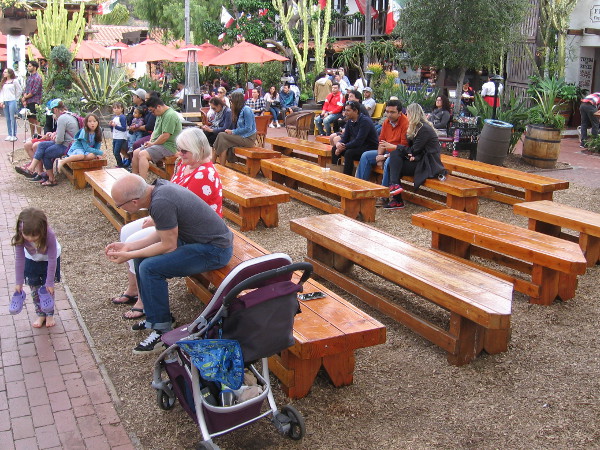
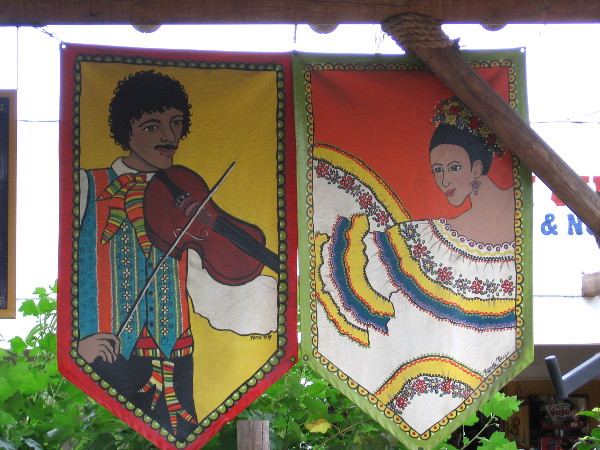
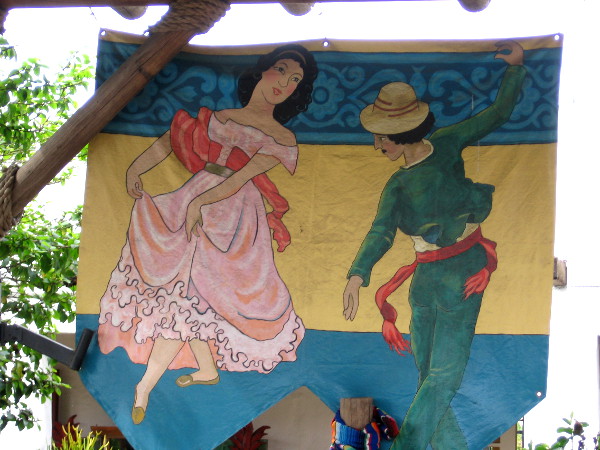
The outdoor stage is located near the Mexican-themed shops and restaurants of Fiesta de Reyes. Daily dancing is a popular attraction.Traditional Mexican dance includes colorful dresses and big smiles.Outdoor benches at Fiesta de Reyes allow visitors to relax and watch the free entertainment.Some performers in costume wait off to the side of the stage.Colorful banners behind the stage.A joyful scene of traditional Mexican folk dance.Between the stage and nearby outdoor restaurant is this stunning dancer. Art made entirely of succulents.Benches facing the stage include bits of cheerful folk art.An image of two smiling youth, holding hands.Fun mariachi sculptures on a wagon just inside the entrance to Fiesta de Reyes.Mexican culture on a sunny San Diego day.
…
I live in downtown San Diego and love to walk around with my camera! You can follow Cool San Diego Sights via Facebook or Twitter!
You can easily explore Cool San Diego Sights by using the search box on my blog’s sidebar. Or click a tag! There are thousands upon thousands of fun photos for you to share and enjoy!
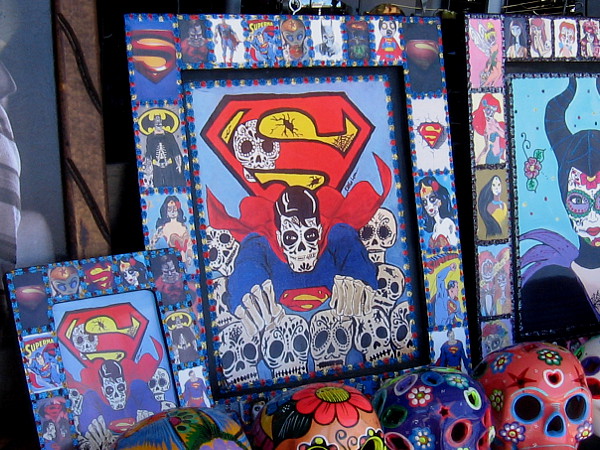
Day of the Dead (Día de los Muertos) art rendition of Justice League heroes, including Superman and Batman.
A good number of pop culture fans follow Cool San Diego Sights, because every year I cover San Diego Comic-Con and post tons of cosplay photos. So here’s something I saw today during my walk through Old Town that DC Comics readers might really enjoy!
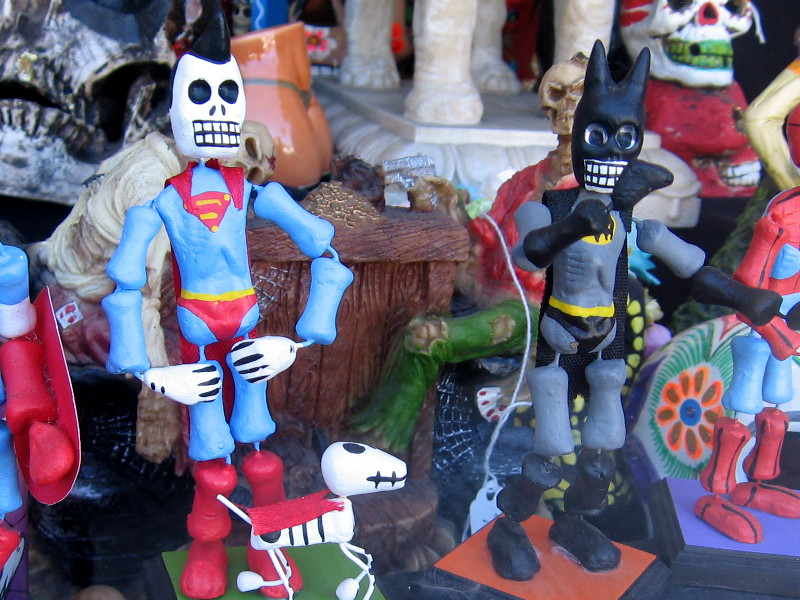
In the window of a shop called Cielito Lindo were all sorts of Day of the Dead ornaments and gifts. And among all the colorful artwork were Batman, Wonder Woman, Superman, and his super-dog Krypto!
Day of the Dead is a beloved Mexican holiday that is very popular here in San Diego. In Spanish it’s called Día de los Muertos. Skulls and skeletons, which abound during the Day of the Dead, traditionally represent deceased loved ones.
As you can see, Day of the Dead inspires all sort of creative, unexpected art! No subject matter escapes its decorative influence! Even the mighty Justice League!
Day of the Dead (Día de los Muertos) art depicts popular DC Comics super-heroine Wonder Woman.A skeletal Superman flying through skulls.Fun skeleton artwork celebrating Day of the Dead (Día de los Muertos). The figures are Superman, his dog Krypto, and Batman!
…
I live in downtown San Diego and love to walk around with my camera! You can follow Cool San Diego Sights via Facebook or Twitter!
You can easily explore Cool San Diego Sights by using the search box on my blog’s sidebar. Or click a tag! There are thousands upon thousands of photos–including many of Comic-Con and all sorts of cosplay–for you to share and enjoy!
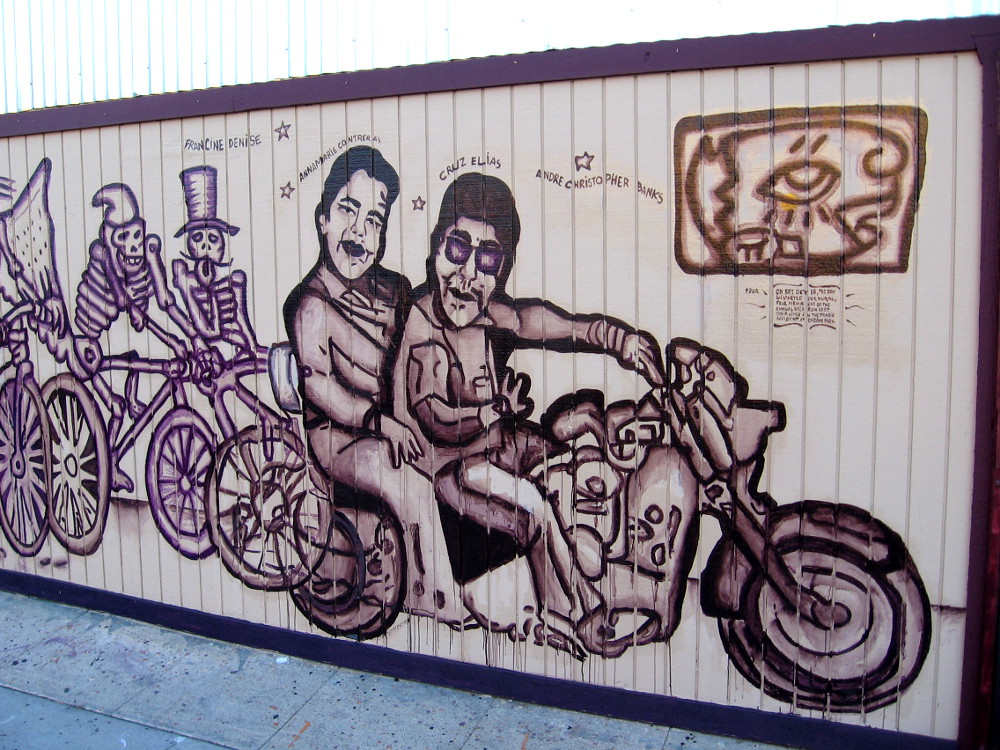
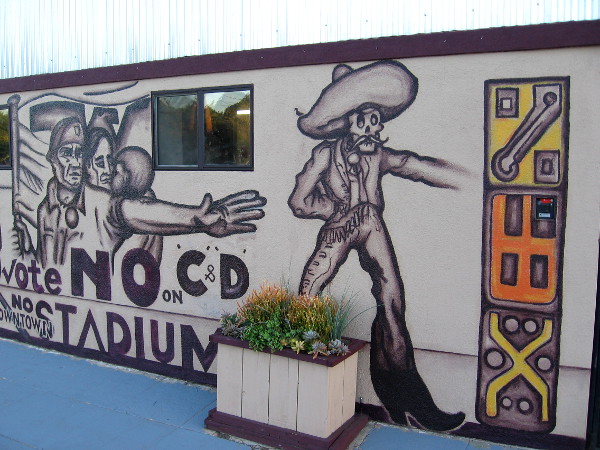
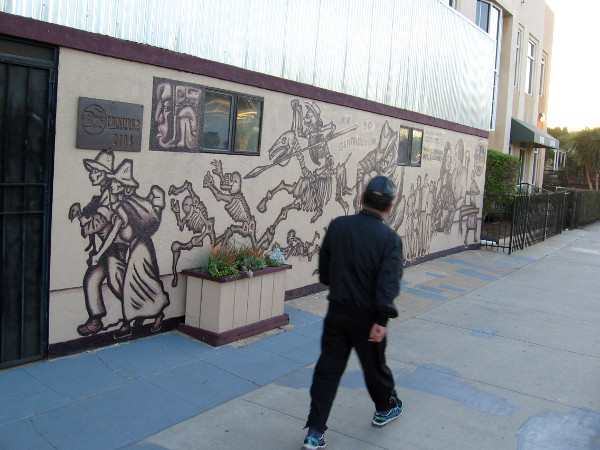
A long mural painted on a building at the corner of National Avenue and Evans Street honors four lives that were lost during a tragic accident in Chicano Park on October 15, 2016.
Here are photos of the new mural in Barrio Logan that honors the lives of four people who died tragically last month in Chicano Park under the Coronado Bay Bridge. On October 14, the four–Annamarie Contreras, Cruz Elias Contreras, Andre Christopher Banks and Francine Denise Jimenez–were attending the annual La Raza Run motorcycle festival in Chicano Park when a car driven by a drunk driver suddenly plummeted from the bridge onto the crowd below. The news that four were killed and eight were injured was shocking. Many were shaken. So many hearts were broken.
The new artwork, which includes a tribute to the four victims, can be found at the corner of National Avenue and Evans Street, a block southeast of Chicano Park. Chicano Park is famous for its many colorful murals that depict the civil rights struggles of Mexican Americans and immigrants.
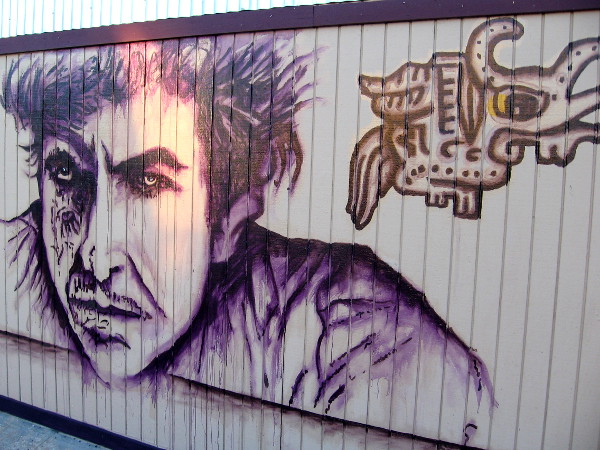
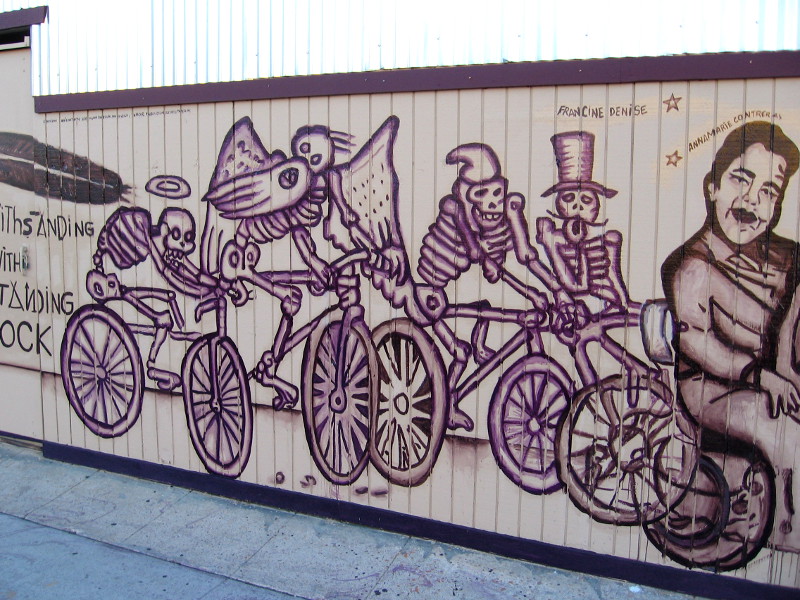
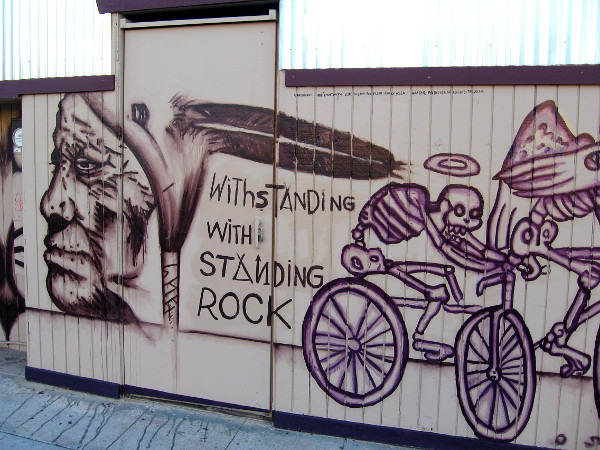
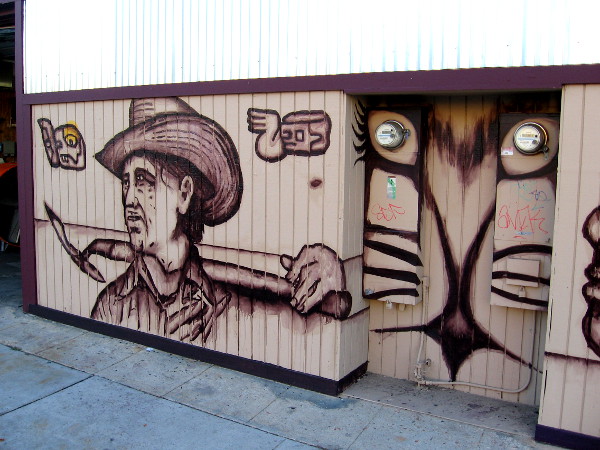
On Saturday, October 16, the day we started our mural, four members of the annual Raza Run lost their lives in the tragic accident at Chicano Park.The mural is titled Que Viva Barrio Logan, by artist Mario Torero. It’s painted on the side of Diego and Son Printing. Words proclaim: Making a difference in our community.The mural transmits great emotion. Many in the Barrio Logan community oppose gentrification.The mural also includes a message opposing the building of a new stadium downtown.Working under the Coronado Bay Bridge, home of Chicano Park.A few of the images in the mural. Breaking a chain of bondage. Music and pride. Protect the water.The face of Bob Dylan in Barrio Logan.Skeletons on bicycles. Symbols, I believe, of past loved ones.Withstanding with Standing Rock.The face of a migrant worker.Walking down the National Avenue sidewalk, past a new mural that celebrates life, memory and history in Barrio Logan.
…
I live in downtown San Diego and love to walk! You can follow Cool San Diego Sights via Facebook or Twitter!
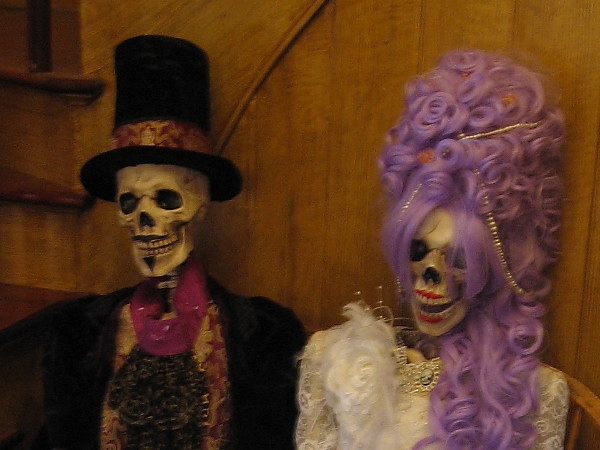
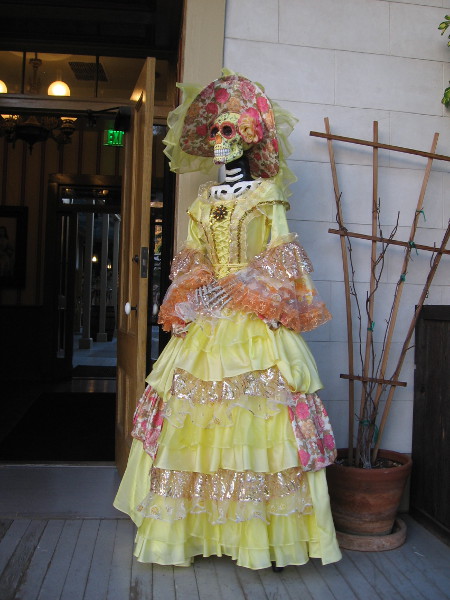
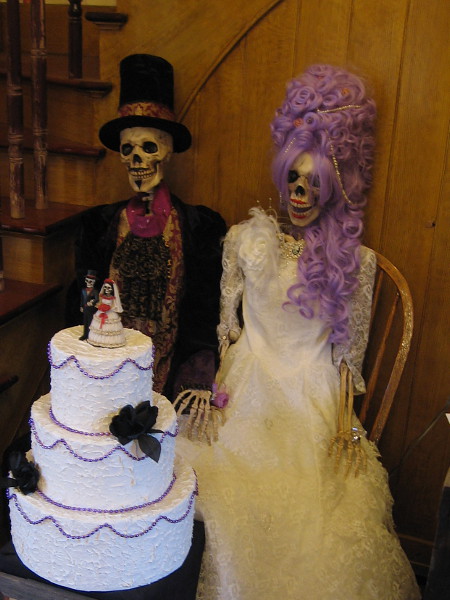
Two elegantly dressed skeletons have been discovered seated inside the front entrance of the Cosmopolitan Hotel in Old Town.
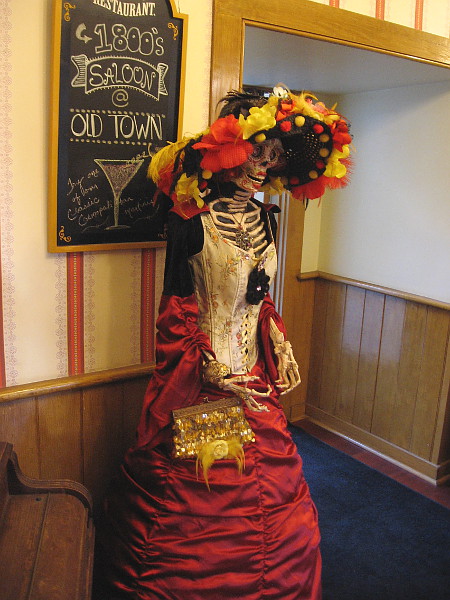
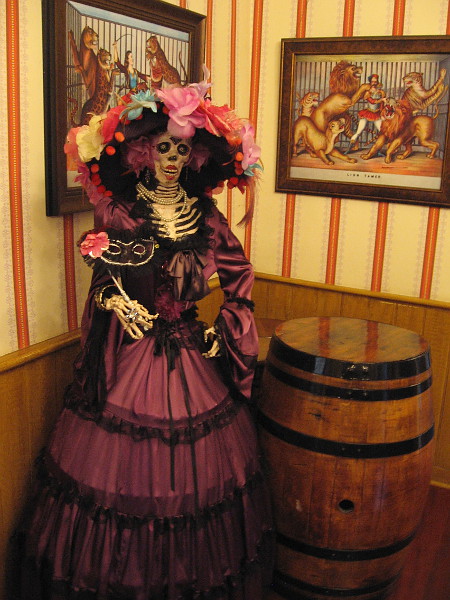
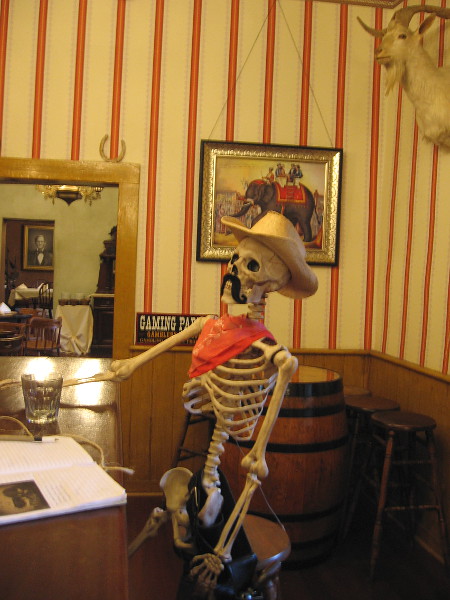
I was stunned to observe that a large number of skeletons have been discovered in an old San Diego hotel. The Cosmopolitan Hotel, to be exact. The elegantly dressed skeletons, wearing frilly dresses or top hats, were seen standing about the hotel’s entrance, in the saloon, even seated on chairs behind a large wedding cake.
Huh?
I’m just having a bit of fun! The Cosmopolitan Hotel is part of Old Town, and dozens of elegantly dressed skeletons appear in Old Town San Diego State Historic Park every year as Día de los Muertos approaches.
Día de los Muertos, or Day of the Dead, is actually a celebration of ancestors and loved family members who have passed away. In Mexico, the deceased are remembered and prayed for, and certain joyful traditions are observed. One unusual tradition is derived from La Calavera Catrina, a famous etching by Mexican artist José Guadalupe Posada, which depicts a female skeleton dressed in a fancy hat. Even though the image was originally created as satire, the Catrina has become a familiar sight in many places where Día de los Muertos is observed.
I snapped these photos at the historic Cosmopolitan Hotel in Old Town. The original building dates back to the late 1820s, when the wealthy Californio cattle rancher Juan Bandini built a “mansion” among the simple adobes in Old Town. When Bandini’s fortunes faded, he sold the house to Albert Seeley in 1869, who built a second story and converted the house into a hotel for a new San Diego stagecoach stop, which he also built nearby.
I believe I photographed a couple of the same skeletons a year or two ago, but I simply couldn’t help myself. They’re so much fun!
A covered wagon in front of the Cosmopolitan Hotel in Old Town San Diego State Historic Park.In celebration of Día de los Muertos, or Day of the Dead, two lady skeletons wearing frilly dresses greet visitors to the Cosmopolitan Hotel. Here’s one!Here’s the other!Inside the Cosmopolitan Hotel’s saloon, another lavishly elegant but skeletal customer is observed.A shy skeleton in very fancy attire stands silently in the corner of the Old West 1800s saloon.A bony customer at the bar. That must have been a stiff drink.A wedding cake for a skeleton bride and groom! Día de los Muertos is a joyful holiday that celebrates the past lives of loved ones.
…
I live in downtown San Diego and love to walk! You can follow Cool San Diego Sights via Facebook or Twitter!
You can easily explore Cool San Diego Sights by using the search box on my blog’s sidebar. Or click a tag! There are thousands upon thousands of fun photos for you to enjoy!
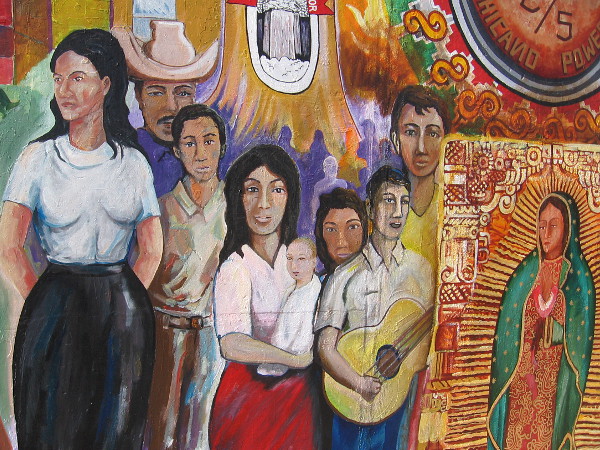
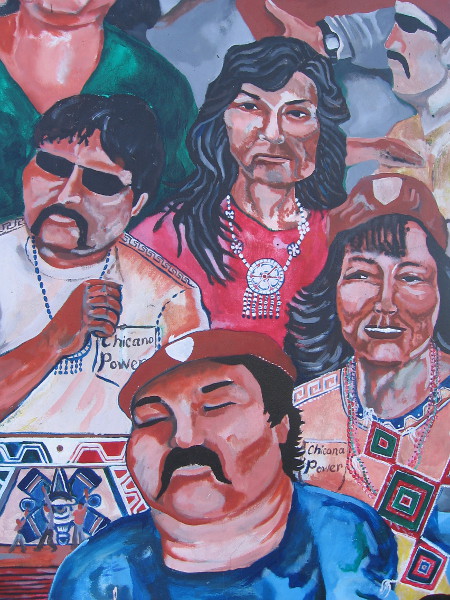
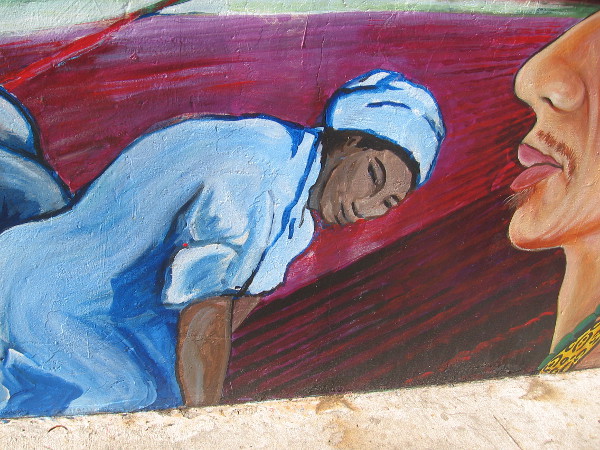
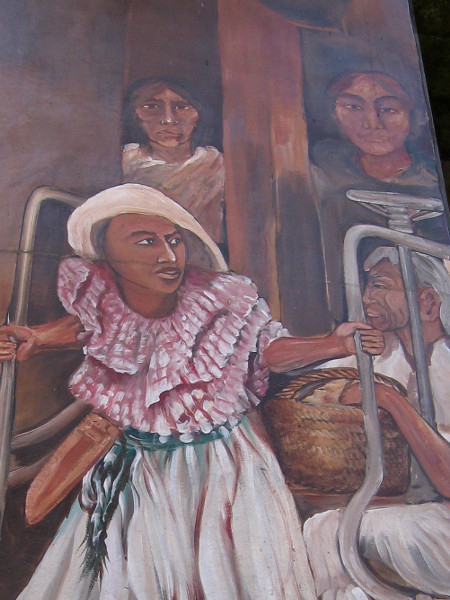
This morning I walked through Chicano Park. It had been a while since I last wandered among the park’s many famous murals. My camera was searching for no one thing in particular. But I couldn’t stop admiring the many expressive faces that have been artfully painted: faces from our Hispanic community that contain a whole range of emotions, including pride, hope and resolve. The expressive faces reflect humanity and inner beauty.
I’ve blogged about this amazing collection of outdoor murals (the largest in the country) on several occasions, providing a little more information. Today, I simply present a few photos of painted human expression.
…
This blog now features thousands of photos around San Diego! Are you curious? There’s lots of cool stuff to check out!
Here’s the Cool San Diego Sights main page, where you can read the most current blog posts. If you’re using a small mobile device, click those three parallel lines up at the top–that opens up my website’s sidebar, where you’ll see the most popular posts, a search box, and more!
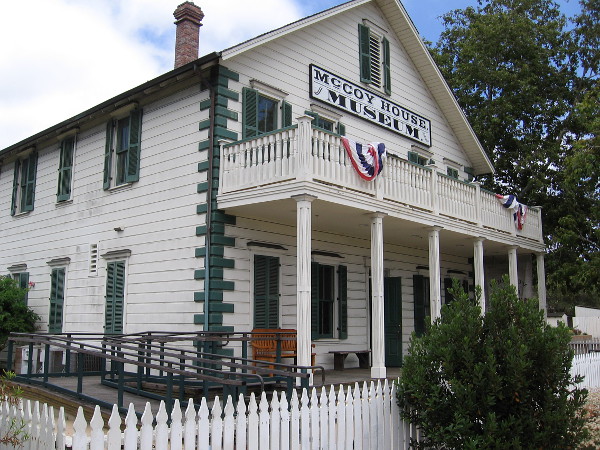
The McCoy House Museum, in Old Town San Diego State Historic Park, is a reconstruction of a home built in 1869 for Sheriff James McCoy.
While there are many small museums and historical attractions that visitors can enjoy in Old Town San Diego State Historic Park, the McCoy House Museum is the best place to see an extensive series of interpretive displays that describe the complete history of early San Diego.
The McCoy House, standing on the north end of Old Town, is a reconstruction of a home built in 1869 for Sheriff James McCoy and his family. James McCoy, who lived from 1821 to 1895, like many early San Diego residents was an ambitious man, working diverse jobs, filling many roles. At the age of 21 he sailed from Ireland to America seeking opportunity. He became a soldier, then a stagehand, then San Diego county assessor, then county sheriff in 1861. He acquired substantial real estate holdings and finally won election to the state senate in 1871.
The interpretive displays in the McCoy House Museum provide a good look back at San Diego’s formative years. They detail the life of the Native American Kumeyaay who’ve lived in the region for thousands of years, the first Spanish explorers, the establishment of the Spanish mission, the Mexican period and the subsequent American period.
If you’d like to read the displays, click my photographs to enlarge them.
This blog post covers the first floor of the museum. I’ll cover the second floor exhibits in a later post. After heading up some stairs, one can find information about the more prominent residents of Old Town, plus the town’s later history as it competed with New Town, which eventually rose to become downtown San Diego as we know it today.
Anyone who is a history buff must visit the McCoy House Museum. You’ll be transported back in time and see how life was exciting, difficult, and altogether different many, many years ago in San Diego.
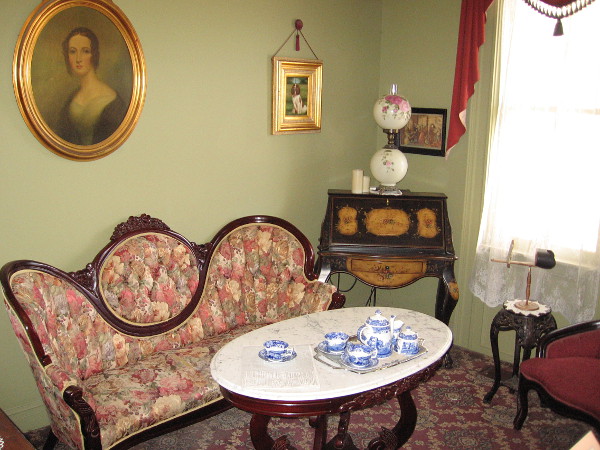
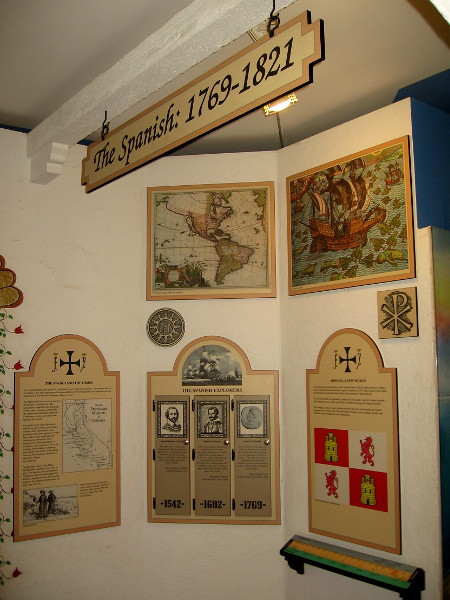
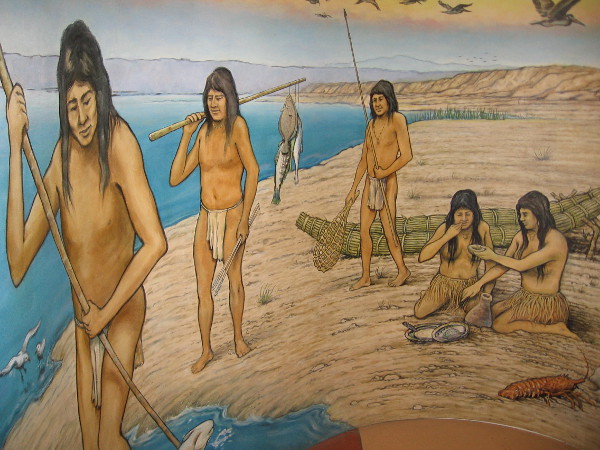
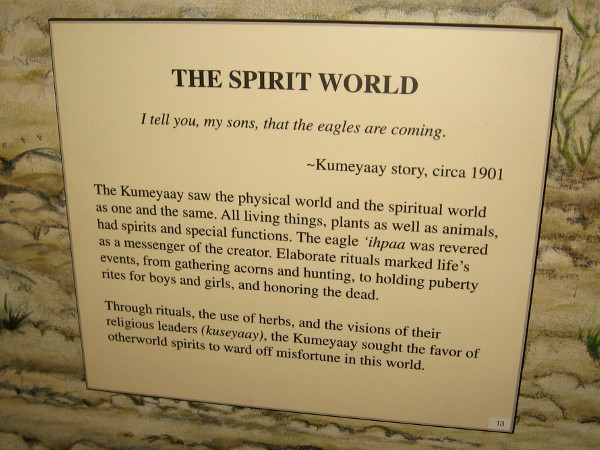
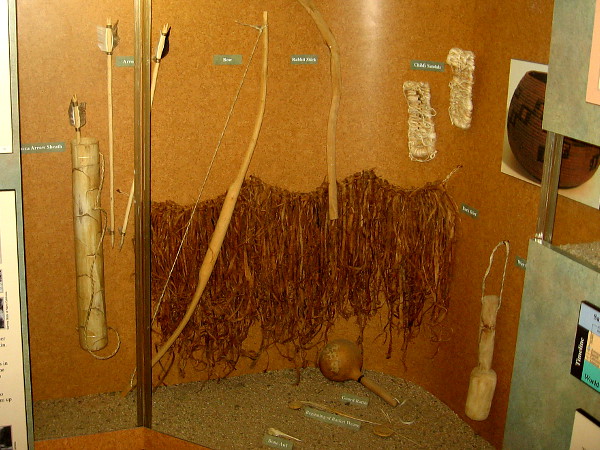
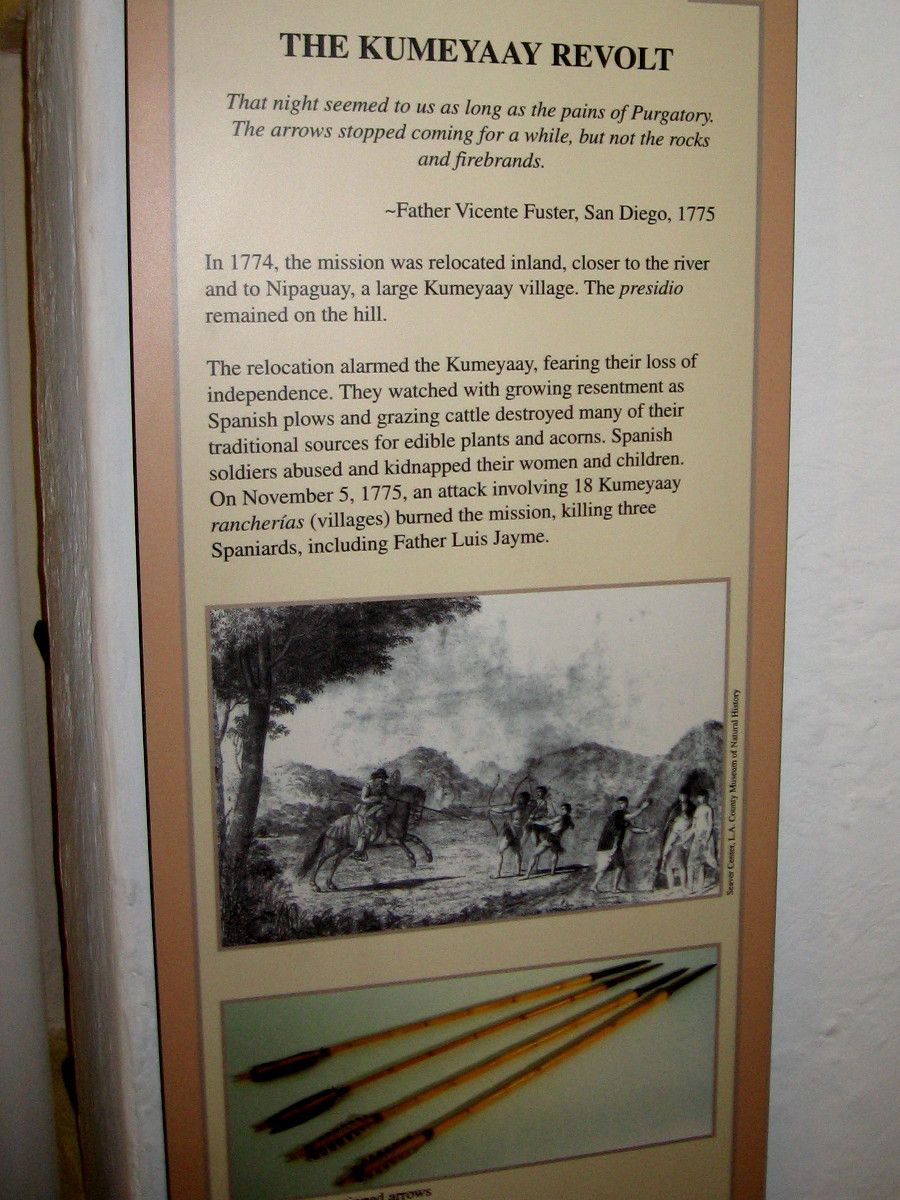
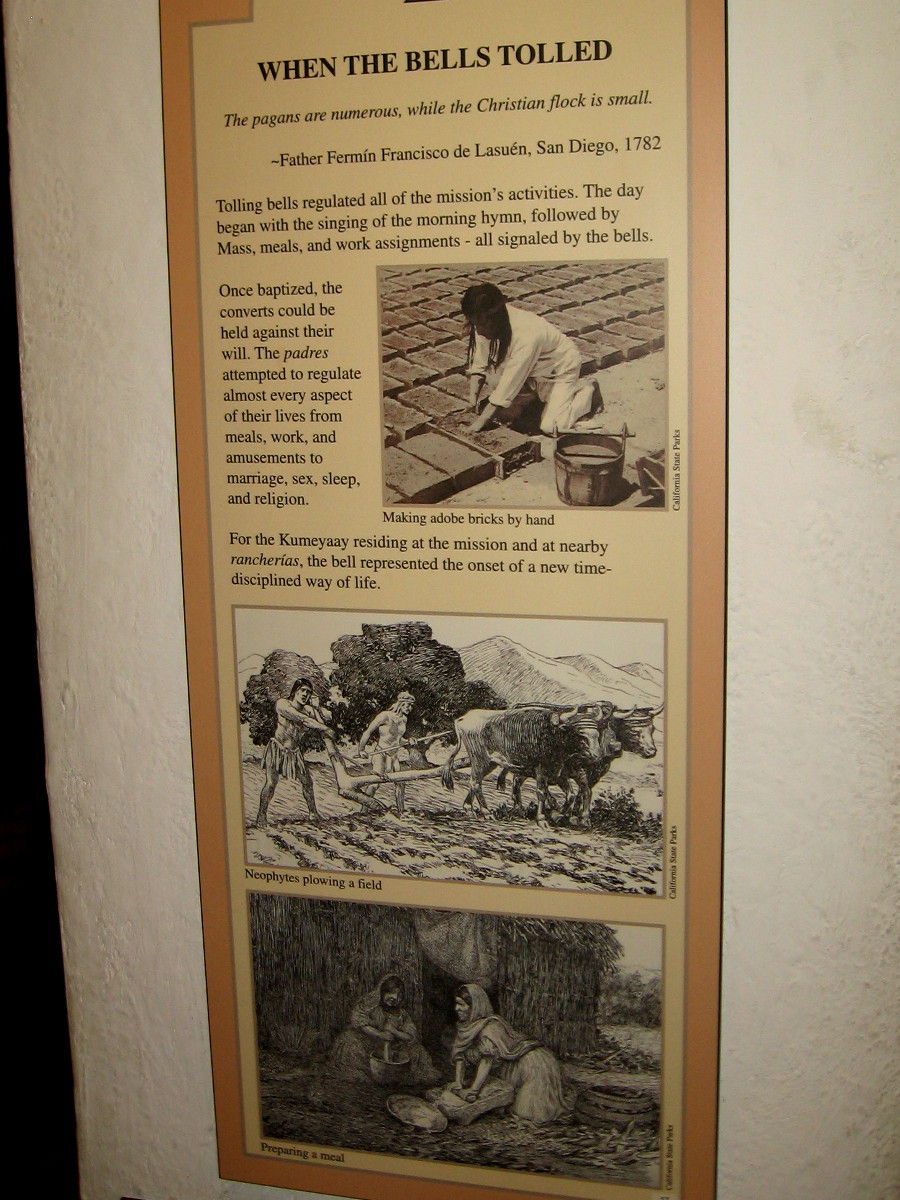
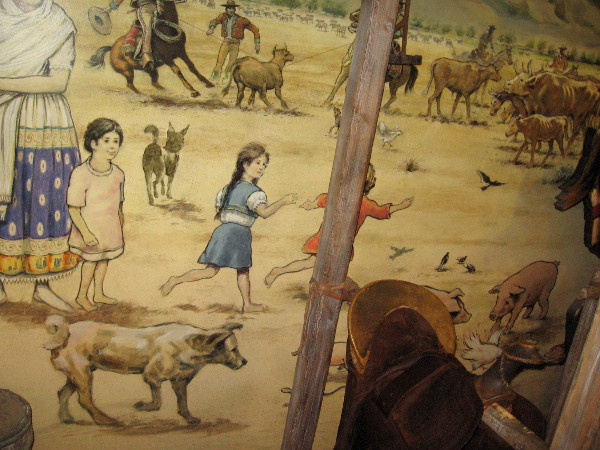
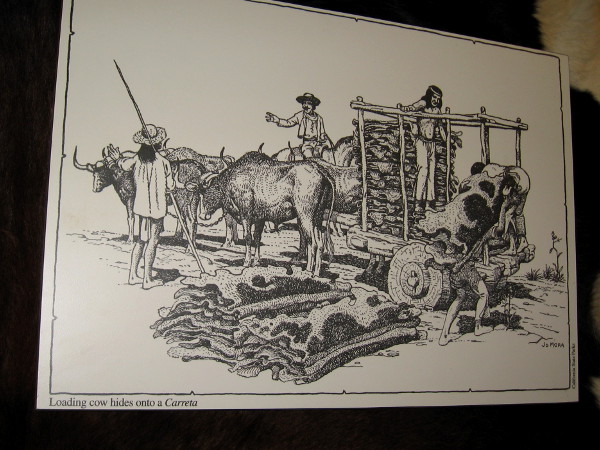
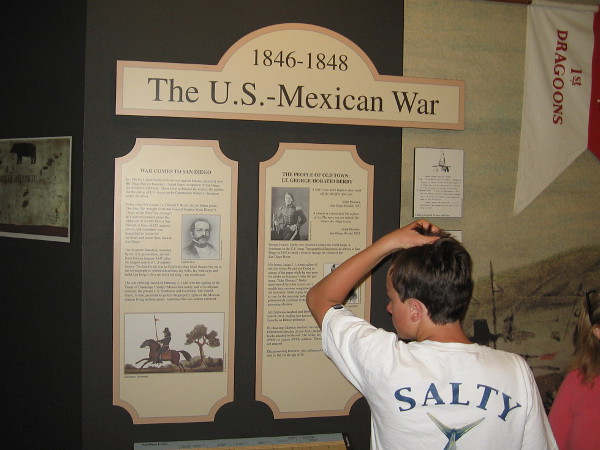
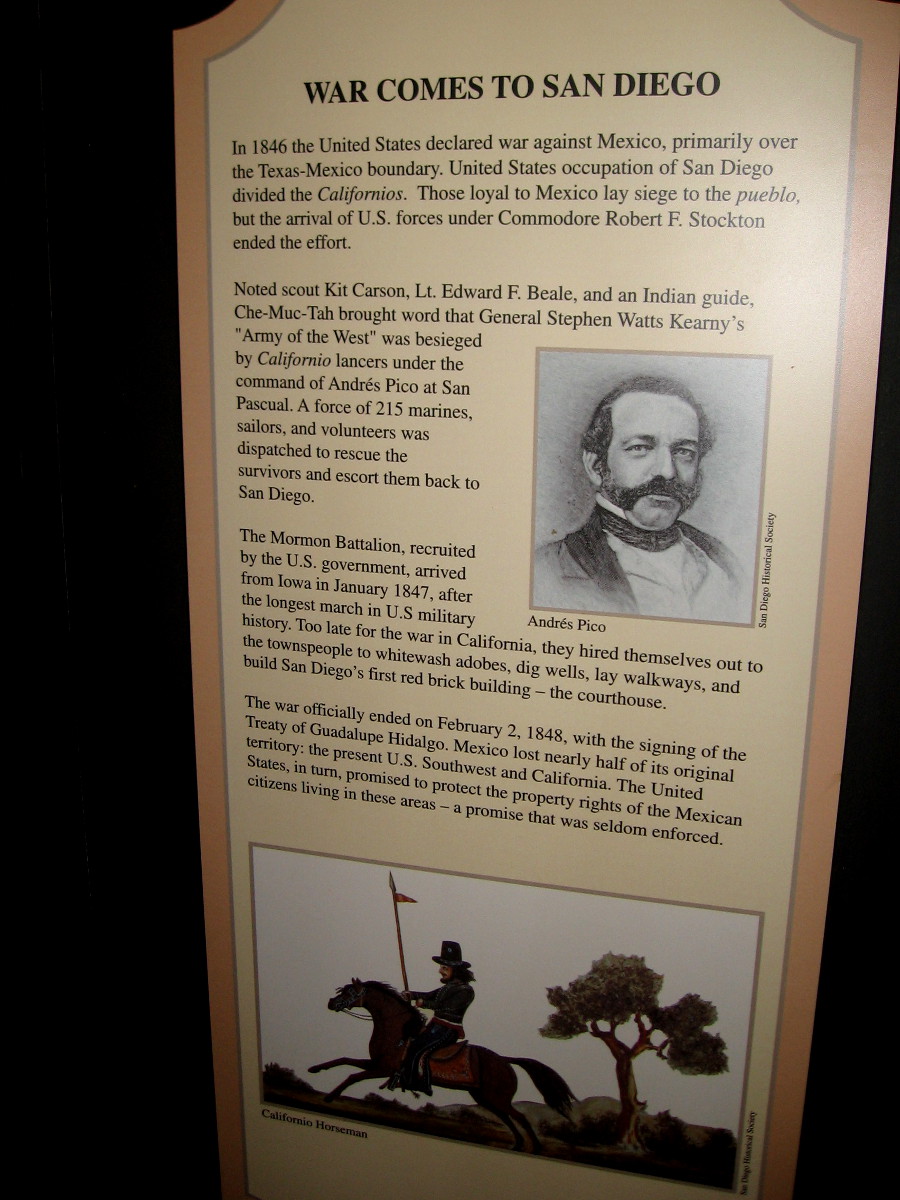
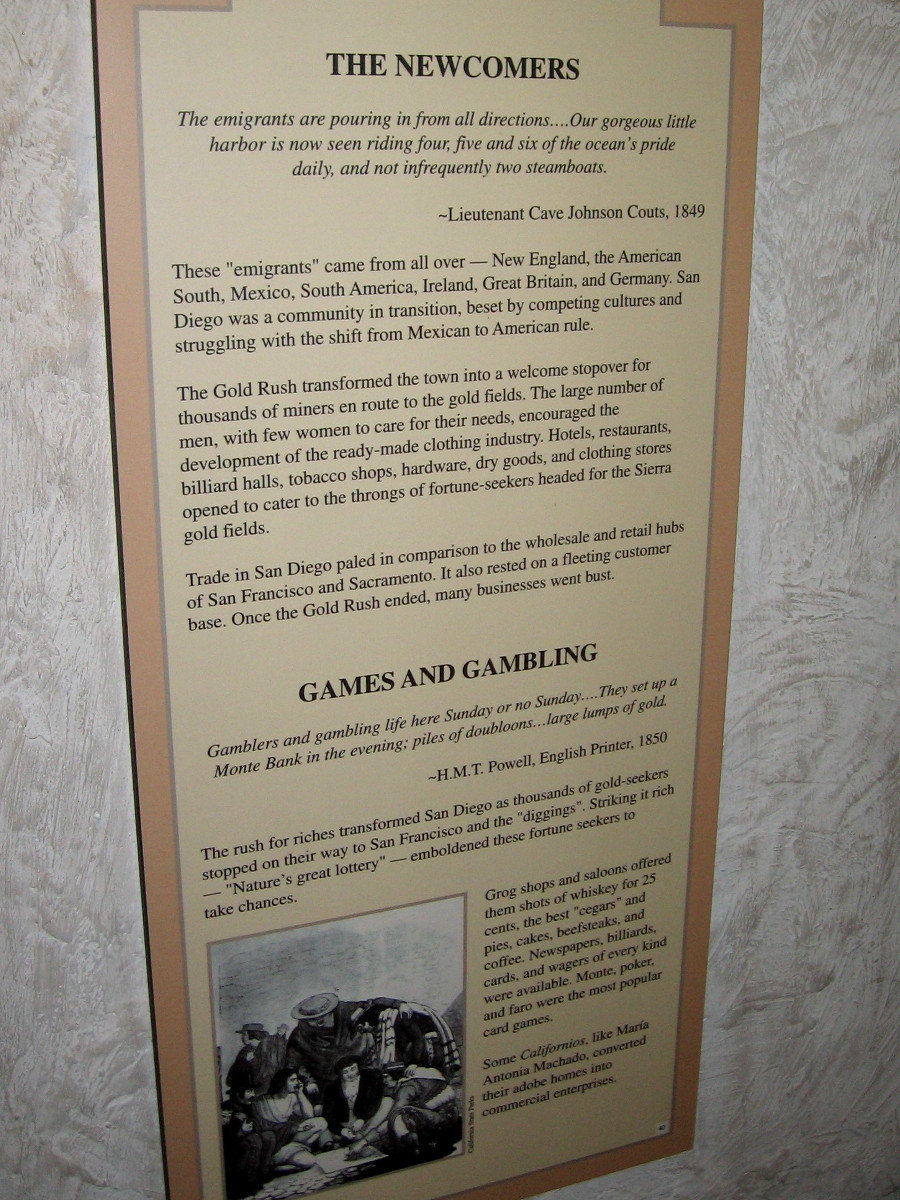
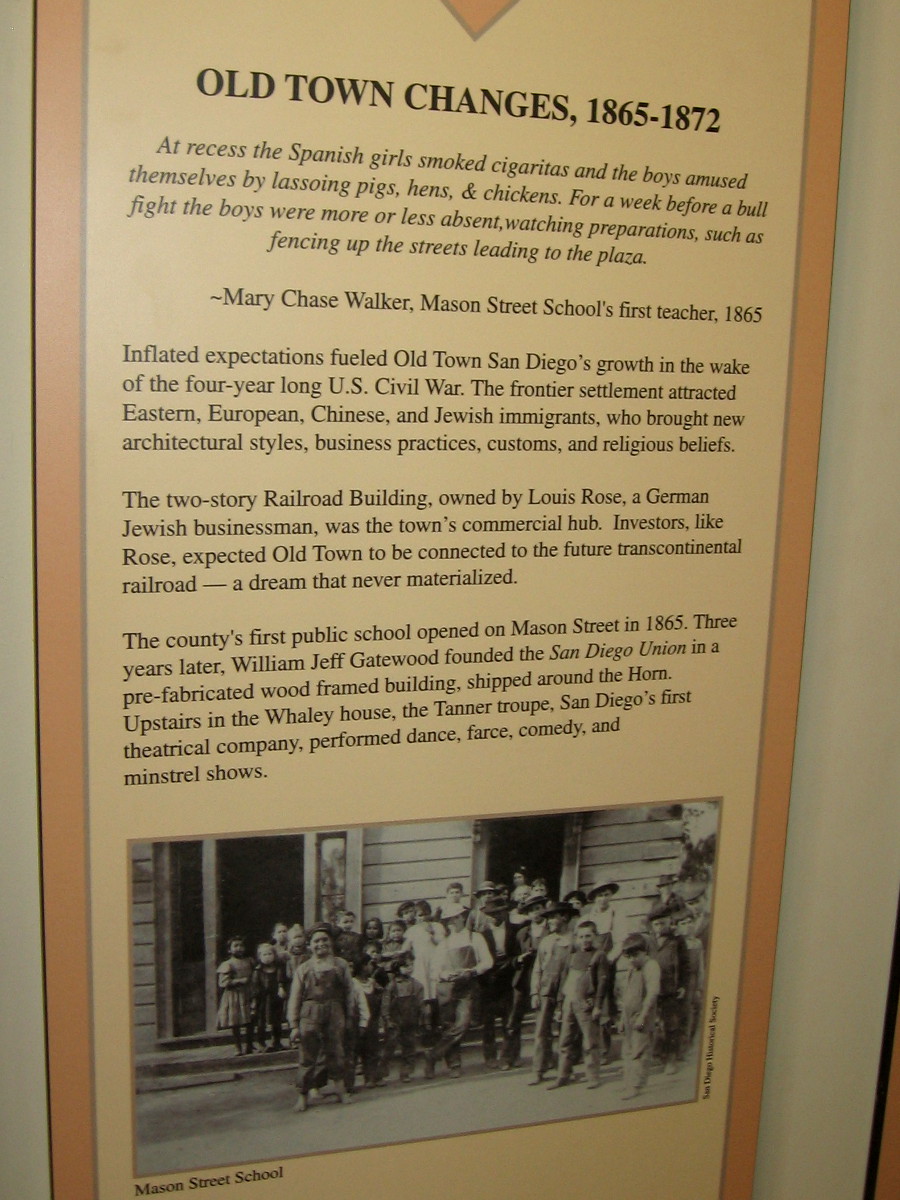
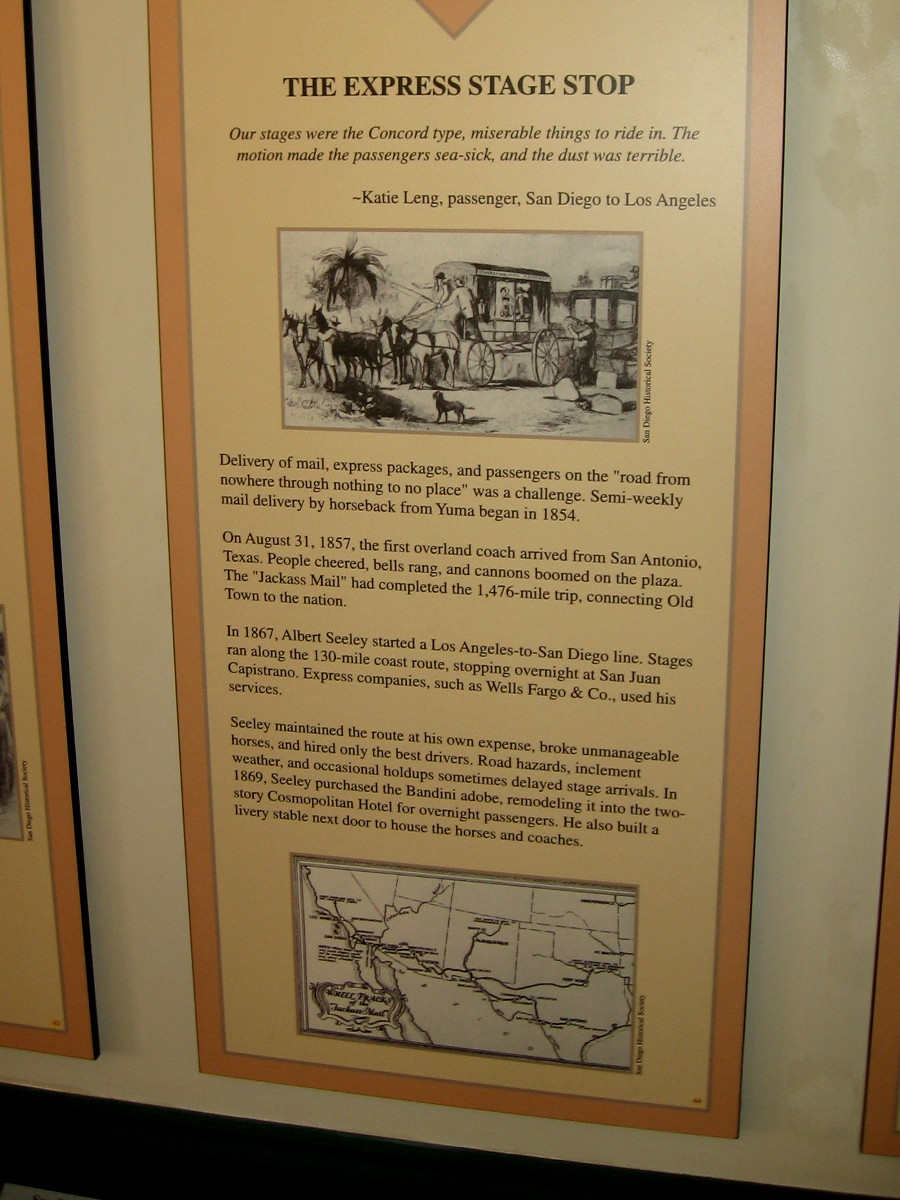
Sign lists important dates concerning the McCoy House. Today it’s a museum containing exhibits that explain the fascinating history of Old Town San Diego.Just inside the front door, this might have resembled the parlor of the original McCoy House, occupied by an upper middle class family in San Diego’s Old Town.Framed photo on one wall from the San Diego Historical Society shows the original McCoy House.Interpretive exhibits inside the McCoy House Museum begin with the Spanish period of San Diego, from 1769 to 1821.Quotes from the journeys of Juan Rodriguez Cabrillo, Sebastian Vizcaino and Gaspar de Portola.A string of missions was created by Spain in California to secure its claim to new territory. The first mission, in San Diego, was originally established on Presidio Hill near the native Kumeyaay village of Cosoy.An artistic representation of life among the Kumeyaay people. They often visited the nearby coast to hunt and gather food.For thousands of years, the Kumeyaay lived along the coast and interior valleys of what is now San Diego County. They moved with the seasons to take advantage of available resources.The Kumeyaay built dome-shaped houses from oak, willow or sycamore branches. The simple structures were called ee-wahs.The Kumeyaay saw the physical and spiritual world as one and the same.Exhibit in the McCoy House Museum shows artifacts associated with the Kumeyaay, including a bark skirt, arrows, rabbit stick, child’s sandals, gourd rattle and war club.The Kumeyaay revolted against the Spanish missionaries in 1775, a year after the San Diego mission was relocated inland very close to a large Kumeyaay village.Once baptized, converted Kumeyaay followed a strict life. Mission bells signaled the day’s activities, including the singing of hymns, Mass, meals and work assignments.Mexico gained its independence from Spain in 1821 after a decade of bloodshed. Changes included a decline in support for the presidio and freedom from Spain’s trade regulations.After the breakup of the Spanish missions, the era of the great ranchos began. Californios were often racially mixed descendants of soldier-settler families.Vaqueros were the original cowboys. They worked on the extensive ranches and handled the large herds of stock.A fanciful picture of life on a rancho, with vaqueros at work and children at play.The Californios loved to celebrate feast days, weddings and religious festivals.Cattle by the thousands roamed San Diego’s hills. Their dried hides were used in trade and were sometimes referred to as California banknotes.Illustration of loading cow hides onto a carreta. Hides were gathered by ships along the coast to be transported around Cape Horn to the eastern United States.Exhibit inside the McCoy House Museum recreates the small shop of a Boston trader. The brig Pilgrim of Two Years Before the Mast brought people aboard to buy wares and finished goods that weren’t available in San Diego.Illustrations of cow hides being cured. This activity took place at La Playa, a point on San Diego Bay near Ballast Point in Point Loma.Diagram of the brig Pilgrim, made famous in Richard Henry Dana Jr.’s classic Two Years Before the Mast. As an ordinary seaman, Dana collected cattle hides up and down the California coast.Exhibit in the McCoy House Museum details local history during the Mexican–American War from 1846 to 1848.During the war, U.S. occupation of San Diego divided the loyalty of the Californios. The two sides fought briefly at the Battle of San Pasqual.Around the time of the Gold Rush, San Diego saw an influx of emigrants from all over, including New England, the American South, Mexico, South America, Ireland, Great Britain and Germany.Old Town tales include the construction of the first jail in 1850. The walls were so poorly made, the first prisoner, Roy Bean, easily dug himself out, then celebrated at a nearby saloon!Grog shops became popular gathering places. They were a social hub of San Diego life, providing customers with news and provisions.A recreated Old Town grog shop can be found inside the McCoy House Museum.After the California Gold Rush of 1849, San Diego became more developed. A courthouse and newspaper were established. Transportation included clipper ships, stage lines and steamships.Poster advertises a new clipper ship route. A very quick trip may be relied upon!Between 1865 and 1872, Old Town San Diego continued to grow. The first public school opened, and the town welcomed its first theatrical company in the Whaley house.The first overland coach to San Diego began service in 1854. Additional stage lines came into existence, allowing for the delivery of mail, express packages and passengers.Visitors to the McCoy House Museum can step into a replica stage stop and see what life was like in Old Town during San Diego’s rugged early history.
…
I live in downtown San Diego and love to walk! You can follow Cool San Diego Sights via Facebook or Twitter!
You can easily explore Cool San Diego Sights by using the search box on my blog’s sidebar. Or click a tag! There are thousands upon thousands of interesting photos for you to enjoy!
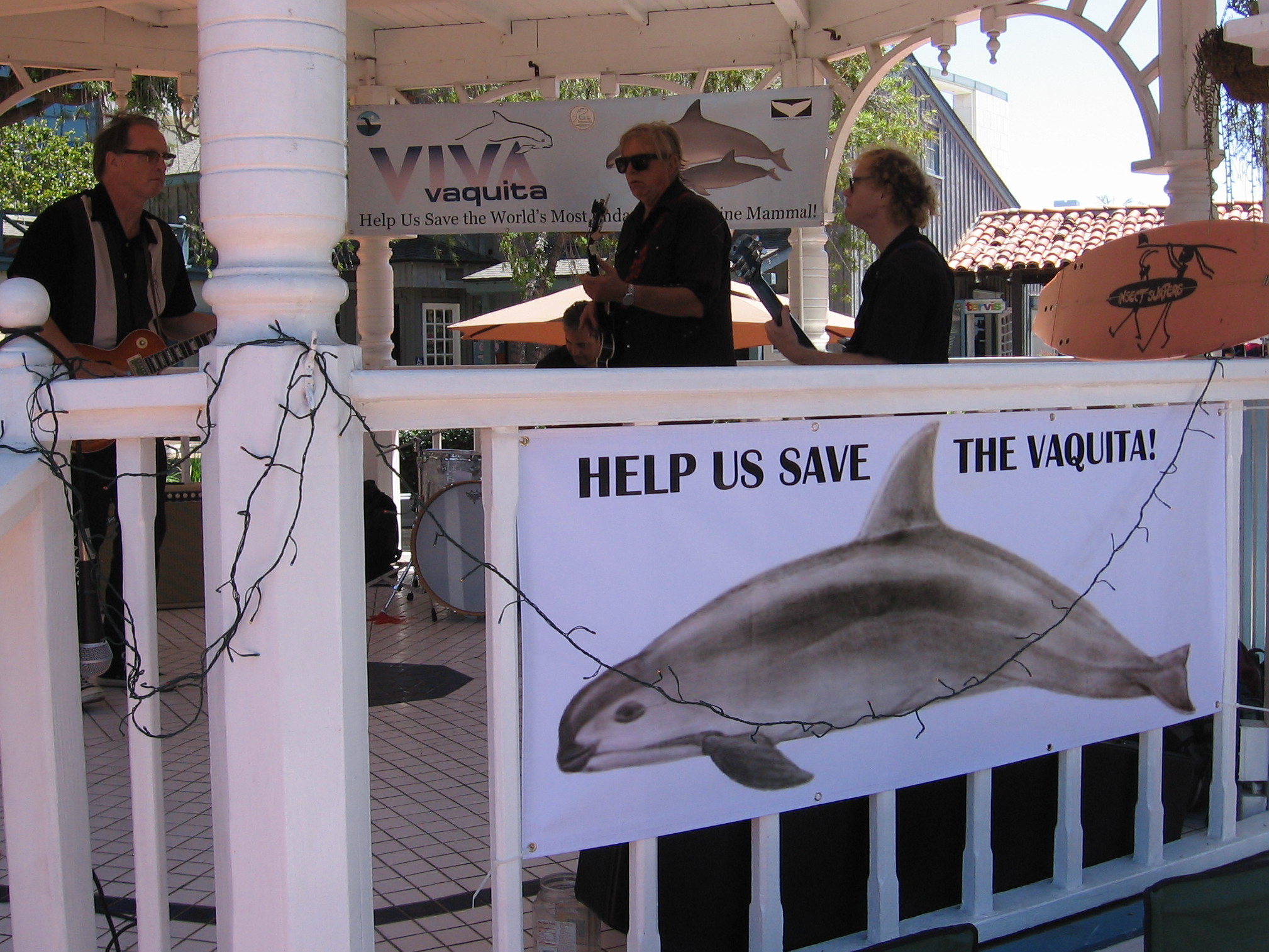
Help us Save the Vaquita display at the east gazebo of Seaport Village in San Diego. The band Insect Surfers was providing some music!
The Vaquita is the world’s most endangered marine mammal. It is thought that about 60 of the animals exist in the ocean today. This small species of porpoise (Phocoena sinus) lives in the warm waters of the eastern Pacific Ocean–specifically in the northern Gulf of California, in a small region east of Baja California not too distant from San Diego. According to the International Union for the Conservation of Nature, the Vaquita is classified as Critically Endangered.
International Save the Vaquita Day was observed today in San Diego and many other cities around the world. I swung by Seaport Village to see what efforts are underway to save Mexico’s “Panda of the Sea” and to learn a little about the Vaquita.
I learned that the Vaquita, thankfully, enjoys clean waters. Their big threat is being entangled in the gillnets of fishermen. A major effort is underway to eliminate these nets from the Vaquita’s natural habitat. But some fishermen, seeking to provide a living for themselves, use them anyway.
I learned there’s also an effort to inform consumers that some shrimp and fish that one finds in the grocery store is caught with gillnets. It is hoped enlightened shoppers will seek out and purchase seafood that isn’t caught with this type of net.
I learned that Vaquitas have never been held in aquariums, and has only been known to science since 1958.
If this species goes extinct, it will be gone forever.
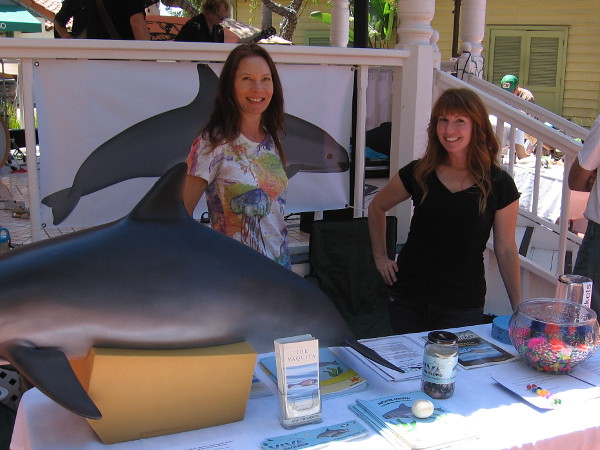
These nice ladies are working hard to save the Vaquita. It is hoped many others will join the effort, in any way possible. Time is very limited–perhaps a year or two–before the species might go extinct.Kids make art and learn about the critically endangered Vaquita, a marine mammal that clings to a tenuous existence not far from San Diego.
…
I live in downtown San Diego and love to walk! You can follow Cool San Diego Sights via Facebook or Twitter!
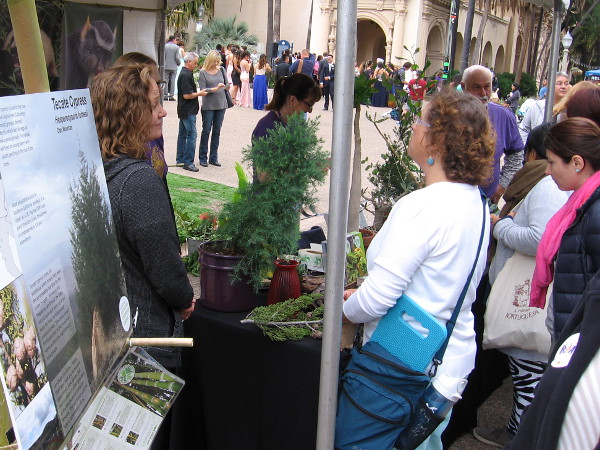
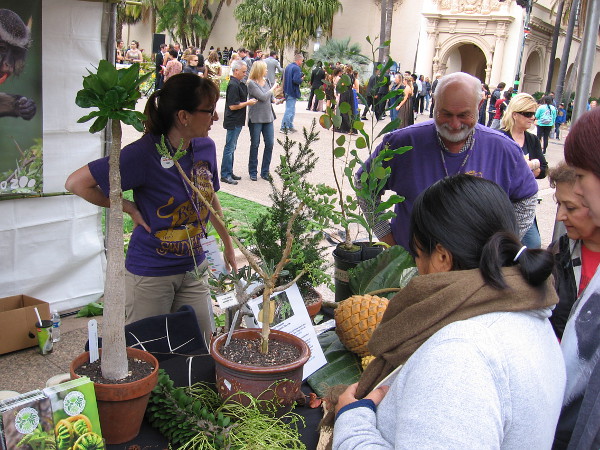
Visitors at the San Diego Zoo Centennial Festival in Balboa Park learn how rare, threatened and endangered native plants are being saved by the zoo.
Many know how the San Diego Zoo is a world leader in working to protect animal species from extinction. One important task is to store critical genetic material. Their world-renowned Frozen Zoo has been storing cryogenically preserved biological samples since 1976.
When I walked through the San Diego Zoo Centennial Festival in Balboa Park last Saturday, I learned something that really impressed me. Not only is the zoo striving to save the world’s most endangered wild animals, but San Diego Zoo Global has developed an important native plant seed bank, in an effort to conserve rare and threatened local plant species.
The zoo is member of the California Plant Rescue Partnership, whose goal is the long term conservation of wild plant species through seed banks and field work. One of the people with whom I briefly spoke has the job of hiking about San Diego County, searching for and monitoring populations of these rare plant species. What a fantastic job that must be!
The zoo has developed an extensive seed collection. Some native plants being protected are the San Diego golden star Bloomeria clevelandii, Dudleya brevifolia, Monardella stoneana, Comarostaphylis diversifolia ssp. diversifolia, and Corethrogyne filaginifolia var. linifolia, which is commonly called the Del Mar sand aster.
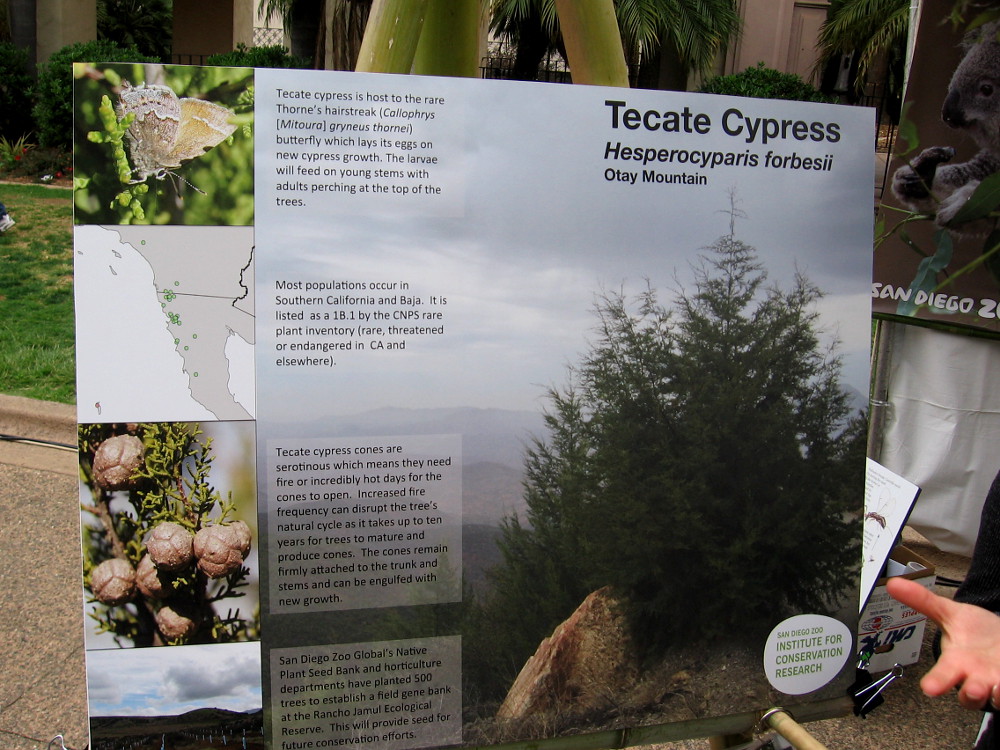
The San Diego Zoo Institute for Conservation Research is also working hard to save the Tecate Cypress in Southern California and Baja California, a tree that the rare Thorne’s hairstreak butterfly depends upon. A poster at the zoo’s centennial event helped to explain why this effort is so urgent.
San Diego Zoo Global’s Native Plant Seed Bank and horticulture departments have planted 500 Tecate Cypress trees to establish a field gene bank. (Click to enlarge.)The San Diego Zoo’s conservation efforts extend beyond protecting animal species threatened by extinction. Plants are important, too!
…
I live in downtown San Diego and love to walk! You can follow Cool San Diego Sights via Facebook or Twitter!

























































 Cool San Diego Sights!