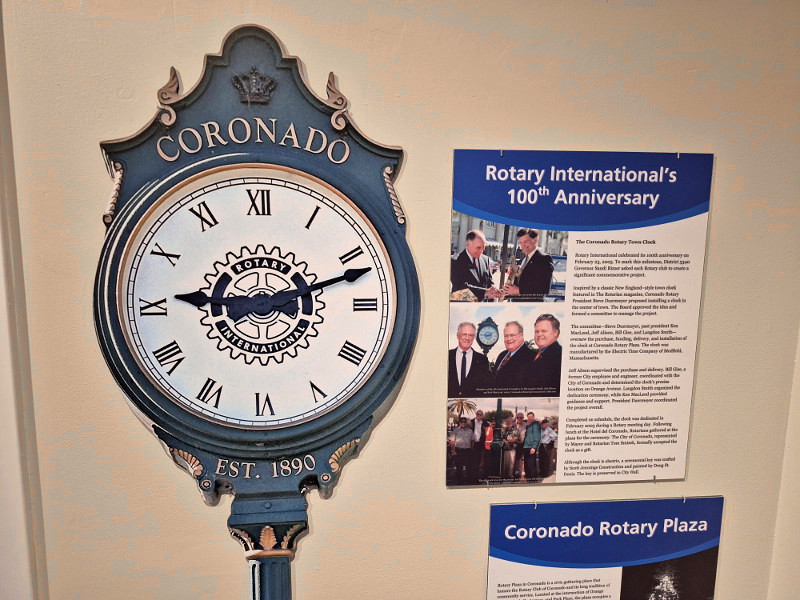
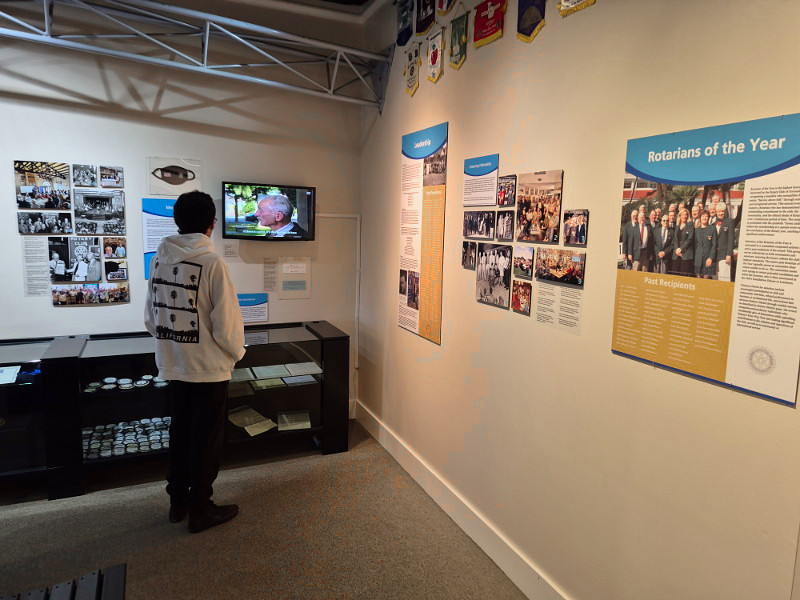
The Coronado Historical Association museum has a new exhibit. It celebrates the Rotary Club of Coronado’s 100 year anniversary in 2026.
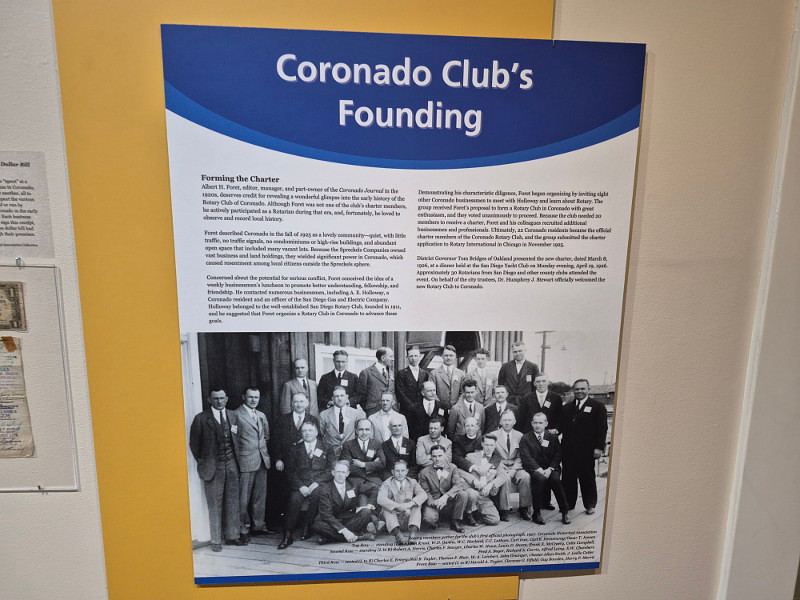
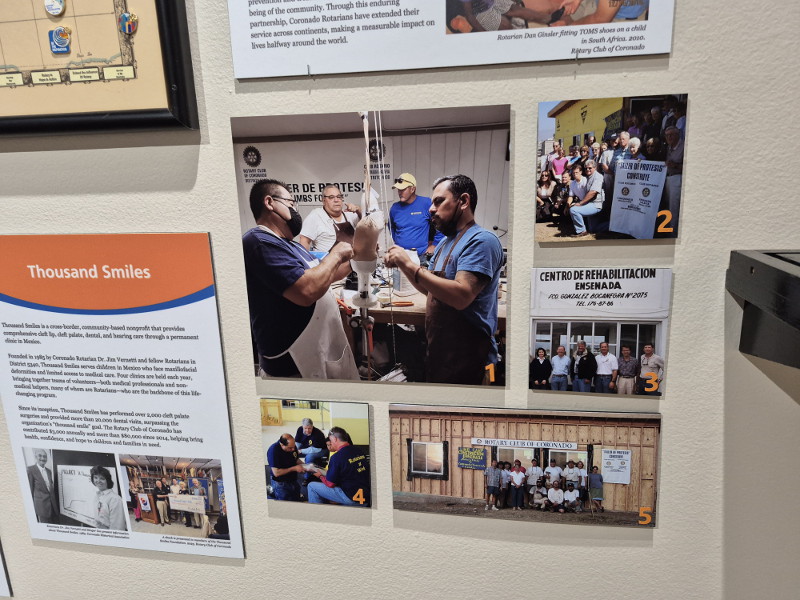
With historical photographs and artifacts, A Century of Service: 100 Years of the Rotary Club of Coronado covers the history of the club, from its founding in 1926 by 21 members to the present day. More importantly, it details how club members have improved the local community, and have worked to help people all around the world.
I was stunned to learn about the sheer amount of charitable work these Rotarians have done!
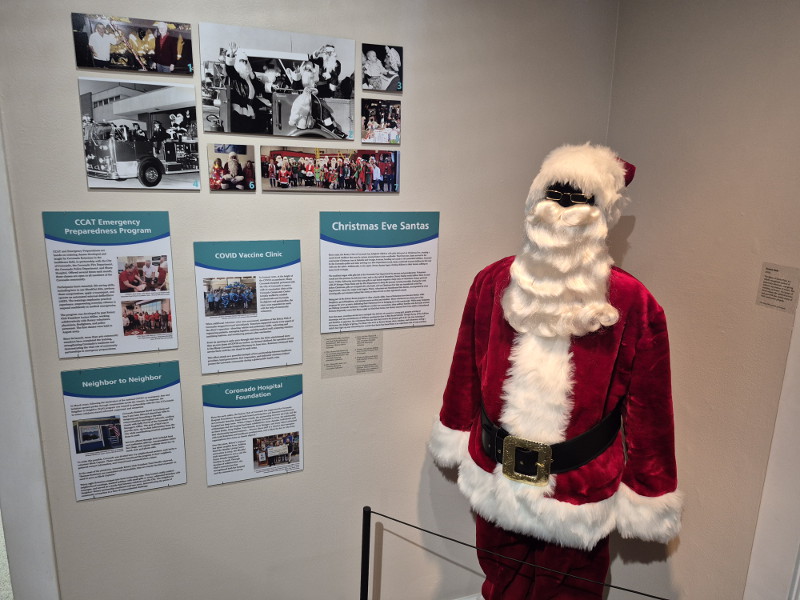
The Rotary Club of Coronado has worked to train community members in emergency preparedness. During COVID they created a Neighbor to Neighbor program to help keep people informed and connected. They support the Coronado Hospital Foundation. They offer scholarships, mentorship and leadership opportunities to local youth. They support the Rotary Youth Exchange, Model United Nations, Music Scholarship Competitions, Speech Contests, Athlete Awards and more!
Helping people around the world, the Rotary Club of Coronado fundraises to eradicate polio. They support grants for organizations like Tanzania Hospital and Orphanage, Project Mercy Baja, and the Pan American Institute school in Tijuana, Mexico. They support Limbs of Freedom which provide prosthetics in Mexico. They also support Thousand Smiles, providing cleft lip and other care in Mexico, too.
So much good work!
Go check out the exhibit and prepare to be impressed!
…
To follow my blog, find the “Follow” box in this website’s sidebar. Or bookmark coolsandiegosights.com and swing on by occasionally!
(If you’re viewing this on a phone, open my website’s sidebar by tapping those three parallel lines at the top of the page.)
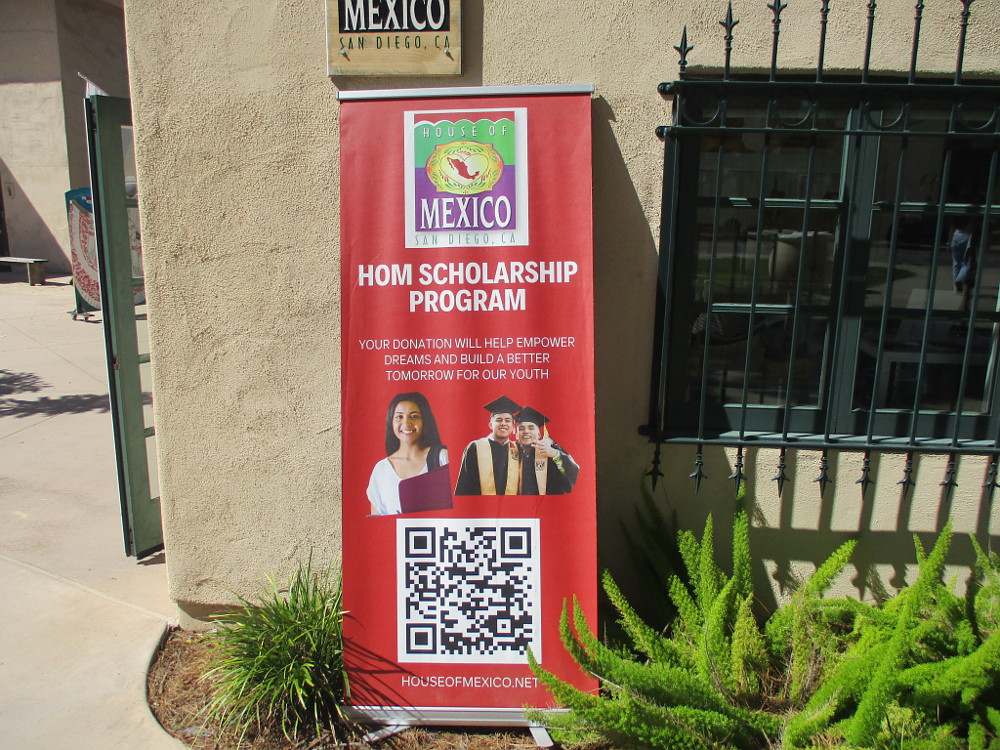
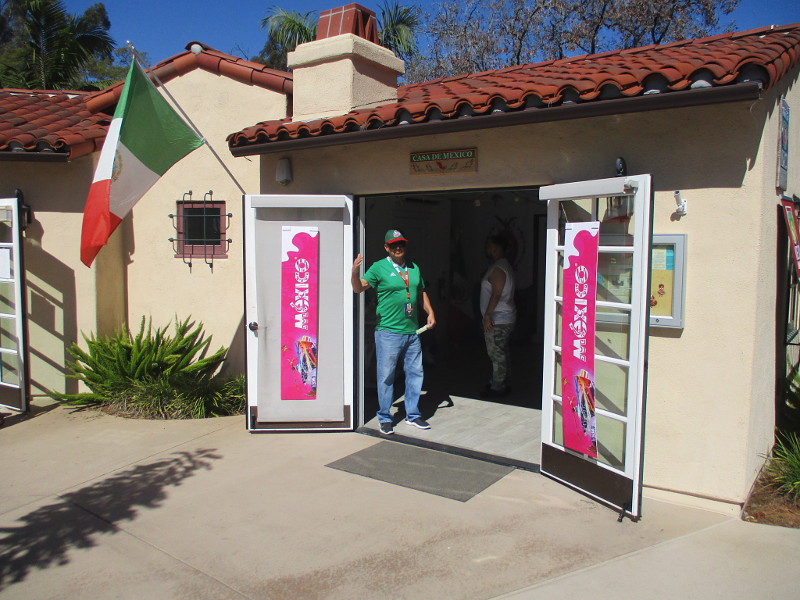
The House of Mexico, based in San Diego’s Balboa Park, offers scholarships to deserving local high school students. Why not help with the worthy program?
This webpage accepts donations and describes how students have benefitted in past years. Young scholars have gone on to attend UC San Diego, San Diego State University, UC Davis, Stanford, Boston University…
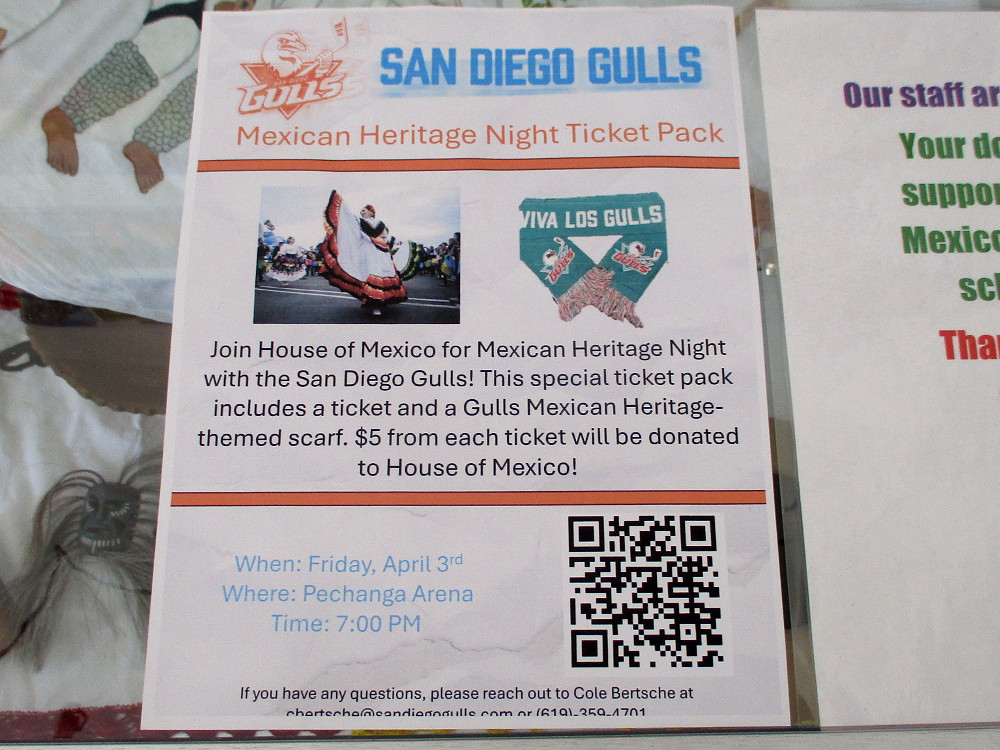
One way to support the effort is to buy tickets for the San Diego Gulls 4th Annual Mexican Heritage Night on Friday, April 3, 2026 by using the QR code on this webpage! Ticket buyers get to enjoy a great hockey game at Pechanga Arena and receive a cool scarf, too!
It’s extraordinary how the San Diego Gulls strongly support literacy and education in our community.
Thank you!
…
To follow my blog, find the “Follow” box in this website’s sidebar. Or bookmark coolsandiegosights.com and swing on by occasionally!
(If you’re viewing this on a phone, open my website’s sidebar by tapping those three parallel lines at the top of the page.)
Fido Fest was held yesterday in Santee’s Town Center Community Park East. Organizations and vendors that support dogs gathered together for the free, very popular event.
I was astonished by the number of organizations present that engage in dog rescue. They came from all around the San Diego and Baja California region. Between them, hundreds of dogs were up for adoption.
Would you like to adopt a dog? Would you like to support those good people who are rescuing dogs and providing them with a loving home?
I walked about Fido Fest and saw many of these good people.
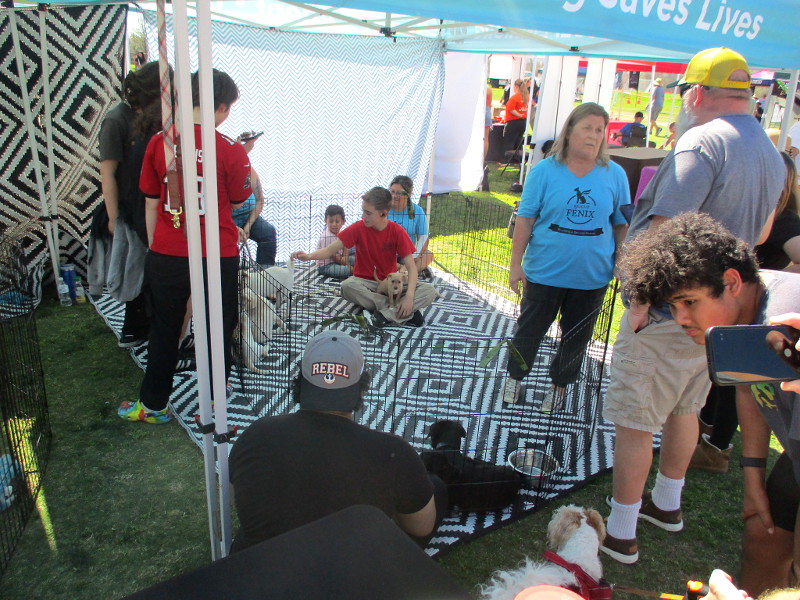
My first photo, above, shows Woofs and Wags Dog Rescue. Their goal is to rescue, rehabilitate and rehome dogs rescued from from San Diego and Baja California. Their website is here.
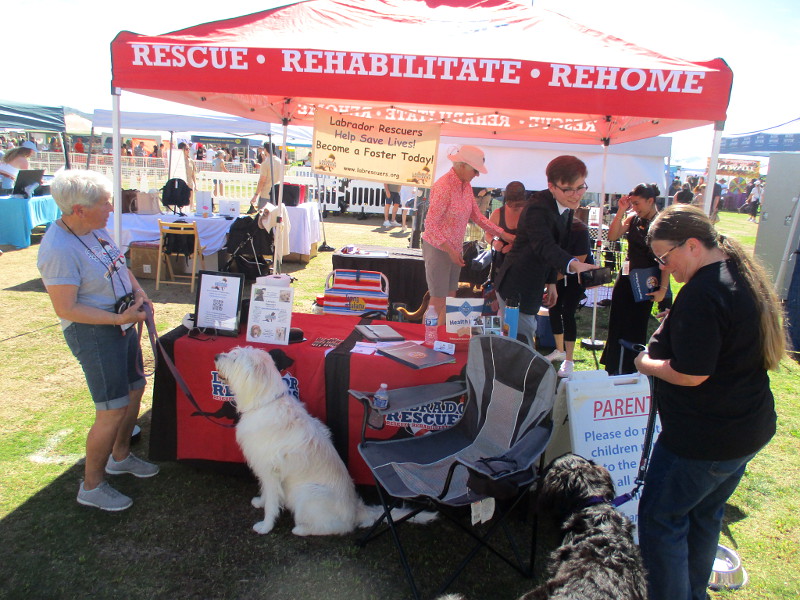
Labrador Rescuers has been dedicated to the noble cause of rescuing, rehabilitating, and rehoming Labrador Retrievers for two decades. Their website is here.
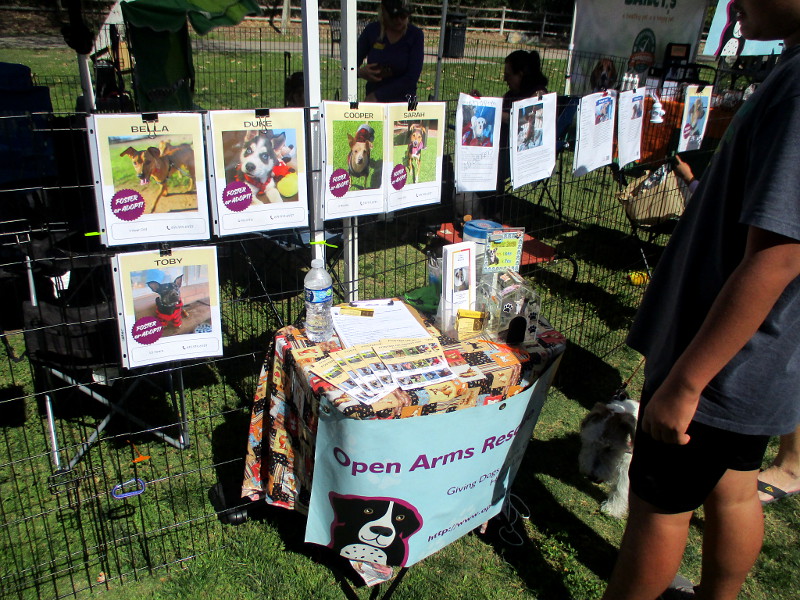
Open Arms Rescue, based in Imperial Beach, is giving dogs a new start at a happy life! Their website is here.
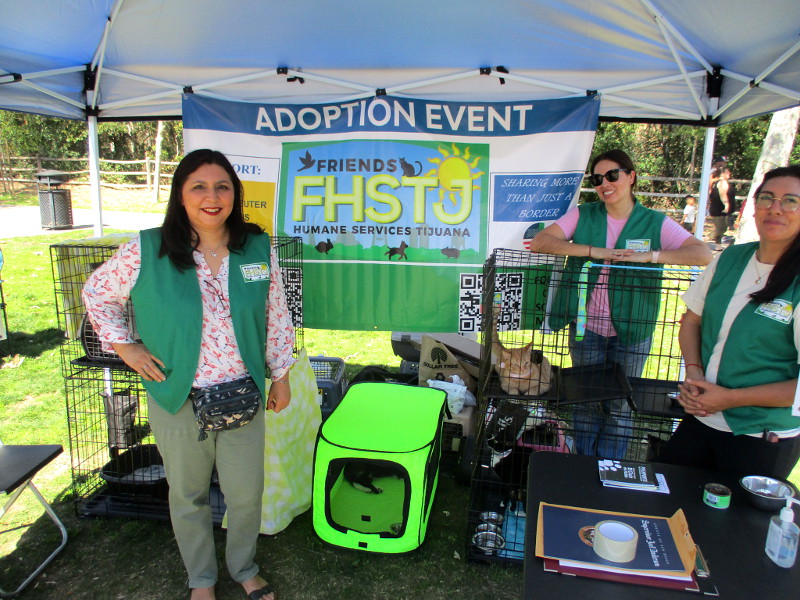
Friends Humane Services Tijuana supports street rescues, mass spay and neuter clinics, pet owners with extremely limited resources needing veterinary care for their animals as well as public education programs, adoption programs for rescuers, and a pet food distribution program for animals in need. Their website is here.
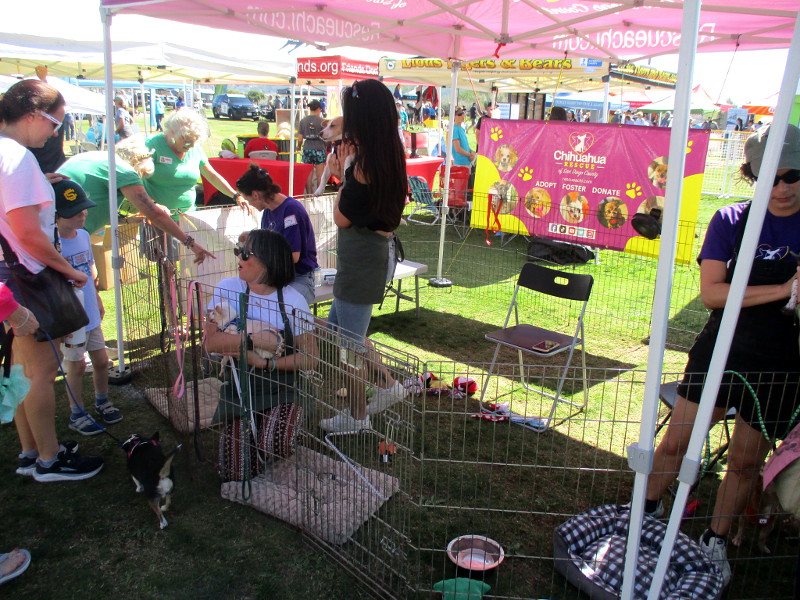
Chihuahua Rescue of San Diego County is dedicated to rescuing and caring for homeless, abandoned and injured small breed dogs. Their website is here.
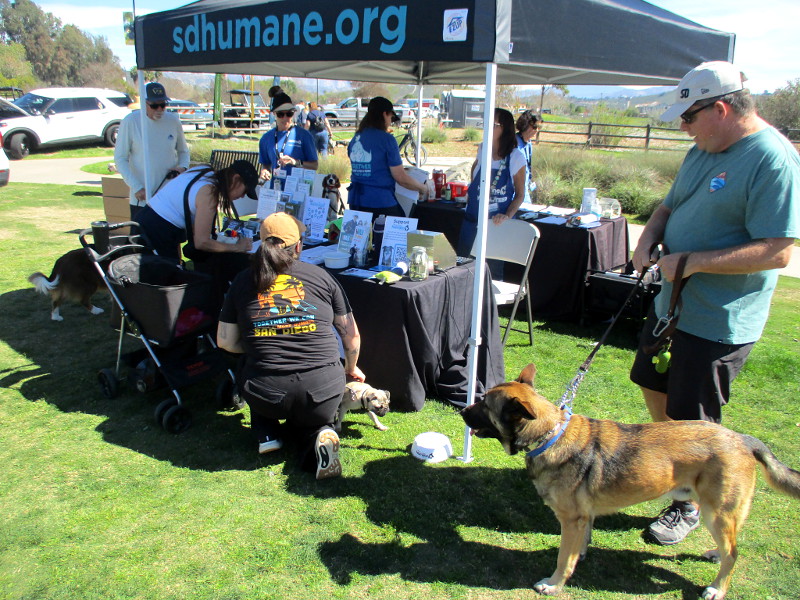
San Diego Humane Society needs no introduction. They do much good work. Visit their website here.
Paws 4 Thought Animal Rescue is an all-breed animal rescue organization. They rescue dogs from shelters at risk of being euthanized, as well as abandoned, abused, and stray dogs in both the U.S. and Tijuana/Rosarito areas. Their website is here.
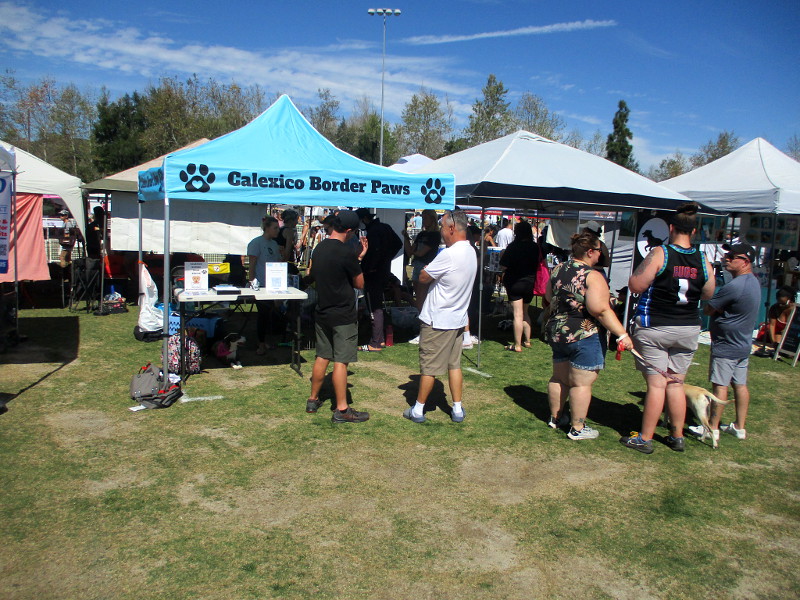
Calexico Border Paws relocate their visiting animals to forever loving homes that match their needs, while avoiding as much euthanization and as possible. Their website is here.
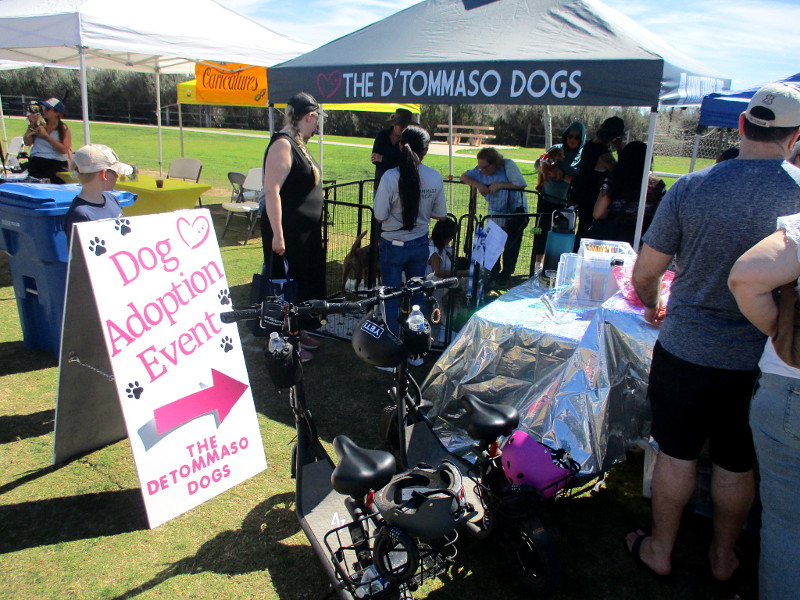
DeTommaso Dogs Rescue aims to save as many animals in need as they can. They rescue animals from the streets of Baja California. They provide medical care, food, shelter, and rehome dogs. Their Instagram is here.
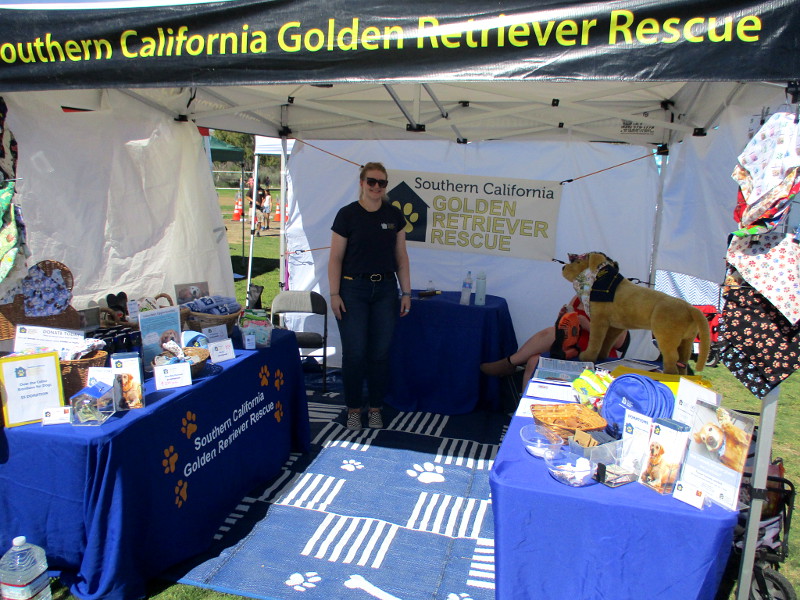
Southern California Golden Retriever Rescue is the third largest Golden Retriever Rescue in the country, finding homes for over 300 dogs annually. Their website is here.
Ruger’s Rescues is for those individuals and families up and down the state (and even in other states) that found that special dog, but are unable to get to the shelter in time or transport them home. Their website is here.
Rescue Fenix is an all volunteer all breed rescue mobilized by the feeling of compassion for animal welfare: those animals who are in danger, sick, abused and neglect. Their website is here.
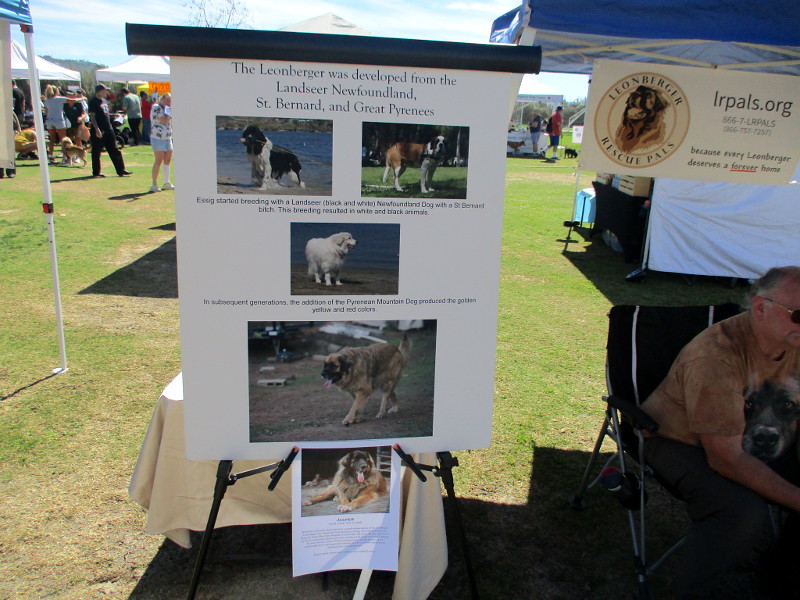
Leonberger Rescue Pals is an all volunteer national organization dedicated to the rescue, rehabilitation and re-homing of unwanted, abandoned or abused Leonbergers and Leonberger mixes. Their website is here.
Animal Donation Advocates has many dogs up for adoption. See their Facebook page here.
Labradors and Friends Dog Rescue‘s mission is to help save the lives of homeless Labradors, Labrador-mixes, and Labrador “friends” from kill-shelters in California and across the southwest. Their website is here.
Animal Rescue Resource Foundation supports a variety of efforts in San Diego County to protect and defend our furry friends. Their goal is to provide connections and solutions for pets and the people that work with them. Their website is here.
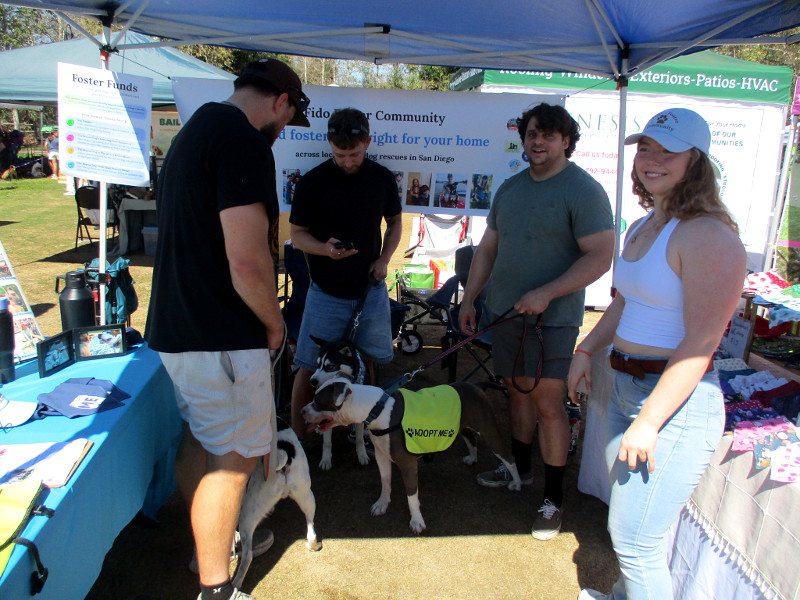
Fido Foster Community helps you find your perfect foster match and join San Diego’s cross-rescue foster community. Their website is here.
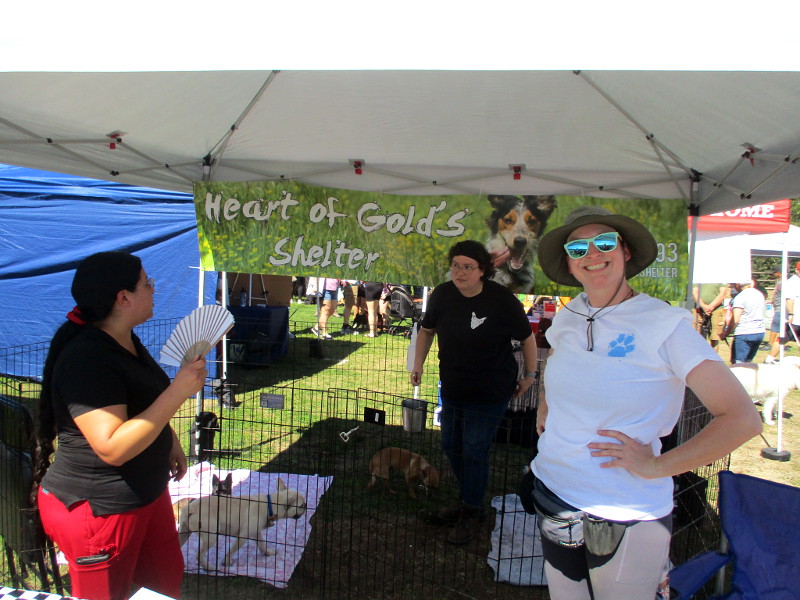
Heart of Gold’s Shelter in El Cajon is making the world a better place! Their Facebook page is here.
…
To follow my blog, find the “Follow” box in this website’s sidebar. Or bookmark coolsandiegosights.com and swing on by occasionally!
(If you’re viewing this on a phone, open my website’s sidebar by tapping those three parallel lines at the top of the page.)
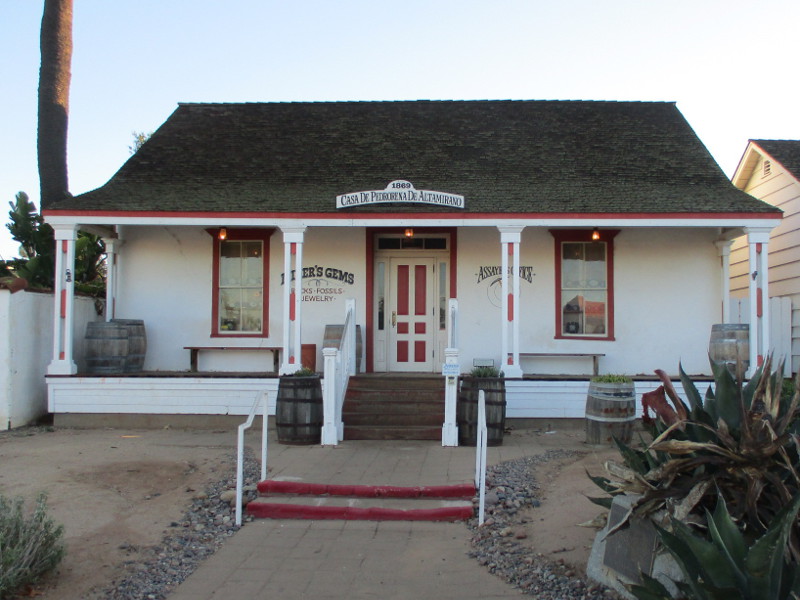
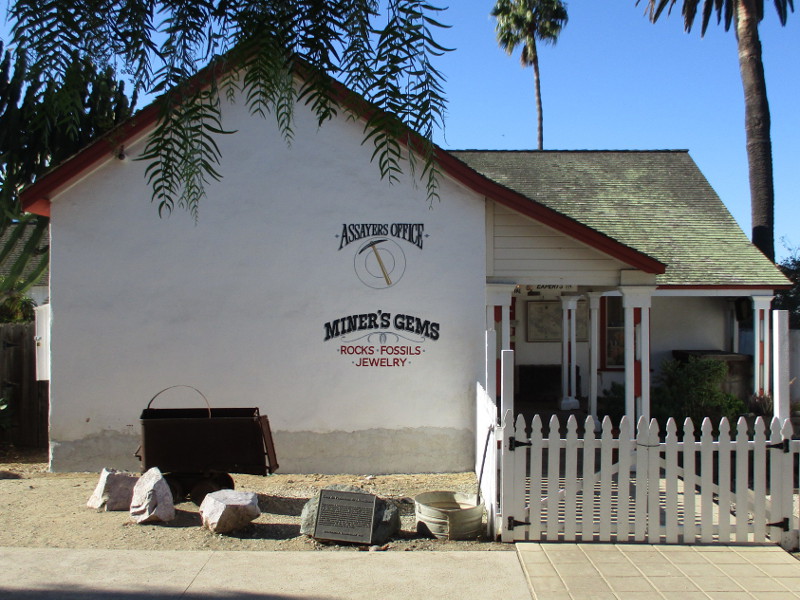
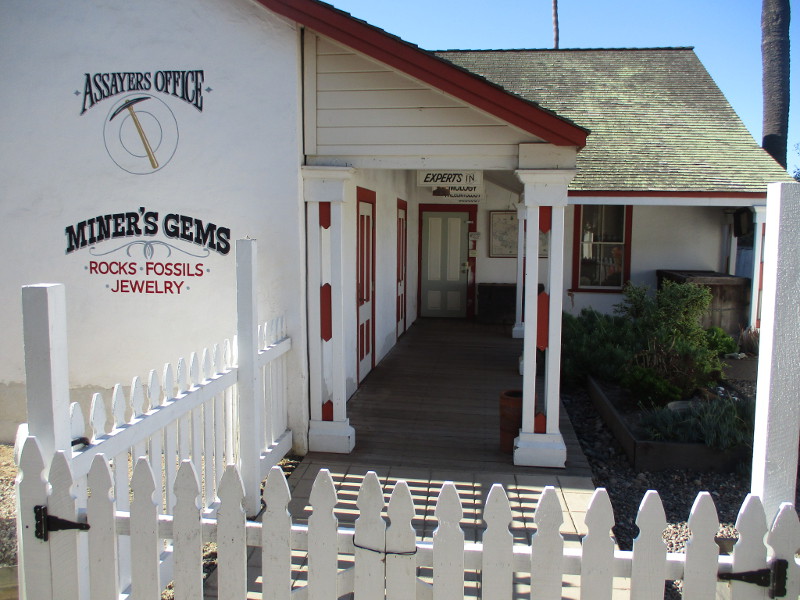
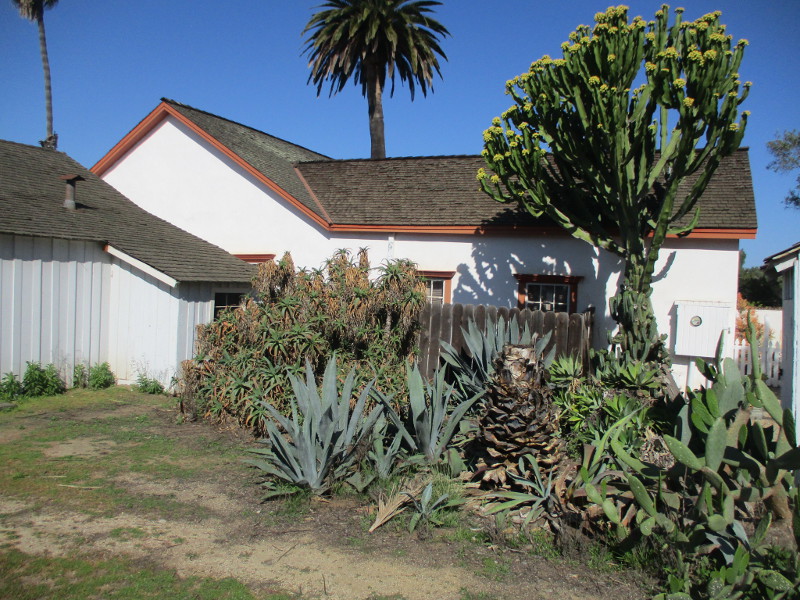
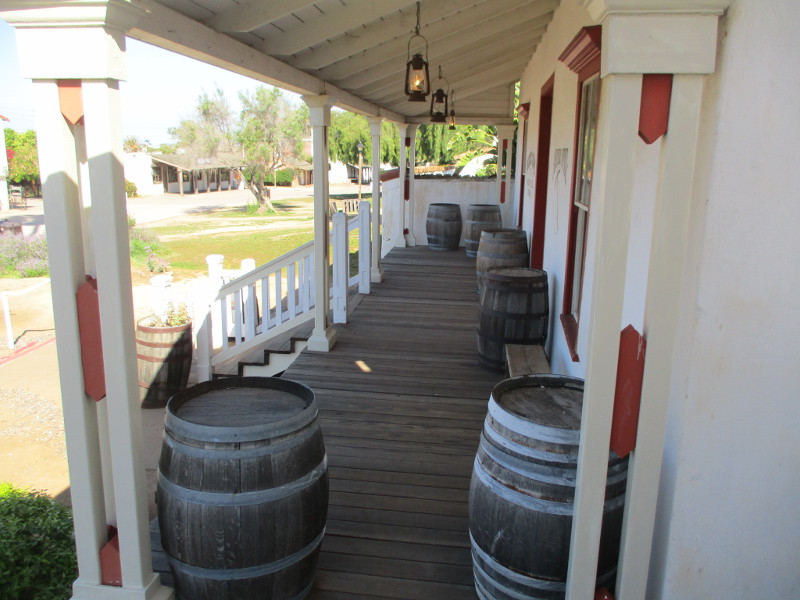
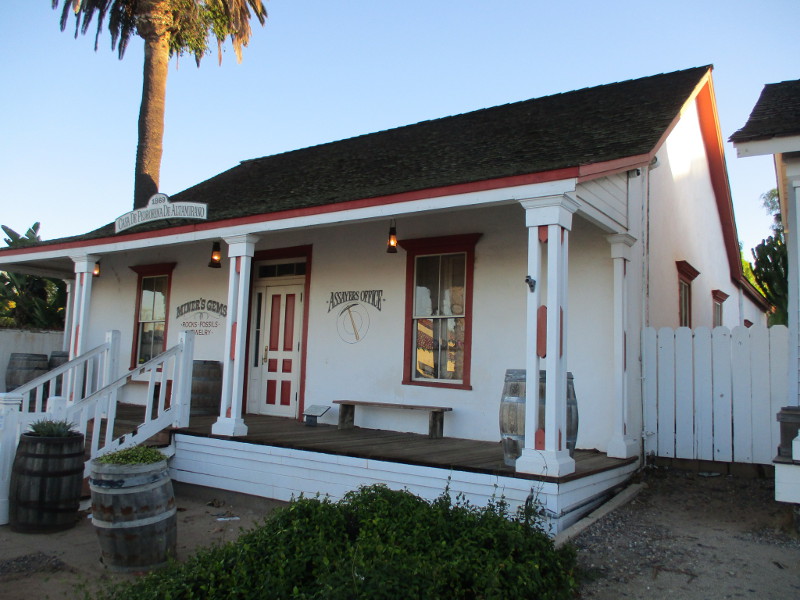
Whenever I walk through Old Town San Diego State Historic Park, I take photographs of the Pedrorena-Altamirano House. For some reason, however, I never get around to posting those photos!
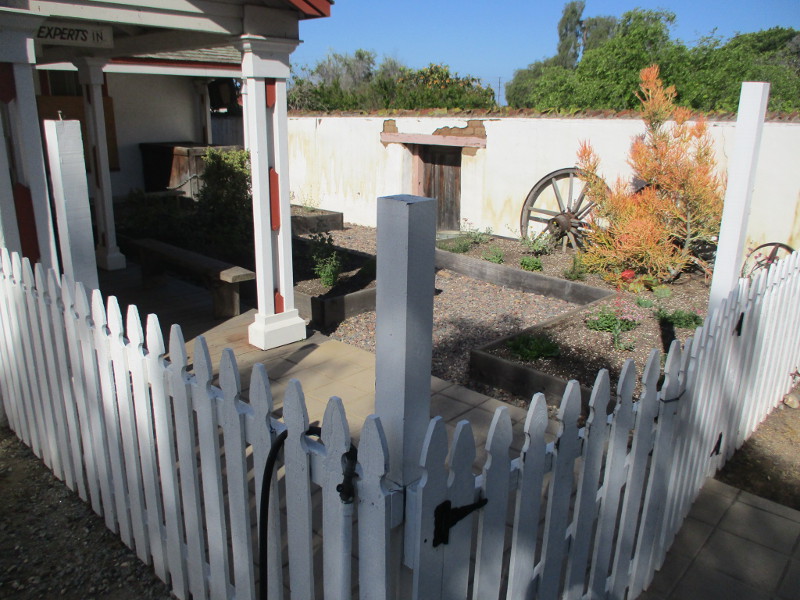
Here we go, finally. These images were captured at various times under different light conditions.
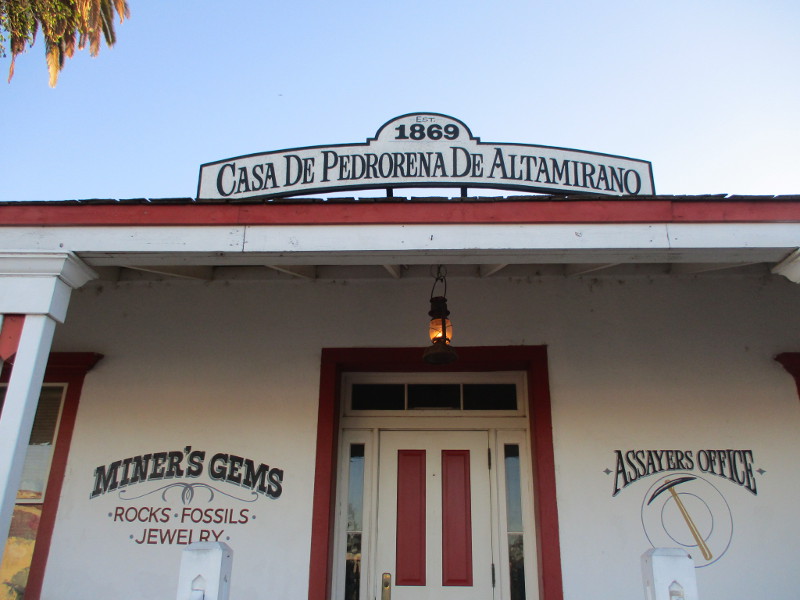
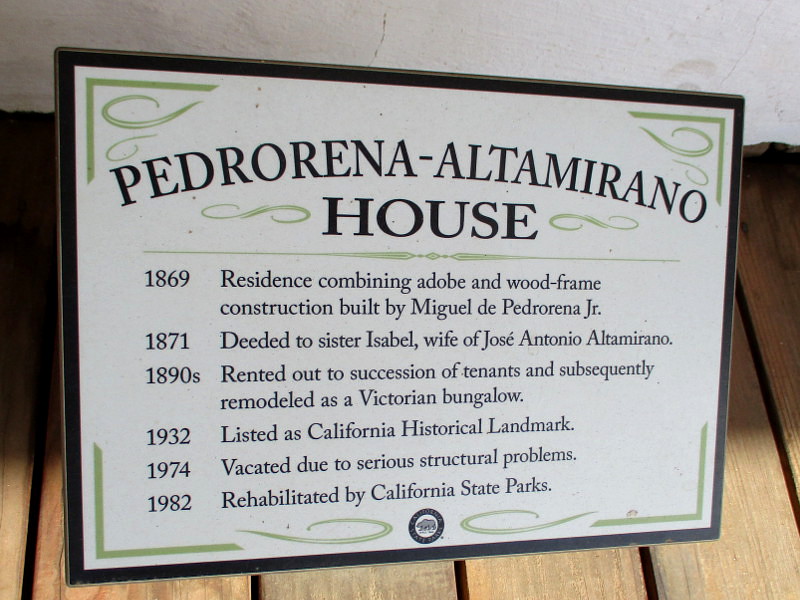
As a sign on the front porch explains, the adobe and wood frame house was built by Miguel de Pedrorena Jr. in 1869 and deeded to his sister Isabel, wife of José Antonio Altamirano, in 1871. Hence its name. In Spanish the house is called Casa de Pedrorena de Altamirano.
In the 1890s it was remodeled as a Victorian bungalow, and in 1932 the house was listed as a California Historical Landmark. California State Parks rehabilitated the structure in 1982.
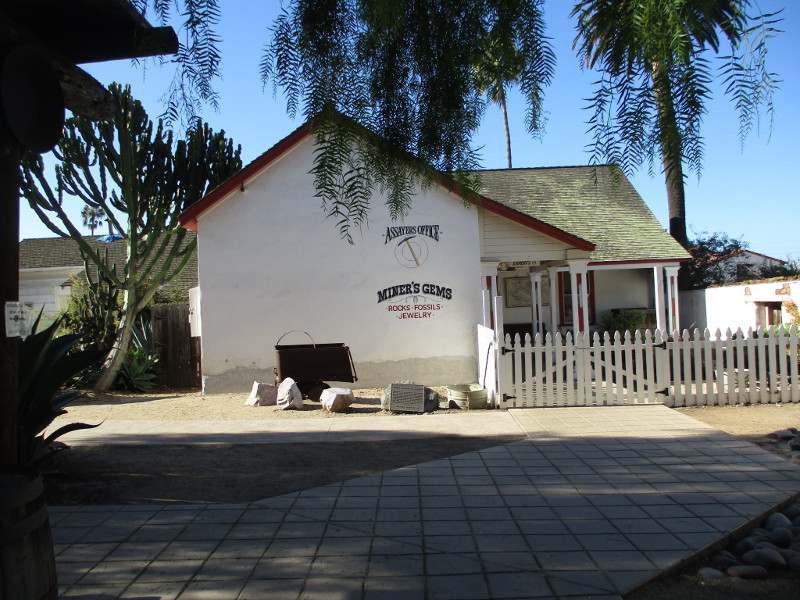
Today, as you can see, it’s home of Miner’s Gems and Minerals. That explains the mining equipment visitors discover in back.
The next photos were taken behind the house…
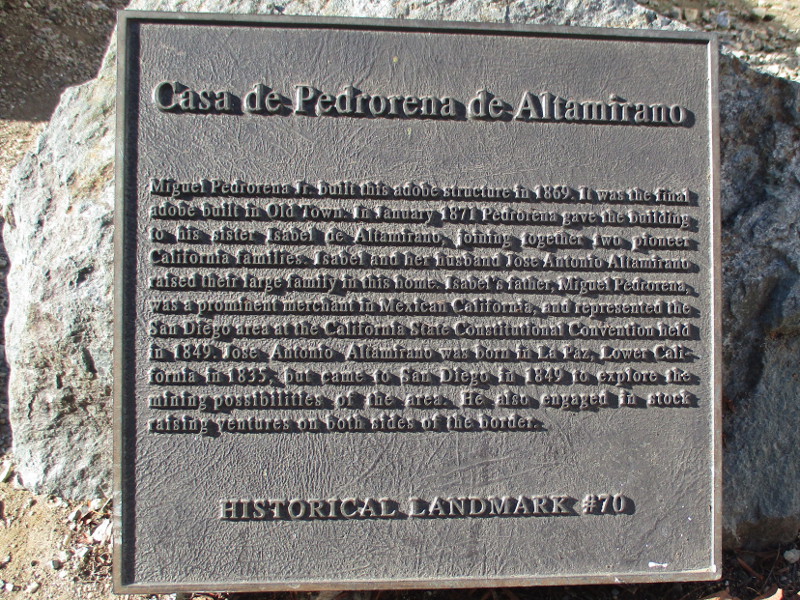
As you can see, there’s a plaque…
The plaque provides more interesting history. It reads:
Casa de Pedrorena de Altamirano
Miguel Pedrorena Jr. built this adobe structure in 1869. It was the final adobe built in Old Town. In January 1871 Pedrorena gave the building to his sister Isabel de Altamirano, joining together two pioneer California families. Isabel and her husband Jose Antonio Altamirano raised their large family in this home. Isabel’s father, Miguel Pedrorena, was a prominent merchant in Mexican California, and represented the San Diego area at the California State Constitutional Convention held in 1849. Jose Antonio Altamirano was born in La Paz, Lower California in 1835, but came to San Diego in 1849 to explore the mining possibilities of the area. He also engaged in stock raising ventures on both sides of the border.
HISTORICAL LANDMARK #70
Now let’s circle around the house and return to the front…
…
To follow my blog, find the “Follow” box in this website’s sidebar. Or bookmark coolsandiegosights.com and swing on by occasionally!
(If you’re viewing this on a phone, open my website’s sidebar by tapping those three parallel lines at the top of the page.)
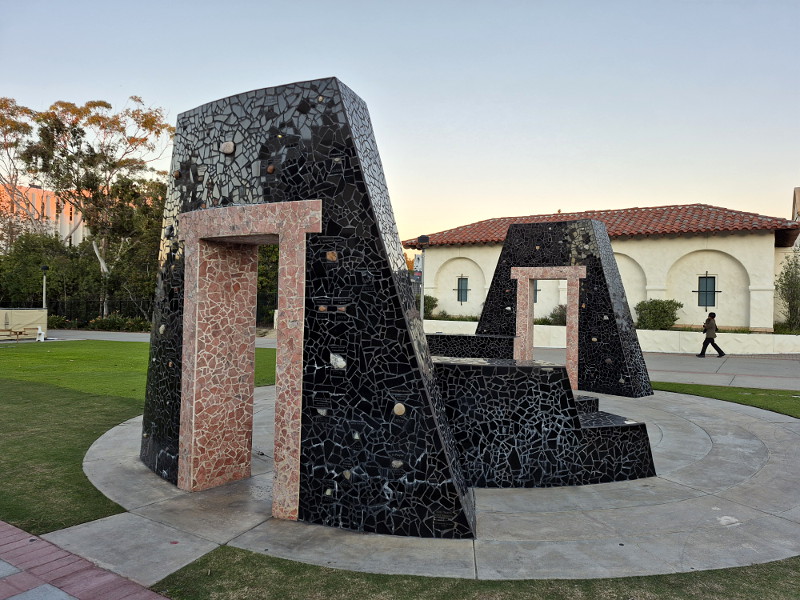
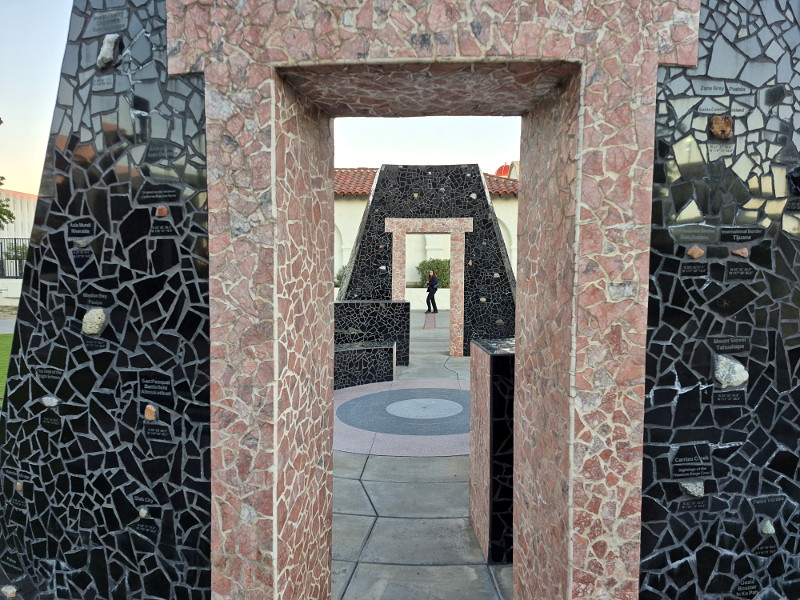
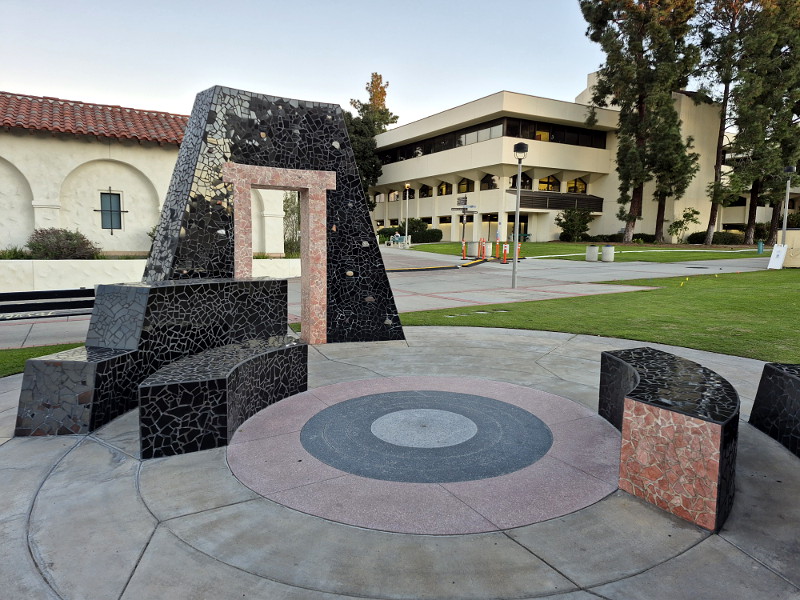
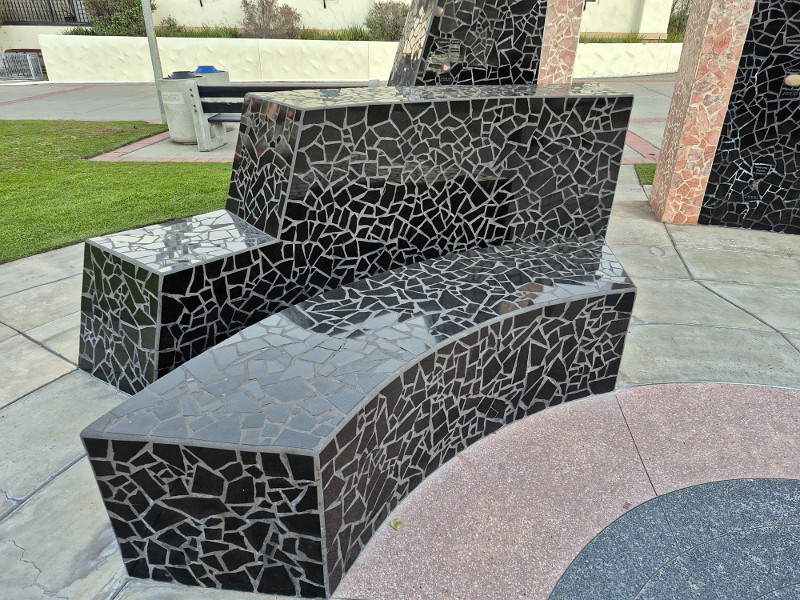
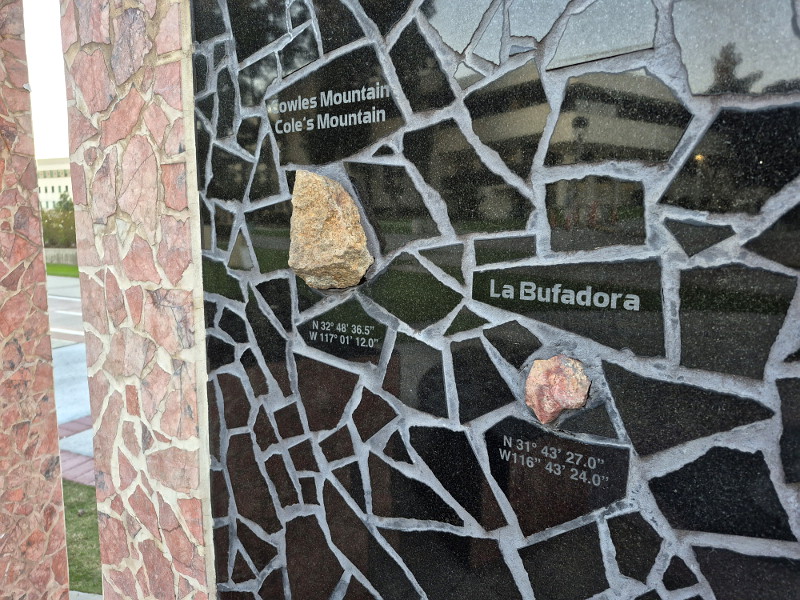
In 1997 the 100 Years, 100 Stones monument debuted at San Diego State University. It was created to celebrate the 100th anniversary of SDSU.
If you’ve ever walked down the campus’ central Campanile Walkway you’ve no doubt seen this unique stone-like sculpture with its two portals. It has an appearance suggestive of ancient temples or ruins.
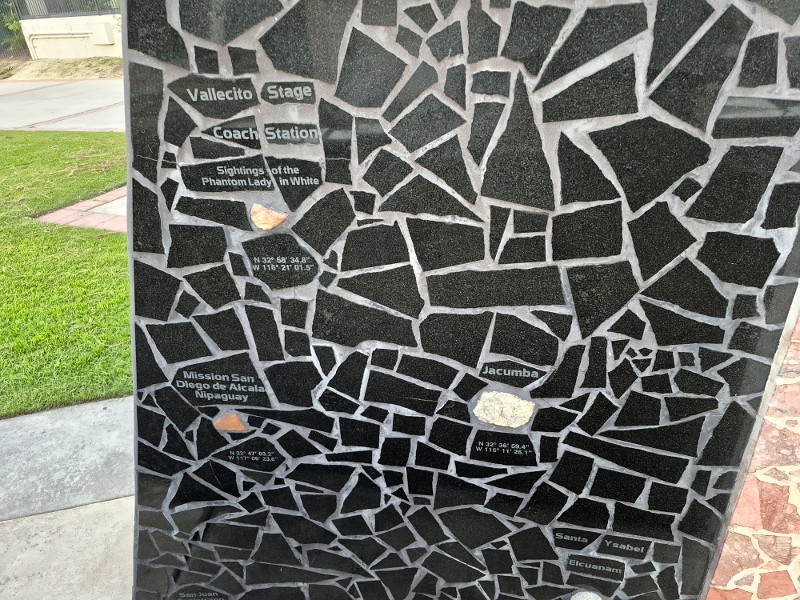
Those who look closely at the monument will see small rock samples embedded in it, with informative labels. The rocks come from locations all around our region, within a hundred miles of SDSU, including places in Mexico. The art blends culture with geology.
Installation artist Eve Andree Laramee designed 100 Years, 100 Stones. There’s no plaque by this public art with any sort of explanation (that I’ve noticed), so I wonder if students walking past it understand its origin and nature. For years I myself didn’t know. Thank you Google!
…
To follow my blog, find the “Follow” box in this website’s sidebar. Or bookmark coolsandiegosights.com and swing on by occasionally!
(If you’re viewing this on a phone, open my website’s sidebar by tapping those three parallel lines at the top of the page.)
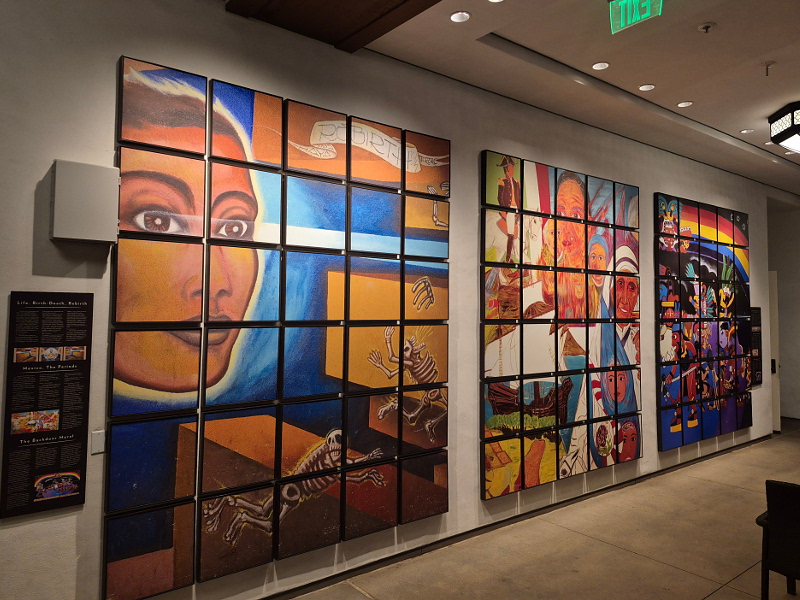
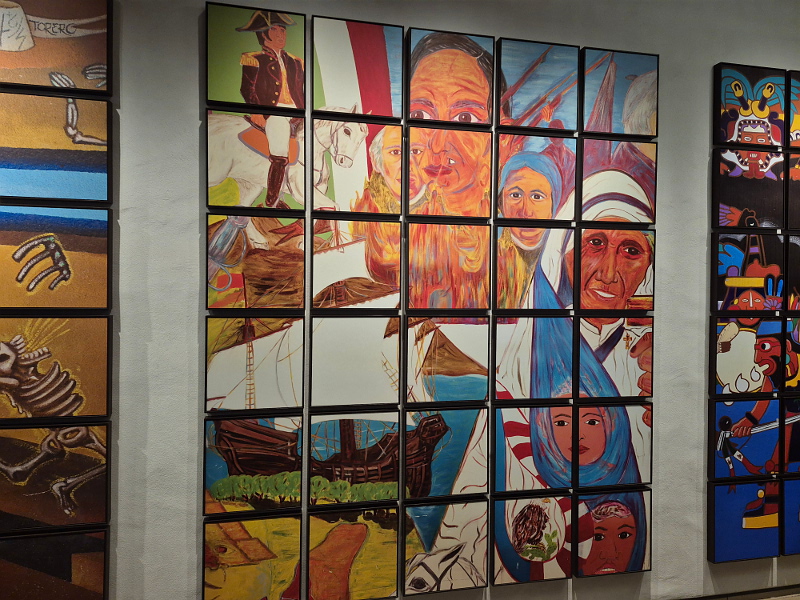
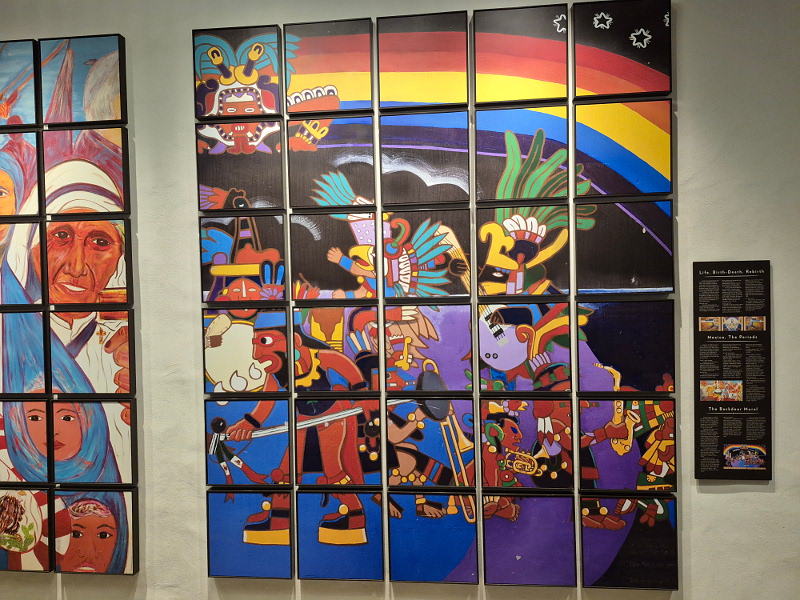
On the second floor of the Conrad Prebys Aztec Student Union at San Diego State University, memories are preserved just outside Montezuma Hall. Three historical murals that were painted on plaster at the old Aztec Center, which was demolished in 2011, live on today as tiled photographs.
Here’s an article that describes the origin of the original three murals, which were painted by students in the late 1970s and early 1980s.
On either side of the tiled photographs are identical plaques that show the complete murals and provide further explanation.
Tiled photographs of Life, Birth-Death, Rebirth. Painted by San Diego-based artist Mario Torero and SDSU students in 1980, “Life, Birth-Death and Rebirth” was located in the lower courtyard of Aztec Center. Torero and students chose the theme because they wanted to focus on the more positive aspects of Chicano culture instead of dwelling on the past…Tiled photographs of Mexico, The Periods. Painted in fall 1980 and spring 1981, “Mexico, The Periods,” was produced as part of an SDSU Chicano mural class. Art instructor Juan Laguna and his students divided the mural into four sections, each celebrating the four periods of Mexican history. The 10-foot by 20-foot mural was located in an inside hallway in the lower level of Aztec Center…Tiled photographs of The Backdoor Mural. Formerly located in a hallway near the backstage entrance to the Backdoor in Aztec Center, the 9-foot by 14-foot mural was completed on Jan. 27, 1976. It was designed and painted by principal artist Arturo Anselmo Roman and students in his Chicano mural art class. Dedicated to the god of music, the design featured various Meso-American gods as musicians…
…
If you’d like to see San Diego through my lens, find the “Follow” box in the sidebar to receive new posts in your email, or bookmark coolsandiegosights.com and swing on by occasionally!
(If you’re viewing Cool San Diego Sights on a phone, you can open my website’s sidebar by tapping those three parallel lines at the top of the page.)
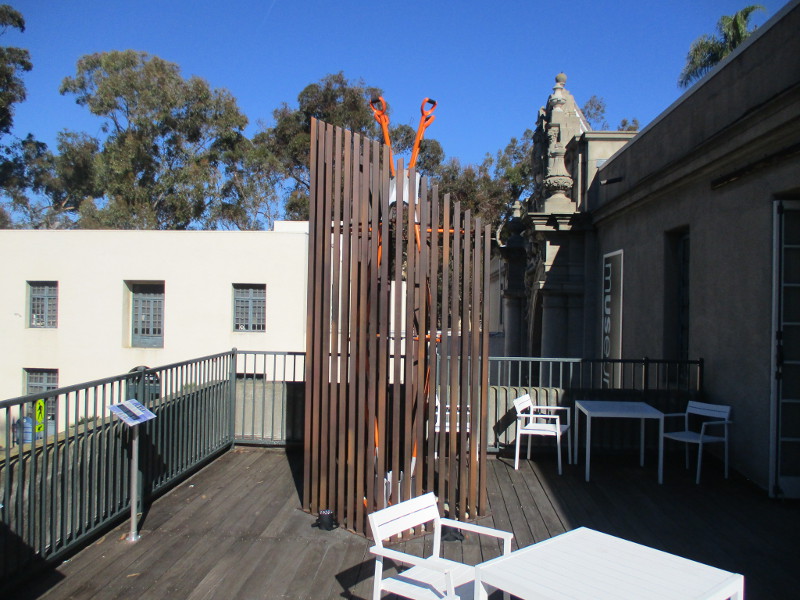
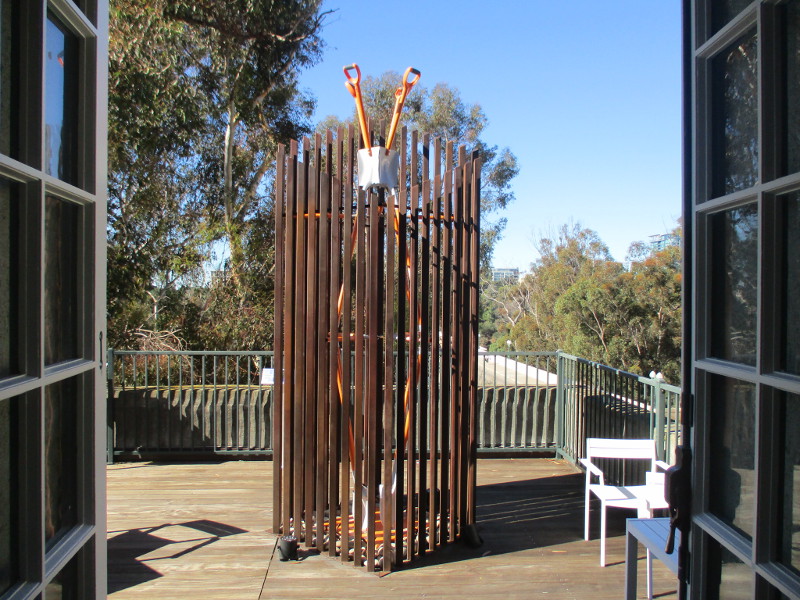
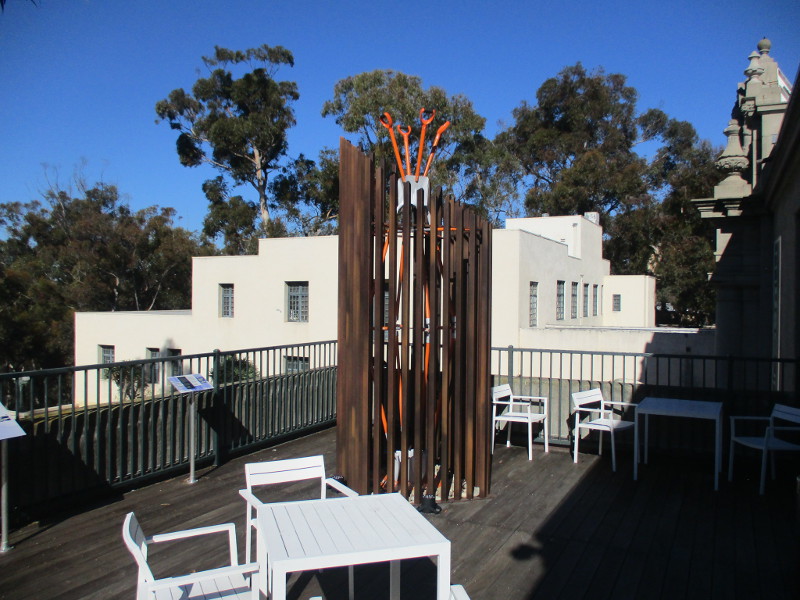
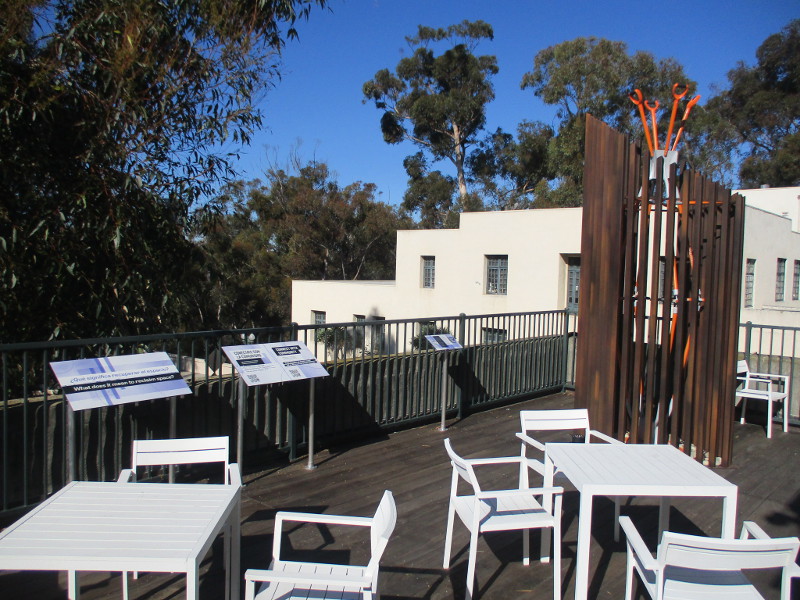
A sculpture was recently installed at the Museum of Us in Balboa Park. You can see the new artwork when crossing the Cabrillo Bridge, about to enter the west archway of the California Quadrangle. Look up toward the second floor’s outdoor balcony!
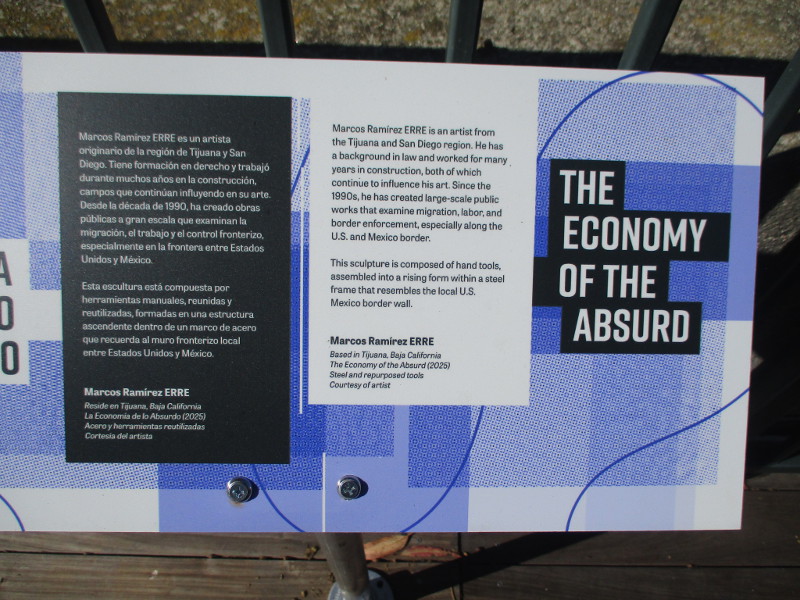
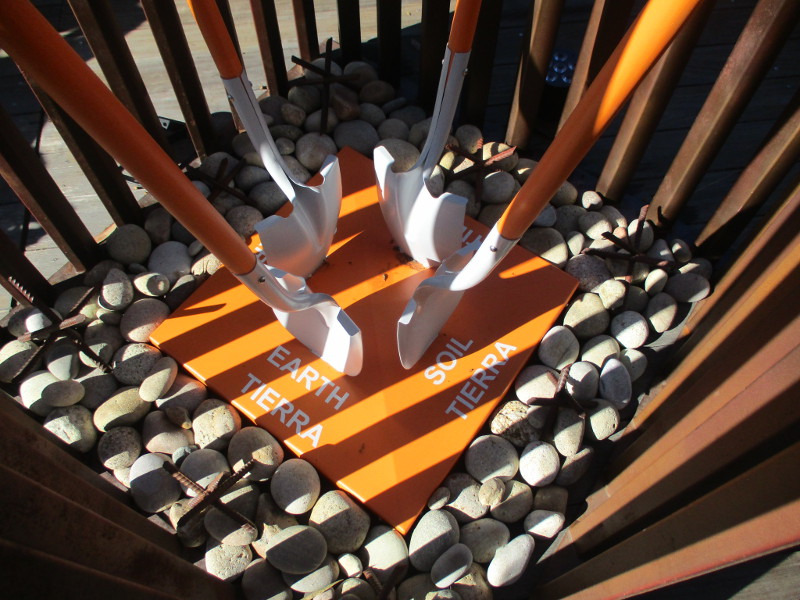
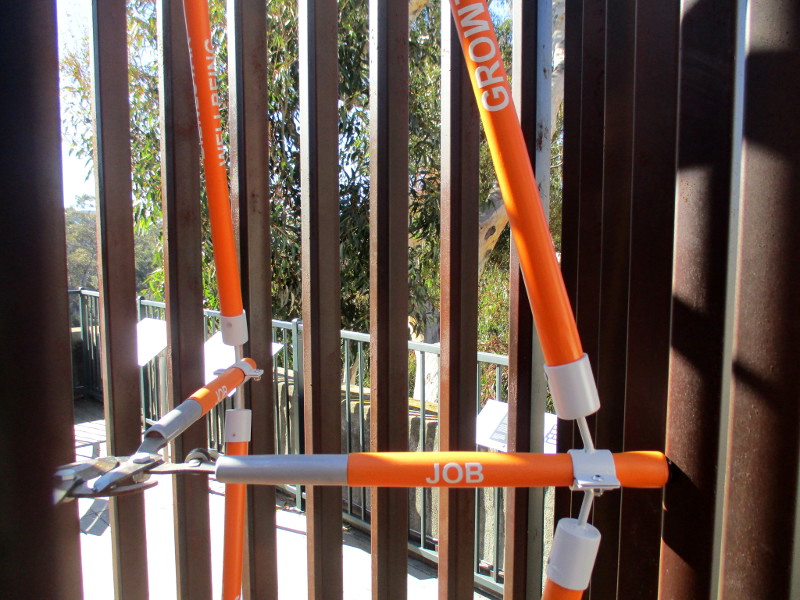
The sculpture is titled The Economy of the Absurd. It was created by Marcos Ramírez ERRE, an artist from the Tijuana and San Diego region who has created large-scale public works since the 1990s. It’s part of the newly opened Museum of Us exhibition Race: Power, Resistance & Change.
The museum’s About the Exhibit page explains: The exhibition Race: Power, Resistance & Change shares stories of how the construction of race has shaped laws, institutions, and daily life in San Diego and the broader multinational region.
As a plaque on the balcony near The Economy of the Absurd explains: This sculpture is composed of hand tools, assembled into a rising form within a steel frame that resembles the local U.S. Mexico border wall.
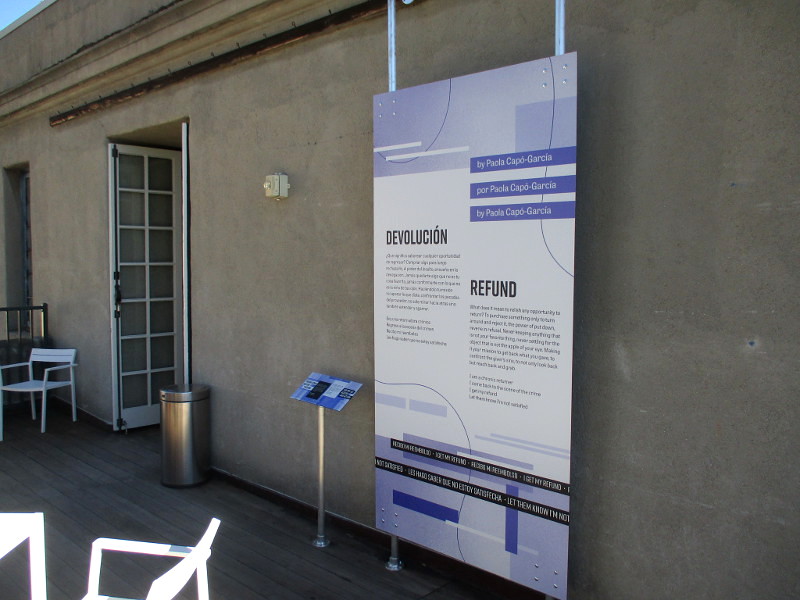
A number of other plaques are also located on the balcony, including one featuring the poem Refund by past San Diego Poet Laureate Paola Capó-Garcia. It is all part of the overall exhibition.
When I spied the new sculpture yesterday while walking through Balboa Park, I had to go check it out!
Here I am proceeding out onto the Museum of Us balcony…
(Photographs of views from the balcony before installation of this exhibit can be found by clicking here.)
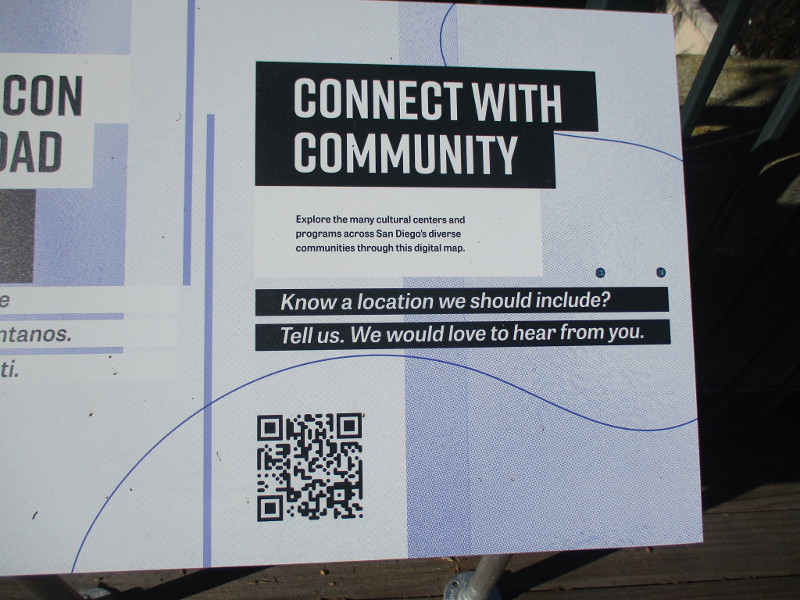
Visitors are encouraged to contribute to a digital map. The map is of cultural centers and programs across San Diego’s diverse communities. You can participate by clicking here!
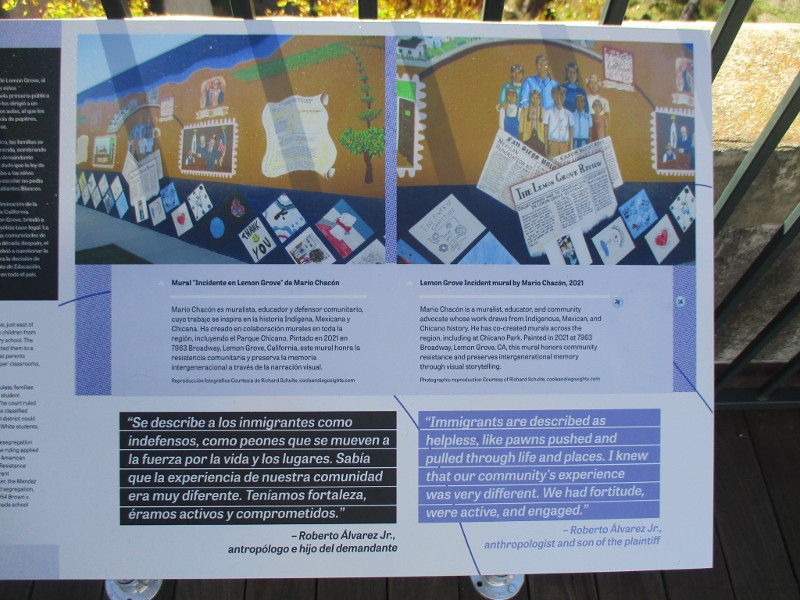
Imagine my excitement when I found that one of the plaques, concerning the public mural in Lemon Grove of the “Lemon Grove Incident,” features two photographs that I took for Cool San Diego Sights and a mention of my website!
Finally, here’s the short poem Refund…
…
If you’d like to see San Diego through my lens, find the “Follow” box in the sidebar to receive new posts in your email, or bookmark coolsandiegosights.com and swing on by occasionally!
(If you’re viewing Cool San Diego Sights on a phone, you can open my website’s sidebar by tapping those three parallel lines at the top of the page.)
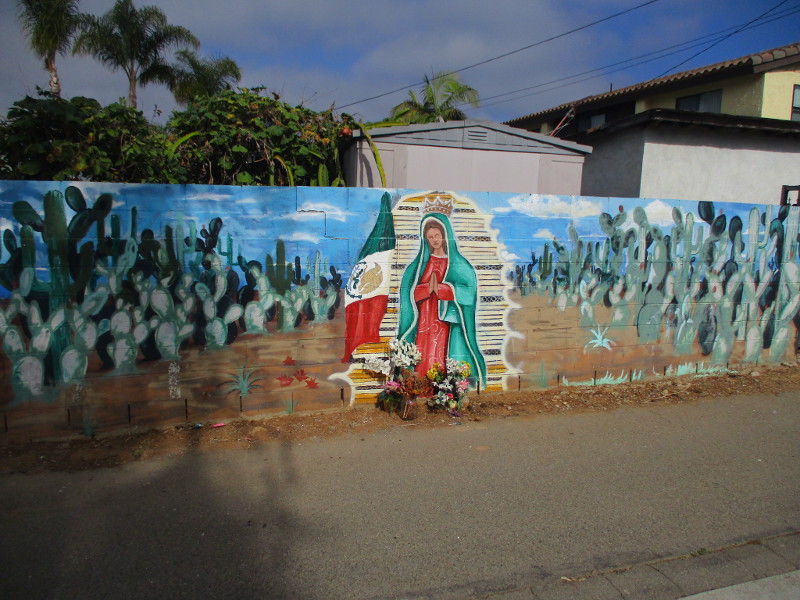
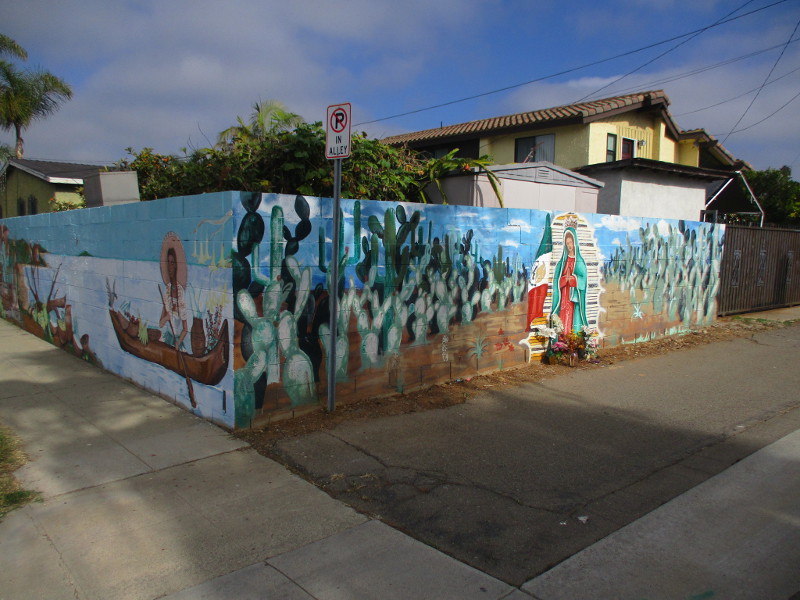
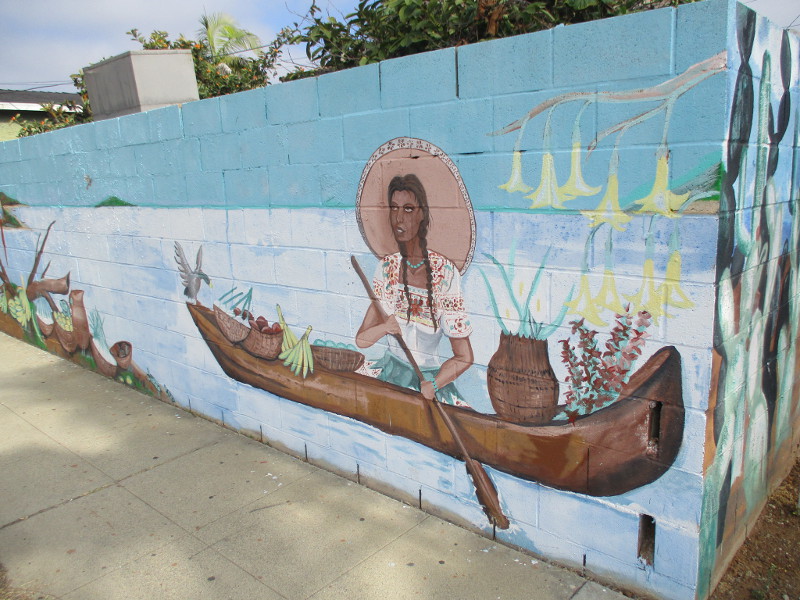
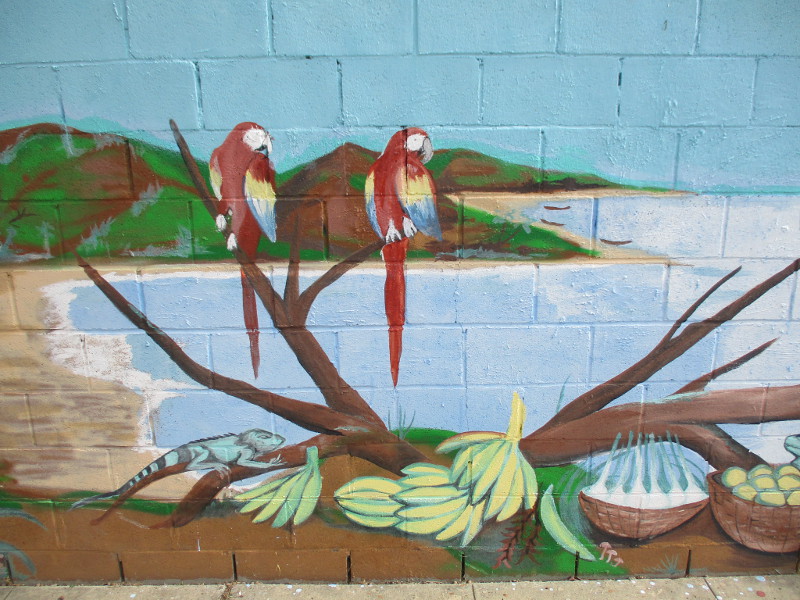
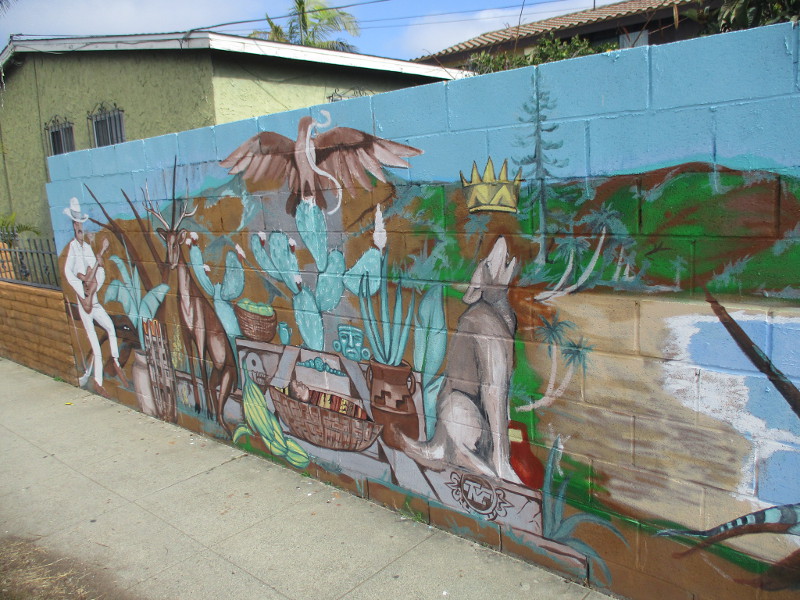
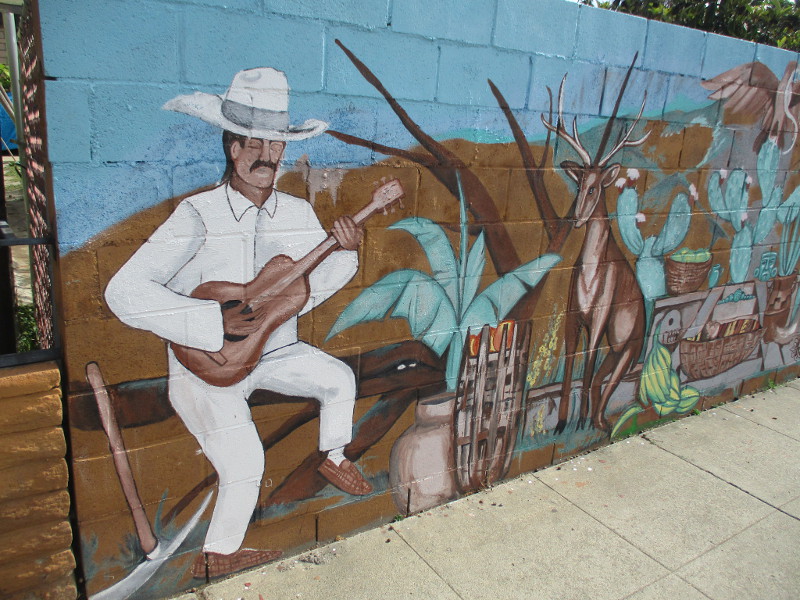
I spotted this beautiful mural during my last walk in Oceanside. It decorates a wall on San Diego Street, between Lemon Street and Dubuque Street, about a block away from Balderamma Park.
The side of the wall that faces an alley depicts the Virgin of Guadalupe among prickly pear and other cacti. It also appears to be a neighborhood shrine. People have left fresh flowers.
The other side, facing San Diego Street, has been painted with colorful scenes, so full of life.
I couldn’t ascertain who the artist is. If you have any information, leave a comment.
…
I post new blogs pretty often. If you like discovering new things, bookmark coolsandiegosights.com and swing on by occasionally!
I live in downtown San Diego and love to walk around with my camera! You can follow Cool San Diego Sights via Facebook or X.
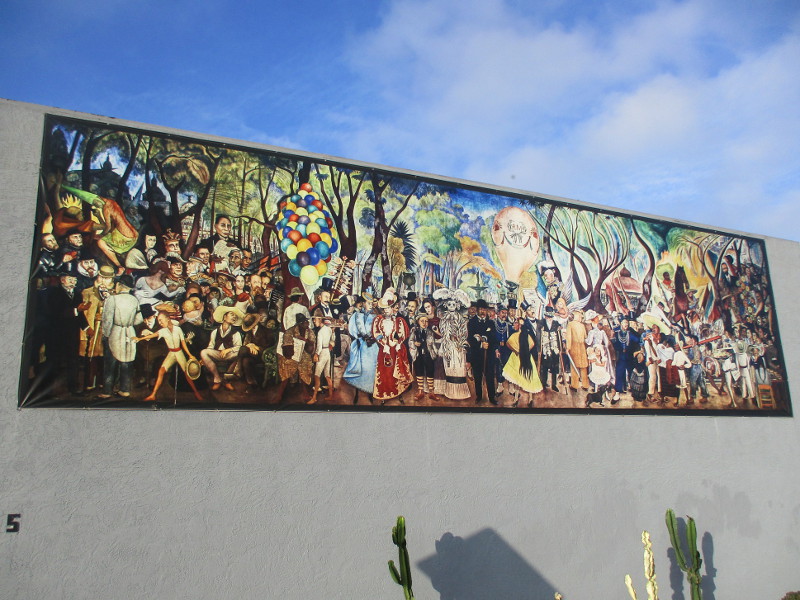
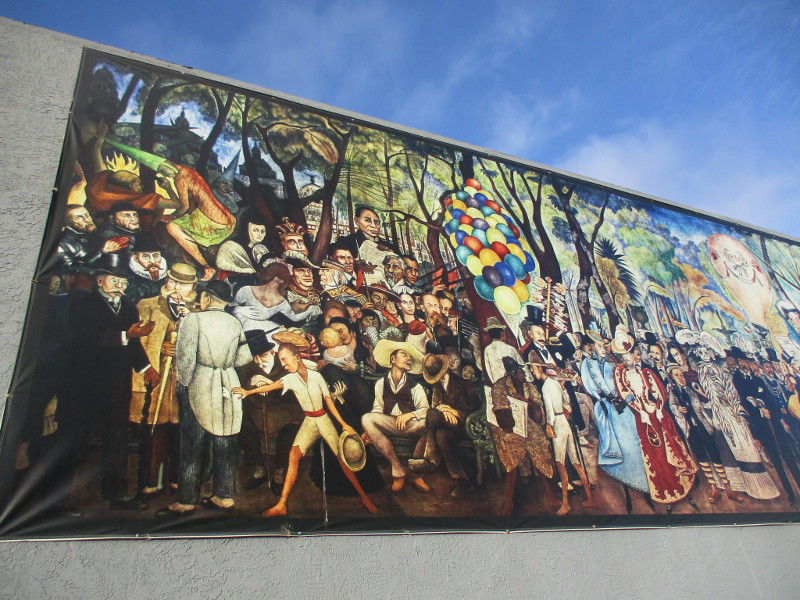
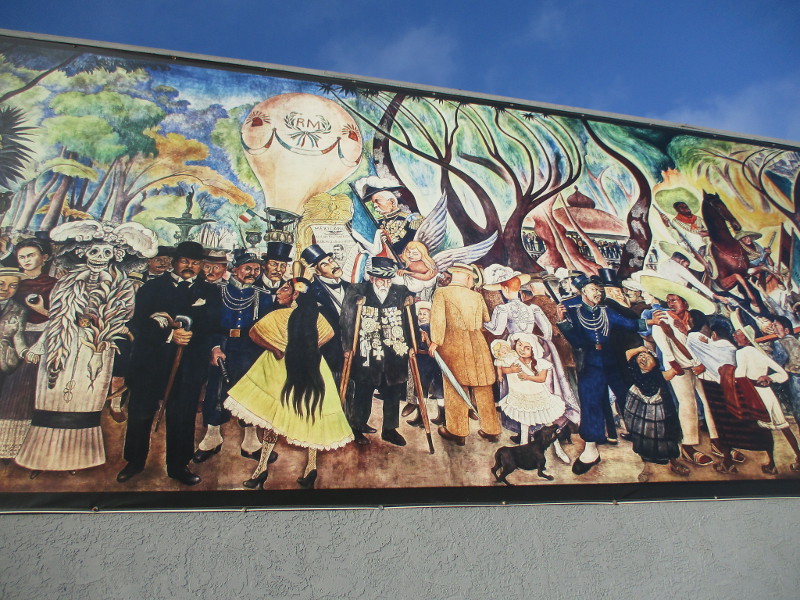
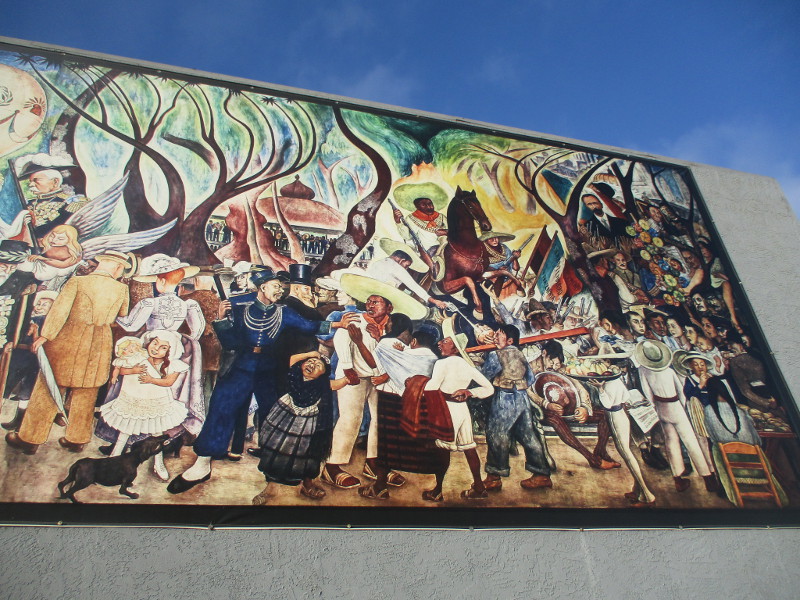
A printed banner duplicate of a very famous mural by Mexican painter Diego Rivera can be seen in San Diego’s Barrio Logan neighborhood. Sueño de una tarde dominical en la Alameda Central (Dream of a Sunday Afternoon at Alameda Central Park) decorates the exterior of the M & R Transmission building at 1775 National Avenue.
The original mural, painted by the artist between 1946 and 1947, can be viewed at the Museo Mural Diego Rivera in Mexico City.
The mural depicts famous people and events in the history of Mexico, passing through the Alameda Central park in Mexico City.It features many historical figures, including Hernán Cortés, Benito Juárez, and Frida Kahlo. The central figure is La Catrina, a skeleton figure symbolizing the connection between life and death.
I took these photos a few weeks ago, when I walked through Barrio Logan.
…
I post new blogs pretty often. If you like discovering new things, bookmark coolsandiegosights.com and swing on by occasionally!
I live in downtown San Diego and love to walk around with my camera! You can follow Cool San Diego Sights via Facebook or X.
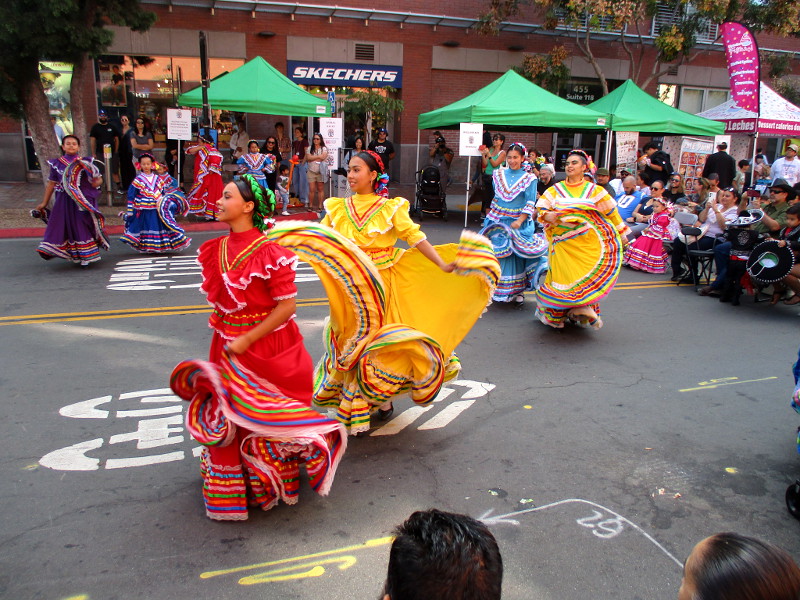
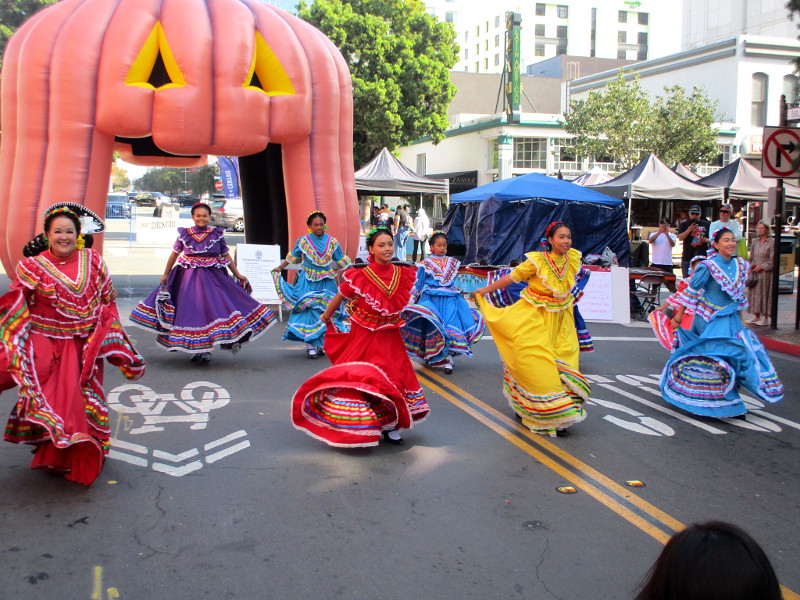
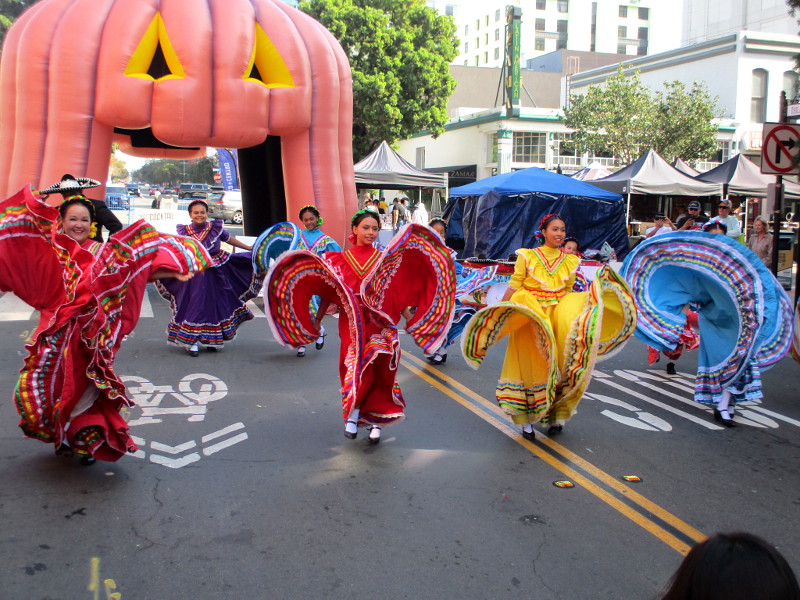
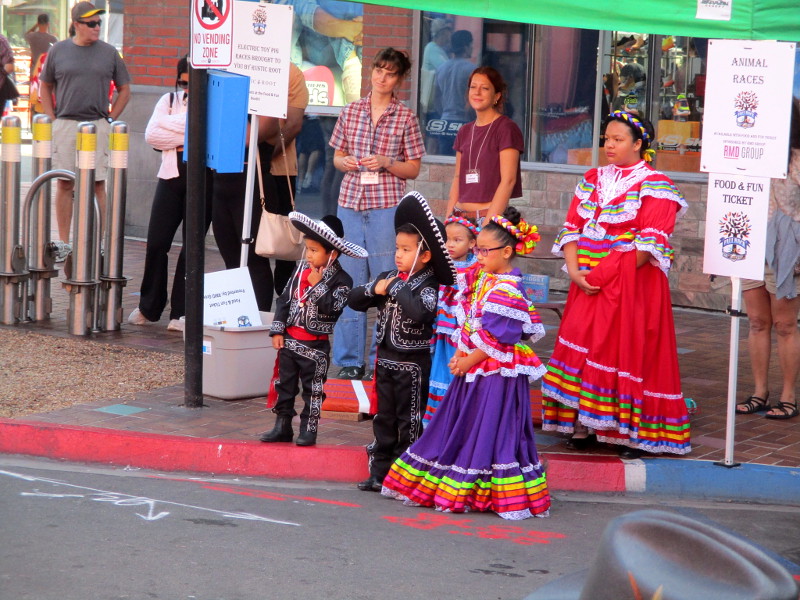
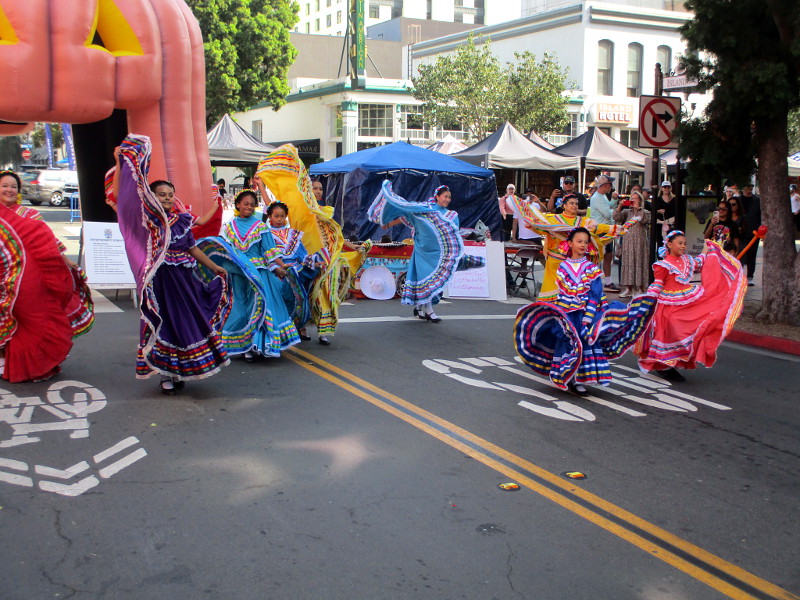
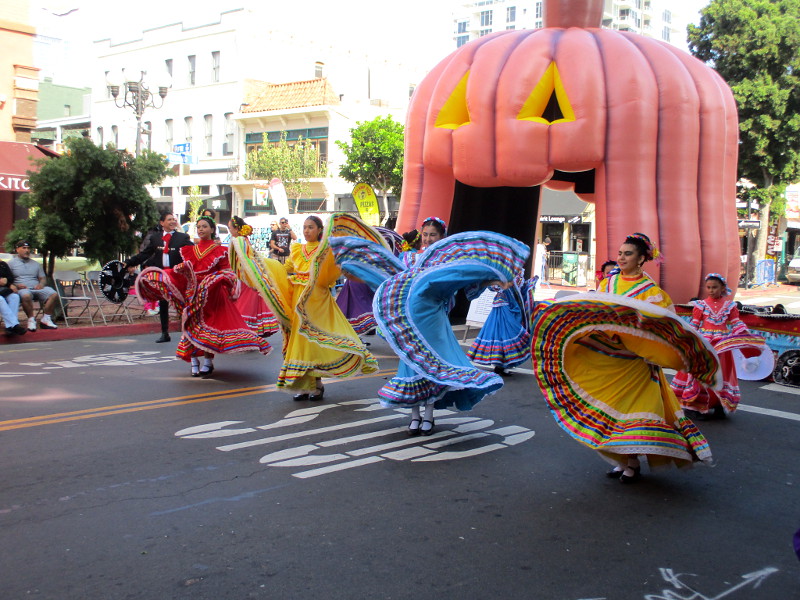
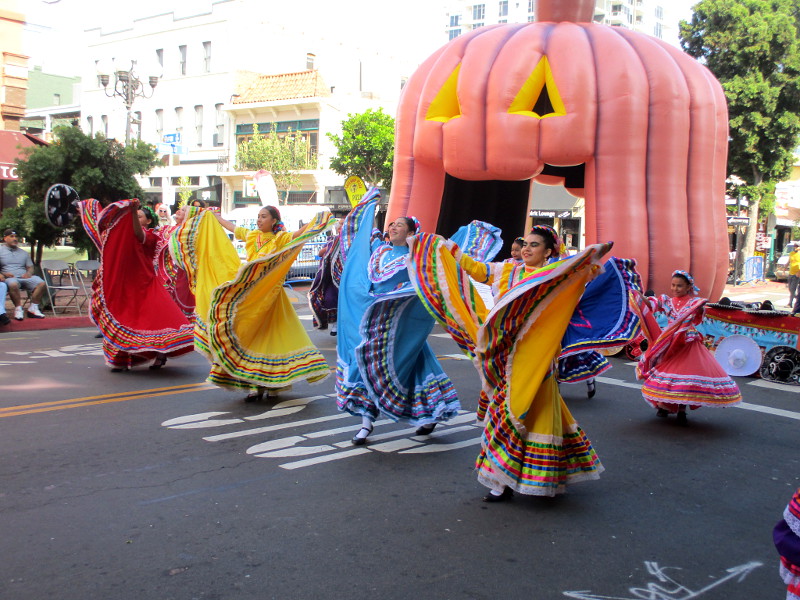
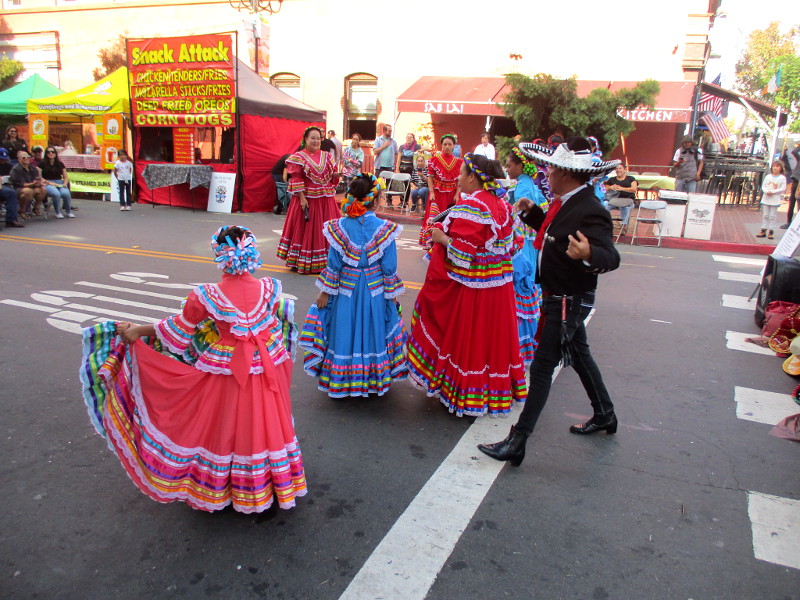
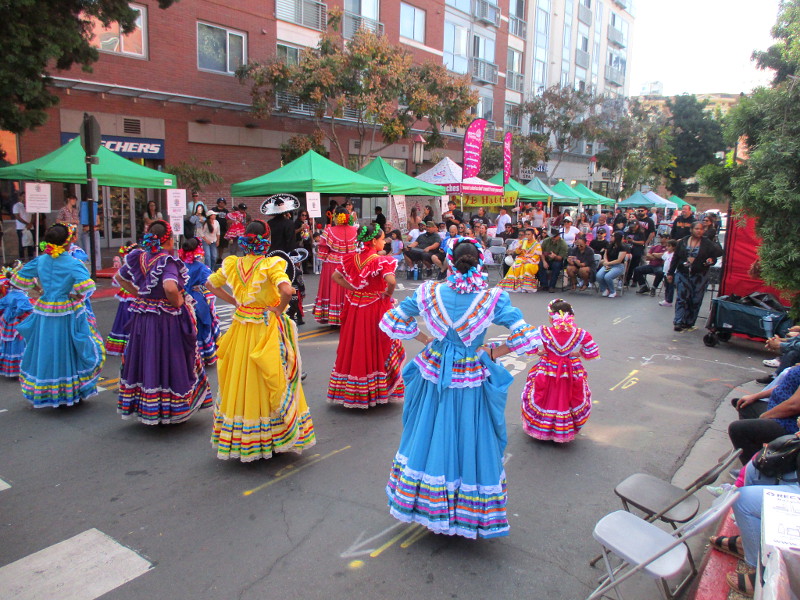
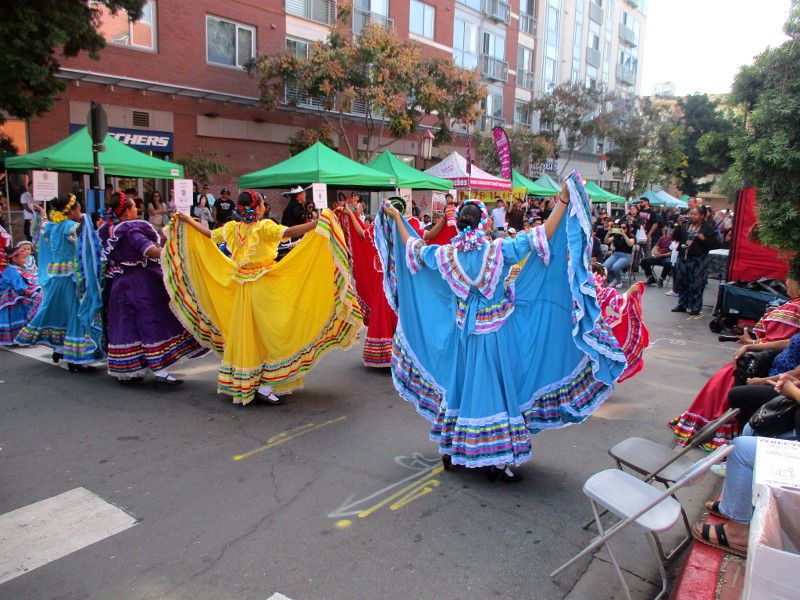
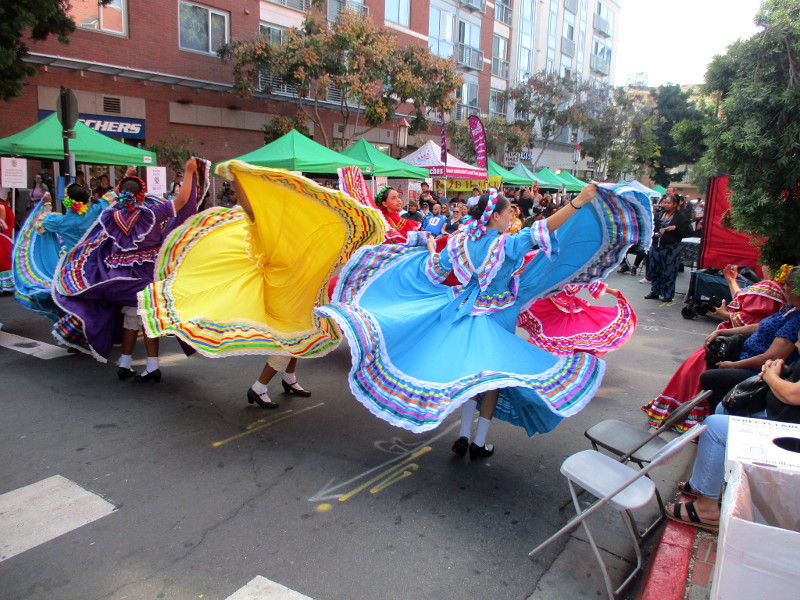
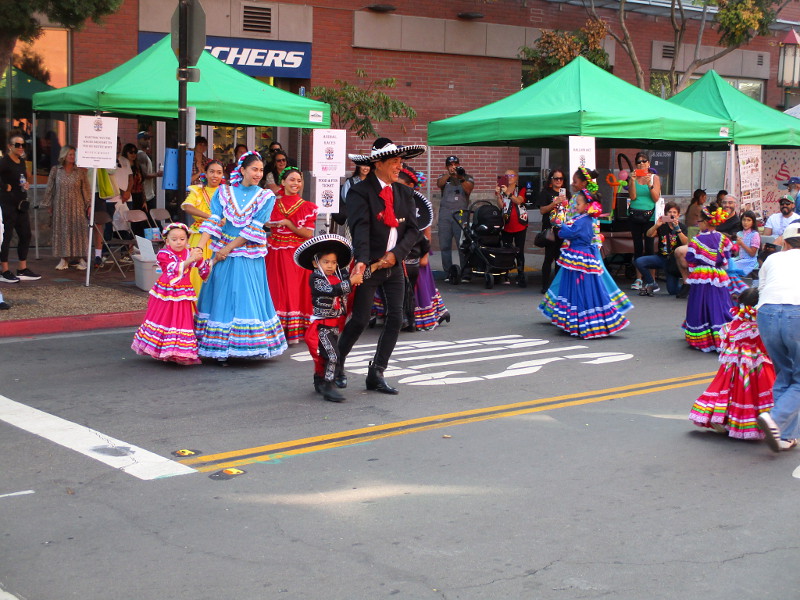
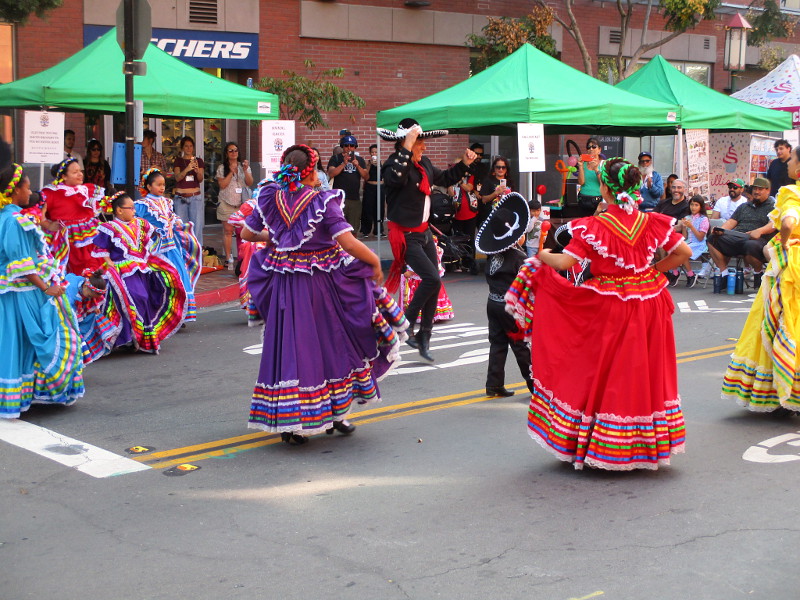
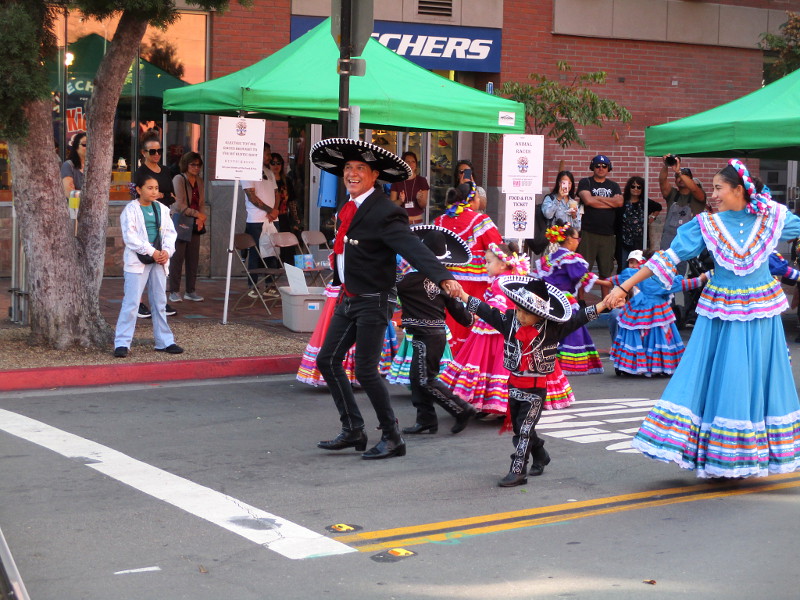
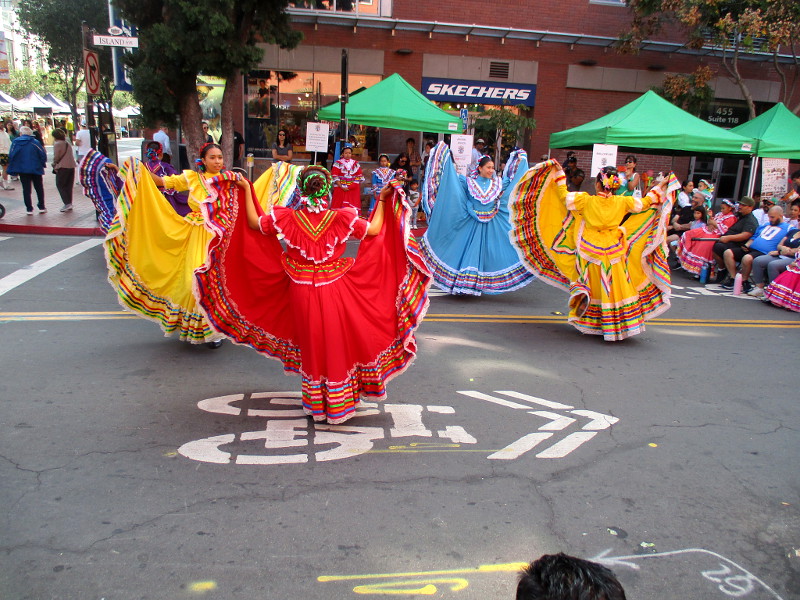
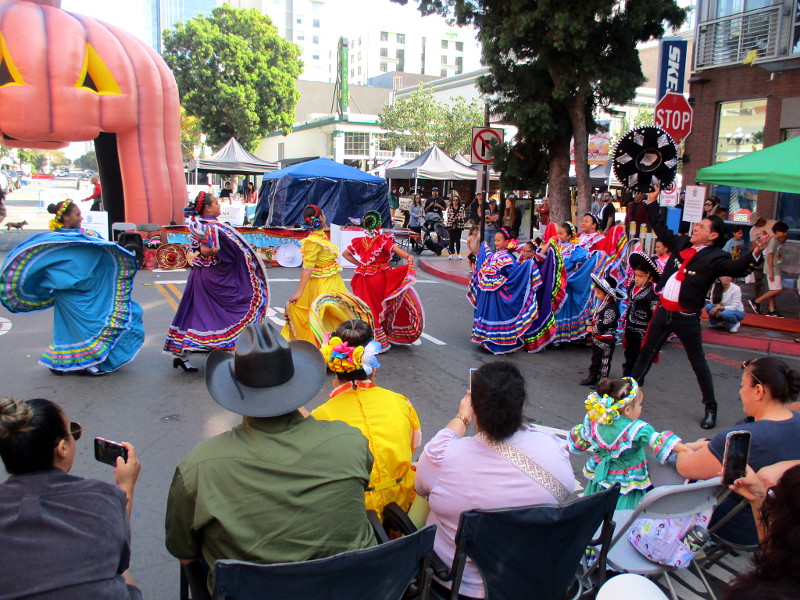
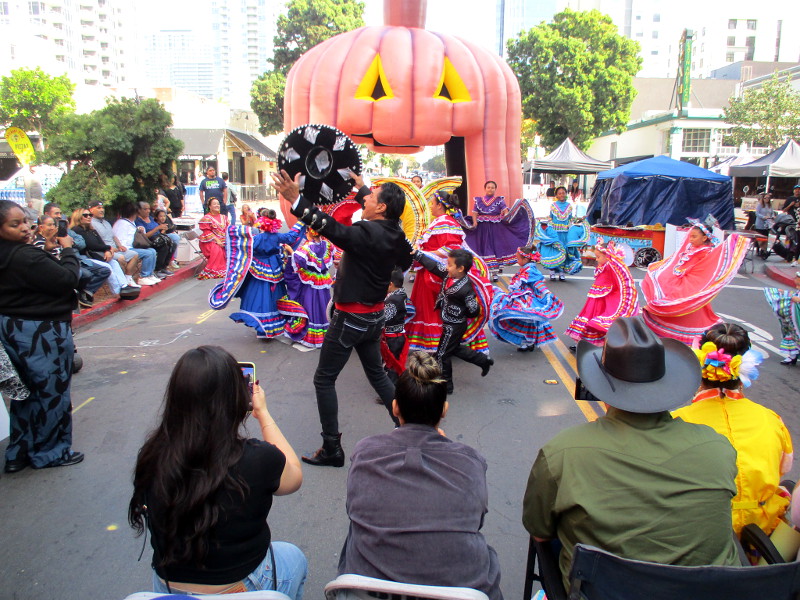
Young dancers with the Gift of Dance, a local ballet folklórico school, performed today in San Diego’s Gaslamp Quarter during the annual Fall Back Festival.
These colorful photographs provide a hint of the dancers’ energy, fluid grace and poise. The dances transmitted pure joy. If you were there, you felt it.
Traditional Mexican dances included La Negra, La Raspa, La Madrugada, Tehuantepec, El Jarabe Tapatio, Los Machettes, and Las Chiapanecas.
Audience members were often clapping along with the music!
I hope you enjoy my photos…
…
I post new blogs pretty often. If you like discovering new things, bookmark coolsandiegosights.com and swing on by occasionally!
I live in downtown San Diego and love to walk around with my camera! You can follow Cool San Diego Sights via Facebook or X.









 Cool San Diego Sights!