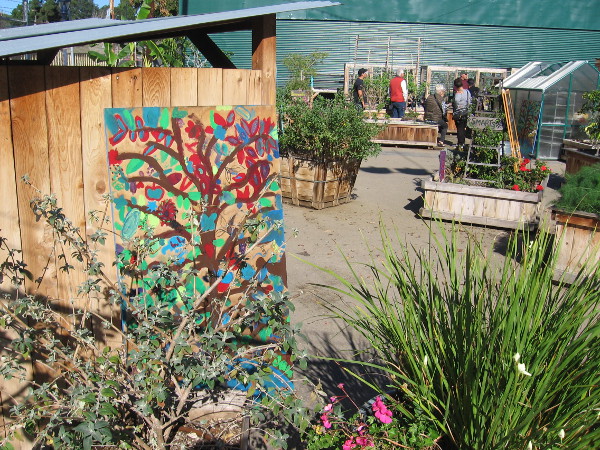
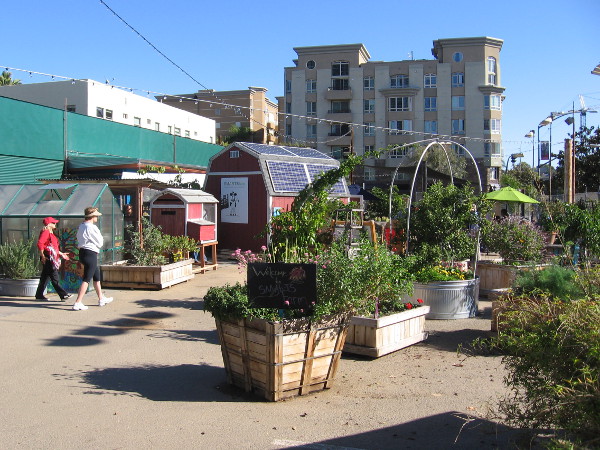
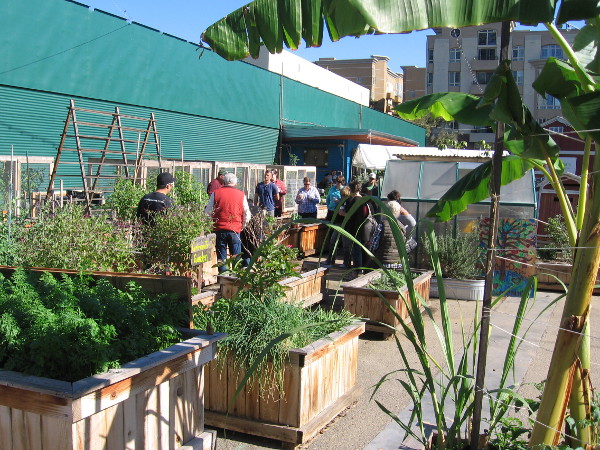
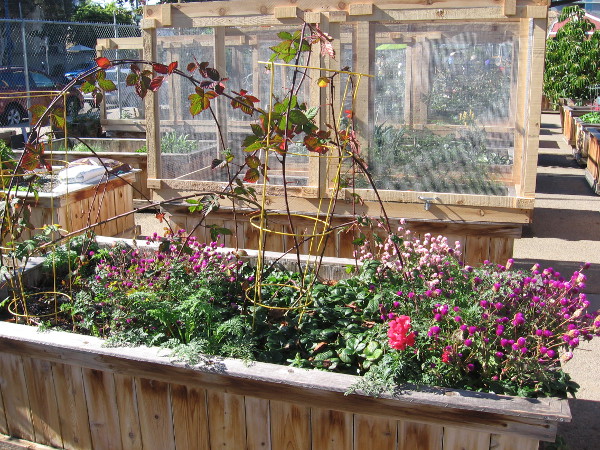
People check out many planters full of vegetables and flowers at the new SMARTS Farm in East Village.
Today I walked to East Village in downtown San Diego to check out a holiday event at SMARTS Farm. I didn’t realize that this cool community garden had recently moved. Their new and improved location is at the corner of 13th Street and Broadway.
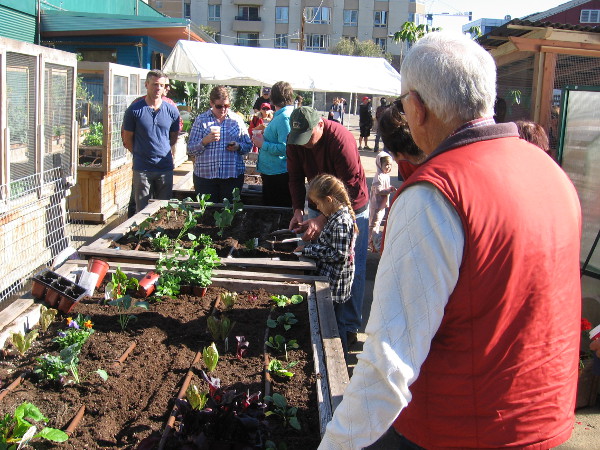
At SMARTS Farm, anybody is welcome to become an urban gardener–growing flowers or vegetables in the heart of our sunny city. Downtown residents can relax here, kids can learn about farming, botany and nature, and I believe photography classes are still offered.
If you’re ever downtown, swing on by to see for yourself!
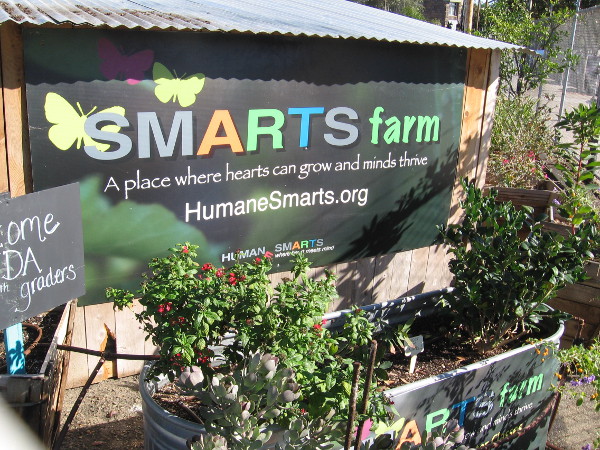
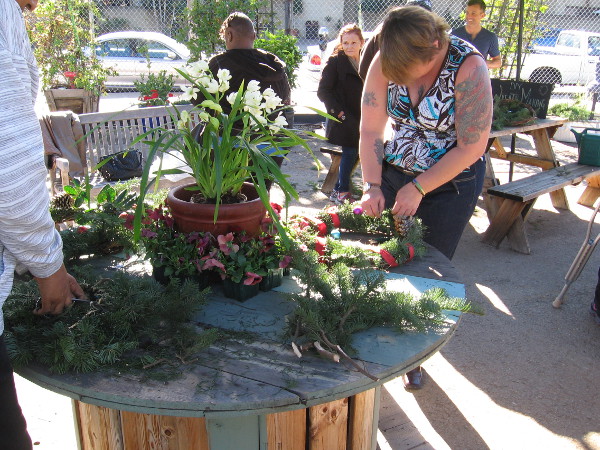
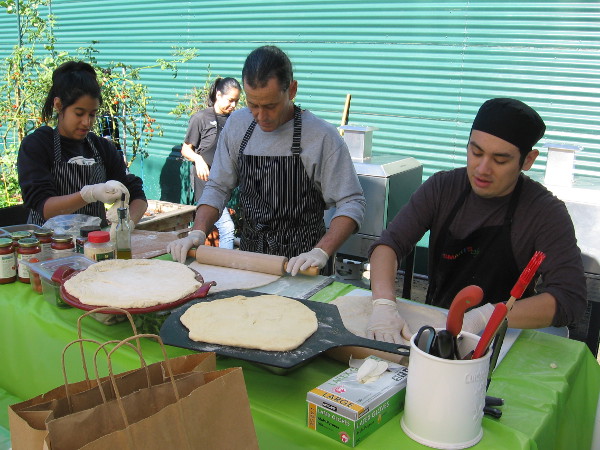
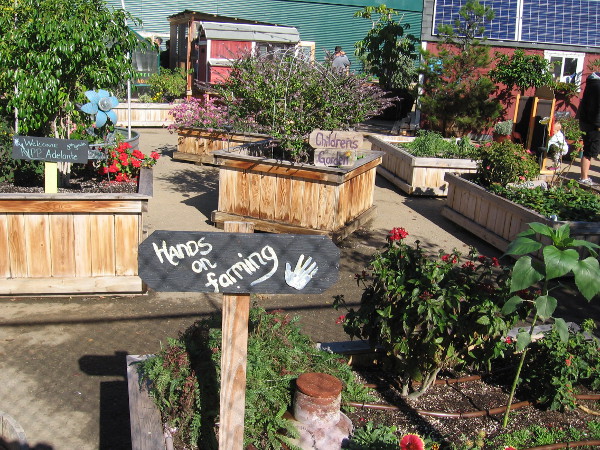
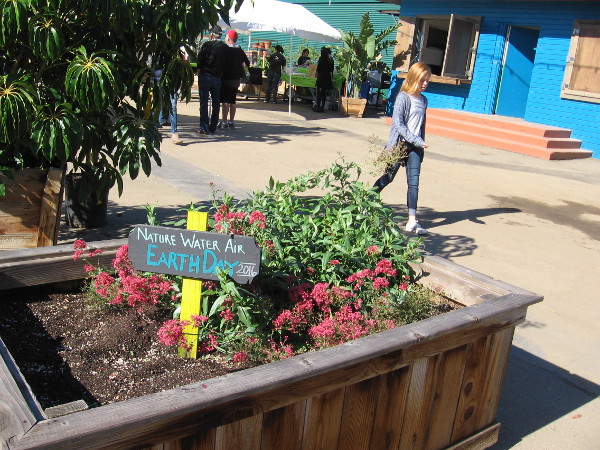
SMARTS Farm in San Diego’s East Village is a community garden where hearts can grow and minds thrive.A wreath is hung on the barn inside SMARTS Farm to celebrate the holiday season. They’ve moved to a new location and are open to everyone in the community!Someone makes a wreath the week before Christmas during a special SMARTS Farm holiday event.These guys were rolling out yummy pizzas!Walking around the large colorful garden. Schools and community groups can grow their own plants in an urban environment downtown.Lessons about how to plant urban crops were underway in the late morning.A young gardener sows some seeds at SMARTS Farm.Hands on farming includes a children’s garden and plants grown by nearby school KIPP Adelante Preparatory Academy–my neighbor on Cortez Hill.A pleasant day can be had tending a garden and learning about gardening in the middle of downtown San Diego!Nature, Water, Air. At SMARTS Farm, every day is Earth Day!
…
I live in downtown San Diego and love to walk around with my camera! You can follow Cool San Diego Sights via Facebook or Twitter!
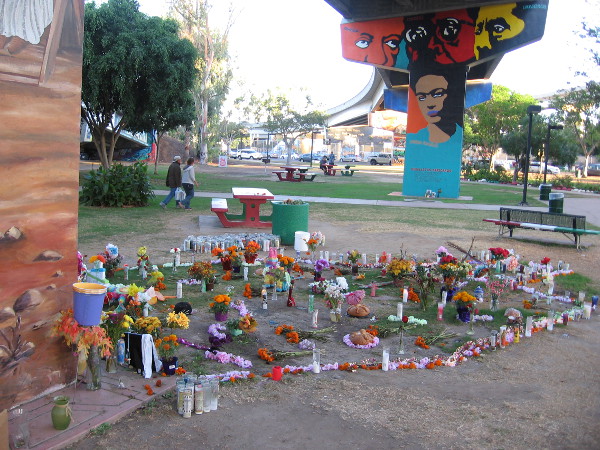
A large memorial remains in Chicano Park, almost four weeks after a tragic accident here took the lives of four people.
Almost a month after a tragic accident in Chicano Park, a large, spontaneously created memorial remains. It was created by many hands and hearts in the Barrio Logan community.
The memorial contains flowers, candles and other tokens of love, along with photographs of the deceased. Four were killed on October 14 when an automobile driven by a drunk driver plummeted from the Coronado Bay Bridge. Remembered are Annamarie Contreras, Cruz Elias Contreras, Andre Christopher Banks and Francine Denise Jimenez. Also remembered is Ramon “Chunky” Sanchez, who recently passed away. He was a beloved musician and inspiring leader in the local Chicano community.
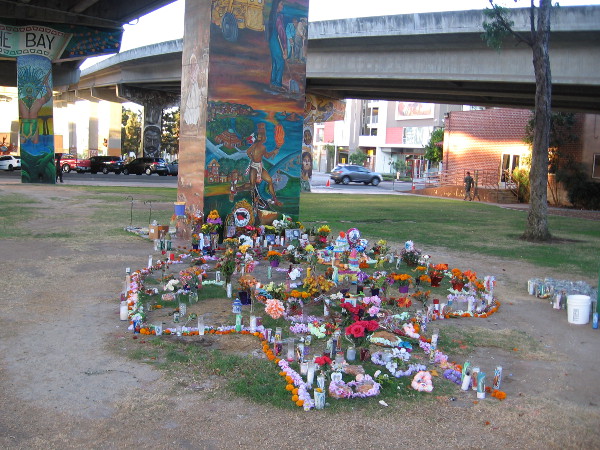
Many candles are kept lit.
Candles, flowers and other powerful expressions of love stand beside a Chicano Park mural. They memorialize Annamarie Contreras, Cruz Elias Contreras, Andre Christopher Banks, Francine Denise Jimenez and Ramon “Chunky” Sanchez.Traditional symbols of love, grief and memory.
…
I live in downtown San Diego and love to walk! You can follow Cool San Diego Sights via Facebook or Twitter!
Pottery pumpkins smile outside a gift shop in San Diego’s festive Old Town.
I see pumpkins! Everywhere! It must be mid-October in San Diego!
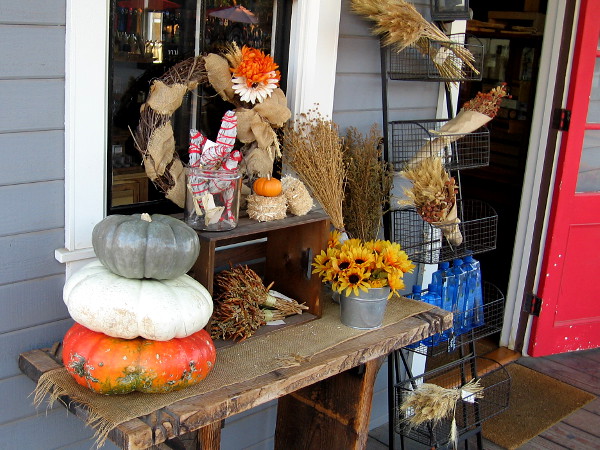
Pumpkins, pumpkins everywhere! Big ones and little ones! Grocery stores are overflowing. It must be mid-October.A fun display of pumpkins and Autumn characters on a street corner in Little Italy. Halloween is on the way! Boo!A beautiful arrangement of flowers, pumpkins and gourds graces a rustic Old Town boardwalk.More golden Autumn colors suggest it’s time to harvest the good things in life.A pumpkin and warm flowers on an antique cart in Old Town San Diego.
…
I live in downtown San Diego and love to walk! You can follow Cool San Diego Sights via Facebook or Twitter!
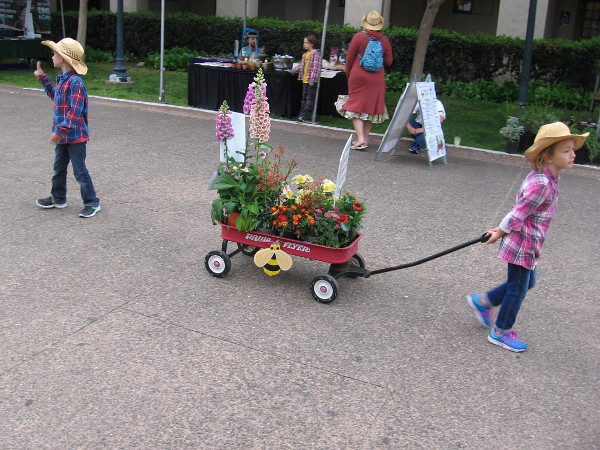
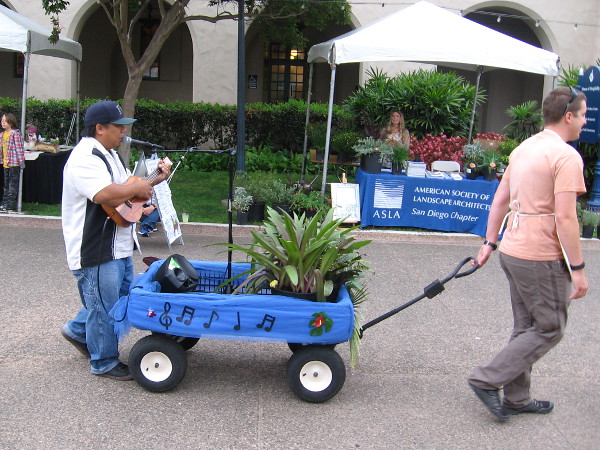
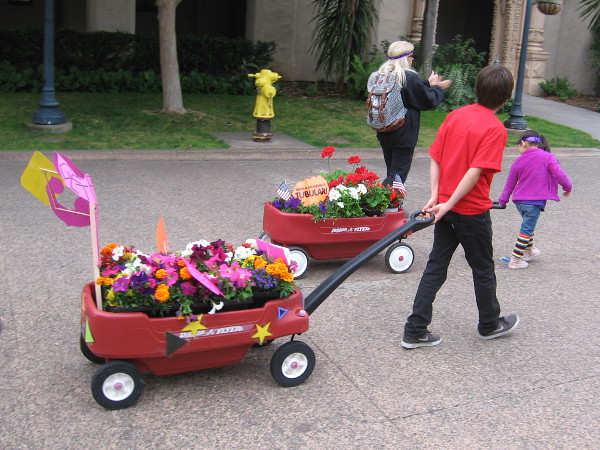
Kid pulls a Radio Flyer during Floral Wagon Parade. The fun family event was part of Balboa Park’s big 2016 Garden Party!
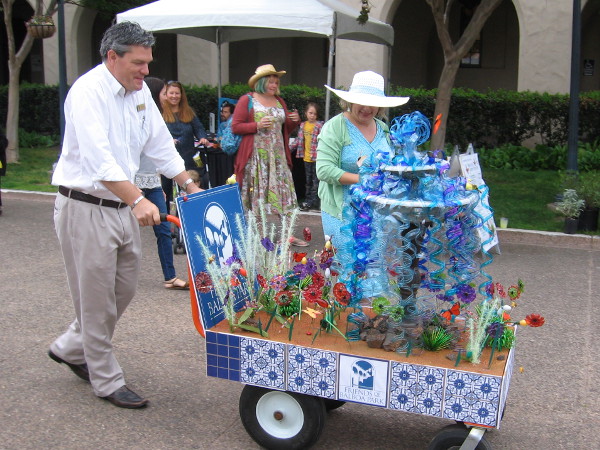
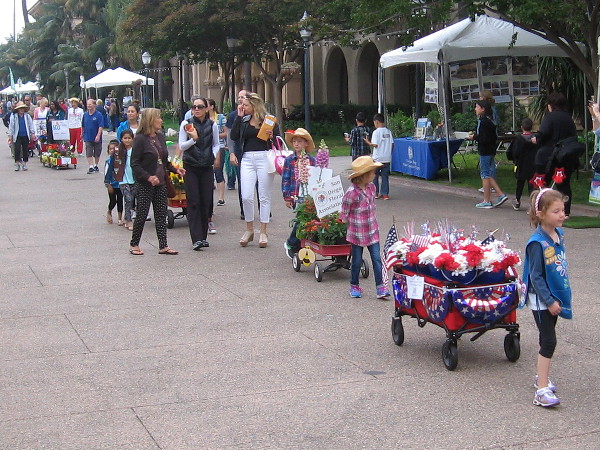
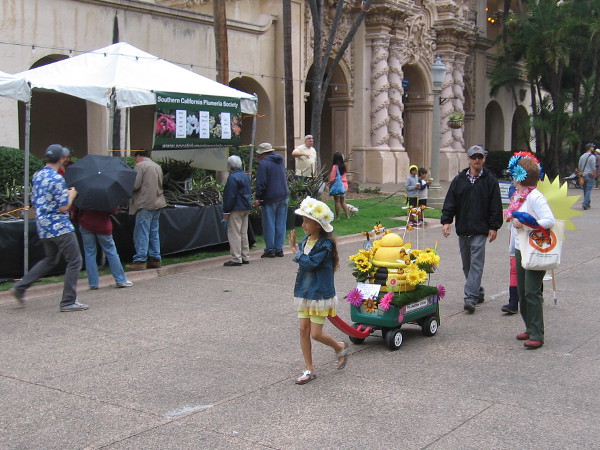
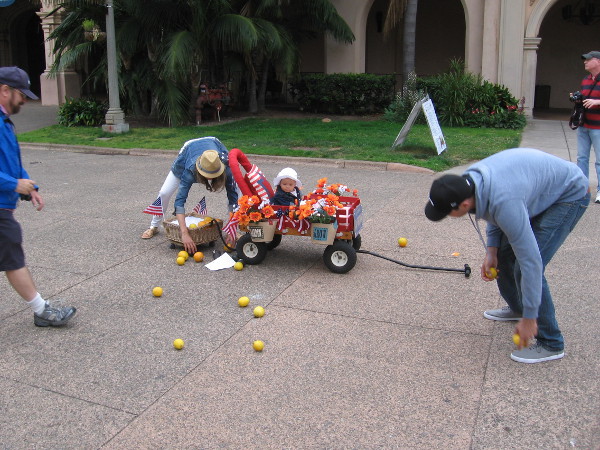
I took more fun photos! They capture a bit of the cheerful color from this morning’s Floral Wagon Parade in Balboa Park! The unique flower-themed parade kicked off the park’s Second Annual Garden Party!
I’ve got even more pics of the 2016 Garden Party, which I’ll post later tonight on my new Beautiful Balboa Park blog! The event included dancing, butterfly releases, and all sorts of delightful stuff. You might enjoy checking it out!
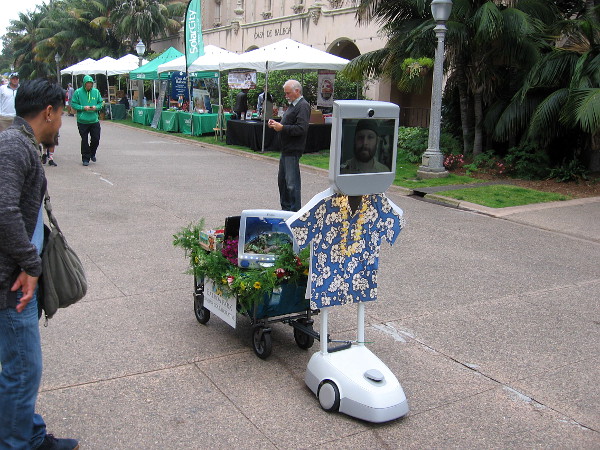
Here comes the Floral Wagon Parade down El Prado. Lots of colorful blooms have been arranged to delight onlookers!An elaborate Friends of Balboa Park display near the front of the parade. Today was the park’s Second Annual Garden Party!Here comes more of the morning parade! The Garden Party was just getting underway at nine o’clock, and the later crowds hadn’t quite materialized yet.This cool musician was playing Somewhere Over the Rainbow on a ukulele!Towed by young people, floral displays head down Balboa Park’s central El Prado.Even though the sky was gray and overcast, these flowers brightened the day like small suns.A terrible disaster! A basket-trailer containing fruit overturned during the parade!Here comes Botany for Kids! (It seems the adults were having the most fun.)These young ladies informed me that they were dressed as garden fairies.Is that a digital Sheldon Cooper on the screen? No! It’s a funny remote-control parade “float” created by the Balboa Park Online Collaborative.The colorful Floral Wagon Parade enters the Plaza de Panama, where speeches will kick off the day’s big 2016 Garden Party.Looks like parade participants had lots of fun decorating their flower-laden wagons!
…
I live in downtown San Diego and love to walk! You can follow Cool San Diego Sights via Facebook or Twitter!
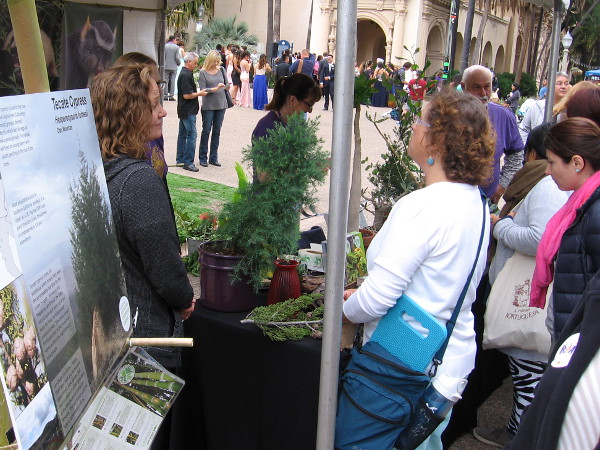
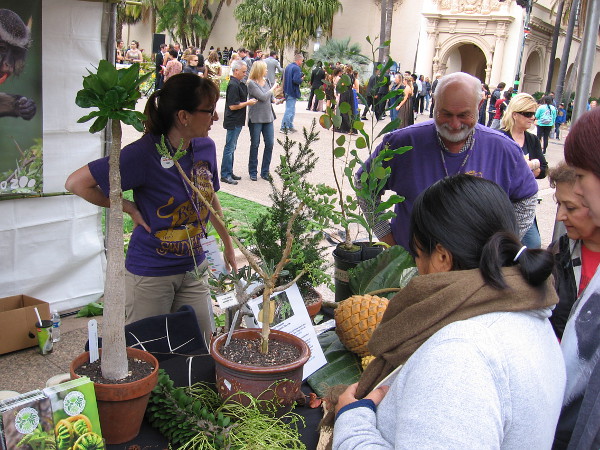
Visitors at the San Diego Zoo Centennial Festival in Balboa Park learn how rare, threatened and endangered native plants are being saved by the zoo.
Many know how the San Diego Zoo is a world leader in working to protect animal species from extinction. One important task is to store critical genetic material. Their world-renowned Frozen Zoo has been storing cryogenically preserved biological samples since 1976.
When I walked through the San Diego Zoo Centennial Festival in Balboa Park last Saturday, I learned something that really impressed me. Not only is the zoo striving to save the world’s most endangered wild animals, but San Diego Zoo Global has developed an important native plant seed bank, in an effort to conserve rare and threatened local plant species.
The zoo is member of the California Plant Rescue Partnership, whose goal is the long term conservation of wild plant species through seed banks and field work. One of the people with whom I briefly spoke has the job of hiking about San Diego County, searching for and monitoring populations of these rare plant species. What a fantastic job that must be!
The zoo has developed an extensive seed collection. Some native plants being protected are the San Diego golden star Bloomeria clevelandii, Dudleya brevifolia, Monardella stoneana, Comarostaphylis diversifolia ssp. diversifolia, and Corethrogyne filaginifolia var. linifolia, which is commonly called the Del Mar sand aster.
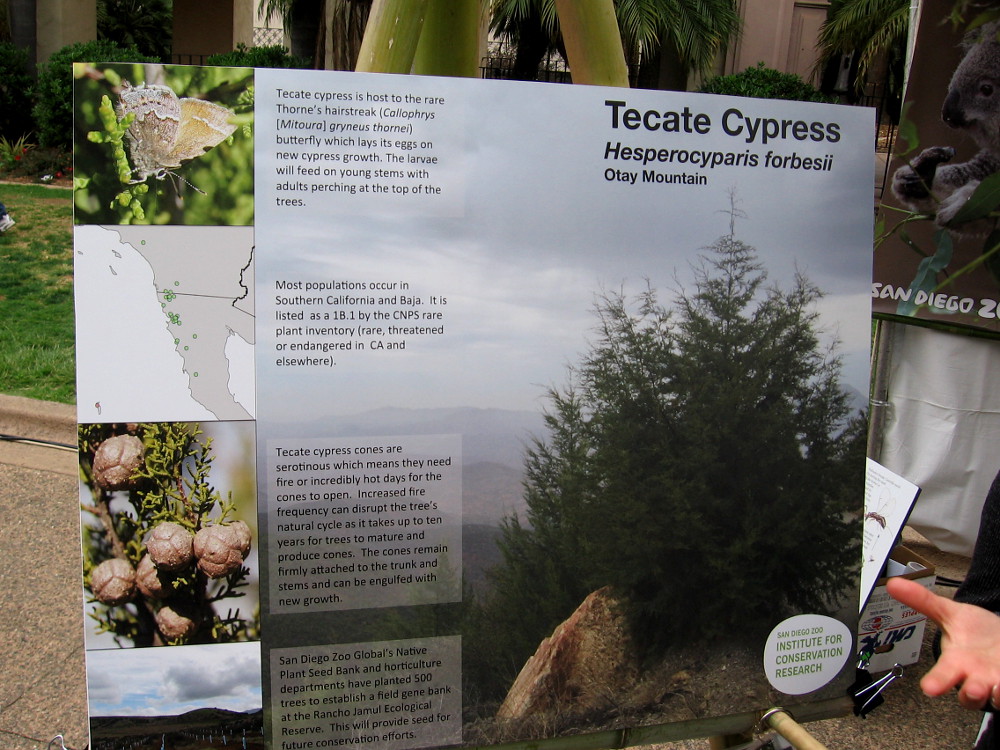
The San Diego Zoo Institute for Conservation Research is also working hard to save the Tecate Cypress in Southern California and Baja California, a tree that the rare Thorne’s hairstreak butterfly depends upon. A poster at the zoo’s centennial event helped to explain why this effort is so urgent.
San Diego Zoo Global’s Native Plant Seed Bank and horticulture departments have planted 500 Tecate Cypress trees to establish a field gene bank. (Click to enlarge.)The San Diego Zoo’s conservation efforts extend beyond protecting animal species threatened by extinction. Plants are important, too!
…
I live in downtown San Diego and love to walk! You can follow Cool San Diego Sights via Facebook or Twitter!
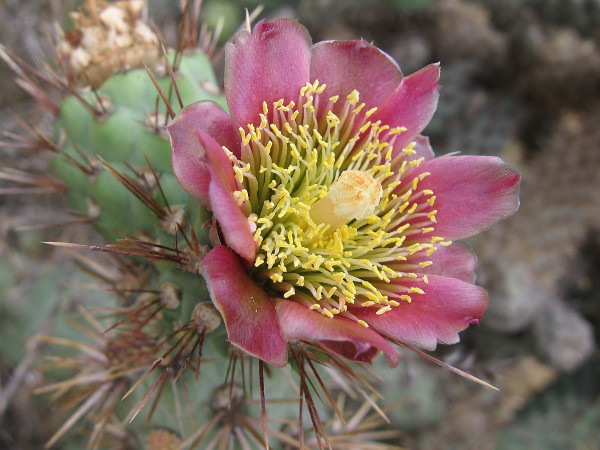
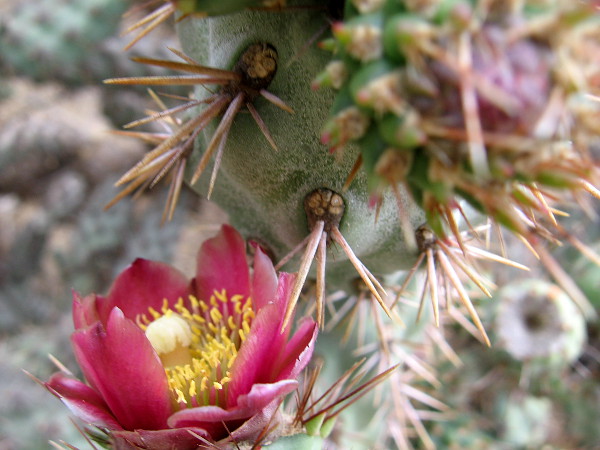
Spectacular flower of a Coastal cholla cactus in San Diego. Seen along a trail near Morley Field Drive that leads into Balboa Park’s Florida Canyon.
I took these colorful photos while walking Sunday through Balboa Park, along one of the rugged dirt trails that leads up out of Florida Canyon. A short hike can be enjoyed through native coastal chaparral and spring wildflowers, between Morley Field and Park Boulevard, just south of Morley Field Drive.
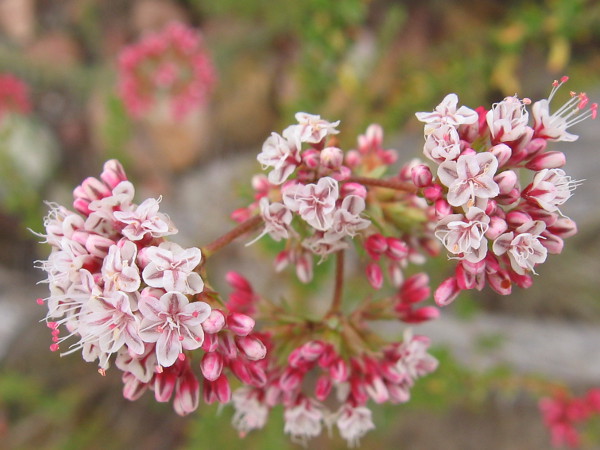
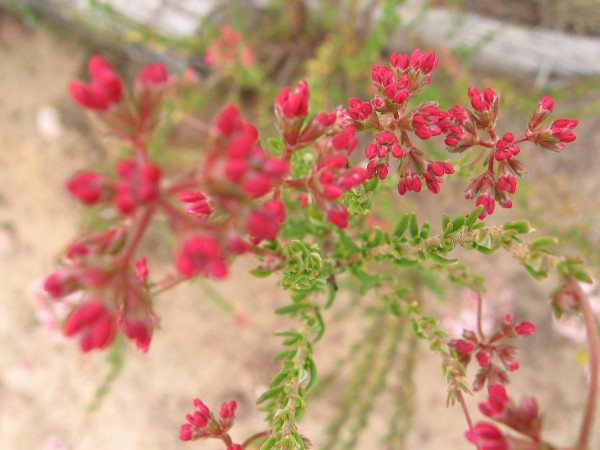
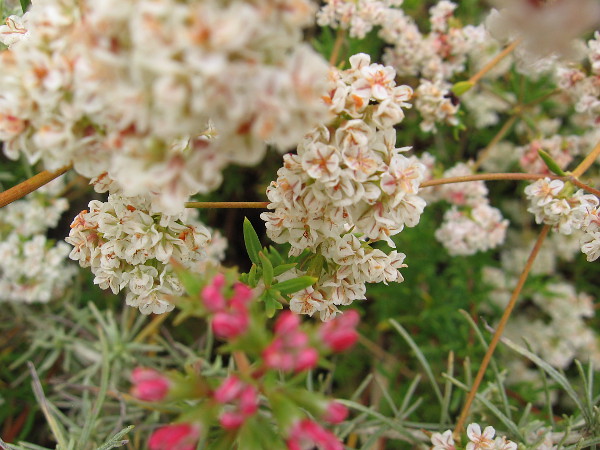
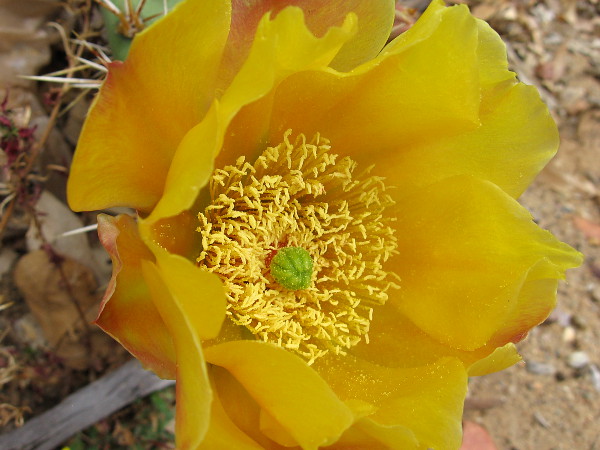
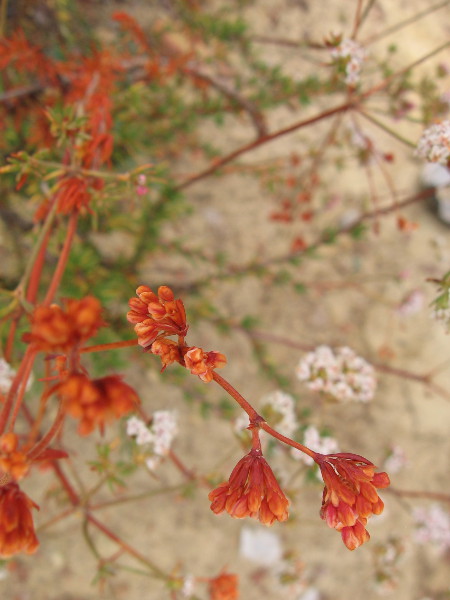
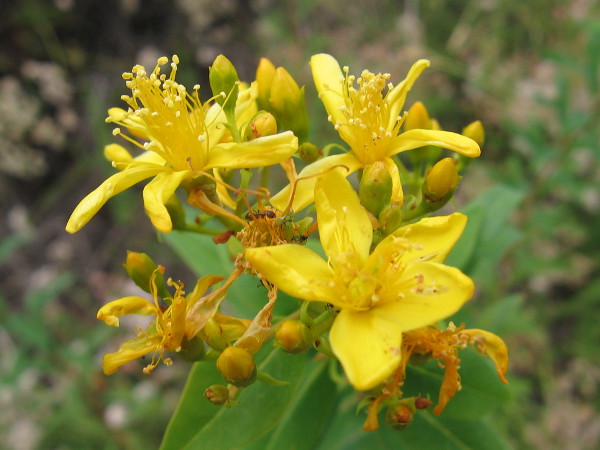
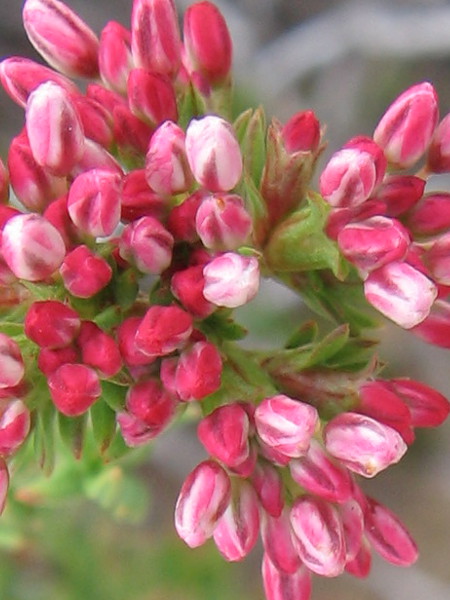
Flat-top buckwheat, or California buckwheat, flower clusters are opening in spring. These native plants grow profusely in arid San Diego.Small red flower clusters of flat-top buckwheat (Eriogonum deflexum) that have yet to open.More buckwheat in Balboa Park’s Florida Canyon. Native Americans used the plant to make tea with medicinal properties.Another flower on a very spiny Coastal cholla (Cylindropuntia prolifera) makes for an interesting photograph.A wild yellow prickly pear cactus flower near the rim of Balboa Park’s Florida Canyon, just across Park Boulevard from the San Diego Zoo.These buckwheat flower clusters have turned brown. Perhaps that’s why the plant is sometimes called skeletonweed.These flowers that I randomly photographed along the trail have me stumped. I tried to identify them, but without success. If you know what they are, please leave a comment!A profusion of red and white buckwheat beauty.
…
I live in downtown San Diego and love to walk! You can follow Cool San Diego Sights via Facebook or Twitter!
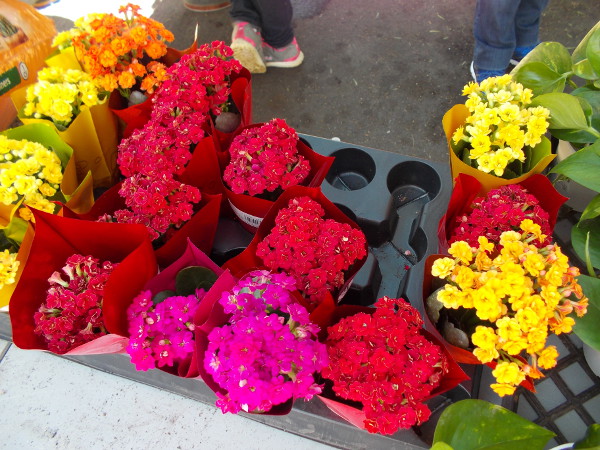
Home Depot brought a bunch of colorful flowers to the Jacaranda Spring Thing community event on Cortez Hill.
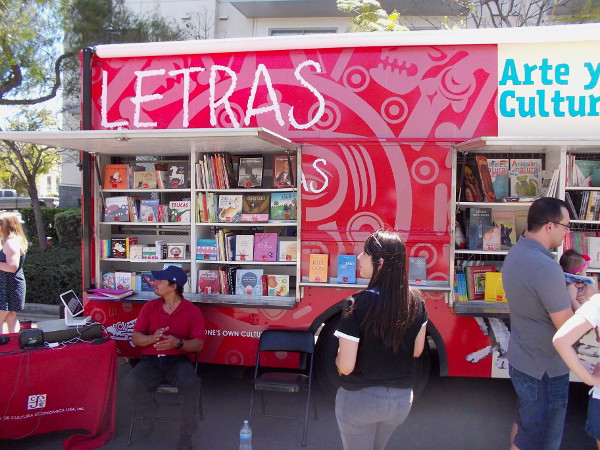
On my way home from Balboa Park, I walked through the Jacaranda Spring Thing neighborhood event being held this afternoon on Cortez Hill. I saw a relaxed gathering of people out in the sunshine, enjoying some food, live music and other fun activities. Home Depot was on hand demonstrating some gardening and patio ideas for anyone interested. It’s still going on as I post this–until 4 o’clock!
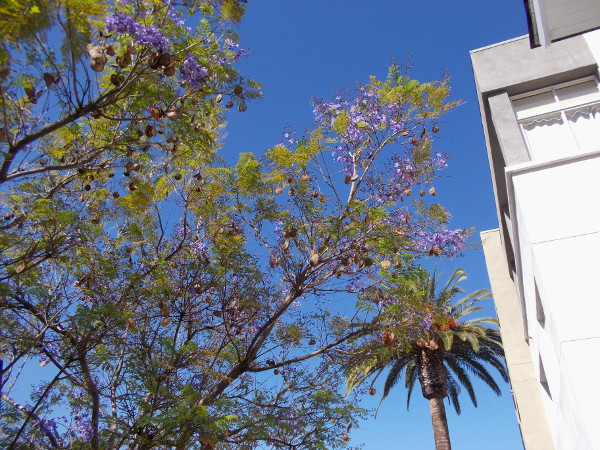
I saw folks setting up the Jacaranda Spring Thing on Date Street this morning, as I set out on my walk.Purple blooms of jacaranda trees can be seen around downtown San Diego’s Cortez Hill neighborhood.A neighbor learns about outdoor and indoor gardening during the special Cortez Hill event.Someone tries their hand at a fun bean bag toss game.A colorful book truck operated by a Mexican publisher could be found at the Jacaranda Spring Thing.Live music, food and good times in the spring sunshine on a Saturday afternoon.
…
I live in downtown San Diego and love to walk! You can follow Cool San Diego Sights via Facebook or Twitter!
Cheerful blooms cover Pink Trumpet Trees in Tweet Street Park. The neighborhood park is site of an upcoming spring festival!
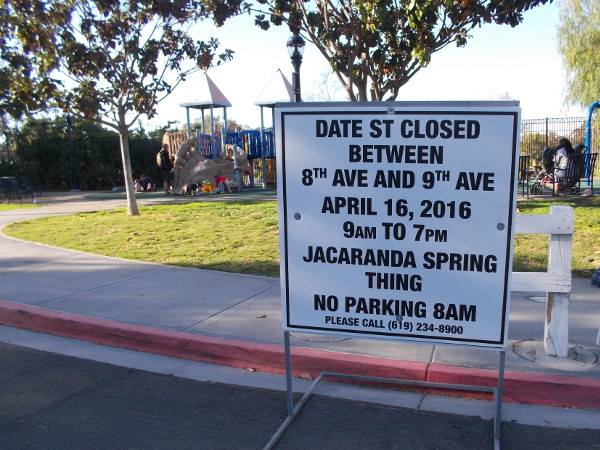
This morning, when I saw a large temporary sign on the street outside my front door, I went to investigate. And look what I discovered! A neighborhood spring festival is going to take place on Cortez Hill!
It’s called Jacaranda Spring Thing! (Yes, there are lots of beautiful Jacaranda trees on Cortez Hill. Many can be found in Tweet Street Park where the festival will take place.)
The free outdoor event will feature food trucks, a special Home Depot workshop (about fixing up your outdoor patio), live music, a book truck, a photo booth . . . all sorts of fun stuff!
Okay, are you interested? It takes place on April 16 at Tweet Street Park, along Date Street between 8th and 9th Avenue, from noon to 4pm. Here’s a link with more info. (By registering at that link, the organizers at the Downtown San Diego Partnership can get an idea of how many people might show up.)
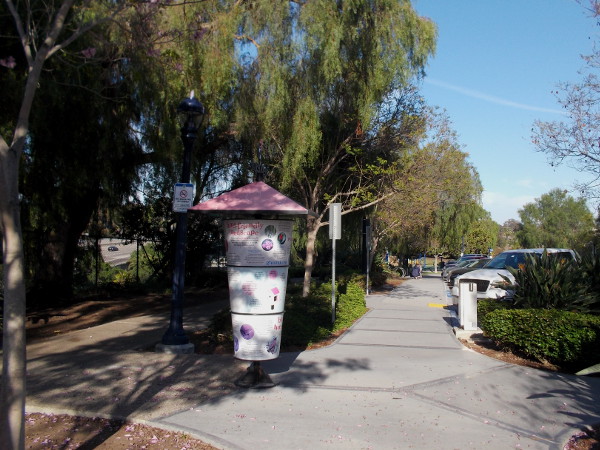
A special neighborhood event is coming to beautiful Cortez Hill. The Jacaranda Spring Thing takes place Saturday, April 16, from 12pm-4pm.I love walking along Date Street through sunny Tweet Street, a park dedicated to city birds.Spring is in the air on Cortez Hill. The gentle season brings new life and great natural beauty.
…
I live in downtown San Diego and love to walk! You can follow Cool San Diego Sights via Facebook or Twitter!
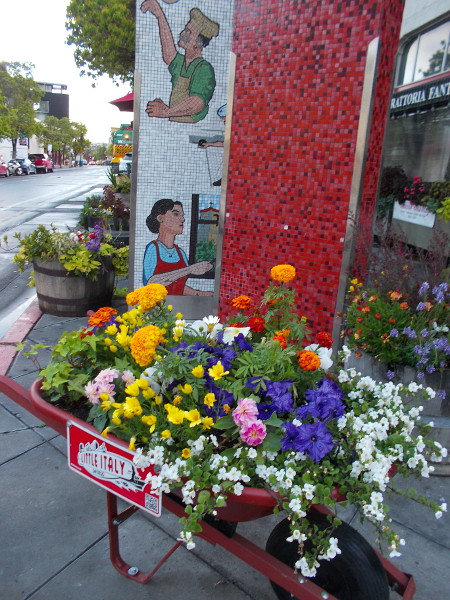
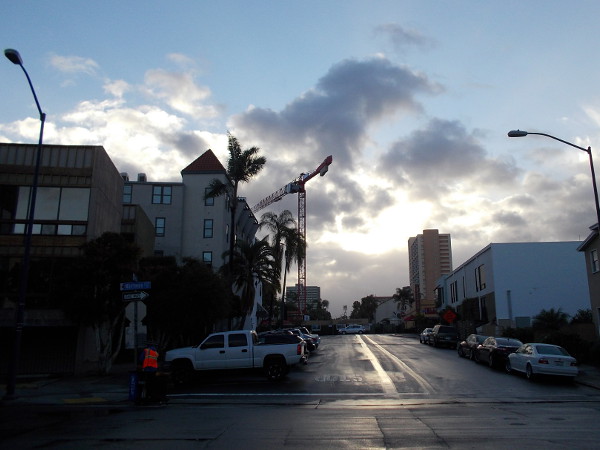
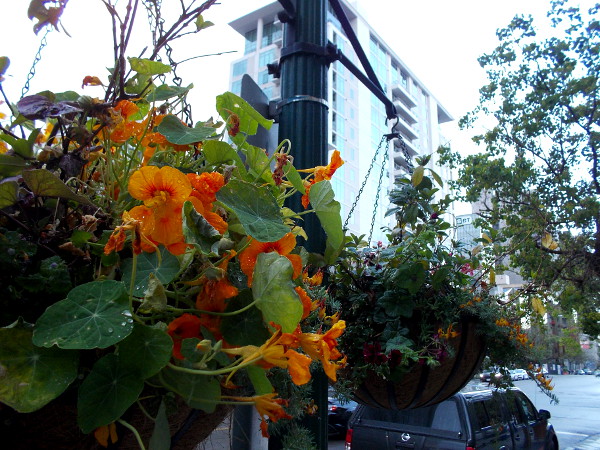
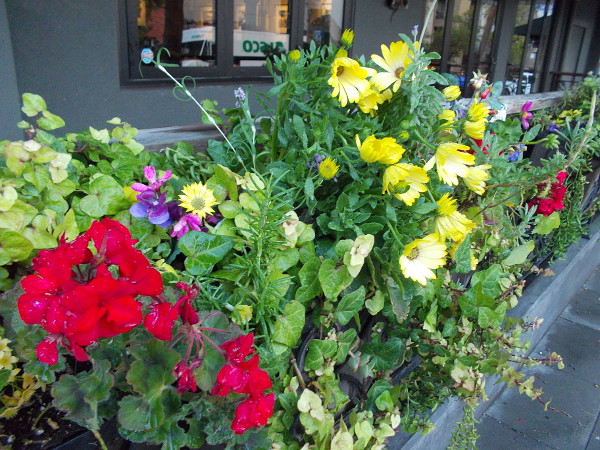
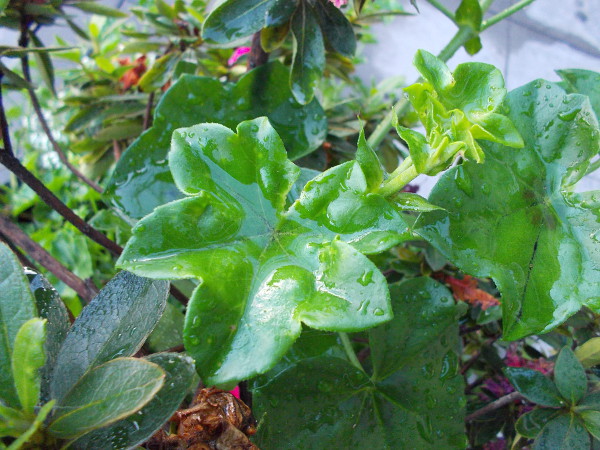
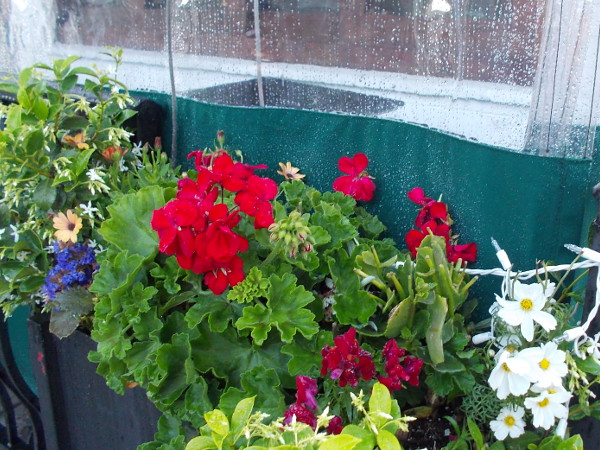
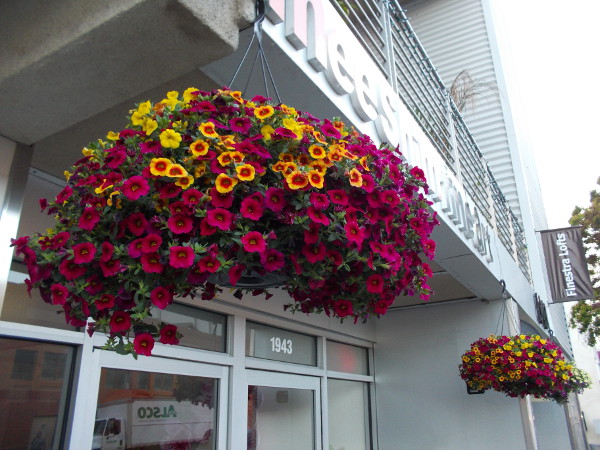
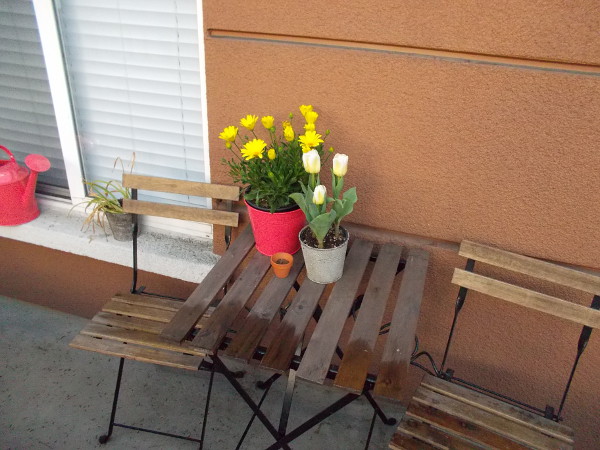
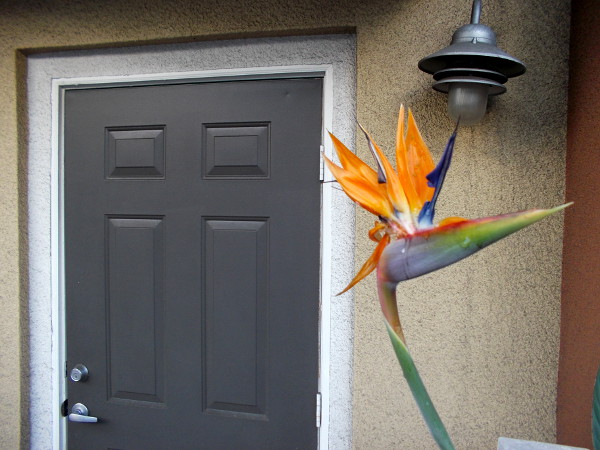
A wheelbarrow full of colorful flowers on a spring morning, following a light rain. Photo taken near base of the Little Italy landmark sign on India Street.
Early this morning I headed through Little Italy. The streets were still wet after a slight rain in the night. I was admiring all the brightly damp flowers up and down one sidewalk, when it occurred to me I should pull out my camera. So I did!
I love springtime in San Diego. Lots of walking and photos ahead!
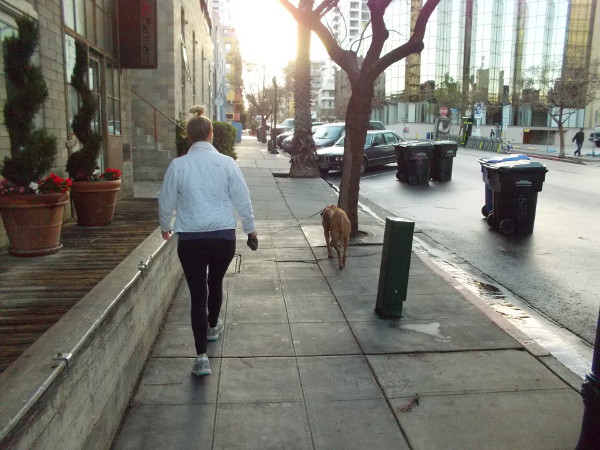
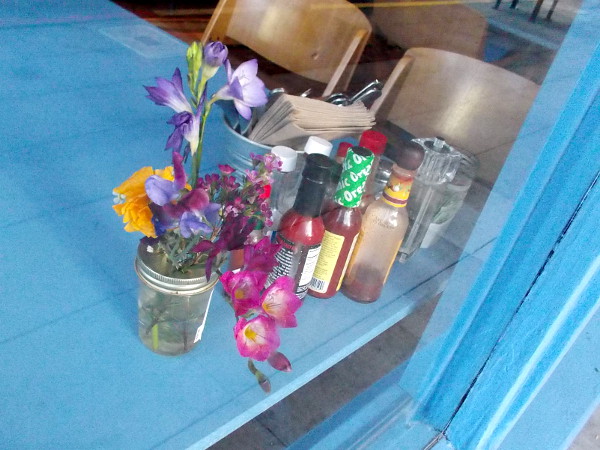
Looking east from Kettner Boulevard in downtown San Diego’s beautiful Little Italy neighborhood. Morning clouds catch the rising sun after some nighttime sprinkles.Little Italy streets have many public planters filled with flowers. Orange blooms in this hanging planter are still wet from the recent rain.Many spring flowers provide a burst of color near the windows of a Little Italy restaurant.A small patch of color on India Street. A nearby sign reads Garden by Randall.Some moisture has pooled in the leaves of this potted geranium on the sidewalk.More happy flowers by the outdoor seating area of a restaurant. The clear plastic that provides protection from inclement weather is still wet with many raindrops.Bunches of hanging flowers. Gorgeous spring colors are all about Little Italy’s friendly streets.Banner on a street lamp advertises the upcoming Mission Federal Art Walk in Little Italy. It’s about a month away.Some yellow blooms on a small table in the front patio of a Little Italy residence.An eye-catching bird of paradise flower greets anyone who approaches this door!Walking with the dog up a sidewalk in Little Italy, early one spring morning after some rainfall.A peek through a window at flowers on a table inside a Little Italy breakfast spot.To see lots of bright flowers on San Diego’s streets, perhaps swing by Little Italy during the spring!
…
I live in downtown San Diego and love to walk! You can follow Cool San Diego Sights via Facebook or Twitter!
Do you like to read short pieces of thought-provoking fiction? You might enjoy checking out Short Stories by Richard.
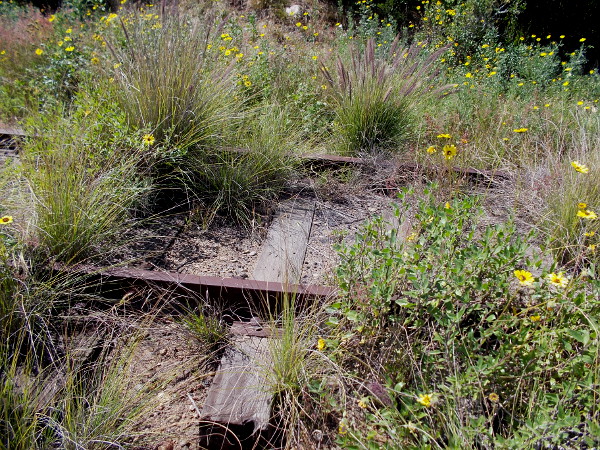
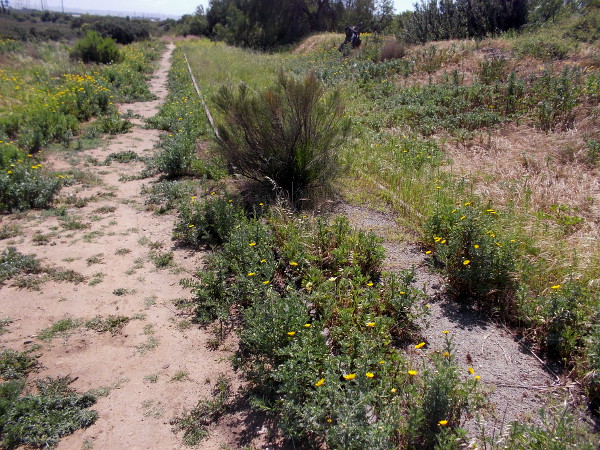
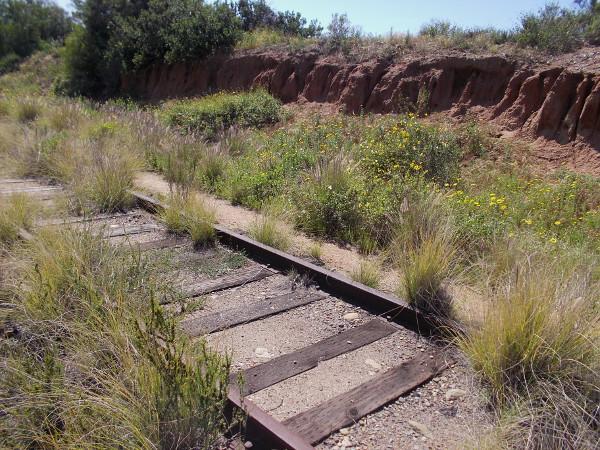
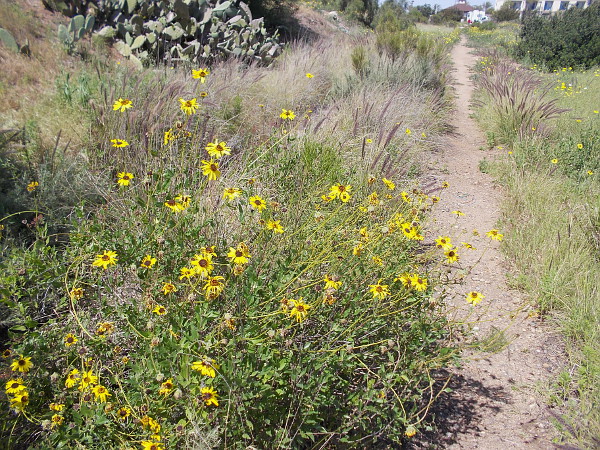
Rusty old train tracks are overgrown with wild vegetation, including many California bush sunflowers.
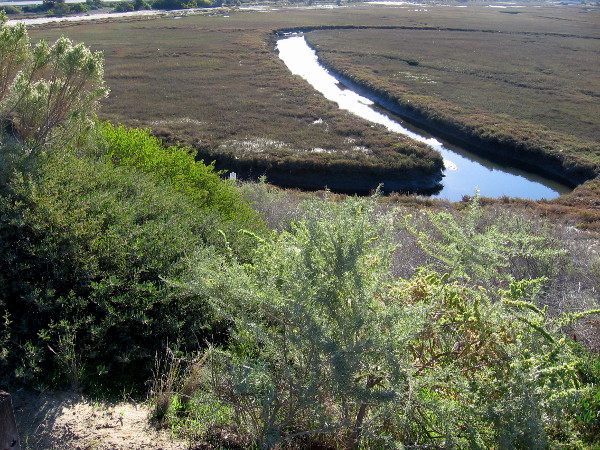
I made a cool discovery the other day. A little-known hiking path in San Diego’s South Bay provides a view of a beautiful natural wetland.
According to signs that I saw, the small estuary between Bay Marina Drive, Marina Way, Interstate 5 and the Sweetwater River is a protected wildlife refuge. I believe, after looking at Google Maps, that the water flows from Paradise Creek. But I’m not certain. Perhaps someone reading this knows.
Long-unused train tracks that are partially concealed by vegetation run along the edge of the wetland, and so does a narrow footpath. I didn’t see any signs naming the trail, or any that prohibited a short hike. So I walked down it a bit, enjoying the fresh air and peaceful surroundings.
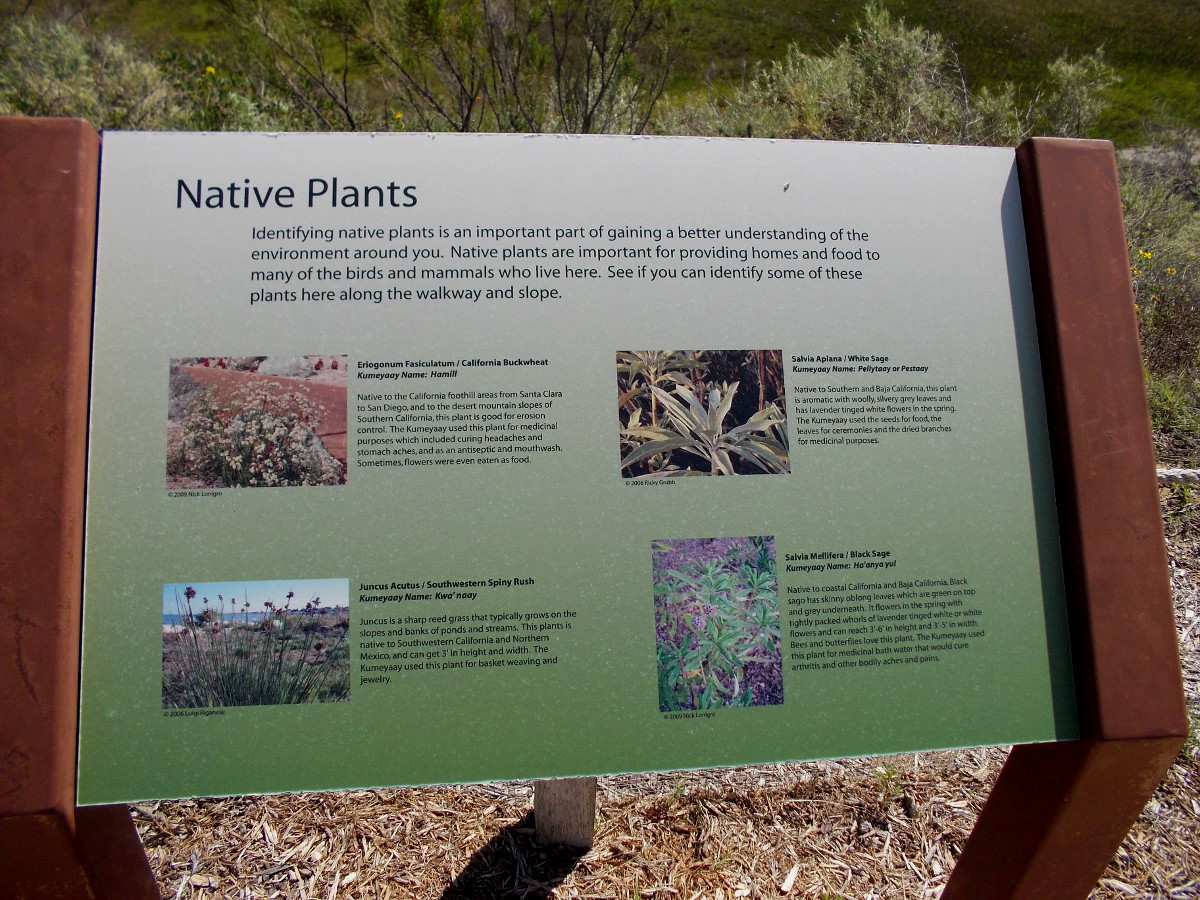
Information sign near edge of estuary identifies native plants. California Buckwheat, White Sage, Southwestern Spiny Rush, and Black Sage.View of National City wetland from observation area south of the Best Western Marina Gateway hotel parking lot.Beginning down the footpath on a sunny weekend day.Some eroded sandstone adds beauty to the scene.Prickly pear and chaparral yucca above a green estuary.Beyond the sign lies a fragile wetland where native plants and animals are protected. I saw some birds out in the wildlife refuge.I turned about after a short hike and headed on back to the hotel parking lot.
UPDATE!
On a later visit I discovered additional signs beside the hotel parking lot. They contain more interesting information.
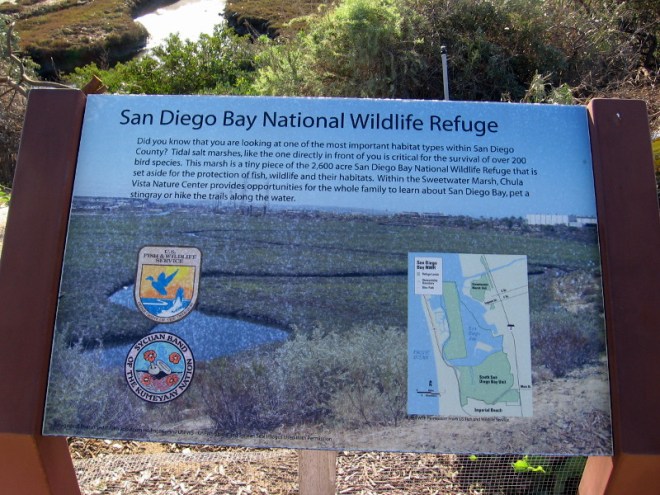
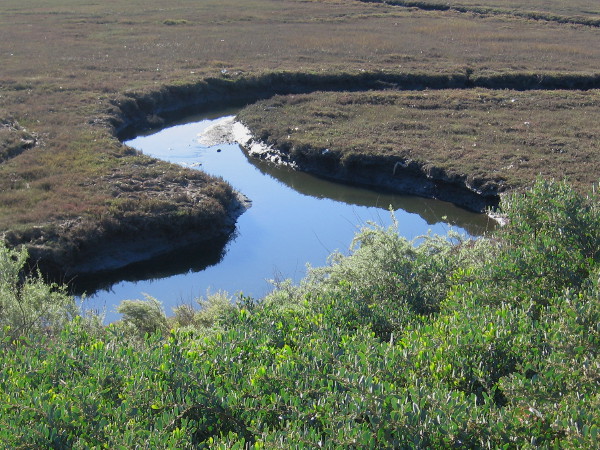
I learned this wetland is called Paradise Marsh. It’s an environmentally important tidal salt marsh that’s part of the much larger San Diego Bay National Wildlife Refuge.
Water reflects bright sunlight in National City’s Paradise Marsh.Paradise Marsh is a small part of the 2600 acre San Diego Bay National Wildlife RefugeThe birds of Paradise Marsh include the Willet, Mallard, American Avocet and the Great Blue Heron.For hundreds of years, Native American tribes such as the Kumeyaay, Iapi or Tipai made their homes around the estuaries of San Diego Bay.A beautiful tidal salt marsh wetland can be viewed in National City.
…
I live in downtown San Diego and love to walk! You can follow Cool San Diego Sights via Facebook or Twitter!






















 Cool San Diego Sights!