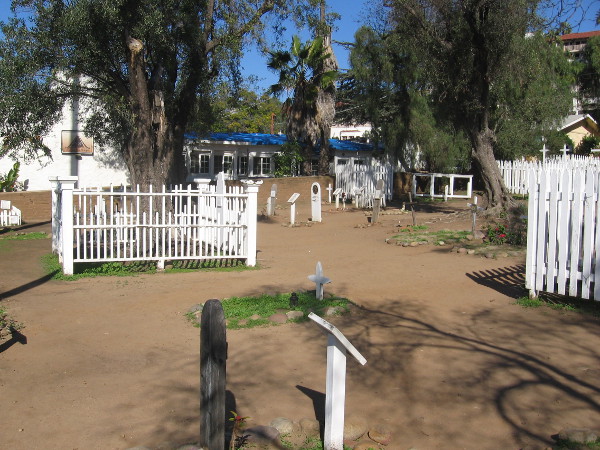
Gravestones tell stories of early San Diego history.

El Campo Santo cemetery in Old Town San Diego contains much history.

El Campo Santo, a cemetery located in Old Town, contains many of San Diego’s earliest residents. By walking respectfully among the gravestones, one can learn much about the city’s interesting history and what life was like for its diverse people. Real-life characters buried here include ranchers, gold miners, sailors, Californios, Native Americans, soldiers, politicians, merchants, actors, children and outlaws.

Established in 1849, the graveyard is the final resting place of nearly five hundred souls. Just a handful are shown in this blog post.

I took photographs of grave sites, headstones and many small signs in the “Holy Field” that describe what is known about the deceased. With a little editing, I’ve provided information here from many of those signs, and from a few other online sources.
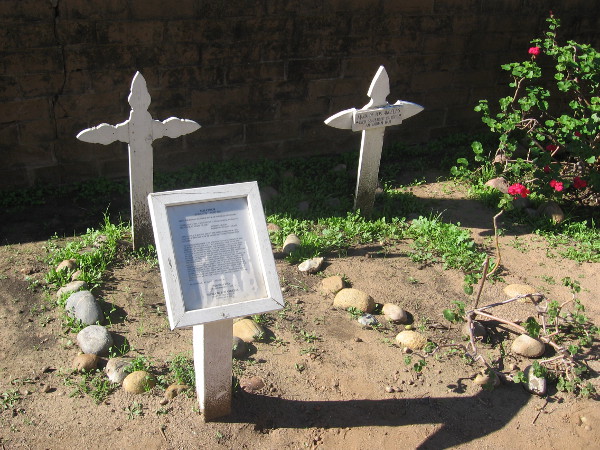
Melchior was a Native American who lived to be 97 years old.

Melchior, born 1770, died 1867, age 97 years. Very little is known about the Indian Melchior. He was born a year after the arrival of Junipero Serra in San Diego. He was baptized by the missionaries and became a Roman Catholic Christian. During his long life, he saw San Diego grow from a small pueblo to a city.

Thomas W. Tanner ran an acting troupe that performed at the Whaley House.

Thomas W. Tanner was buried December 22, 1868, age 55 years. He ran an acting troupe that performed on the second floor of the Whaley House in December 1868. Tanner’s troupe offered moral, chaste and versatile entertainment consisting of drama, farce, comedy, singing and dancing. Unfortunately, Tanner died 17 days after his troupe opened. He was married to Policarpia de la Rosa and was a native of Baltimore, Maryland.
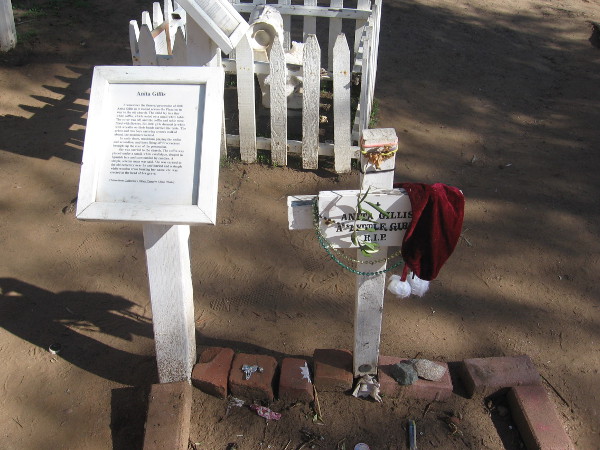
Anita Gillis was a young child.

Anita Gillis was a child when she died. Her funeral is remembered as follows on a plaque by the grave. A funeral procession wound across the Plaza and ended at the old church. The child lay in a tiny white coffin, which rested on a small white table. The cover was off, and the coffin and table were filled with flowers. Six little girls dressed in white with wreaths on their heads carried the table. The priest and two boys carrying crosses walked ahead, the mourners behind. Musicians played the violin and accordion, and boys firing off firecrackers brought up the rear of the procession. She was carried to the church, and the coffin placed under a small white catafalque, draped in Spanish lace and surrounded by candles. A simple, solemn mass was said. She was then carried to the old cemetery and buried with a simple white wooden cross bearing her name erected at the head of her grave.

Juan Mendoza worked on a ranch and was shot in the back.

Juan Mendoza died February 6, 1865. He was the victim of a fatal shotgun blast to the back. The assailant was Cave Johnson Couts, a local landowner and prominent San Diegan born in Tennessee. As the story goes, Mendoza worked as majordomo, or chief steward, on one of Cave Couts’ ranches. Couts claimed that Mendoza had threatened his life and in a hasty act of revenge killed Mendoza in broad daylight. The action violated the legendary “Code of the West” which prohibited “shooting an unarmed man” and “shooting a man in the back”. Couts was tried by jury for his crime and found not guilty. This was received “with much applause” from local citizens since threatening the life of a man, as Mendoza allegedly did, gave Couts the right to stand his ground and kill him.
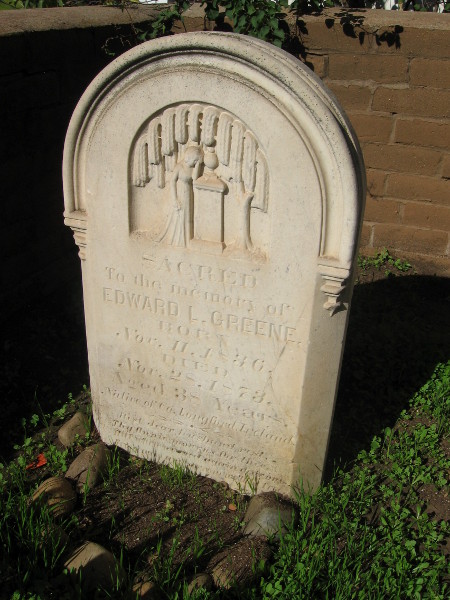
Edward Lynch Greene was a gold miner who became member of the state legislature.

Honorable Edward Lynch Greene died November 28, 1872, age 38 years. He was a native of Ireland who came to California in 1852 and was a miner for gold. He was naturalized in 1861. He became a member of the state legislature when he was elected to the Assembly from Calaveras County in 1869. He was staying in San Diego at the Era House when he died of consumption. He’d been ill for the past eighteen months. He left behind a young wife, Ann Greene.
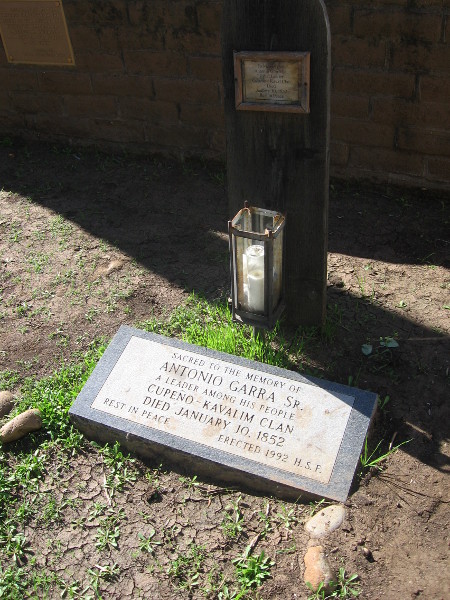
Antonio Garra Sr. was a Native American who rebelled against taxation.

Antonio Garra Sr. died January 10, 1852. He was a leader among his people, the Cupeno-Kavalim Clan. He was educated at Mission San Luis Rey and spoke as many as five Indian dialects, as well as Latin. He was one of the foremost chiefs with great power and influence among his people. The Cupeno were considered mission Indians and were subject to pay taxes in San Diego County. Garra, upset by the taxation of his people, helped to organize a resistance movement, comprised of attacks on Santa Barbara, Los Angeles and San Diego. Against his wishes, a fatal attack was made on Warner’s Ranch. He was soon thereafter captured. On January 10, 1852 Garra was found guilty of murder and theft, but not treason, as he had never taken an oath of allegiance to the United States. Before being executed by firing squad, Garra said in his last words: “Gentlemen, I ask your pardon for all my offenses, and expect yours in return.” Antonio Garra, Sr. is believed to be buried underneath what is now San Diego Avenue.
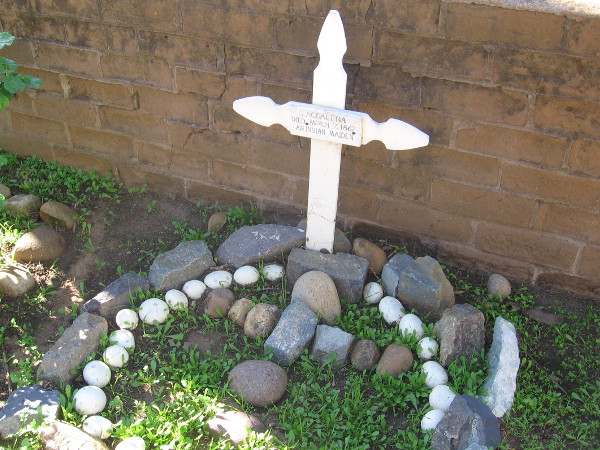
Magdalena was a Native American young lady.

Magdalena was an Indian maiden who died on March 7, 1867 at age 21.
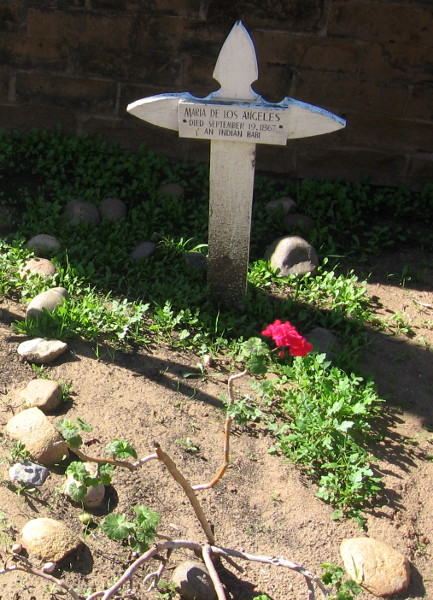
Maria de los Angeles was a Native American infant.

Maria de los Angeles was an Indian infant who died September 19, 1867.
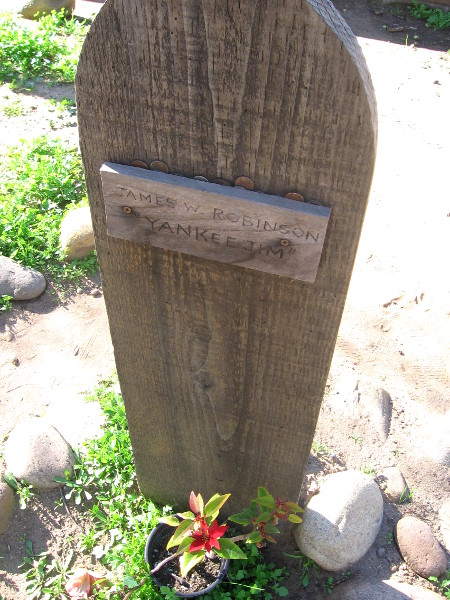
Yankee Jim was hung for stealing the only rowboat in San Diego Bay.

James W. Robinson was known as Yankee Jim. He suffered an extreme penalty for stealing the only rowboat in San Diego Bay. He was sentenced to be hanged. He couldn’t believe that he would be hanged until the very last moment. He appeared to think it was all a grim joke, or at worst, a serious effort to impress him with the enormity of his evil ways. He was still talking when the deputy sheriff gave the signal. Yankee Jim converted to the Roman Catholic Church prior to his death, and so was given the baptismal name of Santiago (Spanish for James). His godfather was Philip Crosthwaite, the deputy sheriff who gave the signal for his execution.

Rosa Serrano de Cassidy and her husband owned a rancho in Pauma.

Rosa Serrano de Cassidy died February 10, 1869, age 21 years. She was the first wife of Andrew Cassidy (a native of County Cavan, Ireland) who helped establish and operate the U.S. tidal gauge in La Playa (in present day Point Loma). Rosa was the daughter of Jose Antonio Serrano who served under Pio Pico in the Mexican War and was in the battle of San Pasqual. Rosa and her husband owned a rancho in Pauma. Her headstone is one of the few remaining originals in the cemetery. After cracking during an earlier restoration, it was placed flat on the ground in order to preserve it.
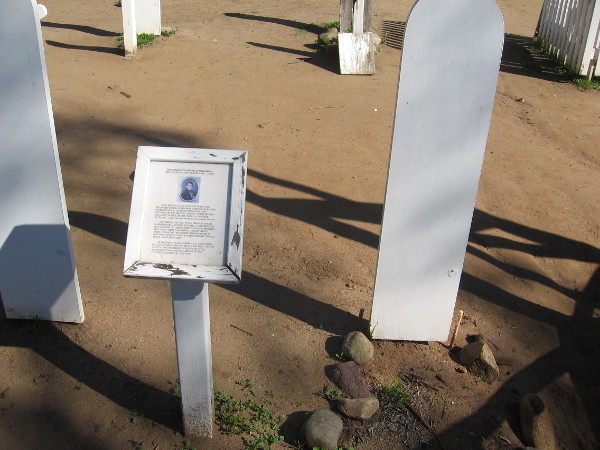
Don Miguel was a native of Spain, and one of the founding fathers of California.

Don Miguel Telesforo de Pedrorena died March 21, 1850. Don Miguel was a native of Spain, belonging to one of the best families of Madrid. After receiving an education in his own country, he was sent to London, where he was educated in English. In 1845 he settled in San Diego. He married Maria Antonia Estudillo, daughter of Jose Antonio Estudillo, and the two had four children. They built their casa behind the Estudillo home. It was one of the first framed houses in Old Town, and still stands beside the San Diego Union print shop. Don Miguel became a leading merchant and citizen of old San Diego. He served as a delegate to the State’s Constituional Convention at Monterey in 1849 and became one of the founding fathers of California.

Juan Maria Marron was a ship's captain who became prominent politically.
Juan Maria Marron was a ship’s captain who became prominent politically.

Juan Maria Marron, born 1808, died at the age of 45. He was a ship’s captain before coming to San Diego in the early 1820’s. He was the owner of 13,311 acres called Rancho Agua Hedionda, which extends from modern day Vista to Carlsbad. He became prominent politically when he married Dona Felipa Osuna in 1834. She was the daughter of Juan Maria Osuna, who was the first alcalde of San Diego and the owner of Rancho San Dieguito. During the Mexican-American War, Marron supported the Americans against many of his Mexican friends. He was captured by Californios who threatened to execute him, but he was released, and his rancho was stripped of horses and cattle.

Jayme Lyons was a carpenter, merchant, blacksmith and sheriff.
Jayme Lyons was the son of a carpenter, merchant, blacksmith and sheriff.

Buried November 28, 1859, age 4 years, Jayme was one of probably thirteen children of George and Bernarda Lyons. Jayme’s father was a native of Donegal, Ireland, who came to San Diego in 1847. He had been a carpenter on a ship that came around Cape Horn from New Bedford, Massachusetts. He kept a store in Old Town, owned a blacksmith shop, and was sheriff for two terms. Jayme’s mother was Bernarda de Villar, the daughter of Lieutenant de Villar, who at one time was the Commandant of the San Diego Presidio.

Bill Marshall and Juan Verdugo were hanged nearby.

Bill Marshall and Juan Verdugo were hanged on December 13, 1851. Bill Marshall was an American married to the daughter of a local Indian chieftain. He was a renegade sailor from Providence, Rhode Island, who’d deserted from a whaling ship at San Diego in 1844. After taking up habitation with the Indians, he took an active part in the Garra Indian uprisings in 1851. He and the Indian Juan Verdugo were caught and brought back to San Diego to be promptly tried by court martial. Both were found guilty. The Indian acknowledged his guilt, but Marshall insisted he was innocent. At two o’clock in the afternoon, a scaffold was erected near the old Catholic cemetery, the men placed in a wagon, the ropes adjusted about their necks, and the wagon moved on, leaving them to strangle to death.

Rafael Mamudes worked at chopping wood and digging wells. He dug the graves for the people of Old Town

Rafael Mamudes was a Native American born in Hermosillo, Mexico. He was a baker in Monterey, a miner in Calaveras County, and made a sea voyage to Guaymas. He owned a little plot of land in San Diego where the old jail stands. Legend has it he made a murderous attack upon his wife. To do penance, the priest gave Rafael the task of ringing the church bells when the occasion demanded. Rafael worked at chopping wood and digging wells. He dug the graves for the people of Old Town. He never missed a church service.

Jesus was a Native American who died of a blow to the head while drunk.

Jesus, an Indian, passed away December 15, 1879, age 25 years. He died of a blow to the head without receiving sacraments. According to the priest Juan Pujol, he was said to be drunk, so he was buried near the gate of the cemetery.
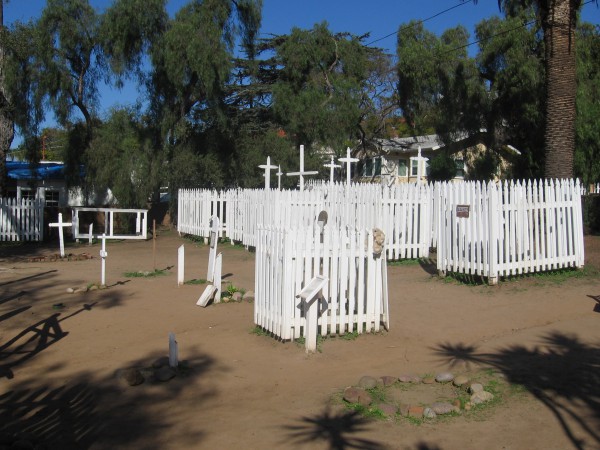
Hundreds of varied, rich life stories were concluded here in this early San Diego cemetery.

To enjoy future posts, you can “like” Cool San Diego Sights on Facebook or follow me on Twitter.
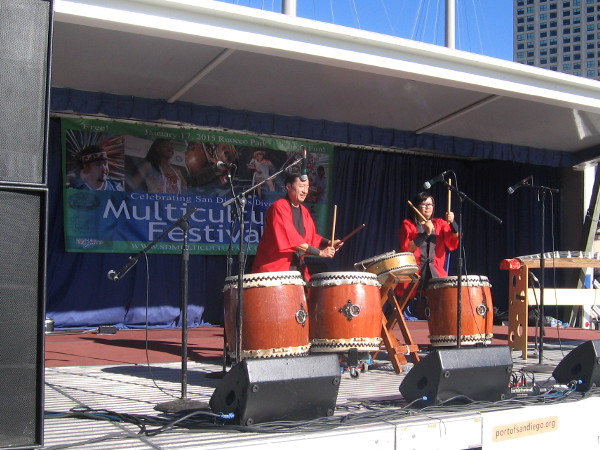
Fun pics from the San Diego Multicultural Festival.

Japanese drummers add rhythm to the San Diego Multicultural Festival.

Today I directed my feet toward the Embarcadero, where the 17th Annual San Diego Sheila Hardin Multicultural Festival took place.

In partnership with the Port of San Diego, the World Beat Cultural Center, and other community organizations, the Multicultural Festival featured lots of diverse music, culture and perfect Southern California sunshine.

This annual festival used to take place along the narrow Martin Luther King Jr. Promenade, which is dedicated to the great civil rights leader. This year it was moved to Ruocco Park to provide more space. The relatively new park, just north of Seaport Village, seems like an ideal location, with lots of grass for kids to play on, throw a ball and just have fun. Personally, I love this park and often sit on one of the benches near the water to read and watch people.

Here are a few photos that I captured…

The annual festival took place this year in Ruocco Park, just north of Seaport Village.
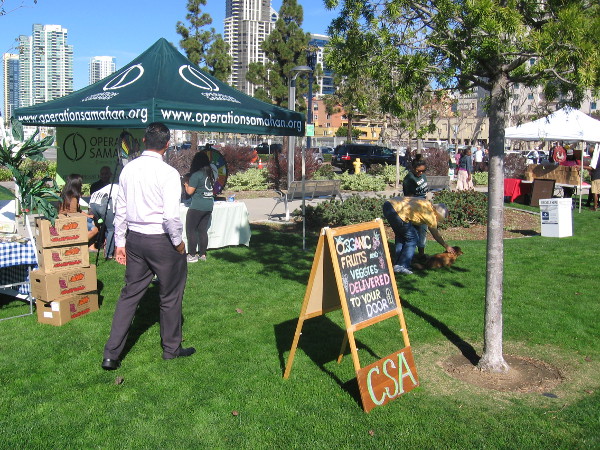
Lots of local organizations and vendors had cool stuff on display and for sale.
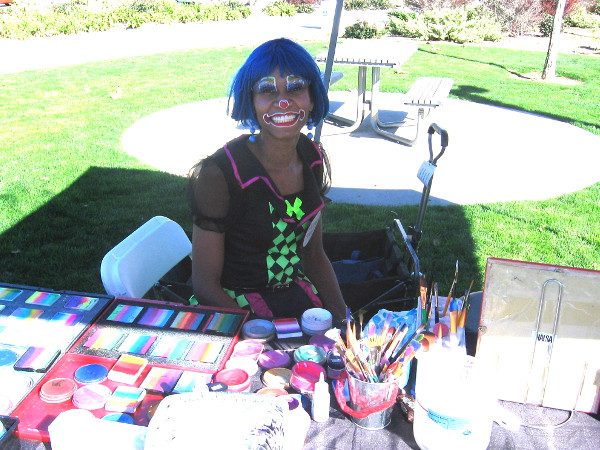
Young lady with awesome smiling painted face was decorating other folks!
A bubble blower floated small globes of color across the grass, all the way to the stage!
A bubble blower floated globes of color across the grass, all the way to the stage!
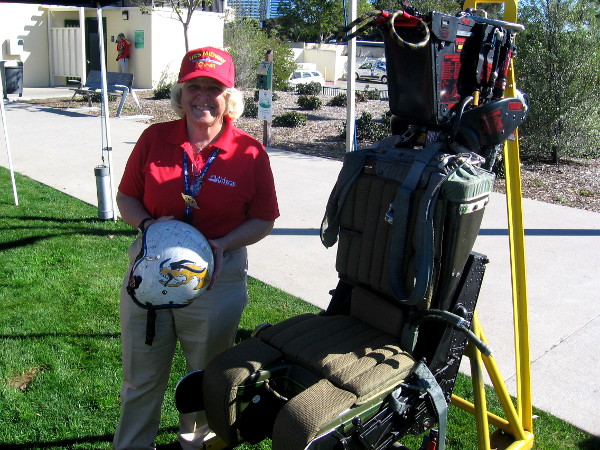
This nice lady from nearby USS Midway Museum helped me sit in this ejection seat!
Among lots of cool things on display were these two gravity cars from the Soap Box Derby.
Among cool things on display were two gravity cars from the Soap Box Derby.
A big pile of drums wait to make music in the waterfront park!
Serviceman with small child enjoys a sunny day at the Multicultural Festival in San Diego.
Serviceman with child enjoys a sunny day at the Multicultural Festival in San Diego.

To enjoy future posts, you can “like” Cool San Diego Sights on Facebook or follow me on Twitter.

Symbolism in Barrio Logan’s new gateway sign.

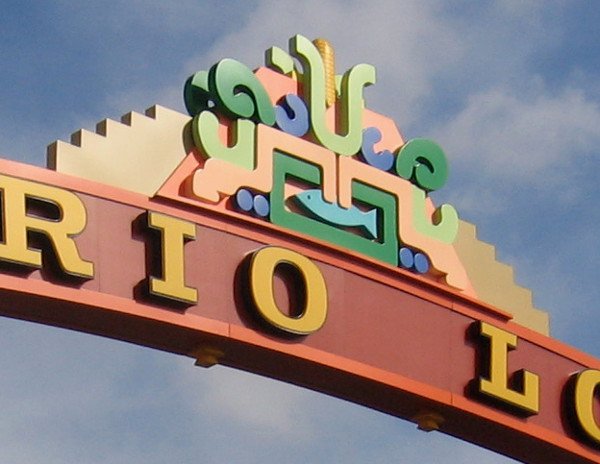
The colorful new Barrio Logan gateway sign arches over Cesar Chavez Parkway.

A little over a week ago, the new Barrio Logan gateway sign had a dedication ceremony. The welcoming sign, arching over Cesar Chavez Parkway between Harbor Drive and Interstate 5, is similar to others that can be spotted in various communities around San Diego. Its design, however, is notably different. The cornice contains a variety of symbolic elements inspired by this neighborhood’s complex history.

The cornice contains a variety of combined symbols that represent the community.
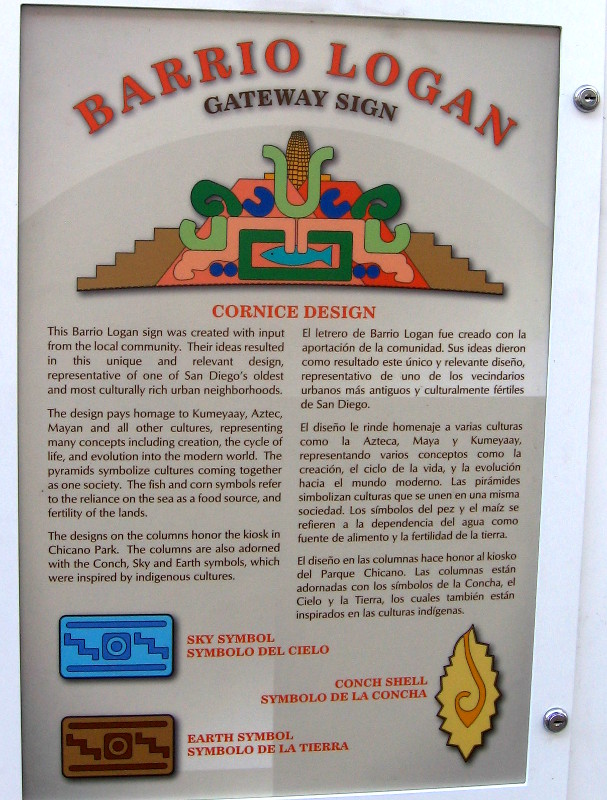
One of two displays on either column that explains the design.

Small displays near the base of each column can be read from either sidewalk. They explain the significance of the cornice design:

“This Barrio Logan sign was created with input from the local community. Their ideas resulted in this unique and relevant design, representative of one of San Diego’s oldest and most culturally rich urban neighborhoods.

The design pays homage to Kumeyaay, Aztec, Mayan and all other cultures, representing many concepts including creation, the cycle of life, and evolution into the modern world. The pyramids symbolize cultures coming together as one society. The fish and corn symbols refer to the reliance on the sea as a food source, and fertility of the lands.

The designs on the columns honor the kiosk in Chicano Park. The columns are also adorned with the Conch, Sky and Earth symbols, which were inspired by indigenous cultures.”

View of the gateway sign as one approaches from the Barrio Logan trolley station.

To enjoy future posts, you can “like” Cool San Diego Sights on Facebook, or follow me on Twitter.

Fall Back Festival recreates history in San Diego.

Blacksmith at Fall Back Festival in San Diego's Gaslamp works the bellows.
Blacksmith at Fall Back Festival in San Diego’s Gaslamp works the bellows.

Today I checked out a great event in downtown San Diego’s Gaslamp Quarter. Called the Fall Back Festival: the Children’s Historical and Cultural Street Faire, this historical reenactment places visitors in a magical time machine, transporting them back to the 1880’s.

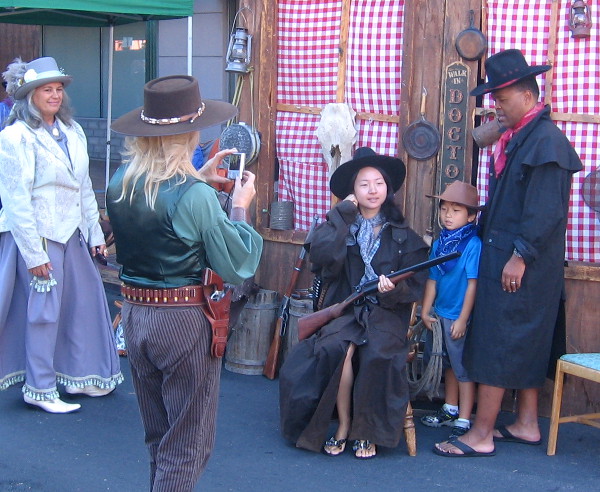
Three blocks of fun included a blacksmith, old western storefronts, pony rides, candle dipping and other educational activities. Many participants wore costumes and clothing from this early period in San Diego’s history. There was also an exciting High Noon shootout–which I unfortunately missed. But I did capture a few pics…

Lady in old-fashioned dress walks with her umbrella past Horton Grand Hotel.

I snapped the above photo as I headed toward the festival. The lady was just walking along through modern, shiny downtown San Diego like an image from the past.

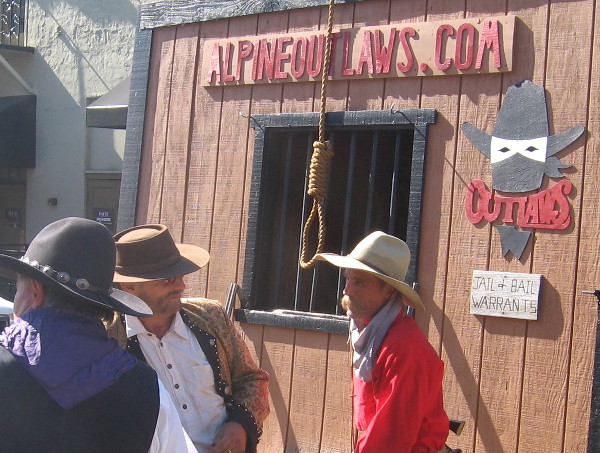
These cowboys, the Alpine Outlaws, have a jailhouse downtown and a hanging noose!

Yikes! The first thing I saw was a bunch of crafty outlaws!

Festival celebrates the diverse and fascinating early history of San Diego.
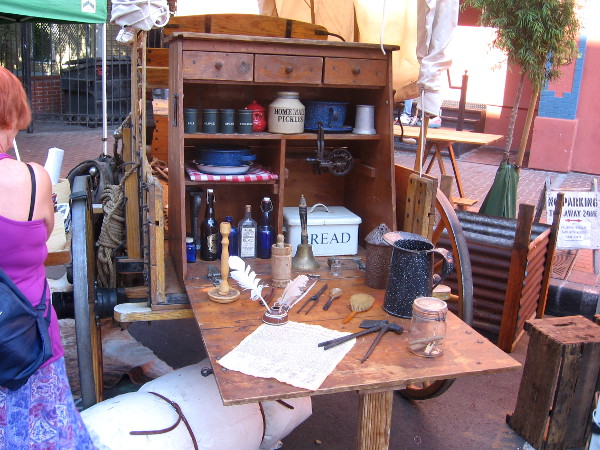
Wood cabinet at rear of wagon is packed with wares typical in 1880's.
Wood cabinet at rear of wagon is packed with wares typical in 1880’s.
A table full of rusty irons from the Old West!
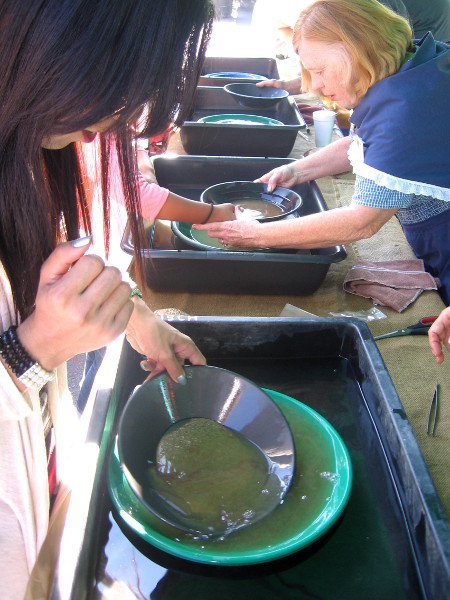
Temecula Valley Prospectors had kids panning for gold.
Temecula Valley Prospectors had kids panning for real gold.
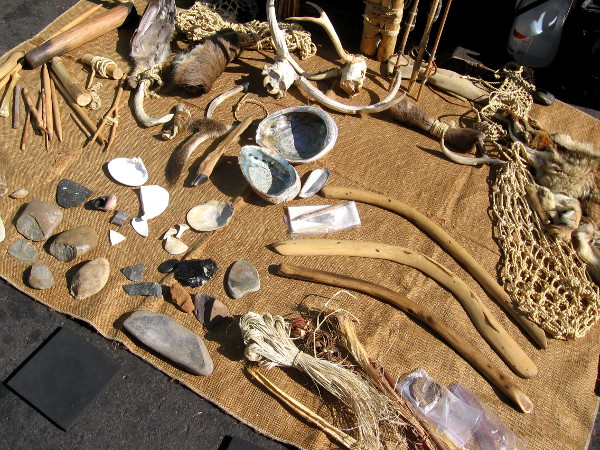
Realistic replicas of Native American tools and weapons were on display.

An interesting guy named Dave, of San Diego Survival History and Fitness, showed me a very cool display. He made all of the above implements and weapons by hand, using materials and techniques that were used by the Kumeyaay and earlier native peoples in the San Diego area. The Spaniards who built their first California Mission in San Diego feared the throwing sticks which you can see in the above photo. Shaped like a boomerang, they had the power to easily bring down a deer!

Historical exhibit has photos of Japanese settlers and community in San Diego.
San Diego Model A Club had a row of old automobiles at the Fall Back Festival.
Of course, there was live country western music for the crowd to enjoy!

To enjoy future posts, you can “like” Cool San Diego Sights on Facebook or follow me on Twitter.
Old Town San Diego and Día de los Muertos.

Día de los Muertos special event at Bazaar del Mundo is filled with color.
Día de los Muertos displays at Bazaar del Mundo are filled with life and color.

Día de los Muertos, also called Day of the Dead, is a popular holiday in Mexico and in many other cultures around the world. It’s a celebration that honors the memories and spirits of loved ones who have passed away. It closely follows Halloween, a holiday that is similar but actually quite different. Día de los Muertos, rich with images of skeletons and decorated skulls, is neither scary nor morbid; it is joyous!

This weekend, Old Town hosted its annual Day of the Dead special event. Altars, costumes and other sights that are common during the holiday could be found throughout the park and surrounding area. I took lots of photos!

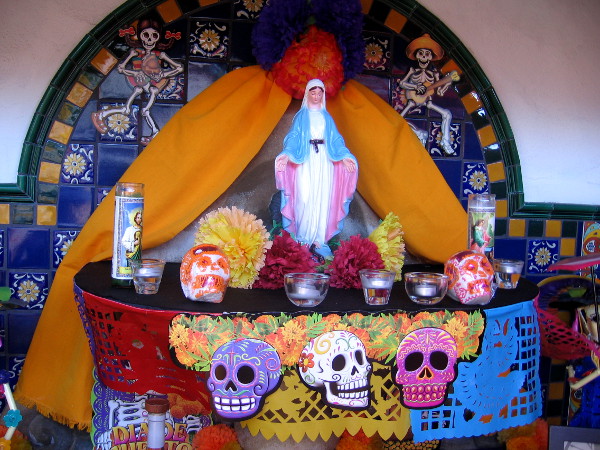
Día de los Muertos altar at Bazaar del Mundo in Old Town, San Diego.
Día de los Muertos altar at Bazaar del Mundo in a corner of Old Town, San Diego.
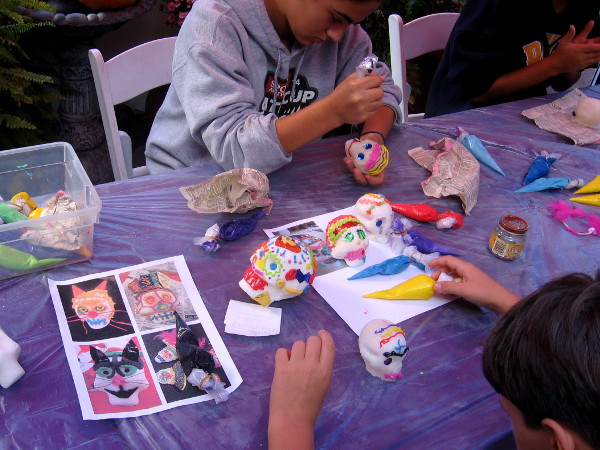
Kids decorate sugar skulls, a fun tradition of Day of the Dead.
Kids decorate sugar skulls, a fun and tasty tradition of Day of the Dead.
Ethnic and folk crafts and ornaments are abundant at Bazaar del Mundo.
Ethnic and folk crafts are abundant at Bazaar del Mundo.
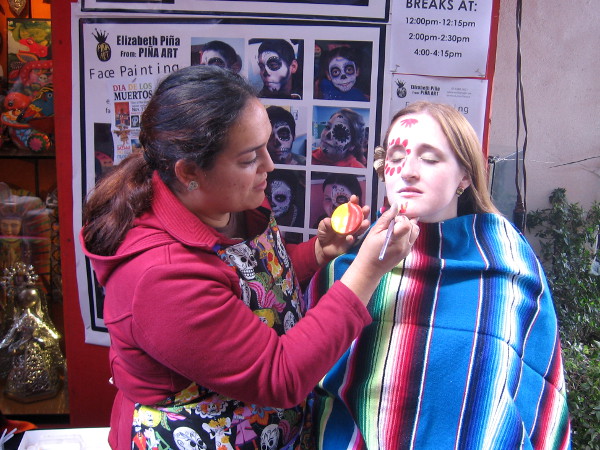
Young lady has face painted to celebrate Día de los Muertos.
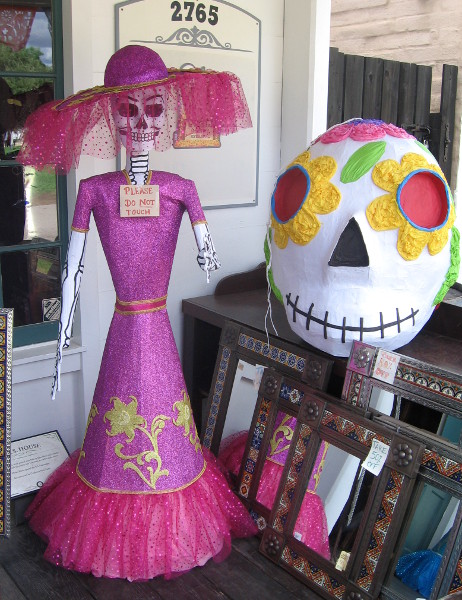
Image of woman skeleton in old-fashioned purple hat and dress.
A traditional Catrina. A female skeleton in old-fashioned hat and dress.
Altar at Fiesta de Reyes features Virgin Mary and photos of departed loved ones.
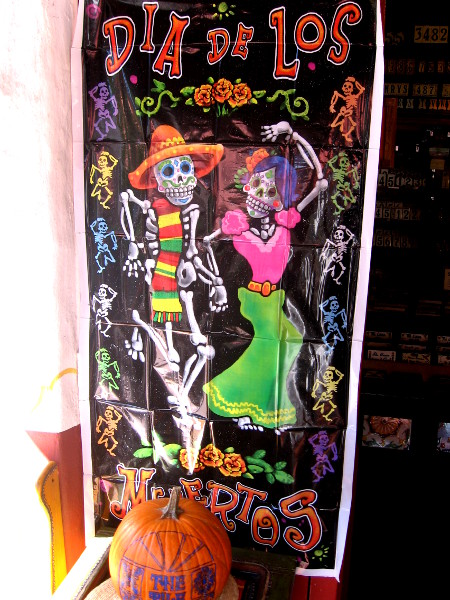
Fantastic sign above pumpkin shows lively, dancing skeletons.
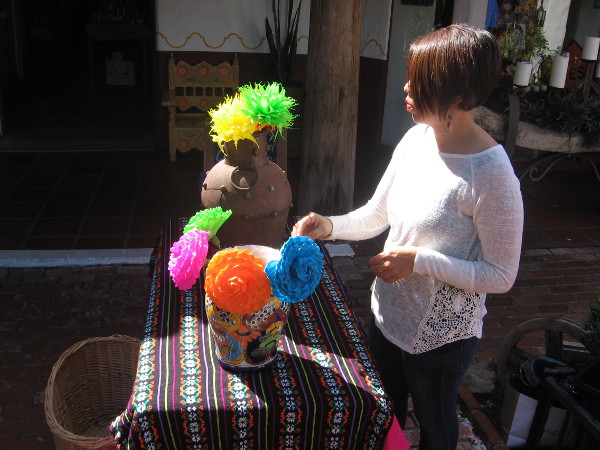
Lady in San Diego's Old Town arranges bright frilly flowers in the sun.
Lady working in San Diego’s Old Town arranges bright frilly flowers in the sun.
Folk dancers on and off stage at Fiesta de Reyes during Día de los Muertos.
This scarecrow and skeleton seem happy together!
This scarecrow and skeleton seem happy together on this perfect Autumn day!
Bench at Fiesta de Reyes painted with sombrero-wearing, flower-bearing skeletons.
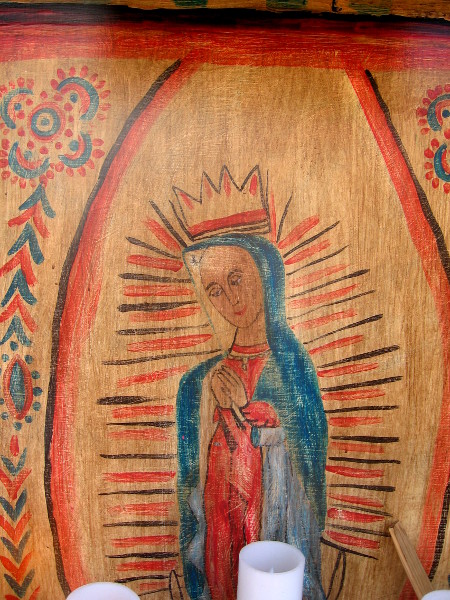
Small image in crude wooden frame in a larger altar.
Small crowned image in crude wooden frame in a larger altar.
Radiant image of Virgin Mary on wood above altar candles.
Prayers are directed toward radiant image of Virgin Mary above altar candles.
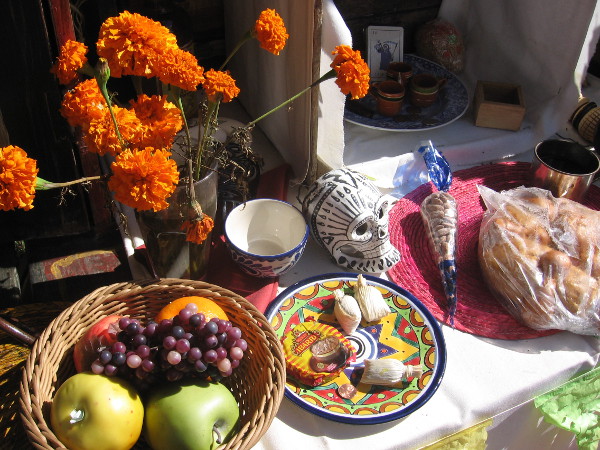
Altars often contain food liked by the deceased, to entice their spirits.
Altars often contain food liked by the deceased, to entice their spirits back.
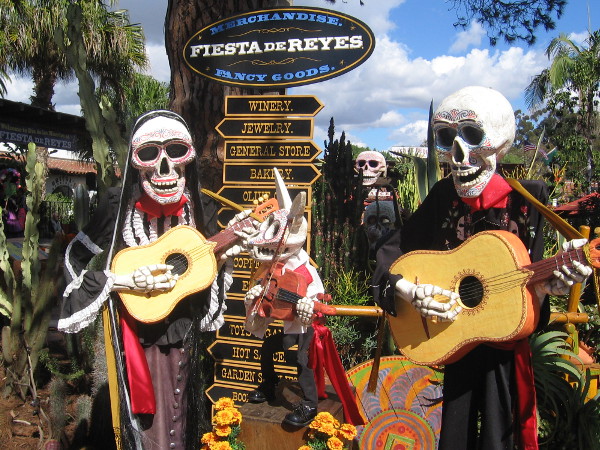
Mariachi skeletons strum guitars at entrance to Fiesta de Reyes.
This big flower and heart-covered skull faces Old Town's central square.
This big flower and heart-covered calavera faces Old Town’s central square.
Larger-than-life Day of the Dead mannequin wears a beautiful red dress.
Dead couple sits in lobby of Old Town's historic Cosmopolitan Hotel.
Dead couple sits in lobby of Old Town’s historic Cosmopolitan Hotel.
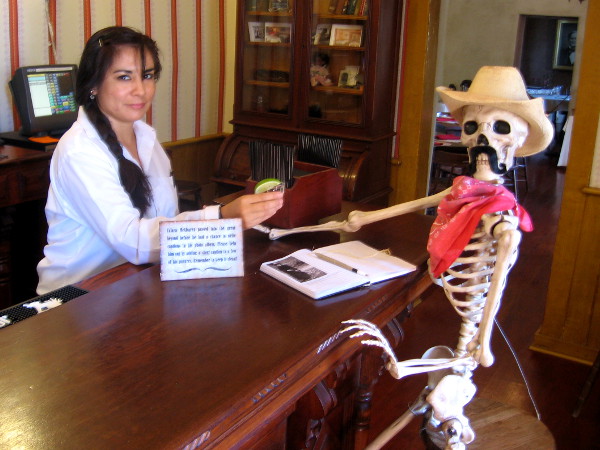
Bartender offers drink to skeleton cowboy at the Cosmopolitan Hotel's bar!
Bartender offers drink to skeleton cowboy at the Cosmopolitan Hotel’s bar!
The bony fellow at the bar was called Calaca McAlvarez!
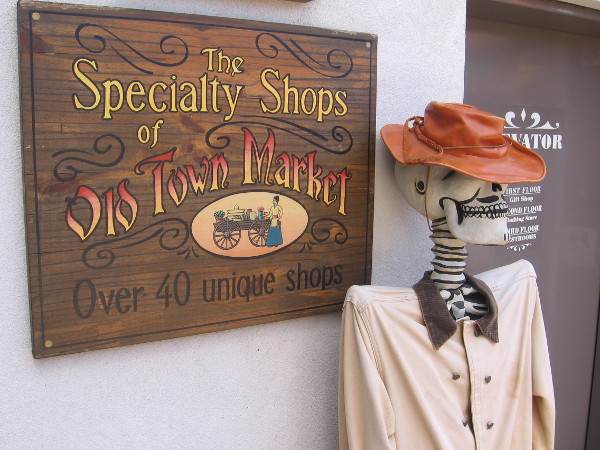
Stylish but dead bystander is resting near one of the many Old Town shops.
Stylish bystander is resting near one of the many Old Town shops.
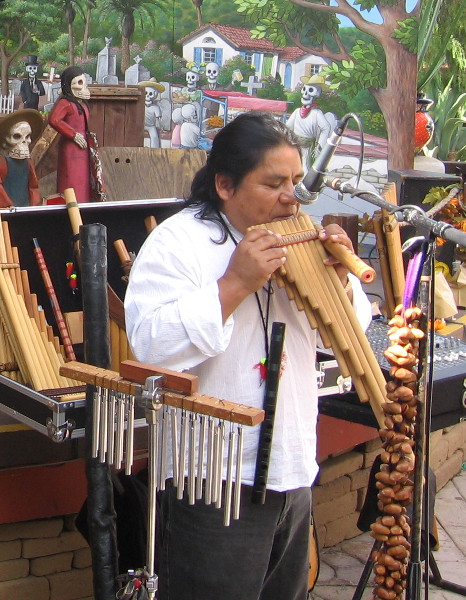
Musician entertains at Old Town's Day of the Dead festivities.
Musician entertains on pipes at Old Town’s Day of the Dead festivities.
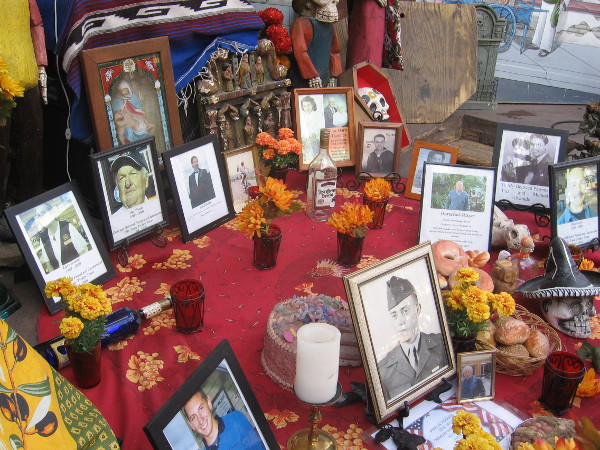
Día de los Muertos display with a strong Mexican flavor.
Photographs remember loved ones who have passed into the spirit world after death.
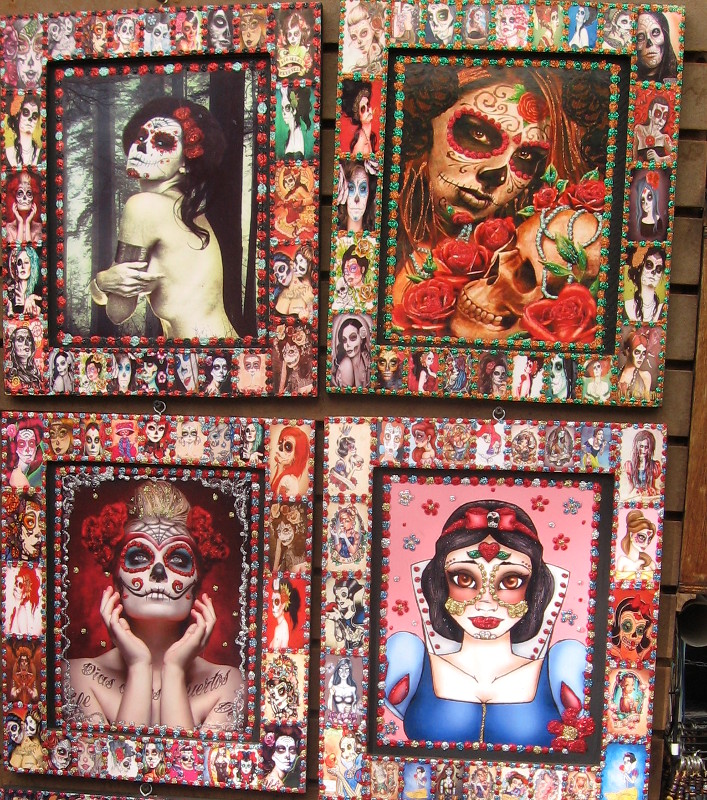
Snow White has been transformed into lavish Day of the Dead artwork.
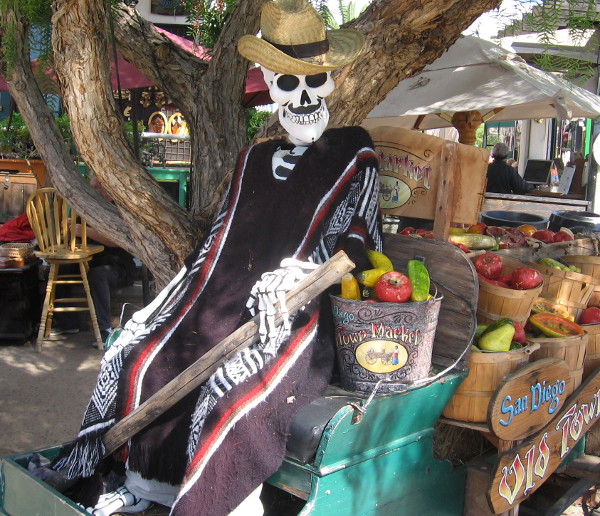
This guy is sitting on a wagon near popular entrance to Old Town State Historic Park.
Sculptor recreates face of living tourist posing for a unique souvenir.
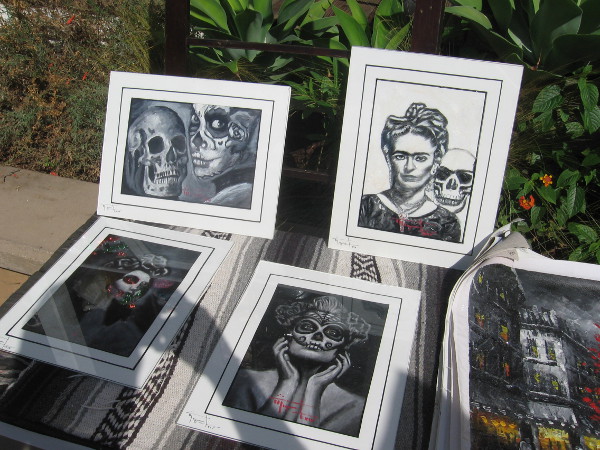
Prints on display for the big crowds attending Old Town's Day of the Dead.
Prints on display for the big crowds attending Old Town’s Day of the Dead.
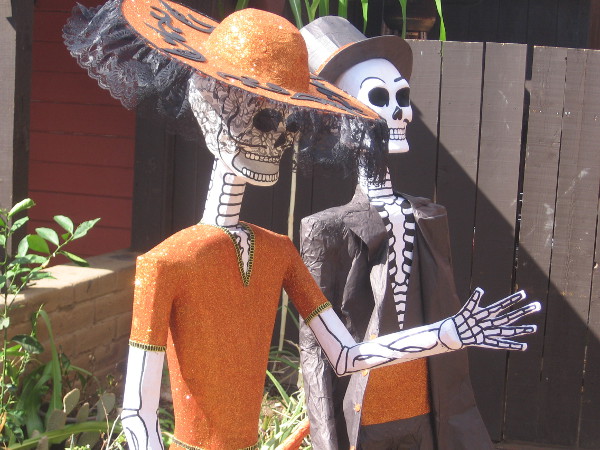
This elegant couple was spotted among the many historic buildings in Old Town.
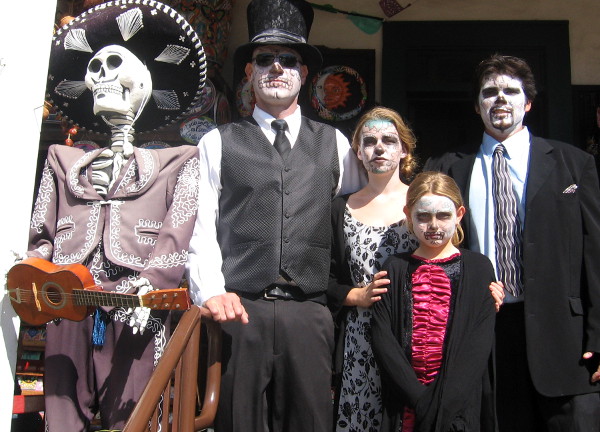
This well-dressed family all had their faces painted to resemble skulls!
Author A. B. Curtiss was signing her acclaimed books at Día de los Muertos.

Please check out her website!

Cool, astonishing sights popped up wherever I turned!

To enjoy future posts, you can “like” Cool San Diego Sights on Facebook or follow me on Twitter.
African-Americans helped to build San Diego.

Public art at Lillian Place shows African-American history in San Diego.
Public art at Lillian Place shows many facets of African-American history in San Diego.

Should you walk through downtown San Diego’s East Village in the vicinity of 14th and J Streets, you might be attracted to several large yellow panels along the sidewalk. This proud display of public art at Lillian Place was raised to commemorate how African-Americans have played an important role in building our diverse and beautiful city.

The artwork, created by Jihmye Collins and Nina Karavasiles, is titled “A San Diego African-American Legacy” and represents African-American contributions to San Diego’s development and rich history.

Cast metal parachute recalls the Top Black Owned Business in the United States.
Cast metal parachute recalls 1943’s Top Black Owned Business in the United States.

Here’s a large portion of the text contained on the panels:

People of African decent were present in San Diego as early as the establishment of Presidio de San Diego in 1769, and played a role in settling the area now known as Old Town.

In the later decades of the 1800s, African-Americans began emigrating to Horton New Town, San Diego’s present-day downtown, relocating primarily from the southern US.

Religious institutions were, and continue to be a cornerstone of the African-American community. In 1887, the African Methodist Episcopal Church became the first organized African-American congregation in downtown San Diego, followed soon after by Calvary Baptist and Bethel AME. At the same time, African-American social and civic groups like the Violet Club, Acme Social Club and Fidelity Lodge #10 of the Prince Hall Masons became important organizations in the community.

San Diego was once the center of a thriving jazz, blues, and gospel music scene. The Creole Palace at the Douglas Hotel and the Crossroads Jazz Club were just two of the spots that hosted local and national talent playing to mixed audiences.

African-Americans have always played a major role in amateur and professional sports in San Diego. Local favorite Archie Moore fought at the city Coliseum as did other champions. San Diegan John Ritchey became the first black player in the Pacific Coast League when he was signed as a catcher to the then minor league padres in 1948.

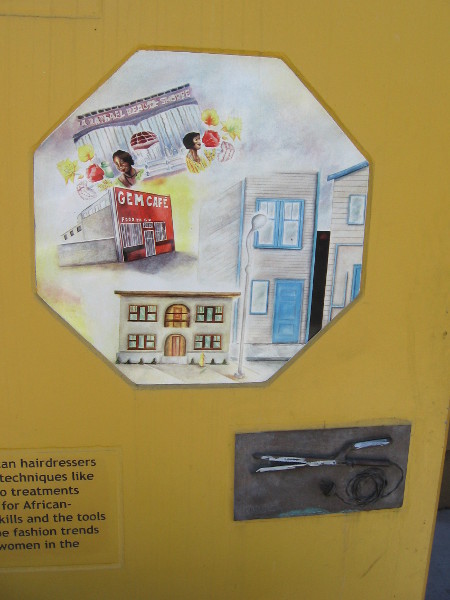
The entrepreneurial spirit of the African-American community flourished through the 20th century with doctor’s offices, hotels and clubs, barbers and beauty parlors, cafes and restaurants, ice cream parlors, laundries, jewelers and pool halls that served the African American community as well as other San Diegans.

During World War II, African-American stunt pilot and businessman Howard Skippy Smith owned the Pacific parachute Company factory on 8th Avenue. Named the Top Black Owned Business in the United States in 1943, Mr. Smith operated an integrated work place that reflected the ethnic and racial diversity of wartime San Diego.

On this block of J Street, African-American Lillian Grant owned multiple buildings, offering rooms to an ethnically mixed clientele during the time of segregation. Next door at the corner of 14th and J Streets sat the Vine/Carter Hotels. Known as the colored hotels, it was owned and operated by African-Americans Alonzo and Katie Carter from the 1930s to the 1950s.

African-Americans helped build religious institutions and community organizations.
African-Americans helped to build religious institutions and community organizations.
Exact duplicate of baseball catcher's mitt from the 1940's made of cast metal.
Exact duplicate of baseball catcher’s mitt from the 1940’s made of cast metal.
Artwork shows San Diego an important center of jazz, blues, and gospel music.
Artwork shows San Diego as an important center of jazz, blues, and gospel music. Count Basie and Billie Holiday both played at the Creole Palace.
Hair curling iron symbolic of thriving African-American entrepreneurs.
Hair curling iron is a symbol of many thriving African-American entrepreneurs.

To enjoy future posts, you can “like” Cool San Diego Sights on Facebook, or follow me on Twitter.

Urban art: The Power of Collective Thought.

Public art on 11th Avenue in San Diego's East Village.
Public art on 11th Avenue in San Diego’s East Village.

Just some cool pics of colorful urban art on a building wall in downtown San Diego’s East Village.

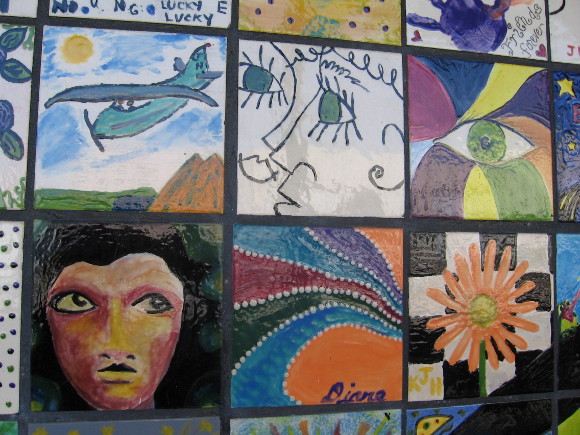
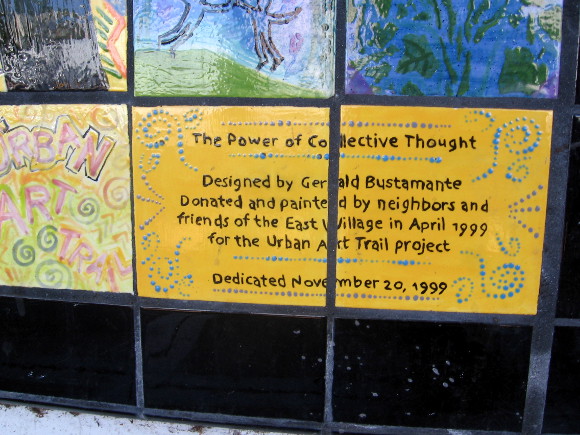
Neighbors painted many colorful tiles for this artistic creation.
The artwork was conceived and applied to a building wall in 1999.
Diverse faces, names and scenes are assembled in a larger design.
Hundreds of hand-painted tiles compose the colorful street mosaic.
The Power of Collective Thought from the Urban Art Trail project.

To enjoy future posts, you can “like” Cool San Diego Sights on Facebook, or follow me on Twitter.
Philippine Cultural Arts Festival in Balboa Park.

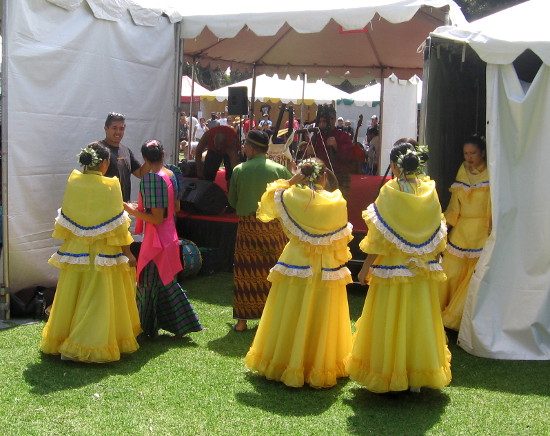
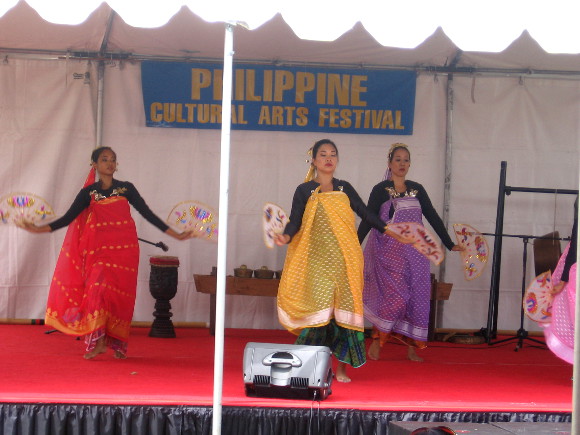
Folk dancers prepare to go on stage at today's cultural exhibition.
Folk dancers prepare to go on stage at today’s cultural exhibition.

I went for a typical weekend walk today. I just headed up to Balboa Park to see what I would see.

And I saw a lot!

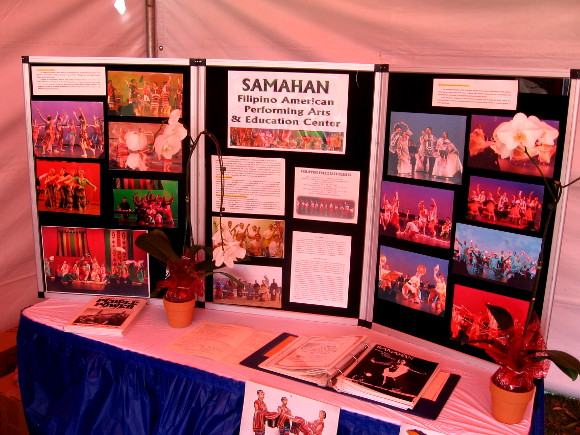
My most interesting and enjoyable experience came as I strolled through the 30th Philippine Cultural Arts Festival put on by the Samahan Filipino American Performing Arts and Education Center. The big event was taking place on some grass at the south end of Balboa Park, near Park Boulevard.

Lots of folks were enjoying authentic Filipino food, browsing through many booths, and watching a variety of unique demonstrations and entertainment. Workshops were even available to the public, teaching anyone interested to speak Tagalog, play the Bandurria, Angklung and Kulintang, practice self-defense in the style of Arnis or Eskrima, and dance Tinikling, which is the very colorful national dance of the Philippines.

Here are some pics!

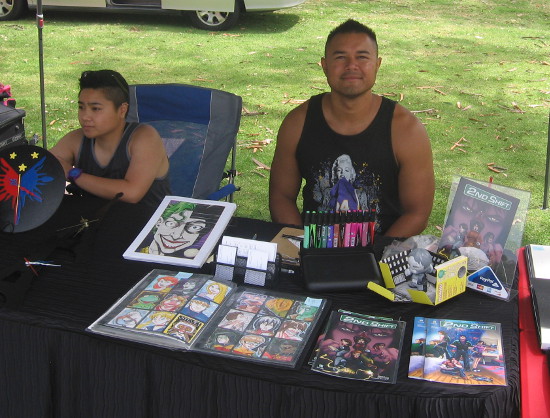
Scott Lost showcases his 2nd Shift comic books and other artwork!

Local artist Scott Lost was showing and selling his work. He has self-published a cool independent comic book series called 2nd Shift. Check it out!

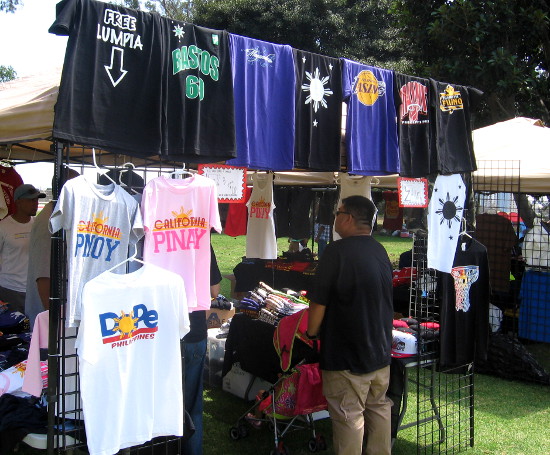
Funny t-shirts celebrate Filipino life at special event in Balboa Park.
Guys with swords teach Philippine martial arts!

I wouldn’t mess with these dudes!

Samahan Filipino American Performing Arts and Education Center.
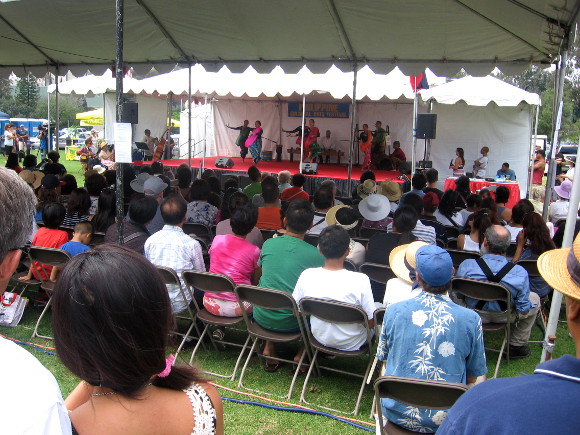
San Diegans from many different communities enjoyed the festival.
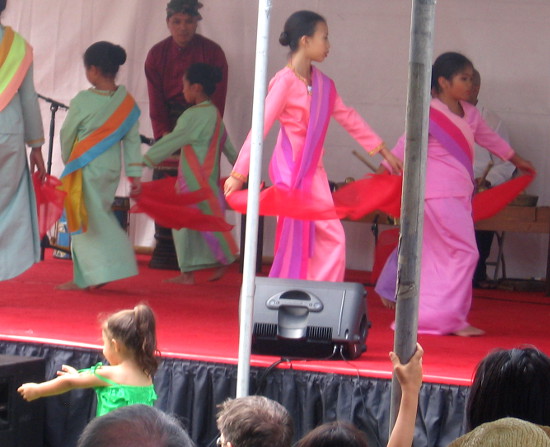
Folk dances from the Philippines were part of the cultural exhibition.
The audience enjoyed some colorful and joyful entertainment!
The audience enjoyed some colorful and joyful sights!

The festival is also going on Sunday (tomorrow) from 11-5. You’ll find it by the corner of Park Boulevard and Presidents Way. If you’re in San Diego, check it out!

To enjoy future posts, you can “like” Cool San Diego Sights on Facebook, or follow me on Twitter.
Mural of Centro Cultural de la Raza in Balboa Park.

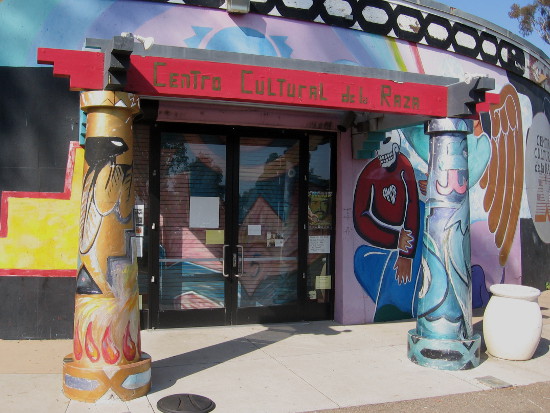
Front entrance of Centro Cultural de la Raza in Balboa Park.

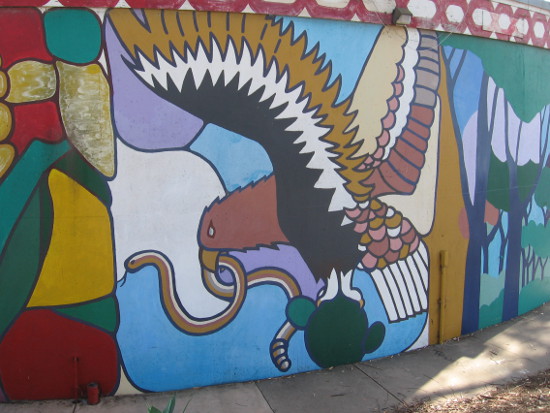
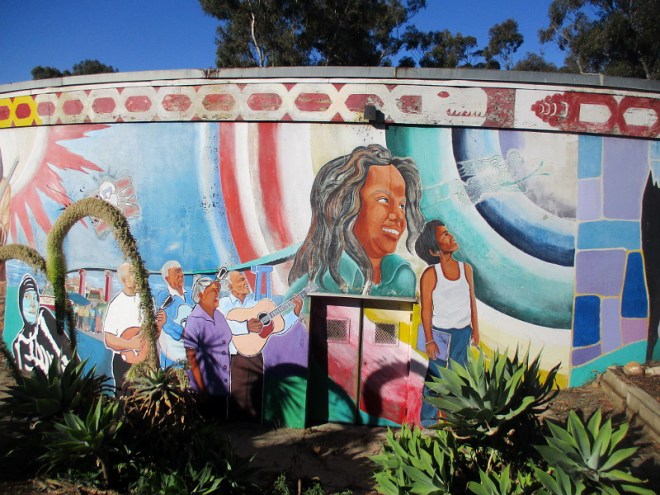
Like the nearby WorldBeat Center, the Centro Cultural de la Raza is housed in a colorful old water tower in Balboa Park. Its huge mural draws the attention of those heading up Park Boulevard, just north of downtown San Diego.

Centro Cultural de la Raza is a cultural center with an emphasis on Chicano, Mexican, Indigenous and Latino art. It hosts many exhibits and artistic performances throughout the year. Ballet Folklorico dancing is one of the educational classes that are available.

I walked around the building and took a bunch of photos of the huge public mural!

Starting around the old water tower, checking out the artwork.
Centro Cultural de la Raza seen from Park Boulevard.
Snake-entwined female in front of moon.
Snake-entwined female in front of glowing moon.
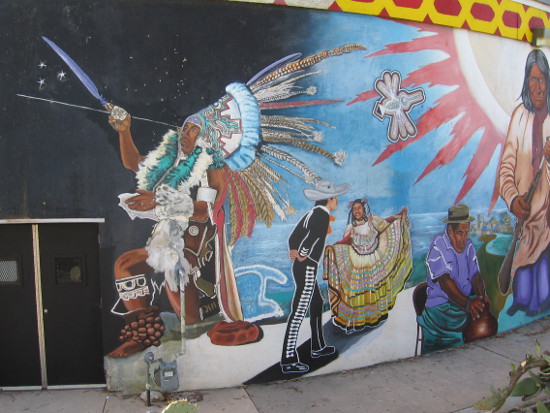
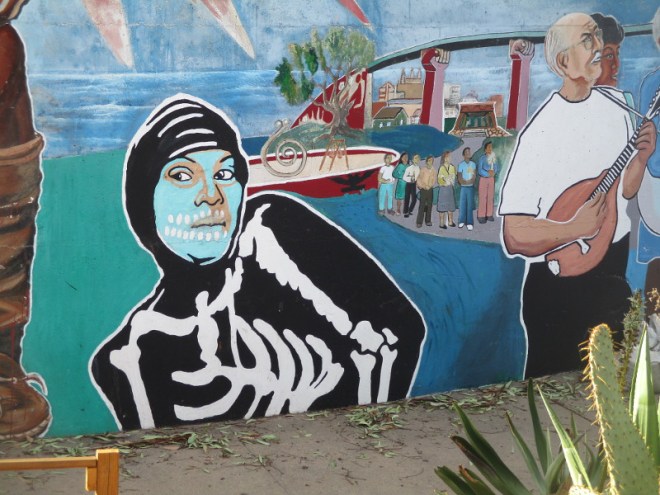
Diverse images from Latino culture in the large mural.
Diverse images from Latino culture in the richly detailed mural.
Geronimo crowned by a radiant sun.
A kneeling Geronimo crowned by a radiant sun.
Hispanic music, education and optimism are portrayed.
Colorful mural contains many animals from the Americas.
A ram and corn are among the many images.
Circling around toward back of the water tower.
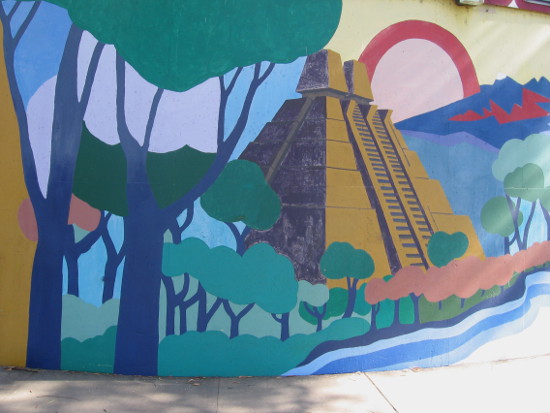
Mesoamerican pyramid in a richly painted scene.
Mesoamerican pyramid in a beautifully painted scene.
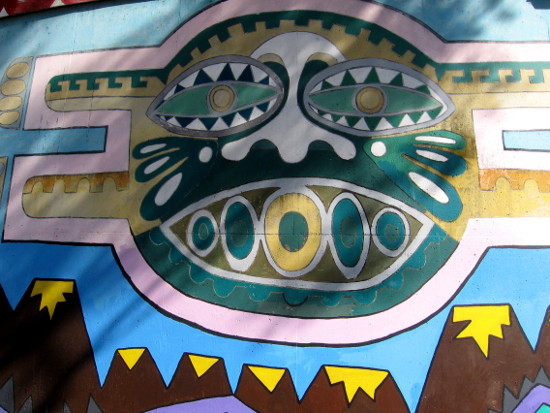
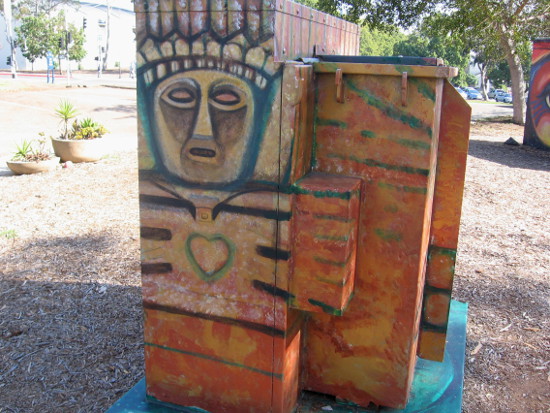
Stylized face watches from Centro Cultural de la Raza.
Stylized ancient face watches from Centro Cultural de la Raza.
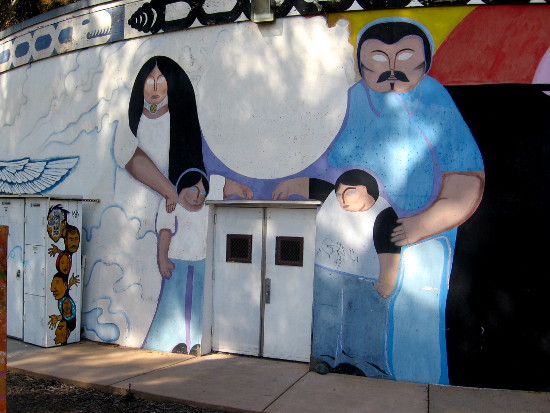
Latino family stands proudly in the San Diego mural.
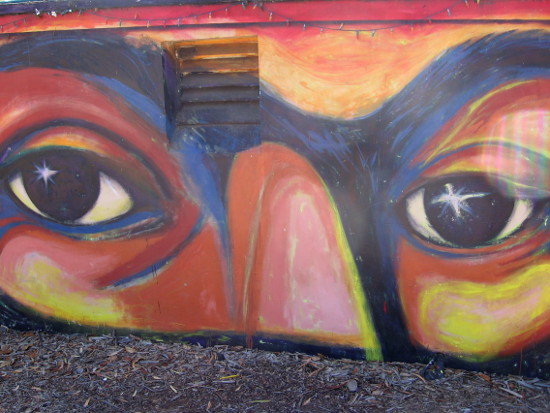
Eyes seem to rise out of the ground.
Nearby utility box made into a work of art.
This crazy face made me laugh.
This appears to be an Aztec warrior.

UPDATE!

When I posted these photos, I really didn’t know much about the mural. After doing some online research, I’ve learned the 240 by 18 feet mural was painted by nine artists, each responsible for a section. The mural painting project was headed by Antonia Perez. The Geronimo artwork was the work of Victor Ochoa, one of the co-founders of El Centro Cultural de la Raza in 1970.

Here are additional photos I took in early 2021, with a better camera under brighter light conditions…

IMG_6536z

IMG_6806z

IMG_6810z

IMG_6813z

To enjoy future posts, you can “like” Cool San Diego Sights on Facebook, or follow me on Twitter.
Sign language Tribute to Martin Luther King Jr.

Bronze hand signs the letter D.

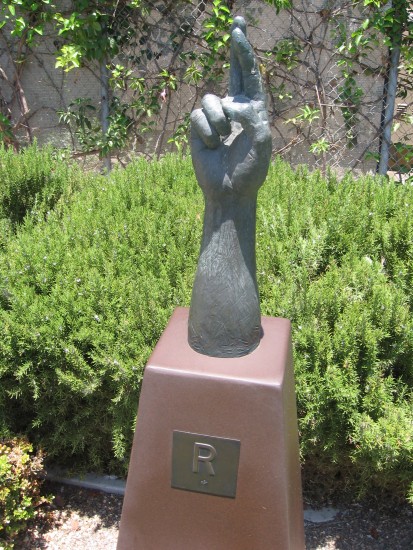
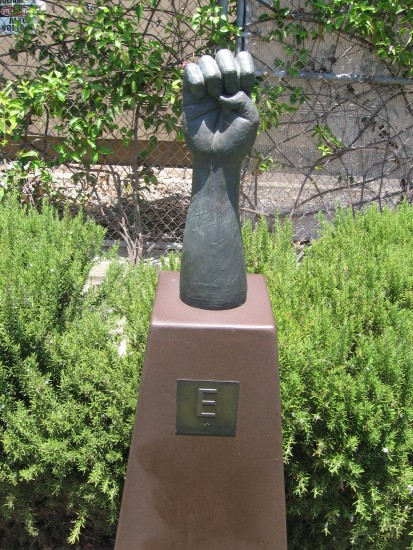
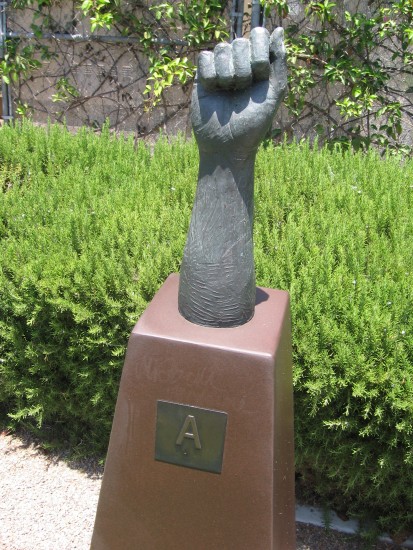
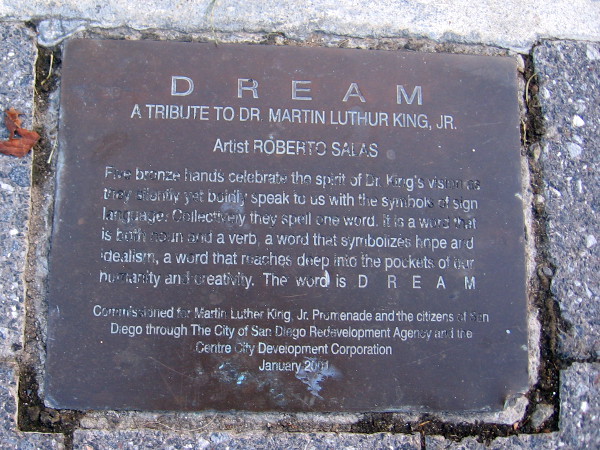
Take a walk or ride a bike down the Martin Luther King Jr. Promenade in downtown San Diego and you’ll encounter several sculptures inspired by America’s great civil rights leader. Here are a few photos of DREAM – A tribute to Dr. Martin Luther King, Jr., a dramatic work created by Roberto Salas in 2001. Five bronze hands spell out the word DREAM in sign language. This public art can be found very close to The New Children’s Museum.

Along the beautiful promenade, which follows Harbor Drive from near Seaport Village down to the Gaslamp Quarter, many MLK quotes are enshrined in the walkway. The last photo shows one very famous quote, just a few steps from this powerful tribute.

Bronze hand signs the letter R.
Bronze hand signs the letter E.
Bronze hand signs the letter A.
Bronze hand signs the letter M.
DREAM - A tribute to Dr. Martin Luther King, Jr. by artist Roberto Salas. A word that reaches deep into our humanity and creativity.
DREAM – A tribute to Dr. Martin Luther King, Jr. by artist Roberto Salas. A word that reaches deep into our humanity and creativity.
People approach DREAM on Martin Luther King Jr. Promenade.
A very famous and wise quote by Martin Luther King Jr.

I have a dream that my four little children will one day live in a nation where they will not be judged by the color of their skin, but by the content of their character.

Martin Luther King, Jr.
To enjoy future posts, you can “like” Cool San Diego Sights on Facebook or follow me on Twitter.