Community art: One Day in the Life on Imperial.

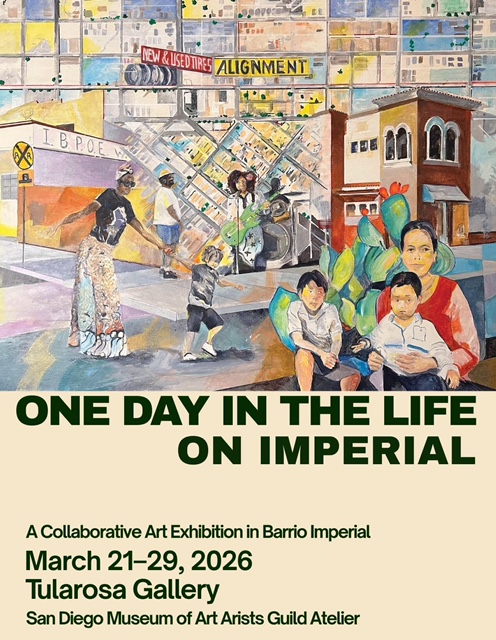
A special art exhibition will soon be opening in Grant Hill, across Imperial Avenue from neighboring Logan Heights. One Day in the Life on Imperial will feature works by members of the San Diego Museum of Art Artists Guild. The exhibition will be open to the public beginning March 21, 2026 at the TULAROSA gallery, located at 2602 Imperial Avenue. The Opening Reception is from 4 to 7 pm.

The San Diego Museum of Art Artists Guild has initiated an “Atelier” for the purpose of experimentation with conceptual art and community engagement. This exhibition is its inaugural event. The Barrio Artists Partnership is participating, too. The Atelier artists have, for three months, been walking, talking, observing and creating art based on their community centered dialogue.

Seventeen artists from diverse areas of San Diego will present their finished art as well as their concept behind the art.

Everyone is invited to drop by and see their inspired work!

After March 29 the exhibit will be moved to Gallery 21 in Balboa Park’s Spanish Village Art Center, where it will open on April 7.

To follow my blog, find the “Follow” box in this website’s sidebar. Or bookmark coolsandiegosights.com and swing on by occasionally!

(If you’re viewing this on a phone, open my website’s sidebar by tapping those three parallel lines at the top of the page.)
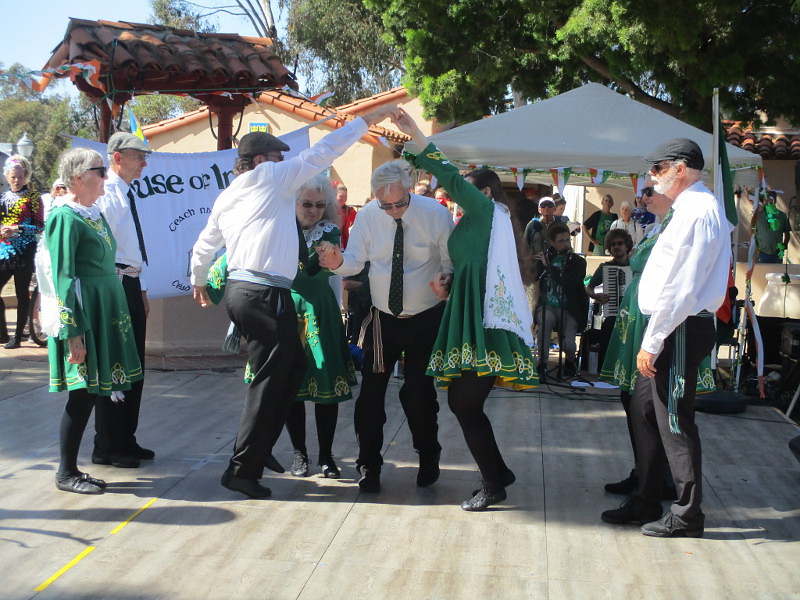
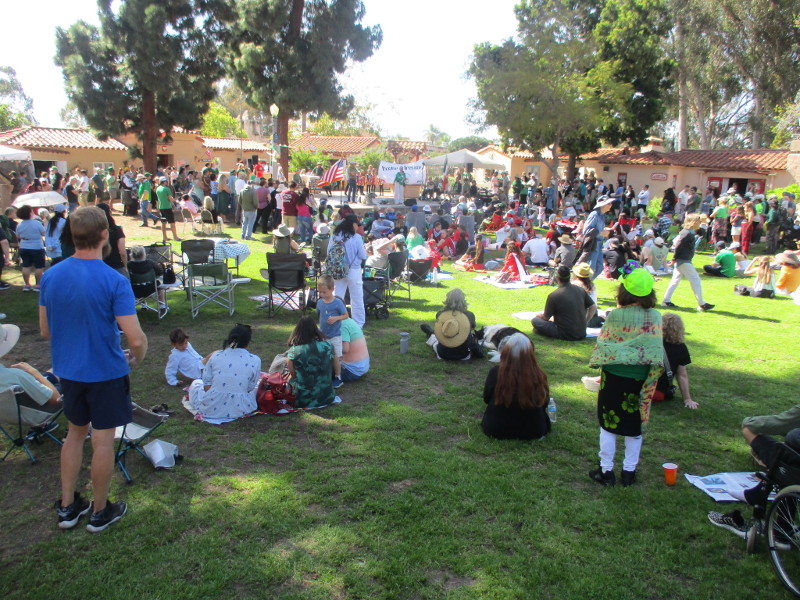
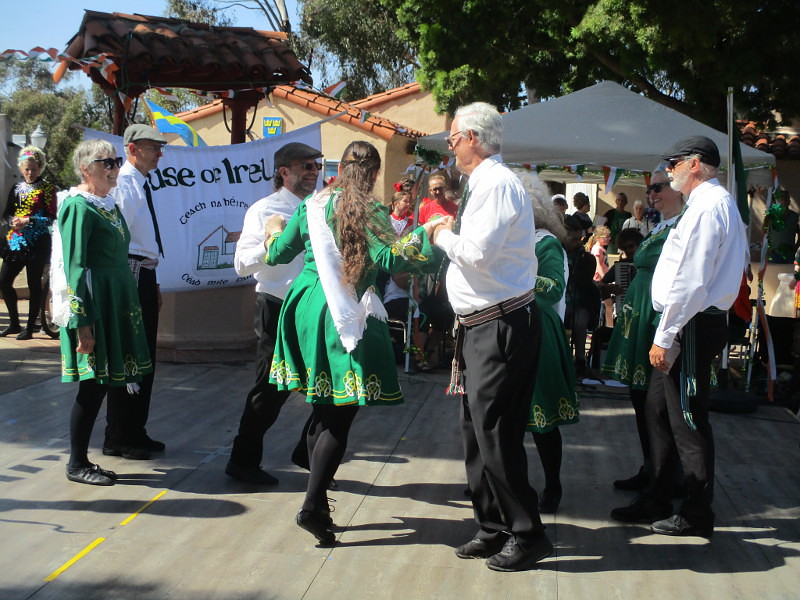
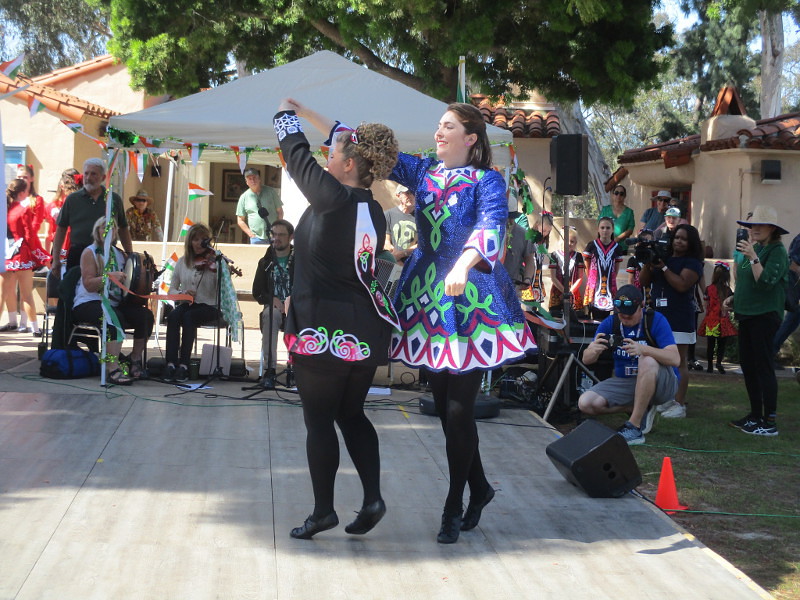
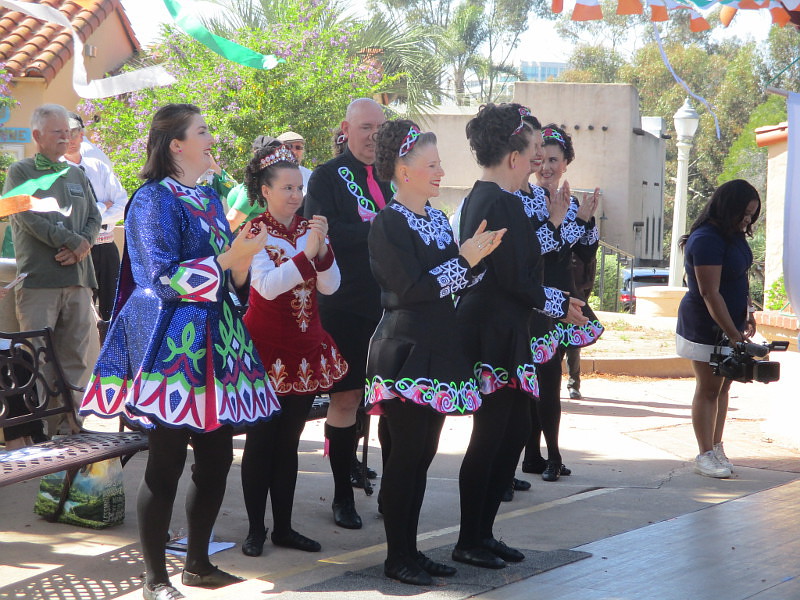
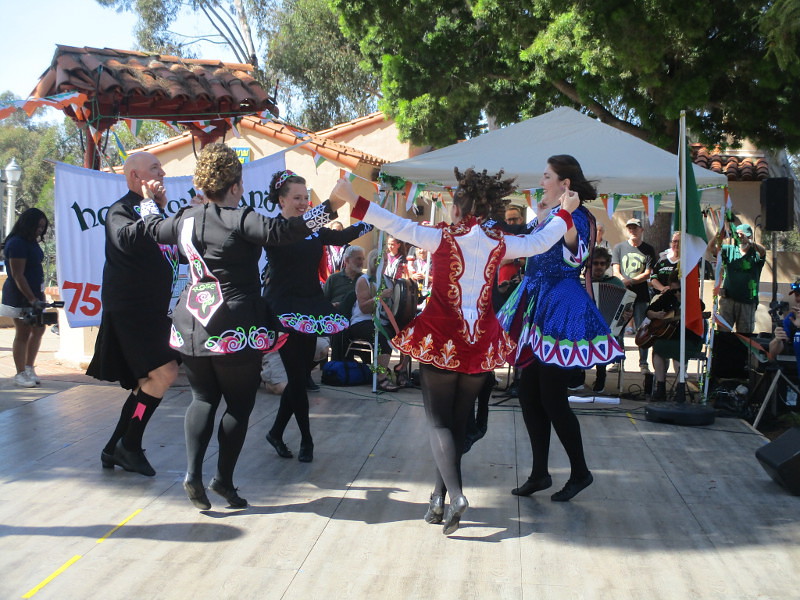
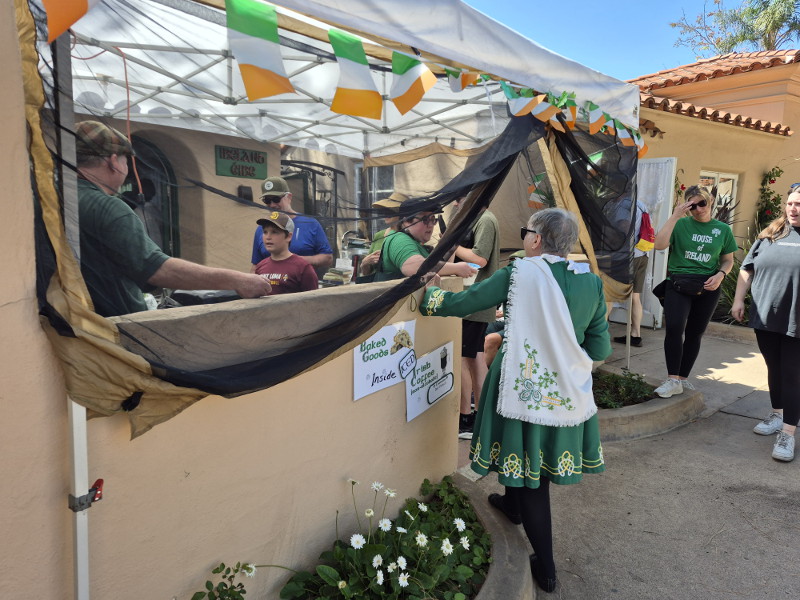
Fun culture at House of Ireland lawn program!

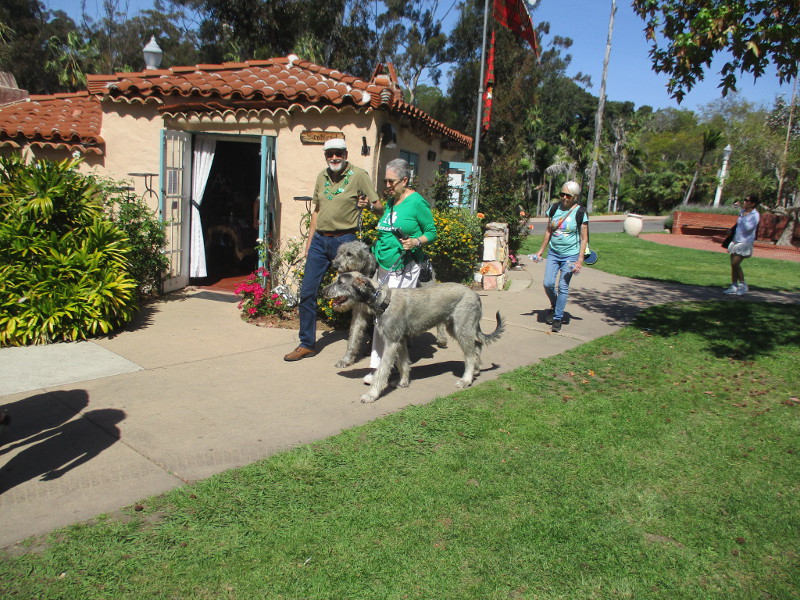
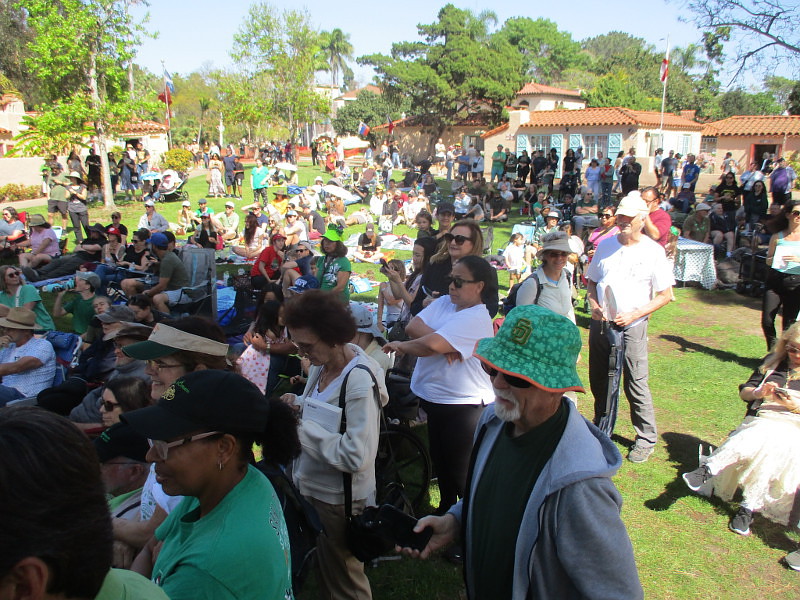
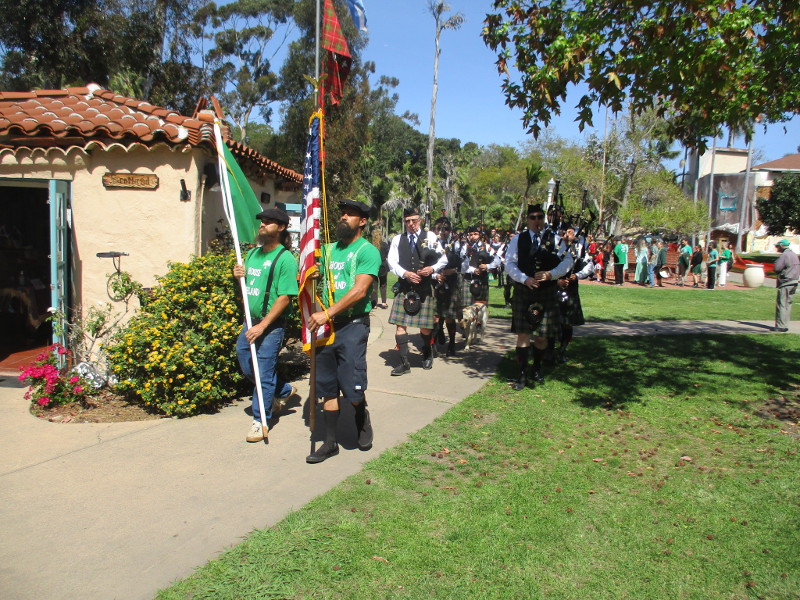
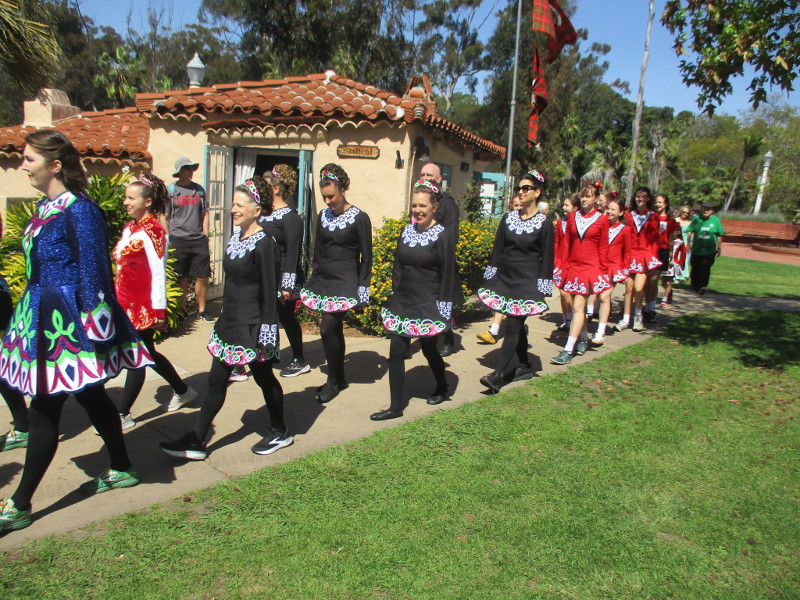
The House of Ireland in Balboa Park hosted their lawn program today, two days before St. Patrick’s Day.

As usual, there was a lot of green, Irish food, Irish dance and Irish fun!

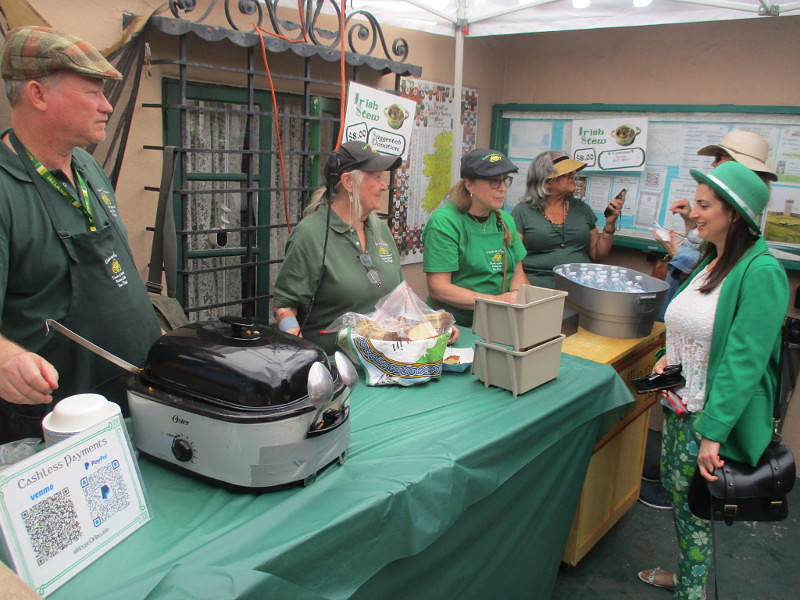
A big crowd on the lawn enjoyed the sunshine anticipating exciting cultural entertainment. Irish stew was being served at the House of Ireland cottage. Tasty baked goods, too!

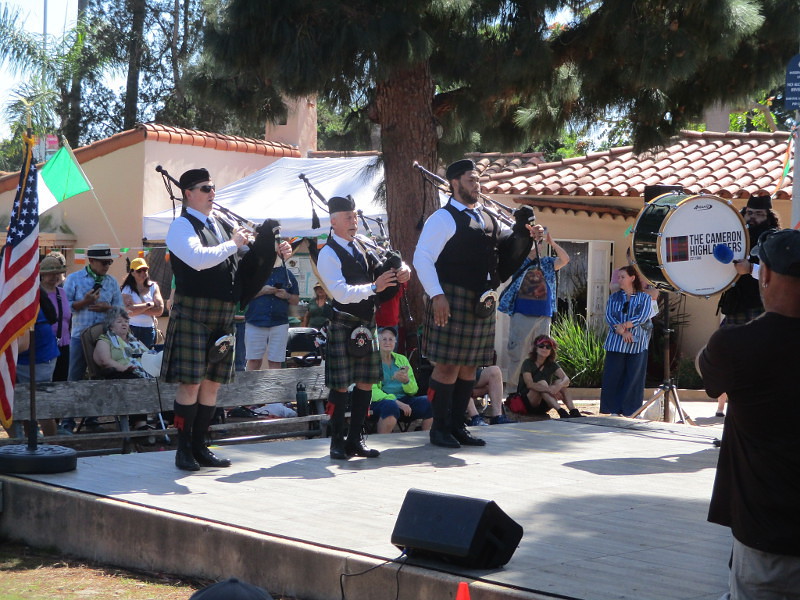
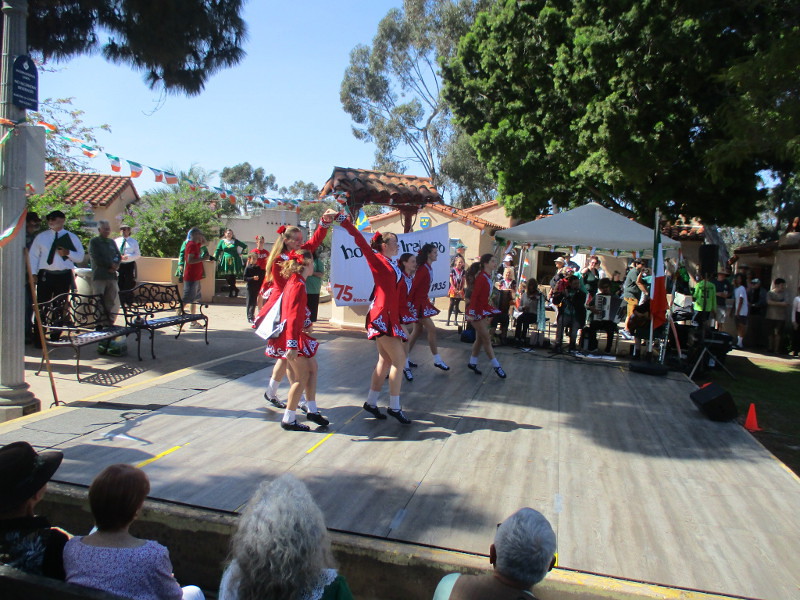
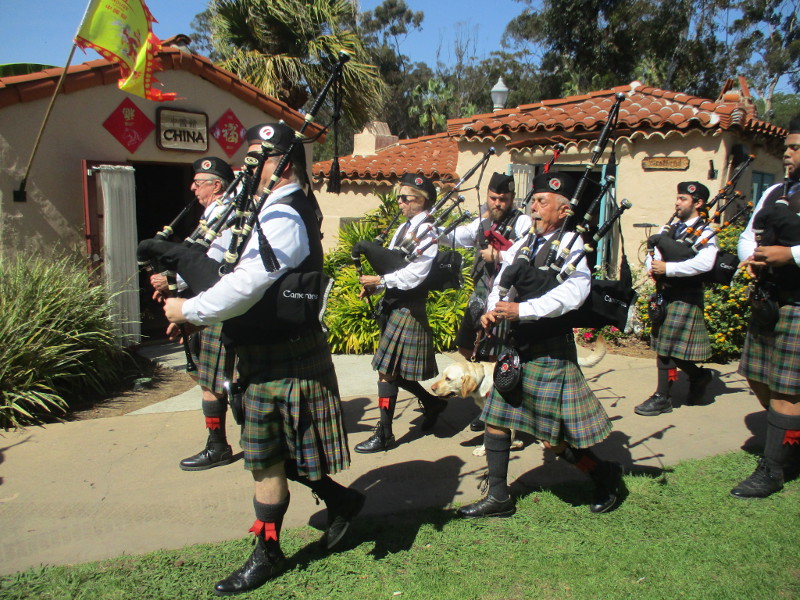
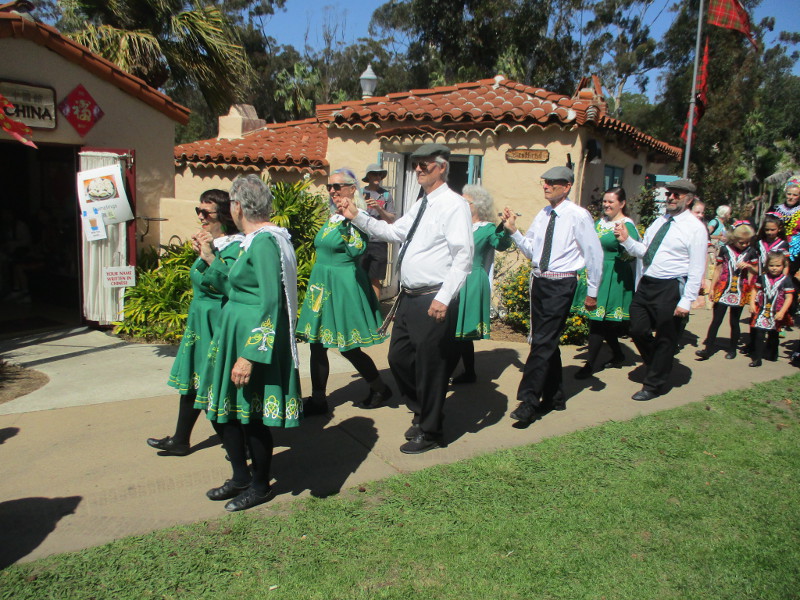
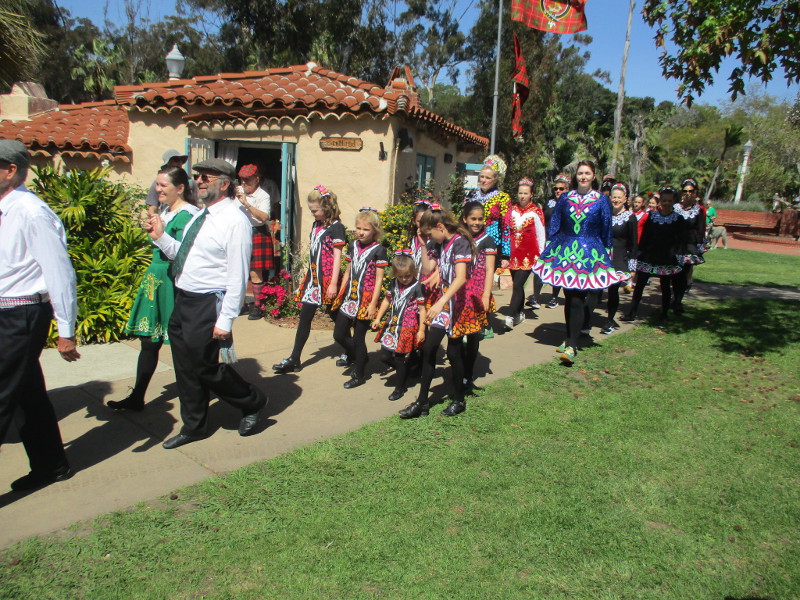
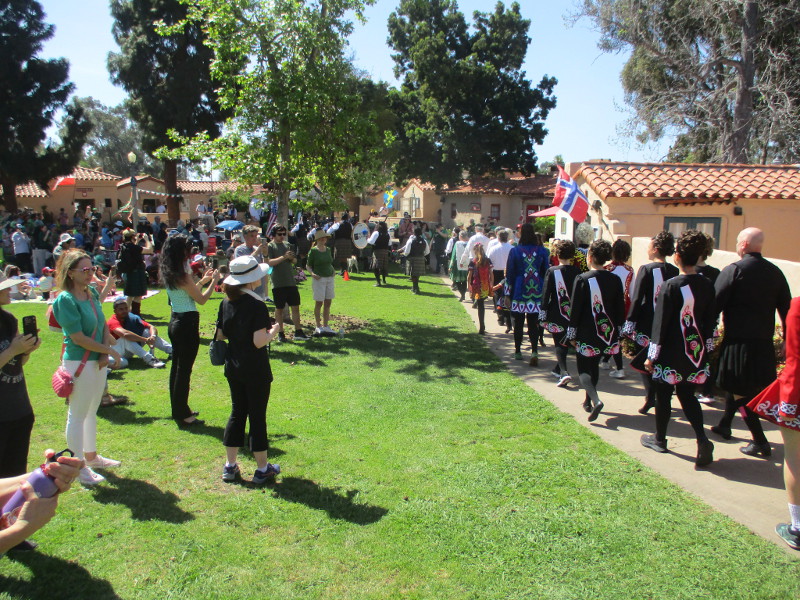
The cultural program began in earnest at two o’clock. A festive procession onto the lawn and up to the stage was led by the bagpipers and drummers of The Cameron Highlanders. Several dancing groups in colorful traditional costume would follow them.

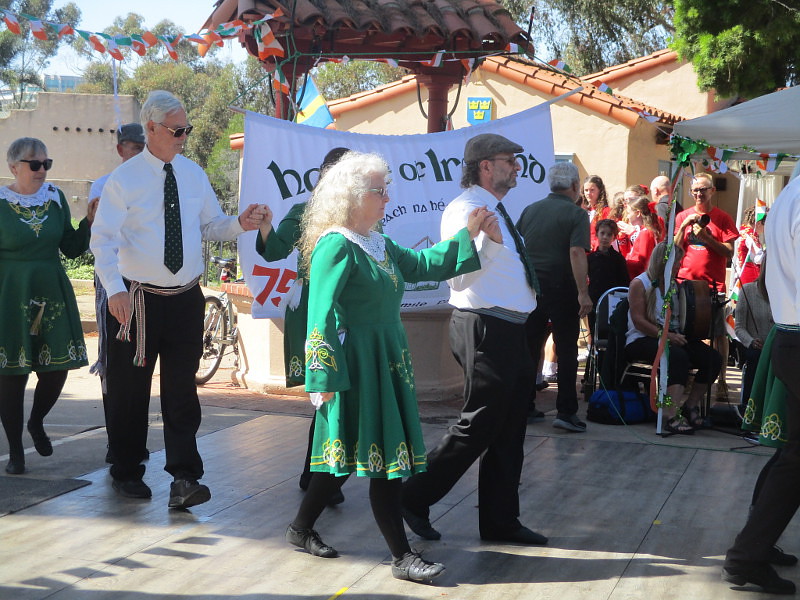
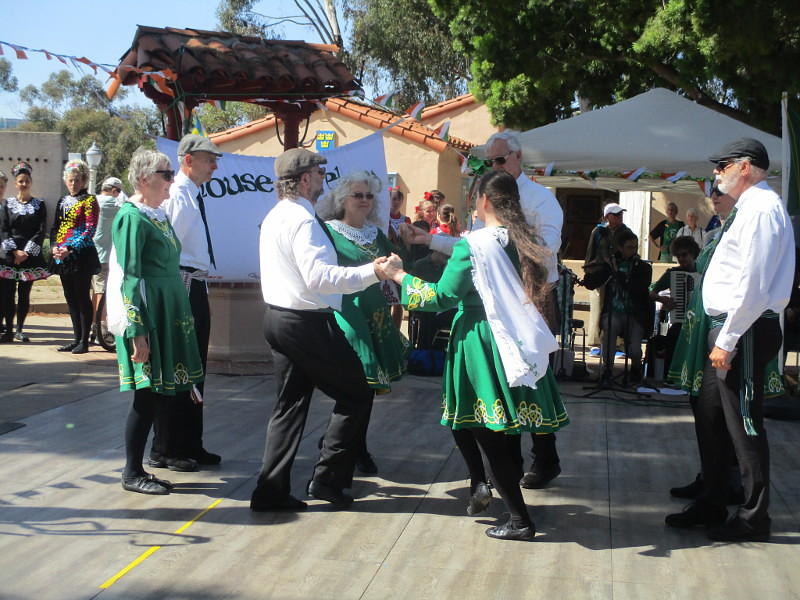
Soon thereafter, the Irish dancing would begin!

Dancers young and old, including members of several academies of Irish dance, would kick it up on the stage. Reels, jigs and hornpipes had the performers moving energetically to the rhythm of live music.

Enjoy a few photos…

To follow my blog, find the “Follow” box in this website’s sidebar. Or bookmark coolsandiegosights.com and swing on by occasionally!

(If you’re viewing this on a phone, open my website’s sidebar by tapping those three parallel lines at the top of the page.)
House of Syria exhibit at Hall of Nations.

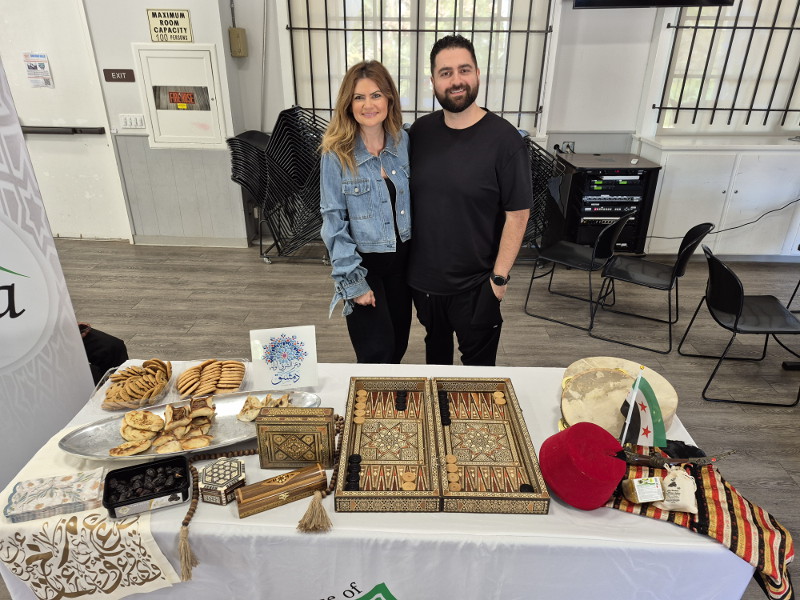
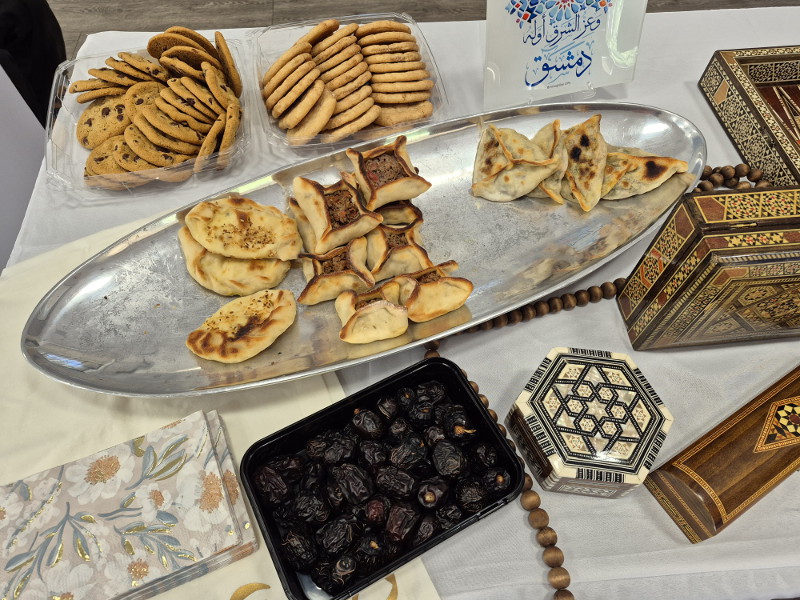
I wandered into Balboa Park’s Hall of Nations today. I was surprised to discover a great small exhibit by one of the newest members of the House of Pacific Relations International Cottages: the House of Syria!

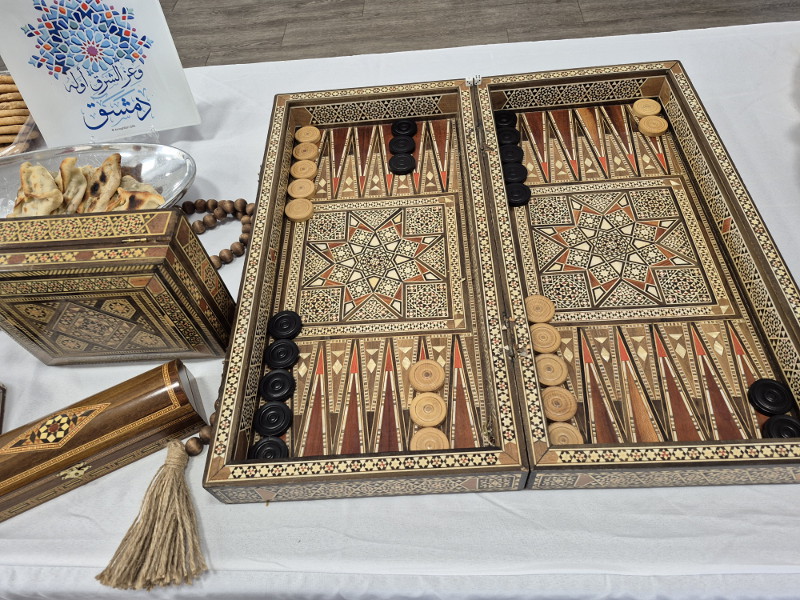
I was given a friendly greeting as I examined various displays. Most prominent was a very beautiful backgammon set. I’ve learned backgammon is derived from games going back to Mesopotamia in ancient times, such as the Royal Game of Ur. I also spotted some tasty Syrian sweet pastries!

Like other International Cottage members, the House of Syria is very welcoming. Their website states: Our members are volunteers passionate about preserving Syrian culture and sharing it through events, exhibitions, traditional music and dance, and authentic Syrian cuisine. Whether you have roots in Syria or simply want to learn more about its culture and history, House of Syria welcomes you as part of our extended family.

Like other nation members who don’t have a cottage yet, that’s a future goal. Get in touch with these good people if you’d like to learn more.

To follow my blog, find the “Follow” box in this website’s sidebar. Or bookmark coolsandiegosights.com and swing on by occasionally!

(If you’re viewing this on a phone, open my website’s sidebar by tapping those three parallel lines at the top of the page.)
Sweetwater Park native garden teaches ethnobotany.

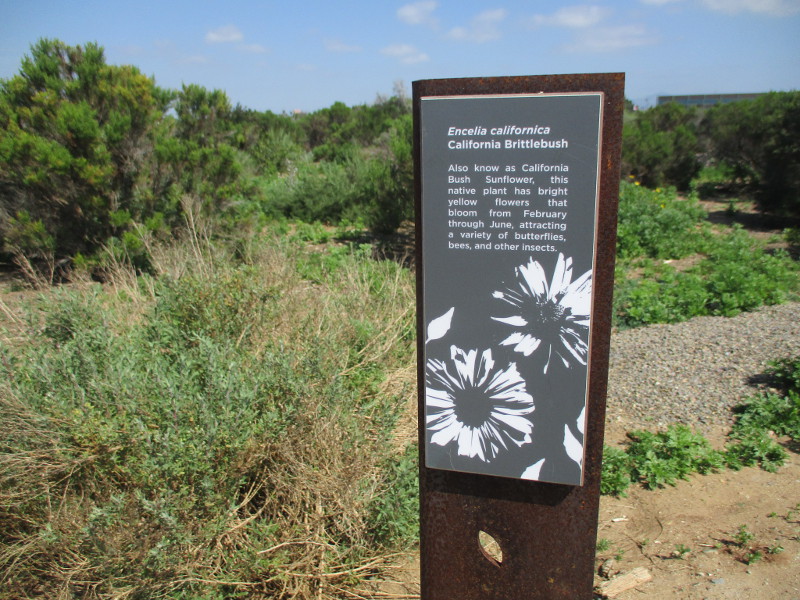
Chula Vista’s new Sweetwater Park on San Diego Bay is a place where our natural environment is protected and celebrated. Visitors can enjoy long walking trails that wind among native plants.

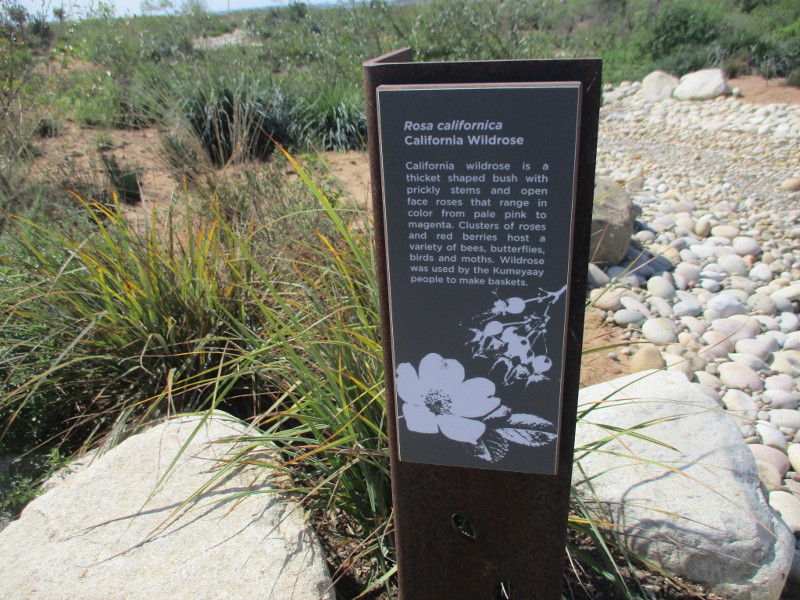
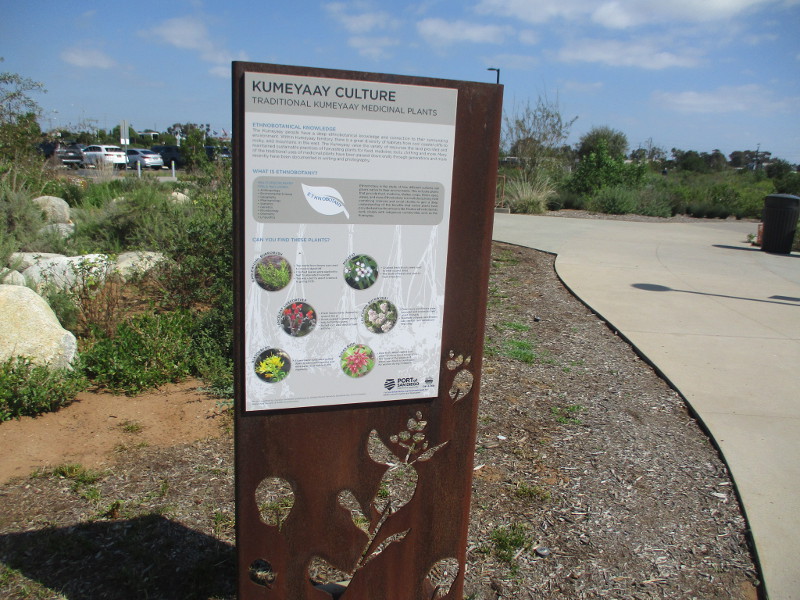
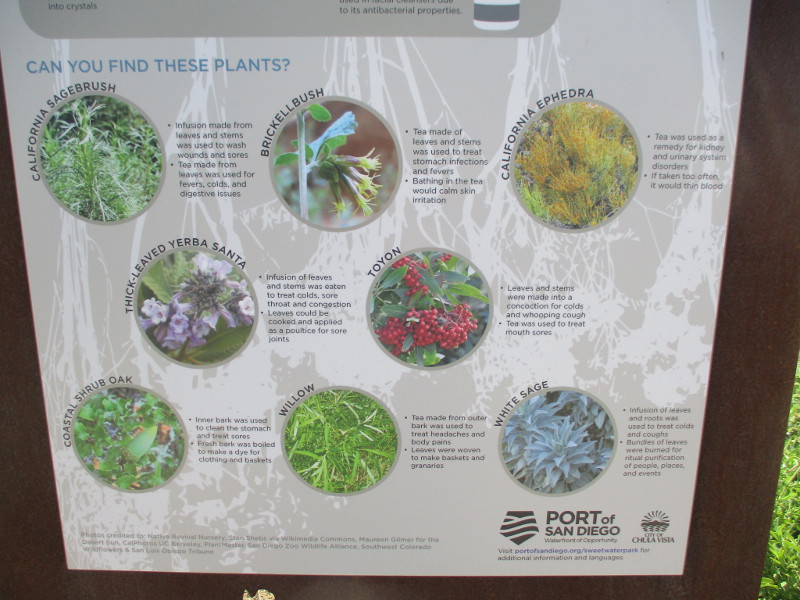
In the Council Ring near the restrooms and parking lot, an easy circular path features many such plants, and two informative signs explain how these plants were an important part of Kumeyaay culture.

Ethnobotany is explained as the study of how different cultures use plants native to their environments. This includes plants that provide food, medicine, shelter, soaps, fibers, dyes, waxes and more. The Kumeyaay people, who have lived in the San Diego region for thousands of years, have a deep ethnobotanical knowledge and connection to their surrounding environment.

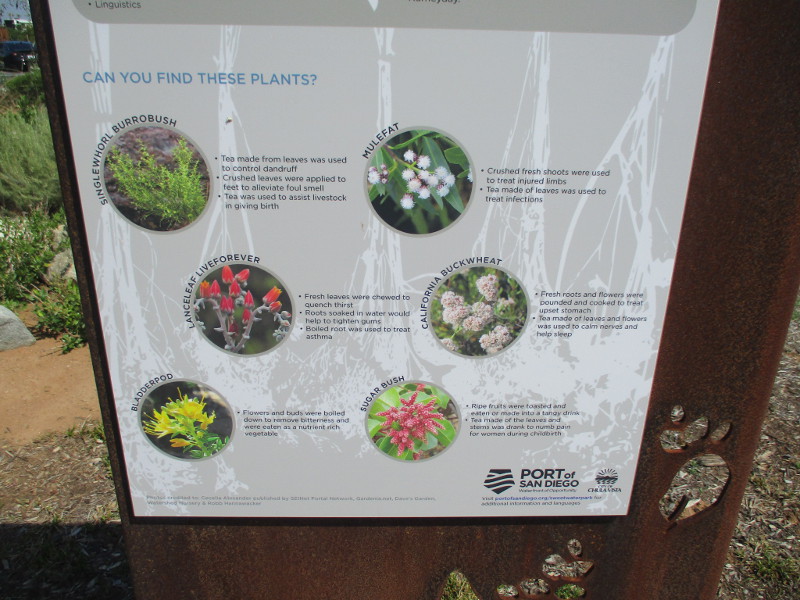
Visitors are invited to look for certain plants, such as Sugar Bush, California Buckwheat, Mulefat and Bladderpod. Did you know that tea made from Singlewhorl Burrobush has been used to control dandruff? Or that boiled root of Lanceleaf Liveforever has been used to treat asthma?

Pause at these signs during your visit to Sweetwater Park and learn more about the history of our region, and the native inhabitants the natural environment has supported.

Look for other signs around the park identifying plants, too!

To follow my blog, find the “Follow” box in this website’s sidebar. Or bookmark coolsandiegosights.com and swing on by occasionally!

(If you’re viewing this on a phone, open my website’s sidebar by tapping those three parallel lines at the top of the page.)
Dandelion Day connects Korean youth with heritage.

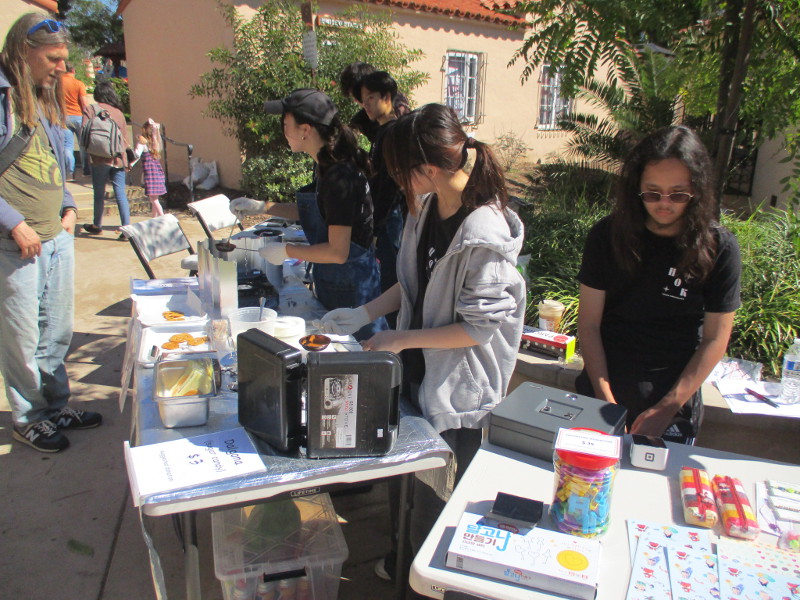
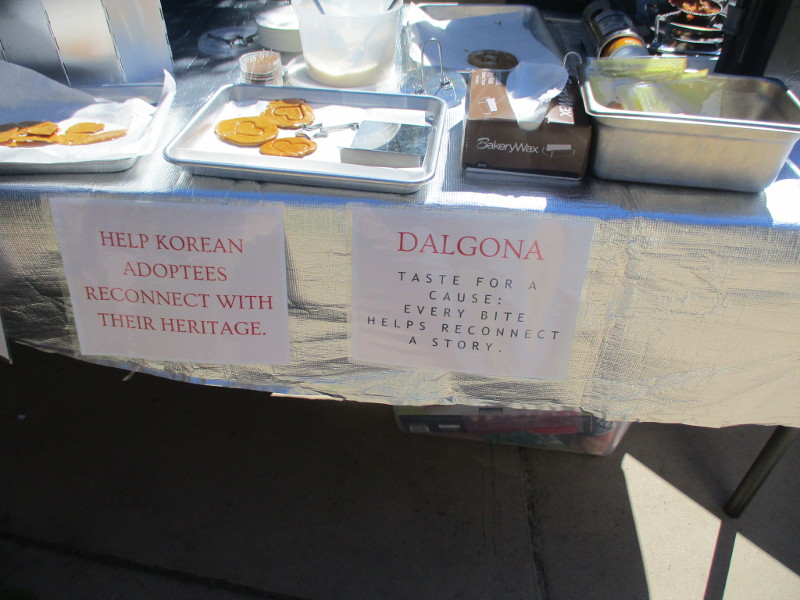
Dandelion Day was celebrated today in Balboa Park at the House of Korea cottage. The event raised funds that will be used to reconnect young Korean adoptees in San Diego with their heritage.

As one poster explained: This special day offers an opportunity to celebrate and experience Korean culture through engaging activities, traditional games, live performances, and authentic cuisine.

I happened to discover the activity table this afternoon while walking about the International Cottages!

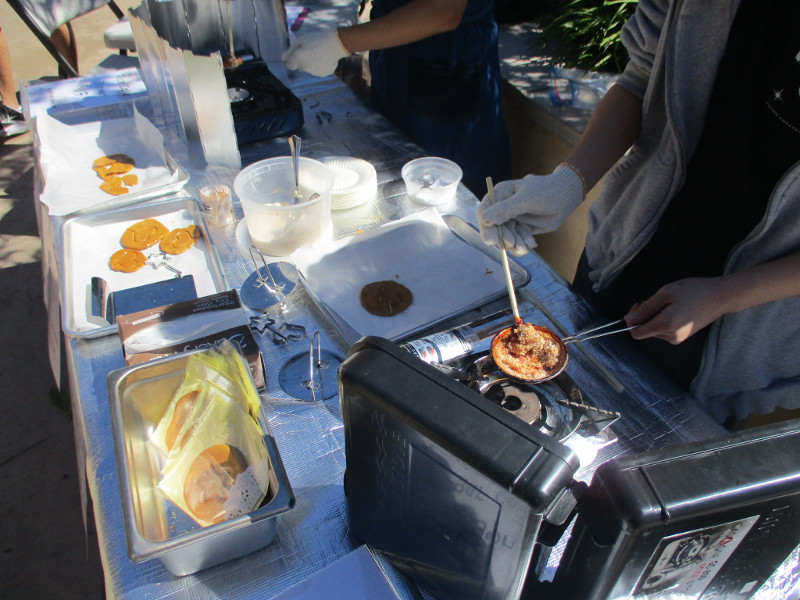
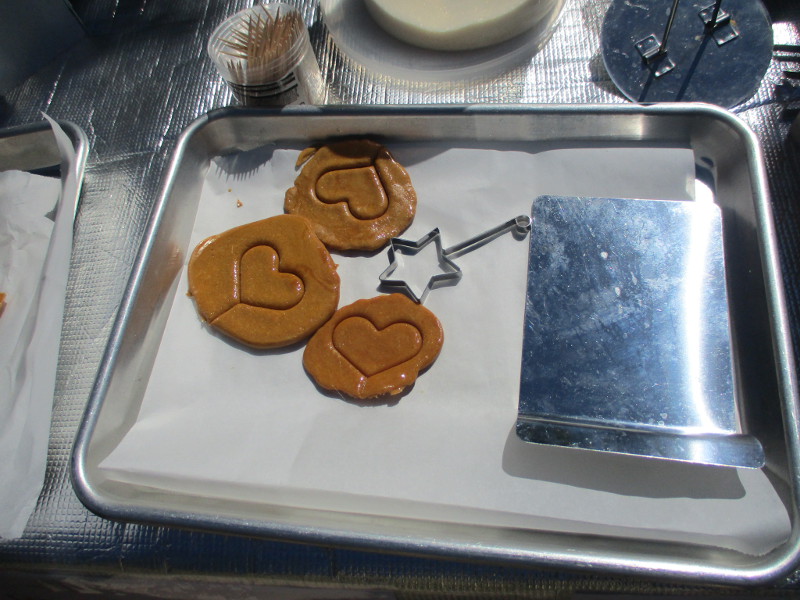
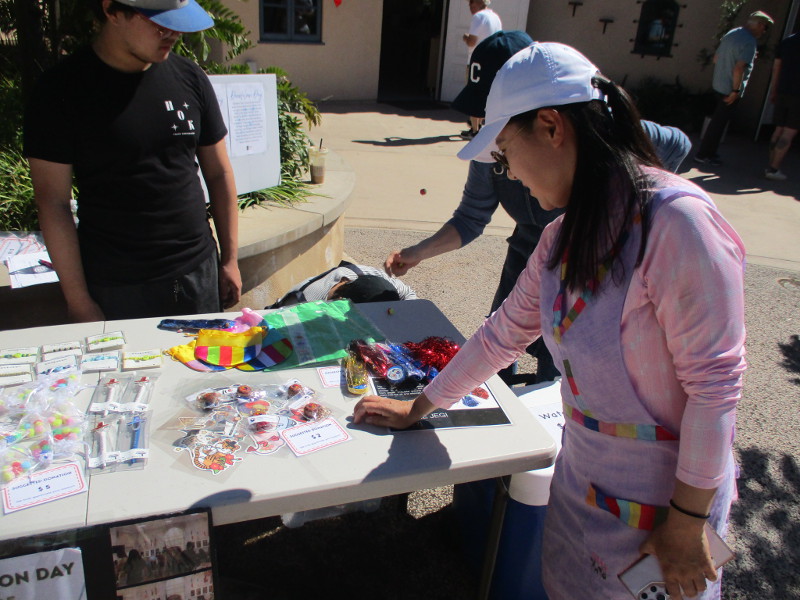
High school youth–the Young Ambassadors of the House of Korea–were demonstrating how to create a traditional hat called a gat, and were making the decorated sugar candy called dalgona, which they offered for a donation. I noticed that visitors could also learn how to create norigae, an accessory made of pendants, cords and tassels worn on the outer jacket of Korean traditional clothing.

Would you like to connect with the House of Korea and support their cultural and educational outreach in San Diego? Go to their website here!

To follow my blog, find the “Follow” box in this website’s sidebar. Or bookmark coolsandiegosights.com and swing on by occasionally!

(If you’re viewing this on a phone, open my website’s sidebar by tapping those three parallel lines at the top of the page.)
Mysterious symbols at SDSU trolley station!

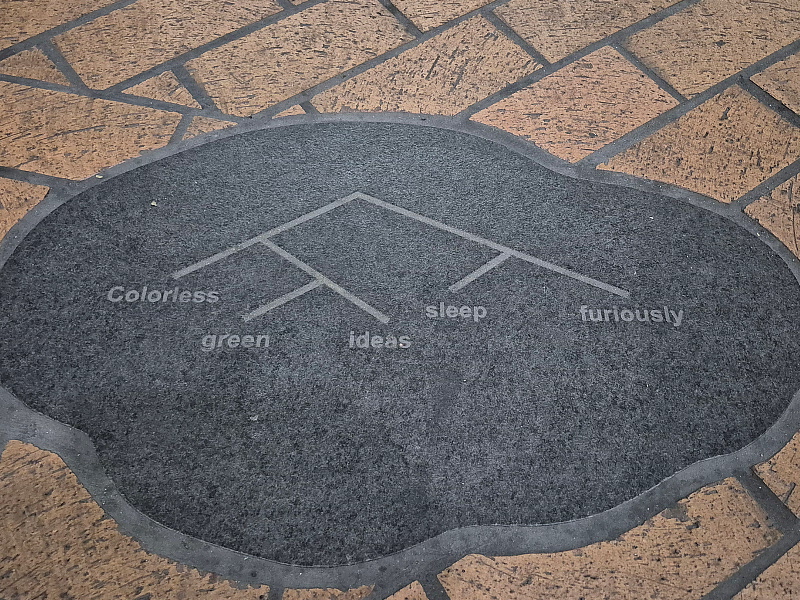
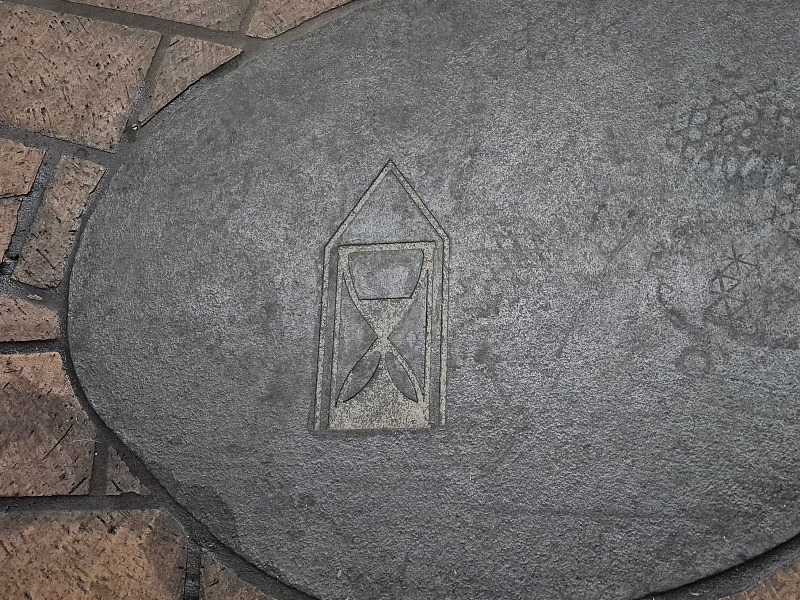
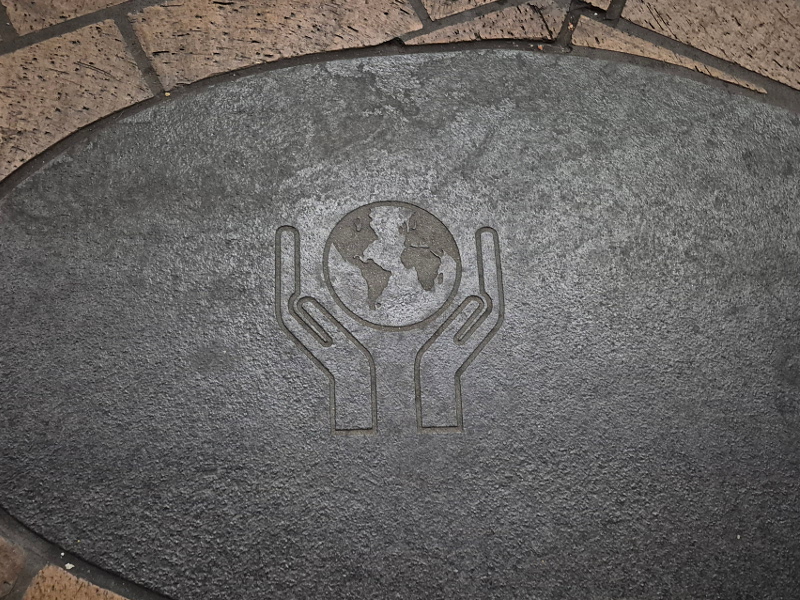
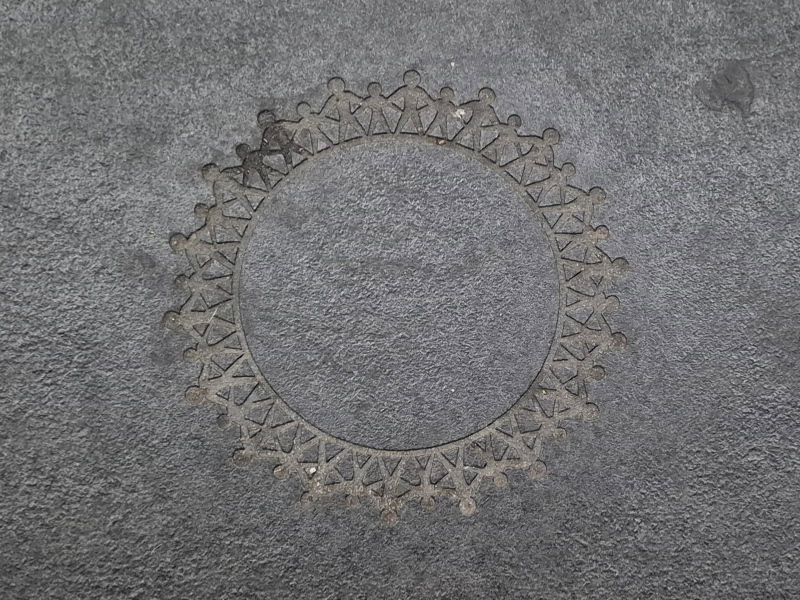
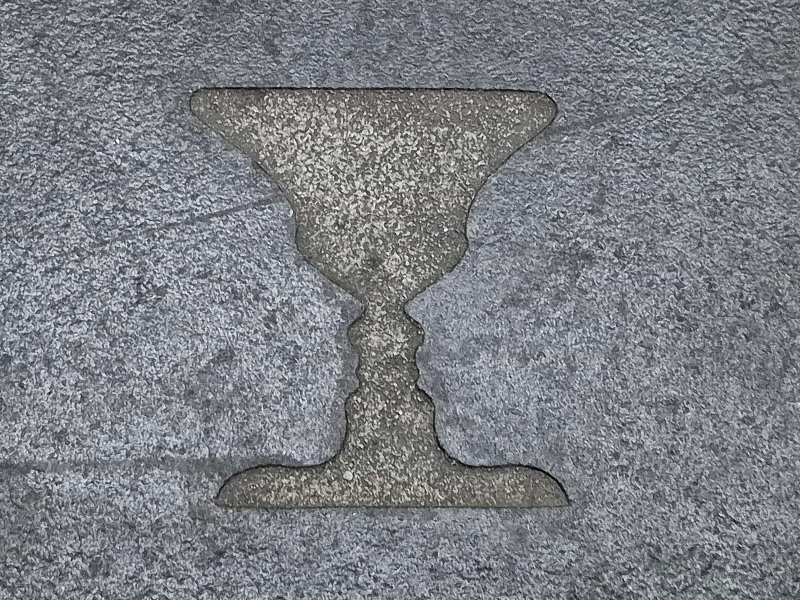
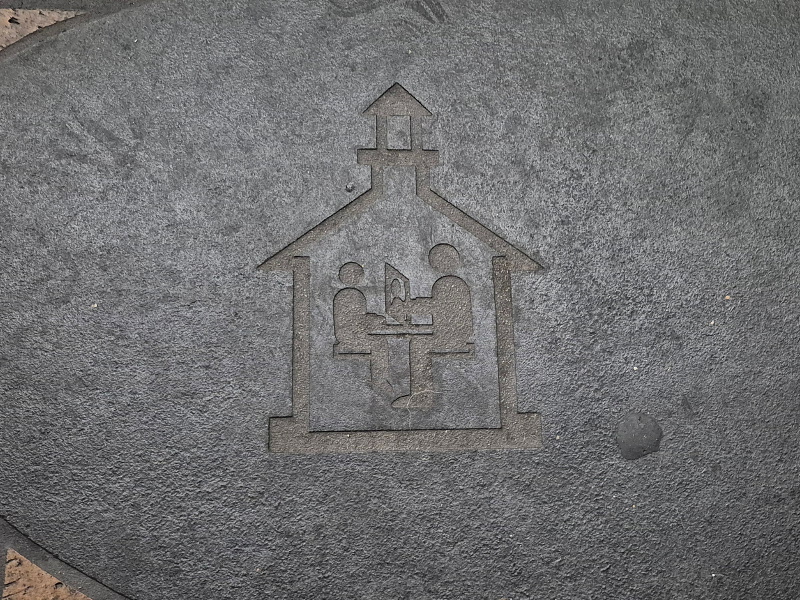
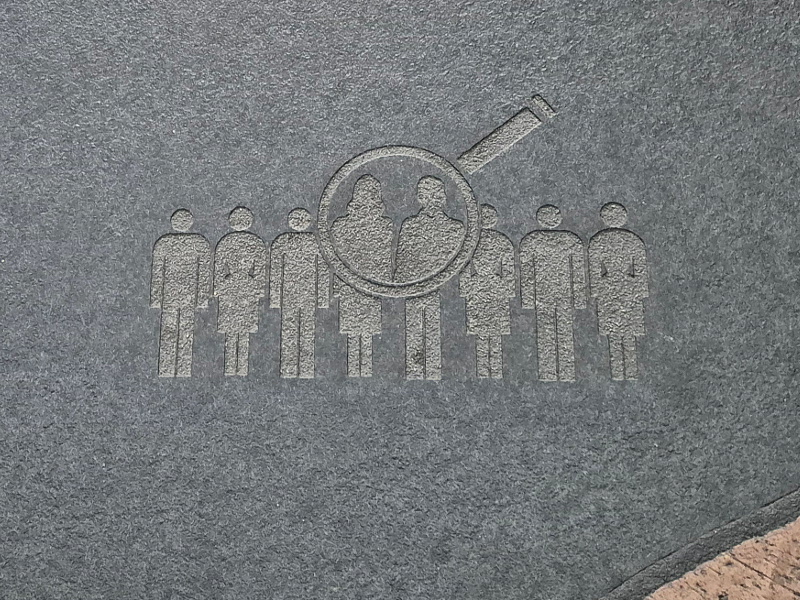
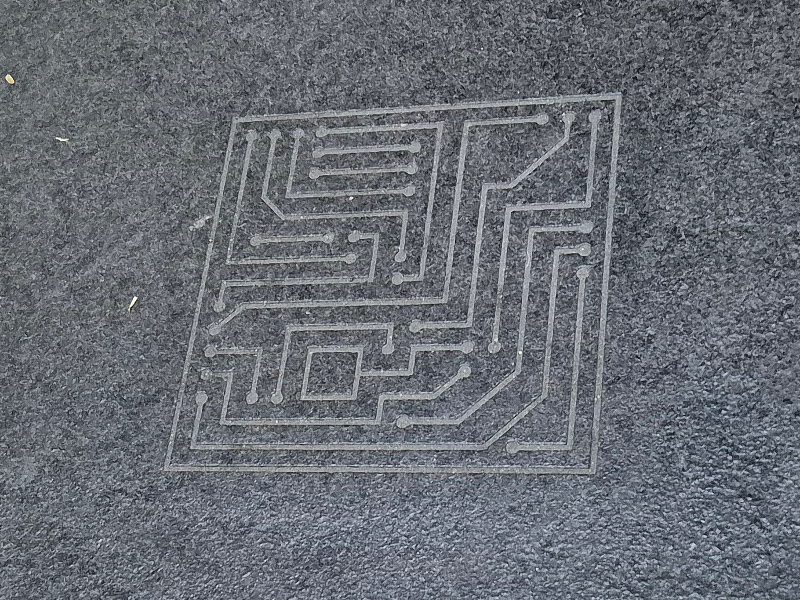
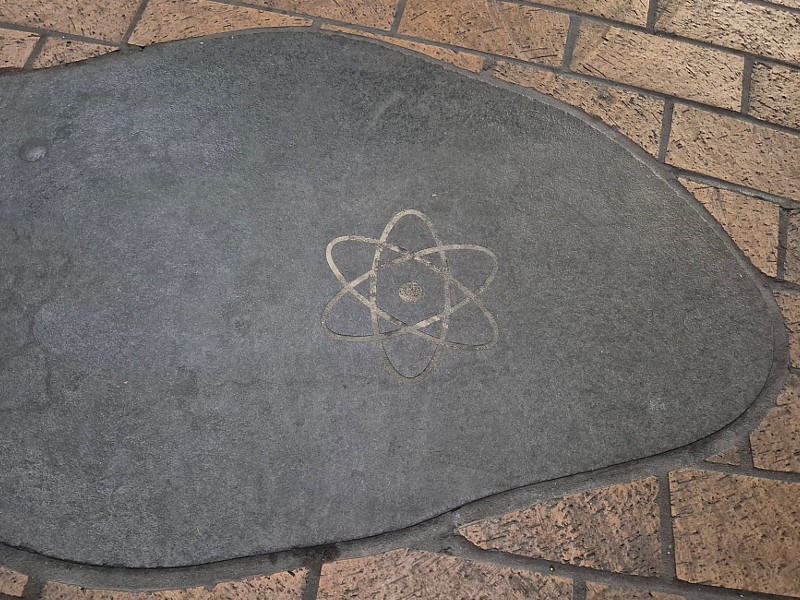
Mysterious symbols and figures can be seen at your feet when you stand on the passenger platform at the SDSU trolley station. Lean over in the dim light and look closely. What are they?

The mystery is solved when you learn these symbols are part of a larger public art installation at the SDSU Transit Center. In 2005, when San Diego’s only underground trolley station first opened, artist Anne Mudge and the Metropolitan Transit System (MTS) debuted the art.

What you’ve discovered at your feet is called Stepping Stones. As this page on Anne Mudge’s website explains: Etched into the surfaces of 60 granite “stepping stones” are symbols of various cultural and academic disciplines found on the SDSU campus. The granite stones interrupt and redirect the linear flow of bricks around them, just as ideas impact the surrounding intellectual and cultural environments.

Visit the above link for descriptions of other works in this art installation, which are visible inside and around the SDSU Transit Center.

Students waiting at the trolley station can step from ideas to microchips to the Earth to people to atoms…

To follow my blog, find the “Follow” box in this website’s sidebar. Or bookmark coolsandiegosights.com and swing on by occasionally!

(If you’re viewing this on a phone, open my website’s sidebar by tapping those three parallel lines at the top of the page.)
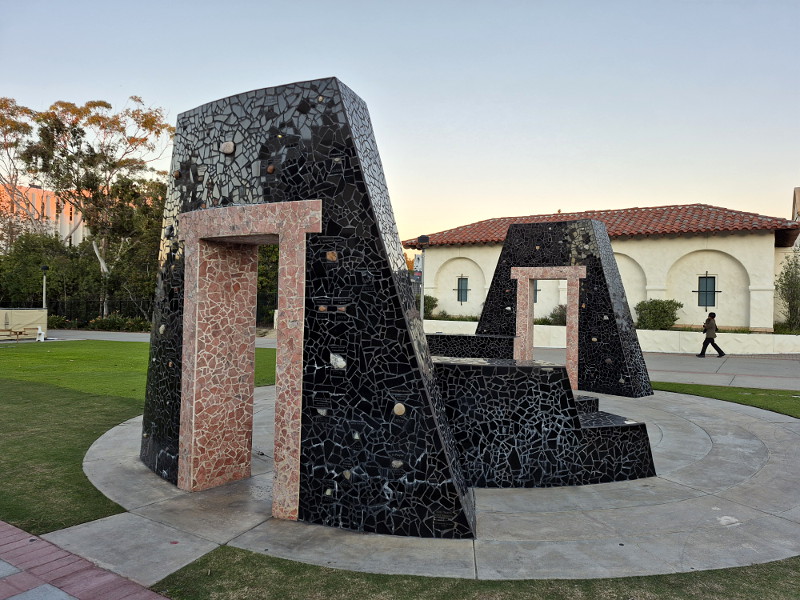
100 Years, 100 Stones monument at SDSU.

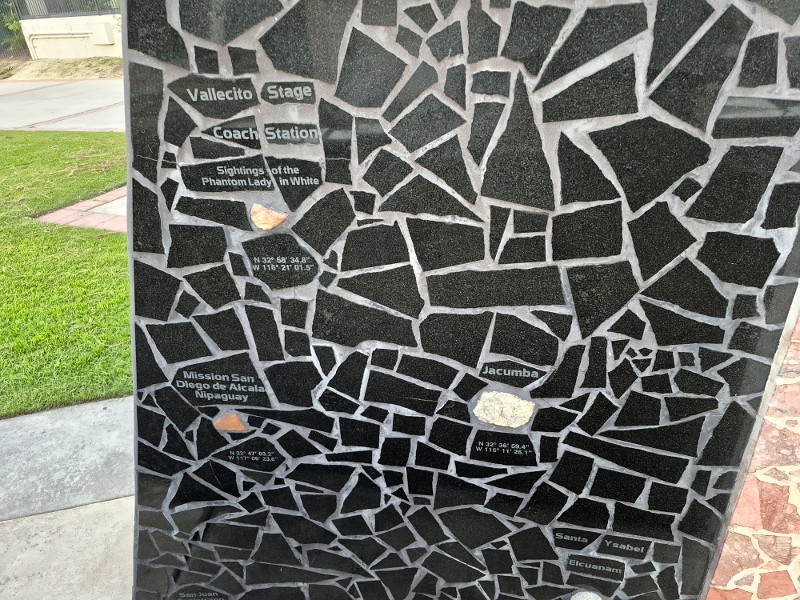
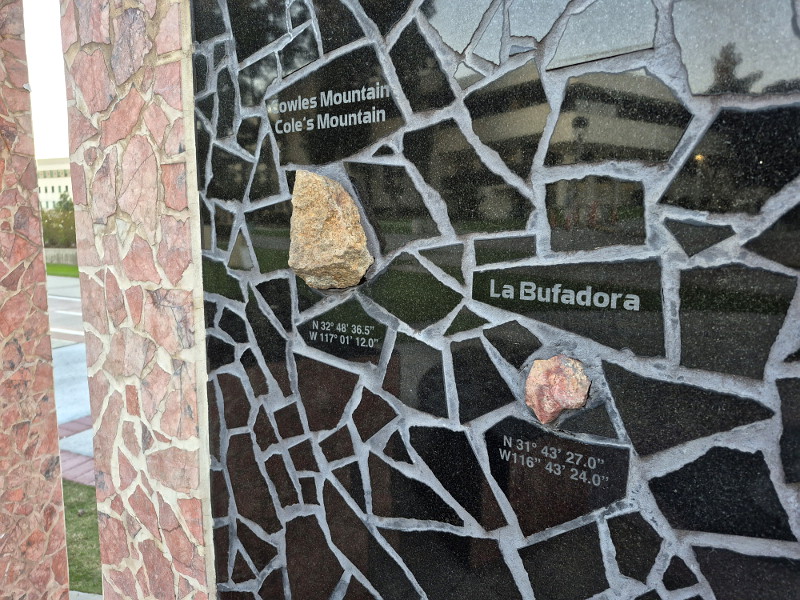
In 1997 the 100 Years, 100 Stones monument debuted at San Diego State University. It was created to celebrate the 100th anniversary of SDSU.

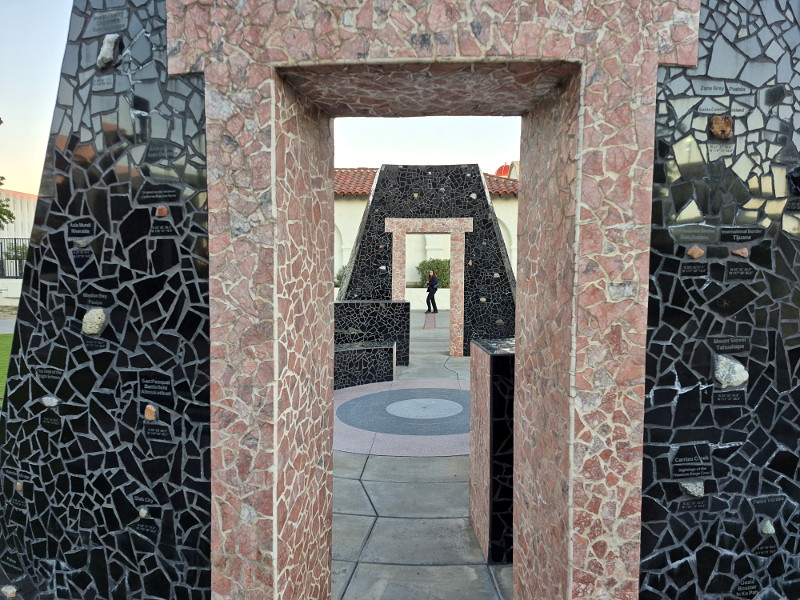
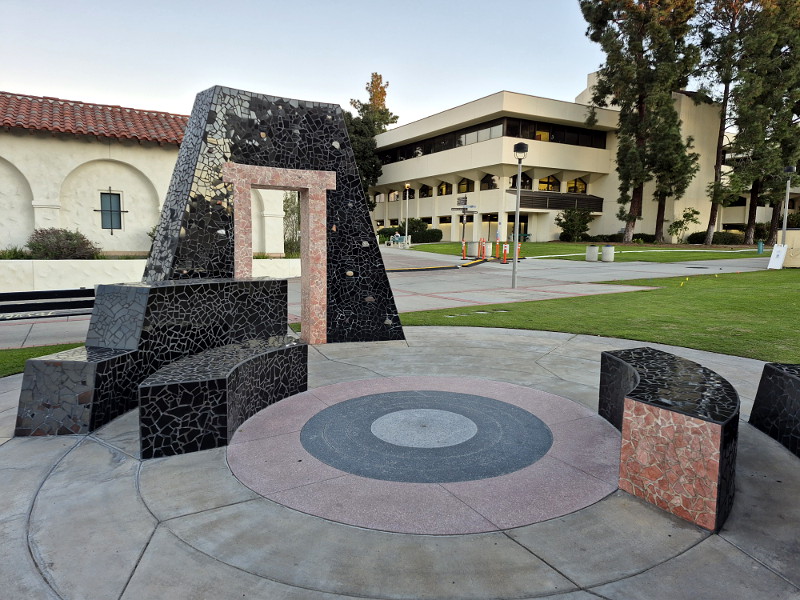
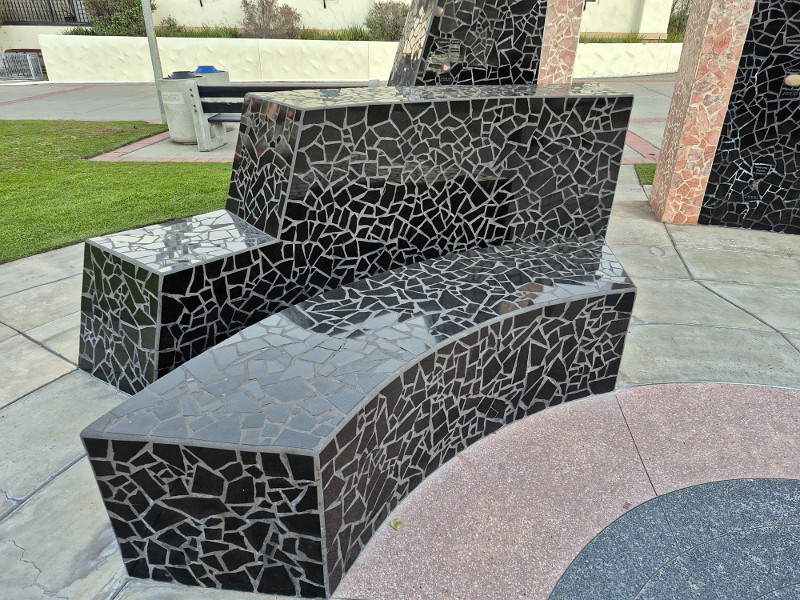
If you’ve ever walked down the campus’ central Campanile Walkway you’ve no doubt seen this unique stone-like sculpture with its two portals. It has an appearance suggestive of ancient temples or ruins.

Those who look closely at the monument will see small rock samples embedded in it, with informative labels. The rocks come from locations all around our region, within a hundred miles of SDSU, including places in Mexico. The art blends culture with geology.

Installation artist Eve Andree Laramee designed 100 Years, 100 Stones. There’s no plaque by this public art with any sort of explanation (that I’ve noticed), so I wonder if students walking past it understand its origin and nature. For years I myself didn’t know. Thank you Google!

To follow my blog, find the “Follow” box in this website’s sidebar. Or bookmark coolsandiegosights.com and swing on by occasionally!

(If you’re viewing this on a phone, open my website’s sidebar by tapping those three parallel lines at the top of the page.)
Celebrating the San Diego Museum of Art centennial!

The San Diego Museum of Art is celebrating its centennial in 2026. First opening in 1926 as the Fine Arts Gallery, the world-class museum has grown and experienced many remarkable moments over the past hundred years.

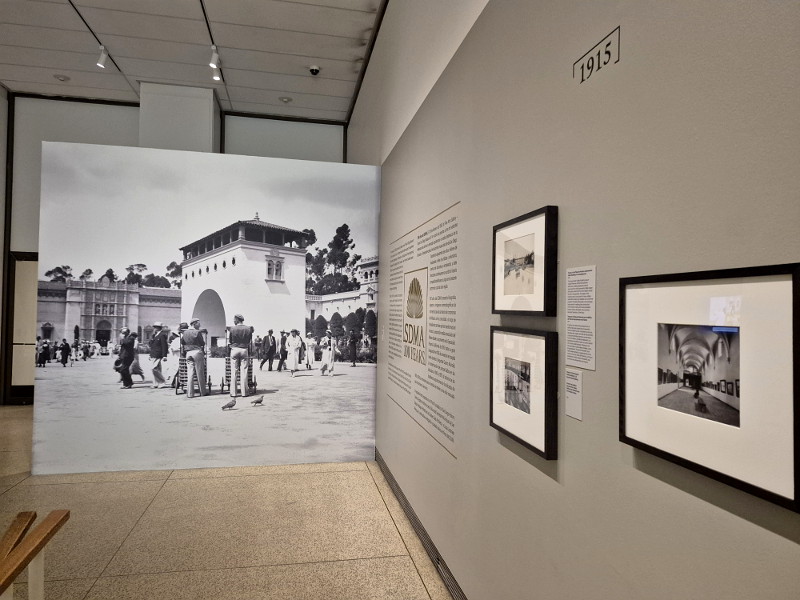
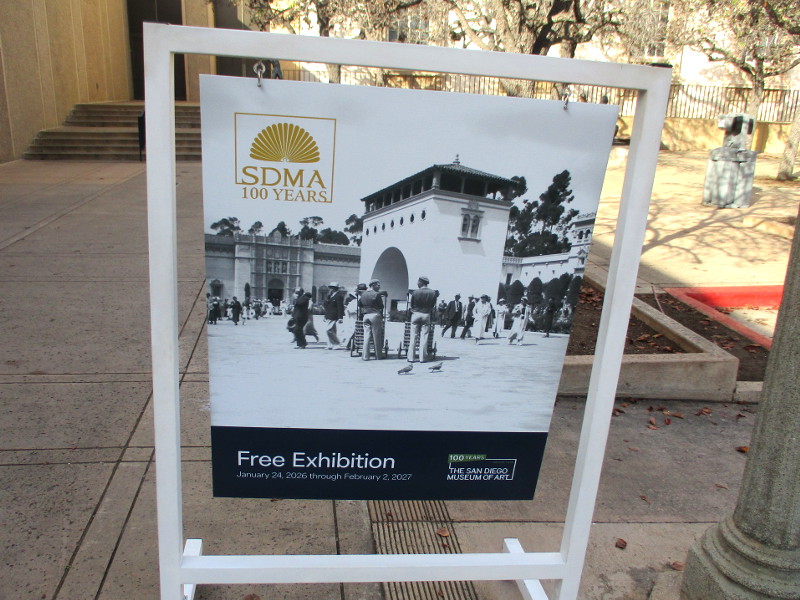
That history is remembered in a free exhibition titled SDMA 100 Years. The exhibit opened yesterday in the museum’s Galleries 14/15, which are accessible to the public through a door at Panama 66 in the museum’s sculpture courtyard.

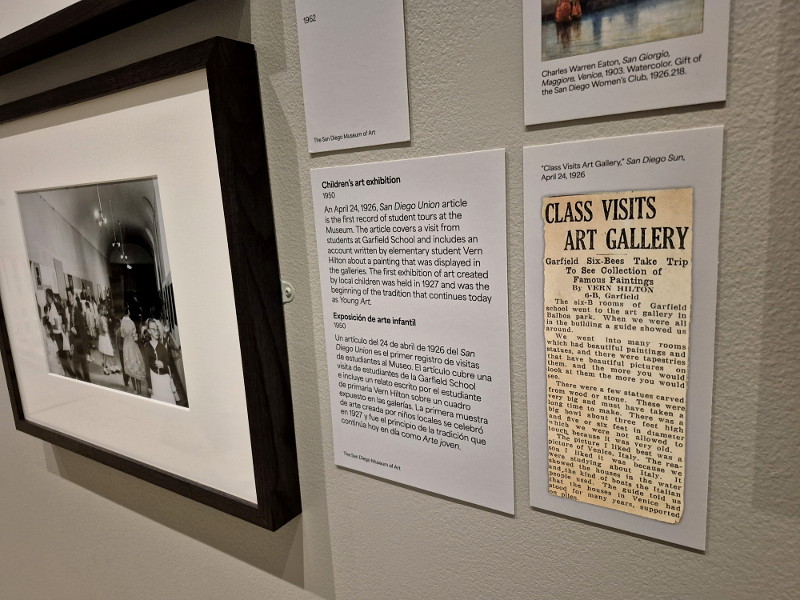
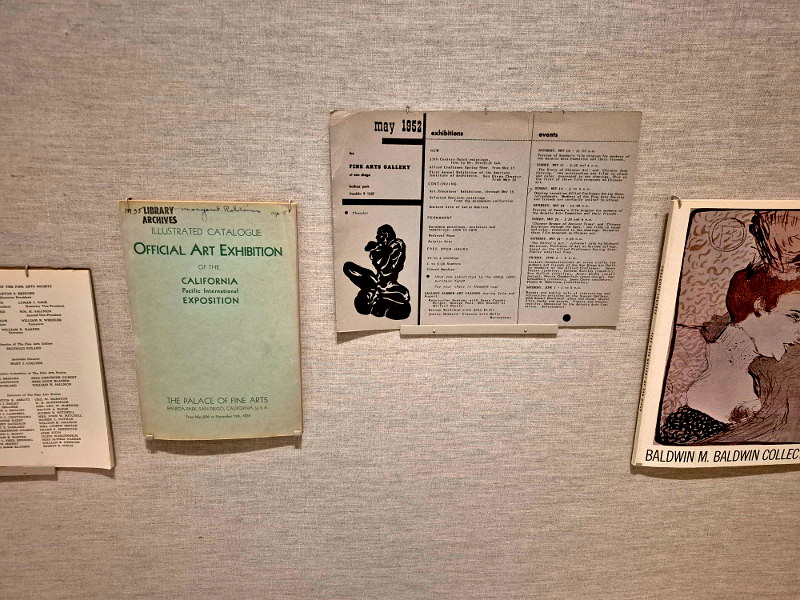
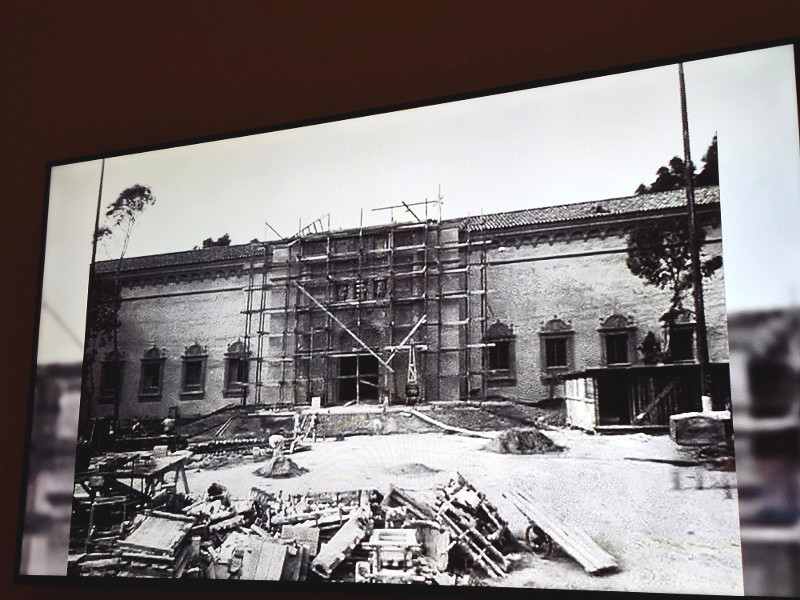
SDMA 100 Years features a timeline of photographs that document the museum’s evolution, from the building’s construction in Balboa Park right up to the present day. There’s also a short documentary video and a display case full of ephemera.

Visitors can observe how the San Diego Museum of Art had its origins in the 1915 Panama-California Exposition, had its successful grand opening in 1926, served as a naval hospital during World War II, and how west and east wings were added for significant expansions.

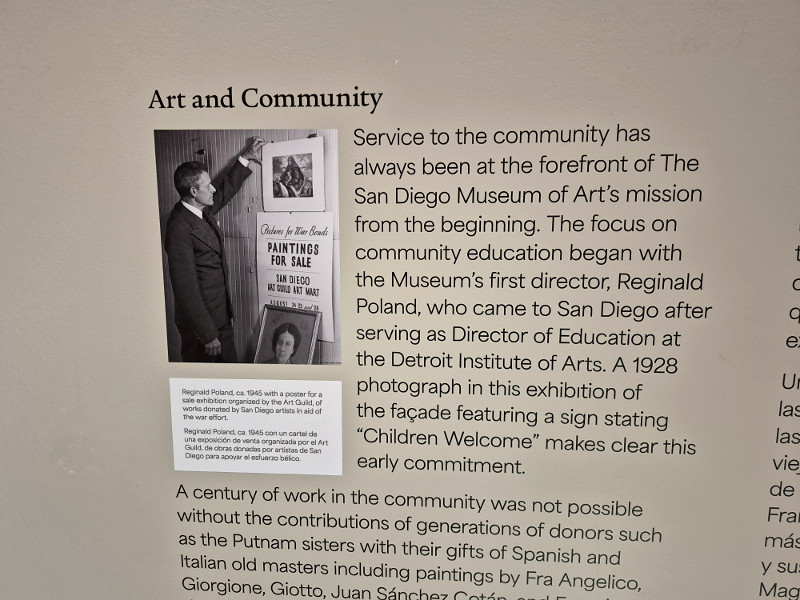
You’ll see photos showing museum contributions to art education and the San Diego community over the years. You’ll see renowned artists who’ve contributed their work, and relive major exhibitions. You’ll envision what the museum plans for their future, too!

You are invited to contribute to the exhibition! Anyone can submit their personal memories and photographs of the museum. To participate, look for the link at the bottom of this webpage!

SDMA 100 Years will be displayed through 2026, right up to February 2, 2027.

To follow my blog, find the “Follow” box in this website’s sidebar. Or bookmark coolsandiegosights.com and swing on by occasionally!

(If you’re viewing this on a phone, open my website’s sidebar by tapping those three parallel lines at the top of the page.)
Neighborhood eateries painted by San Diego artist!

Painting of Pho Xpress and Stout Public House on Sixth Avenue in downtown San Diego. By artist James Watts.

I love these fanciful paintings of neighborhood eateries! They were created by San Diego artist James Watts (@jewattso) as part of his ongoing 100 Paintings project.

I happened to walk down the sidewalk in front of his downtown studio today and he was there outside in the sunshine with his two cats, working with a smile on painting #93. Read about his 100 Paintings project here.

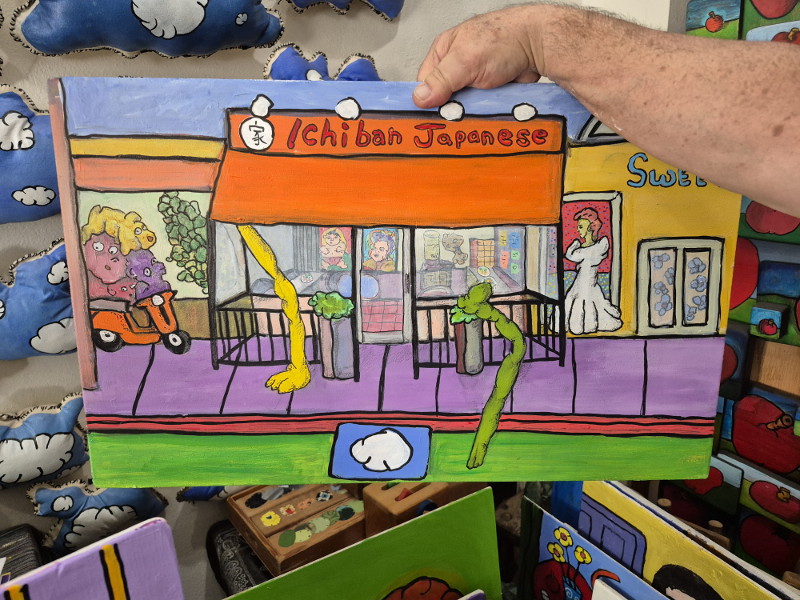
I ventured into his amazing studio, and he showed me some of his latest work. Among many great new paintings, he showed me these three colorful pieces. You might recognize the restaurants they depict!

James Watts is a creative dynamo who is a true San Diego treasure. He’s a super cool friendly downtown neighbor, too!

Read the photo captions. (More on his paintings in my next blog post!)

Painting of Ichiban Sushi & Japanese Cuisine on University Avenue in Hillcrest. By artist James Watts.
Painting of Las Cuatro Milpas on Logan Avenue in Barrio Logan, now permanently closed after 92 years. By artist James Watts.

To follow my blog, find the “Follow” box in this website’s sidebar. Or bookmark coolsandiegosights.com and swing on by occasionally!

(If you’re viewing this on a phone, open my website’s sidebar by tapping those three parallel lines at the top of the page.)
KPBS to debut new San Diego music series!

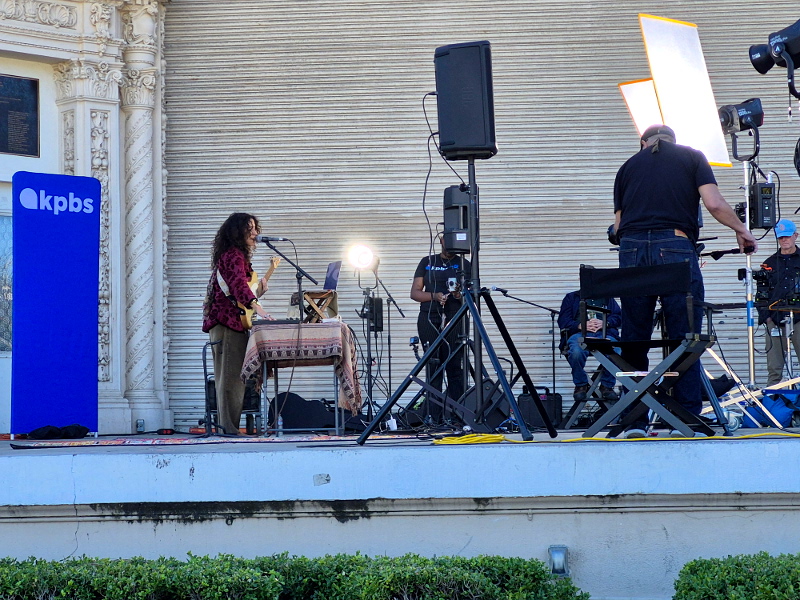
A KPBS film crew was in Balboa Park this afternoon. Why? Up on the stage of the Spreckels Organ Pavilion, three San Diego musicians were performing for a series now in development by KPBS!

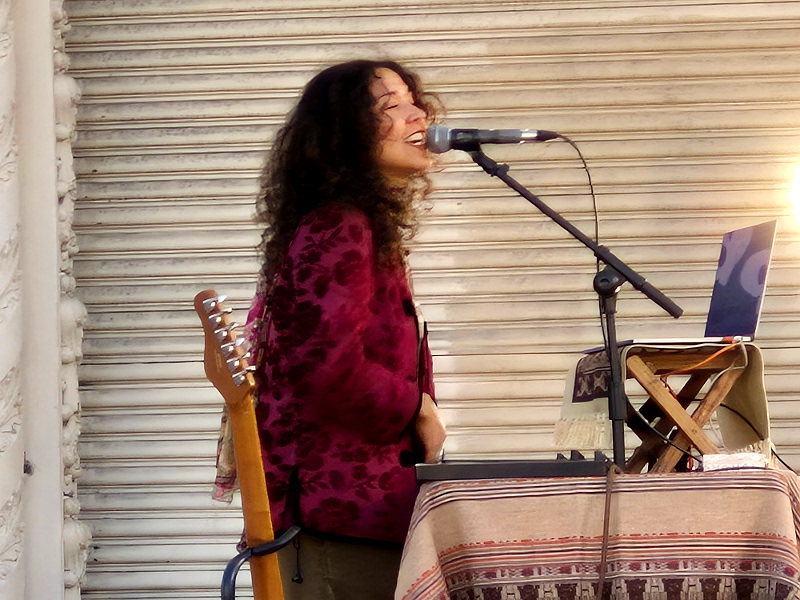
The local musicians were Divina Jasso, James Spaite and Shua. I listened to the first two. They had amazing voices. These photographs show Divina Jasso.

I was told that the music series, whose official name is not yet determined, will be available on the podcast The Finest. Here’s the link to The Finest. Videos of these performances will also be available on YouTube and elsewhere in the future.

Right now, the nascent music series is operating a bit like a pop-up. Today’s performance was unannounced. The audience in Balboa Park simply walked up–like me!

Very cool!

To follow my blog, find the “Follow” box in this website’s sidebar. Or bookmark coolsandiegosights.com and swing on by occasionally!

(If you’re viewing this on a phone, open my website’s sidebar by tapping those three parallel lines at the top of the page.)