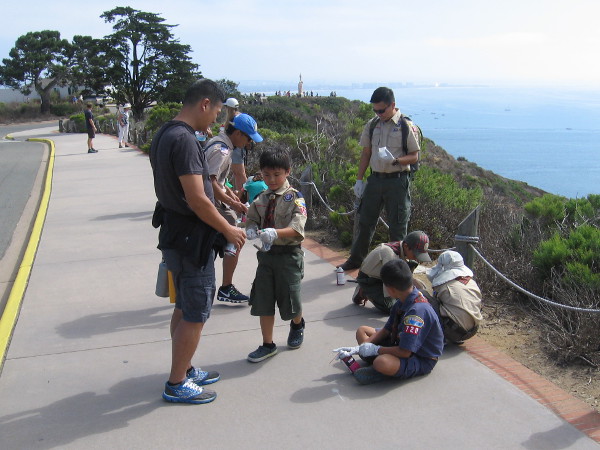
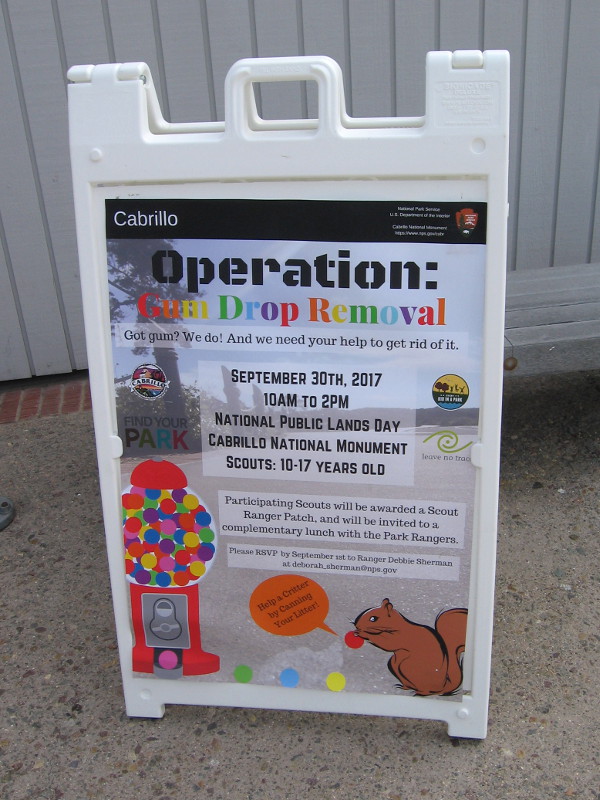
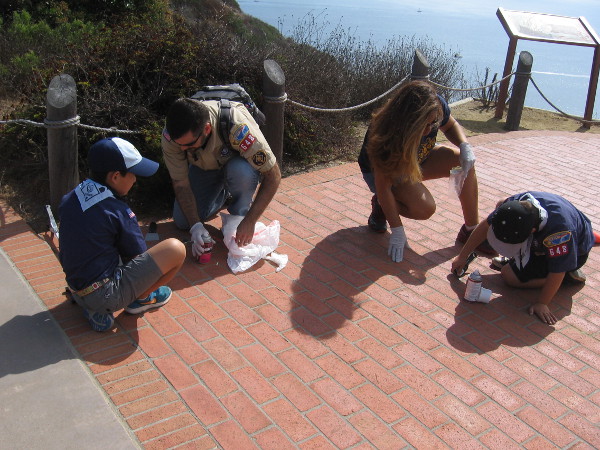
Many generous Boy and Girl Scouts volunteered to beautify Cabrillo National Monument during Operation Gum Drop Removal!
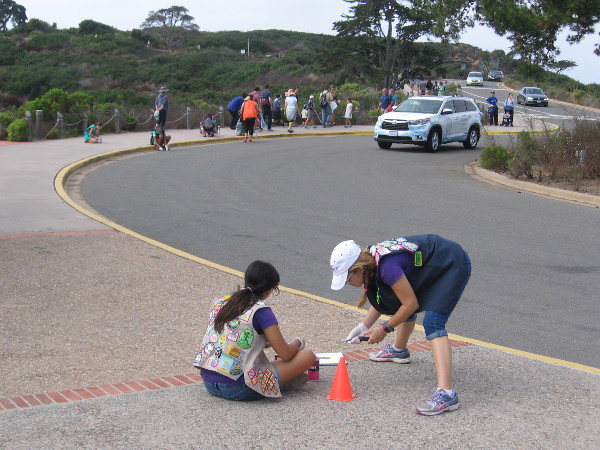
I noticed during my visit to Cabrillo National Monument today that troops of Boy and Girl Scouts were busy around the park cleaning up chewing gum and other trash!
This very cool volunteering event was part of National Public Lands Day. It was also an opportunity for Scouts to earn special badges and enjoy a free lunch with park rangers!
Wow! Great job Scouts! Your positive outlook and dedication to community service has made San Diego even more beautiful! So here’s a big Thank You!
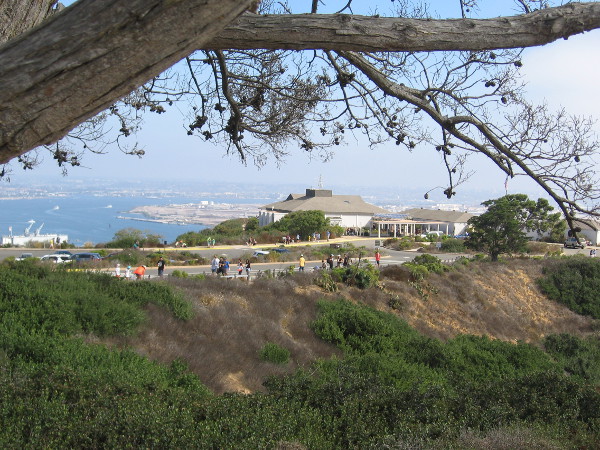
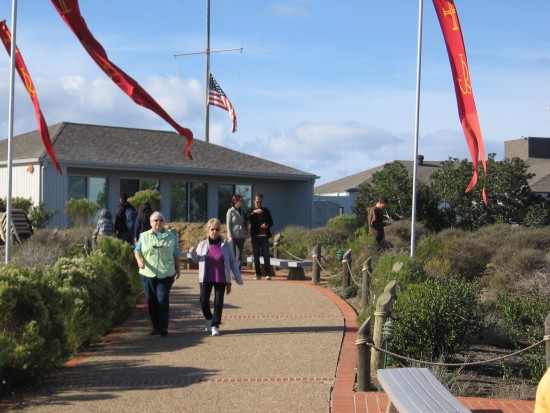
Scouts helping to remove gum and trash were awarded a Scout Ranger Patch, and enjoyed a complimentary lunch with Park Rangers! How cool is that!View of Cabrillo National Monument’s Visitor Center from afar. I could see Scouts working hard throughout the park!
…
I live in downtown San Diego and love to walk around with my camera! You can follow Cool San Diego Sights via Facebook or Twitter!
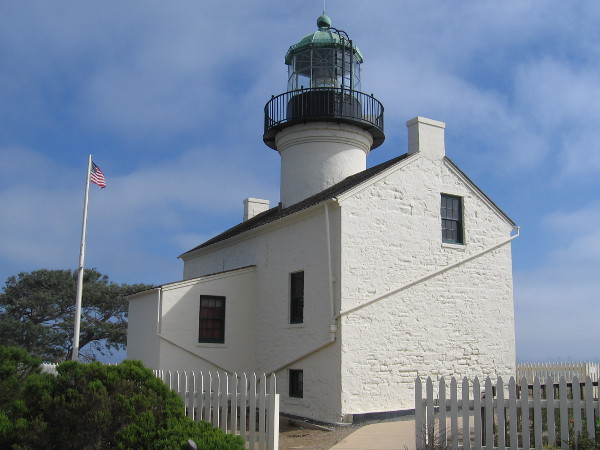
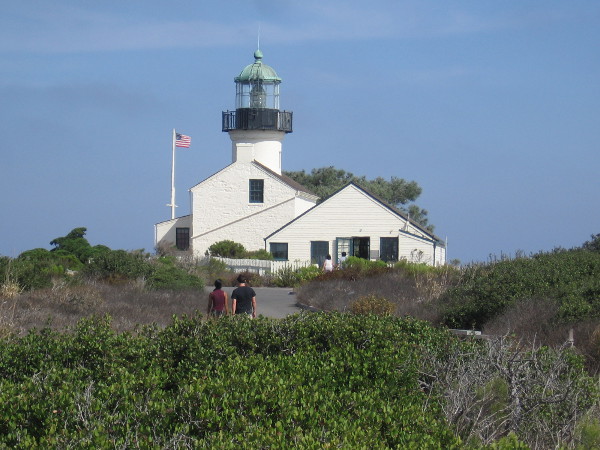
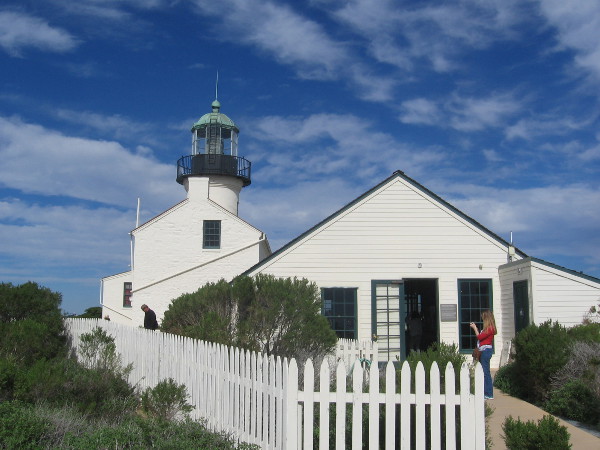
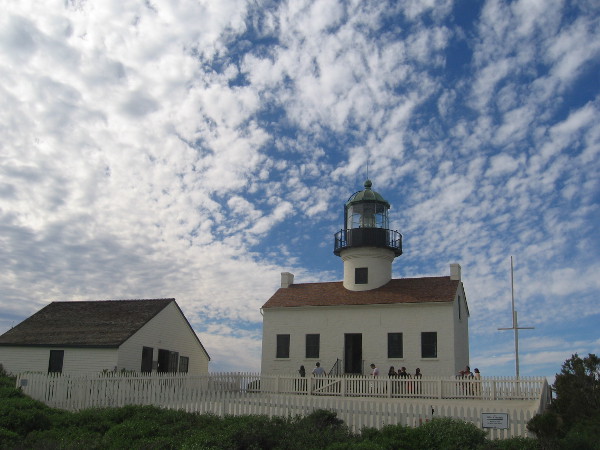
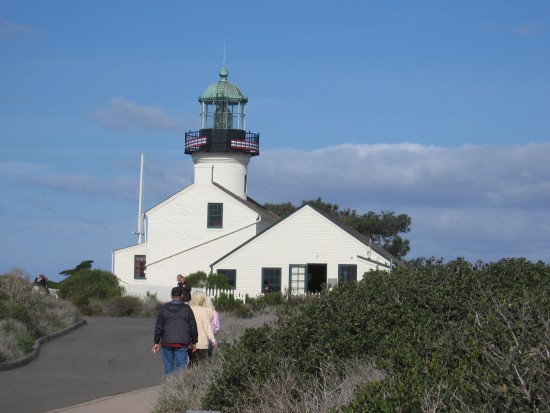
The beautiful Old Point Loma Lighthouse and the nearby Assistant Keepers Quarters building at Cabrillo National Monument.
I’ve visited Cabrillo National Monument many times over the years. I’ve blogged about it on several occasions. It’s one of the most wonderful places in San Diego.
Today, September 30, is National Public Lands Day, so admission to Cabrillo National Monument was free all day.
I grabbed my camera, jumped into my car and drove this morning to the tip of the Point Loma peninsula. Once again, I wanted to enjoy some amazing views and a pleasant walk above the Pacific Ocean and San Diego Bay. Most of my time was spent around the Old Point Loma Lighthouse.
To see and learn more about the lighthouse, including its interior and the adjacent museum, and to enjoy other fascinating aspects of Cabrillo National Monument, please feel free to explore Cool San Diego Sights.
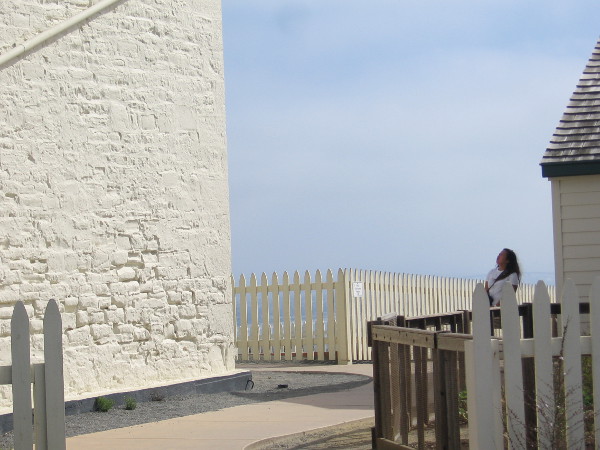
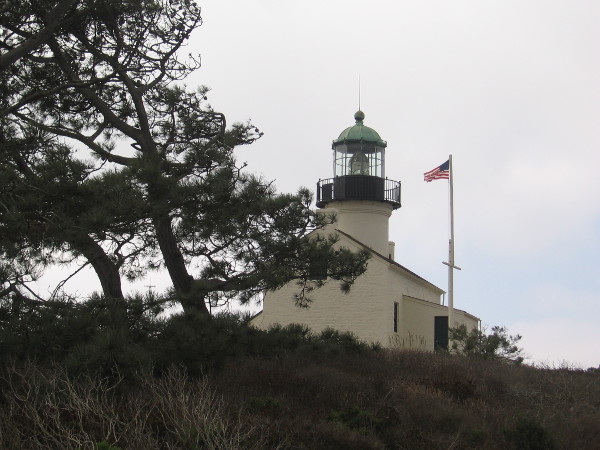
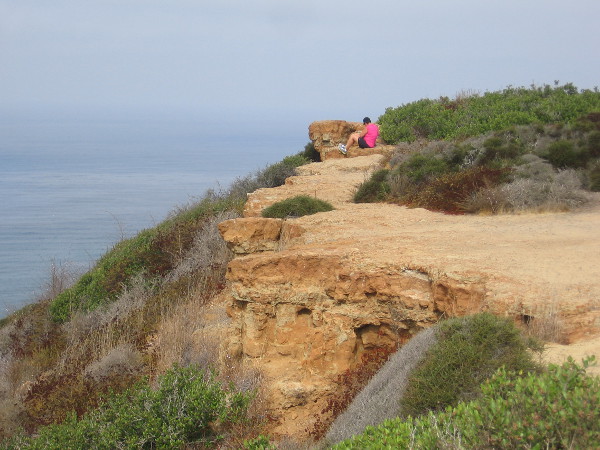
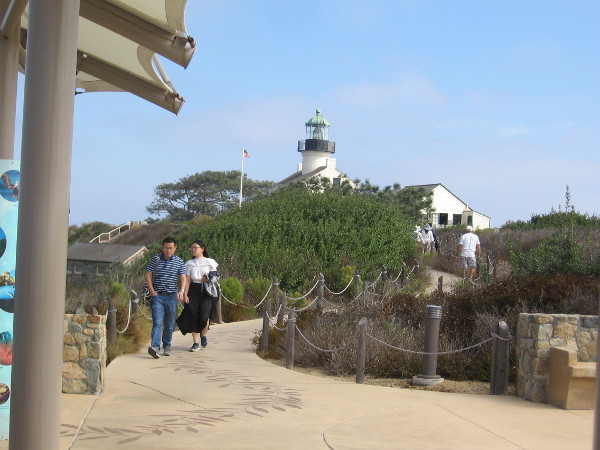
The historic Old Point Loma Lighthouse is a major attraction at Cabrillo National Monument in San Diego.Visitor to Cabrillo National Monument looks up at the lighthouse.Built in 1855 at the end of the Point Loma peninsula, above the entrance to San Diego Bay, the old lighthouse used to guide sailors to safety with a powerful fresnel lens.Walking around the old lighthouse is a wonderful experience, with amazing views in all directions.The cluster of trees near the Old Point Loma Lighthouse are rare Torrey pines, which are native to this region.Walking along the cliffside trail north of the lighthouse.Someone sits high above the blue Pacific Ocean enjoying the cool breeze and natural beauty.South of the lighthouse, people walk toward the gray whale migration overlook.Visitors to Cabrillo National Monument scan the watery horizon for ships and whales.A park ranger and volunteers were removing non-native plants among dry stalks of California sunflower and buckwheat. Invasive species can crowd out native species.People approach the handsome lighthouse from the south.Photo of Old Point Loma Lighthouse, the small museum beside it and the large Rain Catchment Basin.Visitors to San Diego are strongly encouraged to enjoy some time at Cabrillo National Monument. It’s a very special place, with many paths to walk.
…
I live in downtown San Diego and love to walk around with my camera! You can follow Cool San Diego Sights via Facebook or Twitter!
You can easily explore Cool San Diego Sights by using the search box on my blog’s sidebar. Or click a tag! There are thousands upon thousands of fun photos for you to share and enjoy!
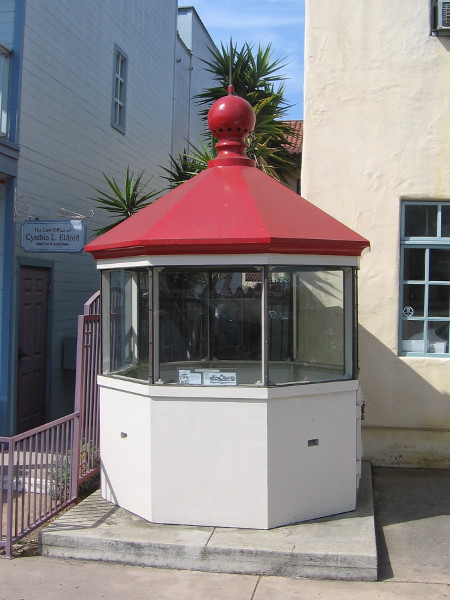
The top section of a historically important lighthouse now stands on a sidewalk in Old Town San Diego!
A lighthouse that once guided ships into San Diego Bay now stands on an Old Town sidewalk? How strange is that?
Well, not an entire lighthouse–just the lantern room of the 1890 Ballast Point Light Station!
The other day while walking down Congress Street, a few steps southeast of Harney Street, I paused to more carefully examine this mystery. (I’ve driven past the kiosk-like structure often, without really giving it a second thought.)
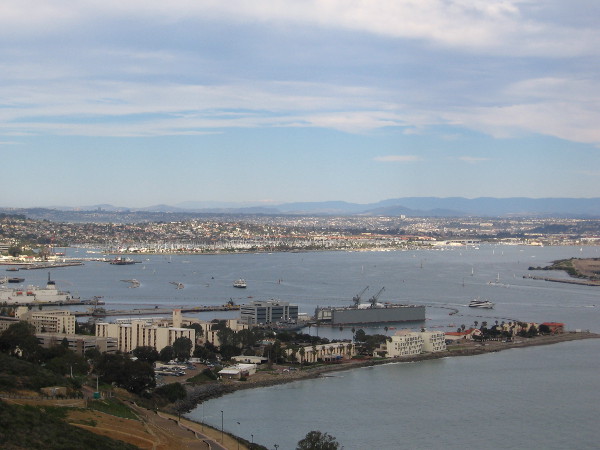
First, you should note Ballast Point is about 6 miles southwest of Old Town. The spit of land juts down into San Diego Bay from Point Loma; it’s where tall ships used to load ballast stones for their return trip around Cape Horn to the East Coast. Today it is part of Naval Base Point Loma.
So how did this top section of Ballast Point’s historic lighthouse end up on an Old Town sidewalk?
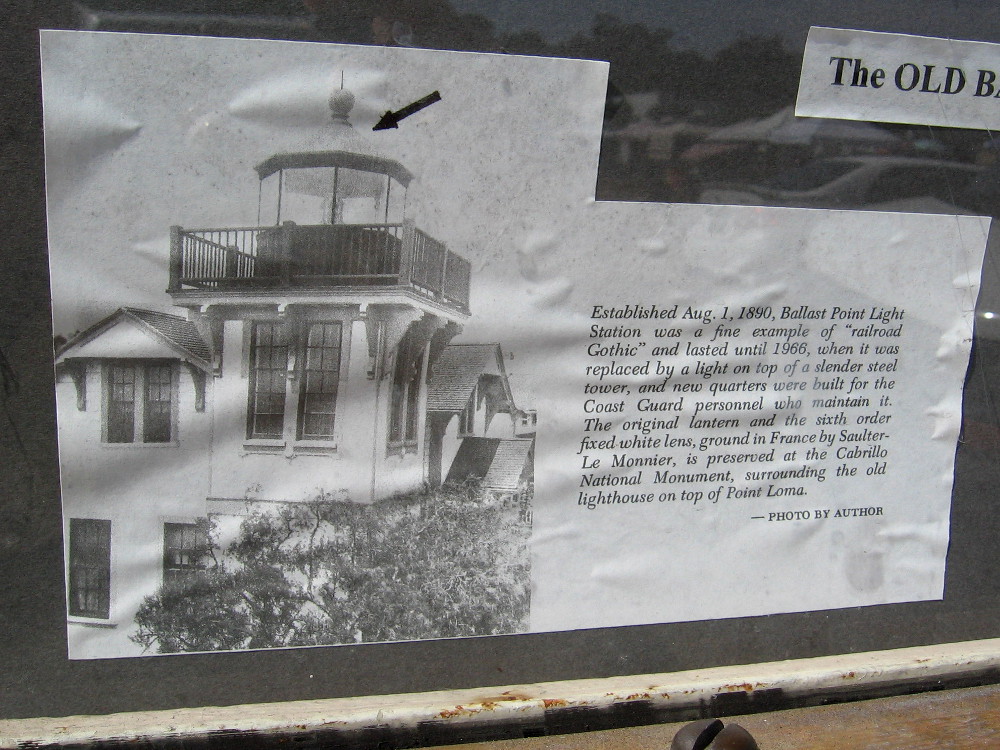
Some interesting photos behind a glass pane provided me with a few clues. The Ballast Point Light Station was built in 1890 and eventually dismantled in 1960. (Click the images and they will expand so you can read much more.)
After doing a little research, I learned the lantern room was found in 1998 by the owner of an Old Town nautical antiques store–West Sea Company–in a classified ad. At the time the Ballast Point lantern room was located at someone’s Bonita residence! Purchased and transported by flatbed truck to Old Town, it was placed on a cement pad near West Sea Company–and here it “mysteriously” remains today!
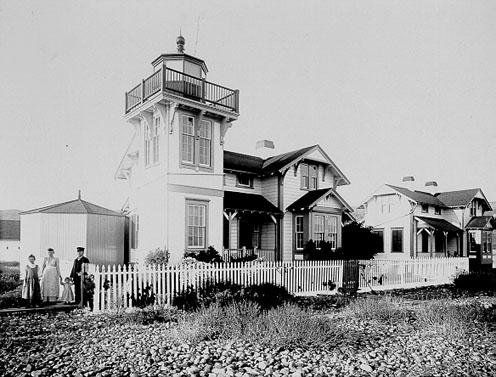
The 1890 Ballast Point Light Station was an example of Railroad Gothic. Its sixth order lens can be seen today at Cabrillo National Monument, in a museum beside the Old Point Loma Lighthouse.Historical photo and some words explain the light at Ballast Point. It guided sailors past Middle Ground Shoal and into San Diego’s harbor.A public domain photo of the Ballast Point Light Station, courtesy Wikimedia Commons.This lantern room housed a light that guided ships into San Diego Bay. It can now be seen on Congress Street in Old Town!
…
I live in downtown San Diego and love to walk around with my camera! You can follow Cool San Diego Sights via Facebook or Twitter!
You can easily explore Cool San Diego Sights by using the search box on my blog’s sidebar. Or click a tag! There are thousands upon thousands of fun photos for you to share and enjoy!
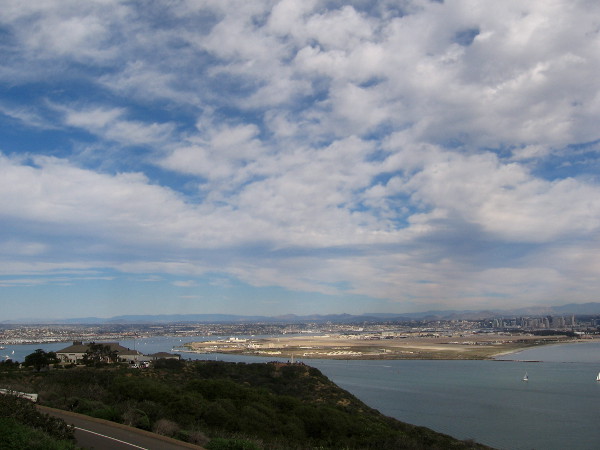
People on patio behind Visitor Center take in a breathtaking panorama.View from Cabrillo National Monument Visitor Center scenic overlook. Downtown San Diego is visible to the east.
Last Sunday, after I checked out the new Yankee Baleeiros whaling exhibit in the Visitor Center, I wandered about Cabrillo National Monument and took in the many beautiful views. My camera was very busy!
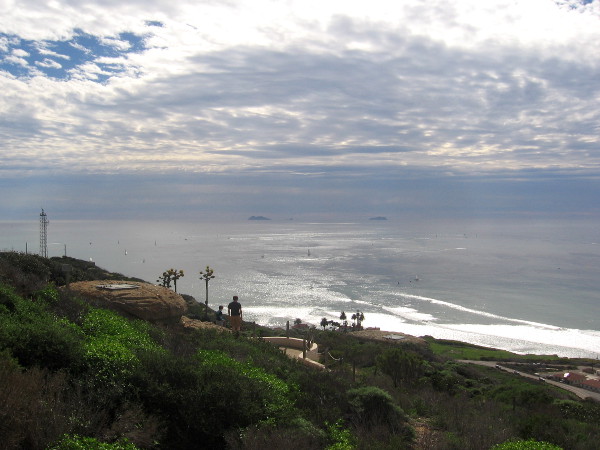
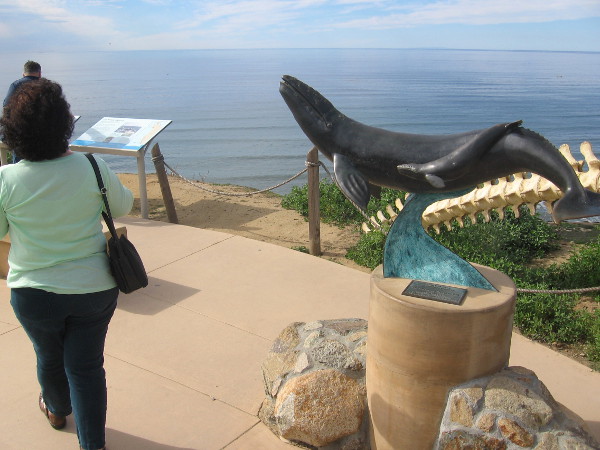
Tall ship America sails south down the channel out of the bay and into the open ocean.Looking out over San Diego Bay. Shelter Island lies in the distance beyond Naval Base Point Loma.One of many interesting signs. This one shows typical commercial and pleasure craft seen on the water below.Statue of explorer Juan Rodriguez Cabrillo at a popular lookout spot.Naval Air Station North Island seems to glow beyond the Cabrillo National Monument Visitor Center building.I took lots of photographs while climbing up through native coastal vegetation toward the beautiful Old Point Loma Lighthouse.Looking southwest over two World War II bunkers toward the distant Coronado Islands, which are a part of Tijuana, Mexico. The new lighthouse is down by the water.People gaze out at the beautiful sky and ocean from a popular whale-watching point.Gray whales migrate past Cabrillo National Monument from December through April. Spouts are often seen from here!Sculpture of a gray whale and a cetacean’s vertebrae along walkway that leads from the old lighthouse.Looking northwest toward the tidepools below and Pacific Ocean breakers.
…
To enjoy future posts, you can “like” Cool San Diego Sights on Facebook or follow me on Twitter.
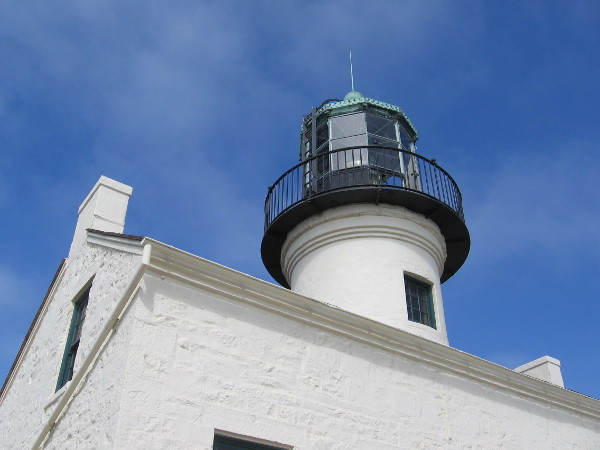
Looking up at the Old Point Loma Lighthouse in Cabrillo National Monument.
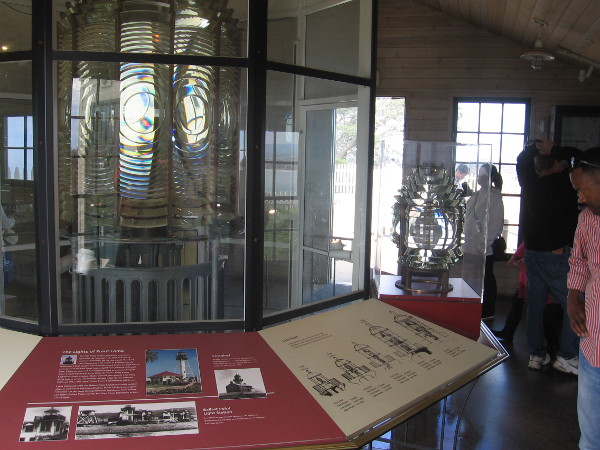
Everyone likes to explore the Old Point Loma Lighthouse. You can climb up the winding staircase and peer into several interesting rooms where the lighthouse keeper and his family lived. But the small museum in the nearby assistant keeper’s quarters contains the true marvels of science and art. Come inside and let us have a quick look!
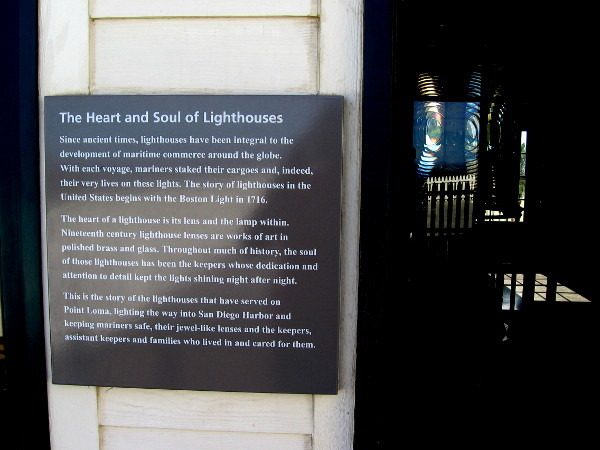
The assistant keeper’s quarters next to the lighthouse today contains a small museum.Sign outside lighthouse shows huge Fresnel lens which guided ships with focused light 400 feet above sea level.Sign at entrance to museum. The heart of a lighthouse is the lens and lamp. 19th century lenses are works of art made of polished brass and glass.
The highly polished Fresnel lenses utilized by lighthouses are beautiful objects. They refract and reflect light, creating prismatic colors when viewed from certain angles. It’s almost a miracle that a small flame in a lamp can be magnified to the extent that ships far out at sea can easily see it and be guided to safety. Light intensified by lenses in this museum could be seen 18 to 24 miles away!
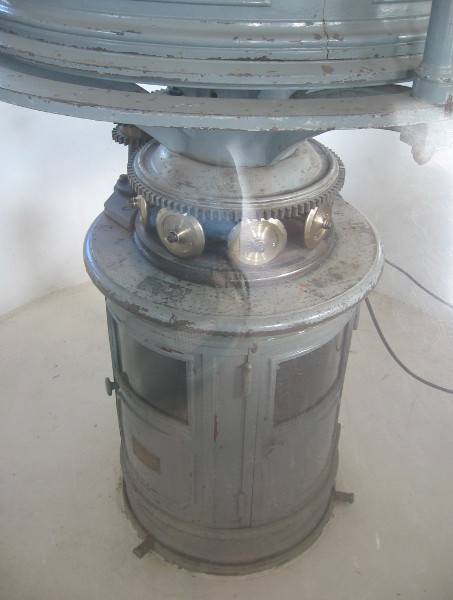
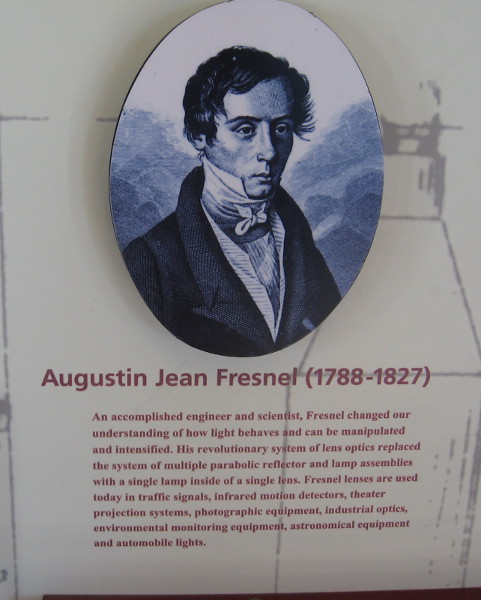
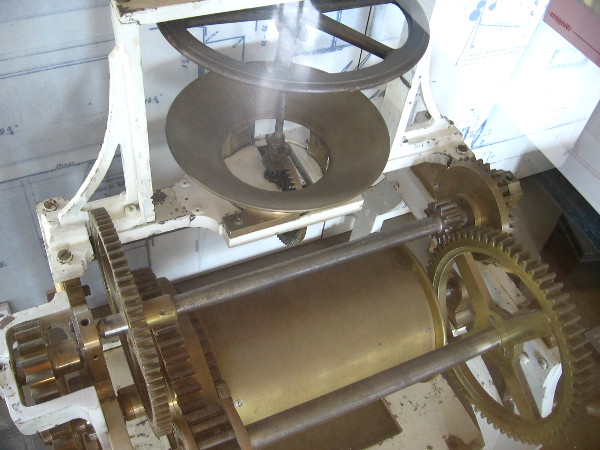
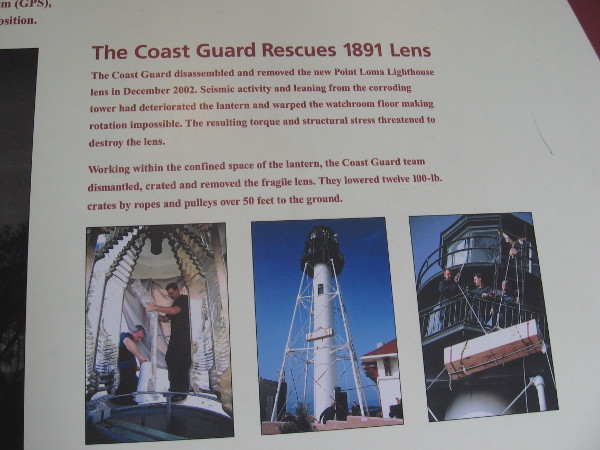
This 3rd Order Fresnel lens was used by the New Point Loma Lighthouse, built in 1891 down by the water.An optical wonder, this huge lens is an amazing, highly polished light bender.Diagram shows how a complex Fresnel lens functions.The base of the heavy Fresnel lens with chariot wheels visible.There are different orders of size, as illustrated in this display.Augustin Jean Fresnel (1788-1827) was an accomplished engineer and scientist. Fresnel lenses are used in many modern applications today.Small museum by Old Point Loma Lighthouse contains various very cool exhibits.This small 5th Order lens lighted the Ballast Point Lighthouse from 1890 to 1960.Log book of daily expenditures for oil, wicks and chimneys.This clockwork of gears slowly turned the light above.The keeper’s service box contained cleaning supplies and delicate tools for maintaining the lamp.The Coast Guard removed this large Fresnel lens from the New Point Loma Lighthouse in 2002.Looking at the iconic Old Point Loma Lighthouse and small museum beside it.
…
To enjoy future posts, you can “like” Cool San Diego Sights on Facebook or follow me on Twitter.
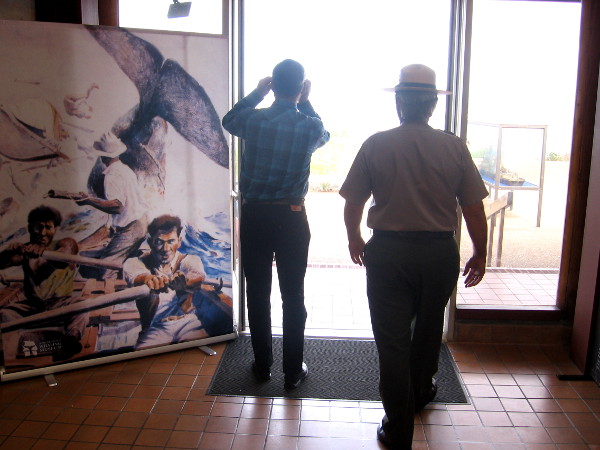
Looking out the rear of the Cabrillo National Monument Visitor Center on a beautiful day.
I saw on the morning news that an important exhibit was opening today in the Cabrillo National Monument Visitor Center. I haven’t been up that way since I blogged about the park’s centennial, so I figured I’d go check things out!
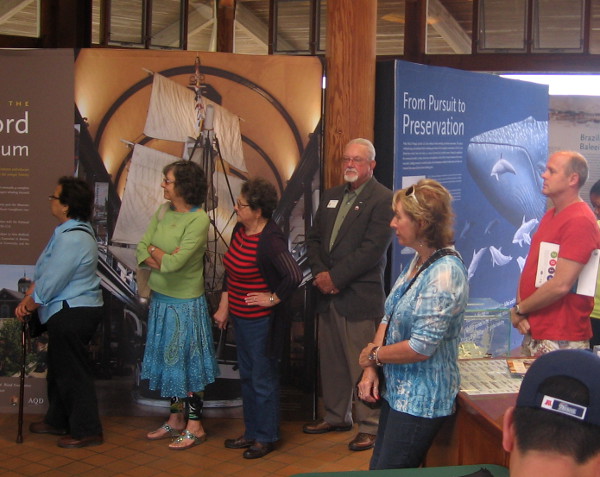
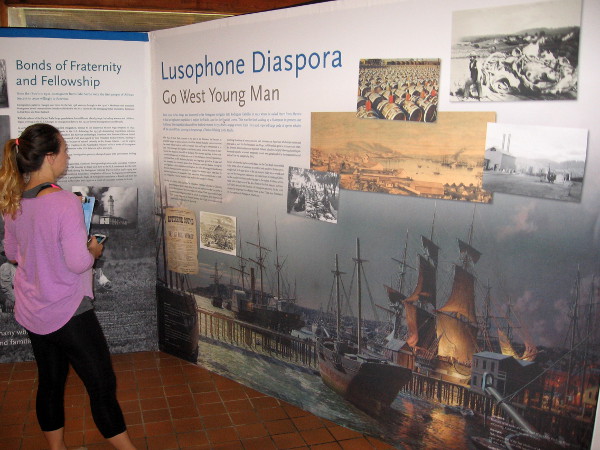
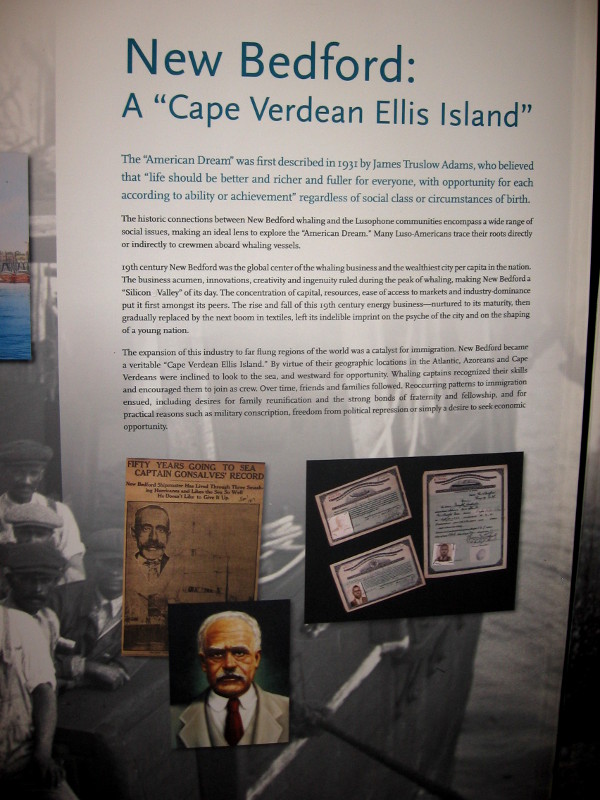
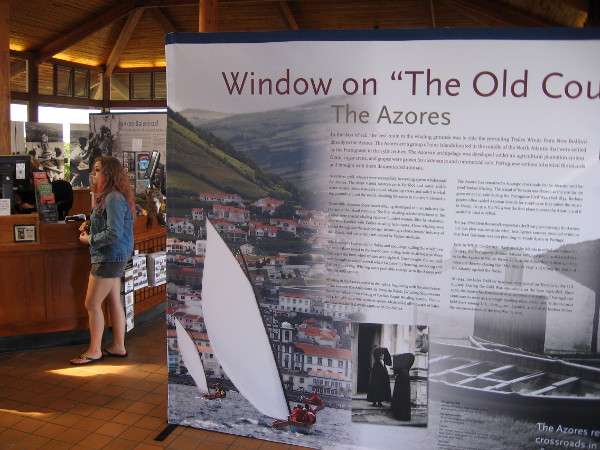
The traveling exhibition is called Yankee Baleeiros! The Shared Legacies of Luso and Yankee Whalers. That’s quite a long title, but it’s fitting for the epic displays that occupy about half of the sizable visitor center. Developed by the New Bedford Whaling Museum, the exhibit “celebrates the interwoven Luso-American stories of the Azorean, Cape Verdean, and Brazilian communities in the United States from early immigration in the 18th century through the latter half of the 20th century.” Sounds like a long and tedious thesis! But it’s actually fascinating! Basically, it shows the rich history of Portuguese speaking whalers in the Northeast, primarily New Bedford, and how they interacted with Yankee whalers.
As San Diego is one of the world’s best places to encounter a large variety of whale species, and as this is the season for migrating gray whales, the exhibit is more than appropriate. The displays also address how whaling techniques evolved over the years, the success of modern conservation efforts, and how whale-watching is now a much larger industy than whaling.
After listening to a short opening presentation by Park Superintendent Tom Workman and Christina Connett, PhD, Curator of Collections and Exhibitions at the New Bedford Whaling Museum, I headed out to Cabrillo’s excellent Pacific Ocean viewing areas to scan the horizon for spouts. I didn’t see any, but there were a bunch of boats off Point Loma whale-watching on this sunny Sunday afternoon. I got more pics from my visit coming, so stay tuned!
If you haven’t been to Cabrillo National Monument in a while (or ever), head on over! The special exhibit will be on display through April 12, 2015.
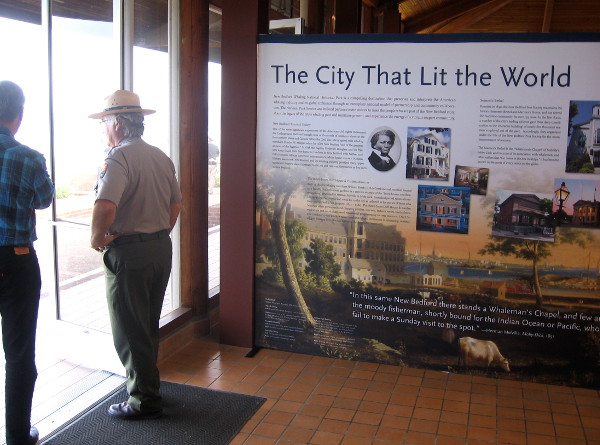
Park Superintendent Tom Workman talks while Christina Connett of the New Bedford Whaling Museum listens.People listen to presentation at opening of Yankee Baleeiros whaling exhibit.Displays recount the history of Lusophone (Portuguese-speaking) whalers in America.New Bedford was the major port for whalers in the Northeast.Inside the visitor center is a section of the 1848 Grand Panorama of a Whaling Voyage ‘Round the World by Benjamin Russell and Caleb Purrington.
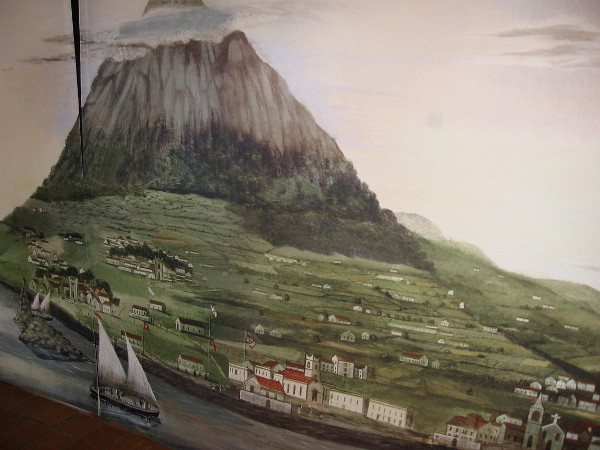
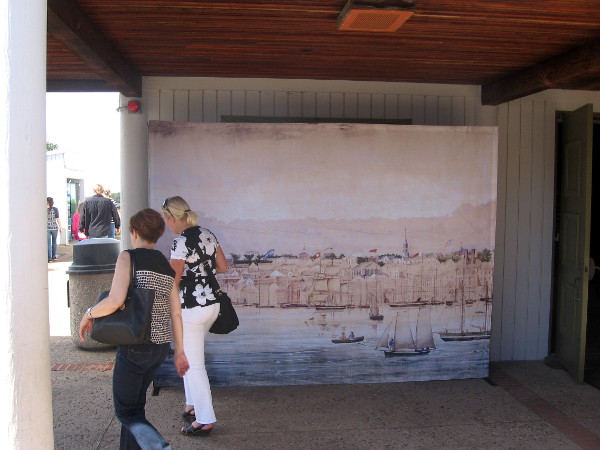
Portions of the 1848 Grand Panorama of a Whaling Voyage ‘Round the World by Benjamin Russell and Caleb Purrington were on display inside and outside the visitor center. The complete work is 1,275 feet long and eight and a half feet tall! It’s believed to be the longest painting in the world! The piece went on a national tour shortly after completion, and appeared at the 1964 New York World’s Fair! Cool!
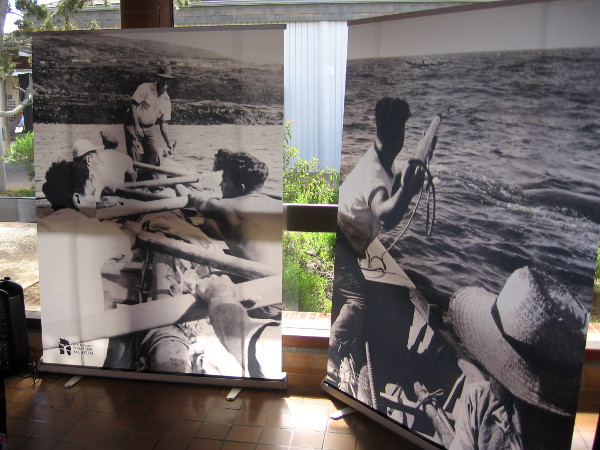
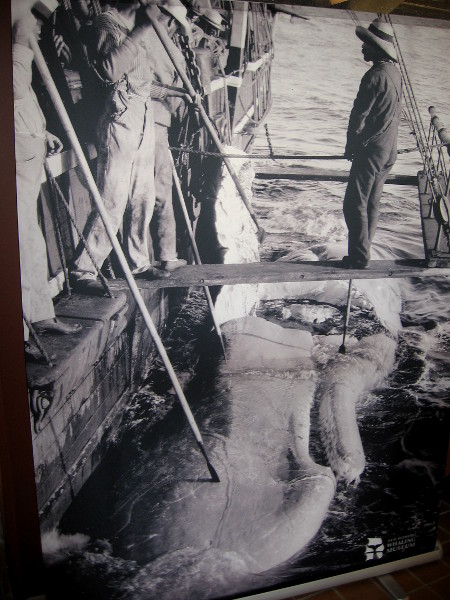
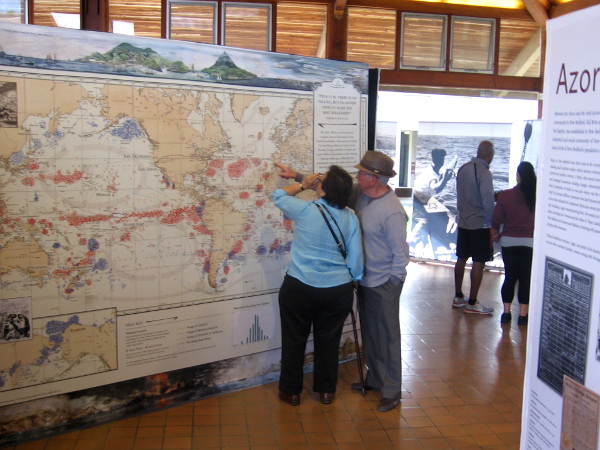
The fantastic displays are museum quality and extremely informative.Photos of sailors rowing out to hunt whales, and a harpooner at the ready.A dead whale is hauled to the ship’s side and stripped of blubber by many hands.People point out spots on a map of historical whaling grounds.The opening presentation is over and folks head out to take in the many sights around Cabrillo.Is there a whale out there? Probably not. This back door faces San Diego Bay!
…
To enjoy future posts, you can “like” Cool San Diego Sights on Facebook or follow me on Twitter.
People near Visitor Center enjoy Cabrillo National Monument’s centennial.
Here are some pics I took Sunday during the second day of Cabrillo National Monument’s centennial celebration.
Cabrillo National Monument is located at the tip of the Point Loma peninsula. The hilly peninsula helps to enclose San Diego Bay and is a perfect lookout over both the ocean and harbor. The park includes most notably the historic Old Point Loma Lighthouse and a 1988 replica of the original statue of Juan Rodriguez Cabrillo that was commissioned by the Portuguese government in 1935. It also includes military bunkers that were used to protect the bay during World War II, and a very popular whale-watching lookout.
The park this year turned one hundred years old. In 1913 Woodrow Wilson reserved a portion of Fort Rosecrans on the Point Loma peninsula for a statue of Cabrillo. Unfortunately, a statue was not immediately forthcoming, and the park’s development became the work of many decades.
The work in progress continues today. My last visit was a few years ago, and this time I noticed many big changes and improvements!
The first photo shows a bunch of people near the Visitor Center, on the walkway that leads out to the Cabrillo statue.
Various informative displays in front of Visitor Center for the centennial event.
For the centennial event, many community and government organizations had exhibits near the entrance to the Visitor Center. This pic shows what appeared to be the most popular table. The friendly lady had numerous snakes that fascinated young and old alike.
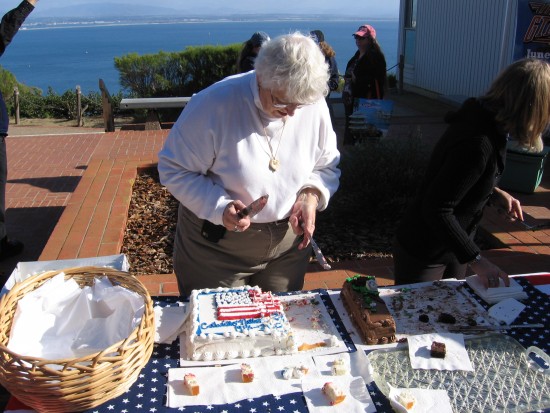
Yummy centennial cake was served to all park visitors.
Everybody enjoyed a small slice of birthday cake!
Statue of Juan Rodriguez Cabrillo overlooks the ocean.
Here’s the iconic statue of Juan Rodriguez Cabrillo, the Portuguese explorer who sailed into San Diego Bay on behalf of Spain nearly five hundred years ago. It stands not far from the Visitor Center overlooking both the bay and Pacific Ocean.
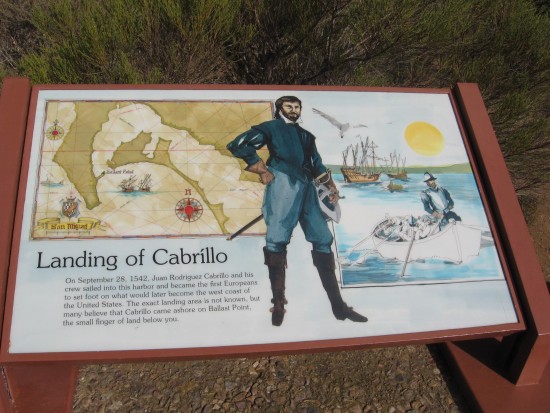
Park sign shows where Cabrillo entered San Diego Bay in 1542.Distant view of Cabrillo statue and Coronado Island.
As I walked up the hill to observe a reenacted air raid drill from World War II, I looked back at this beautiful view. Great views can be had at Cabrillo National Monument looking in almost any direction!
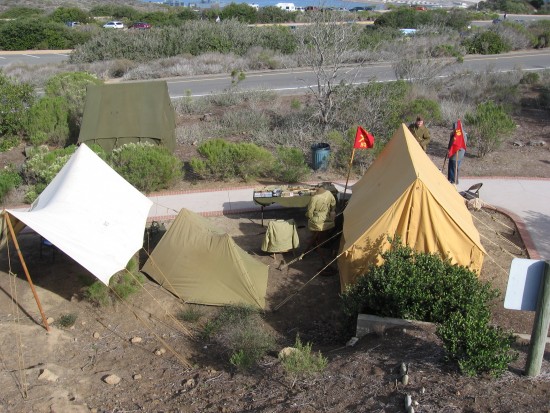
Tents of Army camp set up as historical reenactment.
These tents and some nearby vehicles were on display for the centennial. During World War II, after the Japanese attacked Pearl Harbor, many feared an attack on San Diego. So defenses were quickly erected. In addition to a number of observation bunkers, a few gun emplacements were situated along the end of Point Loma to defend the mainland and bay.
A small museum nearby includes many photographs, recordings and artifacts from that period in San Diego’s history.
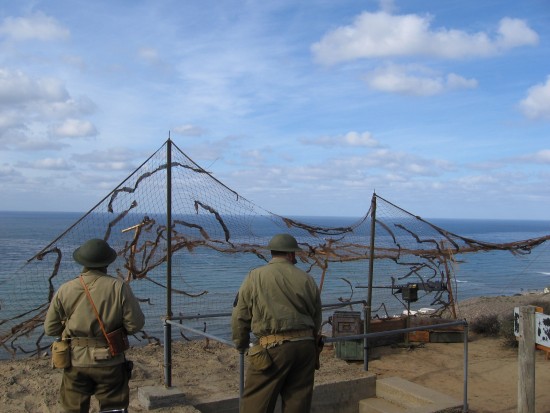
Mock air raid drill recalls duties during World War II.
At eleven o’clock, a mock air raid was staged! An aircraft from nearby Naval Air Station North Island swept over the bluffs as World War II veterans and enthusiasts looked on from the hilltop near some old bunkers.
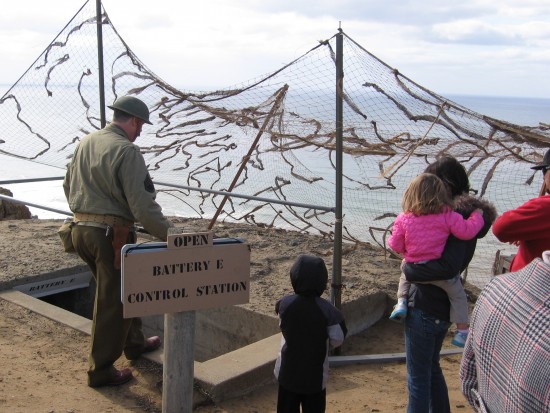
Visitors head into Battery E bunker used during World War II.
After the air raid, we all took turns going down into Battery E.
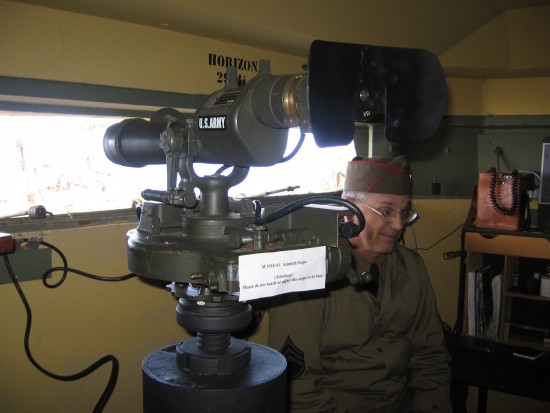
A look inside Battery E and equipment to sight enemy ships.
We were surprised at what we found! The flash of my camera illuminated the small semi-dark bunker, capturing this instrument used to scan the horizon for Japanese warships during World War II.
A chart inside the bunker identifies Japanese warships.
Down a nearby ladder was a second small room containing beds for those who stood watch at all hours.
People walk toward the old Cabrillo lighthouse.
A short distance from Battery E is the historic Old Point Loma Lighthouse. From 1855 to 1891 it stood as a beacon for those entering San Diego Bay, before being replaced by an automated lighthouse down near the water. This old lighthouse is one of San Diego’s most well-known sights!
A museum by the old lighthouse includes the first Fresnel lens to be used by the automated New Point Loma Lighthouse.
A small museum near the lighthouse’s entrance is worth a quick look. It includes an amazing Fresnel lens that magnified light to help sailors out at sea.
Front of the historic lighthouse and its large rainwater basin.
A large flat area in front of the lighthouse was used by the keeper and his family to capture rainwater. Back then this lighthouse stood isolated, far from the small town across the water that grew into metropolitan San Diego.
Recreated family room in Cabrillo lighthouse includes Christmas tree.
Several furnished rooms in the lighthouse are on display behind glass. Very little space was available to accommodate the keeper and his family. In addition to this main room, there’s a kitchen area, closet, and two bedrooms up the winding stairs.
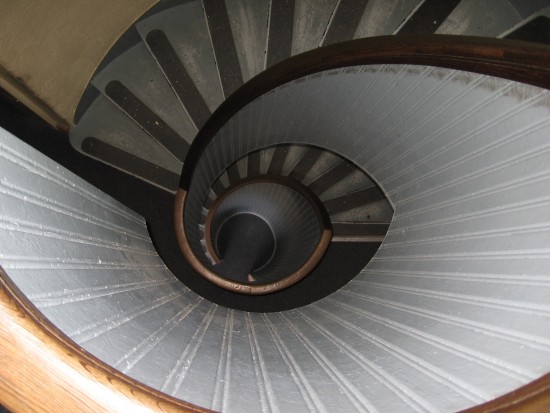
Looking down winding stairs from top of Cabrillo lighthouse.
Speaking of the stairs, I couldn’t resist taking this pic!
Another view of Point Loma’s historic old lighthouse.
Another great look.
Grey whale sculpture near Pacific Ocean overlook.
Interesting sculptures, artwork and signs can be found at the Pacific Ocean overlook. During the winter months, you can see gray whales spouting as they travel between the Arctic and Baja California.
A good place to spot migrating gray whales during the winter months.
You can see where the tidepools are below. I didn’t go down to the water on this trip, but it’s a fun place to see all sorts of sea creatures!
Walking down to Bayside Trail and folks who will talk about history.
At noon there was a guided hike down the Bayside Trail. We walked down a short road to the trailhead, where an old military truck waited with some folks dressed in historic uniforms. They would show us some interesting stuff down the trail.
Group walks down Cabrillo Bayside Trail on a December day.
Here we go down the Bayside Trail. The lady park ranger showed us a large number of native plants, including Coastal Sage, Lemonade Berry, Prickly Pear and more. The flora you see here is what is natural to the area. San Diego is located in a semi-arid zone, with very little precipitation. Most of the trees and other plants you see around town are not native.
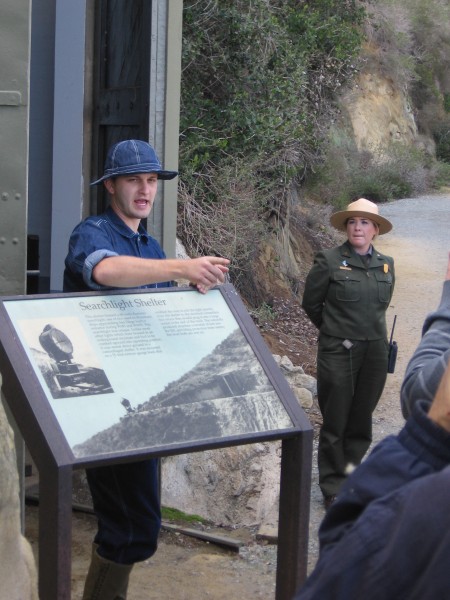
A spotlight protected San Diego Bay during World War II.
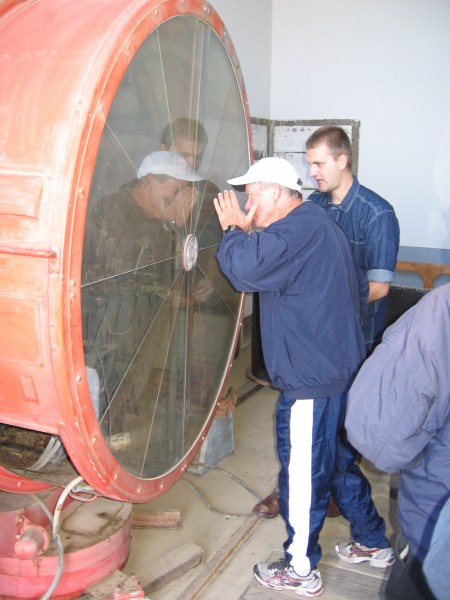
We’ve come to a small structure built into the hillside that houses an old electric spotlight. The huge lamp was used to watch the San Diego Bay’s entrance during World War II. It rolled out on a pair of tracks and plugged into an outlet that you can see by the trail.
Inside the small structure we look at the huge wartime spotlight.
My camera’s flash brightly illuminated the old spotlight inside.
Further down the trail is the spotlight’s generator building.
Now we’ve walked down to the electrical generator building–really just two small empty rooms. Usually these structures are closed to the public.
Rounding a corner of the sandstone cliff San Diego comes into view.
The group turned back, but I walked on…
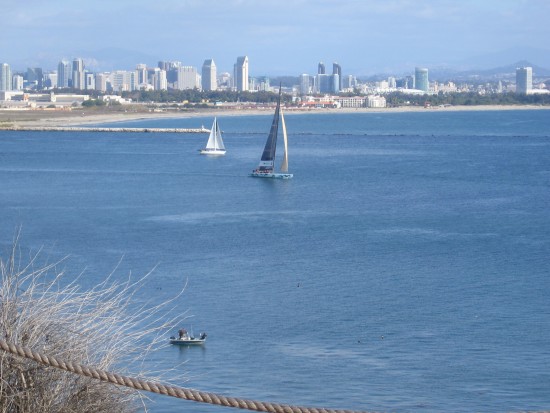
America’s Cup boat Abracadabra sails down the San Diego channel.
And I was rewarded with this view. Having lived in San Diego a good many years, I recognized the large sailboat leaving San Diego Bay. It’s the Abracadabra, a boat used in a past America’s Cup. I also spotted the Stars and Stripes, just out of this picture.
Beyond downtown San Diego I could see numerous mountains, from Cuyamaca on down to Otay. When it snows in the mountains, San Diego has a snow-capped backdrop viewed from here!
One last fond look at the beautiful Cabrillo National Monument lighthouse.






































 Cool San Diego Sights!