A look inside Escondido’s first public library!

Several historic buildings can be visited at the Escondido History Center in Grape Day Park. One of these buildings was the very first library that opened in Escondido, back in 1895.

The little building was the second public library in San Diego County. In 1971 it was saved from demolition by the Escondido Historical Society and moved to Grape Day Park.

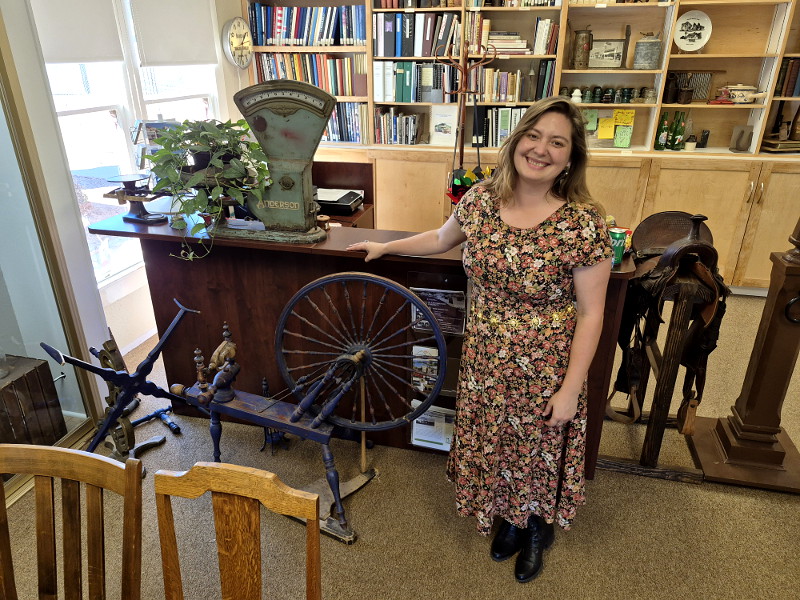
Today visitors step into the little old library (headquarters of the Escondido History Center) on Thursday through Saturday, between 10 am and 4 pm. Inside one can look at historical photographs, conduct research, or view fascinating exhibits. There are also several antique artifacts like an old scale, spinning wheel, and gas pump.

Last Saturday I also found a smile!

I learned the old library and been remodeled and expanded over the years. To me, its present-day use as a museum is the thing of greatest interest.

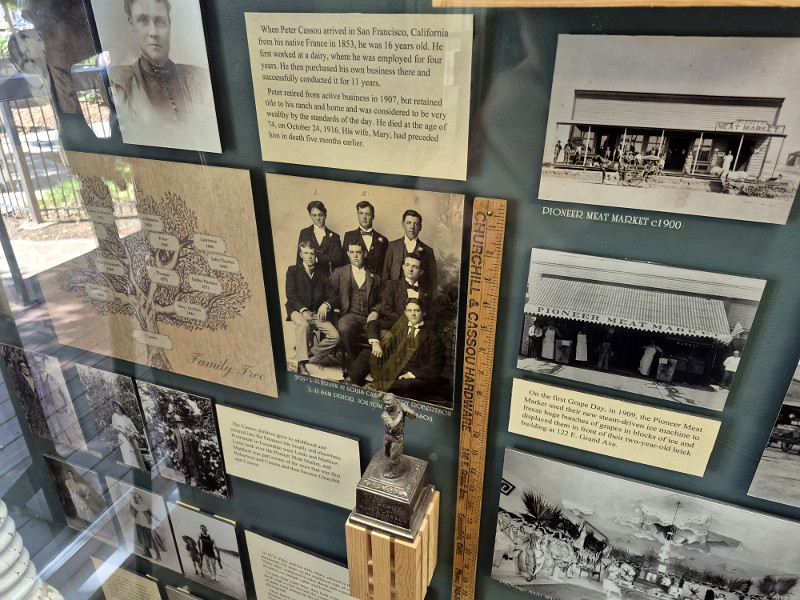
The exhibits can change a bit over time. During my visit I enjoyed looking at Pioneer Family: Cassou Family, and Planes, Trains and Automobiles.

Here’s an old photo of the Escondido Public Library as it originally appeared. Notice there’s not much else around it!

A big glass display case against one wall is packed full of history.

One exhibit traces the history of Escondido’s influential Cassou family, whose mid-19th century roots were in France.
Transportation in Escondido over the years is highlighted in the second exhibit.

Cruisin’ Grand photographs show how the beloved summer event has previously appeared.
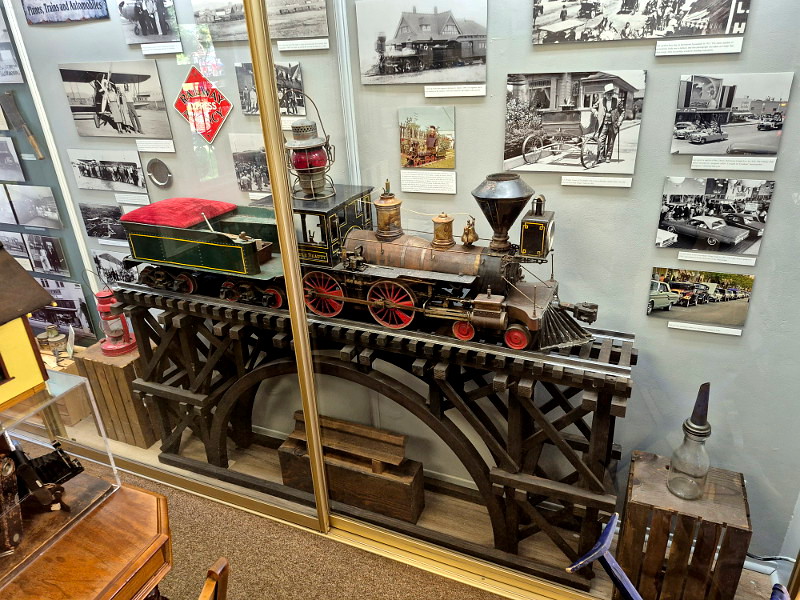
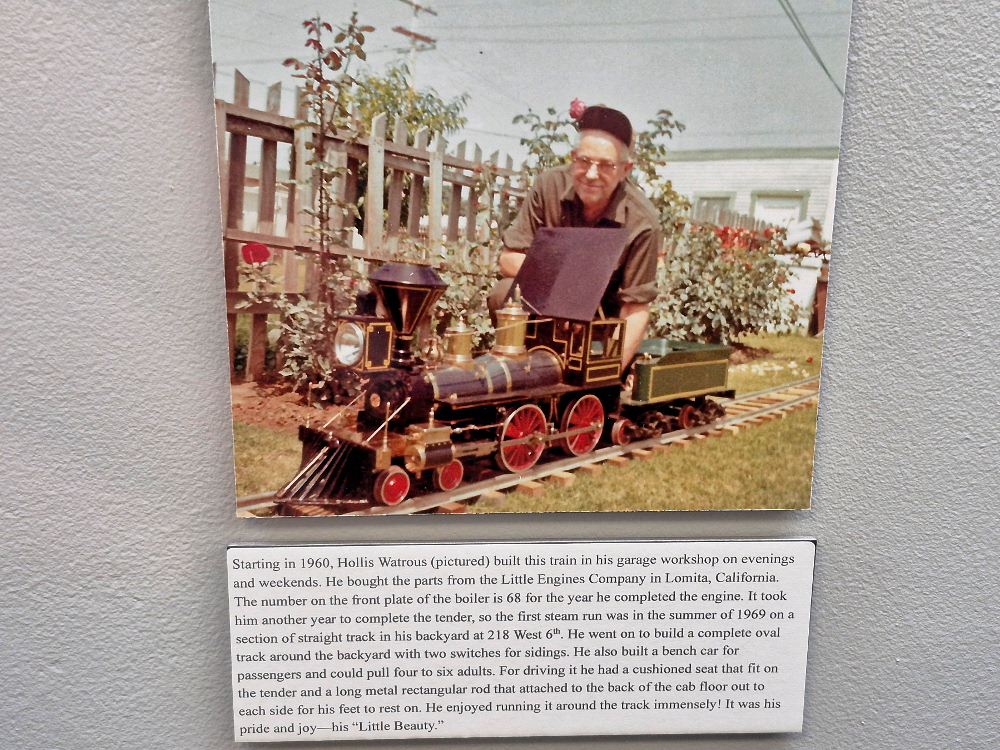
I love that big model train! It was created by Hollis Watrous in his garage workshop starting in 1960. He ran it on tracks in his backyard!
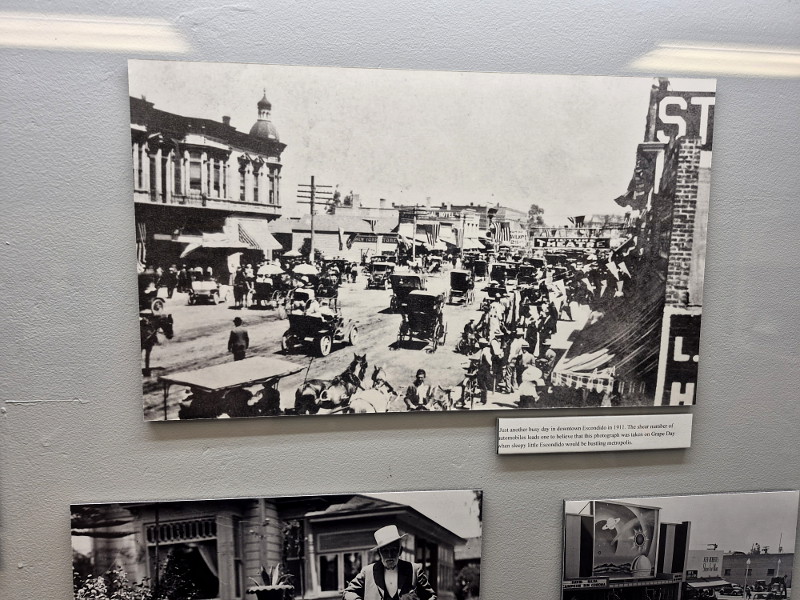
Here’s a cool old photograph of downtown Escondido in 1911.

It is believed, by the large number of automobiles, that the photo was taken on bustling Grape Day.
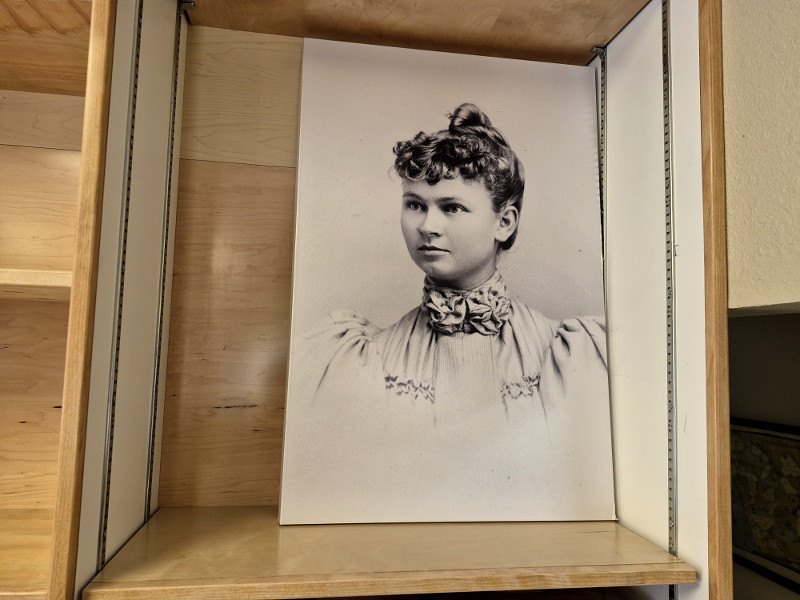
Among the shelves behind the front counter I spied this old image of Escondido’s first librarian, Mina Ward.
I post new blogs pretty often. If you like discovering new things, bookmark coolsandiegosights.com and swing on by occasionally!

I live in downtown San Diego and love to walk around with my camera! You can follow Cool San Diego Sights via Facebook or X.

Feel free to share!
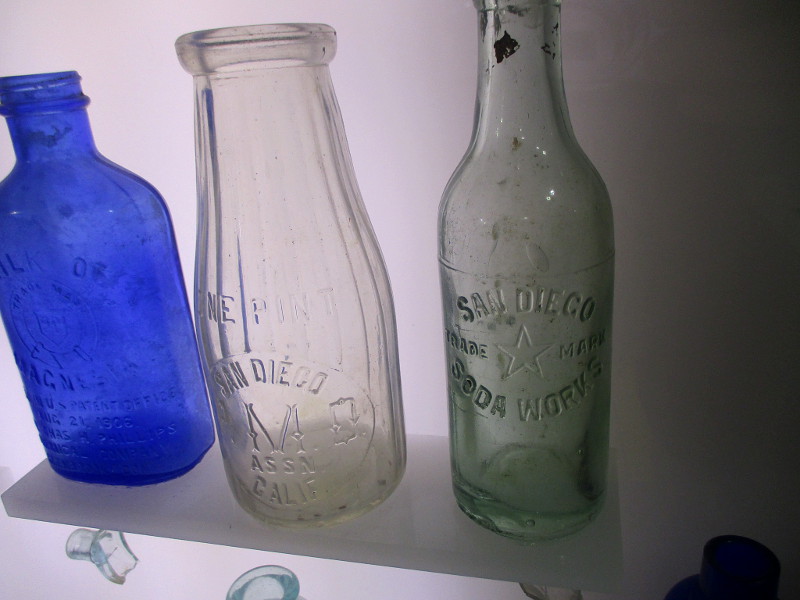
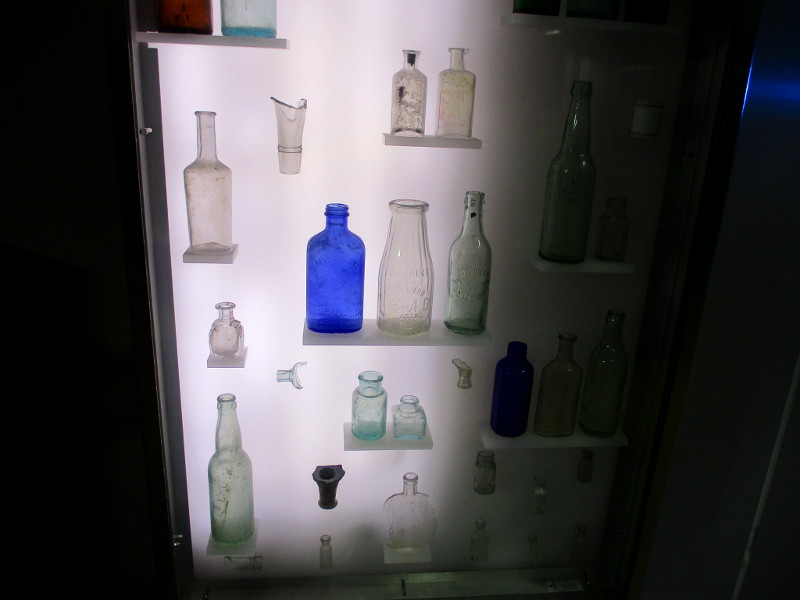
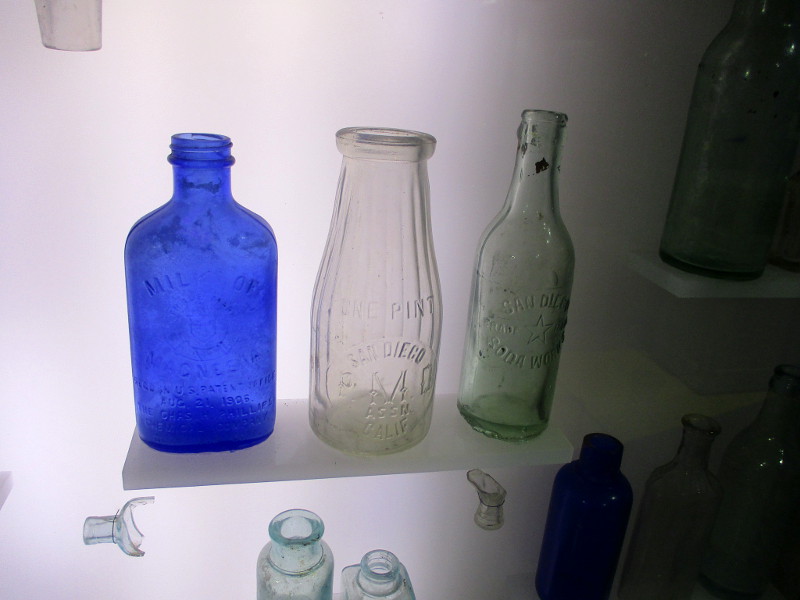
Antique bottles at Little Italy parking structure.

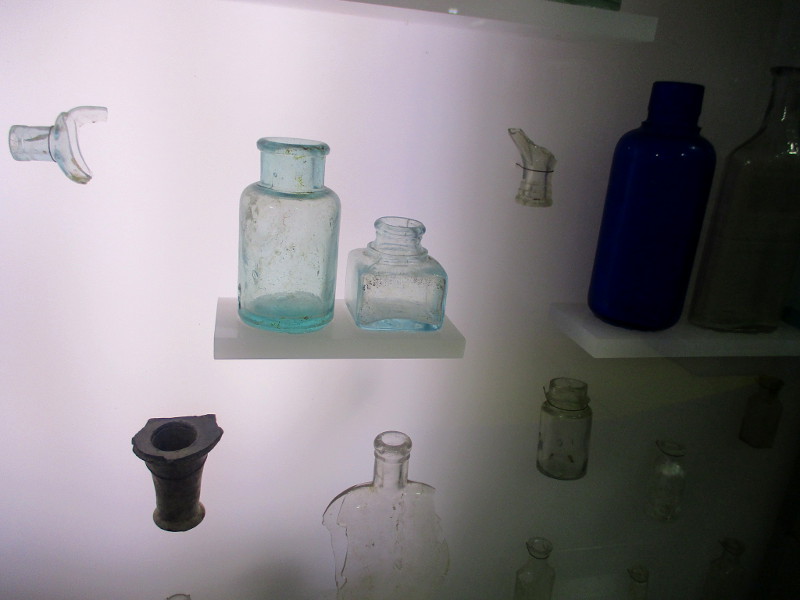
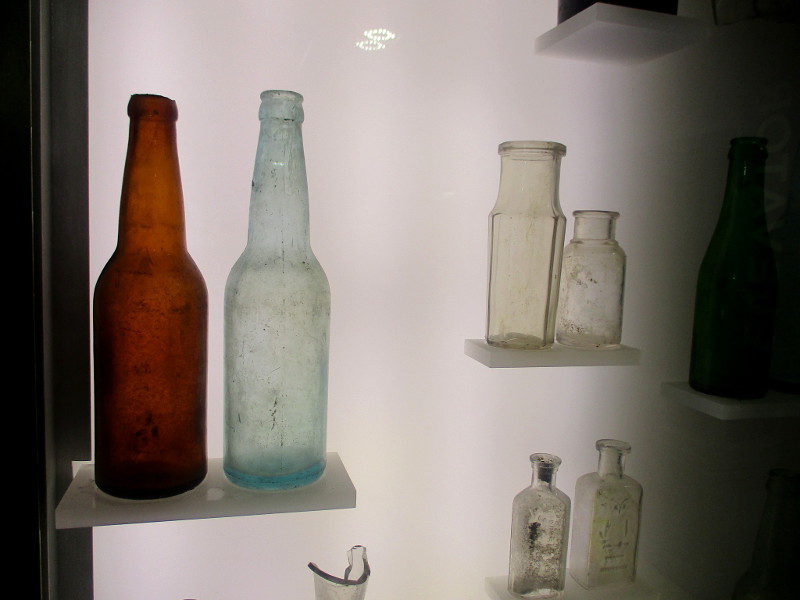
The parking structure that stands beside the County Center/Little Italy trolley station contains a fascinating exhibit. Just inside the Cedar Street door, a glass display case holds rows of antique bottles. These old bottles were discovered in 2014 during the early stages of the building’s construction.

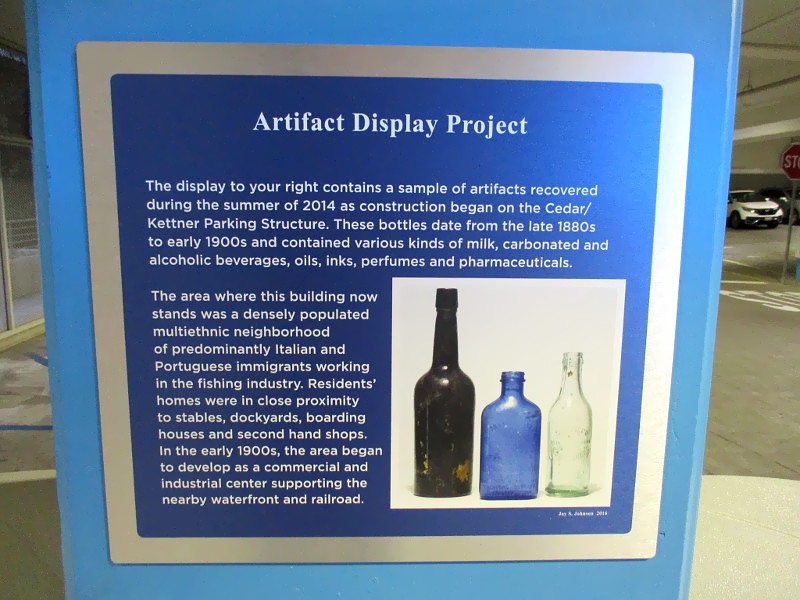
A nearby sign explains why these bottles are on public display…

Artifact Display Project

The display to your right contains a sample of artifacts recovered during the summer of 2014 as construction began on the Cedar/Kettner Parking Structure. These bottles date from the late 1880s to early 1900s and contained various kinds of milk, carbonated and alcoholic beverages, oils, inks, perfumes and pharmaceuticals.

The area where this building now stands was a densely populated multiethnic neighborhood of predominantly Italian and Portuguese immigrants working in the fishing industry. Residents’ homes were in close proximity to stables, dockyards, boarding houses and second hand shops. In the early 1900s, the area began to develop as a commercial and industrial center supporting the nearby waterfront and railroad.

I post new blogs pretty often. If you like discovering new things, bookmark coolsandiegosights.com and swing on by occasionally!

I live in downtown San Diego and love to walk around with my camera! You can follow Cool San Diego Sights via Facebook or X.

Thank you for sharing!

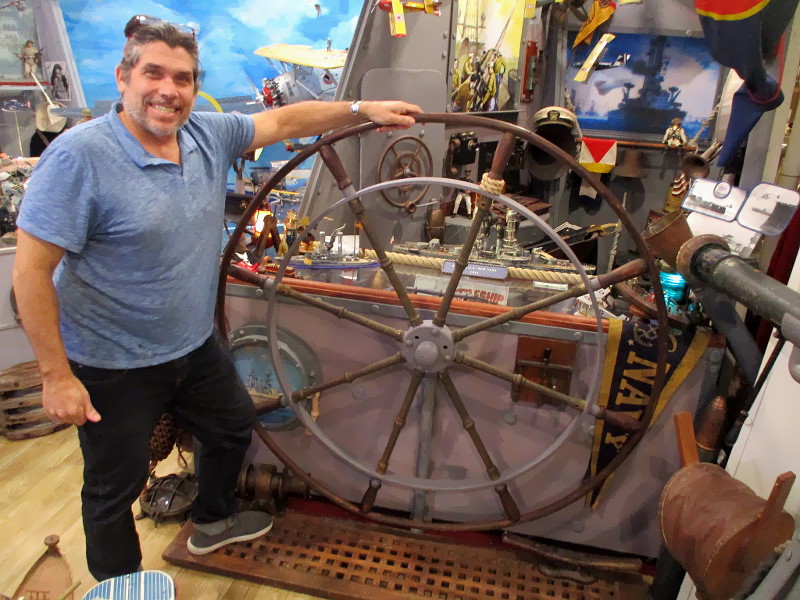
Super-dreadnoughts and a rare ship’s wheel!

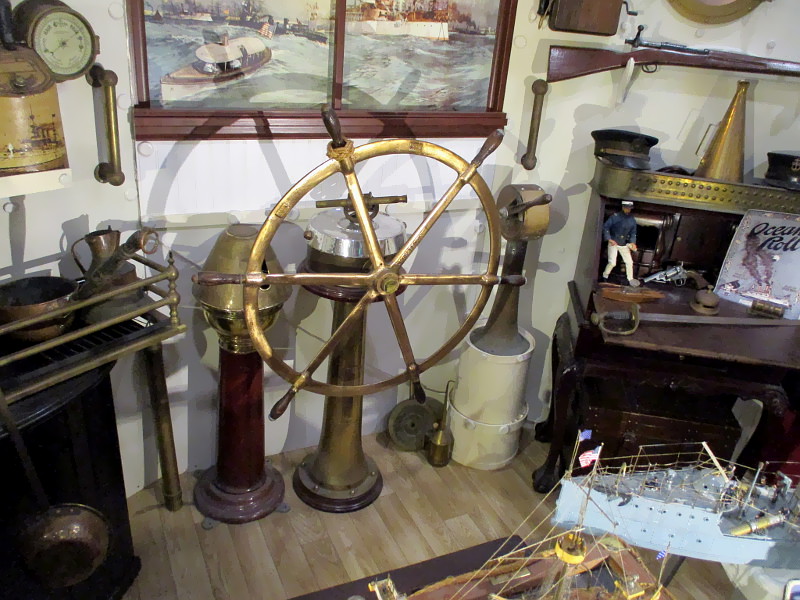
What you see above is very rare. It’s a bronze and wood, 57 inch diameter ship’s wheel. It dates from the Age of Steel Riveted Hull and Steam, 1912 to 1930s. There’s photographic evidence that it might very well have been used in a navy’s super-dreadnought warship!

Joe Frangiosa was super excited to find this rare wheel. His amazing Nautical History Gallery and Museum inside Liberty Station’s Command Center building now features ship’s wheels from five different eras in maritime history. The huge wheel made its first appearance in his museum just a week ago!

Joe confided that this addition has been enormously satisfying. He installed the huge wheel in such a way that people can turn it and pretend to command the high seas. Kids love it!

Joe suggested you all visit his Instagram page here.

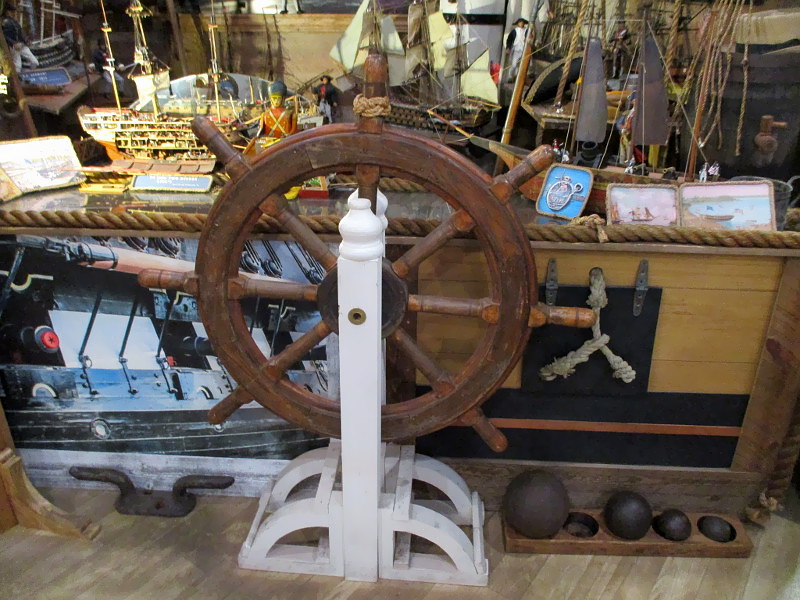
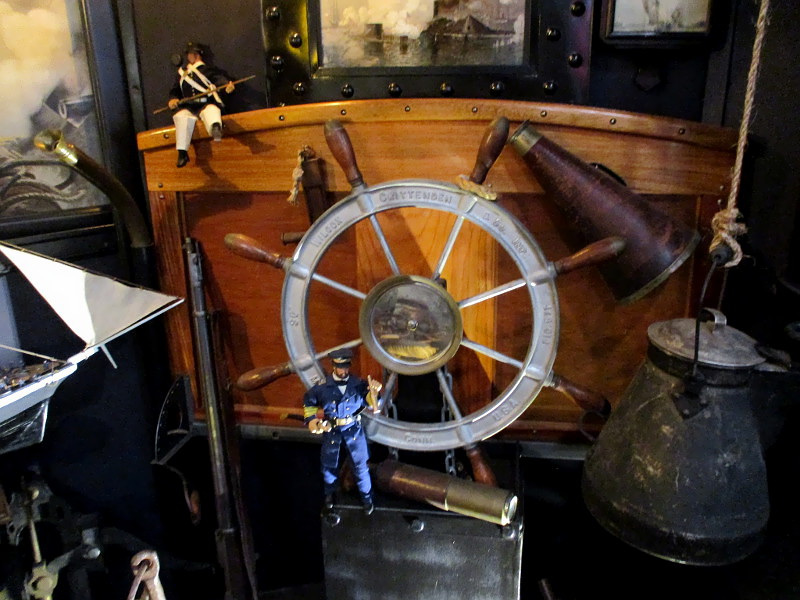
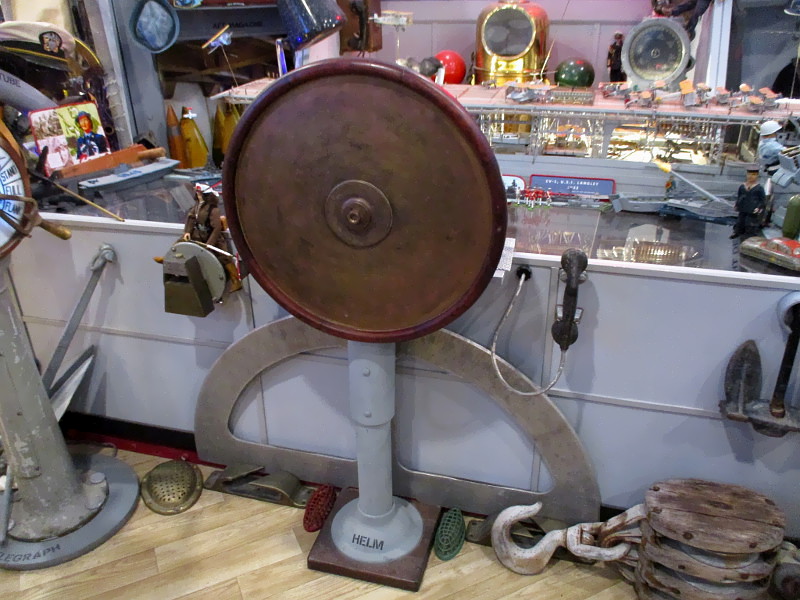
Check out my photos of the other four wheels. You might note that rope is tied around one spoke–the king spoke. When that bit of rope is located at the top of a wheel, that means the rudder of the ship is centered. A sailor can steer by feel in dark, stormy or foggy conditions.

The next wheel is made entirely of wood, with wood peg construction. It dates from the Age of Wooden Hull and Sail, 1775 to 1840.

The next wheel is made of iron. It dates from the Age of Wooden and Iron Hull, Sail and Steam, 1840 to 1887.

This next ship’s wheel is polished bronze and shines brightly! It dates from the Age of Steel Riveted Hull, Sail and Steam, 1887 to 1912.

Finally, this ship’s wheel without spokes is also bronze, but unpolished. It dates from the Age of Steel Welded Plate Hull, 1930s to 1945.

Thanks for visiting Cool San Diego Sights!

I post new blogs pretty often. If you like discovering new things, bookmark coolsandiegosights.com and swing on by occasionally!

I live in downtown San Diego and love to walk around with my camera! You can follow Cool San Diego Sights via Facebook or X.

Art treasures of Maritime Museum: Celebrating the Sea!

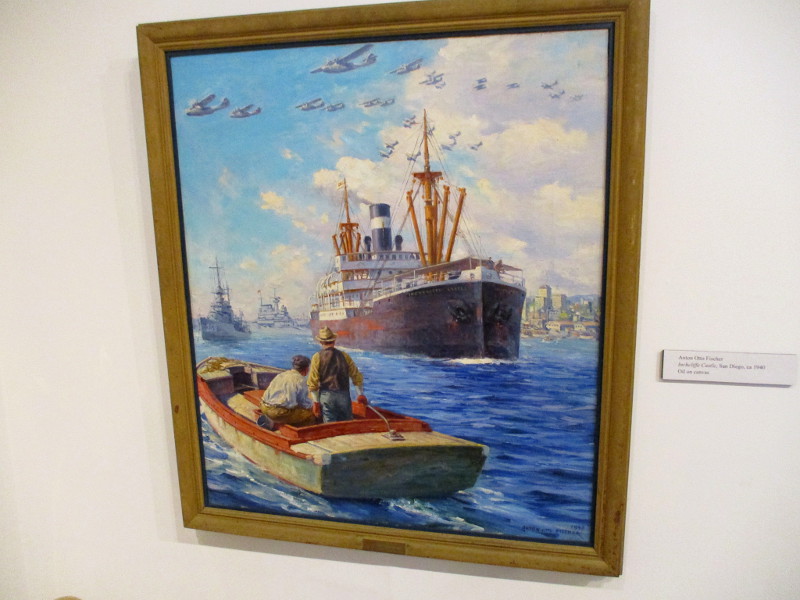
Inchcliffe Castle, San Diego, circa 1940, by artist Anton Otto Fischer.

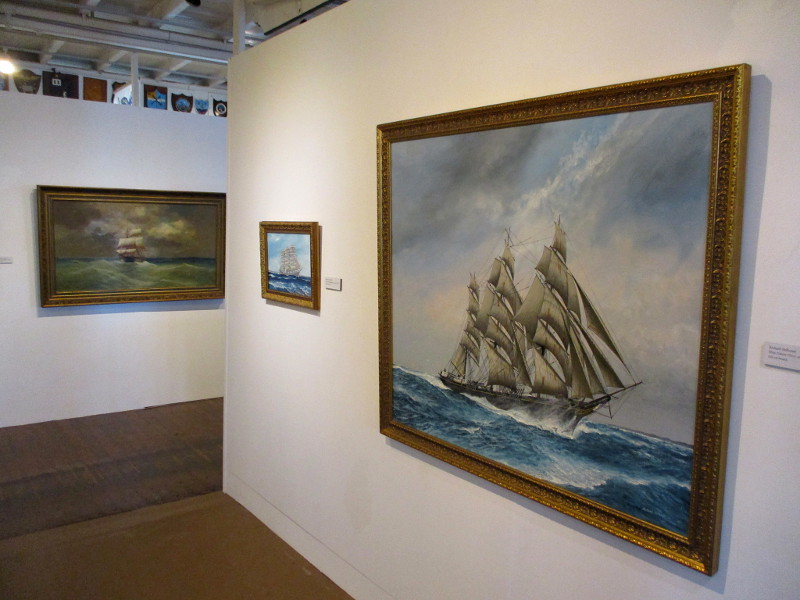
An important new exhibition has opened at the Maritime Museum of San Diego. It’s titled Celebrating the Sea: Exploring the Maritime Museum of San Diego’s Hidden Collection.

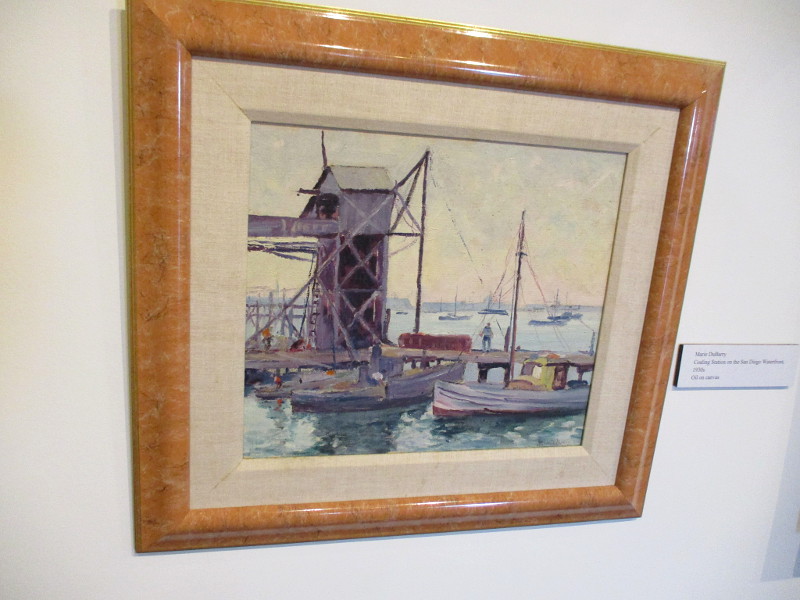
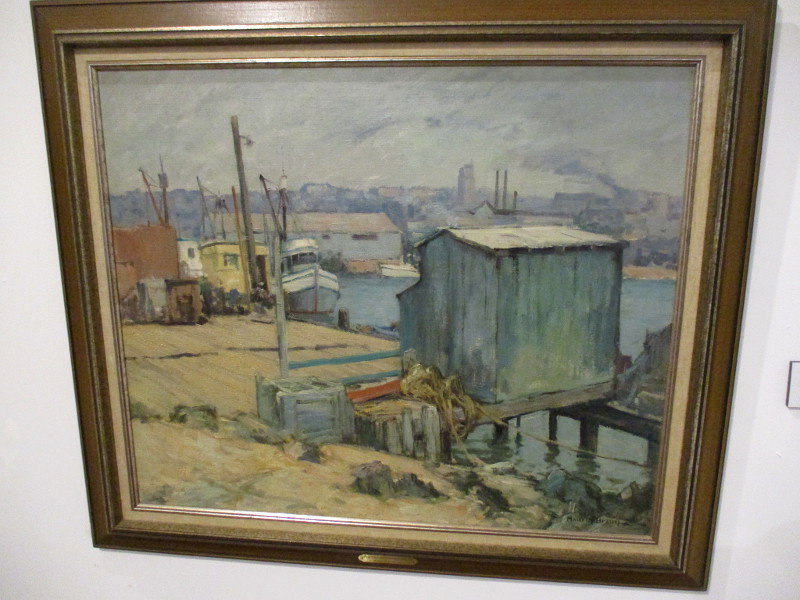
Notable works of original art in the museum’s extensive collection have been placed on view. Included are beautiful paintings of ships, local scenes that include San Diego Bay, and coastal vistas. Many of the pieces are by renowned artists, like Maurice Braun and Arthur Beaumont.

Visitors will also marvel at rare artifacts, such as an antique Chinese lacquer cabinet with ivory chess set, circa 1720.

The fine exhibition reinforces the Maritime Museum of San Diego’s reputation as a world-famous destination for lovers of both art and the sea!

Coaling Station on the San Diego Waterfront, 1930s, by artist Marie DuBarry.

East View of the Coast Guard Station, 1934-1937, by artist Maurice Braun.

Thanks for visiting Cool San Diego Sights!

I post new blogs pretty often. If you like discovering new things, bookmark coolsandiegosights.com and swing on by occasionally!

I live in downtown San Diego and love to walk around with my camera! You can follow Cool San Diego Sights via Facebook or X.

The Art of Navigation at the Maritime Museum.

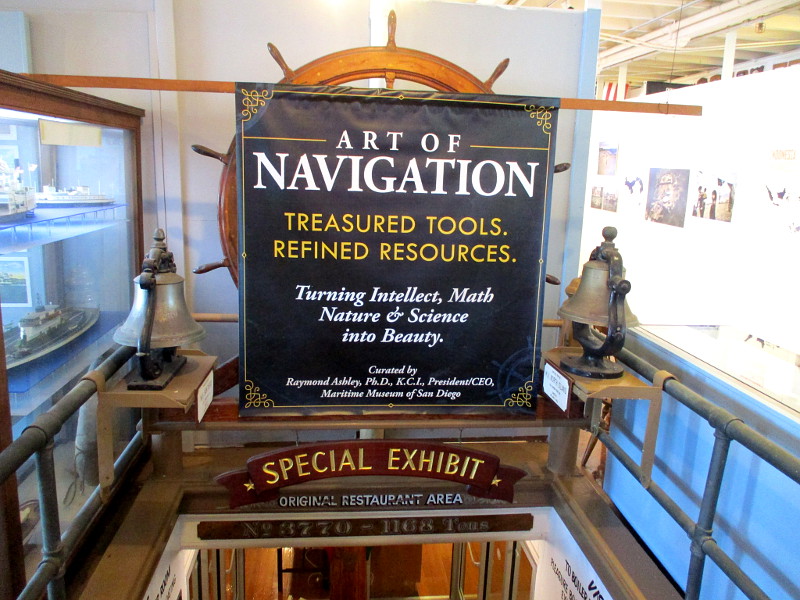
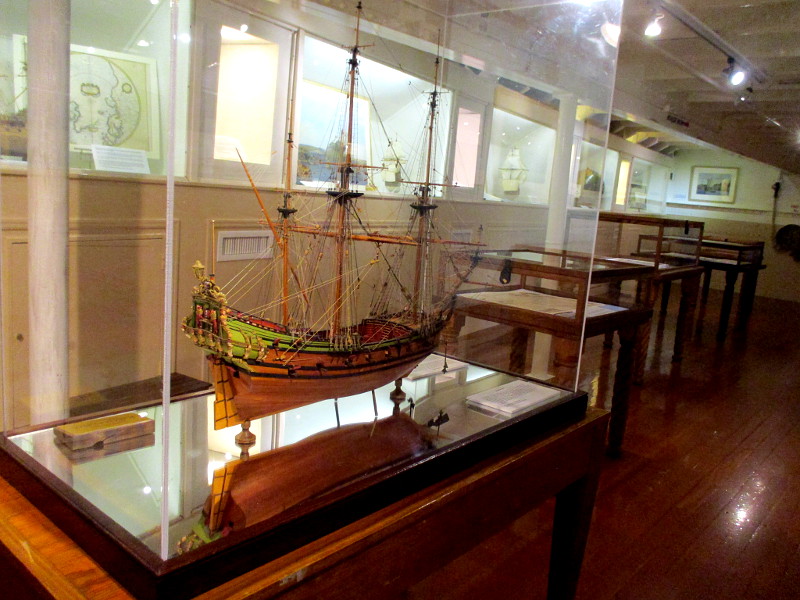
Those who are fascinated by tall ships, exploration and the evolution of technology don’t want to miss a great new exhibit at the Maritime Museum of San Diego. It’s titled the Art of Navigation.

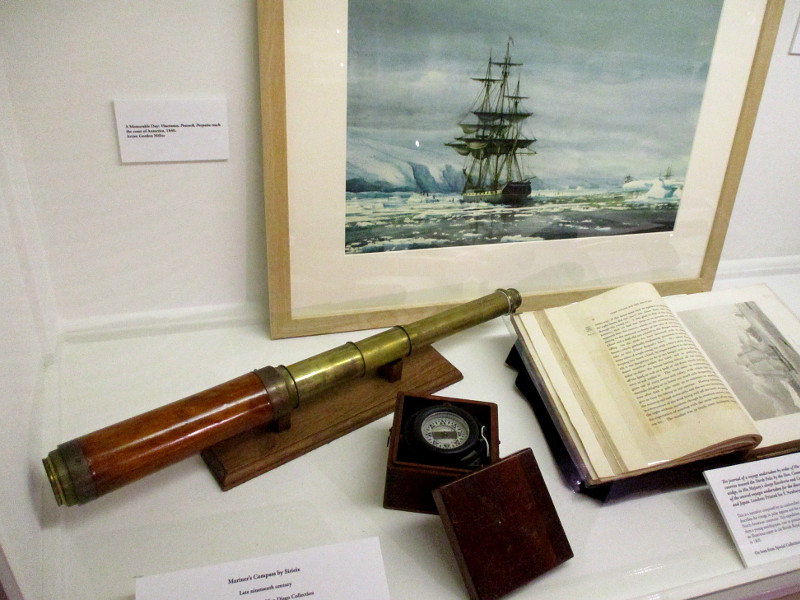
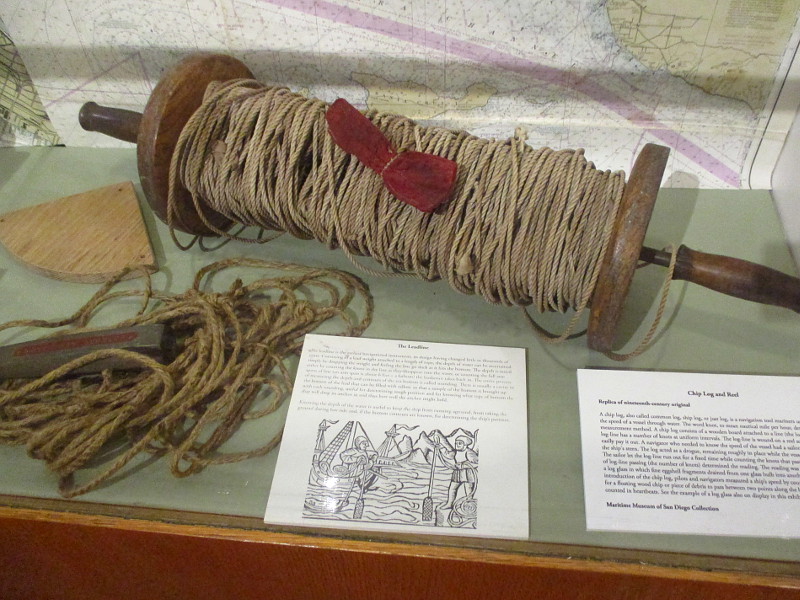
Visitors to the exhibit learn how navigators have used maps, charts and a variety of tools to find their way across the oceans and through dangerous waters. The extensive displays include some exceptionally rare antiques. Old instruments that can be viewed include an astrolabe, backstaff, nocturnal, traverse board, chip log and reel, hand-held telescope, cross-staff, quadrant, taffrail log, navigation slate and more! These instruments might seem primitive when compared with modern technology, but ship’s captains successfully sailed around the planet with the information they provided.
Personally, I like to read nautical stories set during the Age of Sail. As I read I’ll come across the names of these instruments, and at times puzzle over their application. The descriptive Art of Navigation exhibit brings helps to bring those adventurous old stories to life!
The exhibit also includes beautiful paintings and model ships, and even a display directly related to the Maritime Museum’s famous Star of India!

The Art of Navigation is free with museum admission. As advertised, it does indeed turn intellect, math, nature and science into beauty!

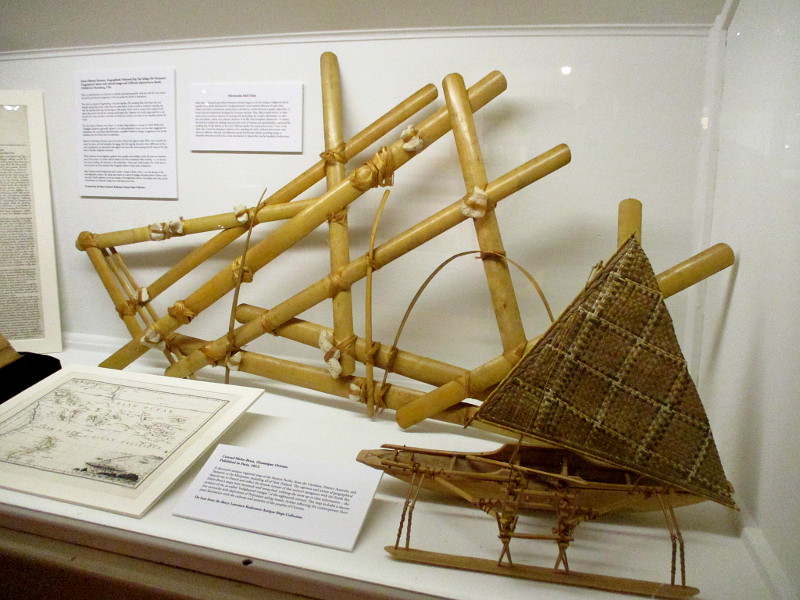
Micronesian stick chart, used by the indigenous island peoples of the Pacific to navigate across great distances of open water.

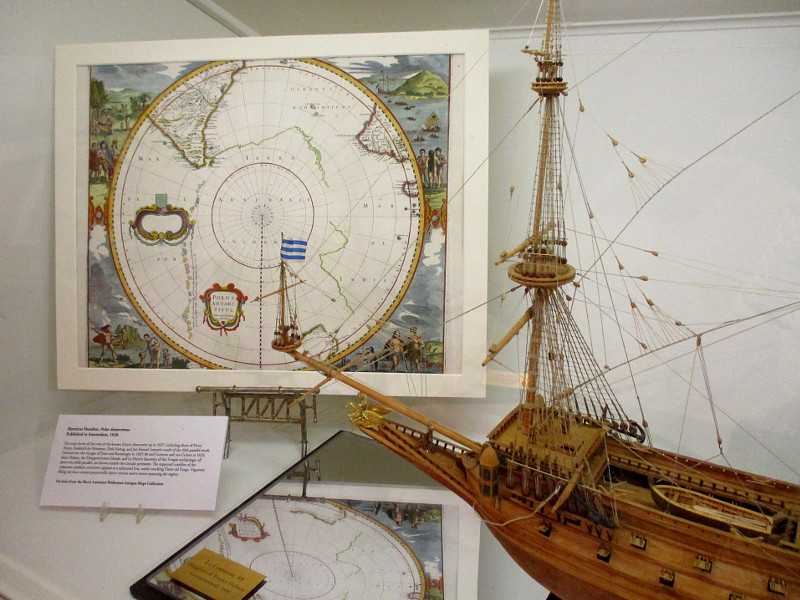
Henricus Hondius. Polus Antarcticus. Map of Dutch discoveries published in Amsterdam, 1638.

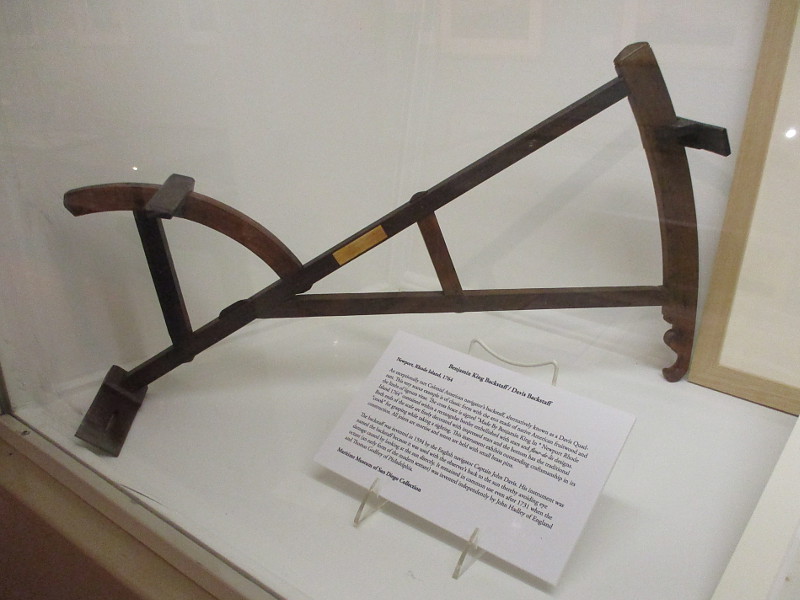
Benjamin King Backstaff (also known as Davis Quadrant), Newport, Rhode Island, 1764. Used by Colonial American navigators.

Replica of 19th century chip log and reel. Used to estimate the speed of a ship through water.

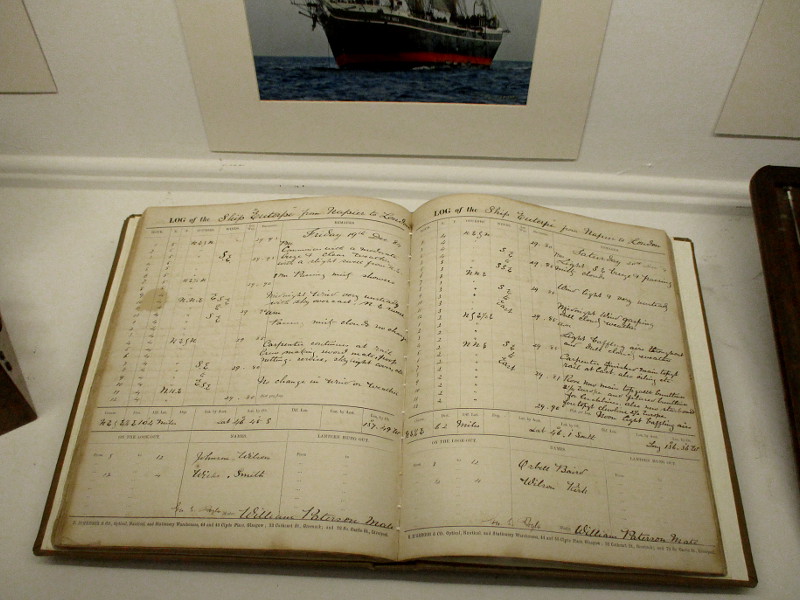
Log of Euterpe, a historic ship later known as Star of India.

Thanks for visiting Cool San Diego Sights!

I post new blogs pretty often. If you like discovering new things, bookmark coolsandiegosights.com and swing on by occasionally!

I live in downtown San Diego and love to walk around with my camera! You can follow Cool San Diego Sights via Facebook or X.

Own a genuine, historical Balboa Park artifact!

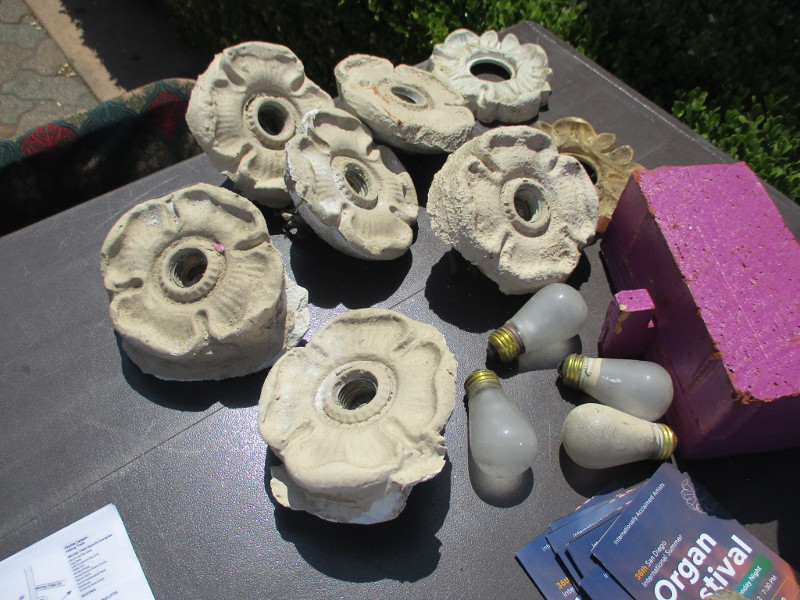
Would you like to own a genuine historical artifact from Balboa Park that dates back to just before 1915, when the park debuted for the Panama-California Exposition? You can!

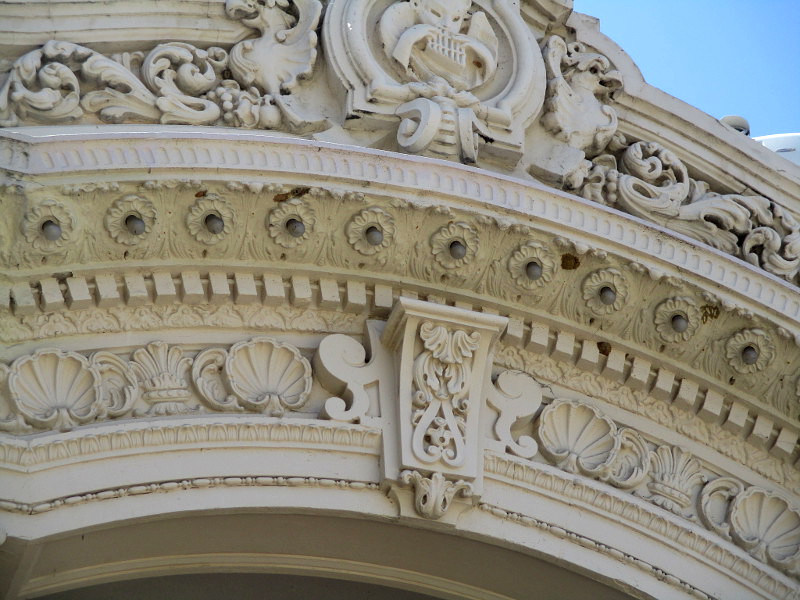
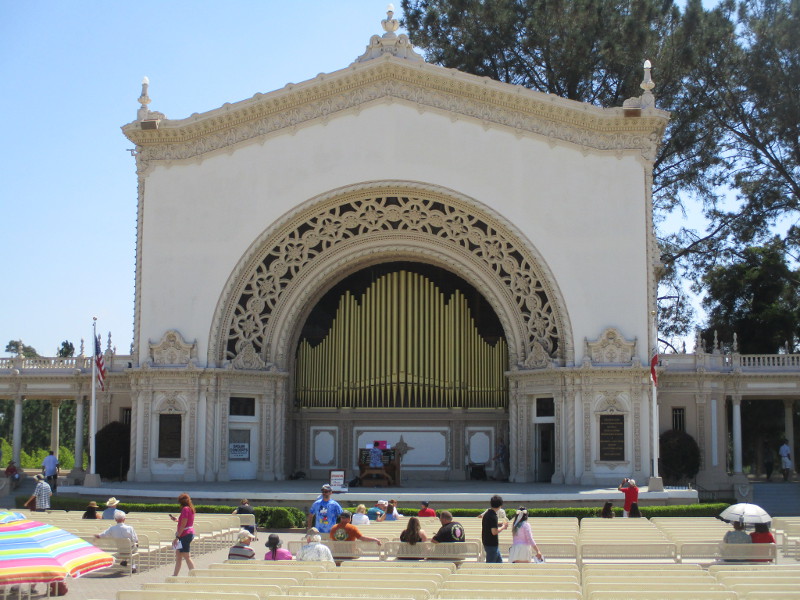
The original light bulb sockets have all been replaced on the façade of the Spreckels Organ Pavilion building and colonnades. If you’ve been to a concert after dark, you know the beautiful lights that add magic to the night.

The Spreckels Organ Pavilion was one of only four structures in Balboa Park meant to remain permanently after the 1915 exposition. Well, these decorative sockets and their hidden wiring deteriorated after a century of use and constant exposure to outdoor elements.

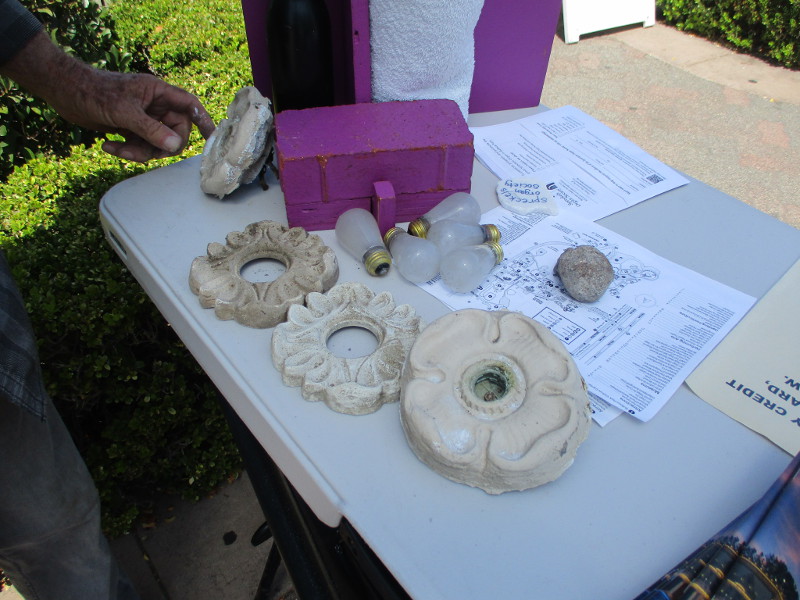
I learned today that for a twenty dollar donation, one socket (with light bulb) will be yours! Simply attend a two o’clock free Sunday organ concert and look for them on tables as you enter the pavilion.

Get them while they last and own a genuine piece of San Diego history! And you’ll help support the Spreckels Organ Society, too!

Thanks for visiting Cool San Diego Sights!

I post new blogs pretty often. If you like discovering new things, bookmark coolsandiegosights.com and swing on by occasionally!

I live in downtown San Diego and love to walk around with my camera! You can follow Cool San Diego Sights via Facebook or X.

Win a historic, handmade quilt this Fourth of July!

You can win a valuable and historic handmade quilt in Old Town San Diego this coming Fourth of July!

The beautiful quilt has an antique Churn Dash top that was probably made in the 1890s or early 20th century. It was purchased in 2015 and finished by volunteers at Old Town San Diego State Historic Park, while sitting on the front porch of the Threads of the Past building. Perhaps you saw these ladies dressed in old fashioned garb during a visit. While talking to passersby and explaining their stitching, they carefully applied cotton batting and a reproduction blue cotton backing.

The quilt’s mostly red, white and blue pattern has other fun names: Monkey Wrench, Hole in the Barn Door, and Hens and Chickens! The quilt can presently be seen inside the State Park’s Robinson-Rose House Visitor Center. That’s where you can purchase your opportunity drawing tickets, too!

One dollar purchases one ticket for the Fourth of July quilt raffle; five dollars will get you six tickets. The big jar containing tickets wasn’t terribly full when I saw it today, so your chances might be fairly good at winning!

The proceeds from the raffle will help fund Living History programs at Old Town San Diego State Historic Park. You need not be present to win!

Thanks for visiting Cool San Diego Sights!

I post new blogs pretty often. If you like discovering new things, bookmark coolsandiegosights.com and swing on by occasionally!

I live in downtown San Diego and love to walk around with my camera! You can follow Cool San Diego Sights via Facebook or X.

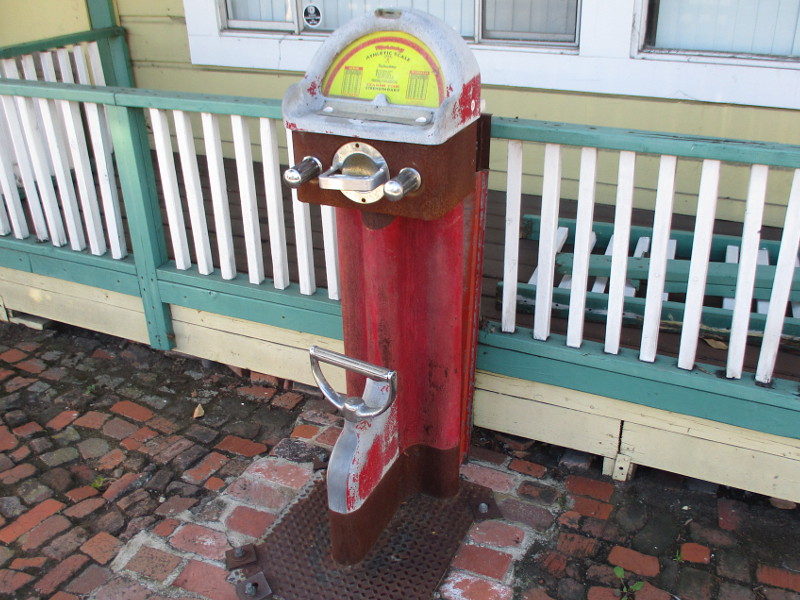
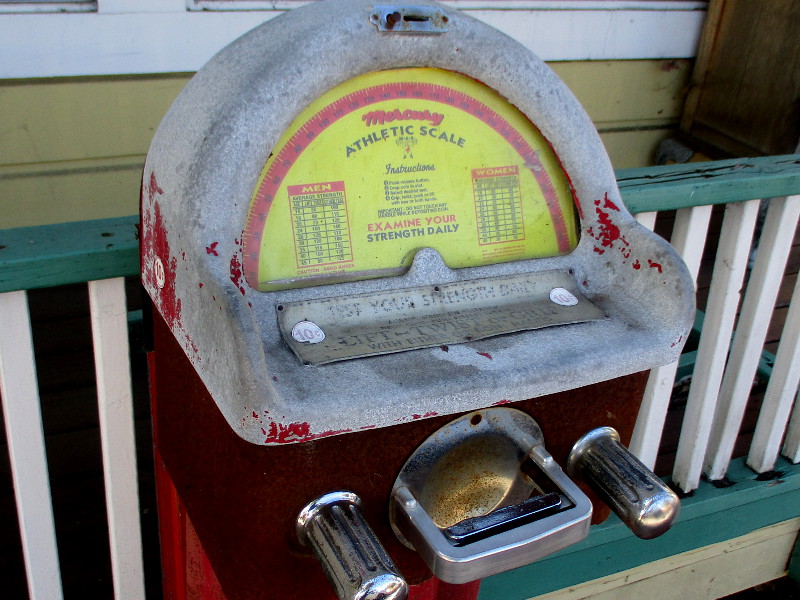
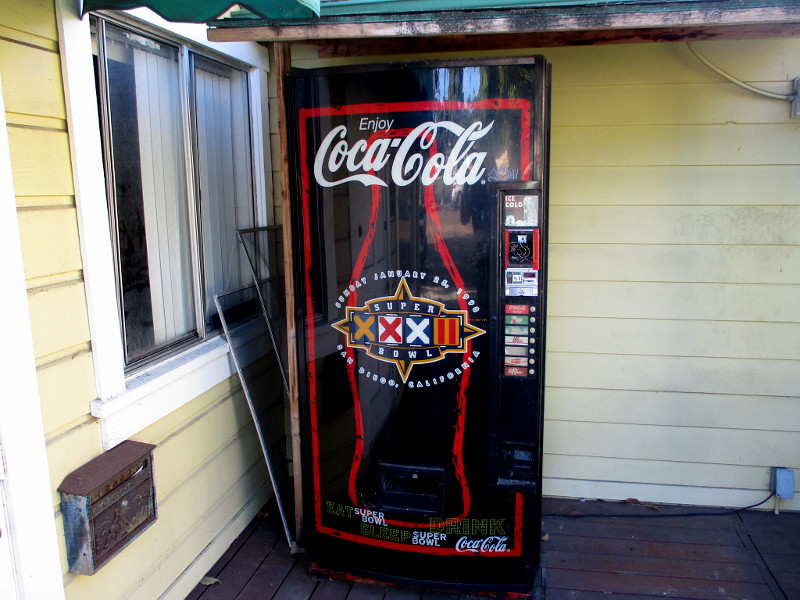
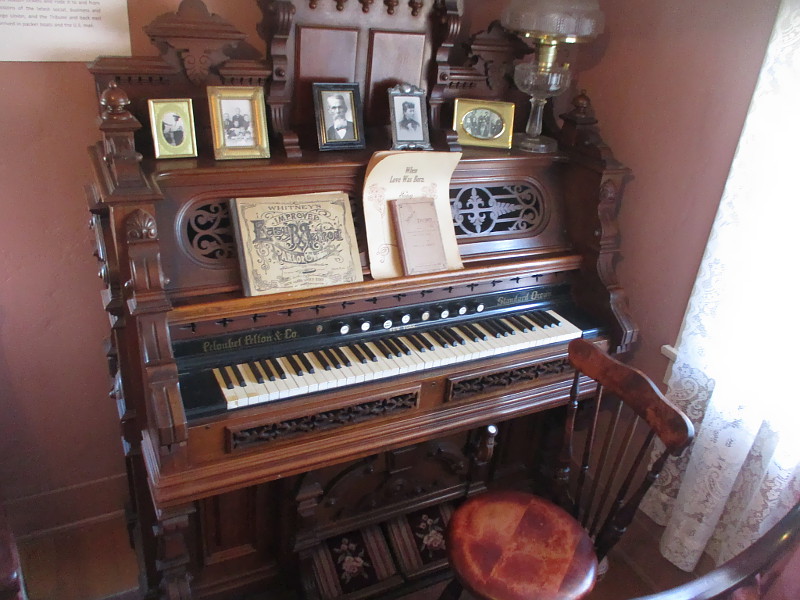
Unexpected nostalgia in downtown Carlsbad!

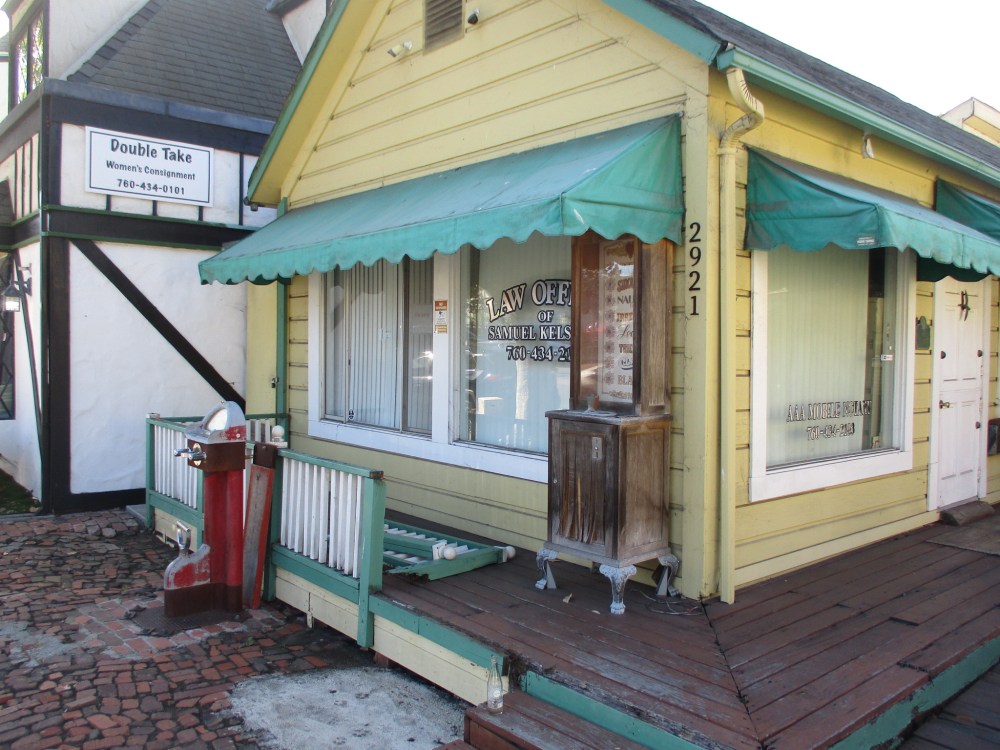
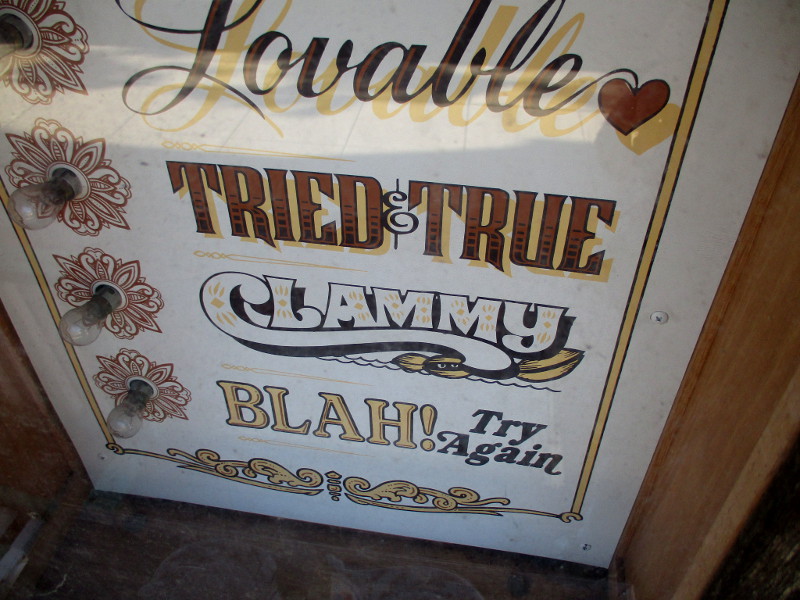
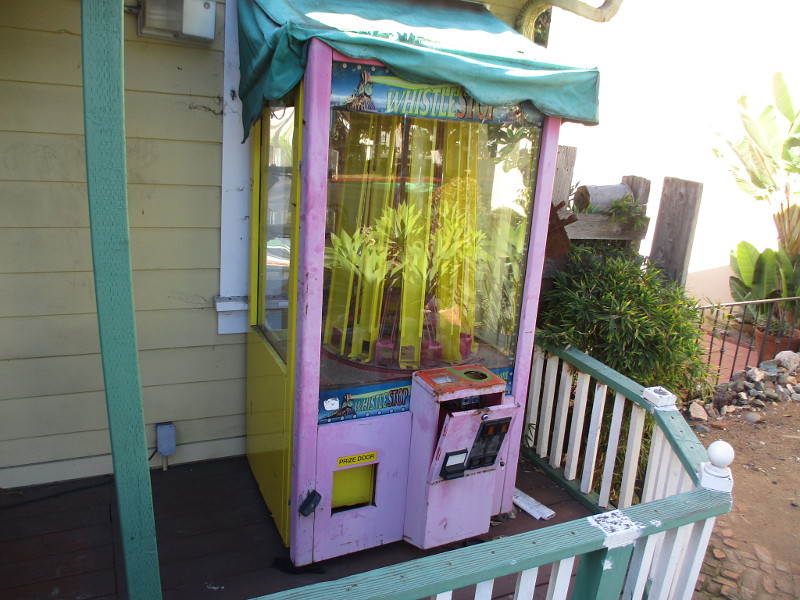
Walking around downtown Carlsbad, you might stumble upon these fun, unexpected, very cool sights!

Someone obviously loves antiques and nostalgia. Take a look at what I found during my last random walk around Carlsbad!

Would you like to make your own cool discoveries? Go for a walk!

Thanks for visiting Cool San Diego Sights!

I post new blogs pretty often. If you like discovering new things, bookmark coolsandiegosights.com and swing on by occasionally!

I live in downtown San Diego and love to walk around with my camera! You can follow Cool San Diego Sights via Facebook or X (formerly known as Twitter)!

Step into El Cajon’s fascinating history!

How much do you know about the history of El Cajon?

Step into the Knox House Museum and you’ll be transported back in time. You’ll experience what life was like for El Cajon’s first settlers and its early residents.

You’ll learn how, in 1876, Amaziah Knox built a residence and hotel in the seeming middle of nowhere. Rising two stories tall, boasting seven rooms, it was the first commercial structure in El Cajon.

You’ll walk through the parlor, kitchen, living room, sewing room, and bedrooms, furnished as they might have been from 1895 to 1912. You’ll see original objects that were owned by the Knox family, plus many old photographs of El Cajon taken during its early years..

The El Cajon Historical Society operates the free Knox House Museum and welcomes visitors with a great tour of the old house. Check out their website for the location, open days and hours.

My own visit last Saturday was an eye-opener. I peered at photos of a very early El Cajon, with its small handful of structures. I learned that the hotel was cleverly built in a popular camping place for teamsters, miners, and drovers traveling to the Julian gold mines after 1870.

I saw how the hotel and the young city expanded, and how agriculture played an important role in the growing prosperity. Grapes covered many acres in one old photo. They were dried and exported as raisins.

I learned how the home’s parlor served as El Cajon’s very first post office, with Mr. Knox the official Postmaster.

Did you know the United States Cavalry was once stationed in El Cajon, and that El Cajon and Lakeside boasted a stagecoach line?

No? You should visit the museum! Or check out their informative website by clicking here.

My tour guide Rick told me the historical society is looking for new volunteers. Do you live in El Cajon or East County? Would you like to help keep this important history alive? Contact the El Cajon Historical Society here.

Or consider a donation. Worthy organizations like this are struggling, especially after the disruptions caused by COVID.

One last thing. The El Cajon Historical Society is eager to teach young people about the fascinating history of this city they call home. They are offering a slide show for local classrooms! Do you know any teachers? Pass the word!

Thanks for visiting Cool San Diego Sights!

I post new blogs pretty often. If you like discovering new things, bookmark coolsandiegosights.com and swing on by occasionally!

I live in downtown San Diego and love to walk around with my camera! You can follow Cool San Diego Sights via Facebook or X (formerly known as Twitter)!

Tour the Stein Family Farm in National City!

Do you love history? Would you like to tour a historic, over hundred-year-old farm that still stands in the heart of National City?

You should visit the Stein Family Farm!

I published a blog post in early 2021 that included photographs from the street of the farm’s exterior. I detailed the history of the Stein family. Their farm dates from the early 1900s. You can read what I wrote by clicking here.

The farm is presently owned by the Community Development Commission of the City of National City and operated by the National City Living History Farm Preserve. Visitors to the old farm can see what rural National City was like many years ago.

Last Saturday I stepped through the front gate of the Stein Family Farm and received an amazing tour by historian and caretaker Christopher Pro.

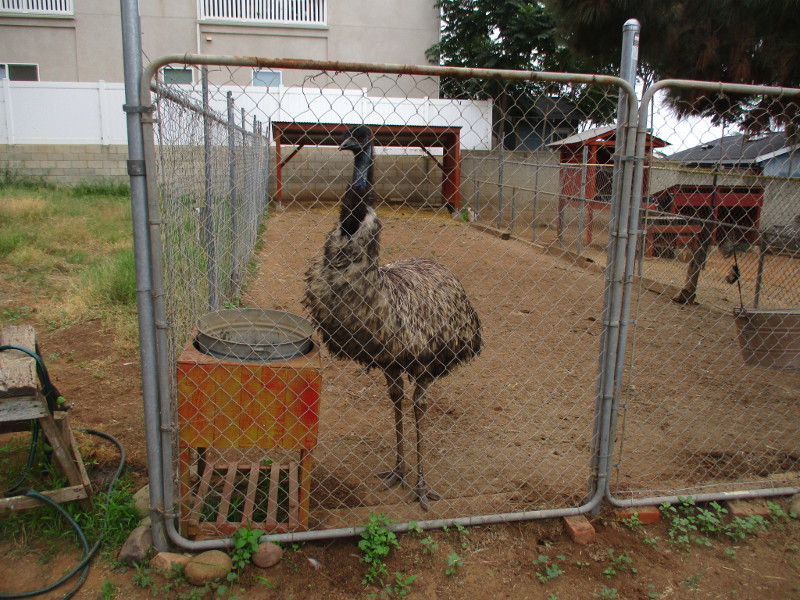
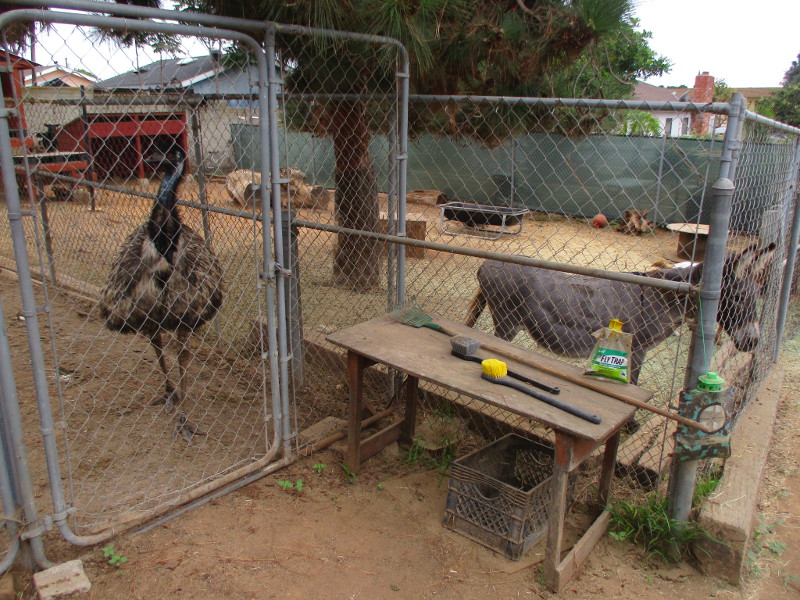
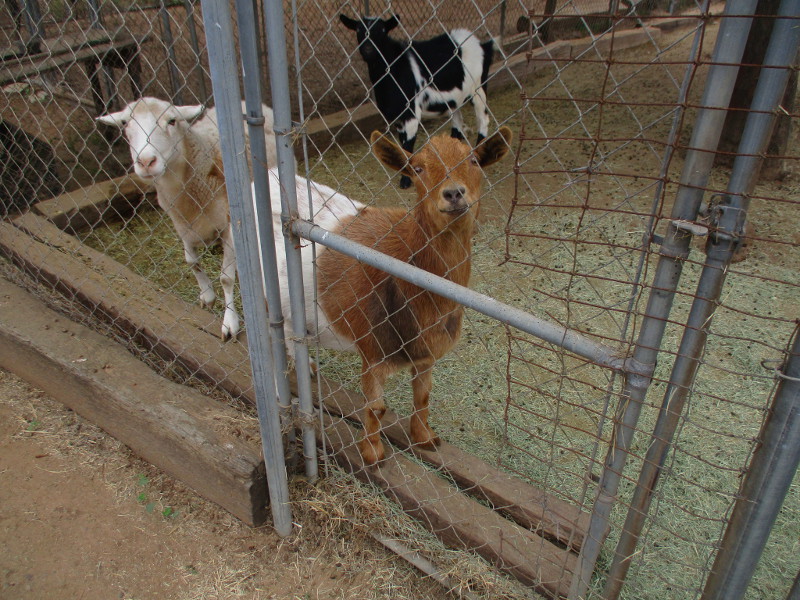
We walked through the farmhouse and I learned about its antique furnishings. We peered into the old barn at a horse-driven carriage. We walked through the property and met a surprising variety of domesticated animals that seemed pleased to meet visitors, then we took a look at the farm’s orchard where many different fruit trees provide a living classroom for student arborists.

I saw parents with young kids rambling around the grounds, enjoying the animals and an inviting butterfly garden. One family soaked in the Southern California sunshine while sitting at the picnic benches near a big vegetable garden.

A visit to the Stein Family Farm is free, although donations are welcome. The farm is located at 1808 F Avenue in National City. It’s open every Saturday, from 10 am to 2 pm.

Do you love animals and/or gardening? They welcome new volunteers!

I should have written down notes during my amazing tour. I’ve tried to remember a few tidbits of interesting information, so read my photo captions. I welcome comments, as usual!

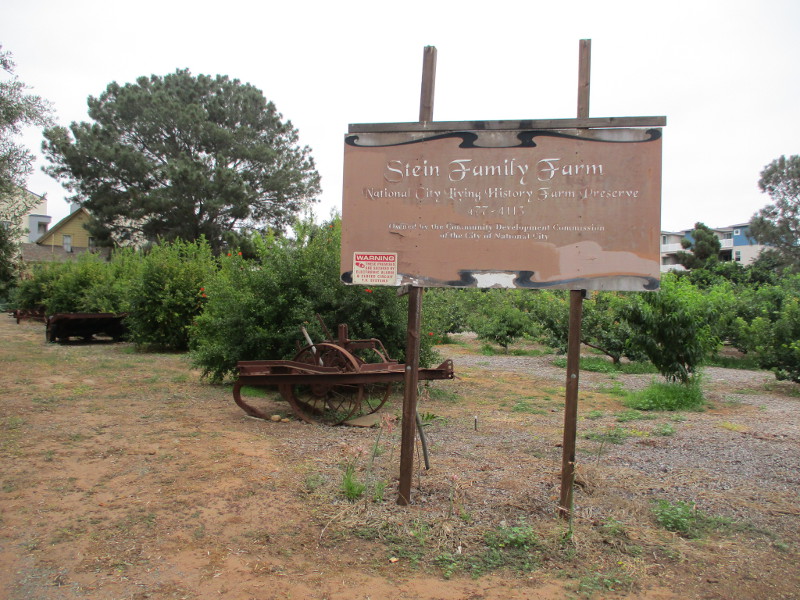
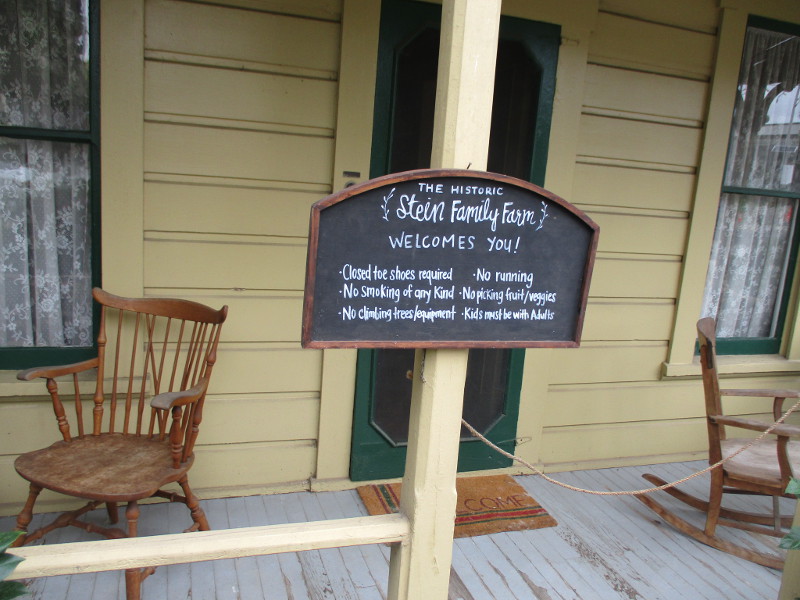
Look for this sign!

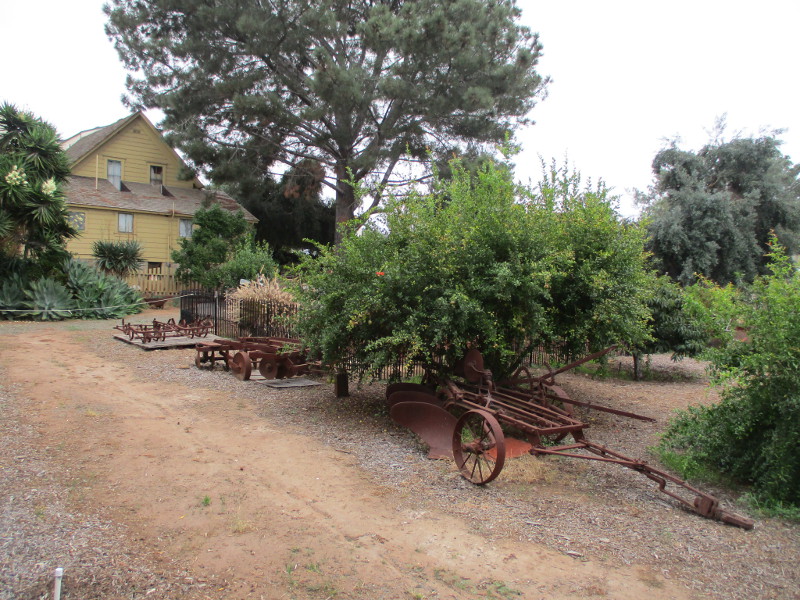
Some old farm machinery parked near the orchard.

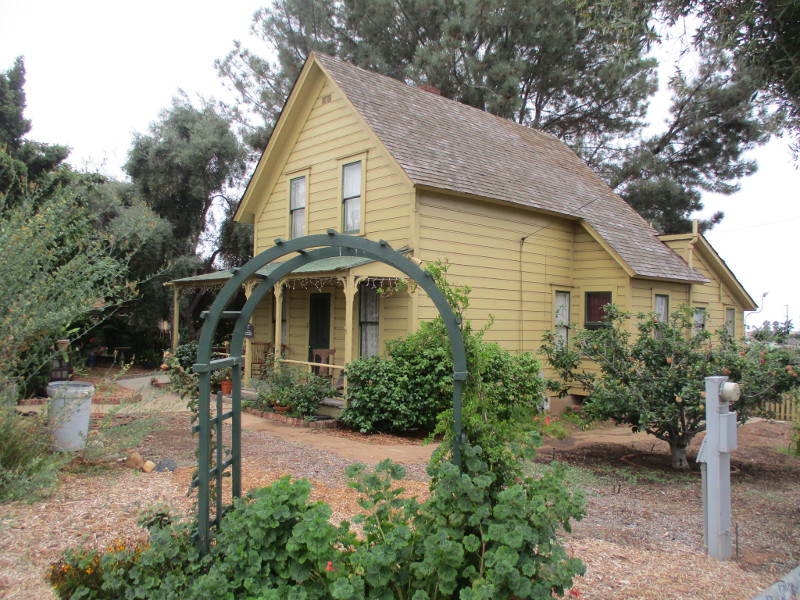
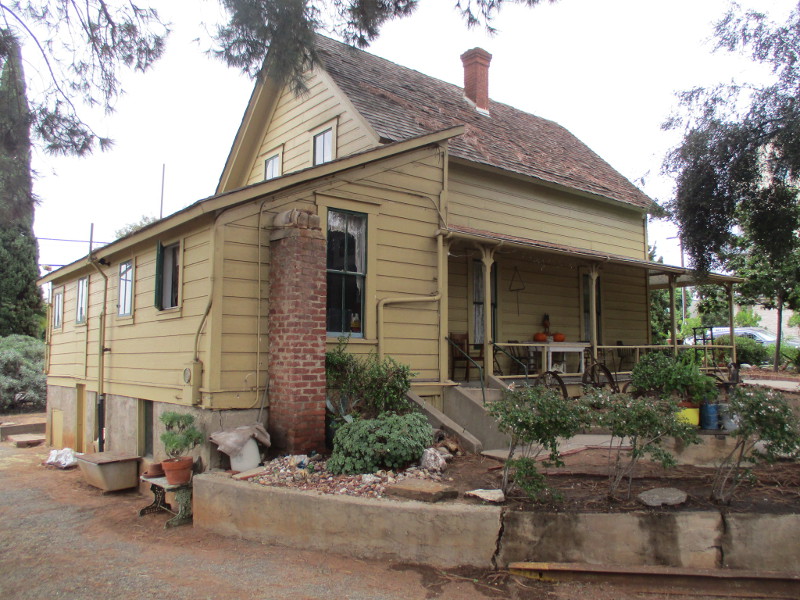
The front of the Stein farmhouse.

The front porch.

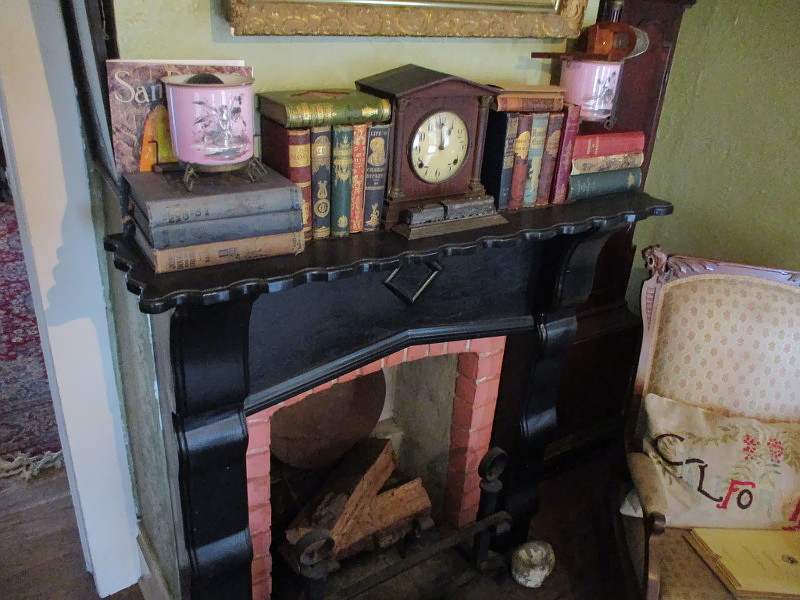
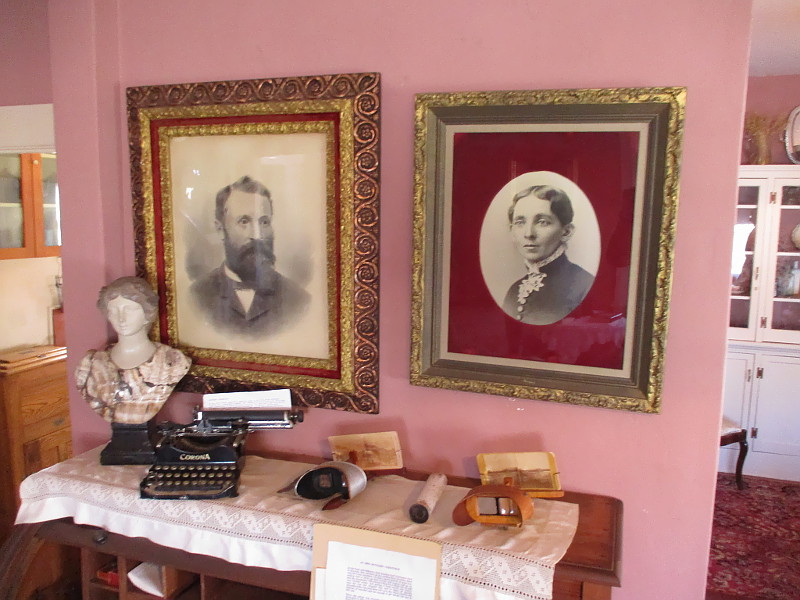
Inside the farmhouse. Portraits of Charles and Bertha Stein on their wedding day.

School kids visiting the Stein Family Farm on field trips can see what life was like a century ago.

I learned this was Charles Stein’s saddle. Some of the antique furnishings aren’t originally from the farmhouse.

Looking back from the dining room, which was a bit too dark for taking sharp photos with my old camera.

In the early 1900s, fancy teacups probably arrived from the east by train.

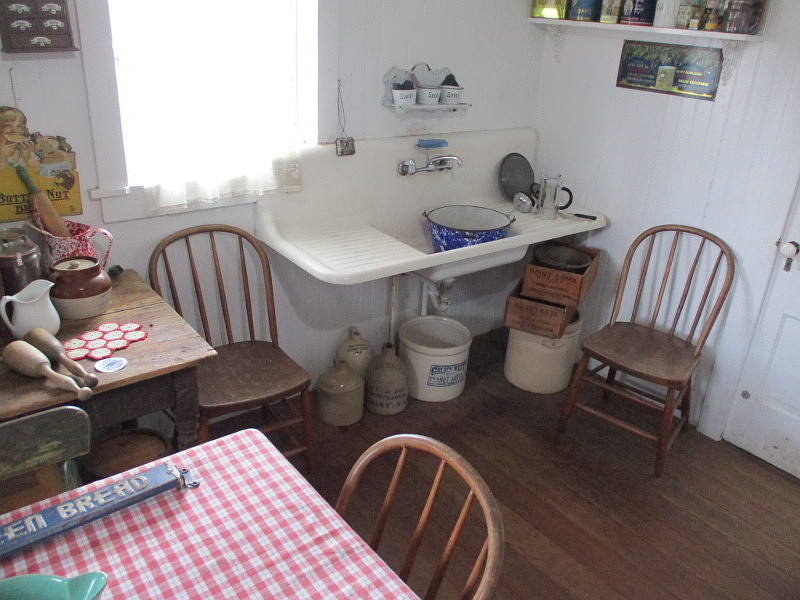
A look at the Stein farmhouse kitchen. That green thing is a breadbox.

I turn my camera to the right.

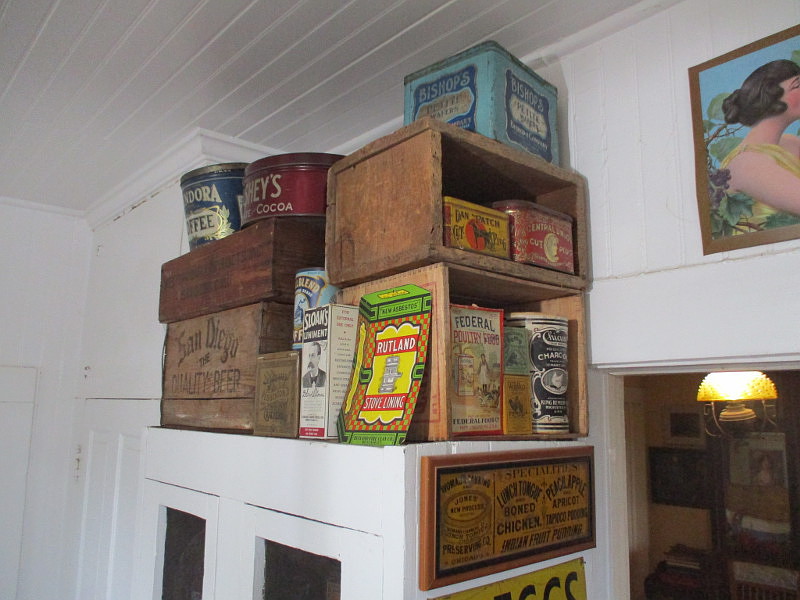
I learned some of these tins and boxes represent local businesses from the past.

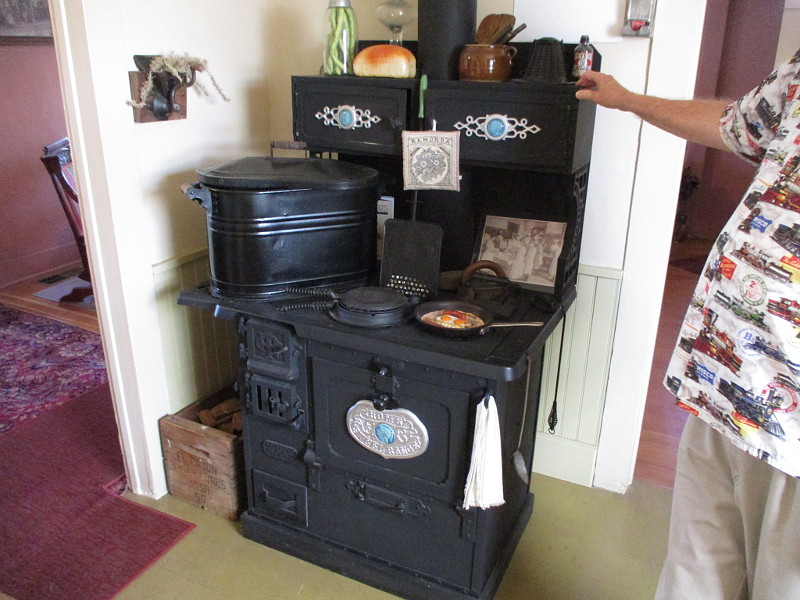
The farmhouse’s original stove. On top I see an iron, washboard and sausage maker.

Porch on the south side of the farmhouse appears very inviting!

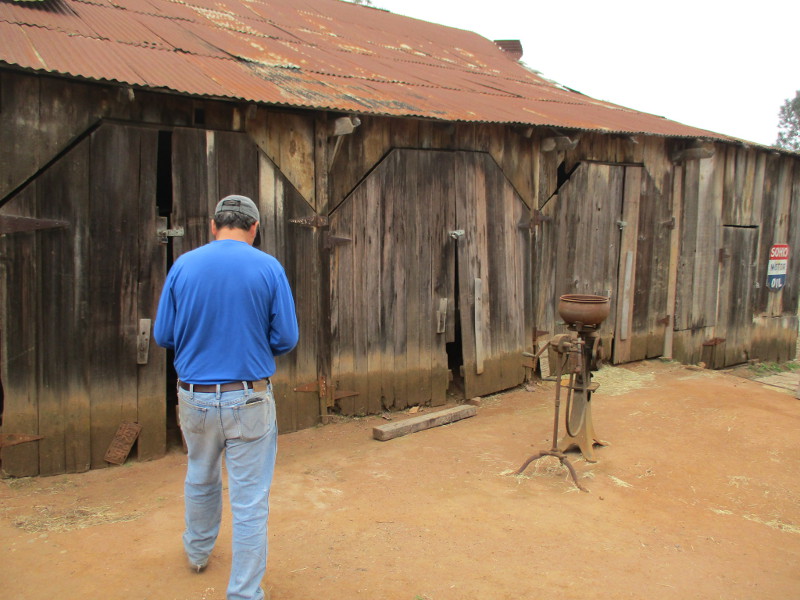
We walk a short distance to the old barn.

The hand-cranked device on the left is for sheep shearing. On the right is an antique device for separating cream.

An old carriage inside the barn.

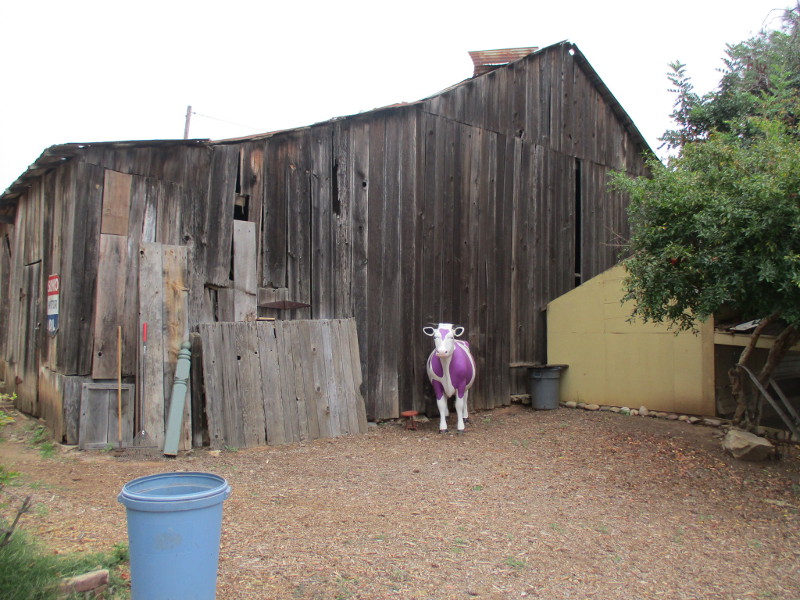
That strange cow near the barn once stood at the Purple Cow Dairy Store.

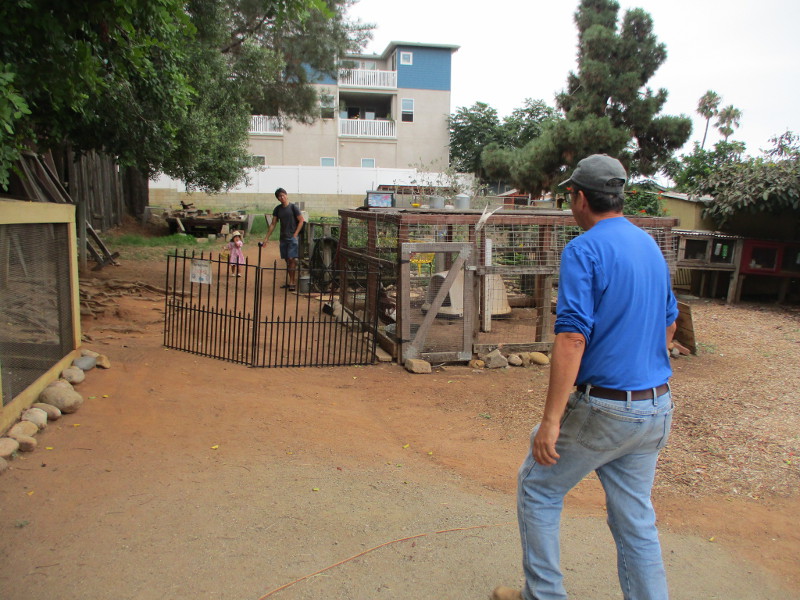
Heading toward the many farm animals!

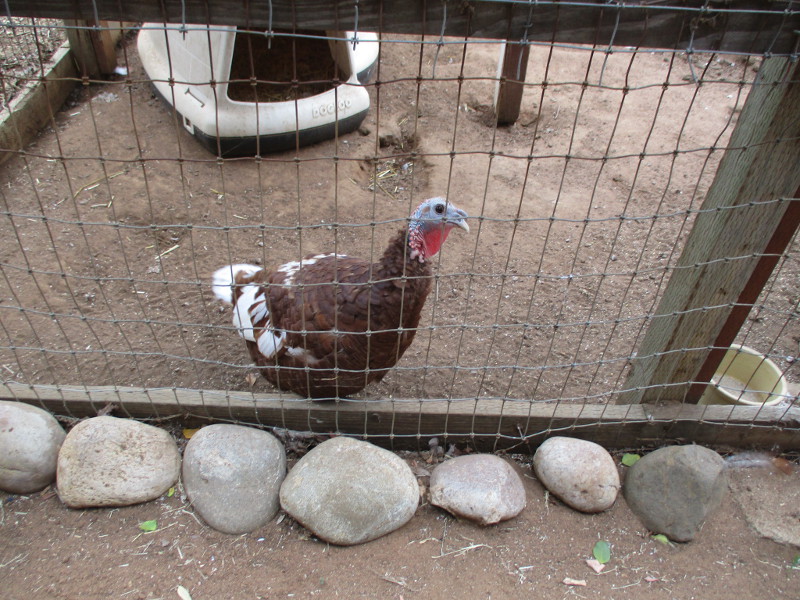
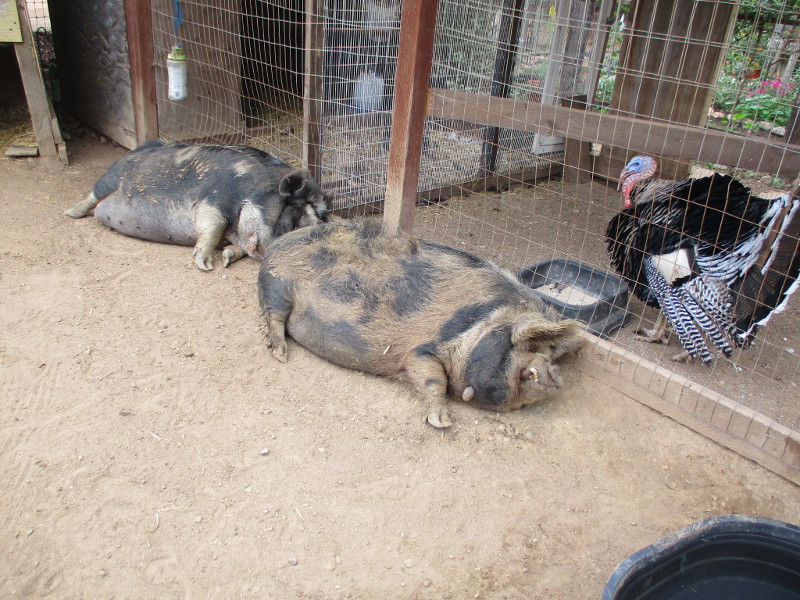
A turkey wonders who I am.

We pass a beautiful little butterfly garden. School kids like it, too.

Butterfly knowledge on a sign.

Yes, it’s an emu!

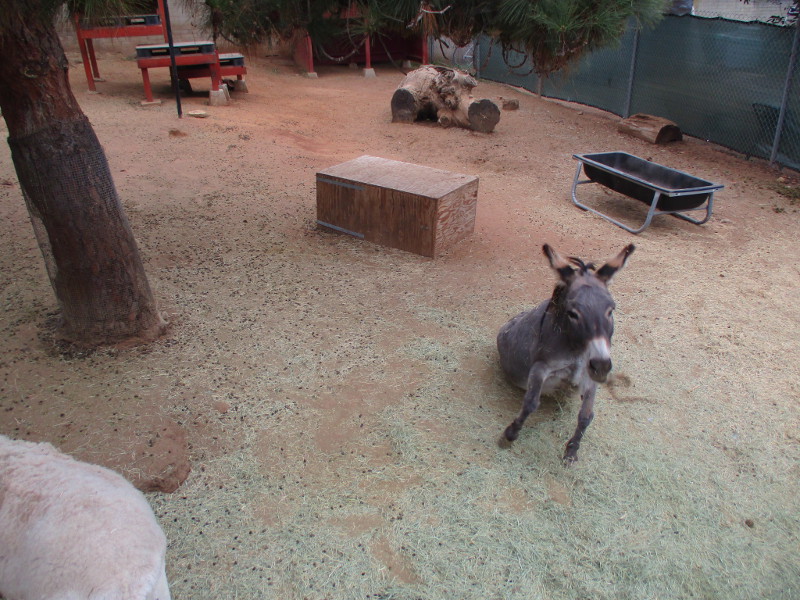
Two pigs digesting their breakfast.

Hello!

All the animals are very friendly.

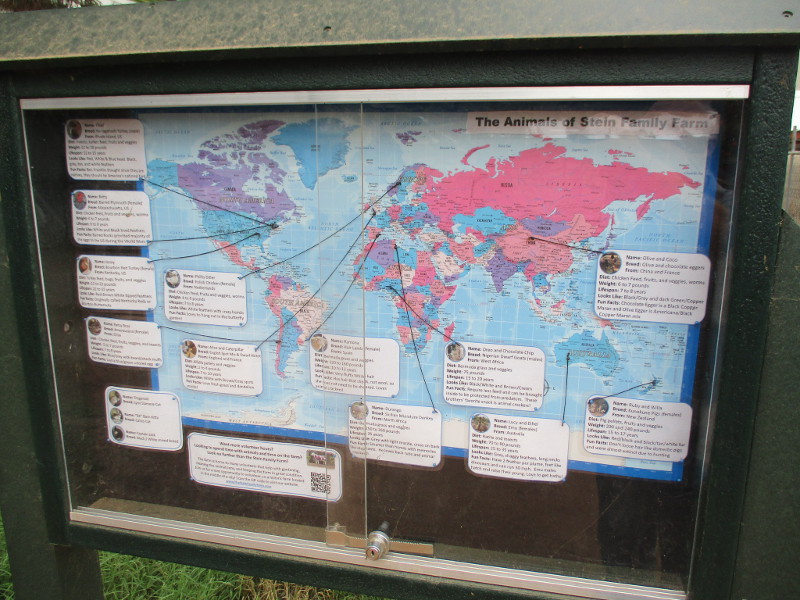
This chart shows the animals of the Stein Family Farm. Each has been given a name. A Polish Chicken with a crazy hairdo is named Phyllis Diller! The different animal breeds have origins around the world.

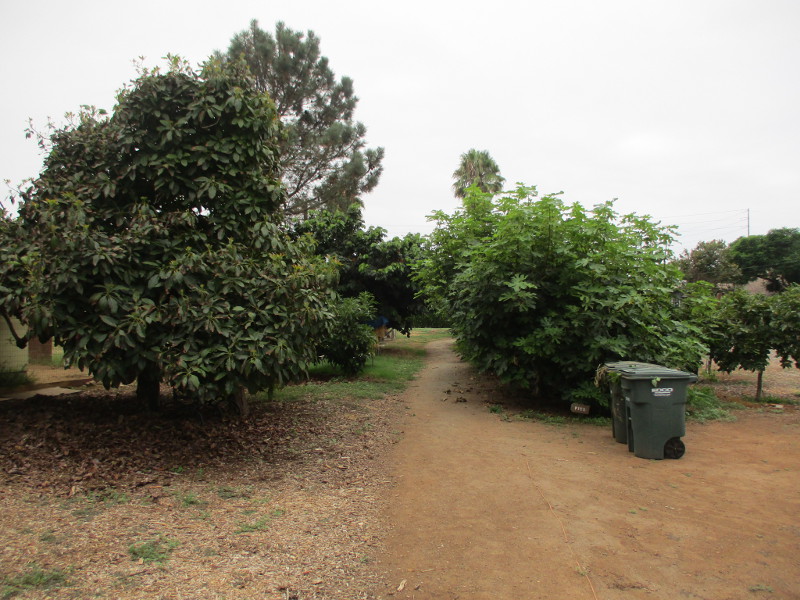
Gazing west toward the lush orchard. Many different fruit trees were mentioned.

A fun stage or photo backdrop. Weddings are sometimes held here.

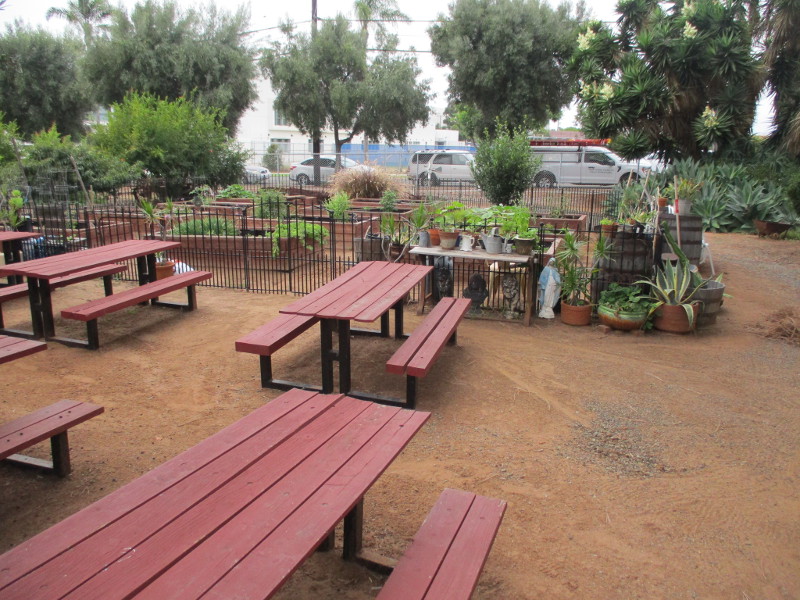
Lots of inviting picnic tables.

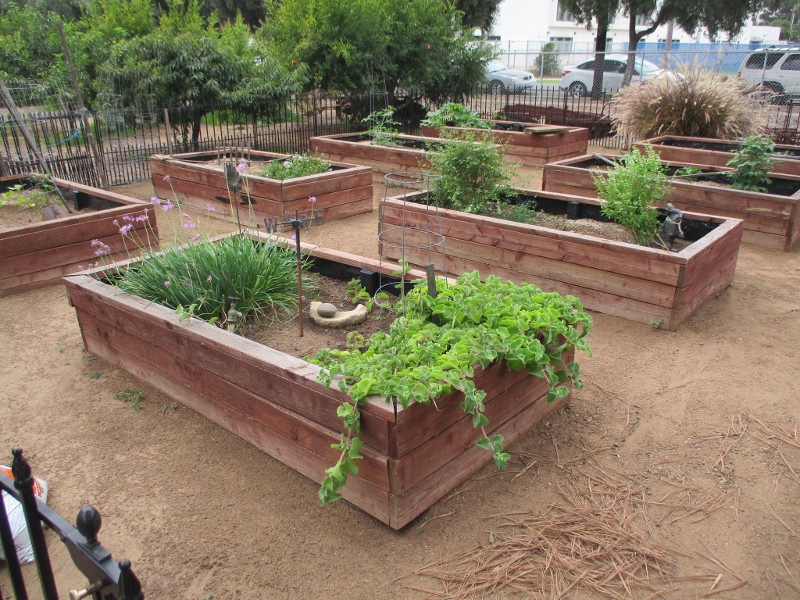
A well-tended vegetable garden.

Looking back toward the old farmhouse. That big tree on the right is a Torrey pine.

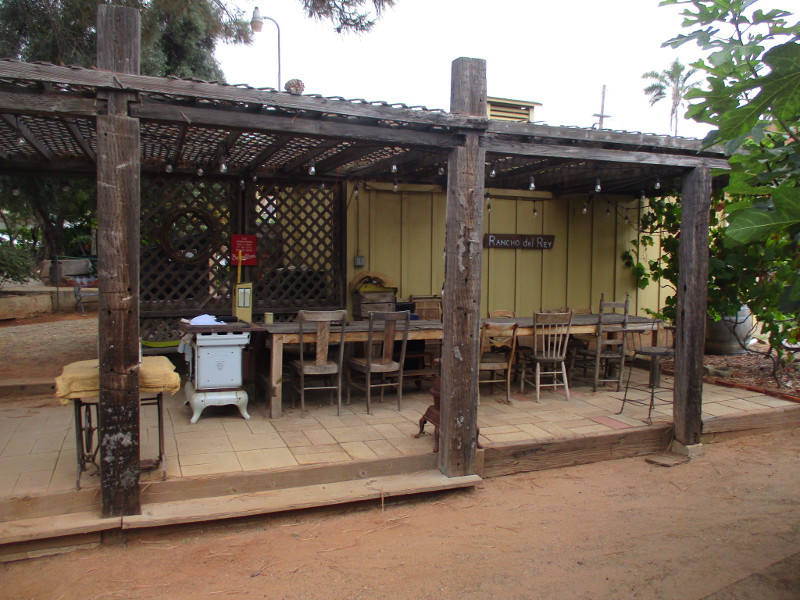
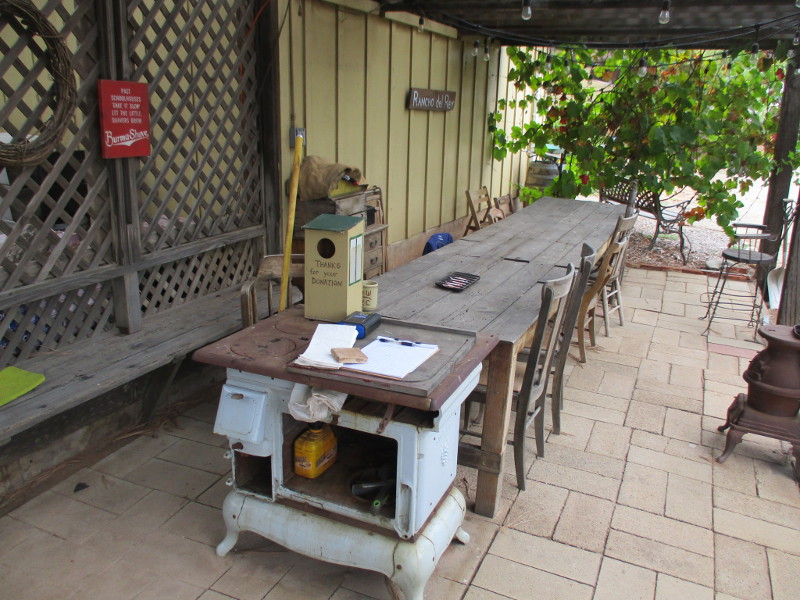
A great place for meetings. Scouts and local clubs often gather here.

An Eagle Scout project resulted in this long, rustic table.

Tour’s almost over.

Thanks for visiting Cool San Diego Sights!

I post new blogs pretty often. If you like discovering new things, bookmark coolsandiegosights.com and swing on by occasionally!

I live in downtown San Diego and love to walk around with my camera! You can follow Cool San Diego Sights via Facebook or X (formerly known as Twitter)!